Who is already building the homes Europe needs?
A map nobody had drawn
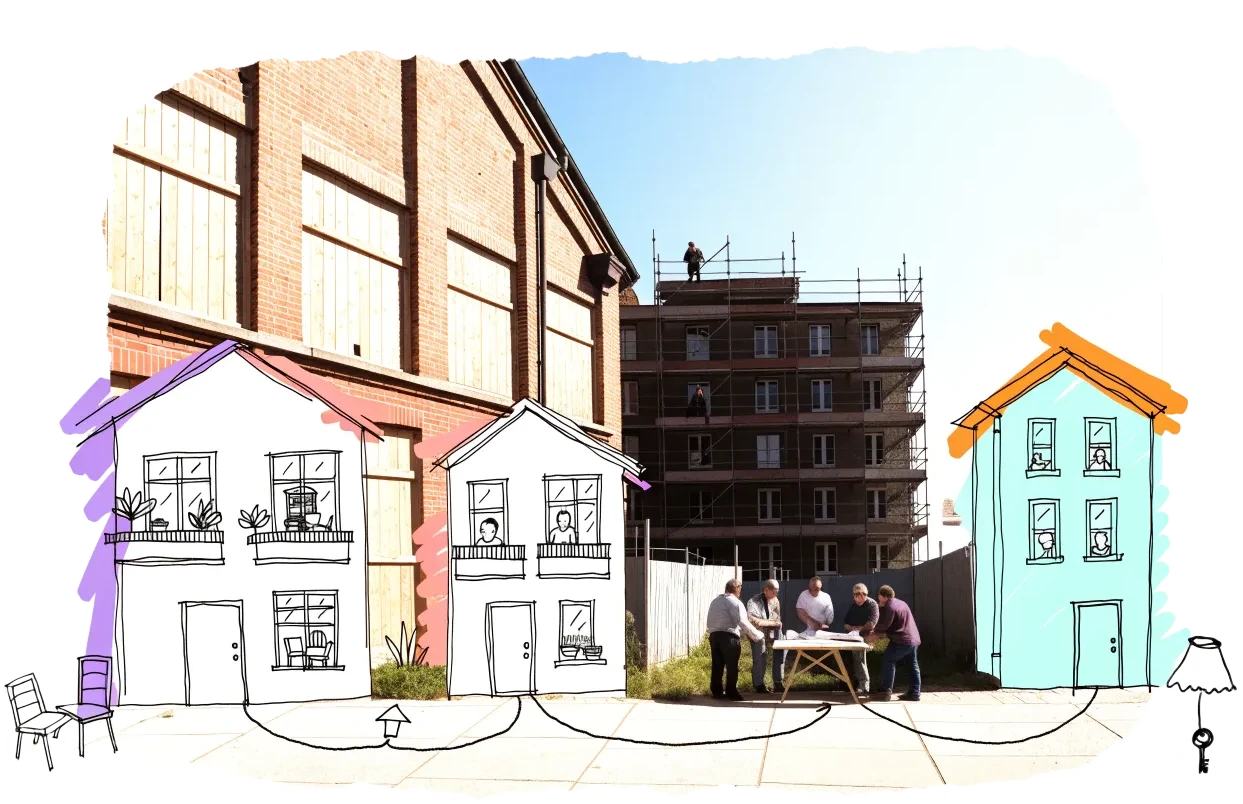
In Molenbeek, in Brussels, nine households live in homes they bought without buying the ground underneath. Community Land Trust Brussels kept the land, which is why its homes cost on average 40% less than the private market, and why they will cost the next buyer less too. It calls the building the first inhabited land trust on the European continent.
The housing debate tends to set the market against the state. Between the two sits a crowd of organisations that already build homes nobody can sell for a windfall: cooperatives, foundations, land trusts and non-profit companies, some a century old and some founded last year. Nobody had put them on one map, so we researched one, city by city, and checked every organisation against its own website.
The map below shows the builders, and the organisations that both build and lend. Look first for the clusters, then for the empty stretches between them.
The dots gather where old cooperative laws and patient city land policy have had decades to work: Vienna, Frankfurt, Munich, Hamburg and Zurich first, then London, Milan, Madrid and Copenhagen. They thin out towards the east and south-east, and around Athens we found none at all.
Five kinds of builder turn up again and again. Cooperative developers build homes their members occupy at cost and never sell on. Land foundations buy ground and lend it out on long leases, so it can never be sold again. Community land trusts do the same and then build on it. Non-profit and limited-profit developers let homes at cost rent under laws that cap what they may earn. And solidarity property companies, France's foncières solidaires among them, buy and renovate buildings for people the market has left behind.
Two tests decided who made the map. The homes must stay out of speculation, whether a statute, a lease or the organisation's own rules keep them there. And the organisation must have a purpose beyond its own size: building for people in need, handing control to residents, bringing an empty building back. Consultancies, architects and campaign groups were left off, however useful, and so were ordinary commercial developers with a green label.
Where the map is thin, we say so plainly. The Baltic capitals show no developer at all, Sofia, Bucharest and Nicosia one each, and much of the former Yugoslavia little more; the fifth part of this read asks what held them back.
Developers who are not in it for the exit
In Hattingen, on the edge of the Ruhr, a foundation set up in 2002 has spent two decades buying land it has promised never to sell. Stiftung trias has taken 54 plots into its endowment and, by its own count, a million square metres of ground out of speculation. Housing groups build on that land under a hereditary building right and pay a ground rent, which the foundation spends on the next plot.
Berlin's Stadtbodenstiftung set out to do the same as the first real community land trust initiative in Germany, planning 99-year leases for cooperatives and self-managed houses, according to a European guide to urban land trusts. That guide also tracks how fast the model spread in England: from 30 land trusts in 2010 to over 300, with nearly 1,000 homes completed.
Some of those trusts build in the middle of cities. In south London, the Rural Urban Synthesis Society, founded in 2009, won a site from Lewisham Council and is putting 36 permanently affordable homes, partly self-built, on a former derelict school and industrial site. The Bristol Community Land Trust acquires land for homes its members can afford, and Brussels' trust had 181 homes delivered, building or planned by 2020, with 600 members.
A newer generation of cooperative developers builds for groups that could never manage a site alone. Die WoGen in Austria works as a developer for new housing projects, and its members' deposits help finance their first steps, as a scoping review of cooperative models describes. In Catalonia, Sostre Cívic counts more than a thousand members across 17 projects, all held in common and never sold.
France built a legal form for this. Solidarity land bodies such as La Coop Foncière near Paris, the Lille metropolis's trust and COO.SOL in Bordeaux keep the ground and sell only the home, which La Coop Foncière prices a quarter to two fifths below the market; it aims to deliver a thousand homes a year by 2030.
Beside them work the non-profit and limited-profit landlords whose rents are fixed by law. Denmark alone has roughly 500 non-profit housing associations, each approved by a municipal council, according to Housing Europe's comparison of these models. The map below shows where such non-market homes already make up a large share of the stock, and where the new developers work almost alone.
Where the share is large, a new cooperative joins a sector with lenders, laws and land deals already in place. Where it is small, it has to build all of that first.
Read these stories side by side and the same two shortages recur: land at a price that does not assume a future sale, and money that will wait decades for its return. The foundations exist to solve the first. The second runs through every story that follows.
Old giants, new pioneers
In Stockholm in 1923, the city's tenants' association founded HSB and started four buildings at once. Their 149 flats were ready the following year. Riksbyggen followed in 1940, set up by building unions as an answer to the housing shortage and to unemployment.
Norway built the same kind of movement. Usbl was founded in 1948 by young people in Oslo who wanted to get building going, and the country's cooperative housing associations now have more than 1.2 million members, according to Housing Europe's survey of cooperatives. BORI alone manages 31,000 homes.
Vienna's limited-profit associations work at a similar scale. Sozialbau, founded in 1954, manages 55,776 flats; WBV-GPA was set up by the private-sector employees' union in 1953; Heimbau still builds and lets across the city. In Copenhagen, fsb and AAB belong to a sector that pays into a shared National Building Fund, which takes part of the rent from estates whose loans are paid off and balances the books across the sector, as Housing Europe's comparison explains. Further east, WSM built homes for more than 5,000 people in interwar Warsaw, and SBD Praha, building since 1959, has delivered 1,042 new flats in its recent cooperative projects.
The timeline below sets their founding years beside those of the pioneers. Look at when each generation began.
- 1923[source]
HSB, Stockholm
The tenants’ association founds a savings and building society; its first four buildings are ready a year later.
- 1948[source]
Usbl, Oslo
Young people answer a call to get house-building moving.
- 1953[source]
WBV-GPA, Vienna
A union founds a limited-profit housing association.
- 1959[source]
SBD Praha, Prague
A building cooperative that is building cooperative flats again.
- 2002[source]
Stiftung trias, Hattingen
A foundation that buys land and never sells it.
- 2007[source]
mehr als wohnen, Zurich
Zurich’s cooperatives found a cooperative of cooperatives.
- 2016[source]
Zadrugator, Ljubljana
Students and young workers set out to build Slovenia’s first rental housing cooperative.
- 2020[source]
MOBA Housing SCE
Pioneers from five countries become a European Cooperative Society.
Founding years, each from the organisation’s own site: four of the giants, from the housing shortages of the 1920s to the 1950s, and four of the pioneers, all founded since 2000.
The giants were born of the housing shortages between the wars and after 1945, and they have long since proved what scale and permanence look like: homes that stay affordable for generations, run by members, backed by funds that recycle rent into repairs.
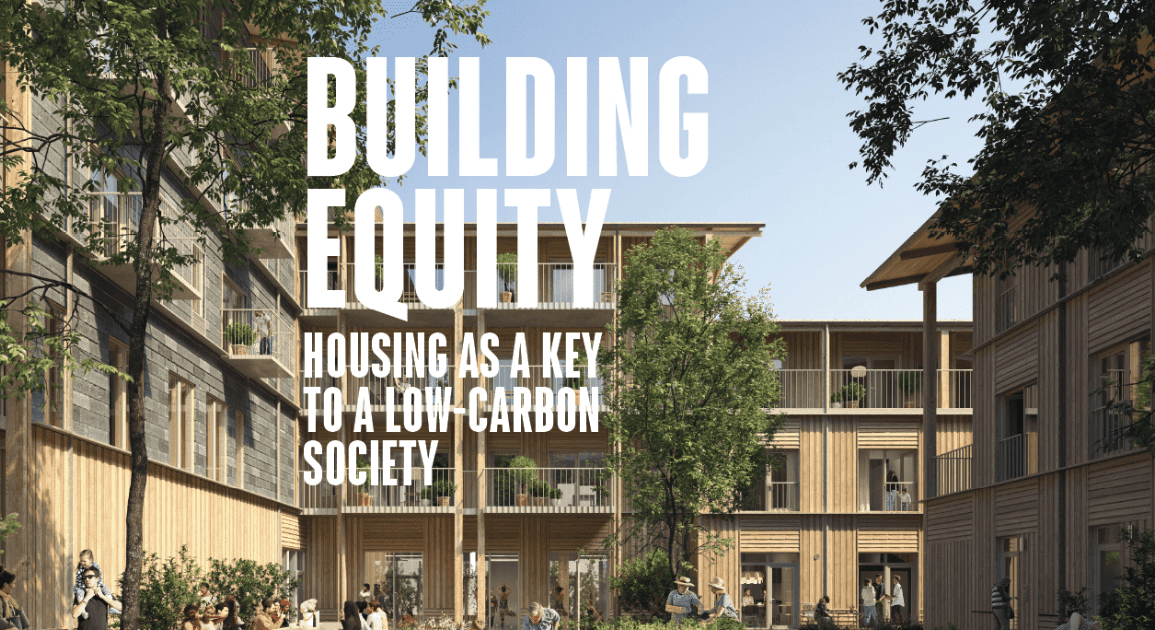
The pioneers, most of them founded around and after the 2008 crash, brought back something size had made hard for the giants: a building its residents plan and run themselves. mehr als wohnen was founded in December 2007 by Zurich's existing cooperatives as a place to try new ways of living. Genossenschaft Kalkbreite built 97 homes over a working tram depot and then 56 more at the Zollhaus, with shops and workspaces in both, as BLOXHUB's review of low-carbon housing records. In Madrid, Entrepatios has housed 17 families at Las Carolinas since 2020; in Prague, Sdílené domy buys houses and ties them into a legal structure that stops them ever being sold back; in Ljubljana, Zadrugator has worked since 2016 towards a first pilot.
The two generations rarely meet. A study of the Central and South-East European pioneers notes that support from mature cooperatives like Zurich's ABZ would help, but that solidarity among established cooperatives varies widely. What they share is simpler: every one of them needed a lender who would wait, which is the subject of the read on patient capital.
Factories, dormitories and empty flats
In 1985 a small collective in West Hull started renovating empty homes on Gee Street, learning to build by building. Giroscope became a workers' cooperative the next year, and its portfolio has since grown to 150 residential properties; in 2025 it turned a local church into an enterprise centre. In Leeds, Latch began in 1989 with a council grant and homeless volunteers doing up derelict houses, and later turned a Victorian villa into six flats. Canopy, also in Leeds, still works that way: people who have been homeless renovate empty houses and move in.
On the continent the same work takes other forms. Les Tournières, a property cooperative in Liège, buys and renovates buildings for associations that work with people in precarity. In Lyon, Coopérative Logement d'Abord buys vacant flats scattered across the metropolis, renovates them and lets them to people in severe housing need, with the metropolis itself among its members. In Turin, Homes4All grew out of a city impact-finance scheme that pays only for results, is renovating a 16-flat block in Borgata Tesso and has proposed turning a former school into a residence; Dark Matter Labs describes it as a start-up putting ethical investors' capital into vacant homes. In Dresden, Stiftung trias owns the land beneath ZENTRALWERK, a former factory; Zentralwerk eG holds a 99-year heritable building right and operates the project, housing and culture under one cooperative roof. In Brussels, Communa negotiates the temporary use of empty buildings and opens them to people who need a roof.
The buildings below are the ones these developers brought back. Look at what each one used to be.
Sostre Cívic's first project, Princesa 49, rehabilitated a municipal building the city had ceded on a long surface right. In Križevci, the architecture cooperative behind Croatia's first pilot is converting a former military dormitory into 36 flats. Sdílené domy bought a large house in Prague's Břevnov with a €1 million credit from Germany's Umverteilen Foundation. And at Berlin's Haus der Statistik, a block that stood empty for a decade, a cooperative works alongside the city on homes, culture and a new town hall.
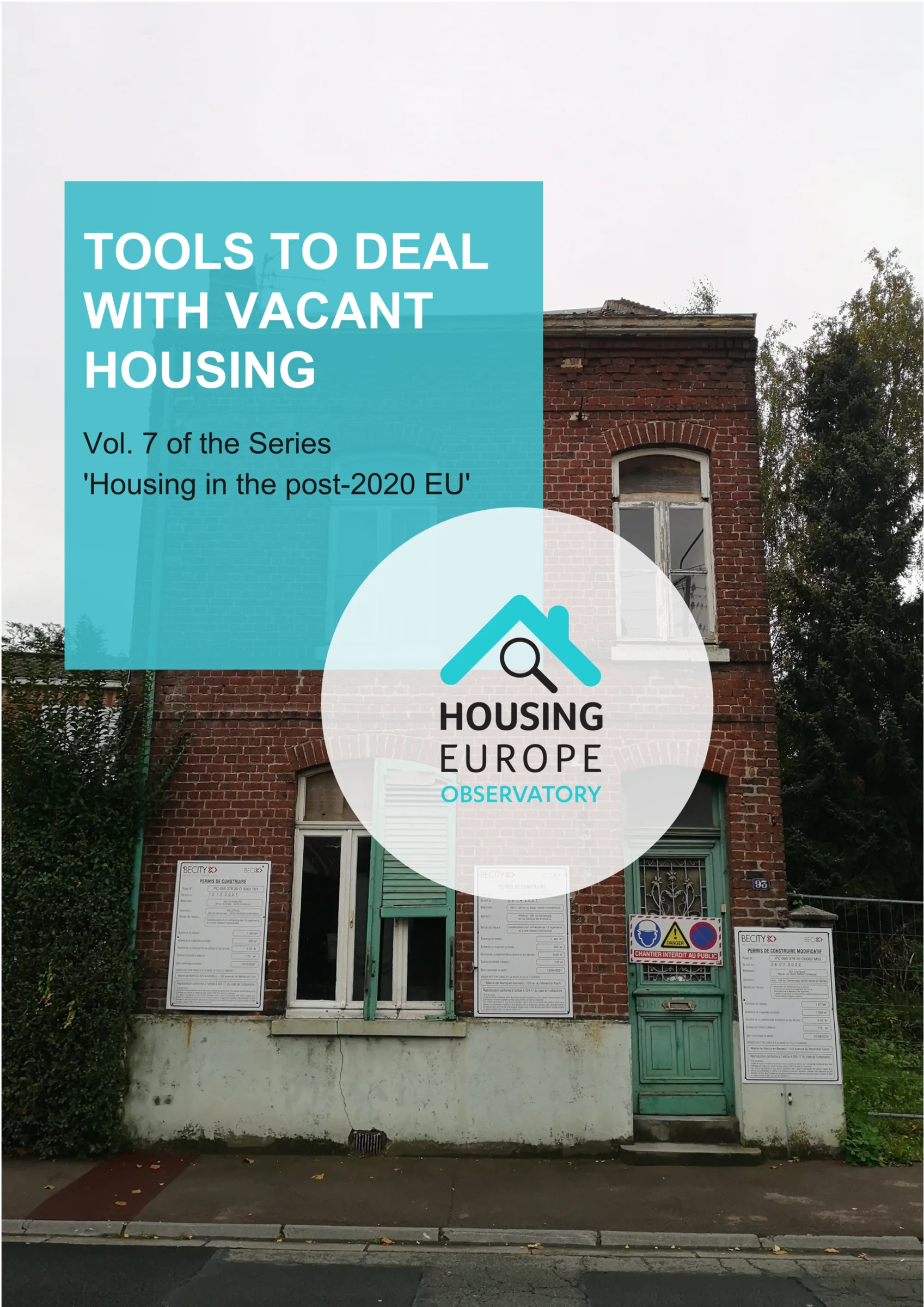
Cities hold most of the keys. Housing Europe's guide to vacant housing lists what they can offer owners (grants, public loans, guarantees, temporary rental agreements, specialist agencies) and what they can impose, from requisition to England's Empty Homes Premium, which lets councils charge up to four times the normal council tax on a home empty for more than ten years.
The pattern repeats from Hull to Turin: a small developer that knows the street, a lender that will wait, and a city that opens the door. The read on turning empty offices into homes makes the wider case for building inside what already stands.
Where the map is still blank
In Athens we found no organisation that builds or finances non-speculative homes. The closest is CoHab Athens, which studies and tests collective ownership, and Greece has no cooperative-housing sector to grow from. That is the finding of a careful search, not proof that nobody is trying.
In Tallinn, Riga, Vilnius, Sofia, Bucharest, Nicosia, Bratislava, Ljubljana and Zagreb we found few builders. What exists is mostly public lenders, national Habitat for Humanity offices and one or two cooperative pioneers. Rotterdam and Luxembourg are thin for different reasons: in Rotterdam a flagship cooperative pilot collapsed over land terms, and in Luxembourg cooperative housing has barely begun.
The pioneers in the east explain why. After the privatisations of the early 1990s, more than 70 percent of households in Central and South-Eastern Europe own their homes, while housing providers such as cooperatives are offered loans of up to ten years at most, according to a study of the region's pioneers. There are hardly any policies to lease or sell land below market price.
The bars below set the tenure mix of the thin countries beside three where the old giants work. Watch how much of each bar is owner-occupied.
Where almost every household owns its flat, a developer that rents at cost has no sector to join and no lender that knows the model. In Estonia, Housing Europe's survey notes, a cooperative was made compulsory for managing privatised blocks, so the word there usually means a residents' association that looks after a building, not a developer that builds one.
The map below shows the cooperative share of the housing stock, with the countries named here highlighted. Read their figures with Estonia in mind: a share there can mean privatised blocks run by their residents, not a sector that still builds.
A low share is not the same as no one trying. Since 2017, pioneers from Croatia, Czechia, Hungary, Serbia and Slovenia have worked together, and since 2020 as MOBA Housing SCE. Croatia's pilot shows what a project there has to assemble: 15% equity from residents, 25% from the municipality and EU funds, and a long-term loan for the rest, possibly from an Austrian bank. In Ljubljana, Zadrugator's plans have so far failed for lack of state subsidy.
So the blank regions are not blank because nobody wants these homes. They are blank because land, long credit and a legal form for non-profit cooperatives are all missing at once. Where one of the three arrives, the dots follow.
What makes a good local partner
If you sit on a city's housing committee or a cooperative's board, the organisations in this read are the partners you are looking for. A few questions separate the good ones from the merely well meaning.
Does something stop the homes being sold? The strongest partners have an asset lock written into their rules, a foundation or trust that holds the land, or a law that caps what they may earn. A promise in a brochure is not a lock.
Have residents lived with them for a while? A track record is measured in households that stayed, meetings that were held and repairs that were paid for out of the rent, more than in homes completed.
Can they wait? A developer that must sell or refinance within a few years will eventually pass that pressure on to the people who live there. The partners that last are the ones whose money, and whose mission, run to decades.
Does the city already trust them? The pioneers that moved fastest had a council that leased them land, guaranteed a loan or ceded a building. That trust takes years to earn and is easy to lose.
European Housing Coop builds cooperative homes as a network of local projects, and every one of them starts with partners like these rather than replacing them. If your organisation builds, lends or holds land for homes that stay affordable, take a seat with us.
References
From our library44
- Community Land Trust Brussels (CLTB) — Organisation
- Stiftung TRIAS — Organisation
- Stadtbodenstiftung — Organisation
- Urban Community Land Trust in Europe — Knowledge
- Rural Urban Synthesis Society (RUSS) — Organisation
- Bristol Community Land Trust — Organisation
- Die WoGen Wohnprojekte-Genossenschaft e.Gen. — Organisation
- Housing Needs and Cooperative Housing Models: A Scoping Review — Knowledge
- Sostre Civic — Organisation
- How Collaborative Housing can respond to the European housing challenge — Knowledge
- La Coop Foncière — Organisation
- Organisme de Foncier Solidaire de la Métropole Lilloise (OFSML) — Organisation
- COO.SOL (Organisme de Foncier Solidaire de Bordeaux Métropole) — Organisation
- Unlocking Potential - A Comparative Analysis of Approved Housing Body Models in the European Union — Knowledge
- HSB — Organisation
- Riksbyggen — Organisation
- Boligbyggelaget Usbl — Organisation
- Housing Cooperatives in Europe - Resilience and Adaption to Changing Need — Knowledge
- BORI BBL — Organisation
- Sozialbau AG — Organisation
- WBV-GPA (Wohnbauvereinigung für Privatangestellte) — Organisation
- Heimbau – Gemeinnützige Wohnungsgenossenschaft — Organisation
- fsb — Organisation
- Boligforeningen AAB — Organisation
- Warszawska Spółdzielnia Mieszkaniowa (WSM) — Organisation
- SBD Praha (Stavební bytové družstvo Praha) — Organisation
- Baugenossenschaft mehr als wohnen — Organisation
- Genossenschaft Kalkbreite — Organisation
- Building Equity: Housing as a Key to a Low-Carbon Society — Knowledge
- Entrepatios — Organisation
- Sdílené domy — Organisation
- ZADRUGATOR — Organisation
- Cooperative Housing Pioneers in Central and South- Eastern Europe: Mainstreaming Alternatives through Translocal Networks — Knowledge
- Giroscope — Organisation
- Latch (Leeds Action to Create Homes) — Organisation
- Canopy Housing — Organisation
- Les Tournières — Organisation
- Coopérative Logement d’Abord — Organisation
- Homes4All — Organisation
- New Economic Thinking - Enabling a just transition of the built environment in Europe — Knowledge
- ZENTRALWERK Kultur- und Wohngenossenschaft Dresden eG — Organisation
- Communa — Organisation
- Tools to Deal with Vacant Housing — Knowledge
- CoHab Athens — Organisation
Further sources16
- Stiftung trias, Die Stiftung (April 2026) — Stiftung trias, Die Stiftung (April 2026)
- RUSS, Church Grove project — RUSS, Church Grove project
- HSB, Historia: 1920-tal — HSB, Historia: 1920-tal
- Riksbyggen, Vår historia — Riksbyggen, Vår historia
- Usbl, Vår historie — Usbl, Vår historie
- BORI, Om BORI — BORI, Om BORI
- Sozialbau AG, Über uns — Sozialbau AG, Über uns
- GPA, Wohnbauvereinigung für Privatangestellte — GPA, Wohnbauvereinigung für Privatangestellte
- WSM, Historia pewnego marzenia — WSM, Historia pewnego marzenia
- SBD Praha, Družstevní bytová výstavba — SBD Praha, Družstevní bytová výstavba
- mehr als wohnen, Über uns — mehr als wohnen, Über uns · 2007
- Zadrugator, O nas — Zadrugator, O nas · 2016
- MOBA Housing SCE, About — MOBA Housing SCE, About · 2020
- Giroscope, About — Giroscope, About
- Latch, About Latch — Latch, About Latch
- Stiftung trias, Dresden Zentralwerk — Stiftung trias, Dresden Zentralwerk