
Silk workshops, full queues
Lyon grew rich on silk woven in its own homes. The canuts of the Croix-Rousse built tall workshops with ceilings high enough for a Jacquard loom, and in 1831 and 1834 they rose up over what the work paid. That history of living and earning under one roof still shapes the question here: who can afford to stay close to the work in a city of 519,127 people?
Two in three households rent. INSEE's census puts owner-occupiers at 33.7% and tenants at 64.1%. Within the renting majority, HLM tenants (the regulated social landlords, public offices and non-profit companies alike) hold 16.1% of homes, or 43,709 dwellings. That leaves private landlords housing around 48% of households. Cooperative tenure is too small to appear in the census at all. A further 2.2% of households are housed free of charge, usually by family or an employer.
- Owners
- Owner-occupier33.7%
- Renters
- Public & non-profit rental16.1%
- Cooperative0.00%
- Private rental48.0%
- Other2.2%
- Housed free of charge2.2%
Social housing in France is a set of rules as much as a landlord. The census counts 16.1% of Lyon's homes as HLM lettings, and in the city that layer overlaps almost exactly with the public and non-profit stock. The legal count used for the SRU law (the 2000 act setting a minimum share of social housing in larger communes) is wider. It adds hostels and private homes let under social agreements, and across the Métropole it reached 27.22% in 2025. The Métropole's own portal lists 200,000 social homes across the metropolitan area.
Rents climb steeply with each step away from regulation. A social tenant pays about €6.15 per m² a month. The median private rent across the agglomeration is €12.70, and a flat let in the past year in Lyon and Villeurbanne costs €14.50. Furnished and serviced lettings, mid-term and longer, with utilities and furniture priced in, reach €16.50. Buying offers little relief. Notaires recorded a median of €4,490 per m² for older flats in Lyon, even after a fall of 9.2% in a year.
- Public/municipal housing
- All-stock median
- New contracts
- Furnished / serviced (gross)
Monthly rent per m², net of charges except for the furnished tier, which is gross and includes utilities and furniture.
Not every home is occupied. The census counts 8.9% of dwellings as vacant, some 29,000 homes, although many are between tenants or awaiting works. An estimated 2,449 flats operate as full-time short-term lets on Airbnb alone. Offices tell a similar story at a different scale. Around 8.0% of office space stands empty, roughly 389,203 m², much of it in dated buildings.
Newcomers keep coming. About 43,477 people move to Lyon from another French commune each year, many of them students and young graduates. Supply has gone the other way. Developers reserved only 1,559 new flats across the Métropole in 2025, 65 % below the 2019 level, according to the developers' federation FPI (Fédération des promoteurs immobiliers).
The pressure lands hardest at the bottom. A study of private tenants' rent burden by the Fondation pour le Logement des Défavorisés (France's main anti-poverty housing charity) found modest households spending 54 % of income on housing even after benefits. Social tenants are squeezed too. A survey of 50 HLM residences found service charges up 35.1 % between 2019 and 2023, with 22.8 % of tenants in arrears. At the sharpest end, the Jamais Sans Toit collective counted 387 children sleeping rough across the Métropole on the eve of the 2026 school year. "This improvisation cannot last for ever," said Juliette Murtin, the collective's spokesperson.
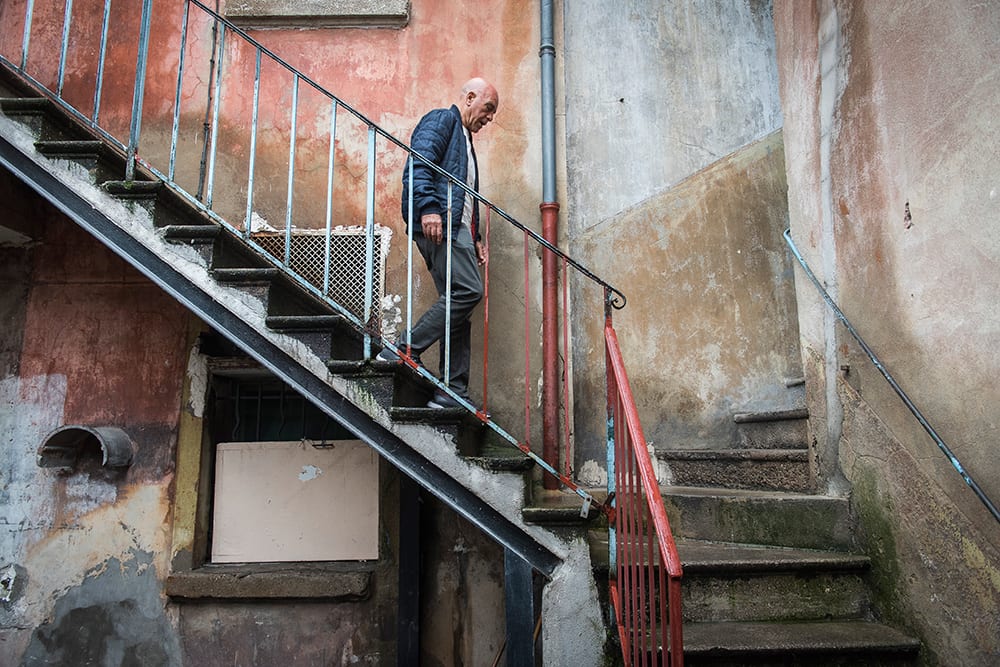
The crisis has reached the middle too. The Métropole's register holds 92,300 applications for social housing against 8,500 allocations in 2025, about 10.8 applicants for every home. Mainstream social rents are open to 65 % of the population, so the queue is not only the poor. Insee's analysis of home-buying found that in Lyon only childless couples could afford to buy in the dearest areas. Residents feel it. In an Ipsos poll before the 2026 elections, only 38% of Les Républicains supporters and 32% of those on the radical left rated the city's housing record as satisfactory. Against that backdrop sits a cooperative sector counted in dozens of homes, not thousands.
The city that brought the housing cooperative back
Lyon's cooperatives come in three shapes. The first is the coopérative d'habitants (a residents' cooperative that owns the building while each household rents its flat). Members buy parts sociales (shares in the cooperative), pay a monthly charge and cannot sell at a profit. The second is the HLM cooperative, a social landlord owned by its members, such as Rhône Saône Habitat. The third is limited-equity ownership through the bail réel solidaire (a long lease under which households buy a home while a land trust keeps the land). All three share one rule: the home is taken out of speculation.
The tradition is older than the law that now frames it. In 1886 Félix Mangini founded the Société lyonnaise des logements économiques, a philanthropic company that later became the Rhône's public housing office. After 1945 the Castors movement of self-builders put up houses in Lyon and Villeurbanne with their own labour. Then the loi Chalandon of 1971 abolished the cooperative rental model and split building from managing. For three decades the form vanished. It returned from Lyon. Habicoop was founded in the city in 2005 and helped write the coopérative d'habitants into the ALUR law of 2014 (the national housing reform that gave participatory housing a legal status).
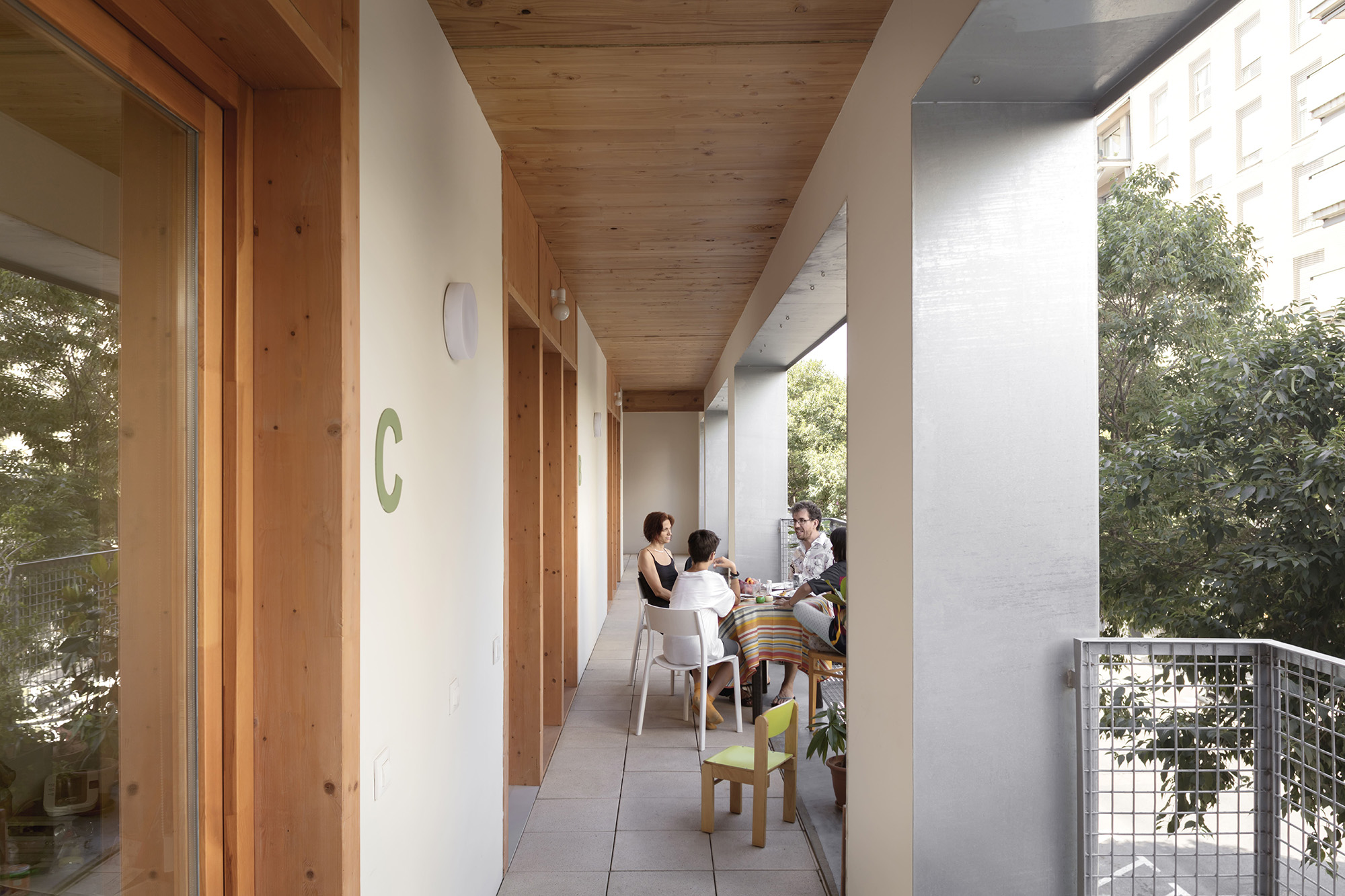
Today the sector has several clusters with different problems. Small residents' cooperatives, grouped around Habicoop and the SCIC (a multi-stakeholder cooperative company) Habitat & Partage, struggle with land access, bank loans and what practitioners call "legal DIY". Completion guarantors treat them as occasional, riskier developers. HLM cooperatives like Rhône Saône Habitat have capital and know-how but work within the social-landlord model. The newer land-trust and SCIC vehicles depend on public money and the Métropole's backing. La Fabrique de l'Habitat Participatif now acts as the common front door, matching would-be groups with land and experts.
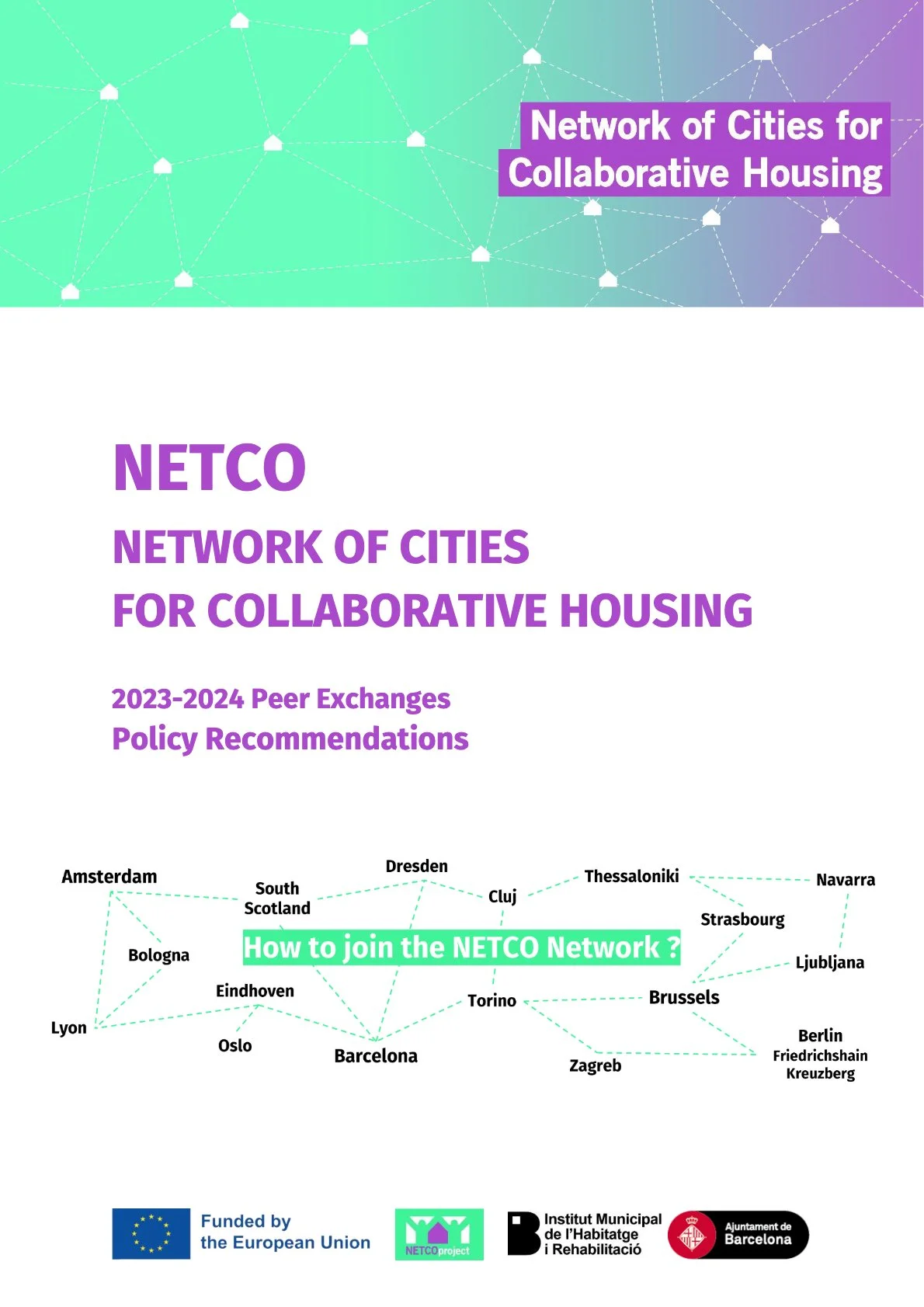
The Métropole has made cooperatives part of its affordable offer rather than a curiosity. It can provide land through development zones, emphyteutic leases (very long ground leases) or the sale of its own property. A European alliance of collaborative-housing networks cites Lyon for discounted public land and for technical support that lets ordinary households join a project. The city is also a member of NETCO, the Network of Cities for Collaborative Housing. How far that support survives the change of majority is now a political question.

A green city inside a conservative Métropole
The March 2026 elections split Lyon's government in two. Grégory Doucet, the ecologist mayor, held the city by 50.67% against Jean-Michel Aulas. The Métropole, which holds most housing powers, went the other way. Véronique Sarselli (Les Républicains) became its president after her list won 92 of the 150 seats. She replaced the ecologist Bruno Bernard.
Each tier holds different levers. Nationally, Vincent Jeanbrun, the minister for cities and housing, leads a relaunch plan that aims for 2 million extra homes by 2030. It funds 110,000 social homes and a new tax regime for private landlords. The Métropole writes the PLU-H (the combined local plan for land use and housing), which targets 8,000 to 8,500 homes a year, including 1,000 under the bail réel solidaire. The city of Lyon keeps smaller tools. In 2025 it voted €7.6 million for 861 social homes and cut the yearly limit for letting a main residence to tourists from 120 to 90 nights.
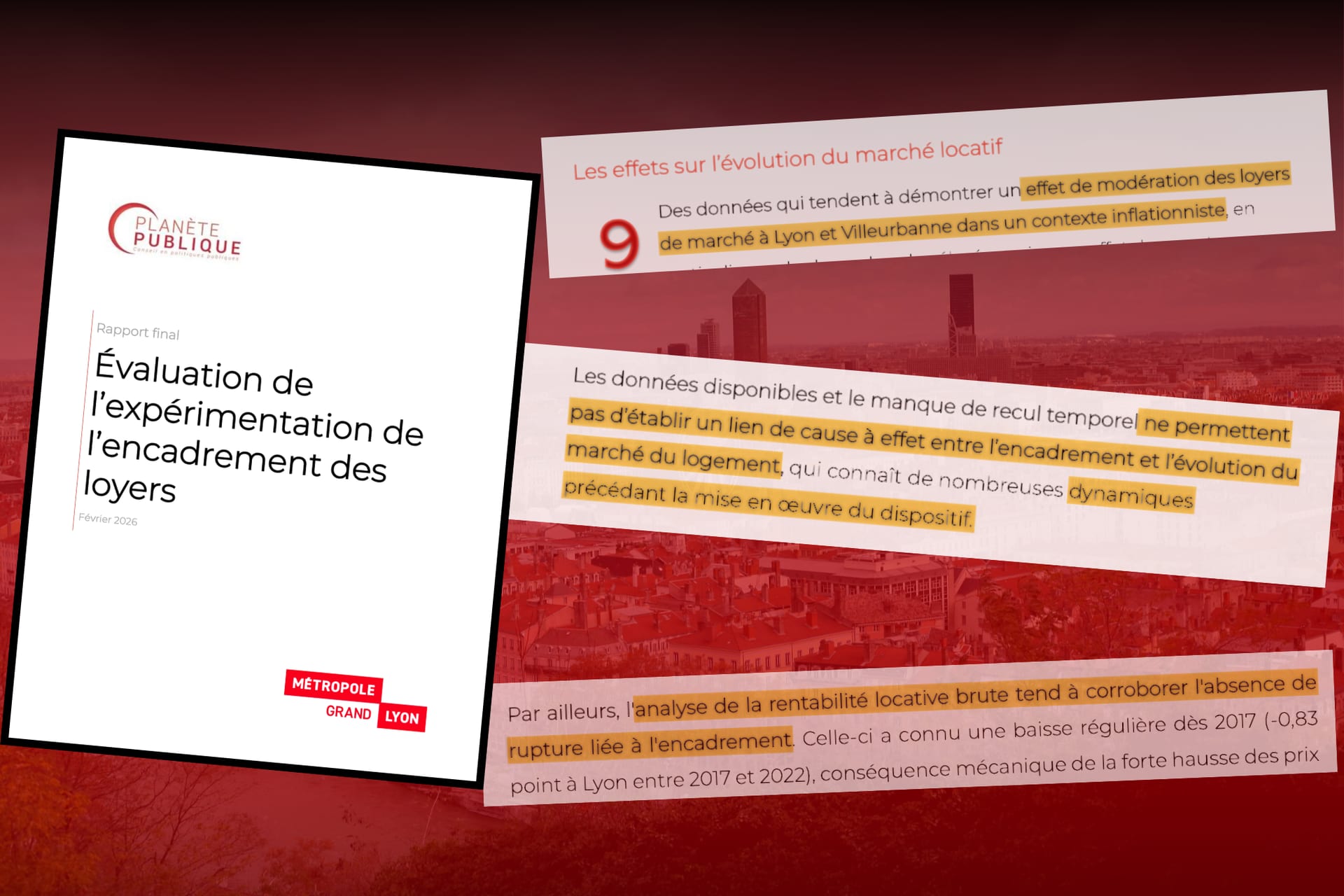
Rent control is the sharpest dividing line. Caps have applied to new leases in Lyon and Villeurbanne since November 2021 under a national experiment that runs until 25 November 2026. Compliance is patchy. The Fondation pour le Logement des Défavorisés found 24% of rents above the cap, by an average of €161 a month. Yet an evaluation commissioned by the previous majority found the caps had moderated market rents during high inflation. Sarselli has said she will end the measure. The two mayors reply that it has saved tenants about €500 a year.
Housing is a basic necessity; it must not be a speculative asset. Its cost must not become an invisible toll that pushes residents out.I have always said I was against rent control, especially in a time of crisis. I am going to abolish this measure.Cooperative instruments were built up under the outgoing majority. The Foncière Solidaire du Grand Lyon, the Métropole's land trust, sells homes at about 50% of market price under the bail réel solidaire. In late 2025 the Métropole also created the Coopérative Logement d'Abord with Solidarités Nouvelles pour le Logement (a housing charity), putting in €1.3 million of its first capital. A Eurocities and Böll Foundation handbook describes it as France's first solidarity cooperative built to turn vacant, energy-inefficient private flats into homes for homeless people. The new majority's programme promises a "supply shock" and more help for first-time buyers, but has published no figures yet.
Empty buildings are the other answer. A national vacancy tax in tight markets charges owners 17 % of rental value in the first year and 34 % after that. A national law of June 2025 eased office-to-housing conversions, and from January 2026 the Métropole exempts such conversions from its development tax. The Lafayette tower at Part-Dieu shows the result: a high-rise office block becoming 100 homes, 45 of them social.
Climate rules push in the same direction. Since 2025 the worst-rated homes on the DPE (the national energy performance certificate) can no longer be let as decent housing. F-rated homes follow in 2028 and E-rated homes in 2034. Converting offices counts as building without consuming new land, which matters under France's goal of zero net land take by 2050. An Energy Cities policy paper cites Lyon's Housing First cooperative as a model for pairing retrofit with social purpose. Dark Matter Labs' New Economic Thinking report highlights Home Silk Road, a Métropole-led site combining retrofit, modular interim housing and reuse of demolition waste.
- 1886[source]
Mangini founds the Société lyonnaise des logements économiques
A philanthropic housing company that later became the Rhône public housing office.
- 1971[source]
Loi Chalandon abolishes cooperative renting
The cooperative rental model disappears from French law.
- 2005[source]
Habicoop founded in Lyon
Campaigners start rebuilding the residents’ cooperative model.
- June 2013[source]
Village Vertical delivered in Villeurbanne
14 cooperative homes within a 38-home programme built with Rhône Saône Habitat.
- 2014[source]
ALUR law recognises residents’ cooperatives
Participatory and cooperative housing gain a legal framework.
- November 2019[source]
Foncière Solidaire du Grand Lyon created
The Métropole’s land trust begins selling homes under the bail réel solidaire.
- November 2021[source]
Rent caps take effect in Lyon and Villeurbanne
New leases must respect reference rents set by the prefect.
- November 2025[source]
Coopérative Logement d’Abord launched
A solidarity cooperative targets 350 vacant private homes for people leaving homelessness.
- January 2026[source]
Tourist lets of main homes cut to 90 nights
The city lowers the yearly limit from 120 nights.
- March 2026[source]
Sarselli wins the Métropole, Doucet keeps the city
The Grand Cœur lyonnais list takes 92 of 150 Métropole seats.
- 25 November 2026[source]
Rent-control experiment due to expire
Continuation depends on national legislation and the Métropole’s stance.
- 2028[source]
F-rated homes barred from the rental market
The energy-decency floor rises from G to F.
- 2030[source]
National relaunch target
The government aims for 2 million additional homes.
- 2034[source]
E-rated homes barred from the rental market
The final step of the energy-decency timetable.
From philanthropic housing to the rent-control deadline and national energy targets.
From Village Vertical to the vacant flat: Lyon's working models
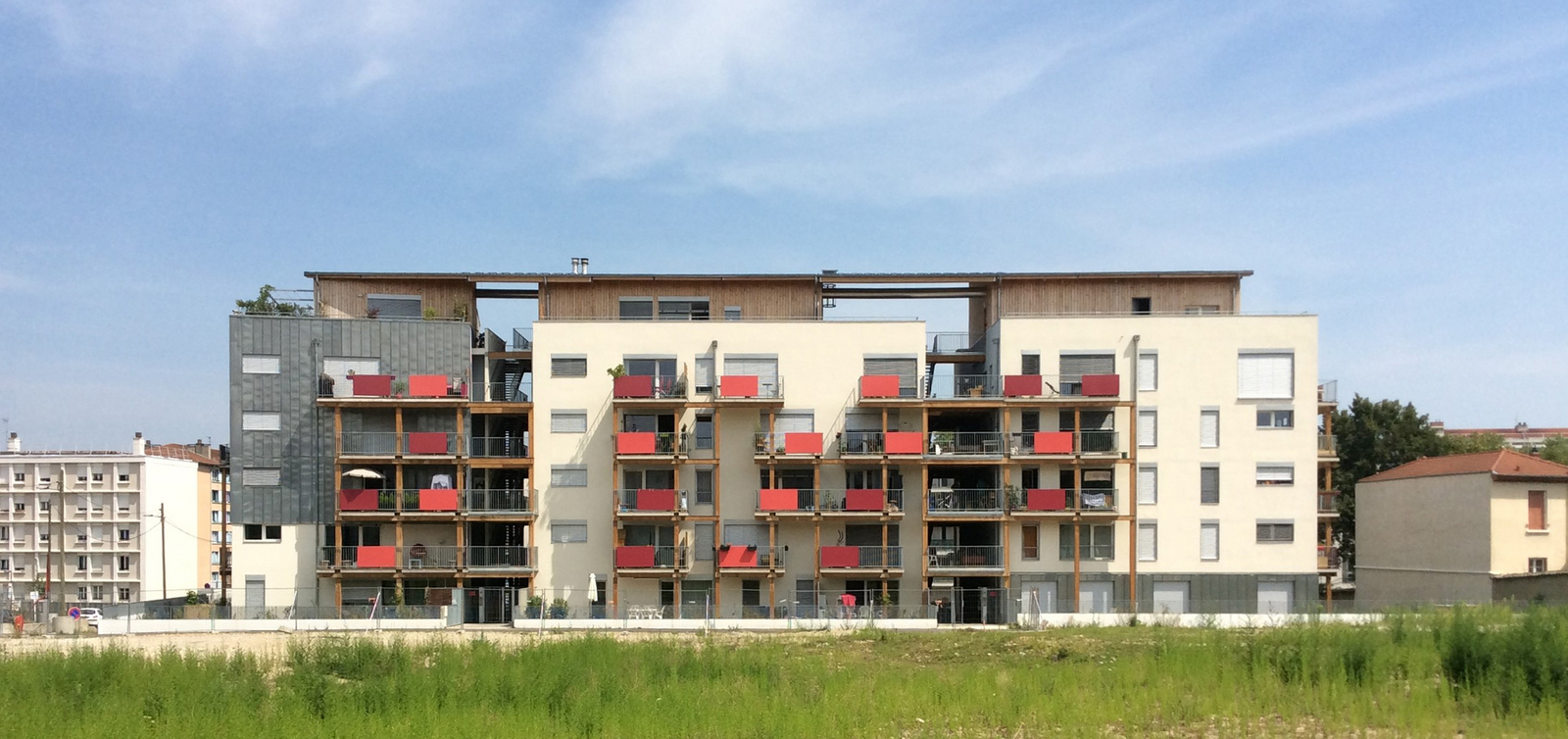
Village Vertical in Villeurbanne is where the modern French residents' cooperative began. Four families started the project in 2005 with Habicoop as adviser, and Rhône Saône Habitat built and financed it. The building opened in June 2013 with 14 cooperative homes, four of them for young people in social housing, beside 24 low-cost homes for sale. A Dublin School of Architecture study of cooperative housing systems holds it up as a European exemplar, alongside Zurich's Mehr als Wohnen.
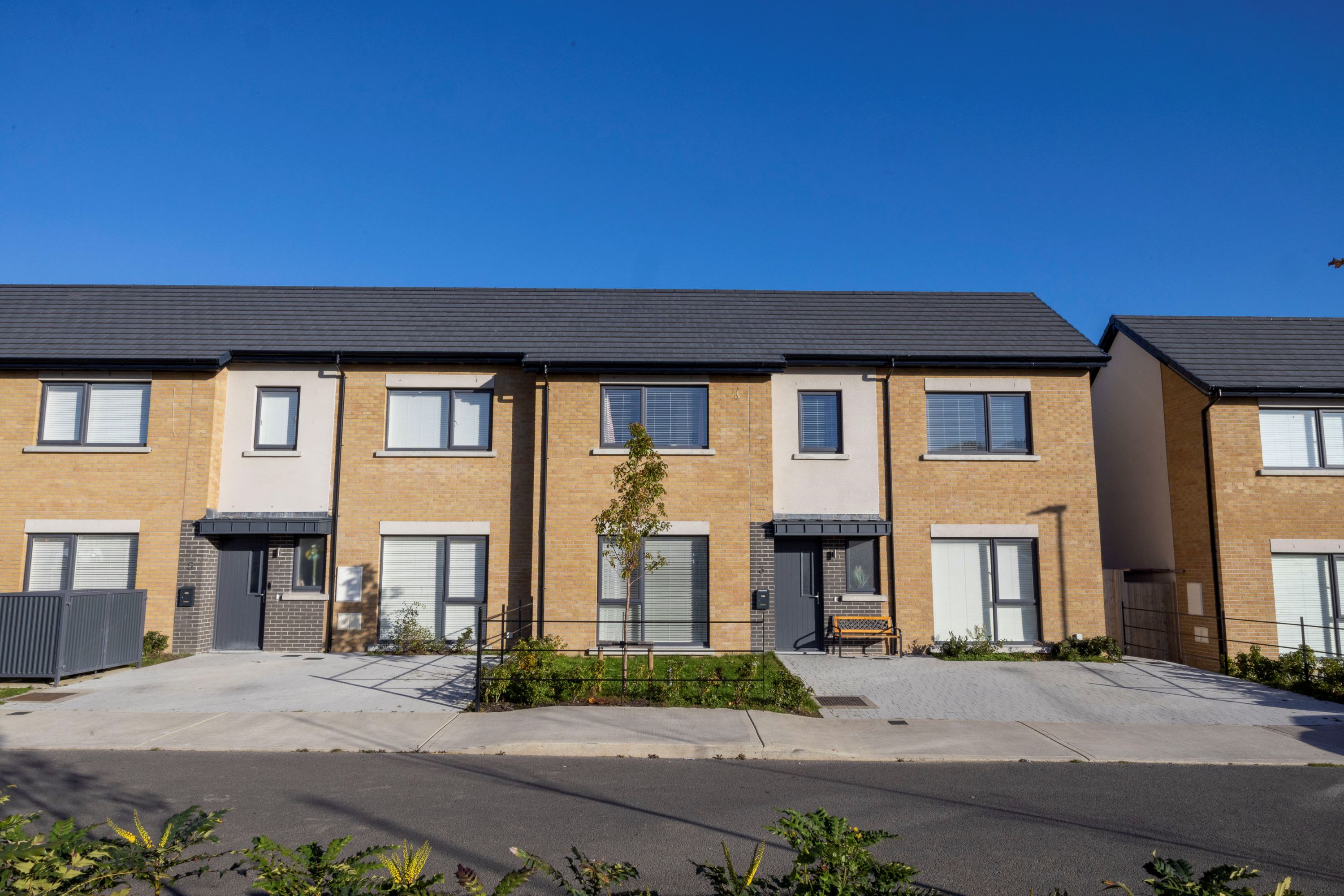
Le Carr'étoile in Bron shows the model reaching the suburbs. Households can join through the Habitat & Partage cooperative or buy directly at €2,950 per m², about 30 % below new-build prices. Habitat & Partage has also opened Les Bobines in Villeurbanne's L'Autre Soie quarter, with 19 homes in cooperative rental. New groups now start at La Fabrique de l'Habitat Participatif, the Métropole-backed hub whose annual fair matches would-be residents with projects and land.
The Foncière Solidaire du Grand Lyon is the largest cooperative-minded vehicle in the region. Created in November 2019, it had launched 482 homes under the bail réel solidaire by 2022, when it became a SCIC. Its ground rent is capped at €2 per m² a month. At Lyon Confluence, the former docks between the Rhône and the Saône, the Métropole has raised the share of social and permanently affordable homes to 60 %, a fifth of them under the same lease.
The Coopérative Logement d'Abord takes the cooperative form into the fight against homelessness. Its shareholders include the Métropole, Solidarités Nouvelles pour le Logement, HLM cooperatives and impact investors. It aims to raise €14 million by 2028 and to hold 350 renovated private flats within seven years. Housing for the Common Good sets it among ten European city case studies, and Energy Cities notes the backing of the Council of Europe Development Bank.
Lyon Métropole Habitat is the public landlord that will carry much of this. It manages 34,276 homes and delivered 526 new ones in 2025. GrandLyon Habitat, with 27,000 homes, traces its roots to 1920. Social housing here has a long lineage. It includes the Gratte-Ciel of Villeurbanne, a municipal workers' city of about 1,500 homes built between 1927 and 1934. It also includes La Duchère, where 1,711 old social flats were demolished and the quarter rebuilt around mixed tenure.
Lyon also exports what it learns. NETCO's peer-exchange report records Charlotte Grosdidier of the Métropole at a 2023 roundtable in Barcelona with officials from Brussels and The Hague. Lyon's residents' cooperatives are small, but they supplied France's legal model, and its land trust and solidarity cooperative are now watched well beyond the Rhône.
References
Statistics11Click on any number to see the source
Housing market
Adaptive reuse & vacancy
Population & migration
From our library16
- Regard sur les taux d'effort de locataires du parc privé lyonnais entre 2007 et 2020 — Knowledge
- À Lyon, les charges locatives ont atteint « un niveau record » dans les logements sociaux — Knowledge
- À la veille de la rentrée scolaire, 387 enfants dorment encore à la rue dans la métropole de Lyon — Knowledge
- L'accession à la propriété souvent impossible dans la Métropole de Lyon, en Haute-Savoie et dans le Genevois français — Knowledge
- Habicoop — Organisation
- La Fabrique de l’Habitat Participatif — Organisation
- How Collaborative Housing can respond to the European housing challenge — Knowledge
- NETCO Network of Cities for Collaborative Housing - 2023-2024 Peer Exchanges Policy Recommendations — Knowledge
- Le rapport favorable à l'encadrement des loyers qui embarrasse la Métropole de Lyon — Knowledge
- Foncière Solidaire du Grand Lyon — Organisation
- Housing for the Common Good: Rooting European Efforts in Local Approaches — Knowledge
- Tackling the Housing Crisis for Fairer, More Liveable and Resilient Cities — Knowledge
- New Economic Thinking - Enabling a just transition of the built environment in Europe — Knowledge
- Village Vertical — Project
- Co-operative Housing Systems – Lessons from Ireland — Knowledge
- Le Carr'étoile — Project
Further sources34
- La carte des logements sociaux — Métropole de Lyon
- Les catégories de logements sociaux — Métropole de Lyon
- Taux SRU 2025 de la Métropole de Lyon — Métropole de Lyon
- Baromètre de l’immobilier Rhône, janvier 2025 — Notaires du Rhône
- Logement neuf : la FPI Région lyonnaise dresse un bilan 2025 historiquement bas — Lyon Entreprises
- Municipales 2026 : le point à Lyon — Ipsos
- Municipales 2026 : résultats du 2e tour — Ville de Lyon
- Véronique Sarselli, nouvelle présidente de la Métropole de Lyon — Métropole de Lyon
- Nomination du Gouvernement — Élysée
- L’électrochoc Lecornu-Jeanbrun pour sortir 2 millions de logements d’ici 2030 — Banque des Territoires
- PLU-H : orientations — Métropole de Lyon
- La Ville de Lyon limite les Airbnb à 90 nuitées et renforce le logement social — LyonMag
- S’informer sur l’encadrement des loyers — Métropole de Lyon
- Encadrement des loyers : 24% des logements encore hors les clous — France 3 Auvergne-Rhône-Alpes
- Les maires de Lyon et Villeurbanne montent au créneau contre la possible fin de l’encadrement des loyers — Lyon Capitale
- Véronique Sarselli confirme vouloir supprimer l’encadrement des loyers — Mediacités
- La foncière solidaire du Grand Lyon change de statut — Métropole de Lyon
- Une coopérative créée pour lutter contre le mal-logement — Métropole de Lyon
- Taxe sur les logements vacants — collectivites-locales.gouv.fr
- La Métropole de Lyon exonère la taxe d’aménagement pour la transformation de bureaux en logements — Lyon Entreprises
- Lafayette : réhabilitation d’une tour IGH de bureaux en logements — Ministère de la Culture
- Décence énergétique des logements — ANIL
- Le partenariat RSH – Village Vertical — Rhône Saône Habitat
- Félix Mangini — Wikipedia
- Castors (mouvement coopératif) — Wikipedia
- La coopérative d’habitant·es — L’école du terrain
- S’informer sur l’habitat participatif — Métropole de Lyon
- Notre histoire — Habicoop
- Habitat participatif Les Bobines à Villeurbanne — Habitat & Partage
- Lyon Confluence — Métropole de Lyon
- Rapport d’activité 2025 — Lyon Métropole Habitat
- Notre patrimoine — GrandLyon Habitat
- Gratte-ciel (Villeurbanne) — Wikipedia
- Lyon La Duchère — Ministère du Logement