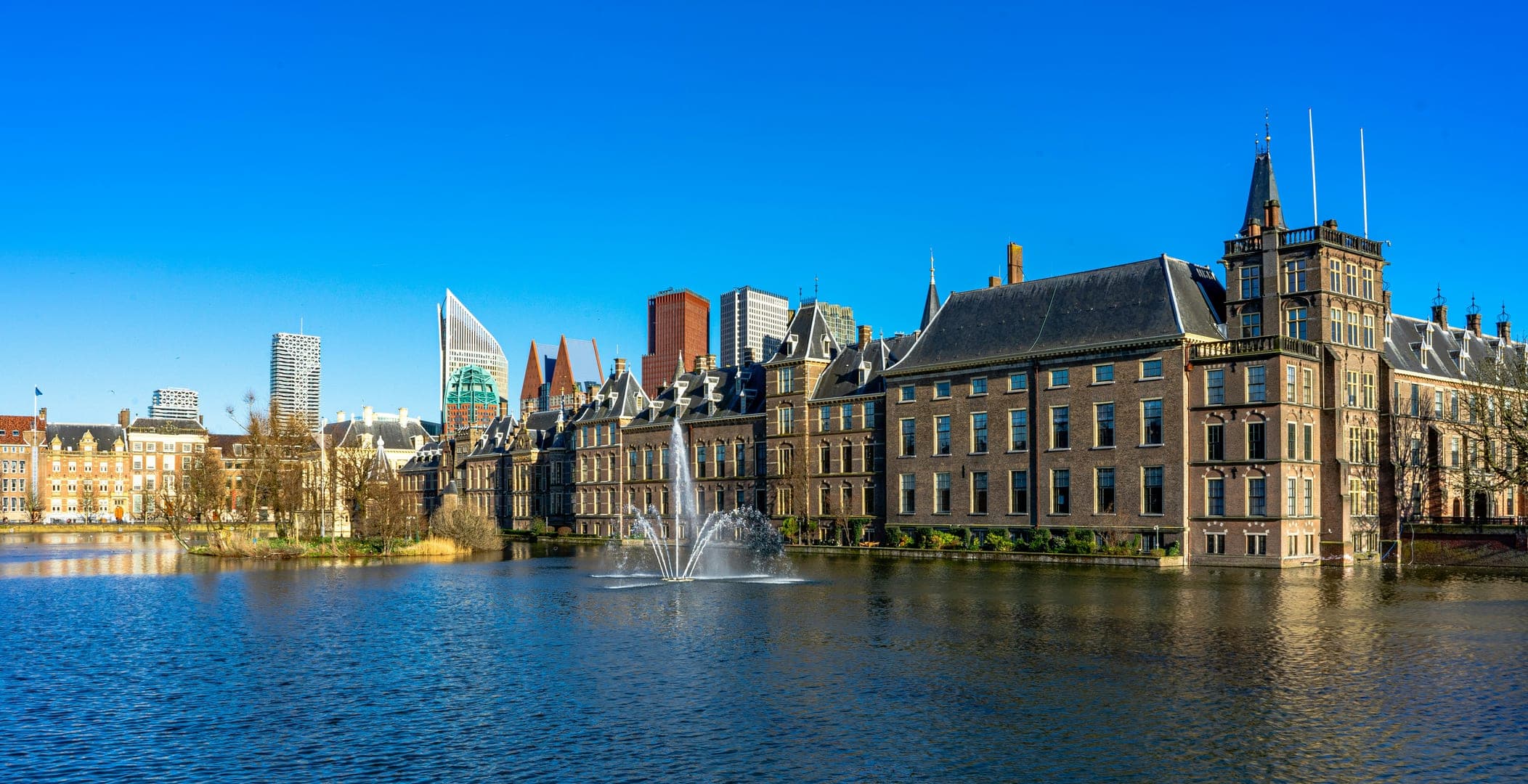
A courtyard city running out of room
The Hague was a village until 1806, when Louis Bonaparte finally granted it city rights. It had long housed a court, then a government, and it grew by lodging the people who served them. By the late 19th century 700 hofjes, the city's small courtyard terraces built around a shared garden, held a quarter of all homes in town. That habit of building for a community rather than a single buyer is the thread this portrait follows into today's shortage.
Tenants dominate the city. 64% of homes are rented and 36% are owner-occupied. The non-profit housing associations, or woningcorporaties (independent social landlords regulated by national law), own 32% of the stock, about 88,000 homes. The biggest landlord is Staedion, which says one in seven Hague homes is theirs; Hof Wonen has run the Hague part of the former Vestia since that troubled association was split in 2023. Private landlords hold roughly 32%. Cooperatives round to 0%, with 1 organisation on the national network's member list.

- Owners
- Owner-occupier36.0%
- Renters
- Public & non-profit rental32.0%
- Cooperative0.00%
- Private rental32.0%
Social housing in the Dutch sense is a rent and income rule rather than a separate owner. About 36% of Hague homes are let at a regulated social rent, spread across association and private stock. Roughly 48% of households earn little enough to qualify. The two figures sit side by side, but they describe a queue rather than a match.
Rents climb steeply with the age of the contract. Association tenants pay about €7.95 per m² a month. The catalogue's cooperative benchmark, a national housing-association proxy since the city has no cooperative sector to measure, is €9.31. The median across all stock is €10. A new private let asks €21.92, and a furnished flat about €24. Anyone who moves pays more than double what a sitting tenant pays for the same square metre.
- Public / housing association
- Cooperative (national benchmark)
- All-stock median
- New-let private
- Furnished
Net-cold rents per m² except furnished (gross). The cooperative point is a national benchmark, not a Hague measurement.
Empty homes are scarce. Residential vacancy runs at 1.9%, about 5,200 dwellings, and full-time short lets are estimated at 350 units. Offices tell another story. Their vacancy rate is 3.1%, and some 0 m² of office floor stands empty across the Hague region.
Demand keeps arriving. About 33,500 people move to the city each year, many drawn by the 520 international organisations in the region. Construction started on roughly 3,300 homes in 2025, short of the city's 4,000-a-year ambition. Since the Wet betaalbare huur (the Affordable Rent Act) took effect in July 2024, mid-priced private rents have also been capped by a national points system.
The crisis reaches well beyond the poorest. A 2026 study of the Hague market by ABF Research puts the regional shortage at 6.7% of stock, against 4.8% nationally. The chance of landing a social home fell from 13% to 10.4% in a single year, and the tightest segments include mid-rent and cheaper owner homes, the middle-class rungs. More than 206,000 people are registered with Woonnet Haaglanden, the regional social-housing portal, and the wait is about seven years. Nationally, private tenants spend 30% of income on housing, and young starters in private lets 35.1%, against 16.3% for owners. The public reads it as a crisis too: 87% of Dutch adults say so, and housing tops the list of political issues for 49% of voters. Follow the Money's investigation Unaffordable housing is the main election issue, but no party is tackling the cause argues that mortgage credit, not construction, drives prices.
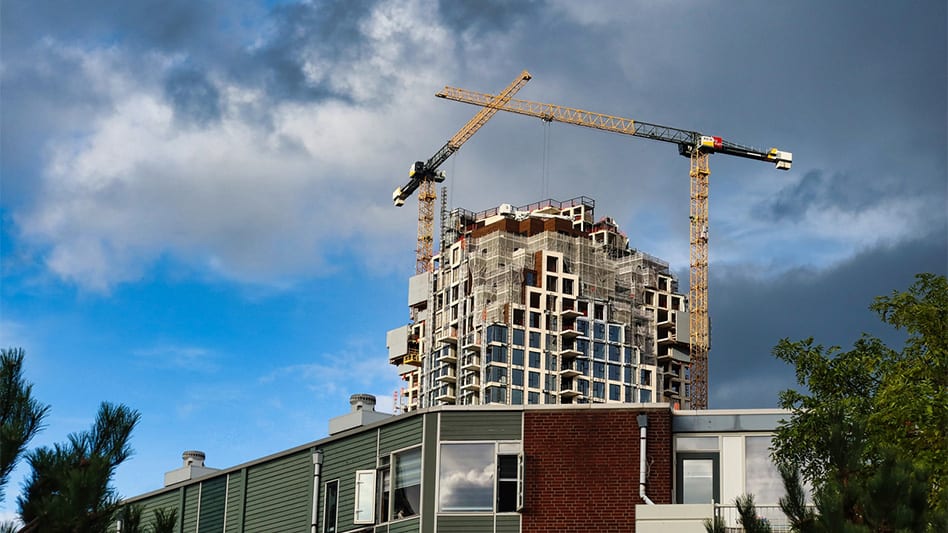
Against that backdrop the cooperative sector is almost invisible in the tenure figures, which makes its few Hague examples worth a closer look.
Cooperatives before the word existed
A Dutch wooncoöperatie (housing cooperative) is an association of residents that owns or manages its homes collectively. The term has been in the Woningwet (the national Housing Act) since 2015. Two forms matter. In a beheercoöperatie (management cooperative) tenants run their block while an association keeps ownership. In a vastgoedcoöperatie (property cooperative) members own the building together and let the homes to themselves at cost. In the rental form members hold a membership share rather than their own flat, which keeps the homes out of resale.
The form is old in The Hague even if the word is new. The Housing Act of 1901 funded approved housing associations, and the Hague association Volksbelangen was among the first two approved, in July 1904. Most of those member associations later merged into professional landlords; Staedion itself formed from three of them in 1999. One survivor keeps the original spirit. The Coöperatieve Woningbouwvereniging Tuinstadwijk Daal en Berg still runs the listed Papaverhof estate of 128 homes, more than a century after its founding. Around it, the city's hofjes kept the idea of shared courtyards alive: about 115 still stand.
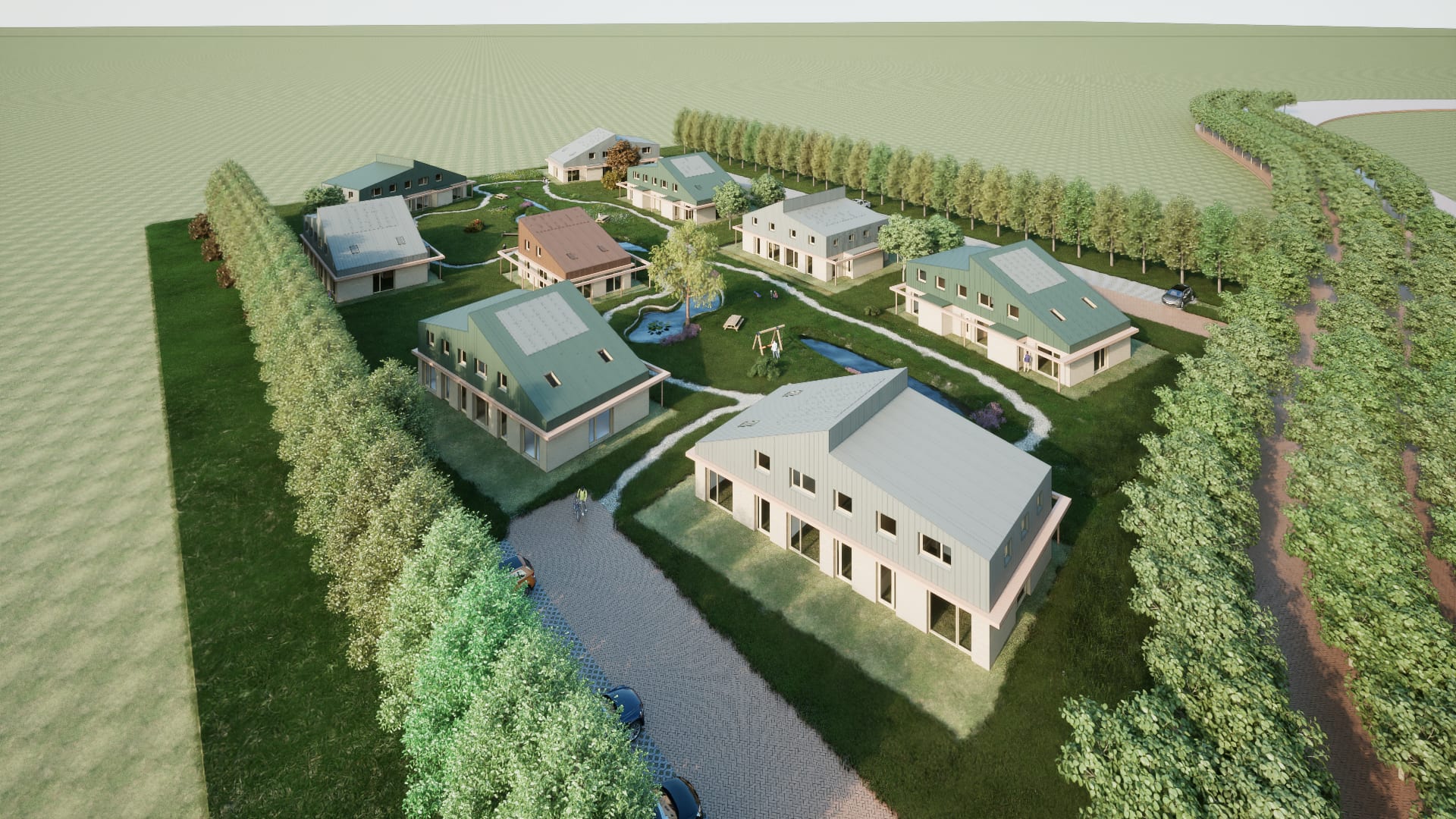
Today's sector falls into three clusters. The first is historic: Daal en Berg and a handful of hofje foundations with ageing buildings and heritage rules to match. The second is tenant buy-outs, led by Wooncoöperatie Roggeveenstraat, whose residents bought 65 homes from Haag Wonen in 2017. The third is new-build groups: collective self-build (CPO, where future residents commission the building themselves) and initiatives such as Knarrenhof Den Haag. They face different problems. The historic group needs retrofit money, the buy-outs need patient loans, and the newcomers need land. A multi-level policy analysis of Dutch cooperatives from Eindhoven University of Technology finds the same split between legal fit and access to capital. A TU/e thesis on the demand for housing cooperatives in the Netherlands finds monthly cost is what draws younger renters.
With this we are really trying to set a movement in motion and give system change a push.Government now treats cooperatives as a small but deliberate part of the affordable mix. The national Fonds Coöperatief Wonen (cooperative housing fund) has €60.6 million with SVn, the municipalities' housing lender, for projects of 12 to 100 homes. The Hague has set aside €3 million of its own to co-finance or guarantee cooperatives. Whether those lines turn into land is a political question.
A building coalition under a national rulebook
The Hague changed course in July 2026. A coalition of the local party Hart voor Den Haag, the liberal VVD, the Christian-democrat CDA and DENK presented a programme promising 4,000 homes a year. Kavish Partiman (CDA) became the wethouder (alderman) for housing. The left opposition says the share of social rent in new building drops to 25%; the agreement's own headline is volume and 'flow' towards homes that fit each life stage.
This agreement does justice to the election result and means a new course, even a political upheaval, for the municipality of The Hague. We are going to build, tackle and invest.This agreement rolls out the red carpet for investors, while ordinary residents of The Hague have to wait longer for an affordable home, good care and financial security.The biggest levers sit in national law. The Wet versterking regie volkshuisvesting (Act strengthening public direction of housing) took effect on 1 July 2026. It requires 30% of new building to be social rent and every municipality to publish a housing programme by 1 July 2027. Minister Elanor Boekholt-O'Sullivan, a former senior military officer profiled by the Guardian in 'Luxury takes time. We don't have time', wants 100,000 homes a year, two-thirds of them affordable. The city decides where. The housing associations deliver much of it through performance agreements with the city.

For cooperatives the city has its own instrument. The Stimuleringsplan Innovatieve Woonvormen (stimulus plan for innovative housing forms) aims for 100 homes a year in cooperatives, CPO and group living, backed by nearly €5 million to 2027. Martijn Balster, then alderman for housing, called them 'hofjes nieuwe stijl', new-style courtyards. He also argued, in the Green European Journal interview Land Policy in Practice: A Tale of Two Dutch Cities, that the city must rebuild active land policy and hold land on leasehold. The Hague showed the plan to European peers at a NETCO session, summarised in Why and how cities can promote affordable and sustainable Collaborative Housing. Nationally, the Wet bevordering wooncoöperaties (Housing Cooperatives Promotion Act) passed the Tweede Kamer, the lower house, on 30 June 2026 and now waits in the Eerste Kamer, the Senate.
Vacancy gets a slower answer. Owners of a home empty for more than 6 months will have to report it, but the rules are now expected in early 2027, a year later than first announced. GroenLinks councillor Vincent Thepass had called vacancy during a shortage 'criminal'. Since 2022 the opkoopbescherming (buy-to-let ban) has barred investors from buying homes with a tax value up to €470,000 to let them. Office conversion is slowing: The Hague turned only 180 homes out of other buildings in 2024, against 300 a year earlier. TU Delft's Adaptive Reuse for Housing shows what finance and permits hold such schemes back.
Climate targets run through the same buildings. The city wants every home well insulated before 2050 and heated without gas, with a heat programme due in 2027. The national insulation programme targets 2.5 million homes by 2030, starting with the worst energy labels. Housing associations and cooperatives are where those retrofits can be planned block by block.
- 1895[source]
The courtyard city
The Hague counts 700 hofjes with 9,500 homes, a quarter of the housing stock.
- 1904[source]
Volksbelangen approved
A Hague housing association is among the first two approved under the Housing Act.
- 2015[source]
Cooperatives enter the Housing Act
The Woningwet defines the wooncoöperatie for the first time.
- 2017[source]
Roggeveenstraat buy-out
Tenants agree to buy their 65 homes from Haag Wonen at half the market price.
- 2023[source]
Vestia split; stimulus plan
The city launches a €5 million plan for cooperatives, collective self-build and group living.
- 1 July 2024[source]
Affordable Rent Act
Rent regulation extends to mid-priced homes; rents on more than 300,000 homes fall.
- January 2026[source]
Cooperative housing fund
€60.6 million goes to SVn to lend to cooperative projects.
- 30 June 2026[source]
Cooperatives bill passes the lower house
The Wet bevordering wooncoöperaties moves to the Senate.
- July 2026[source]
National direction and a new coalition
The Act strengthening public direction of housing takes effect with a 30% social-rent rule; the new Hague coalition targets 4,000 homes a year.
- 2027[source]
Housing programme and vacancy rules
Municipal housing programmes are due by 1 July 2027; the Hague vacancy reporting duty is expected early in the year.
- 2030[source]
National insulation goal
2.5 million Dutch homes insulated.
- 2040[source]
Zuidwest renewal
Staedion plans 5,000 new affordable homes in Zuidwest.
- 2040[source]
Central Innovation District
The district around the central stations is planned to add 20,500 homes.
- 2050[source]
Gas-free, insulated city
Every Hague home well insulated and heated with clean energy.
From the courtyard city to national direction and the insulation deadline.
From hofje to cooperative street
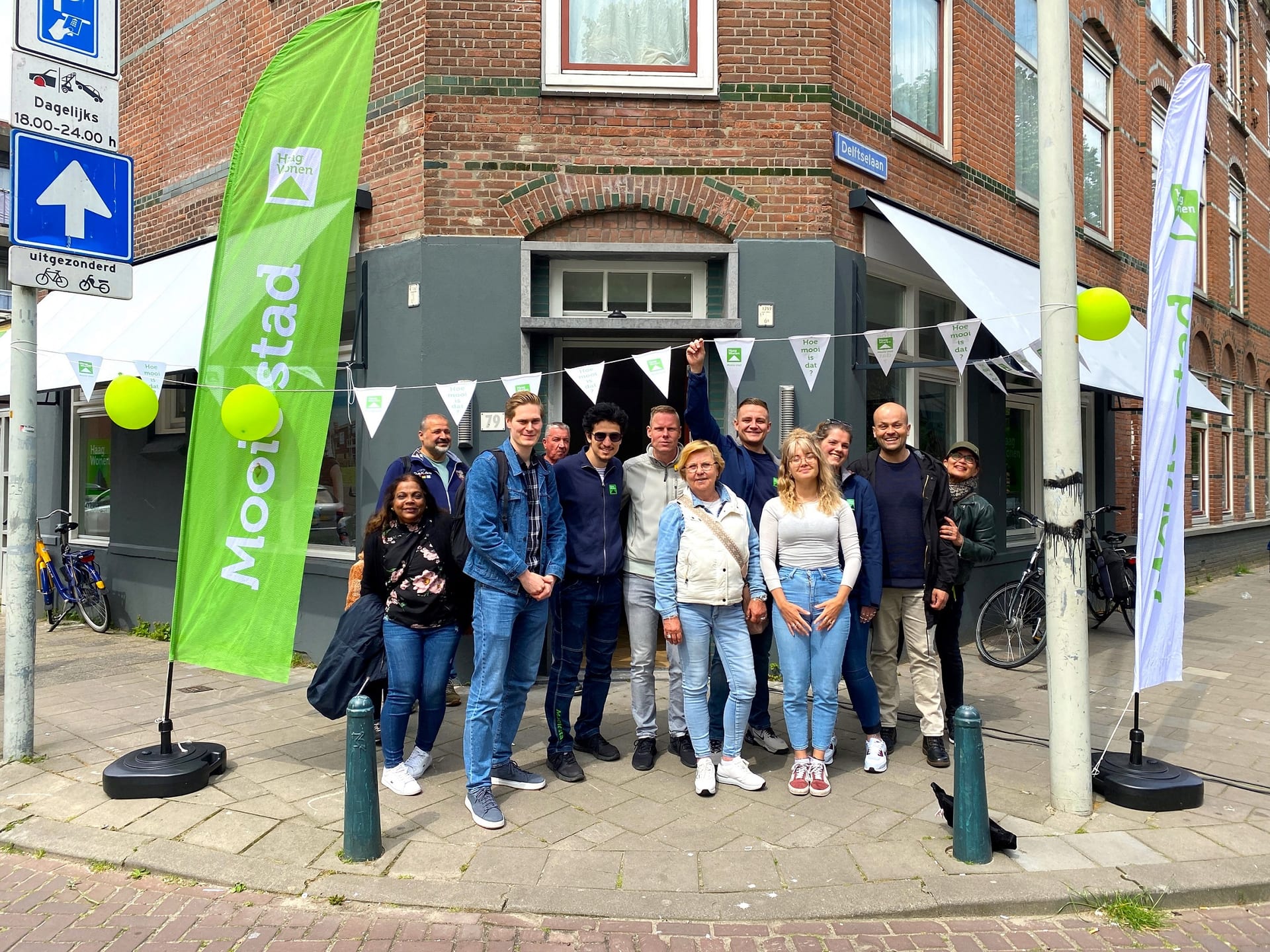
Wooncoöperatie Roggeveenstraat is the city's proof that tenants can own their street. Residents of 65 late-19th-century houses in the Zeeheldenkwartier spent three years on a €2.5 million deal. Haag Wonen charged 50% of market value, and sector experts called it a first. The woonvereniging (residents' association) has owned the houses since 1 January 2019 and renovates them together. In March 2025 its garden hosted the launch of the national cooperatives bill, presented by the SP and Cooplink, the knowledge network for Dutch housing cooperatives.
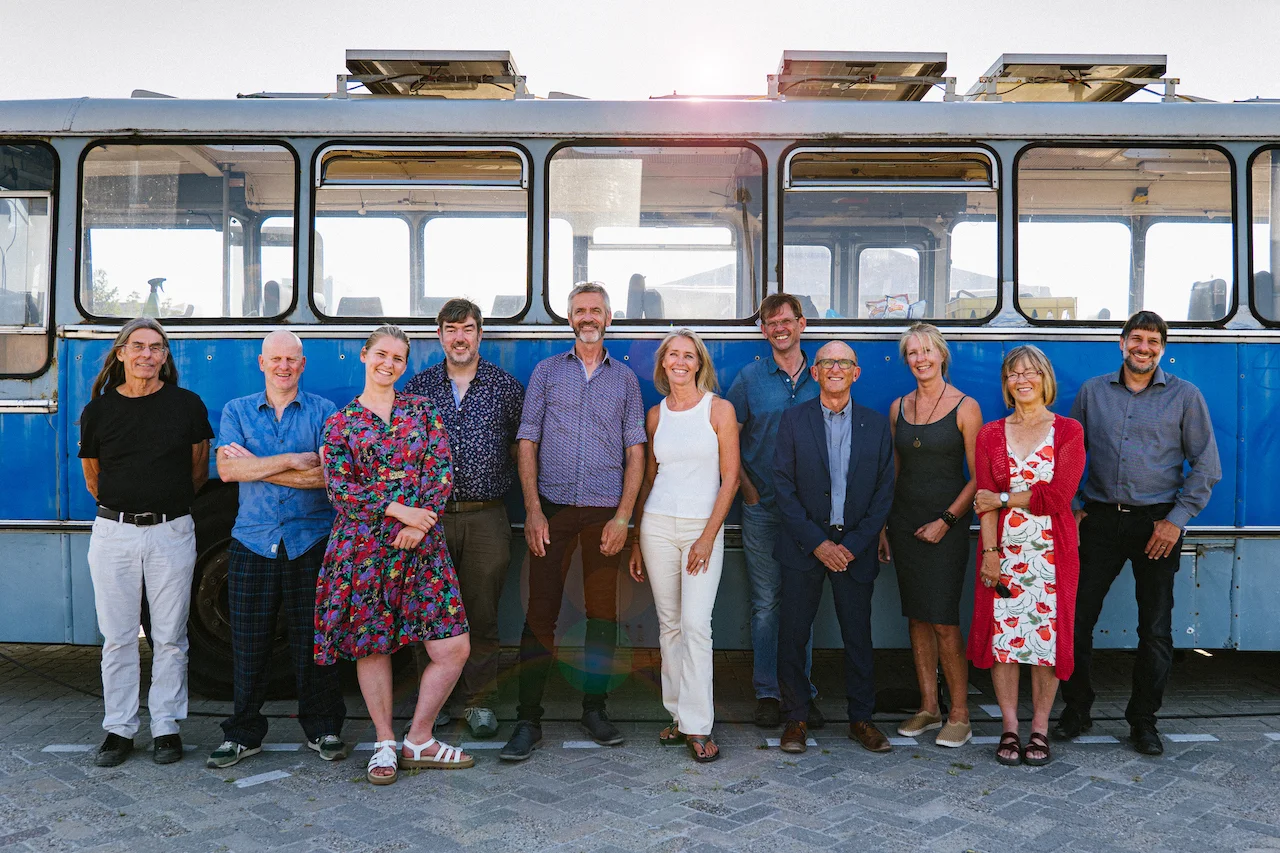
The Papaverhof, run by the Coöperatieve Woningbouwvereniging Tuinstadwijk Daal en Berg, shows how long the form can last. Its 128 homes form a listed garden-village ensemble, still cooperatively managed. The city's stimulus plan holds it up as a model.
De Groene Mient in the Vruchtenbuurt opened the collective self-build route in 2016. Its 33 sustainable owner-occupied homes were the first large CPO new build in The Hague. The residents commissioned the building themselves, which the city now wants to repeat every year.
Knarrenhof Den Haag is the test of whether the city can deliver land. The initiative plans courtyards of 25 to 45 homes mixing social rent and affordable purchase for older and younger residents. More than 600 people have registered. In July 2026 the city named Tarwekamp 3 in Mariahoeve as a possible site and began a feasibility study.
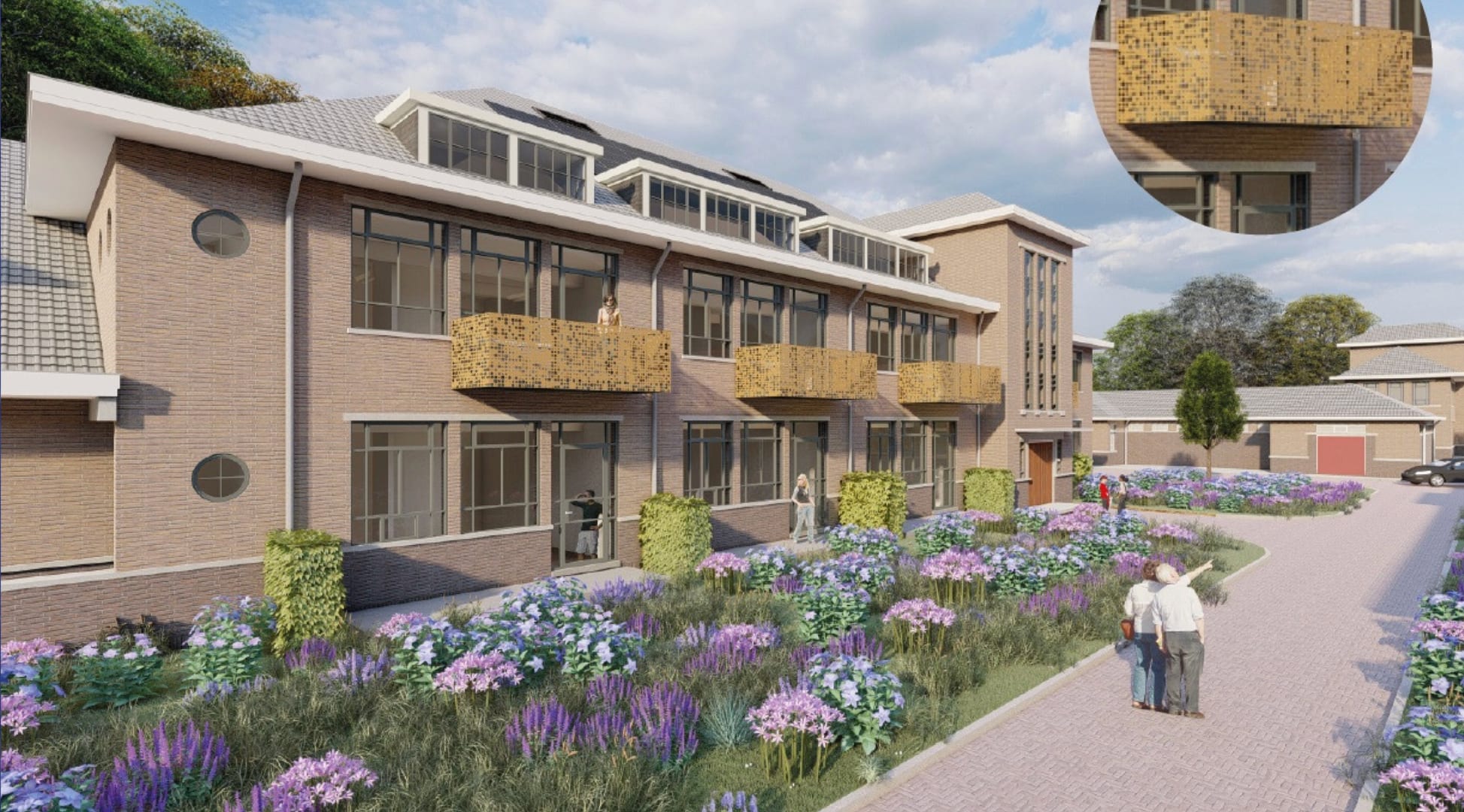
Staedion's renewal of Zuidwest is the largest bet on the non-market tier. The association is renovating about 2,500 homes in the south-west districts and will build 5,000 new affordable ones by 2040. Hof Wonen brings more than 19,000 regional homes into the same agreements.
The Binckhorst, an old industrial estate with three inner harbours, is where the city's empty workspace meets its housing need. Its zoning plan allows 5,000 extra homes, and with the Central Innovation District the wider area should gain more than 30,000. If a slice of those plots went to cooperatives on leasehold, the Hague courtyard could return at district scale.
References
Statistics15Click on any number to see the source
Housing market
Tenure & affordability
Cooperative, social & public
Adaptive reuse & vacancy
Population & migration
From our library15
- Staedion — Organisation
- Hof Wonen — Organisation
- Onderzoek: Haagse woningmarkt knelt vooral in betaalbare segmenten — Knowledge
- Unaffordable housing is the main election issue, but no party is tackling the cause — Knowledge
- Wooncoöperatie Roggeveenstraat — Project
- Haag Wonen — Organisation
- Knarrenhof Den Haag — Project
- Strengthening Cooperative Housing in the Netherlands - A Multi-Level Policy Analysis in Comparative Perspective — Knowledge
- The demand for housing cooperatives in the Netherlands — Knowledge
- ‘Luxury takes time. We don’t have time’: The former top military officer on a mission to fix the Dutch housing crisis — Knowledge
- Stimuleringsplan Innovatieve Woonvormen 2023-2027 — Knowledge
- Land Policy in Practice: A Tale of Two Dutch Cities — Knowledge
- Why and how cities can promote affordable and sustainable Collaborative Housing — Knowledge
- Adaptive Reuse for Housing — Knowledge
- cooplink — Organisation
Further sources34
- Nieuwe coalitie presenteert plannen voor de stad — Gemeente Den Haag · 2026-07-10
- Nieuw Haags coalitieakkoord oogst lof en felle kritiek — 070online · 2026-07-10
- Van piepkleine woning tot zeven jaar wachttijd — Omroep West · 2026-03-09
- Sociale Verhuurders Haaglanden bouwen om woningtekort aan te pakken — Rodi · 2025-10-12
- Aandeel woonlasten in inkomen hoogst voor starters in private huurwoning — CBS · 2026-06-16
- Woningmarkt houdt kiezers bezig — Ipsos I&O · 2025-10-16
- Kabinet deelt plannen voor volkshuisvesting en ruimtelijke ordening — Rijksoverheid · 2026-04-24
- Wet versterking regie volkshuisvesting van kracht vanaf 1 juli — Rijksoverheid · 2026-06-23
- Wet betaalbare huur aangenomen en van kracht vanaf 1 juli — Rijksoverheid · 2024-06-25
- Gemeente wil vijf miljoen investeren in collectieve woonvormen — Den Haag FM · 2023-11-06
- Ontwikkelingen Binckhorst — Gemeente Den Haag
- Central Innovation District — Gemeente Den Haag
- Zuidwest — Staedion
- Opkoopbescherming in Den Haag — Gemeente Den Haag · 2026-06-05
- Aanpak leegstaande woningen — Gemeente Den Haag · 2026-09-15
- Vanaf 2026 handhaving op leegstand — Den Haag FM · 2024-11
- Transformatie leverde vorig jaar weer minder woningen op — Vastgoed Actueel · 2025-11-04
- Denk mee over aardgasvrije warmte in Den Haag — Gemeente Den Haag · 2026-08-18
- Nationaal Isolatieprogramma — Volkshuisvesting Nederland
- Splitsing Vestia een feit — Volkshuisvesting Nederland · 2023-03-13
- Huurders in Den Haag kopen eigen straat — NOS · 2017-06-01
- Woonvereniging Roggeveenstraat — Woonvereniging Roggeveenstraat · 2017-11-27
- Wet Bevordering Wooncoöperaties — Cooplink · 2026-09
- Wet bevordering wooncoöperaties aangenomen door Tweede Kamer — Rijksoverheid · 2026-06-30
- Initiatiefvoorstel-Beckerman Wet bevordering wooncoöperaties (36.780) — Eerste Kamer · 2026-09-22
- Fonds Coöperatief Wonen gaat financiering wooncoöperaties mogelijk maken — Rijksoverheid · 2026-01-19
- Wooncoöperatie — Volkshuisvesting Nederland
- Nieuwe wet maakt wooncoöperatie beginnen makkelijker — NOS · 2026-07-05
- Woningwet 1901 — Canon Volkshuisvesting
- Hofjes in Den Haag — Haags Historisch Museum
- Lijst van hofjes in Den Haag — Wikipedia
- Nieuw Knarrenhof aan Tarwekamp in Den Haag stap dichterbij — Dagblad070 · 2026-07-15
- Ruim 500 internationale organisaties — Gemeente Den Haag · 2026-06-30
- The Hague — Wikipedia