Let's tackle Europe's Housing Crisis, together!
We've set out to build a network of cooperative, sustainable homes across Europe — one we shape and own together. Join us on this thrilling adventure!
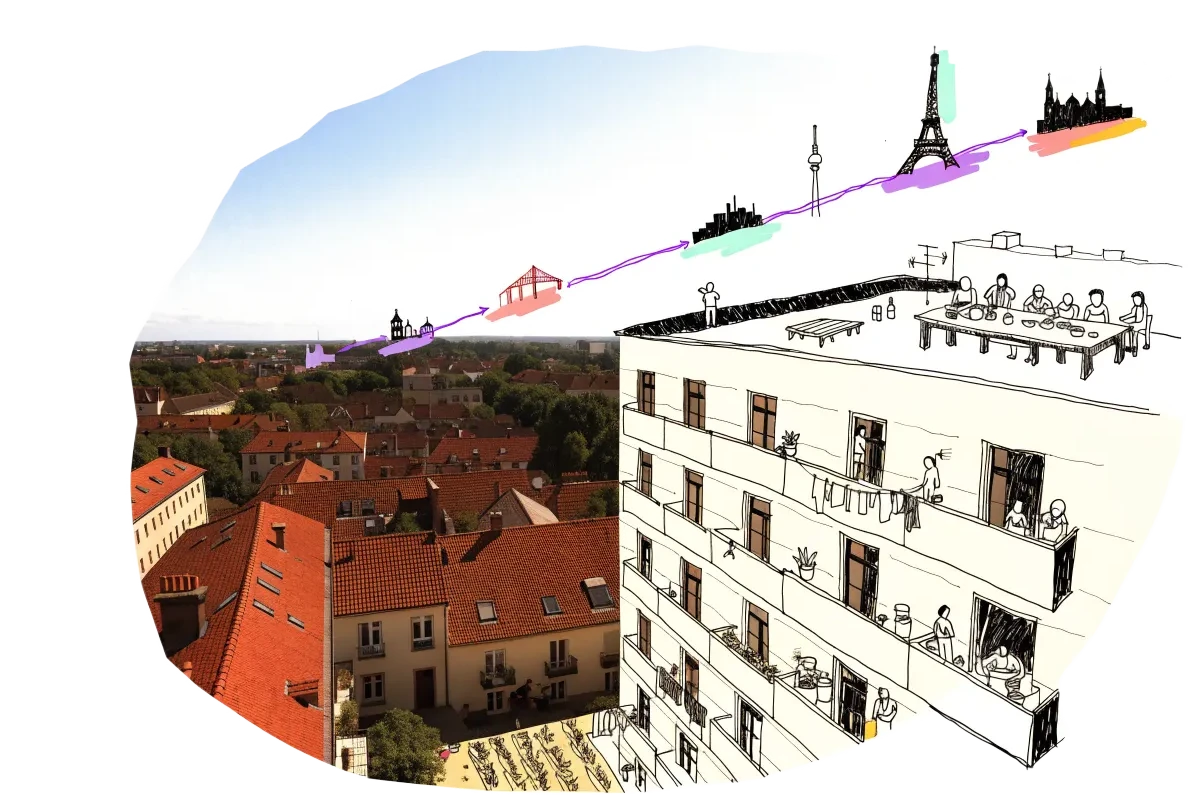
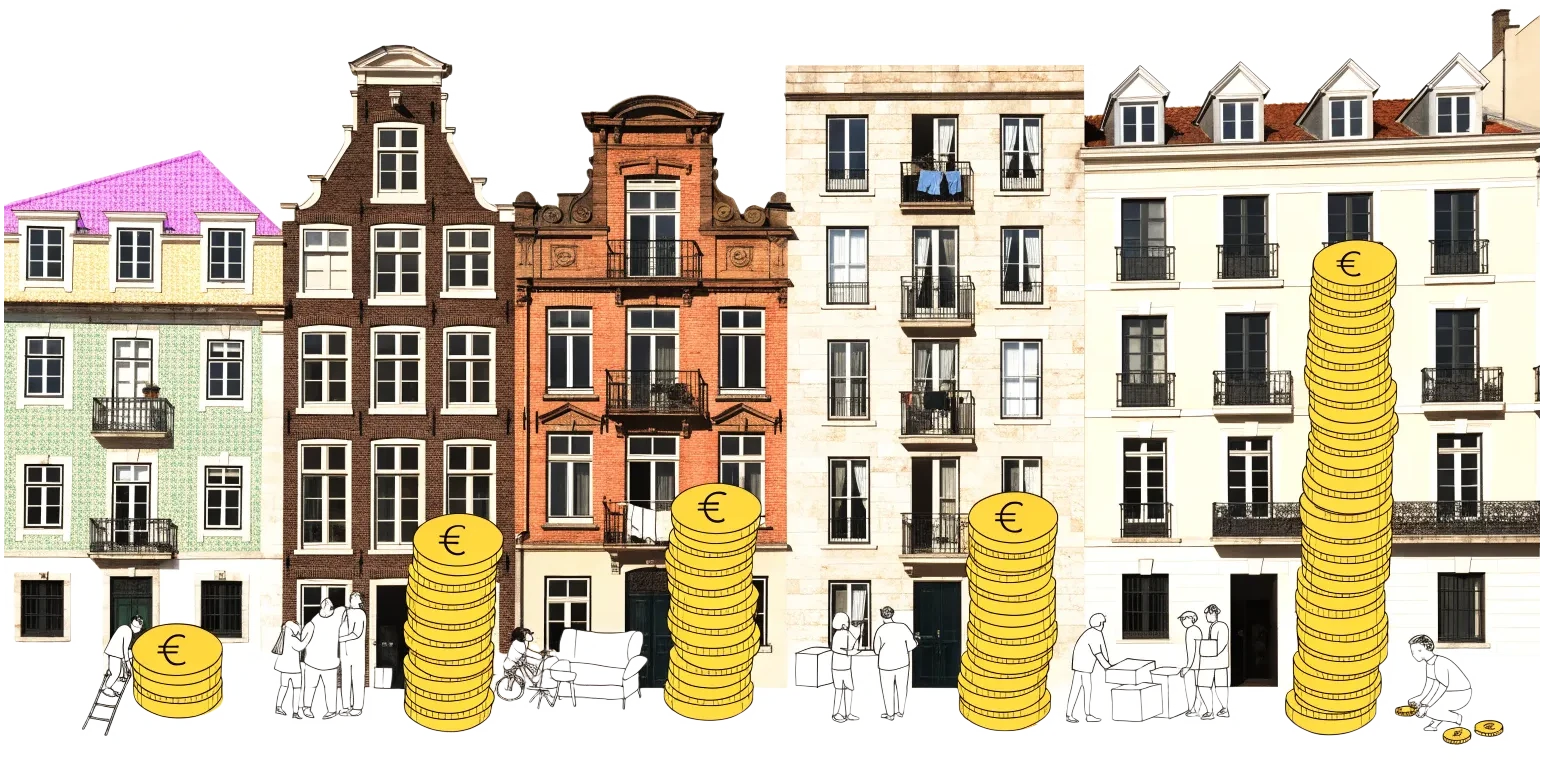
It stopped being a headline and moved in next door
The housing crisis has been in the news for years. But if you live in a city people want to live in, it has stopped being a number and become a sentence you hear from neighbours, colleagues and friends — maybe lately from yourself: this city has become unaffordable, even on a decent income.
And it is tangled up with the climate crisis. Buildings use around 40% of the energy Europe consumes, our cities get hotter every summer, and the quick answer to a shortage — build new, on the edge of town — adds concrete, commuting and emissions to the problem. So the question is not only how to house more people. It is how to make city living add up economically, ecologically and socially, all at once.
The squeeze pulls at something bigger, too: the idea of a Europe where you can live wherever the work, the love or the adventure is calling you. The good news is that nobody designed this. It is the sum of a great many human decisions — and if there's a door in, there's a door out.
A nurse on their own in Berlin, signing a lease today
10thof every month: the day the rent is finally paid
Signed years ago: done by the 6th. Signed today: the 10th. Affordable would be the 9th.
Take-home €3,374 a month · a 55 m² flat signed today €1,057, years ago €579 — service charges and heating included
- Nurse, on their ownthe 10th
- Teacher, starting outthe 11th
- Median family of fourthe 9th
Across Europe: in 85 of 120 cities, a nurse on their own works past the 9th to pay a new rent.
- by the 9th — affordable
- 10th–15th
- 16th–22nd
- 23rd or later
How we worked this out
Rent is the economic model’s asking rent for new lets in each city, per m², plus service charges and heating from our city data — a 55 m² two-room flat for a nurse or a teacher on their own, the model’s 85 m² family home for the family. “Signed years ago” uses the city’s average rent across all existing leases, shown only where it is clearly the lower of the two.
Pay is take-home, 2025. Nurses: average pay of a hospital nurse (OECD Health Statistics), carried to 2025 with average-wage growth where the latest figure is older. Teachers: statutory salary of a public primary teacher at the start of the career or after 15 years (OECD Education at a Glance), by UK nation and Belgian community where the scale is set there. After tax and social contributions for a single person (OECD Taxing Wages; Eurostat for Bulgaria and Croatia). The family is two adults and two children on the national median disposable income (Eurostat), scaled to the household on Eurostat’s own equivalence scale — the income the economic model uses.
These are national pay scales — which is the point: the pay is the same across a country, the rent is not. London is left out, because its London weighting is not in the national figures. The day is the rent’s share of a 30-day month; 9th = 30%, the usual line for affordable housing. carried from 2022 to 2025 with average-wage growth (OECD).
We are building the European Housing Coop
One of those doors has been open for 150 years. Housing cooperatives keep homes affordable from one generation to the next, because nobody is taking a landlord’s profit, and they give the people who live there the security that usually comes only with owning. They are not our idea, and they already work.
What they rarely manage today is to grow. In the cities that need them most, every new cooperative starts from zero — its own search for a building, its own legal set-up, its own bank to convince — and bids against buyers with far deeper pockets. So they stay small and local, while the need is European.
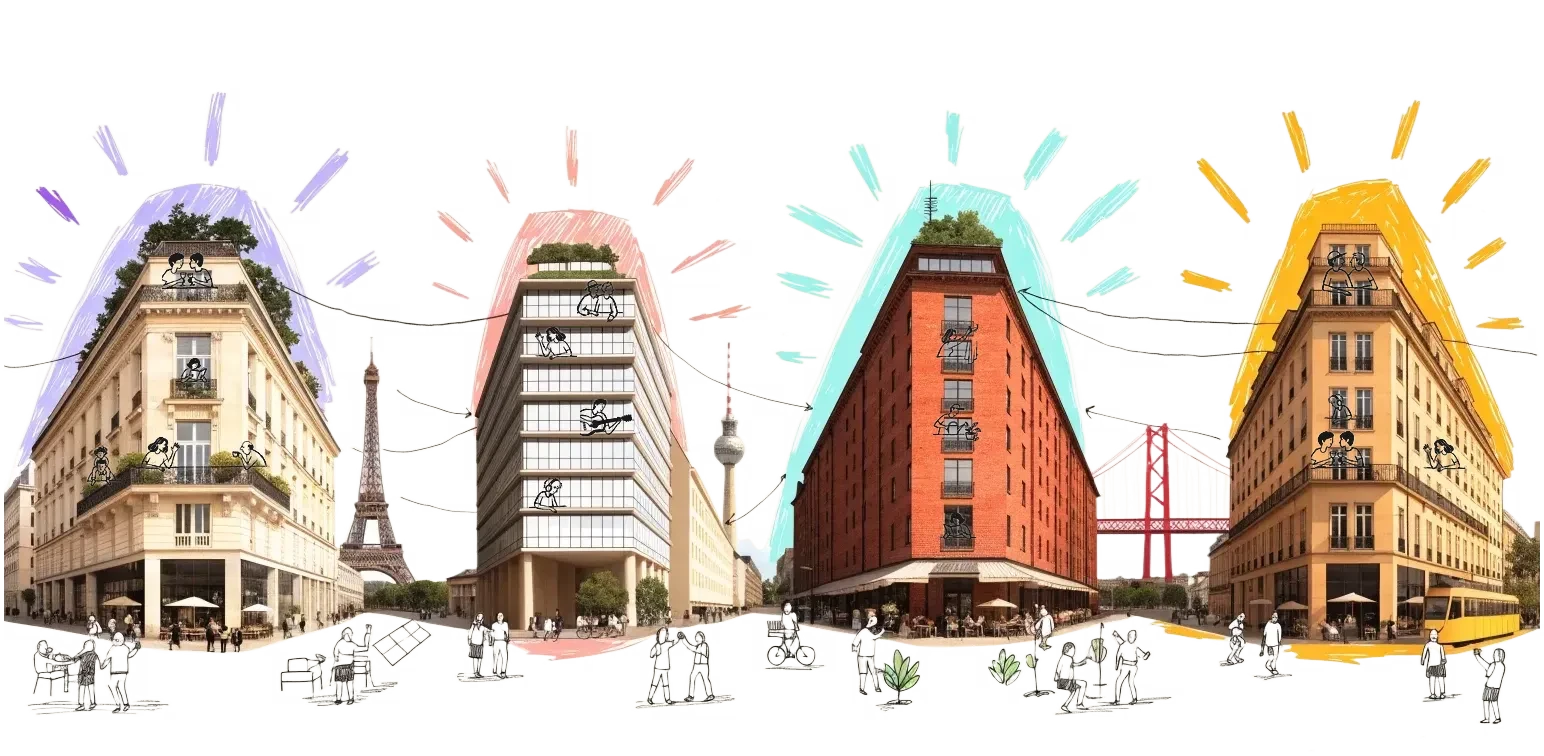
That is what we want to change. The European Housing Coop (EHC) is one umbrella cooperative for a growing network of homes across Europe, owned by its members: the people who live in the buildings, the local cooperatives who run them and the European companies who help build and supply them. Patient money comes in alongside, through an impact fund open to members and non-members alike, for a fair, capped return. We start with a few lighthouse projects for sustainable city living, each one part of a network that grows across Europe.
cooperative homes already stand in 21 European countries — as many as 22% in Sweden, 19% in Poland, 14% in Norway. The story of how they got there →
Empty buildings, full lives
We start where Europe has too much: office floors that have stood half-empty for years in the very cities where nobody can find a home. Together we turn them into homes, gardens and shared spaces — and hand them to the people who live there.
Every building that is finished helps pay for the next one. So each project makes the network stronger, instead of starting from zero.
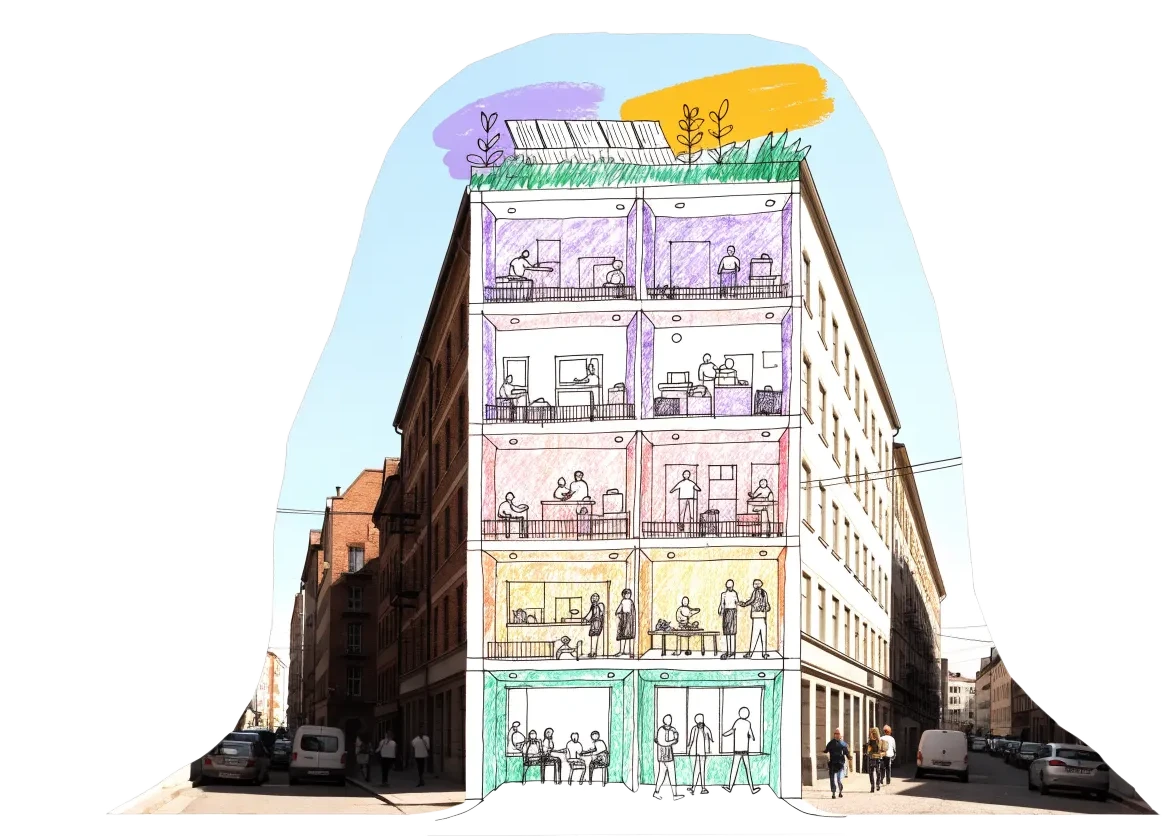
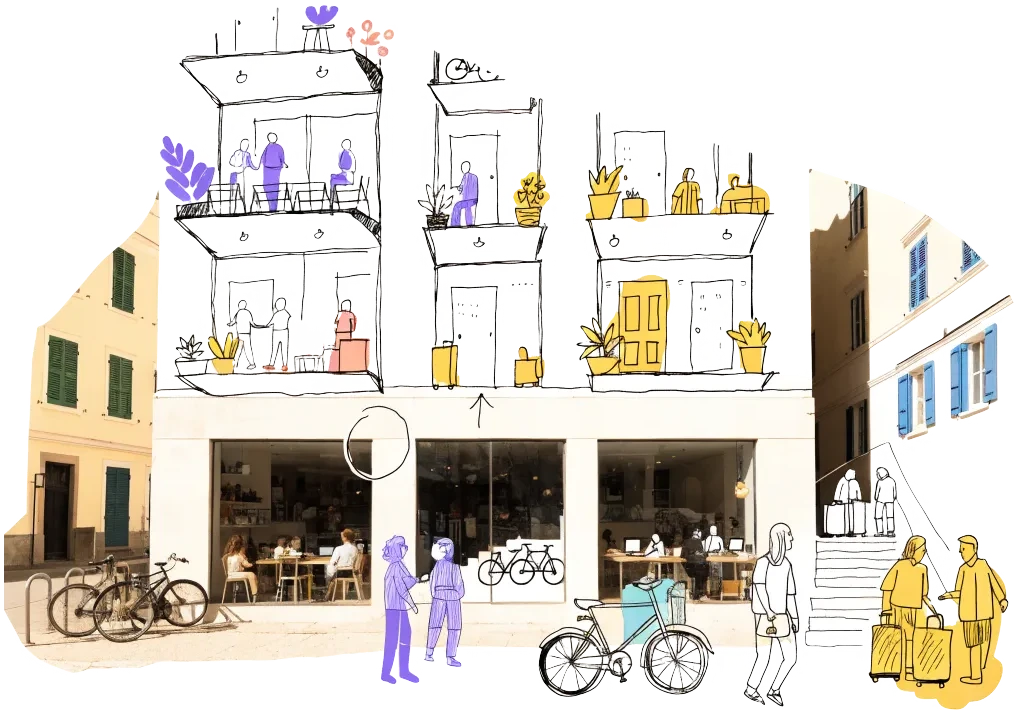
One building, about 7,000 m², top to bottom
- The roofA garden, solar panels and somewhere to eat outside together.
- Long-term homesCo-owned by the people who live in them, at a rent that follows cost.
- Furnished flatsFor stays of a few months — new jobs, studies, a first landing in a new city.
- Shared spacesA big kitchen, a room to work in, a corner for the children.
- The ground floorOpen to the street: a café, a workshop, a small shop — the building’s front door to the neighbourhood.
Your rent follows what the building costs, not the market
This is the projected rent for a long-term member of the European Housing Coop. It pays for the building: the loan, the upkeep, the running of it. The open market charges whatever people will pay. One rises with costs, the other with demand, so the gap grows every year you stay. Both include service charges and heating.
Show it for
Modelled for a first pilot building, in each year’s own money. Change the assumptions yourself
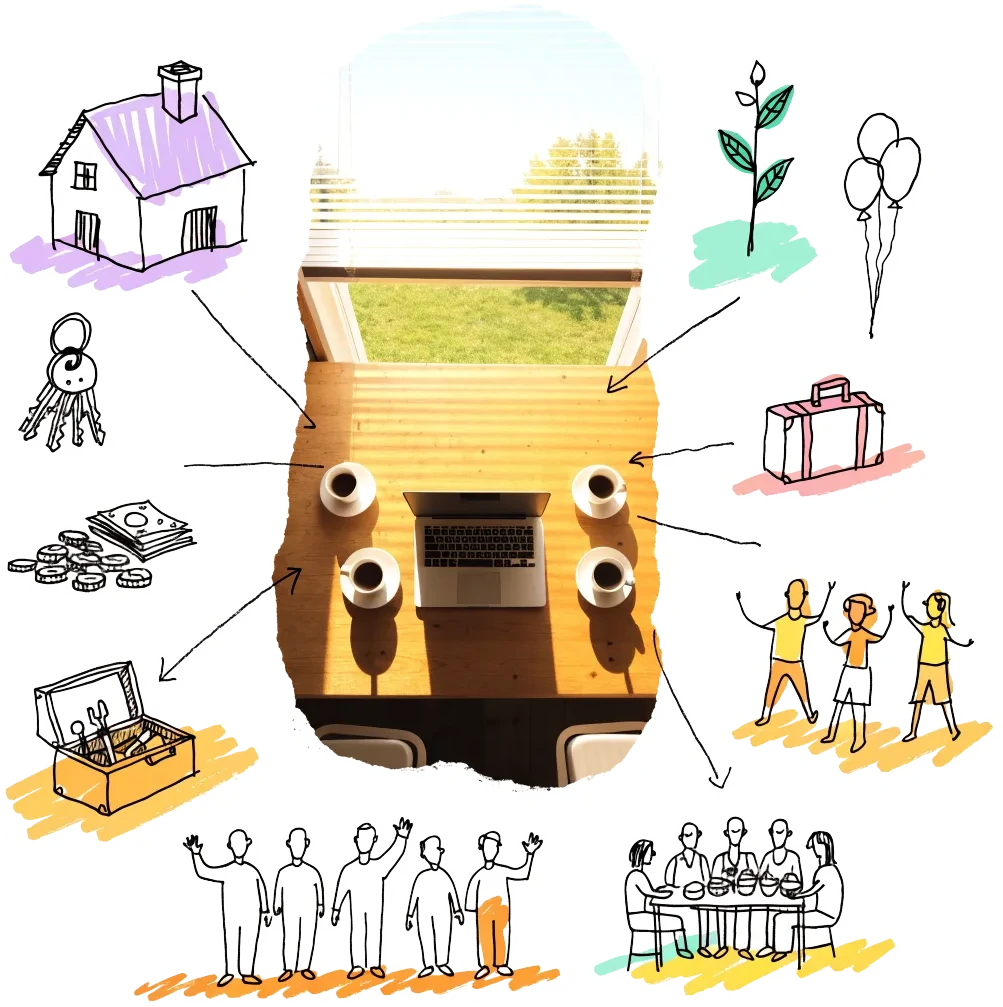
Key parts of the EHC model
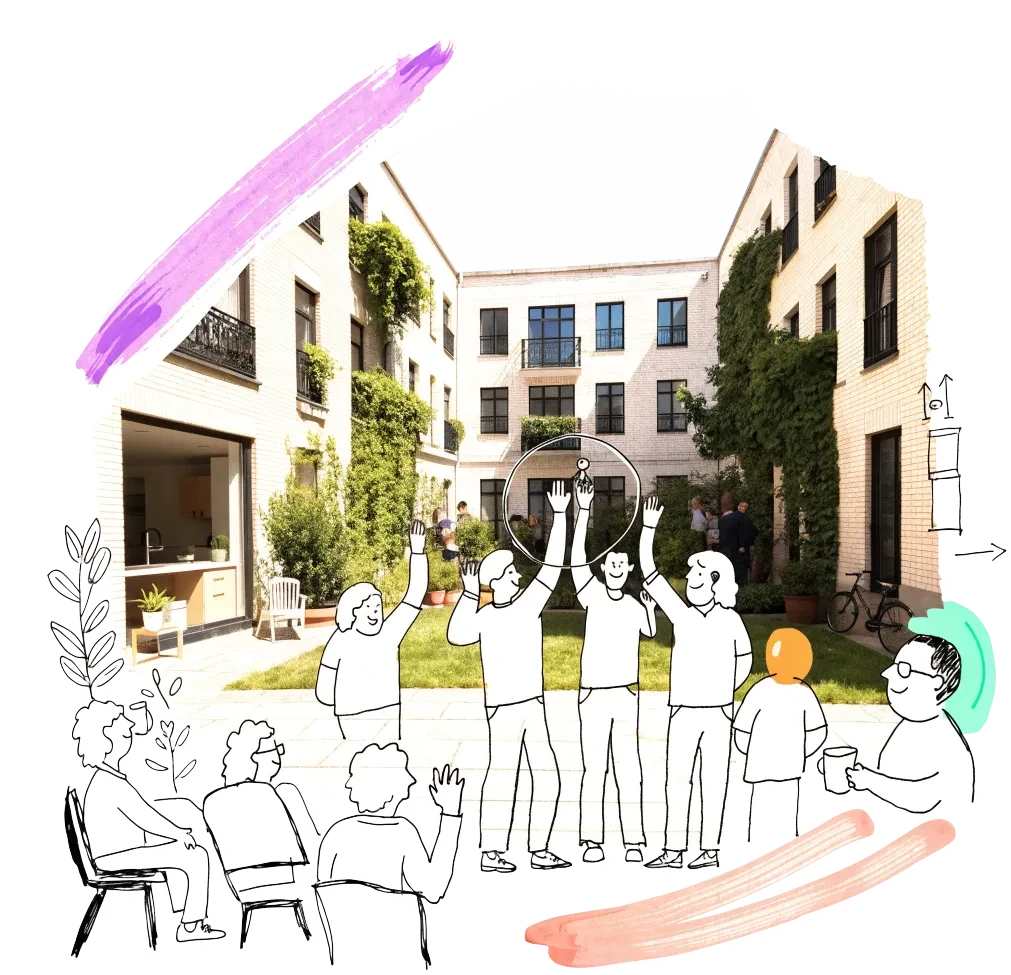
No landlord, and never for sale
The people who live in the building own it together, and it can never be sold off. The rent covers what the building costs, with nothing added for a landlord.
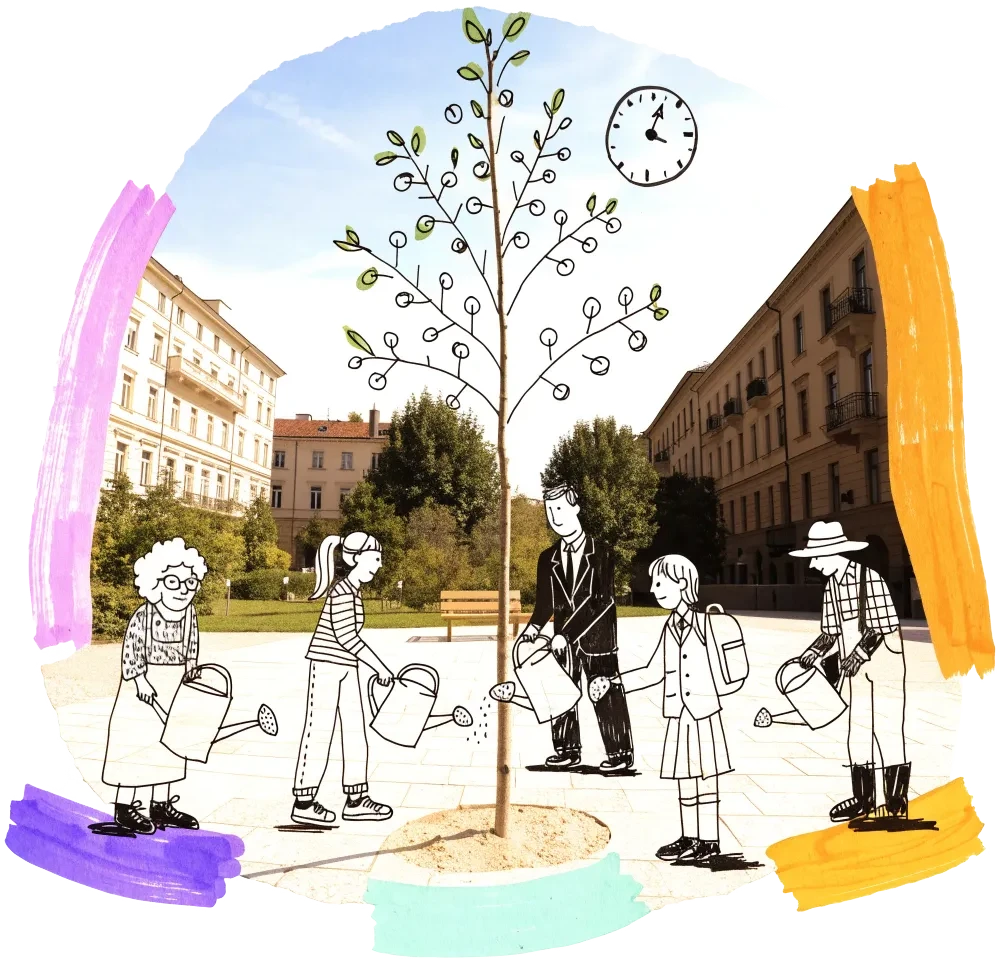
Money that is happy to wait
Funded by people who want a fair, capped return and a better city, not the highest possible one. Nobody has to squeeze the rent to pay them.
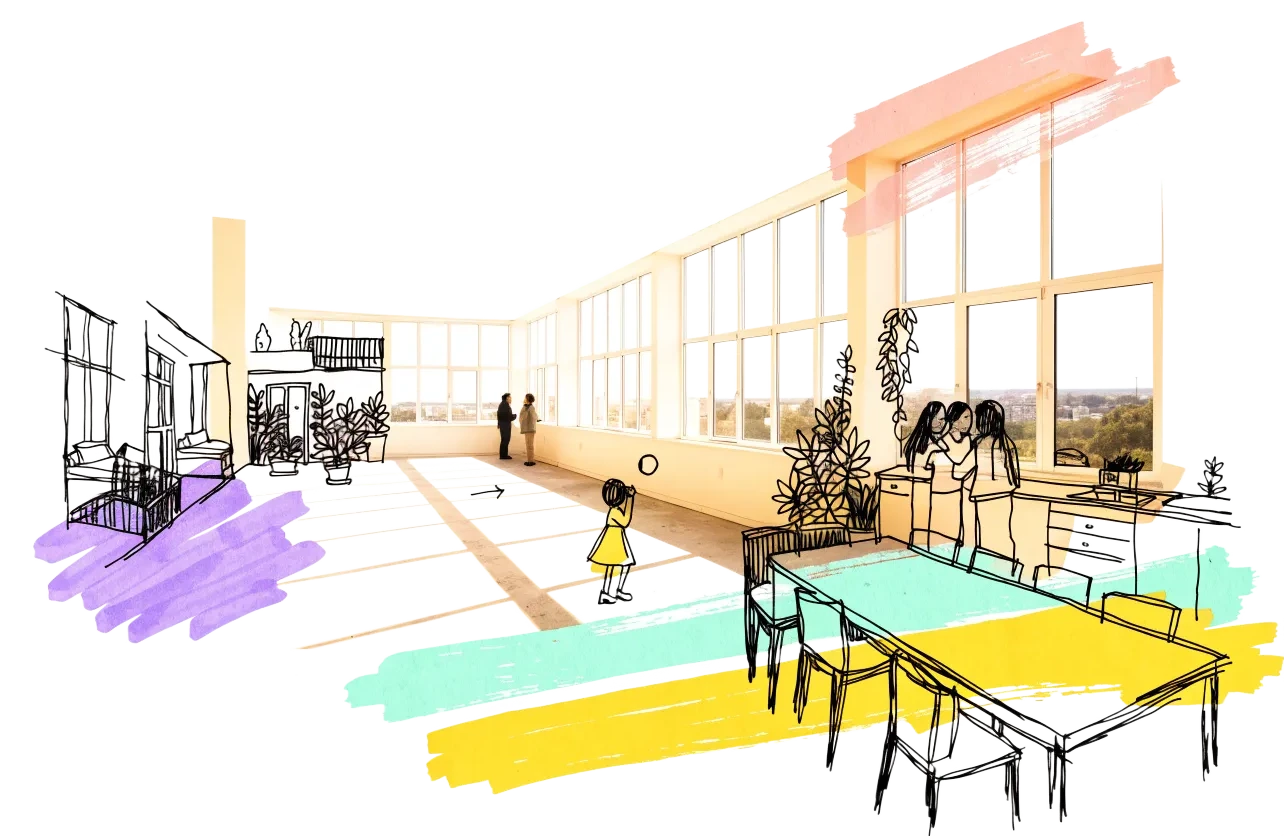
Made from buildings that stand empty
Offices that have sat half-empty for years become homes. It costs less than building new, and the carbon already in the concrete stays there.
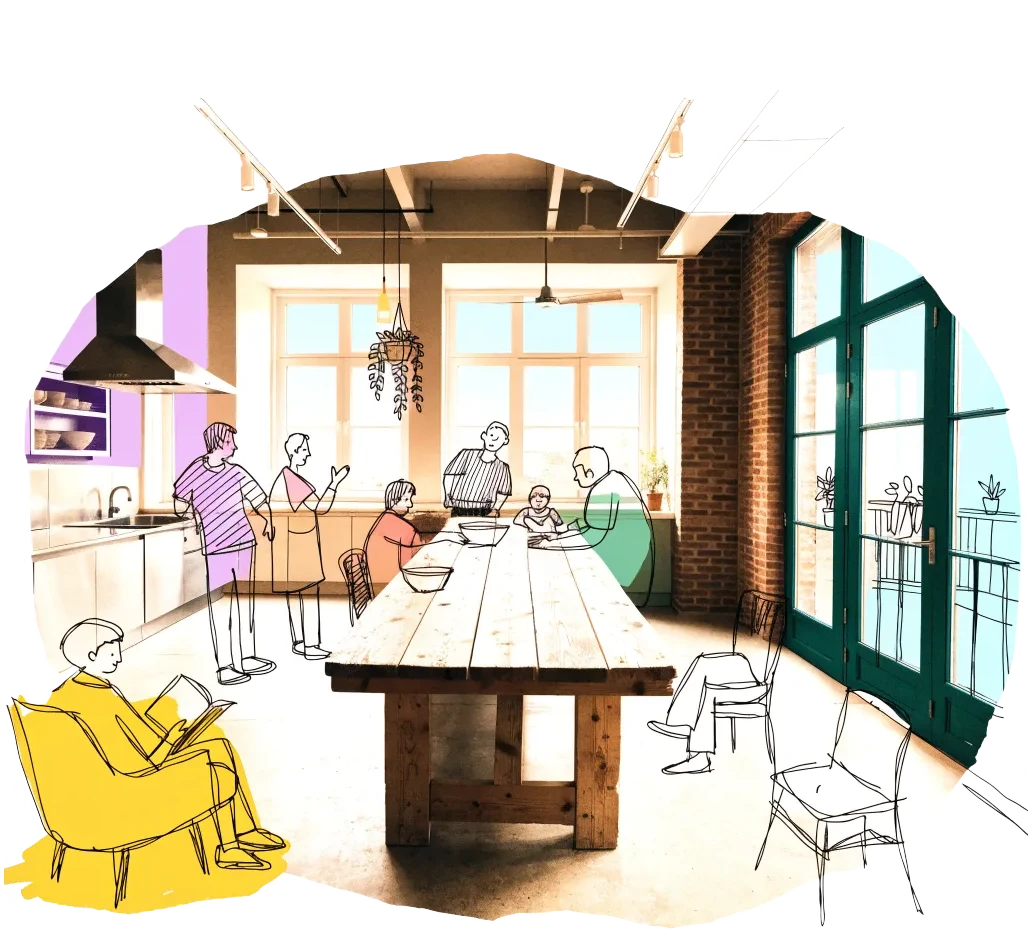
Less to own, more to share
Compact private homes, and generous rooms everyone shares: a big kitchen, a place to work, a guest room, a roof garden. More space to live in, less to pay for.
Move cities, keep your home base
Membership travels with you: a new job in another city can mean a furnished flat in a building you already co-own. Those flats also help carry the long-term homes.
One network, not thirty start-ups
Members, companies, money and buildings meet on one shared platform, so the legal and financial groundwork is done once and every new building starts ahead.
Which seat is yours?
A cooperative without capital is a wish. Capital without a pipeline is money looking for somewhere to be. It takes all of these at the same table — pick the one that sounds like you.
You would bring
Your demand, your sense of how you would actually want to live, and a couple of hours a month once there is a building to run.
You would get
A home you co-own, at a rent that follows what it costs rather than what the market will bear — long-term, or for a while, in whichever city you happen to be.
No buildings yet. A model, and a growing number of people.
We are in the middle stretch. The model is built and open for anyone to pull apart; now we are finding out who is ready to move, and where the first buildings should be.
- DoneUntil summer 2026
Finding a model that works
Build the economics in the open, on real data from over 100 European cities, so anyone can check whether affordable non-speculative homes actually add up.
- We are hereAutumn 2026 – summer 2027
Testing the appetite
Find out who is ready to move: 1,000 individuals and 100 companies willing to found a pan-European cooperative, and the first cities and buildings with the right conditions.
- NextSummer 2027 and beyond
Building the EHC
If the appetite is there and the model holds: found the organisation, raise the capital, and start the first pilot conversions.
Counted conservatively: people who signed up here themselves, and organisations whose people told us the organisation wants to take part. Updated every fifteen minutes.
Be one of them
Help us build it
Put your name down and we'll keep you posted as the first cities and buildings are chosen. If you have a minute more, tell us what matters most to you — it shapes what we build first.