Empty rooms and a queue for the keys
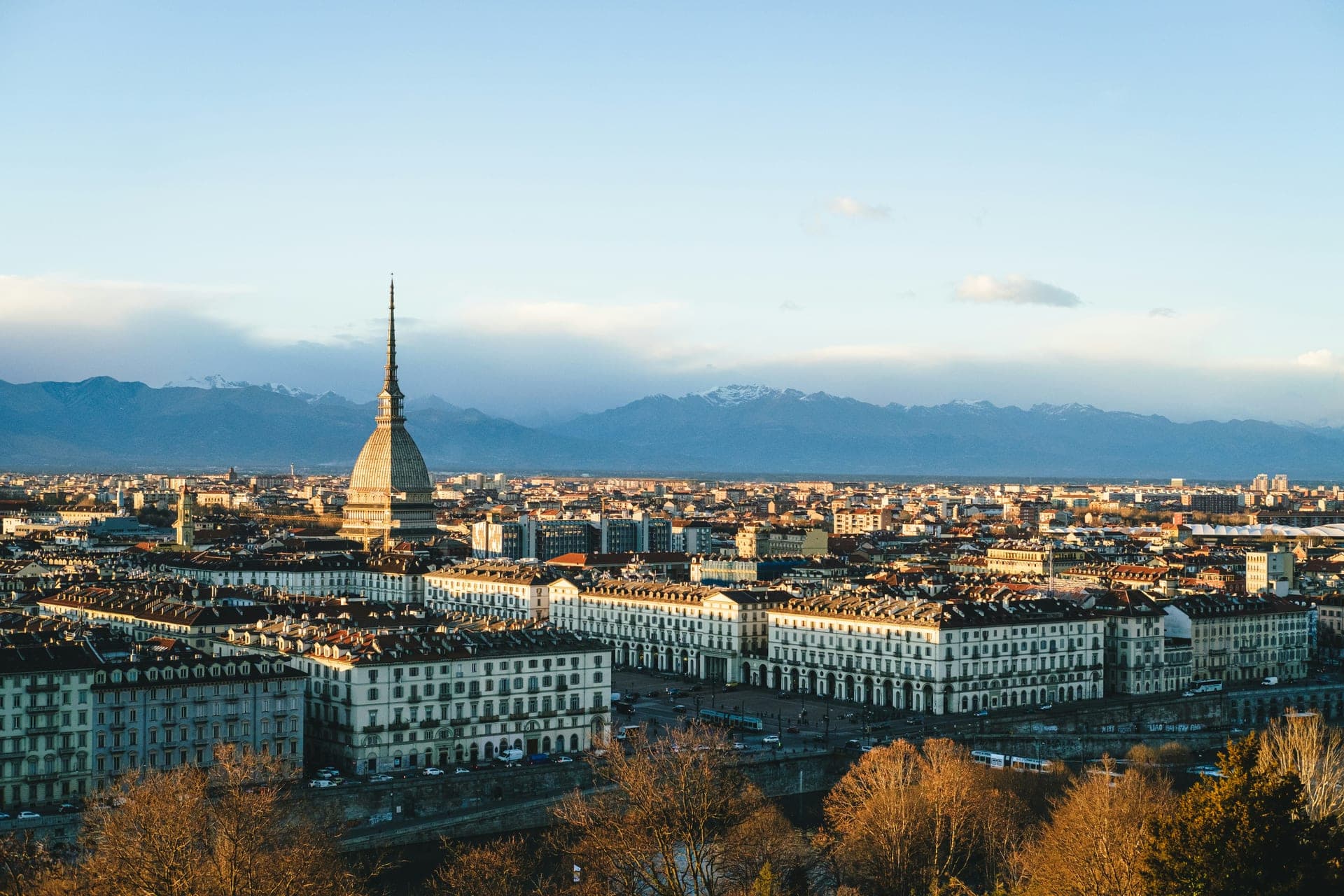
Turin was built twice. The House of Savoy laid down a baroque grid and arcaded streets for a royal capital, and for the first four years of a united Italy the city governed the new kingdom. Fiat then rebuilt it as a factory town, pulling workers up from Sicily, Puglia and the Veneto until the population peaked at almost 1.2 million in 1971. When the car industry contracted the people left and the buildings stayed. Housing here is the arithmetic of that inheritance.
Ownership sets the baseline. 67% of Turin households live in a home they own and 28% rent. Public landlords hold 4.5% of the stock, which leaves private landlords letting 23.5%. Cooperative housing has no line of its own in Italian statistics. A member of a divided-property cooperative counts as an owner and a member of an undivided-property cooperative counts as a tenant, so the sector vanishes into the two large slices. The remaining 5% belongs to Italy’s third census category, altro titolo: homes held rent-free or in usufruct, usually inside a family.
- Owners
- Owner-occupier67.0%
- Renters
- Public & non-profit rental4.5%
- Cooperative0.00%
- Private rental23.5%
- Other5.0%
- Rent-free / usufruct (altro titolo)5.0%
Social housing in Italy is a rule attached to a dwelling, not a tenure of its own. 4.8% of Turin’s dwellings carry one, a little more than the public-housing slice, because the rule also lands on privately owned flats let at agreed rents and on the fund-backed schemes built since the 2000s. The queue measures the shortfall better than the stock does. The last city-wide allocation round, opened in March 2023, drew 7,368 applications; the provisional ranking published in May 2025 named 1,763 households. Of the 17,401 public flats inside the city, 1,606 stood without a tenancy in April 2026, and 876 of those were still waiting for a repair crew.
Price the tiers by the square metre and Turin reads cheap by Italian standards and steeply stratified all the same. Public-housing tenants pay about €1.90 a month per square metre. Cooperative members letting at cost pay around €5.20. The median across all stock is €10 and a new contract asks €11.50. Furnished lets reach €14.78 gross and serviced flats €20. A furnished one-bedroom costs a median €815 a month, and a furnished home for a family of four €1,400. A factor of six separates the regulated floor from the open market, and it decides which street a household can stay on.
- Public housing (ATC)
- Cooperative
- All-stock median
- New contracts
- Furnished (gross)
Net-cold monthly rent per square metre by tier. The furnished tier is gross, with utilities and furniture priced in. Public-housing rents are means-tested; cooperative rents cover costs rather than track the market.
Turin holds more unused housing than almost any comparable Italian city. The 2021 census recorded 23.3% of dwellings as unoccupied, across roughly 68,000 buildings logged as empty. Most of that is not dereliction. The city’s annual housing report counts 303,750 principal homes against about 201,000 second homes. A working figure of some 50,000 empty or unlet flats was put to a Eurocities housing table held here. Non-residential space is looser again. Offices run at 13.5% vacancy, leaving 371,941 square metres of empty floor, with a further 464,737 square metres of vacant retail and commercial space. Holiday lets bite less here than in Florence or Rome. An estimated 2,212 dwellings run full-time as short-term rentals, at a median €74 a night.
Demand has changed shape more than size. The preliminary master plan adopted in March 2026 opens by declaring the long contraction over and the population broadly stable, which turns the supply question from where to build into what to reuse. Building at €1,450 a square metre does not pencil at the rents the city wants to see. Italy also completes fewer new dwellings per head than any other large European market, as a Euroconstruct forecast of European completions sets out. Meanwhile about 30,000 people live in Turin on stays of three to twelve months, from students to posted workers, a group the standard Italian four-plus-four tenancy was never written for.
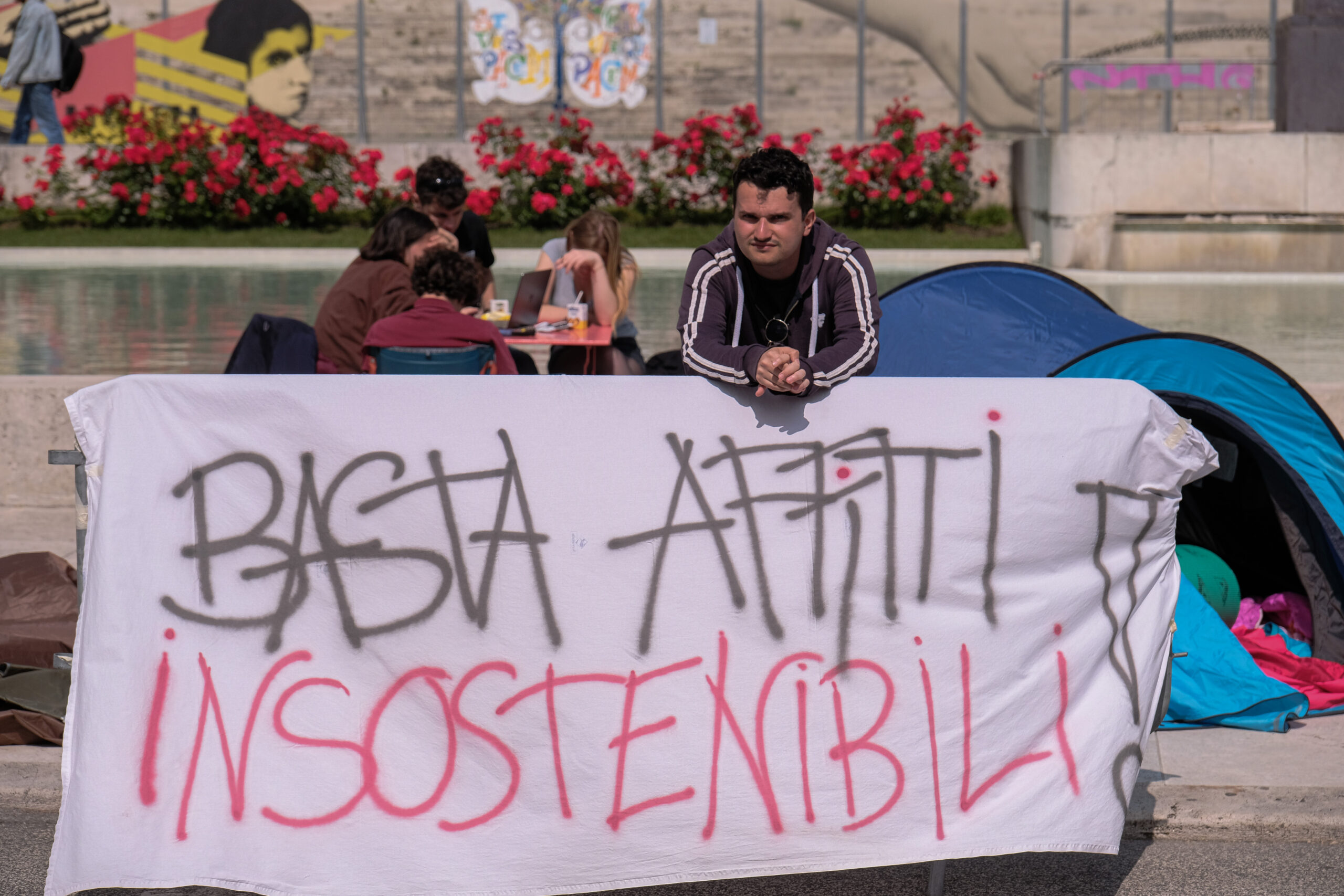
The squeeze has a measurable shape. An estimated 38.6% of Turin households spend more than two-fifths of their income on housing, the threshold Eurofound uses to define housing that is unaffordable. Eviction is the sharp end. 1,354 eviction proceedings were opened in 2024, close to four a day, and 59% of the 737 emergency-housing applications that year followed an eviction for arrears. Foreign residents are 16% of the city and, on the figure a Fratelli d’Italia councillor put to the housing committee, close to half of all applicants for public housing.
The pressure now reaches further up the income scale. The national Piano Casa names its own target group as students, young couples, out-of-town workers and separated parents: households paid too much for public housing and too little for the open market. Cross-city European rent data places Turin among the cheaper large cities and still finds the same divergence between wages and asking rents. A late-2025 survey across the 27 member states found most Europeans asking the EU to act on housing immediately, and an Italian reading of the same divide tracks how unevenly it lands between neighbourhoods.

We are worried that, on this market trend, we could soon end up in the same situation as Milan, Florence, Bologna and Rome, with Turin families no longer able to find a rented home inside the city boundary.That statistically invisible cooperative slice is the oldest organised answer Turin has to the distance between those two prices.
Proprietà indivisa: the flat the cooperative never sells
Italian housing cooperatives come in two legal shapes and Turin has built with both. A cooperativa a proprietà divisa, a divided-property cooperative, develops a building and then transfers each finished flat to the member who financed it. A cooperativa a proprietà indivisa, an undivided-property cooperative, keeps the building on its own books permanently. Its member buys a quota sociale, the share that makes someone a member, and lodges a refundable deposit. In exchange the member holds a right to occupy a particular flat for life, at a rent set to cover costs rather than to follow the market. Nothing can be resold at a profit because nothing individual is owned. Across Italy the two forms together hold roughly 5–6% of the housing stock, a share no census table displays as such. A European survey of cooperative housing places the Italian sector among the largest in absolute terms and among the least visible in policy.
The tradition arrived with the factory. Turin’s building societies grew out of the mutual-aid movement and the philanthropic socialism of the late 1800s, then multiplied when the post-war boom emptied the south into the north. The decisive moment came in 1972, when several small shop-floor cooperatives merged into the Cooperativa Edilizia G. Di Vittorio, formed under the pressure of a housing crisis created by mass internal migration. Over the following thirty years it built about 3,600 flats for its members, using the French coffrage tunnel casting method to hold costs and build times down. It worked first around Via Reiss Romoli and the Corso Vercelli towers, later in Ciriè, Avigliana and Pinerolo.
The sector today falls into four groups that share a city and not a problem. The historic undivided-property cooperatives, Di Vittorio foremost among them, hold ageing stock from the 1970s and 1980s and face an energy-retrofit bill their cost rents were never designed to carry. The divided-property builders work much closer to the ordinary development market and compete for the same land and the same credit. A third group is the fund-backed social-housing operator. Here a cooperative is contracted to run a scheme financed by somebody else. That arrangement is now standard in Piedmont and is picked apart in a multiple-case study of Italian social-housing management. The fourth is the small collaborative-housing scene, where Numero Zero brought eight households together in Porta Palazzo. Regional coordination runs through Legacoop Abitanti Piemonte, whose president also serves as national vice-president.
Government here does not fund cooperatives as a category. It contracts them. The instrument is the convenzione, an agreement with the city that fixes rents and eligibility for a defined period in return for land, planning terms or public co-investment. A cooperative that signs one becomes the gestore sociale, the social manager responsible for letting, tenant mix and community life inside a building somebody else owns. That is a narrower role than a Swiss or Viennese cooperative enjoys, where the cooperative is usually the owner as well. A comparative review of policies that promote cooperative housing treats land access and patient credit as the levers that decide which model a country gets. A primer on cooperative architecture, finance and regulation shows how closely form and building follow from those two. Turin’s machinery is built around the narrower model.
A decree in Rome, a master plan in Turin, and the empties in between
Rome writes the cheque and the rules. The sitting government’s answer to the housing emergency is the Piano Casa, Decree-Law 66/2026, in force since 8 May 2026 and converted into law that July. It sets a target of about 100,000 affordable homes over ten years. At its core is a national programme to return roughly 60,000 public and social flats to use, flats unlettable today purely for want of maintenance. A pooled investment vehicle and an appointed commissioner sit alongside it. Article 5 of the same decree eases the sale of publicly owned housing, and two Sala Rossa motions passed in Turin in July 2026 formally objected to it.
Three floors of government hold different parts of the machine. National law sets the budget, the tenancy rules and how rents are taxed. The Piedmont Region owns the public-housing system: it funds and supervises ATC Piemonte Centrale, which manages the city’s public stock, and it legislates on who qualifies. In July 2026 the regional housing councillor issued a Regolamento sulle Decadenze, a forfeiture regulation setting out the tenant conduct that now costs an ATC tenancy. The City of Turin sits under both. It runs the waiting list, owns about 5,900 of the flats outright, and carries the maintenance bill on a further 3,000 it owns beyond the municipal boundary.
Sixteen years after the regional housing law came into force, the era of impunity in public housing is officially over, an era that was turning too many ATC blocks into no man’s land.The city government reads the same shortage as a funding problem rather than a discipline problem. Its position, put to a European housing table it hosted, is that municipal effort and recovery-plan money cannot close the gap without national and EU resources behind them. Both sides agree the non-market tier has to grow. They disagree on whether growth comes from tightening the rules on the stock that exists or from buying and building more of it.
As an administration we are trying to do our part locally, helped by recovery-plan investment, but we need targeted policies and resources at national and European level.Turin’s own toolkit is small and specific. The territorial agreement under the 1998 tenancy law sets the canone concordato, an agreed rent about 30% below the open market, with lighter taxation on the landlord side to compensate. The Locare agency brokers those tenancies and underwrites them: 247 agreed contracts in 2024 at an average €383 a month, backed by €1.14 million of city money. Above that sit the housing funds, FASP for Piedmont and Cassa Depositi e Prestiti’s Fondo Investimenti per l’Abitare nationally, which finance new stock let at agreed rents. A cooperative enters through the gestore sociale clause in the conventions those funds sign.
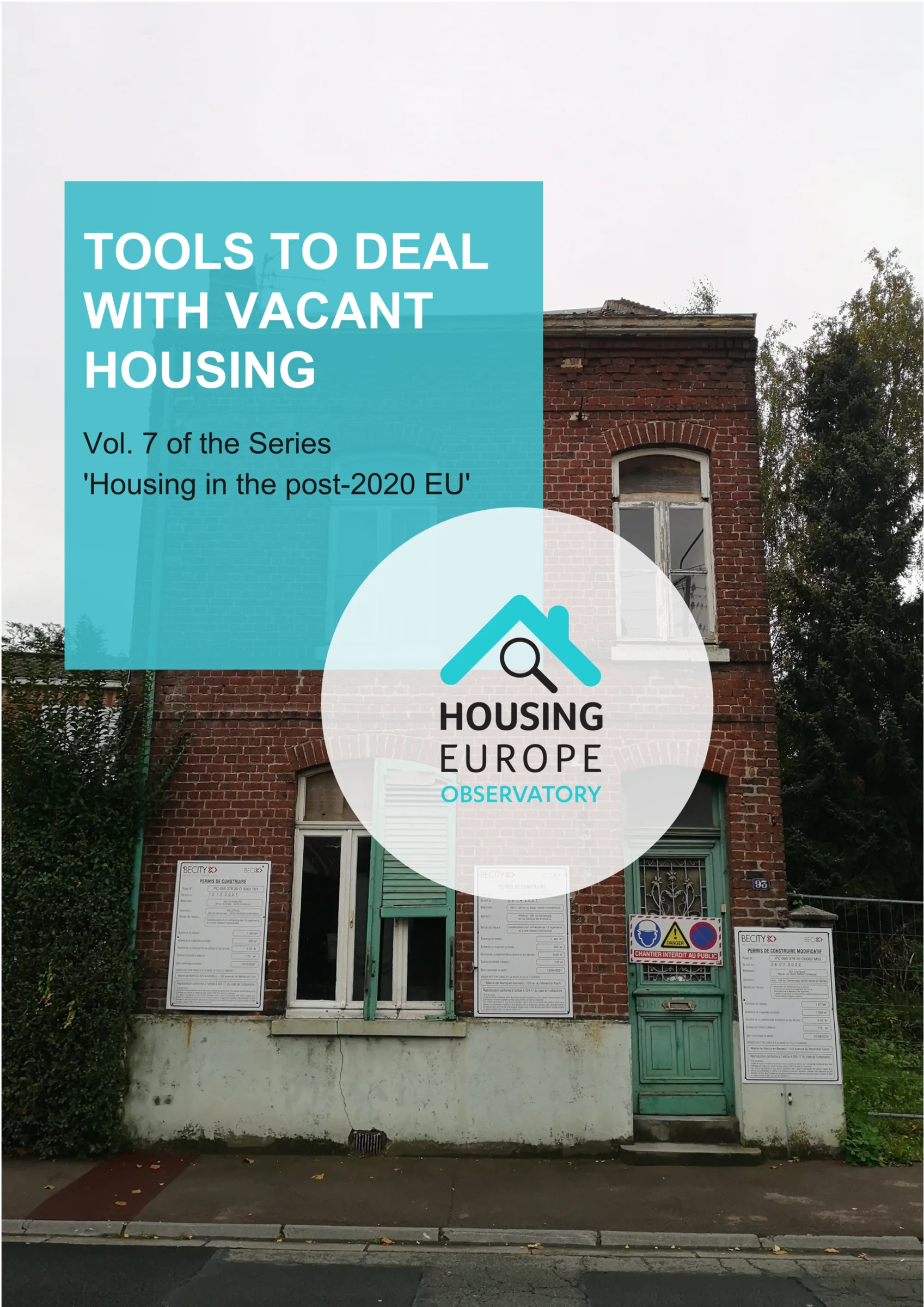
The answer to the empties began with a petition. A popular-initiative resolution called Vuoti a rendere passed the council on 29 September 2025 by 22 votes to 8. Amendments stripped out the power to requisition long-abandoned property from large owners, and the full census of unused buildings with it. What survived is still substantive. There is a moratorium on selling public housing and an instruction to estimate how much of the city’s stock stands unused. Locare gains the power to offer public guarantees to landlords, and the next building regulation is to carry anti-vacancy measures. A European menu of vacancy instruments sets out what the missing half of that list usually looks like.
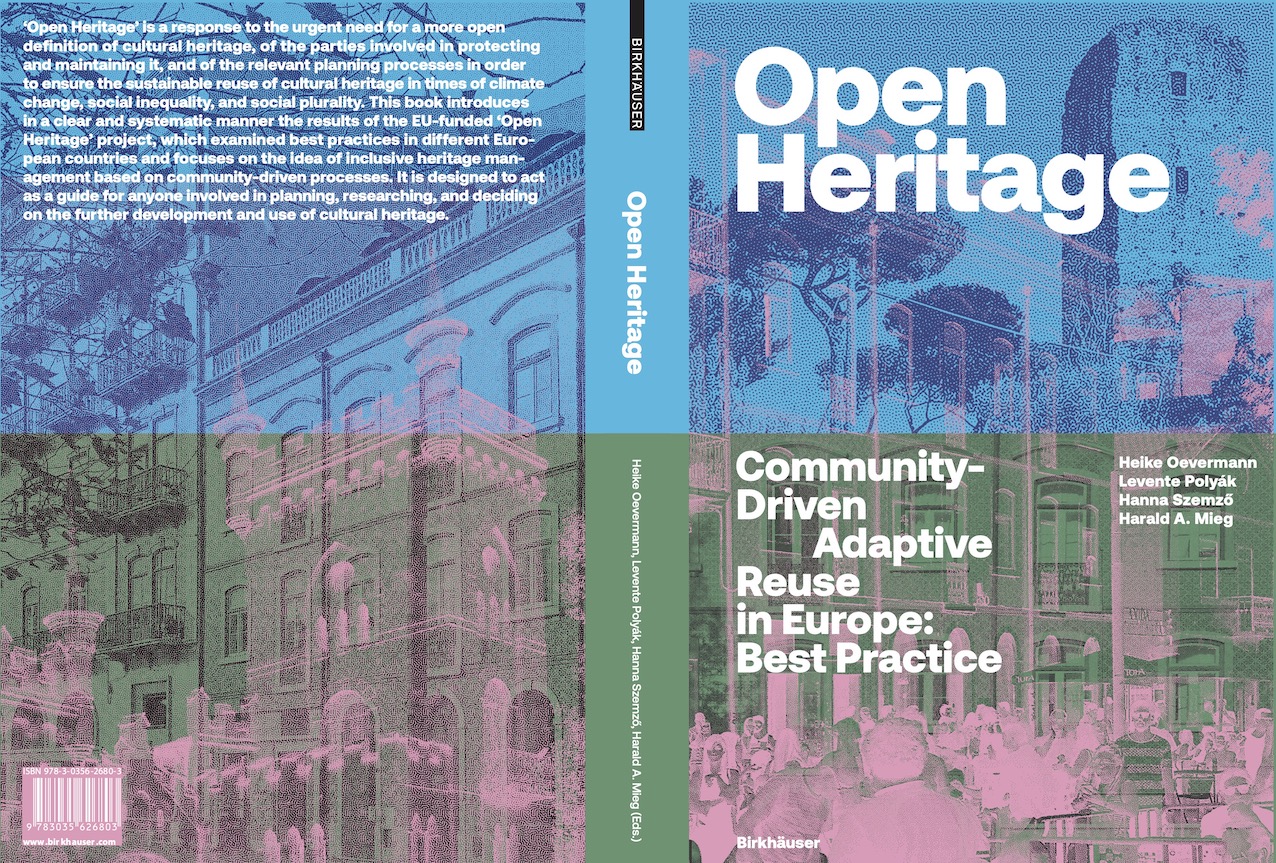
The heavier lever is planning. On 16 March 2026 the council adopted the preliminary new Piano Regolatore Generale by 24 votes to 4, the first rewrite since 1995. It makes change of use easier, an old office into flats or a shuttered shop into a service. It also puts brownfield reuse and the reactivation of urban voids ahead of building on open land. That is the policy answer to all those empty square metres. A study of adaptive reuse as a driver of the development goals and a Dutch assessment of reuse as a housing supply channel both argue the same case. Reuse is cheaper in carbon than a balance sheet makes it look.
Climate policy and housing policy now share a budget line. Turin is one of the European Commission’s mission cities, and its Climate City Contract commits it to cutting carbon dioxide emissions 85.2% by 2030 against a 2019 baseline of 2,396,907 tonnes, through 31 named actions. In May 2026 the city hosted the mission’s annual gathering of climate-neutral cities at the OGR. Retrofit is where that target meets the housing question, because the worst-performing flats and the thinnest household budgets sit in the same buildings. Public, social and cooperative landlords are the only owners who can commission deep renovation at scale, a point made in research on decarbonising affordable housing. A European review of climate adaptation across social landlords reaches the same conclusion from the adaptation side, and work on circularity inside housing cooperatives shows where the materials question bites.

- 1972[source]
Cooperativa Di Vittorio founded
Several small shop-floor cooperatives merge into an undivided-property society that goes on to build about 3,600 rented flats for members over thirty years.
- 2007[source]
Cascina Roccafranca opens
A derelict farmhouse in Mirafiori reopens as a neighbourhood house under the EU Urban 2 programme, governed by a participation foundation shared between the city, associations and residents.
- May 2023[source]
The former Olympic village reopens as housing
Seven buildings at the ex MOI are converted into 157 flats and about 400 student and social housing beds, ending a long occupation and vacancy.
- Jun 2025[source]
Twenty-first housing-condition report
The city records 1,354 eviction proceedings started in 2024 and 737 housing-emergency applications, 59% of them following an eviction for arrears.
- Sep 2025[source]
“Vuoti a rendere” resolution passes
A popular-initiative resolution on empty homes is approved 22 to 8, without the requisition power it originally proposed, but with a moratorium on selling public housing.
- Jan 2026[source]
Living TO Falchera presented
A €60 million scheme of 263 flats at agreed rents goes on show, to be let from 2027 with a cooperative as social manager.
- Mar 2026[source]
New master plan adopted in preliminary form
The council approves the first rewrite of the Piano Regolatore since 1995 by 24 votes to 4, prioritising reuse, mixed use and easier change of use over new land take.
- May 2026[source]
Piano Casa decree in force
Decree-Law 66/2026 targets about 100,000 affordable homes in ten years and the recovery of roughly 60,000 unlettable public and social flats.
- Jul 2026[source]
Piedmont tightens public-housing rules
The region issues a forfeiture regulation listing the conduct that costs an ATC tenancy, sixteen years after the regional housing law took effect.
- Dec 2026[source]
Falchera completion due
Construction of the 263 agreed-rent flats is scheduled to finish, with lettings run by Cooperativa Edilizia Di Vittorio from 2027.
- 2030[source]
Climate City Contract target
Turin commits to cutting carbon dioxide emissions 85.2% against a 2019 baseline of 2,396,907 tonnes, with retrofit of the existing stock doing much of the work.
From the factory-floor cooperative that built for the migration wave, through the adaptive-reuse decade, to a master plan and a climate target that both now run through the existing building stock.
A farmhouse, an Olympic village and the flats going up at Falchera
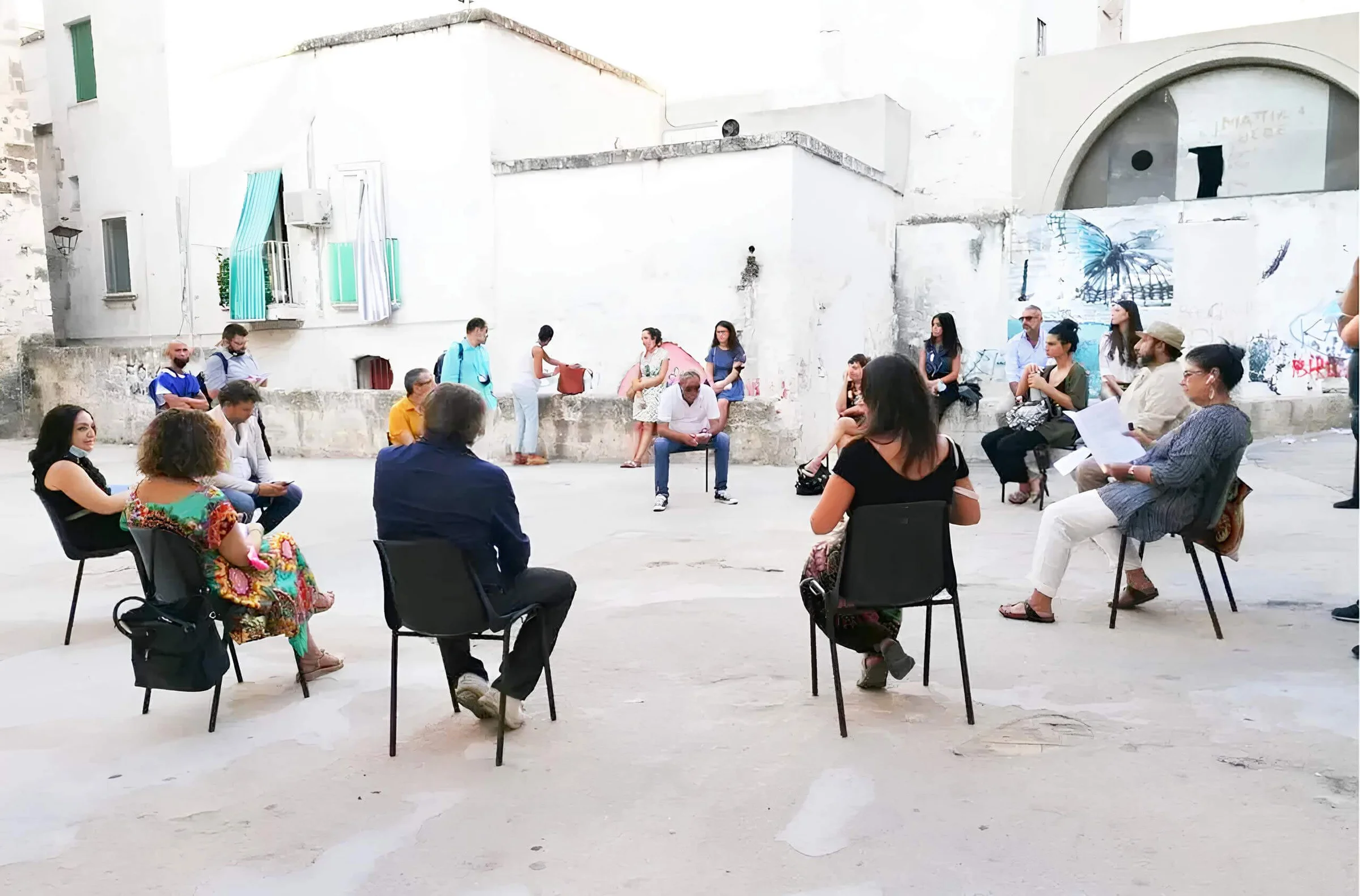
Cascina Roccafranca set the pattern the rest of this list follows. A derelict farmhouse on the Mirafiori edge of the city, it was restored under the EU Urban 2 programme after a participatory design process with the residents who would use it. It is run by a fondazione di partecipazione, a participation foundation whose board seats the city, local associations and citizens together. It has anchored the Rete delle Case del Quartiere, eight neighbourhood houses across Turin, since 2007. It is also the Italian case study in a European survey of community-driven adaptive reuse. Public ownership, mixed use and a manager who is not the landlord: every project that follows borrows something from it.
Living TO Falchera is the largest thing Turin’s cooperative sector currently has under construction. 263 flats on the northern edge of the city, a €60 million scheme let at rents agreed with the municipality, due to complete in December 2026 with lettings from 2027. Cooperativa Edilizia G. Di Vittorio will run them as social manager. The capital is stacked: Cassa Depositi e Prestiti’s Fondo Investimenti per l’Abitare, Investire SGR, Finint Investments and Sinloc, with Fondazione Compagnia di San Paolo alongside. Studio Picco Architetti drew it, COGEFA is building it and Fondazione Housing Sociale wrote the social programme. It closes a regeneration of Falchera begun more than a decade ago with the Laghetti park, better transport links and a reopened register office.
The former MOI, the 2006 Olympic village that later housed several hundred refugees in an occupation the city spent years unwinding, reopened in May 2023 as student and social housing. Seven buildings hold 157 flats and about 400 beds, let at agreed rents and run by Camplus, Italy’s largest student-housing operator. The Piedmont sustainable-housing fund managed by Investire SGR put the equity together with Cassa Depositi e Prestiti, the Compagnia di San Paolo, Fondazione CRT and REAM’s Social and Human Purpose fund. It is the single clearest example of Turin answering a housing shortage out of buildings it already owned.
Cascina Fossata took a seventeenth-century farmhouse in the north of the city and made a temporary-residence model out of it. 104 flats are let for six to eighteen months to young couples, families, posted workers and students, alongside a 55-room hotel, workshops and a conference room, with Slow Food brought in to run the restaurant. The €18 million scheme was promoted by InvestiRE SGR for the Piedmont fund with Sharing, the City of Turin, Cassa Depositi e Prestiti, the Compagnia di San Paolo and Fondazione CRT.
Luoghi Comuni, at Porta Palazzo and San Salvario, is the Compagnia di San Paolo’s own version of the same idea. Two temporary residences built with €11 million of foundation money, offering stays from a single night to 18 months, with ground-floor services and commercial space that open onto the street rather than inward. The residences answer a demand the ordinary lease cannot reach, and the finance behind them is the kind catalogued in a study of community finance for civic space.
Numero Zero is the smallest of these and the most self-organised. Eight flats on the edge of Porta Palazzo shared by 17 people, with roughly 200 square metres of communal space, a workshop, a roof terrace and a garden. The group formed inside the CoAbitare association, bought and converted the building itself, and has lived there since 2013. Monday dinners rotate between households and the buying group extends into the neighbourhood.
Homes4All works on the empty flats instead of new ones. It was founded in Turin in 2019 as a benefit corporation, out of a pay-by-results project run by the city with Brainscapital, Homers, ACMOS and the chamber of commerce. It raises impact capital, takes vacant homes into management and lets them to households in difficulty, with social support attached. Its 2025 report counts 235 people housed in 127 flats across Turin, Genoa and Milan, at an average rent of €361 a month.
The Future Urban Legacy Lab at the Politecnico di Torino supplies the research layer, working on what post-industrial cities do with the assets they inherit. Politecnico researchers also co-wrote a study of how tenant movements turned pre-emption rights into a decommodification strategy in Barcelona, precisely the instrument Turin’s empty-homes debate keeps circling without reaching for. At the other end of the scale sits the Falchè cohousing, opened in September 2026 inside a disused wing of a Falchera school. It offers six accessible places for people living with disability, fitted with assistive technology and built with €138,000 of recovery-plan money and €24,000 from the operator.
None of this matches the size of the queue. What Turin has instead is the rarest input in European housing: buildings nobody currently needs, in a market still cheap enough that converting them can be made to add up. A city built for a population it no longer has is an unusual place for a housing shortage, and an unusually good place to fix one.
References
Statistics18Click on any number to see the source
Housing market
Tenure & affordability
Adaptive reuse & vacancy
Population & migration
From our library22
- Housing crisis in Europe: Italy ranks last in new dwellings completed — Knowledge
- Europe’s rents are on the rise: Who’s hardest hit? - European Data Journalism Network - EDJNet — Knowledge
- The Housing problem according to Europeans — Knowledge
- City divide. Fighting urban inequalities — Knowledge
- Unaffordable and inadequate housing in Europe — Knowledge
- Housing Cooperatives in Europe - Resilience and Adaption to Changing Need — Knowledge
- International policies to promote cooperative housing — Knowledge
- Cooperative Conditions - A Primer on Architecture, Finance and Regulation in Zurich — Knowledge
- Process View to Innovate the Management of the Social Housing System: A Multiple Case Study — Knowledge
- Tools to Deal with Vacant Housing — Knowledge
- Adaptive reuse of urban structures as a driver of sustainable development goals: A systematic literature review — Knowledge
- Adaptive Reuse for Housing — Knowledge
- Accelerating decarbonisation of current and future affordable housing in Europe — Knowledge
- Enabling and embedding circularity goals in housing cooperatives — Knowledge
- Climate adaptation in public, cooperative, and social housing in Europe — Knowledge
- Climate-Neutral and Smart Cities Annual Event — Event
- Open Heritage - Community-Driven Adaptive Reuse in Europe: Best Practice — Knowledge
- Fondazione Compagnia di San Paolo — Organisation
- Homes4All — Organisation
- Future Urban Legacy Lab (FULL) — Organisation
- Turning Tactics into Strategy: The Right to Stay Put and the Decommodification of Housing in Barcelona — Knowledge
- Funding the Cooperative City: Community Finance and the Economy of Civic Spaces — Knowledge
Further sources23
- Emergenza casa, 50mila alloggi vuoti: «Ci servono più risorse dall’Europa» — Torino Cronaca · 2024-09-18
- Presentato in Commissione il Rapporto sulla condizione abitativa a Torino — Città di Torino — CittAgorà · 2025-06-20
- Un Piano dell’Abitare per promuovere lo sviluppo di Torino — Città di Torino — CittAgorà · 2025-07-04
- Passa la delibera “vuoti a rendere”, ma le case sfitte non saranno requisite — Il Torinese · 2025-09-30
- Il Consiglio comunale approva il progetto preliminare del nuovo Piano Regolatore — Città di Torino · 2026-03-16
- Case popolari: a Torino metà di quelle sfitte è in attesa della ristrutturazione — Torino Oggi · 2026-04-20
- Il Piemonte toglie la casa popolare a chi vandalizza e occupa abusivamente spazi comuni — Torino Oggi · 2026-07-24
- Due mozioni per la casa approvate in Sala Rossa — Città di Torino · 2026-07-13
- Il Decreto-legge “Piano Casa”: le principali novità — LCA Studio Legale · 2026-05-13
- Falchera, presentato il nuovo complesso di social housing — TorinoClick · 2026-01-28
- Inaugurato all’ex Villaggio Olimpico di Torino un complesso di social e student housing — Fondazione Compagnia di San Paolo · 2023-05-10
- Cooperativa di abitazioni Giuseppe Di Vittorio — MuseoTorino · 2011
- Housing cooperatives in Italy — Cooperative Housing International · 2017
- Turin Towards Net Zero: Companies as Co-Protagonists of the Climate City Contract — Torino Social Impact · 2025
- Dall’ex scuola a una casa per l’autonomia: Falchera inaugura il suo cohousing — Torino Oggi · 2026-09-17
- Affitti a canone convenzionato: rinnovato accordo con associazioni di proprietari e inquilini — TorinoClick · 2018-01-17
- Cascina Fossata, modello housing sociale — ANSA · 2019-11-25
- A Torino l’innovazione passa per Luoghi Comuni — Secondo Welfare · 2016
- Numerozero — CoAbitare · 2013
- Homes4All, il miracolo di trovare casa — Città Nuova · 2025
- La Cascina Roccafranca — Labsus · 2014-02
- Turin — Wikipedia · 2026
- Abitazione — Legacoop Piemonte — Legacoop Piemonte · 2026