Resource overview (BLOXHUB report, authors not named)
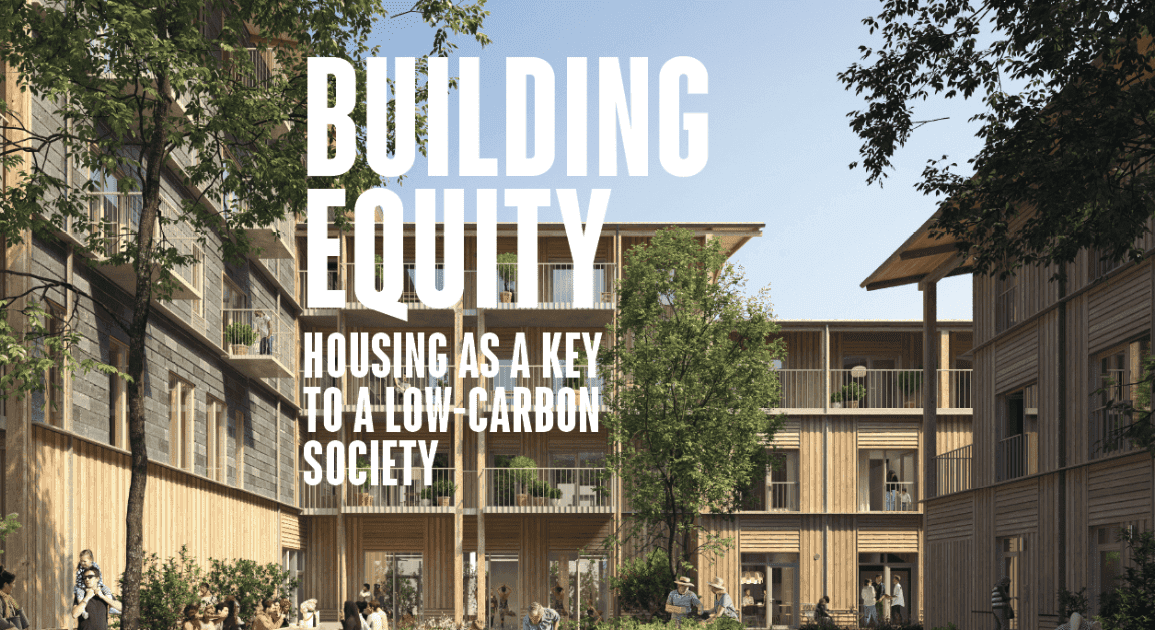
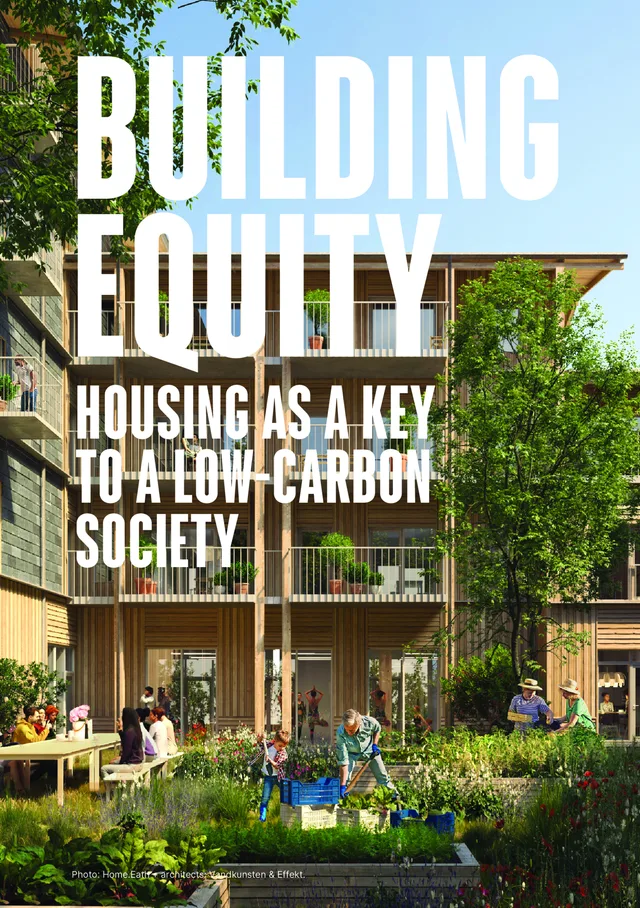
Building Equity: Housing as a Key to a Low-Carbon Society is a study/report published by BLOXHUB (with The Shift as contributing partner, and funding noted from the Laudes Foundation) that compiles insights from pan-European housing and real-estate stakeholders and complements them with illustrative cases. The document positions housing as both a social foundation and a lever for decarbonising Europe’s building stock, with an explicit focus on sustainable, affordable, and inclusive housing outcomes.
The dual challenge: affordability and rapid decarbonisation
The report frames Europe’s task as decarbonising an extensive building stock while maintaining affordability and well-being. It cites Eurostat data that, by 2023, 10.6% of Europeans in cities were overburdened by housing costs. It also notes that the EU’s carbon budget for the built environment is critically low, with “ten years left at current emission rates” to remain within a 1.5°C pathway, and references research indicating the carbon content of new buildings must be reduced by up to 94% by 2050 to align with Paris Agreement targets.
Housing as a human right and the “right to housing” characteristics
Housing is presented as fundamental infrastructure tied to economic prosperity, health outcomes, and participation in society. The report summarises widely used “right to housing” characteristics: security of tenure, affordability (linked to income rather than market maximum), habitability, accessibility, appropriate location, availability of services and infrastructure, cultural adequacy, and sustainability (low/zero-emissions housing using regenerative and sustainable materials, with protection against climate-related risks).
Collaboration and a shared mission across sectors
A recurring finding is the need for a joint mission that brings together public, private, and third-sector actors to reach climate and equity goals at speed and scale. The report describes public-private partnerships (PPPs) as mechanisms to pool resources and share risks and rewards, and highlights the importance of political leadership, regulatory support, and stable financing conditions to attract long-term capital.
Why action is urgent: cost pressures and “green lash” risks
The report links decarbonisation strategies to social acceptance, warning that inclusive approaches are needed to avoid backlash during the cost-of-living crisis. It cites figures including 15 million Europeans struggling with housing costs, house prices up 47% and rents up 18% since 2010, and investor-owned housing increasing by 700%. It also notes that in some regions more than 20% of households spend over 40% of income on housing.
Emerging solutions and illustrative cases
Solutions are organised across new building practices, business model innovation, policy innovation, financial innovation, and community innovation. Examples include regenerative design, increasing density, repurposing existing building stock, flexible living models, community land trusts, profit-sharing models for tenants, and residents-as-shareholders concepts. Case examples include Jernbanebyen (Copenhagen), planned at ~4,500 homes with 25% social housing, and Barcelona’s Right to Housing Plan (2016–2025), with targets including 8,000 new units and a public-private operator aiming for 4,500 homes on public land.
Investment structures, regulation, and long-term accountability
The report emphasises exploring long-horizon, “infrastructure-like” investment structures, impact measurement and transparency, and regulatory drivers (including EU sustainability and reporting directives). It also highlights tenant protections in the context of retrofits and the risk of “renovictions,” calling for governance and accountability systems that align decarbonisation with affordability.