Behind the limestone, a city of tenants
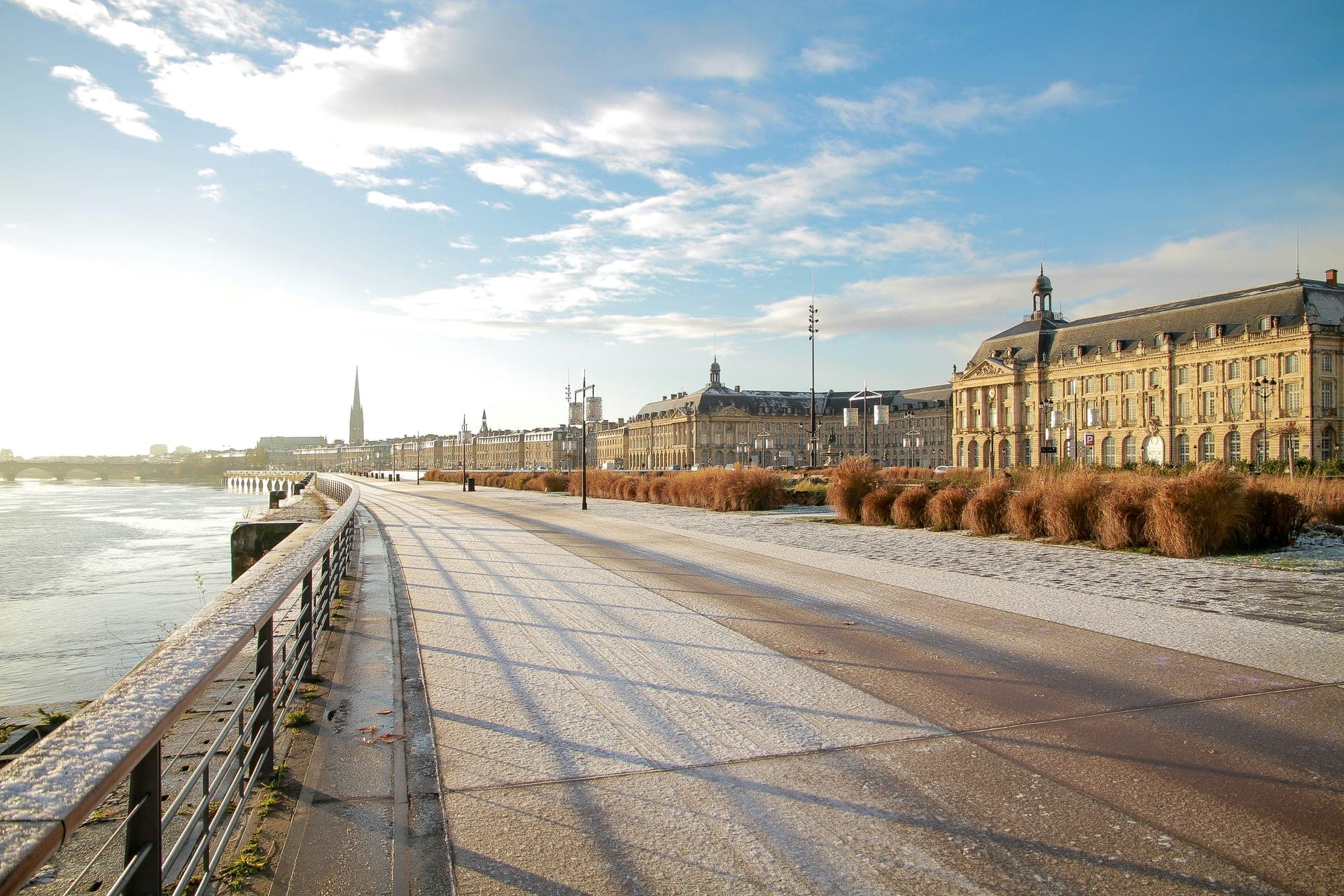
Bordeaux was built by merchants. Wine and colonial trade paid for the pale limestone quays that curve along the Garonne, and the Enlightenment planners who lined them gave the city its uniform façades. By the late 20th century those façades were black with soot. The city cleaned them, laid a tram along the river and waited. Then, in 2017, a new high-speed line brought Paris within two hours, and in 2016 and 2017 alone prices rose by 17%. The question since has been who the restored stone is for.
The commune of 267,991 people holds 168,458 homes, and it is a city of tenants. Only 32.7% of households own their home, while 65.4% rent. Public housing is the largest landlord. Social-rental homes owned by public offices and social housing companies make up 20.5% of main residences, or 28,537 homes, and the biggest of those landlords is Aquitanis, the metropolitan public housing office. Private landlords house the remaining 44.9% of households. A further 1.9% are housed free of charge, a category the French census counts on its own. Cooperatives do not appear as a tenure at all: French housing cooperatives mostly sell homes, so their members are counted as owners.
- Owners
- Owner-occupier32.7%
- Renters
- Public & non-profit rental20.5%
- Cooperative0.00%
- Private rental44.9%
- Other1.9%
- Housed free of charge1.9%
That public stock is also the city's social housing, and the overlap is close to total. In France logement social (social housing, let at capped rents to households under income ceilings) is defined by an inventory kept under the SRU law (the 2000 law on urban solidarity and renewal). So the 20.5% social share and the public tenure share are the same homes counted twice. It is a regulatory layer rather than a slice of its own. The law requires 25%, and Bordeaux has never reached it.
Rents follow tenure closely. A social-rental home in Gironde averages €6.4 per m² a month. Across the Bordeaux agglomeration the private median is €12.6, from €10.8 in the cheapest zone to €14.8 in the most expensive. Toulouse's mayor now cites Bordeaux as the dearer neighbour when he defends his own record, in a 2026 interview on Toulouse's housing plan. A private tenant pays roughly twice what a social tenant pays for the same space.
- Public housing (HLM, Gironde)
- Private, cheapest zone (median)
- All-stock median
- Private, dearest zone (median)
- Private, top quarter starts at
Monthly rent per m², excluding service charges. The social-rental figure is the Gironde average; private figures cover the Bordeaux agglomeration.
Empty homes coexist with the queue. The census puts residential vacancy at 7.1% of the stock. Office vacancy across regional French markets runs at an estimated 6.9%. Tourism takes its own share: an estimated 3,138 homes operate as full-time Airbnb lets. Regulating them is a live question across Europe, as a 2025 European Parliament study of short-term rental rules sets out.
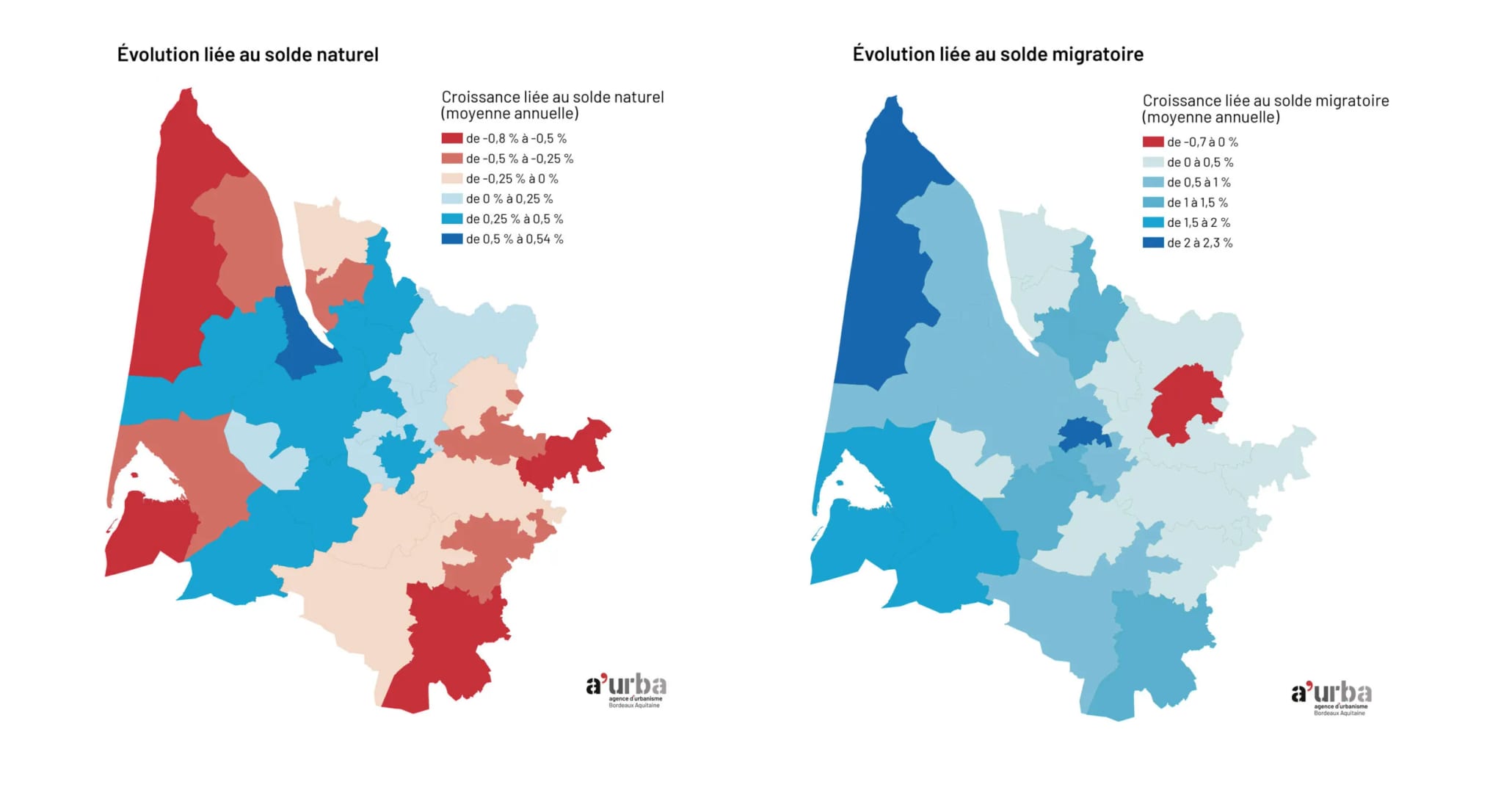
Arrivals keep coming. Gironde gained 107,000 residents between 2017 and 2023, 62,400 of them in Bordeaux Métropole, according to the metropolitan planning agency's census analysis. Building has not kept pace. The department started an average of 11,200 homes a year over 2021–2025. New private leases in the city have been capped since July 2022.
The shortage now reaches well beyond the poor. The State counted 71,300 social-housing applicants in Gironde in early 2025, 51,600 of them in the metropolis. Fewer than 9,000 homes were allocated in 2024, and the average wait was 19 months. Regionally, France 3 reported that 90% of applicants earn below the median and 25% are single parents, with tension highest around Bordeaux. Yet the squeeze on buying runs further up the income scale. Income ceilings for subsidised home-ownership now admit more than 90% of Gironde households. That is a measure of how far market prices have left salaries behind. It also made housing a central theme of the 2026 municipal campaign, as Rue89 Bordeaux's comparison of the programmes showed.
Almost none of that pressure is absorbed by cooperatives. Their footprint is too small to register in the census, and it is where the next part of the story begins.
Owning by lease: how Bordeaux does cooperatives
France's cooperative housing comes in three forms, and none of them is the rental cooperative familiar from Zürich or Hamburg. The largest is the coopérative HLM (a cooperative company inside HLM, France's regulated social-housing system), which builds homes and sells them to modest-income households at capped prices. The smallest is the habitat participatif group (residents who design and run their building together), given its own legal company forms by the 2014 ALUR law (on access to housing and urban planning). The newest is a land model. An organisme de foncier solidaire or OFS (a non-profit land trust) keeps the land for good. The household buys only the building rights, under a bail réel solidaire or BRS (a solidarity lease of 18 to 99 years). That cuts the price by 15% to 40% below market, and resale prices stay capped, so the discount passes to the next buyer.
The tradition in the Bordeaux area is older than the vocabulary. In the 1920s the sugar refiner Henry Frugès asked Le Corbusier to build a workers' estate in Pessac, a paternalist prototype now on the UNESCO list. The cooperative line proper begins after the war. Le Toit Girondin was founded in Bordeaux in 1949 as a cooperative HLM company. It has sold homes to working families ever since, and today manages 1,246 homes. Resident-led housing arrived much later. The first habitat participatif scheme delivered in Gironde opened in Bègles only in 2016.
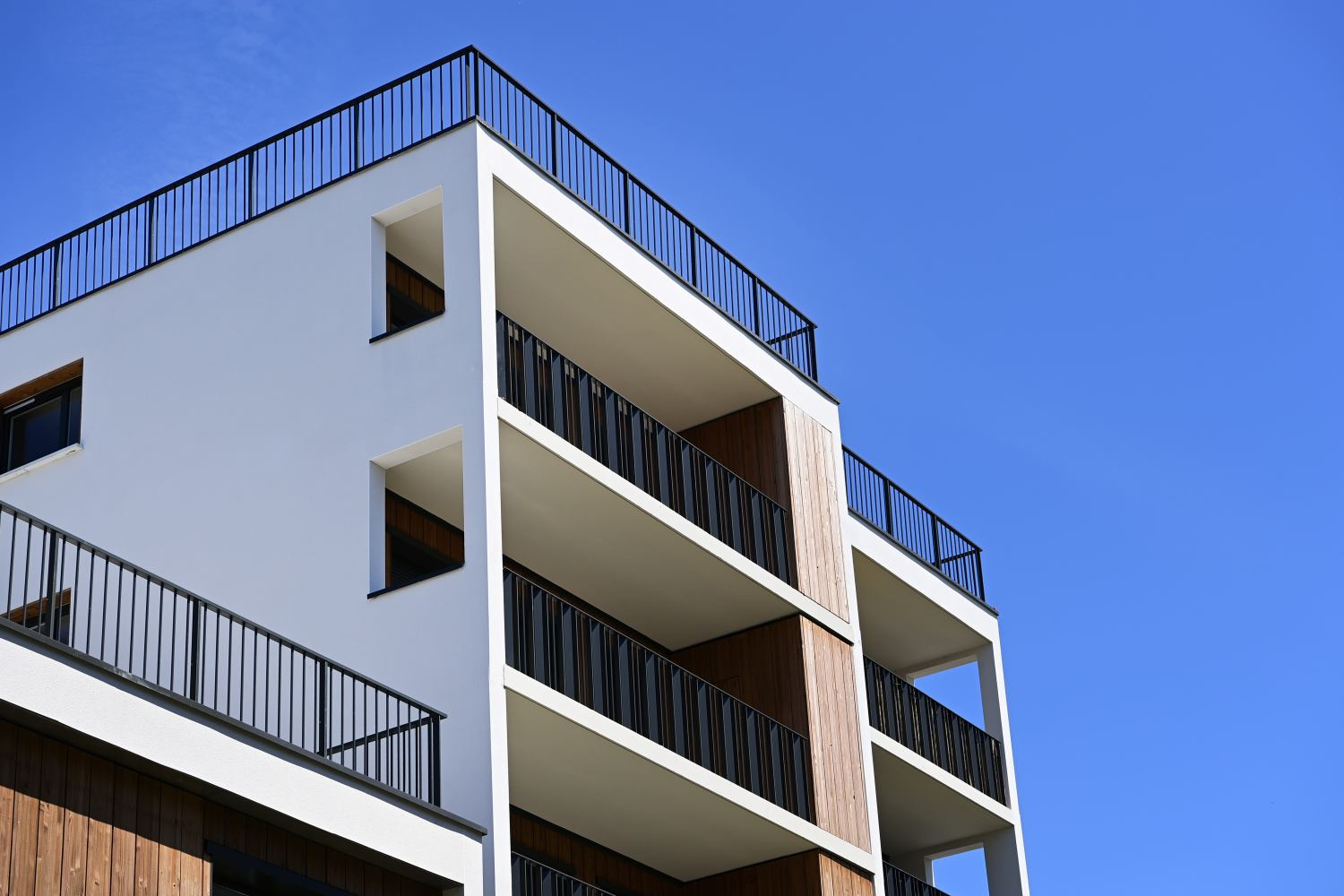
Today the sector falls into three groups, each with its own constraint. The cooperative HLM builders, Le Toit Girondin and Axanis (the ownership arm of Aquitanis), depend on buyers who can still borrow, which ties their output to interest rates. Le Toit Girondin delivered 64 such homes in 2025. The land-trust model is growing fastest and depends on public land. Coo.Sol, the metropolitan OFS, was accredited in 2020 as a multi-stakeholder cooperative. Its members are Bordeaux Métropole, Aquitanis, the social landlord Mésolia, Axanis and Le Toit Girondin. The metropolis counted 62 BRS homes delivered and 2,129 in the pipeline at the end of 2024. Across Gironde that is still only about 1% of housing starts. The resident groups face the hardest problem of all: time. A self-organised project needs years of collective design before a builder or lender will commit.
Public policy treats all three as affordable home-ownership, not as a rental alternative. The metropolitan land-use plan (PLUi) requires 20% of homes in its social-mix sectors to be sold under the solidarity lease, on top of any social-rental quota. The cooperative form is being written into zoning. Whether it should also be allowed to rent, as it does across the Rhine, is not yet on the agenda.
A new mayor inherits the rent cap
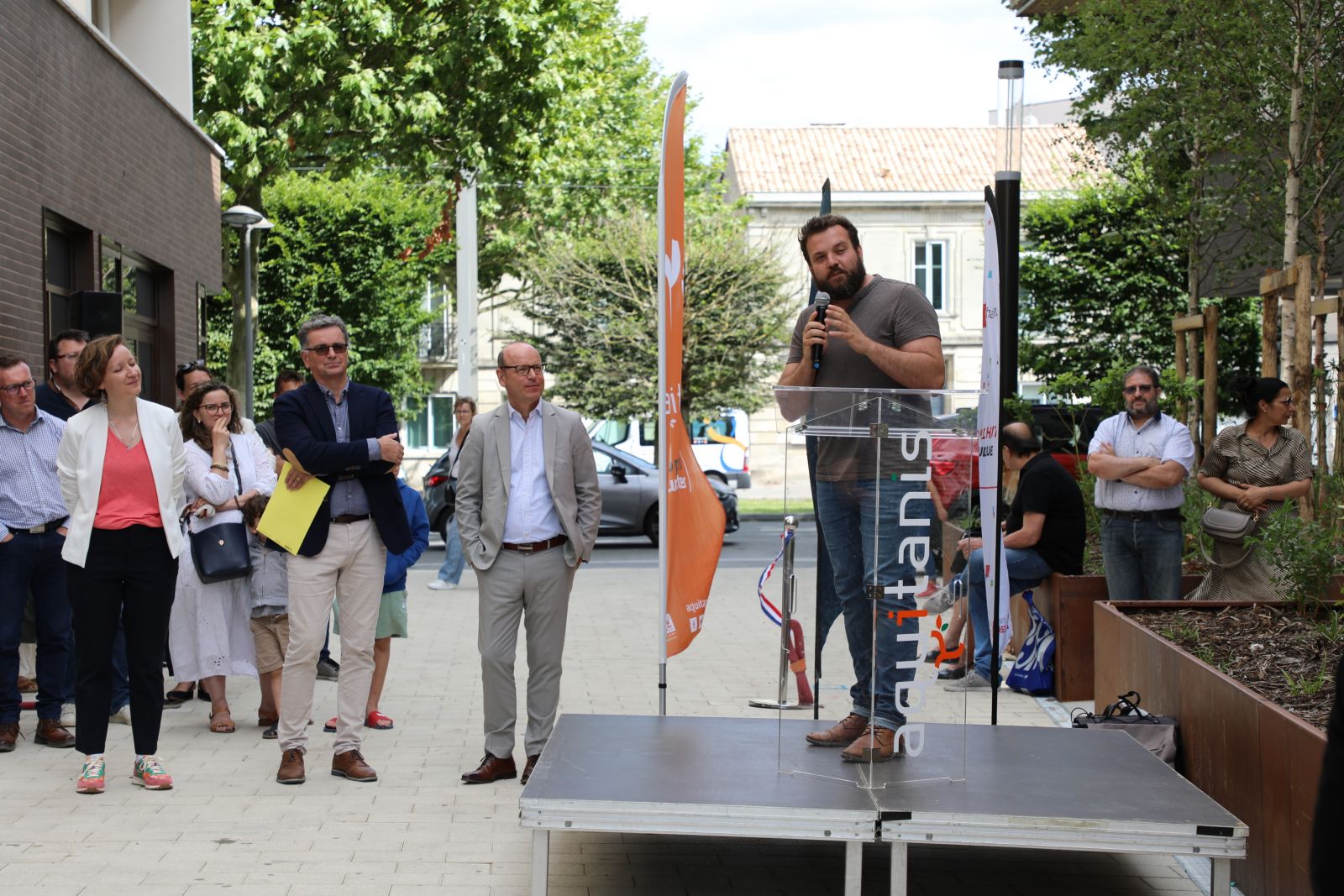
On 22 March 2026 Bordeaux changed direction by 1,827 votes. The centrist Thomas Cazenave took 50.95% in the run-off and unseated the Green mayor Pierre Hurmic after one term. Housing was one of the clearest dividing lines between them. Hurmic ran on regulation and on catching up with the social-housing quota. Cazenave ran on supply, renovation and bringing empty property back to market.
I promise you, it is one of the tools that makes it possible to limit rising rents in Bordeaux.The national government sets the frame. On 23 January 2026 Prime Minister Sébastien Lecornu launched the Relance logement (housing recovery) plan, steered by housing minister Vincent Jeanbrun. It aims for 2 million homes by 2030 and 125,000 social homes a year from 2026. It adds €500 million for social landlords and a statut du bailleur privé (a tax status letting private landlords depreciate new rental homes against their income). The State also polices the SRU quota and, through the Gironde prefecture (the State's office in the department), enforces the rent cap.
The two local tiers hold the ground. Bordeaux Métropole writes the land-use plan and owns Aquitanis and Coo.Sol. The city grants building permits, sets the rules for tourist lets and asks for rent control. Under Hurmic the social share rose from 18.5% in 2020 to its present level, with 5,500 social homes approved during his term. The new majority has not published a quota target of its own.
Rent control is the sharpest test. Bordeaux has capped rents on new leases since 15 July 2022, at no more than 20% above a reference rent for each area and type of home. The experiment, created by the 2018 ELAN law (a housing and planning reform), expires in November 2026. A national evaluation found it lowered rents outside Paris by 2% to 4%, as Rue89 Bordeaux reported in June. Cazenave had called it a “bad answer to a real problem”. Since taking office, the city says only that it is studying the evaluation. In September, mayors of 12 French cities asked for the scheme to be made permanent, and Bordeaux was not among them. Parliament now weighs a two-year extension proposed by the government.
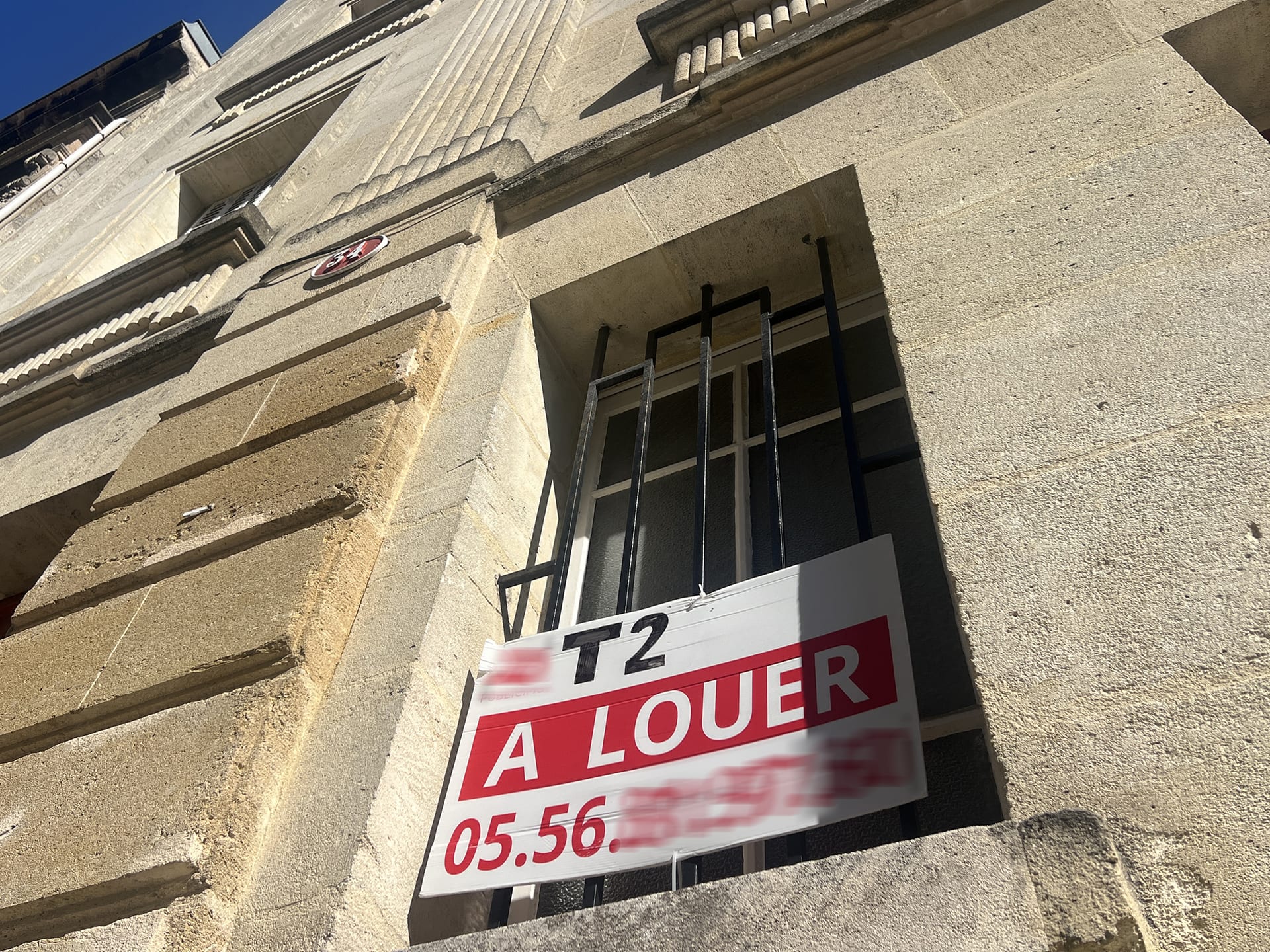
Cazenave's answer to the empty stock starts with offices, after a decade of tightening on tourist lets. A main home may be let to tourists for at most 90 nights a year. Since March 2018, turning any other home into a tourist let has required creating a new home of the same size nearby. His flagship pledge is to see 50,000 m² of vacant offices turned into flats. The first private schemes exist, such as a 1980s office block on rue de Tivoli being turned into 25 homes.
That is 1,000 homes in the city centre that we can obtain by converting offices, for young people and for families, because the city, contrary to what Pierre Hurmic claims, has stayed very expensive, and above all it is very hard to find a home.Climate law pushes in the same direction. The 2021 Climate and Resilience Act set a goal of zero net land take by 2050, halving the consumption of natural land in 2021–2031. The last big district planned under Hurmic, La Jallère, will put 2,500 homes on land already built over around the stadium and empty office buildings, from 2027. The city's voluntary label Frugal rewards low-carbon construction. Stéphane Pfeiffer, then the deputy mayor for urban planning, argued that it had blocked no project, which is also a measure of how little it compels. Public and cooperative landlords, who keep their buildings for decades, are the ones for whom such standards pay back.
- 2007[source]
The Port of the Moon joins the UNESCO list
The 18th-century city centre is listed as World Heritage, fixing the stone façades that define the historic housing stock.
- 2017[source]
High-speed rail to Paris
The new line brings Paris within about two hours. Prices rise 17% over 2016–2017.
- 2018[source]
Tourist lets need compensation
From 1 March, converting a home into a tourist let requires creating an equivalent home in the same area.
- 2020[source]
Coo.Sol accredited
Bordeaux Métropole's land trust is accredited as an OFS, opening the solidarity lease to the metropolis.
- 2022[source]
Rent control begins
From 15 July, new leases in Bordeaux may not exceed the reference rent by more than 20%.
- 2026[source]
National housing recovery plan
On 23 January the government targets 2 million homes by 2030 and 125,000 social homes a year.
- 2026[source]
A new mayor
Thomas Cazenave wins the run-off with 50.95%, ending six years of Green administration.
- 2026[source]
Rent-control experiment due to expire
The ELAN experiment ends in November unless Parliament extends it.
- 2027[source]
La Jallère deliveries begin
First homes of a 2,500-home low-carbon district on already-developed land.
- 2030[source]
National construction target
The target date for 2 million new homes, 400,000 a year.
- 2031[source]
Land take halved
Consumption of natural and farm land for 2021–2031 must be half that of the previous decade.
- 2050[source]
Zero net land take
New building on natural land must be offset by restoring land already built over.
From the UNESCO listing to the national land-take goal: the milestones behind today's debate, with the stated targets still ahead.
Winter gardens, straw walls and leased land
The Grand Parc transformation is the project that made Bordeaux a reference for renovation. Three 1960s social-housing slabs owned by Aquitanis, blocks G, H and I, held 530 flats. Instead of demolishing them, Lacaton & Vassal, Frédéric Druot and Christophe Hutin bolted deep winter gardens and balconies onto every flat. All the families stayed at home during the works, and rents did not rise. It was completed in 2017 and won the EU prize for contemporary architecture in 2019. Correctiv's investigation into Europe's demolition wave holds it up as the alternative. The limit is scale: it treated three blocks of a much larger estate, and each retrofit still has to be argued for against the simpler case for rebuilding.
La Ruche in Bègles was the first habitat participatif scheme delivered in Gironde. Its 11 homes stand in two timber-framed buildings filled with straw, designed by their future residents over three years with Axanis. Pooling spaces and work brought purchase costs and charges up to 30% below market. It proved the model could be sold as social home-ownership. It also showed how slowly it moves: a follow-up of about 40 homes was still a plan when the first residents moved in.
The Bastide-Niel district, on 32 hectares of former railway and military land across the river, is where the land-trust model is being tried at district scale. After the city and metropolis raised their affordability targets in 2022, the plan was redrawn to 4,100 homes, 1,000 of them affordable home-ownership, mostly under the solidarity lease. Coo.Sol is the only land trust on the site. It buys the plots, and its cooperative members build and sell the homes. The model works because the land was public to begin with; across the metropolis, 83% of lease homes sit on publicly controlled land.
Le Carré Lumière in Bègles tested a different question: can a block of flats offer the privacy of a house? LAN Architecture gave its 79 flats deep private loggias, built for about €1,000 per m², and completed them in 2015. It stands where the idle towers of the Terres Neuves district were demolished. Commissioned by a private company, it shows what careful design can do at low cost, while the demolition that made room for it is the path the Grand Parc refused.
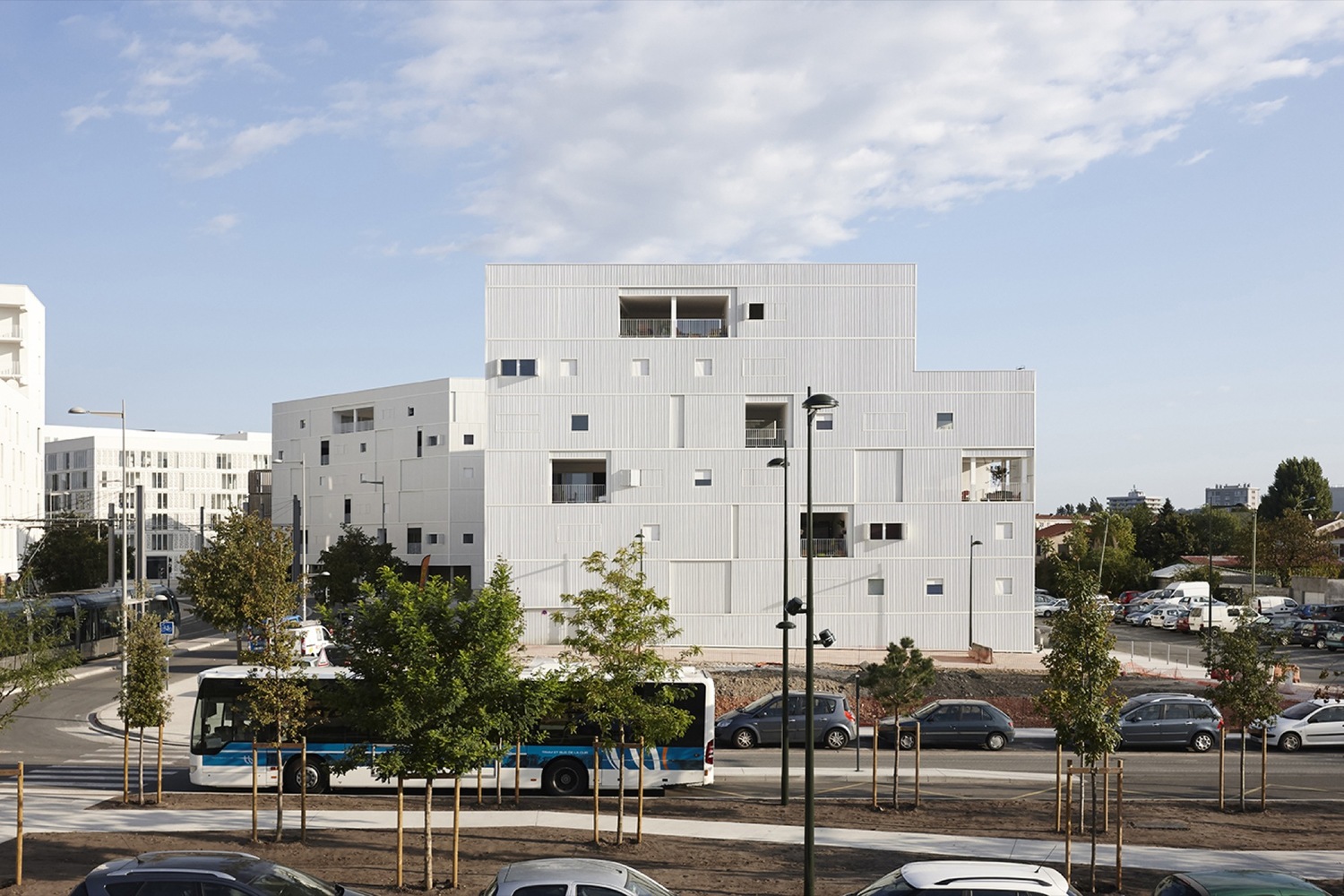
EKKO on the right bank carries the climate argument into private housing. Duncan Lewis's practice Scape built its 49 flats for the developer Groupe Launay in hemp concrete, timber and terracotta, with a five-level shared garden of suspended trees to cool the building. It was finished in 2022. It is a market-rate scheme, so it answers how to build for a hotter Garonne rather than who can afford to live there.
Around these sits the largest project of all. Bordeaux-Euratlantique, the national development zone around Saint-Jean station, covers 738 hectares and plans about 20,000 homes. It was planned around the station the new line would serve. The retrofit, the straw houses and the leased land are what Bordeaux has built for the people already here. The city has the pieces; it has not yet decided how many of them to make.
References
Statistics7Click on any number to see the source
Housing market
Adaptive reuse & vacancy
Population & migration
From our library12
- Aquitanis (office public de l'habitat de Bordeaux Métropole) — Organisation
- Logement : le plan Moudenc pour empêcher l'explosion des prix à Toulouse — Knowledge
- The regulatory aspects of short-term rentals in the EU — Knowledge
- 107 000 nouveaux Girondins — Knowledge
- « Un pic historique de demande » de logement social en Nouvelle-Aquitaine — Knowledge
- Logement : le projet libéral très flou de Cazenave, les idées de Hurmic pour « bâtir la ville sur la ville » — Knowledge
- Société Coopérative d’Intérêt Collectif d’HLM Le Toit Girondin — Organisation
- COO.SOL (Organisme de Foncier Solidaire de Bordeaux Métropole) — Organisation
- Encadrement des loyers : Bordeaux va-t-elle prolonger l'expérience ? — Knowledge
- Jede Minute wird in Europa ein Gebäude zerstört — Knowledge
- Le Carré Lumière — Project
- EKKO — Project
Further sources25
- Immobilier à Bordeaux : l'effet TGV de 2017 s'estompe — FranceTransactions · 2019
- Logement : le projet de Cazenave, les idées de Hurmic — Rue89 Bordeaux · 2026-03-20
- Loyers, agglomération de Bordeaux — Observatoires des loyers · 2024
- 107 000 nouveaux Girondins — a'urba · 2026-01-26
- Le Bail Réel Solidaire en Gironde — a'urba · 2025
- Attribution des logements sociaux : cotation des demandes en Gironde — Préfecture de la Gironde · 2025-02
- Un pic historique de demande de logement social en Nouvelle-Aquitaine — France 3 Nouvelle-Aquitaine · 2025-11-19
- La Cité Frugès à Pessac — Ministère de la Culture
- Le Toit Girondin — Groupe Soïkos · 2025
- Élections municipales à Bordeaux : les résultats — Ville de Bordeaux · 2026-03-22
- Dispositif Relance Logement 2026 et statut du bailleur privé — AFEDIM · 2026-02-26
- Dispositif d'encadrement des loyers à Bordeaux — Préfecture de la Gironde
- Encadrement des loyers : Bordeaux va-t-elle prolonger l'expérience ? — Rue89 Bordeaux · 2026-06-08
- Encadrement des loyers : douze élus réclament sa prolongation — Batiweb · 2026-09-14
- Location touristique à Bordeaux : le guide pour les propriétaires — Ville de Bordeaux
- La reconversion des bureaux à Bordeaux — Rue89 Bordeaux · 2025-12-09
- Artificialisation des sols — Ministère de la Transition écologique
- Bordeaux, port de la Lune, patrimoine mondial — Ville de Bordeaux
- Transformation of 530 dwellings, Grand Parc Bordeaux — EUmies Awards · 2019
- A Bègles, inauguration de l'habitat participatif La Ruche — RTES
- Reinventing collective dwelling: 79 apartments by LAN — Metalocus · 2015
- EKKO, Bordeaux — BIG SEE
- Bordeaux-Euratlantique, des quartiers en devenir — INSEE · 2019-10-17
- Bordeaux possède le plus grand miroir d'eau artificiel du monde — Bouger à Bordeaux
- Pont Jacques Chaban-Delmas — Egis