The city inside the forest line
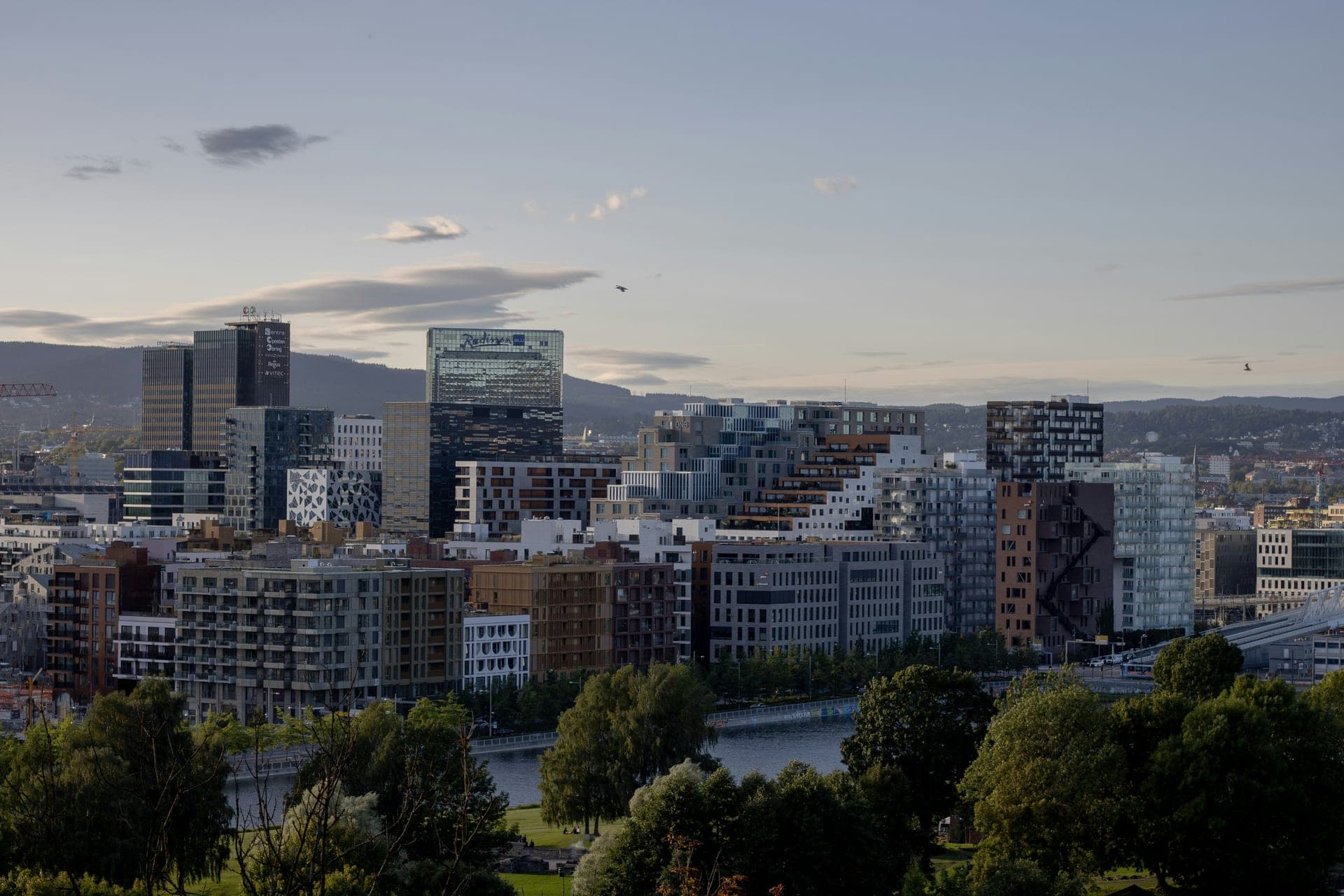
Oslo is a capital that lives inside a forest. Bydel Marka, the protected woodland borough, covers about two-thirds of the municipality, and a national act fixes the boundary that holds it there. The consequence for housing is absolute. Oslo cannot grow outwards, so every argument here about homes is really an argument about density, about land, and about who gets to stay.
Start with who holds what. Statistics Norway files 71% of Oslo households as owner-occupiers, among the highest shares of any European capital. The figure conceals the city's real structure, because Norwegian statistics count cooperative members as owners. Separate the cooperatives out and they are 32% of the stock in their own right. That is roughly 105,000 flats, held in about 1,750 separate borettslag (the Norwegian housing cooperative, in which members own the building together). Some 28% of Oslo residents live in one. Municipal rental housing is small beside that, at 3.5% of dwellings and about 11,000 flats. Genuine private rental accounts for 25.5% of homes, inside a renter share of 29%.
- Owners
- Owner-occupier39.0%
- Cooperative32.0%
- Renters
- Public & non-profit rental3.5%
- Private rental25.5%
Social housing in Norway is a rule applied to a home, not a tenure of its own. The social share is 4% of Oslo dwellings, allocated on income and need by the borough housing offices. It cuts across the slices above rather than sitting beside them, because a Husbanken-financed flat can be municipal, non-profit or cooperative. About 22% of households would qualify on income for a means-tested home or a housing allowance. Oslo counted roughly 800 people as homeless in its last point-in-time survey. Nationally the picture is worse: Husbanken put the number of homeless people at about 4,700 in 2024, with 7,079 households in temporary accommodation, 645 of them families with children. Europe-wide, the richest countries are not the ones with the least social housing.
Rent in Oslo is really five prices. A borettslag member pays about €14.5/m² a month in felleskostnader, the common charge covering maintenance and the cooperative's shared debt. A municipal tenant pays about €13.5/m². The median across the whole stock is €23.5/m², while a fresh contract costs €28/m². Furnished lets reach €30/m², and the serviced, no-lease tier goes to €42/m². The distance between the cooperative charge and the new-let price is where Oslo's housing inequality actually sits. The Deloitte Property Index places the city in the expensive half of its European benchmark.
- Municipal rental
- Cooperative (felleskostnader)
- All-stock median
- New contracts
- Furnished
- Serviced / flexible
Monthly rent per square metre. Cooperative and municipal figures are net cold; the furnished and serviced tiers are quoted gross, as the market sells them.
There is almost nothing standing empty to reclaim. Oslo's dwelling vacancy rate is 1.8% and the rental vacancy rate is 1.5%. Statistics Norway counted about 5,800 empty homes in the city, which is a rounding error against demand. Commercial property tells the opposite story. Office vacancy stands at 7.6% of a stock of 9.5 million m², leaving roughly 740,000 m² available, the equivalent of about 145 whole buildings. Short-term letting takes a further bite: an estimated 2,994 Airbnb listings run as full-time businesses.
People keep arriving. About 36,000 moved into Oslo in 2024, from elsewhere in Norway and from abroad, against roughly 2,200 residential building permits a year. Building is costly: construction runs at about €3,700/m² and residential land at €1,450/m². Output has been erratic rather than steady. The planning agency recorded 647 use permits in the second quarter of 2026 against 222 a year earlier, while start permits fell to 617 from 774. Consented capacity is not the bottleneck: the city's housing reserve held about 13,300 dwellings in adopted detailed plans on 1 January 2026.
A rising housing reserve can result both from more plan approvals and from reduced building activity. It does not automatically mean that the housing-supply situation is good.Hans Martin Osnes Aambø, section leader at Plan- og bygningsetaten, Oslo's planning and building agency
The squeeze has moved well past the poorest households. Housing costs are estimated to overburden 52.2% of Oslo households. Husbanken's rental-market review, published in April 2026, found that some ordinary occupational groups in the city now spend close to half their income on rent, and that one in three tenants is financially insecure. Rents in Norway's four largest cities have risen 32% since the first quarter of 2022, against consumer-price growth of a little over 20%. Supply thinned at the same time. Letting agents reckon one in five rental homes has permanently left the Oslo market since 2020. Rankings of what rent takes out of a local salary place Oslo among Europe's tightest, and the pattern of renters carrying the worst of the cost rise is continent-wide.

High house prices and rents are pushing many people out of the city or into difficult living conditions, with a build-up of social disadvantage in some parts of the city.What makes Oslo unusual is that it already owns the sector most European cities are trying to invent. A third of its homes sit inside cooperatives. The open question is what that sector is still able to do.
The share that Norway counts as a home you own
A borettslag owns a building; a member buys an andel, the share that carries the exclusive right to live in one flat. The share is financed like a house purchase and resold at market price, which is why the national statistics treat the member as an owner rather than a tenant. Part of the price stays behind as fellesgjeld, the cooperative's collective mortgage, serviced through the monthly common charge. Above the individual cooperatives sit the boligbyggelag, the member-owned building societies that develop new schemes and manage existing ones. Membership carries forkjøpsrett, a pre-emption right that lets a member step into an agreed sale at the agreed price. In 2025 it was exercised in 14% of the 31,646 transfers inside affiliated borettslag, so the queue is real rather than ceremonial.
The form began as a municipal answer to a shortage, not as a movement on the margins. OBOS was founded in Oslo in 1929 as a savings and building society for working households, and the city supplied it with land. After 1945 the state development bank Husbanken financed the boligbyggelag at scale. Oslo's outer districts were built almost entirely this way. Prices inside borettslag flats were regulated for decades. Deregulation from the late twentieth century turned the share into an ordinary market asset. That arc is familiar: a cooperative sector wins scale, then drifts towards commodification. It is what Jardar Sørvoll of Oslo Metropolitan University and his co-authors trace across Europe, and the same reforms rewrote the Swedish bostadsrätt.
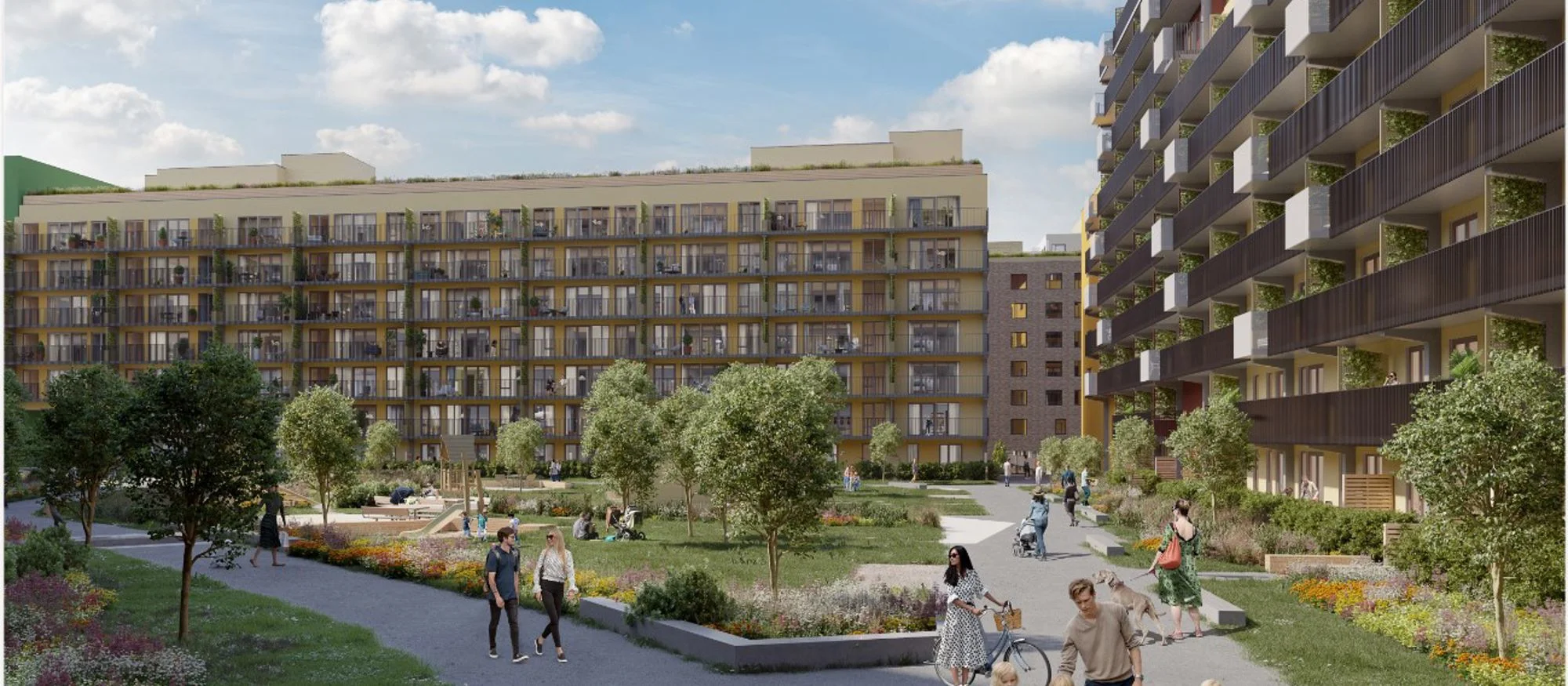
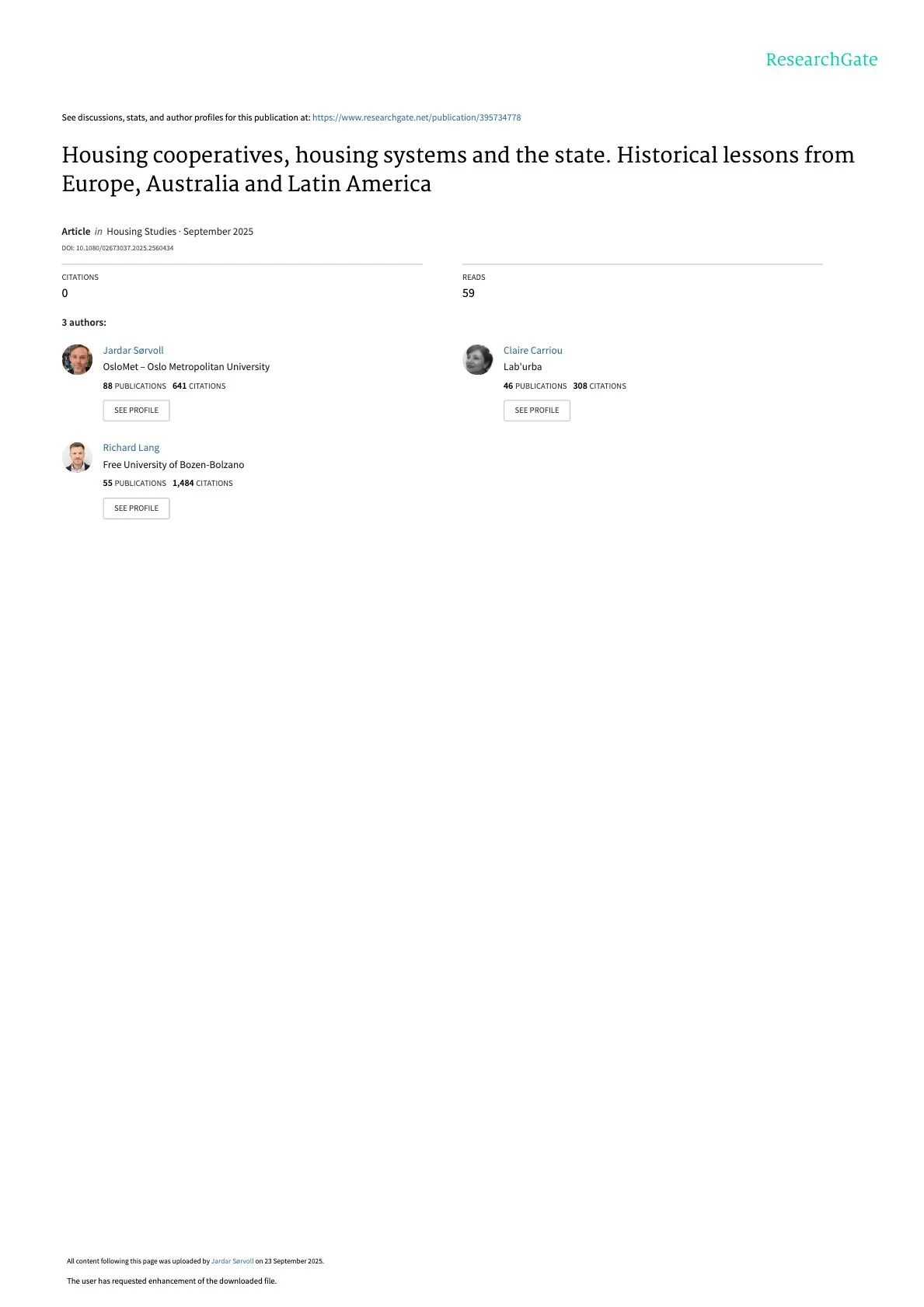
Today the sector is large, old and squeezed. NBBL, the federation of Norwegian housing cooperatives, counts 35 boligbyggelag with 1,365,603 members between them, managing 17,519 housing companies that hold 658,185 dwellings. Oslo's borettslag stock sits inside those totals. Scale has not shielded anyone from the building slump. The boligbyggelag started only 1,836 homes nationally in 2025, against roughly 4,300 a year before the downturn. OBOS has been pushing back. It had begun 1,820 homes by the third quarter of 2025, 887 more than a year earlier. Over 3,300 were under construction, many launched at a lower sales rate than it would normally accept.
Underneath the federations sits a much newer cluster. Tøyen boligbyggelag was founded by residents of one inner-east neighbourhood in the mid-2010s, around the time the contested sale of part of the self-organised Hauskvartalet put community-held property on the city's agenda. Its work is unpaid and its ambitions are measured in single buildings. The two clusters do not face the same obstacle. The large societies are held back by construction costs and sales risk; the small ones cannot reach land at all. Comparative work on what makes cooperative housing scale keeps returning to that second problem.
The boligbyggelag model stands strong, not least because the societies have been good at adapting to new times and a demanding housing market.Bård Folke Fredriksen, managing director of NBBL, the federation of Norwegian housing cooperatives
Government at both levels treats the cooperative sector as a route into ownership rather than as a non-market tier to be protected. OBOS Bostart sells a new flat below market price with a repurchase clause attached. Deleie lets a buyer take a half-share in a flat and rent the remainder from the developer, buying up over time. Oslo built its own vehicle on that logic rather than on the cost-rental model its neighbours use. That choice, ownership first, is where the city's politics begins.
The national target and the city's own land
National housing policy runs on one number. Bustadmeldinga, the 2024 white paper on housing, set four priorities. More people should own. The rental market should be safer. The existing stock should be kept while new homes are built. Those who cannot house themselves should get help. The headline commitment is to start 130,000 new dwellings by 2030. Behind it sit a strengthened bostøtte (the state housing allowance), more startlån (municipal start loans for buyers who cannot raise a deposit), and Kobo, Husbanken's digital allocation system for municipal housing. In February 2026 a Storting minority asked for a new housing-social strategy. The majority refused, arguing the white paper already covered the ground. From 1 January 2027 Husbanken, the Norwegian State Housing Bank, merges with Direktoratet for byggkvalitet, the building-quality directorate, into one housing and building directorate.
Oslo is unusual in Norwegian terms because it is both a municipality and a county, so no regional tier sits between the city and the state. The state writes tenancy law, subsidy rules and property tax. The city controls land. In April 2026 the Conservative and Liberal byråd put a new kommuneplanens arealdel, the municipal land-use plan, out for consultation. It designates 70 development areas and makes room for up to 121,000 dwellings in all, with 63,000 to 90,000 of them before 2040. Plan- og bygningsetaten keeps the running tally of what has actually been consented, and reads a swelling reserve more coolly than the byråd does.
Oslo's own affordability instrument is called tredje boligsektor, a third housing sector. The 2019 city government launched a municipal version, bundling reduced rent for resident labour, starter flats and rent-to-own under one label. Oslobolig, the company the city set up with OBOS, Bane NOR Eiendom and NREP, is the operating piece. It listed 47 deleie homes across five projects in November 2025, against a founding ambition of 1,000 within five to seven years. Three pilot buildings were named in 2019 and none was delivered as planned. Hagegata 30 at Tøyen, empty since 2014, was sold in 2025 to become student housing.
The term 'third housing sector' is used regularly by campaigners and politicians who believe something must be done about the housing market, but it lacks a clear and established meaning. It can create confusion for the people who have to change laws and practice, and it can become a pillow to rest on.The vacancy reply has to run through commercial buildings, because there are no empty homes worth recovering. Oslo has neither a vacant-homes tax nor an empty-buildings register, and at the dwelling vacancy rate recorded above neither would release much. Converting commercial floor space is the lever actually available. The binding constraint there is regulatory: a change of use needs a fresh zoning decision, and that is slow. European work on reclaiming vacant space and on community-led adaptive reuse reaches the same verdict, that governance and finance bite long before the buildings do.
Climate policy and housing policy are the same file here. Oslo's target is direct emissions 95% below the 2009 level by 2030, and the measures already adopted are projected to deliver 70%. One of them is a local regulation, in consultation since September 2025, requiring large construction sites to run zero-emission or biogas machinery on a stepped path to 2030. The standing stock is the harder half. Only 26% of Oslo dwellings sit in energy bands A or B. Deep renovation runs at about 1.5% of the stock a year. Cooperative and municipal landlords are the practical vehicle for changing that. They hold buildings long enough for a retrofit to repay itself, a point European work on decarbonising affordable housing makes repeatedly.
If lifetime is not taken sufficiently into account, we risk introducing climate requirements that penalise buildings which are in practice very sustainable over time.The sharpest argument is about renting. Husleielovutvalget, the committee that reviewed the tenancy act, delivered a draft boligleielov in October 2024. It proposed lifting the minimum fixed term from three to five years, and giving tenants a right of extension. It also opened the door to market adjustment of rent alongside the annual consumer-price step. On 18 September 2026 an alliance called Boligleieløftet formed to fight that last point. Its demand is that rent follow the consumer price index and nothing more. Developers read the same market from the opposite end, and the cooperative sector is on their side of this one.
If that target is to be realistic, powerful measures must be put in place at both national and local level.We think part of the reason for the rise in terminations is that landlords are doing it so they can sign new tenancies at a market-adjusted price and a higher rent.The evidence base is close at hand. The European Network for Housing Research brings its annual conference to Oslo in 2026. Comparative studies of cooperative housing across 22 European countries and of cost-based social renting give the city's choices a frame its own debate rarely supplies.

- 1929[source]
OBOS is founded
Oslo's savings and building society is established to build flats for working households, and becomes the template for the national boligbyggelag system.
- 2019[source]
Oslo launches a municipal third housing sector
The city bundles reduced rent for resident labour, starter flats and rent-to-own under one label, and names three pilot buildings. None is delivered as planned.
- October 2024[source]
A new rental law is drafted
Husleielovutvalget delivers a draft boligleielov proposing longer minimum terms, a right of extension for tenants, and a new mechanism for adjusting rent.
- February 2026[source]
The consented pipeline is counted
Oslo's housing reserve holds about 13,300 dwellings in adopted detailed plans, plus an area reserve of some 38,600 more.
- April 2026[source]
Husbanken reports on the rental market
The second national rental-market review finds commercial letting in Oslo falling, four in ten municipalities short of suitable homes, and one in three tenants financially insecure.
- April 2026[source]
A new land-use plan goes out for consultation
The byråd proposes 70 development areas and room for up to 121,000 dwellings, of which 63,000 to 90,000 before 2040.
- June 2026[source]
Oslo rents rise fastest in the country
Rents climb 3.6% in the quarter and 4.7% over four quarters, the strongest of Norway's four big cities.
- September 2026[source]
Boligleieløftet launches
Tenant, consumer, landlord and trade-union organisations form an alliance demanding that rent follow the consumer price index and nothing else.
- 1 January 2027[source]
Husbanken and DiBK merge
The state housing bank and the building-quality directorate become a single housing and building directorate.
- 2030[source]
The national housing target falls due
The government's commitment to start 130,000 new dwellings reaches its deadline.
- 2030[source]
Oslo's climate deadline
Direct emissions are to be 95% below the 2009 level; measures adopted so far are projected to reach 70%.
- 2040[source]
The plan horizon
The land-use plan makes room for between 63,000 and 90,000 new homes by this date, a buffer above the city's own projected need.
Prototypes on the old industrial edge
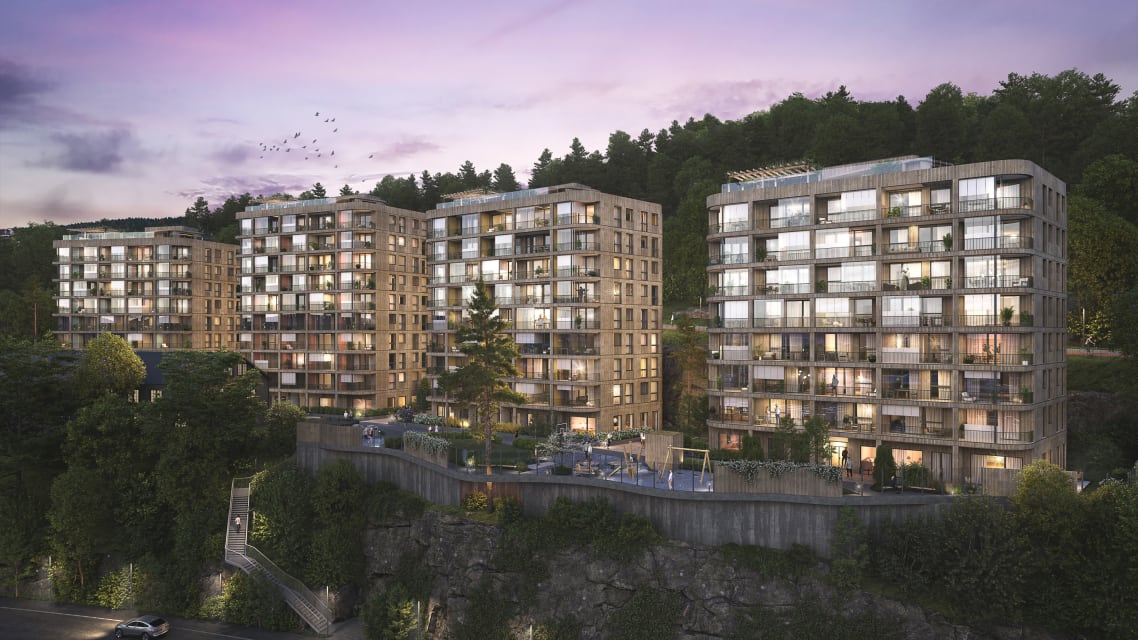
Fyrstikkbakken 14 is the clearest demonstration that Oslo's climate rules and its housing output can be one project. Four blocks at Østensjø hold 160 flats, built in cross-laminated timber and low-carbon concrete, with total greenhouse-gas emissions cut by 56% against the reference case. Its more interesting invention is social. The scheme sets aside 260 m² of delemeter, shared square metres, holding a kitchen, workshop, hobby room, gym and four roof terraces that residents use instead of private space they did not have to buy. It was the first commercial housing scheme built to the environmental brief of FutureBuilt, the regional programme behind most of the city's low-carbon demonstrators.
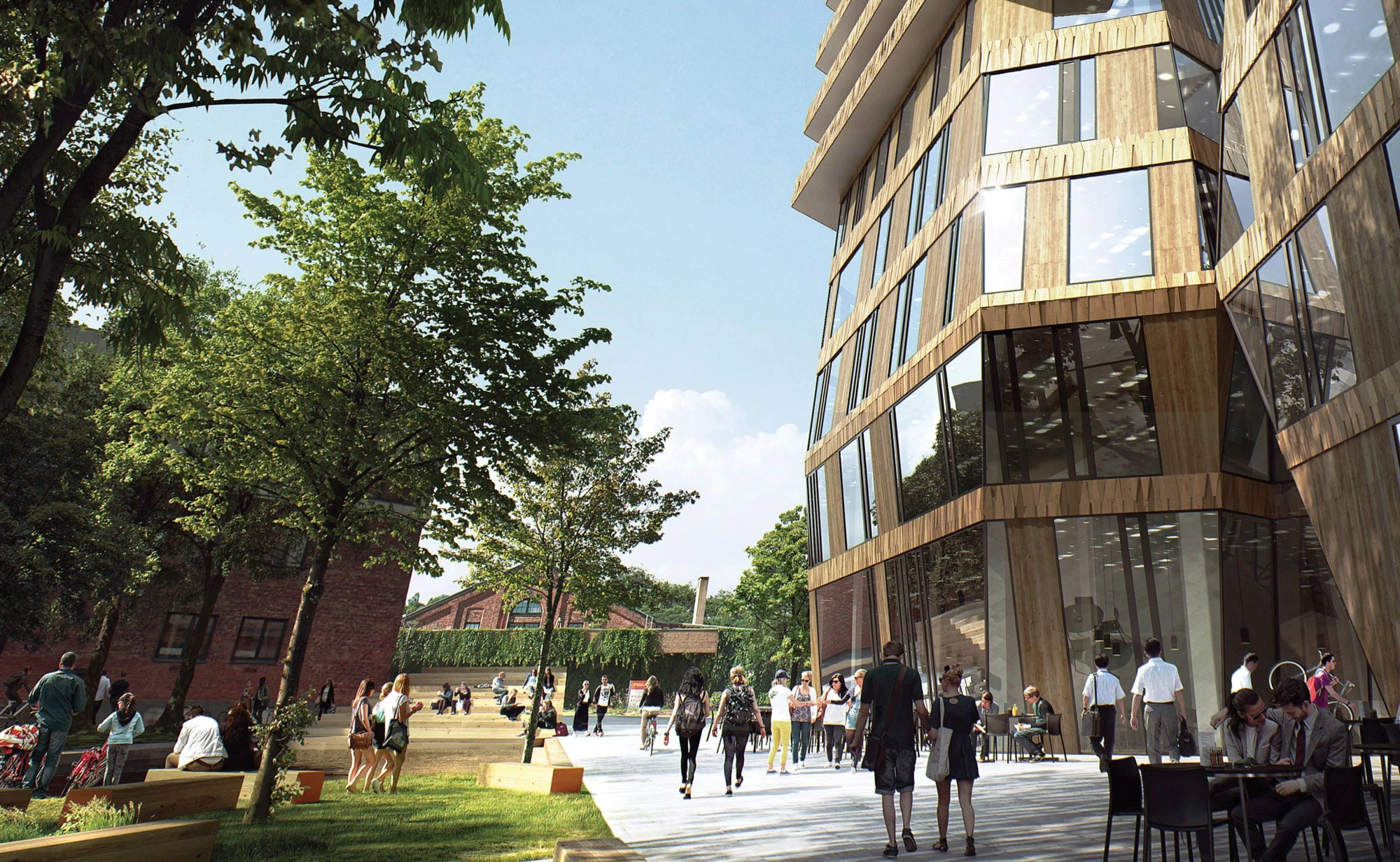
OBOS Living Lab at Vollebekk is a block of flats that doubles as a research instrument. It holds 34 rental homes, from single rooms and shared collectives to four-room family flats, with 60 or more residents living in them while researchers watch. The three lower floors test sharing and flexibility; the upper floors test technology in otherwise ordinary apartments. Internal walls can be moved between tenancies, so the building itself is the variable. No speculative developer would carry that cost, which is precisely the argument for a builder that answers to members rather than to a sales target.
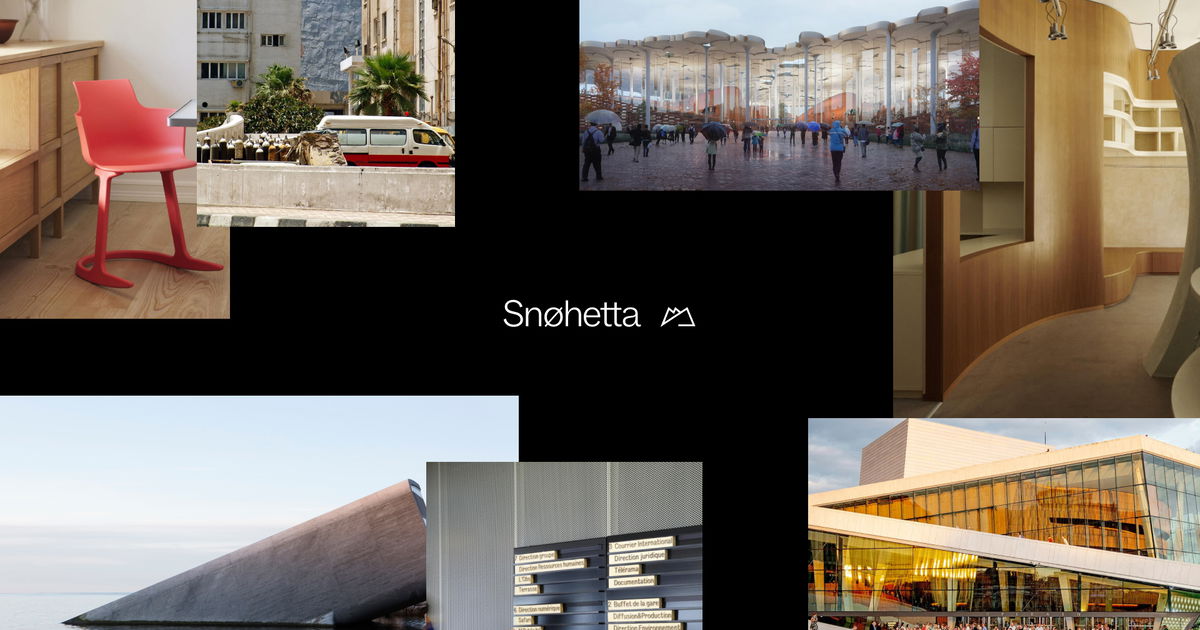
Vertikal Nydalen took the opposite kind of risk. Snøhetta designed an 18-floor building on the Akerselva with restaurants at street level, offices above and apartments on top, then removed the mechanical systems. It buys no energy at all for heating, cooling or ventilation. Geothermal wells, a low-exergy loop and an angled façade that drives air through self-adjusting vents do the work instead. The design needed exemptions from both the technical building regulations and the labour inspectorate before it could be built, which says something useful about where Norway's retrofit problem actually sits.
Kristian Augusts gate 13 proved that the material already standing in Oslo can be re-used at building scale. Mad arkitekter and the owner Entra stripped a 1950s office block and rebuilt it largely from salvage, including hollow-core slabs lifted out of the government quarter and gratings from a demolished swimming baths. It is an office, not housing. What it produced for housing is a documented supply chain, a set of contracts and a working reuse method. Any conversion of the city's available office floors would have to run on exactly that.
Tøyen boligbyggelag is the smallest actor here and the most instructive. Residents of one inner-east neighbourhood founded their own building society, then did the work a developer would normally do. They produced a full proposal for Hagegata 30, the municipal block on Tøyen torg that has stood empty since 2014. It carried worked models for finance, governance and shared functions. The city sold the block instead. The capability the neighbourhood built did not disappear with it.
Cultura Bank sits behind a good deal of work of that kind. Oslo's social-banking institution lends against ecological and cooperative purpose rather than against resale value alone, which is the input small groups almost never find. Architectural capacity is not the constraint either. Nordic Office of Architecture and DARK Architects both work at housing scale in the city. The research on what cooperative housing needs in order to grow is unambiguous: the missing inputs are patient land and patient money.


So where does the next Oslo get built? Not outwards, because the forest line settles that. It gets built on the old industrial edge the city is already converting, and inside the consented plans sitting unbuilt in the reserve. The sector with the balance sheet to take that risk when the market will not is the cooperative one, which already holds a third of the city's homes. The materials are on the table. Getting patient capital to the small groups as easily as it already reaches the large ones is the unfinished part.
References
Statistics25Click on any number to see the source
Housing market
Tenure & affordability
Cooperative, social & public
Adaptive reuse & vacancy
Population & migration
From our library22
- The changing role of cooperatives in the Swedish housing regime — Knowledge
- Snøhetta — Organisation
- FutureBuilt — Organisation
- Fyrstikkbakken 14 — Project
- Housing Needs and Cooperative Housing Models: A Scoping Review — Knowledge
- Can you afford to live here? Europe’s cities ranked by rent-to-salary ratio — Knowledge
- The richest European countries have more social housing — Knowledge
- Cost-based Social Rental Housing In Europe — Knowledge
- Nordic Office of Architecture — Organisation
- Cultura Bank — Organisation
- Housing cooperatives, housing systems and the state. Historical lessons from Europe, Australia and Latin America — Knowledge
- Property Index - Overview of European Residential Markets — Knowledge
- Europe strains under rising prices as renters bear brunt of housing crisis — Knowledge
- Housing Cooperatives in Europe - Resilience and Adaption to Changing Need — Knowledge
- OBOS — Organisation
- Open Heritage - Community-Driven Adaptive Reuse in Europe: Best Practice — Knowledge
- Accelerating decarbonisation of current and future affordable housing in Europe — Knowledge
- Reclaiming Vacant Spaces to Tackle Housing and Homelessness Crises in Europe — Knowledge
- Affordable Cooperative Housing: An International Typology, Supportive Institutions and Public Policies — Knowledge
- DARK Architects — Organisation
- MAD architects — Organisation
- ENHR Annual Conference 2026 — Event
Further sources20
- Boligreserve i Oslo ved inngangen til 2026 — Oslo kommune, Plan- og bygningsetaten · 12.02.2026
- Kraftig økning i brukstillatelser i andre kvartal 2026 — Oslo kommune, Plan- og bygningsetaten · 18.08.2026
- Innstilling 145 S (2025-2026) om nasjonal boligsosial strategi — Stortinget · 24.02.2026
- Boligleieløftet - en bred allianse for en ny boligleielov — Leieboerforeningen · 18.09.2026
- Leiemarkedet under sterkt press — Leieboerforeningen · 22.04.2026
- Fortsatt oppgang i leieprisene — Eiendom Norge · 25.06.2026
- Boligblokker er klimavinnere — NBBL - Norske Boligbyggelag · 20.01.2026
- Boligbyggelagene vokser i et tøft boligmarked — NBBL - Norske Boligbyggelag · 16.06.2026
- Klimabudsjett 2026: vedtatte virkemidler for direkte utslipp — Klimaetaten, Oslo kommune · 2026
- Fyrstikkbakken 14 forbildeprosjekt — FutureBuilt · 2024
- Leiemarkedet koker i Norge: Veldig tøft akkurat nå — Nettavisen · 2026
- Hva er 3. boligsektor i Oslo og hvorfor skaper det forvirring? — Vårt Oslo · 13.04.2026
- Trapper opp boligbyggingen tross resultatfall — OBOS · 28.10.2025
- Om OBOS — OBOS · 2026
- OBOS Living Lab: en testarena for fremtidens hjem — OBOS · 2026
- OsloBolig nyhetsbrev november 2025 — OsloBolig · 21.11.2025
- Nå kommer de første Osloboligene — Oslo kommune · 13.09.2022
- Vertikal Nydalen — Snøhetta · 2024
- Vil bygge 121 000 nye boliger i Oslo — Arkitektur · 14.04.2026
- Regjeringen slår sammen Husbanken og DiBK — Norsk Byggebransje · 2026