The green capital that sold its rentals
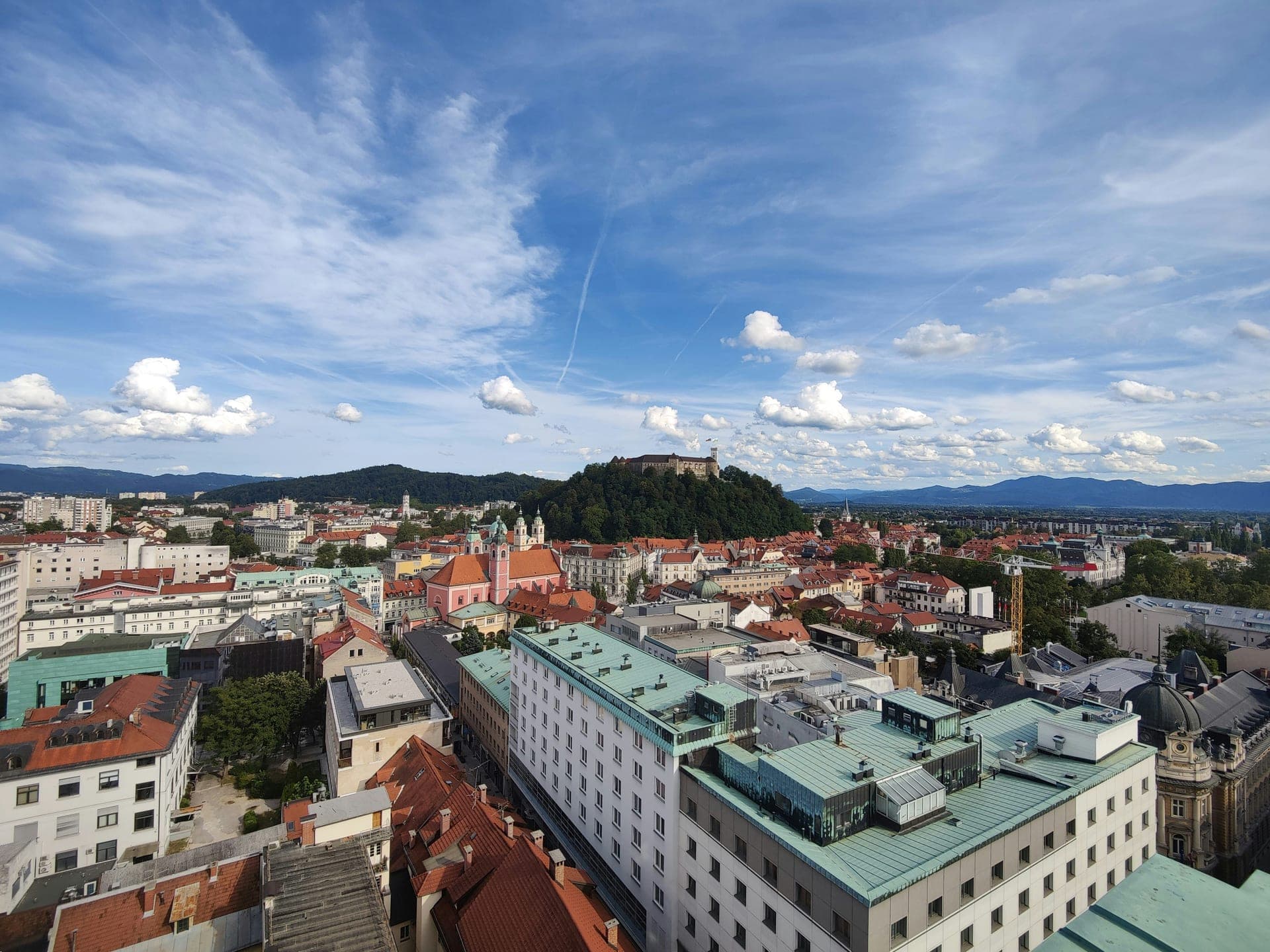
Ljubljana is a compact green capital of about 284,293 people, built along the Ljubljanica river beneath a hilltop castle and the bridges of Jože Plečnik. It is one of Europe's most liveable small capitals, with three-quarters of its area under green cover and a car-free historic core. It is also a city whose housing market was reshaped in a single decision: after independence in 1991, Slovenia let tenants buy their socialist-era flats at a discount, and the public rental stock all but vanished overnight.
The tenure mix still carries that legacy. Around 73% of households own their home and 27% rent, one of the highest ownership shares of any EU capital. Within the rental side, municipal and state landlords hold only about 3.5% of all dwellings — roughly 4,200 flats run by the city's Public Housing Fund and the national Housing Fund — and private landlords let about 20%. Slovenia counts a further 3.5% as a cooperative-style non-profit tier, but this is an analogue: the country has almost no housing cooperatives as a legal tenure, and the figure really describes Housing-Fund non-profit rentals. The genuinely non-market tier of public plus non-profit housing therefore covers only about 7% of the stock, among the thinnest in Europe.
- Owners
- Owner-occupier73.0%
- Renters
- Public & non-profit rental3.5%
- Cooperative3.5%
- Private rental20.0%
Ljubljana treats social housing as a means-test rather than a tenure. Only about 1.5% of the city's dwellings are reserved for social-housing purposes, a targeting layer that sits on top of the small public stock rather than forming a tenure of its own. Roughly 12% of residents would qualify on income, far more than the system can house: Eurofound's survey of housing exclusion records about 2,500 households on Ljubljana's waiting list, where only one applicant in ten is granted a non-profit flat.
Five tiers of rent stack up across the city. Tenants in the regulated municipal flats pay around €4.50 per square metre, and the non-profit Housing-Fund rentals about €4.40. Step out to the open market and the figures jump: the all-stock median runs near €7.40, a newly-let apartment asks a median €16.50, and a furnished, serviced let reaches €18 per square metre gross. From the regulated floor to a fresh market contract is a gap of more than three to one — Ljubljana's affordability problem condensed into a single column.
- Cooperative
- Public/municipal housing
- All-stock median
- New contracts
- Furnished / serviced (gross)
Net-cold monthly rent per square metre by tier (furnished is gross, all-in). The regulated non-profit floor sits far below the market median; a newly-let private contract runs more than three times the municipal rate.
Idle stock matters here, but tourism bites harder. Counted at the 2021 census, residential vacancy ran to about 8% — some 5,200 unoccupied flats, much of it second homes and unmodernised stock. The office market is tighter still, with around 73,225 square metres standing empty, roughly 3% of the modern stock. The real drain is short-term letting: entire-home holiday rentals cluster heavily in the small historic core, where a one-bed fetches a median €110 a night, far more than a long-term tenant would pay. Because that pressure concentrates in exactly the riverside streets every visitor walks, it thins the long-term supply right where demand is hottest.
Supply cannot keep up with the people arriving. The university and the public sector pull in roughly 8,500 moves a year of net inbound migration, yet the city issues only about 1,500 housing permits a year. The strain now reaches the middle of the income distribution, not just the bottom. The European Commission's affordable-housing analysis finds that with a third of an average income, a Ljubljana resident can buy only 39 square metres of a home, against 57 nationwide — a capital-city penalty that has pushed young families and key workers out of ownership. Average asking rents have climbed into four figures a month, and the same survey of housing exclusion records the Public Housing Fund's evictions rising to their highest level in years. Almost dormant since 1991, the cooperative idea is being revived as one answer to exactly this gap.
Slovenia has no systematic development policy that would build a functioning housing system.Building the cooperative Slovenia never had
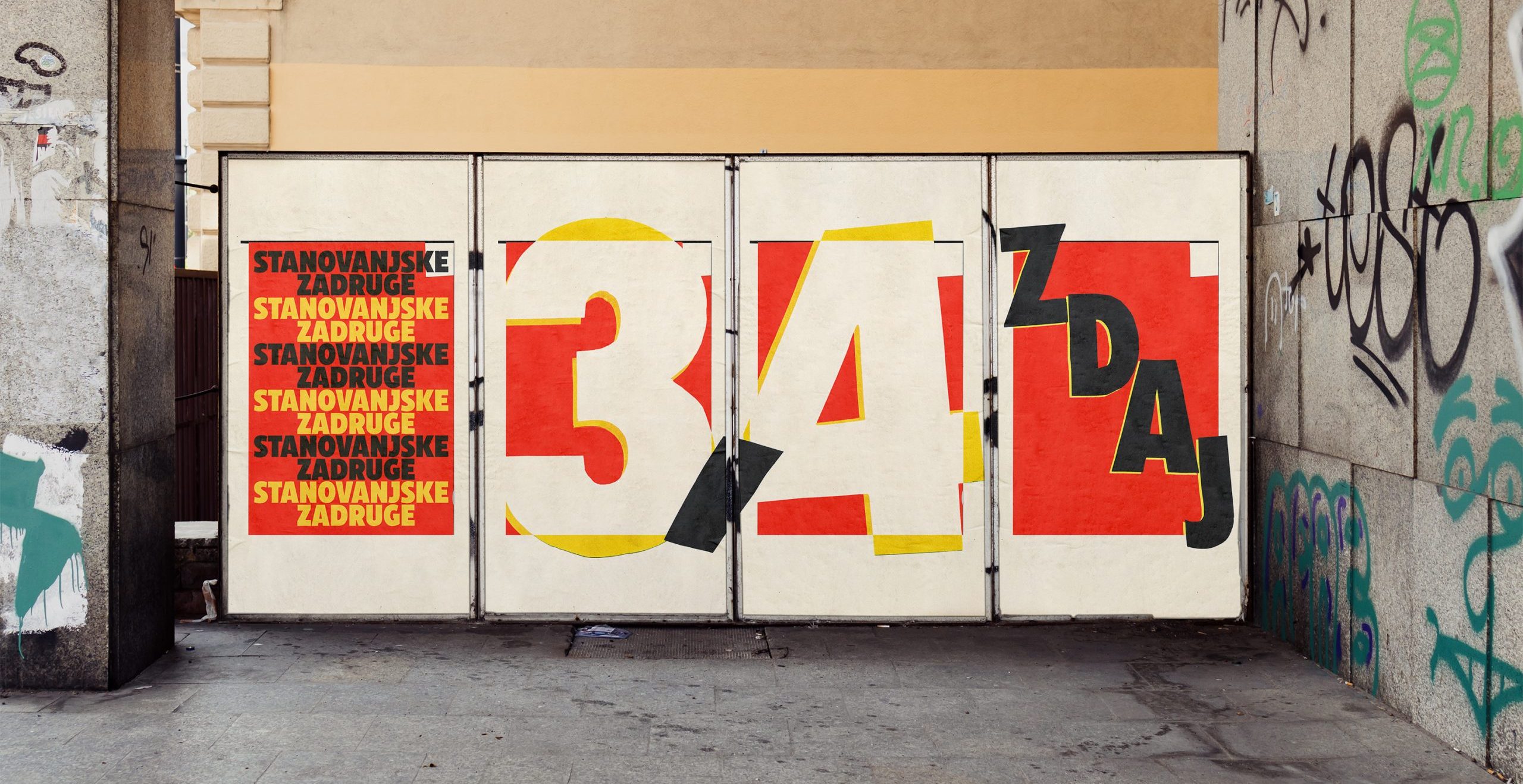
The Slovenian housing cooperative is, for now, mostly an aspiration. There is no established stanovanjska zadruga — housing cooperative — tradition of the Viennese or Zurich kind, and Slovenian law does not yet recognise a housing cooperative as a distinct provider with its own rules. The model being built is a rental cooperative: members would jointly invest, the municipality would supply land on a long lease, and the homes would stay collectively owned and permanently off the speculative market, rather than convert to individual ownership.
The history is one of absence, not depth. Slovenia had producer and consumer cooperatives under socialism, but housing was delivered by the state and the enterprises, not by housing cooperatives. The 1991 right-to-buy then privatised almost the entire rental stock, so there was no cooperative sector to revive — only a memory of collective provision and a market that had swung hard toward ownership. For two decades the cooperative was simply not part of the Slovenian housing conversation.
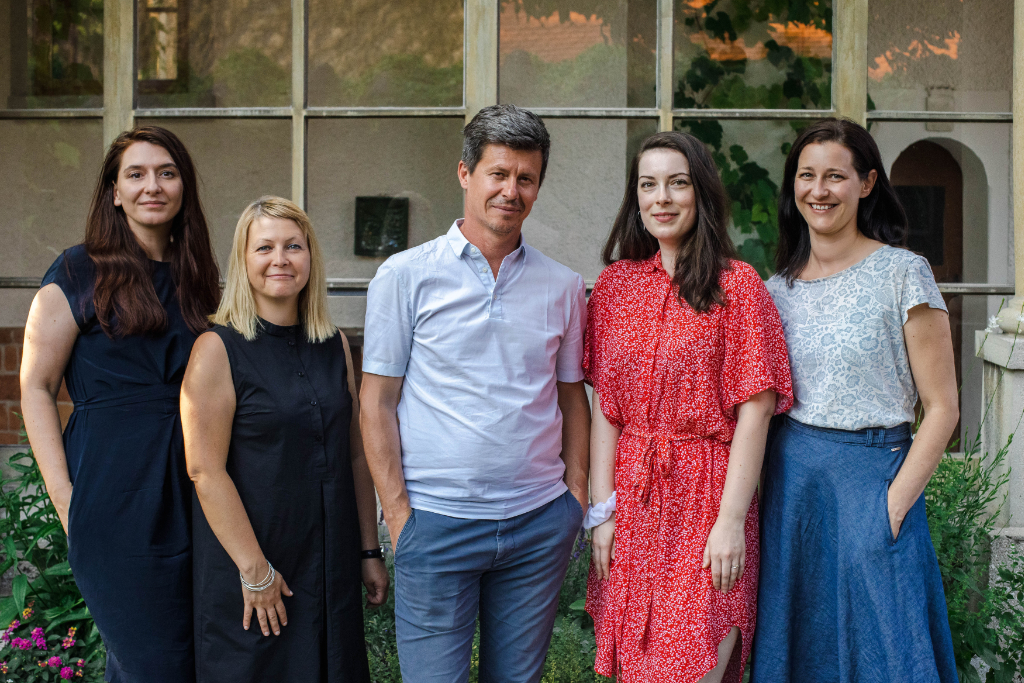
Today the live actors are few but distinct. The pioneer is Zadrugator, founded in 2016 by students and young workers and modelled on Zurich's More than Housing, which has spent years negotiating a first pilot with the city's Public Housing Fund and is a member of the pan-European MOBA network of central- and south-east-European cooperatives. Alongside it sit the public delivery bodies that already build non-profit rentals — the city's Public Housing Fund and the national Housing Fund — which behave like the cooperative's nearest institutional cousins even though they are public, not member-owned. The clusters face different walls: Zadrugator's problem is structural, the missing legal form and the missing low-interest finance, while the public funds' problem is volume, the sheer gap between a waiting list and a build rate. The MOBA network frames both as the same regional task, building the first cooperatives in countries marked by the shared experience of socialism.
Where the state places the cooperative tells you where the politics is heading. The 2025 housing laws, for the first time, let non-profit housing organisations draw on the national financing programme alongside the public funds — the legal door a rental cooperative needs. The recognised bottleneck is finance: patient, long-term capital at rates a non-profit can carry. That is exactly the gap a catalytic-capital investor report maps across central-European capitals.
Rebuilding the rental tier, ten years out
Ljubljana's housing politics is the politics of rebuilding what 1991 sold. Zoran Janković has led the city since 2006, and his administration's lead instrument is the municipal Public Housing Fund, JSS MOL. The fund now holds about 4,666 units and has set out to roughly double that: with the projects under way it expects to add some 6,000 homes by 2045 and pass 10,000 in total, after handing over 88 new non-profit flats in the Zelena Jama estate in 2025. The mayor argues prices could fall if three things happen — a cap on short-term letting, more student beds, and simply more building.
Two hands work the controls. The city owns land and runs JSS MOL; the national government sets the legal frame and the money. In July 2025 parliament adopted an amended Housing Act and a new public-rental financing law, the headline answer of the government's Ministry for a Solidarity-based Future. The financing law commits €100 million a year and targets 20,000 new public rental flats nationwide by 2035, with at least €75 million a year flowing to the national Housing Fund for its own building and for co-financing municipalities and non-profit providers. The Fund's flagship, Soseska Novo Brdo, already shows the scale the law wants to repeat: 498 public rental dwellings in 18 buildings on the city's eastern edge.
The cooperative now sits deliberately inside that frame. The amended law lets non-profit housing organisations enter the financing system for the first time, the legal opening a rental cooperative such as Zadrugator has waited years for, and the city has been examining a pilot of 30 to 40 flats on municipal land. Critics in the planning and housing-research institutes warn that the reform is not finished: a joint response in our context flagged that the new accessible-housing vehicle is loosely defined and could change rents or sell flats with little protection for tenants, and the country's own audit office called the governance arrangement high-risk.
The idle stock from §1 gets a partial reply in policy. There is no vacant-homes tax, but the city is moving on the sharper problem, short-term letting, with a plan to confine holiday rentals in apartment buildings to July and August, backed by a national hospitality law proposing a 60-day, six-bed ceiling and co-owner consent. The slow permitting rate remains the binding constraint, and the menu of carrots and sticks for returning empty homes to use, set out in a primer on tools for tackling vacant housing, is only lightly applied here.
For a Green Capital, climate and affordability have become one file. Ljubljana's housing stock averages around 45 years old, only about 16% of dwellings are energy-efficient, and the renovation rate crawls at roughly 0.8% a year, far short of EU deep-retrofit targets. The city ties this to its Green Capital identity and its 2030 climate-neutrality goal. A national renovation hub, the re-MODULEES climate office, gives residents free advice and routes them to the Eco Fund's subsidies, and the public funds' new building is where low-carbon construction can scale. That links the climate goal directly to the non-market tier the country is trying to grow.
- 1991[source]
The Jazbinšek law and mass privatisation
After independence, the Housing Act lets sitting tenants buy their socialist-era flats at deep discounts. Within a few years most of the public rental stock is sold into private ownership, leaving Slovenia with one of the highest owner-occupation rates in Europe.
- 2000[source]
Housing Fund of the Republic of Slovenia
The national Housing Fund (SSRS) is established to finance and deliver public rental housing — the main state instrument for rebuilding the rental tier the privatisation sold off.
- 2016[source]
European Green Capital
Ljubljana wins the European Green Capital Award after pedestrianising its centre and expanding its parks, setting the sustainability frame the city now ties its housing renovation goals to.
- 2016[source]
Zadrugator founded
A group of students and young workers found Zadrugator to build Slovenia’s first genuine rental housing cooperative, modelled on Zurich, and join the pan-European MOBA network.
- 2021[source]
Novo Brdo neighbourhood opens
The Housing Fund completes Soseska Novo Brdo on the city’s eastern edge: 18 buildings and 498 public rental dwellings, including 25 assisted-living units — the largest single public-rental scheme in a generation.
- Apr 2024[source]
Zelena Jama hand-over
JSS MOL, the municipal Public Housing Fund, hands over the keys to 88 new non-profit rental flats in the Zelena Jama estate, part of a pipeline meant to lift the fund toward 10,000 units.
- Jul 2025[source]
New housing laws adopted
Parliament adopts the amended Housing Act and a public-rental financing law committing €100 million a year and 20,000 new public rental flats by 2035, opening the system to municipal funds and non-profit providers.
- 2026[source]
Airbnb cap proposed for the core
The city moves to confine short-term holiday lets in multi-apartment buildings to July and August, with a national hospitality law proposing a 60-day, six-bed ceiling and co-owner consent.
- May 2026[source]
Ljubljana named for 60-day short-let cap
The Ministry of Solidarity-Based Future lists Ljubljana among 14 municipalities where housing is least affordable and tourist lets are most intense. Short-term rentals of flats there will be capped at 60 days a year in 2027 and 2028. The city may relax the limit to up to 270 days.
- Jul 2026[source]
Litijska-Pesarska estate opens with 95 rental flats
JSS MOL, the municipal Public Housing Fund, opens the Litijska-Pesarska estate: 95 public rental flats in 3 buildings over a shared underground garage. 10 flats are adapted for people with limited mobility, and 2 units are set aside for shared-living communities.
- 2035[source]
20,000-flat horizon
The financing law’s headline target: 20,000 new public rental dwellings nationwide over a decade, with at least €75 million a year flowing to the Housing Fund for its own construction and for co-financing municipalities and non-profit providers.
From the post-independence privatisation through the Green Capital years to the 2025 financing laws and the 20,000-flat horizon.
Nobody in the argument disputes the goal; they split on pace and on safeguards. Simon Maljevac, the minister who holds the housing brief, frames the financing as the breakthrough, arguing the funds and municipalities had been blocked above all by a lack of money the new law now supplies. Klemen Ploštajner, the sociologist and Zadrugator co-founder who later joined the housing ministry, has long argued the deeper problem is the absence of any systematic, long-term housing policy at all. Their common ground is that the non-market tier must grow; their fault line is whether money alone, without a durable institutional system, will get it built.
One of the basic problems, mentioned above all by the funds and the municipalities, is the lack of financing.Novo Brdo, Rakova jelša and the first cooperative
Ljubljana's working examples run from the largest state-built neighbourhood in a generation to a single cooperative that has not yet broken ground, and the thread between them is a country relearning how to build non-market housing after privatising almost everything. They are set out below in descending order of state involvement — the national fund first, the municipal fund next, the member-owned pilot last — before the actors trying to make the model repeatable.
Soseska Novo Brdo is the clearest sign of the new state ambition. Built by the national Housing Fund on the city's eastern edge, it brings 498 public rental dwellings across 18 buildings, including 25 assisted-living units and an underground car park, the largest single public-rental scheme Slovenia has delivered in decades. Its caveat is location and pace: the site sits at the urban fringe, far from the pressured core, and at the scale the new law promises it would need to be repeated many times over to close the waiting-list gap.
JSS MOL's Zelena Jama hand-over is the municipal version of the same effort. In 2025 the city's Public Housing Fund took over 88 new non-profit flats near the BTC commercial district, most of them bought rather than built, in a pipeline meant to push the fund past 10,000 units. The friction is the one every Slovenian fund names: buying finished blocks on the open market is fast but expensive, and the pace still lags far behind a waiting list where only one applicant in ten succeeds.
Zadrugator's Rakova jelša pilot is the most decommodified version of the idea, and the hardest to realise. The cooperative has negotiated for years toward a first scheme of roughly 30 to 40 flats on municipal land, with members investing a tenth of the build cost and the rest borrowed, on the Zurich model, aiming at rents well below the market. It is still unbuilt: Slovenia lacked a legal form for housing cooperatives and a source of patient finance, the twin barriers the 2025 reform only began to lower. If it completes, it would be the first genuine rental housing cooperative in the country.
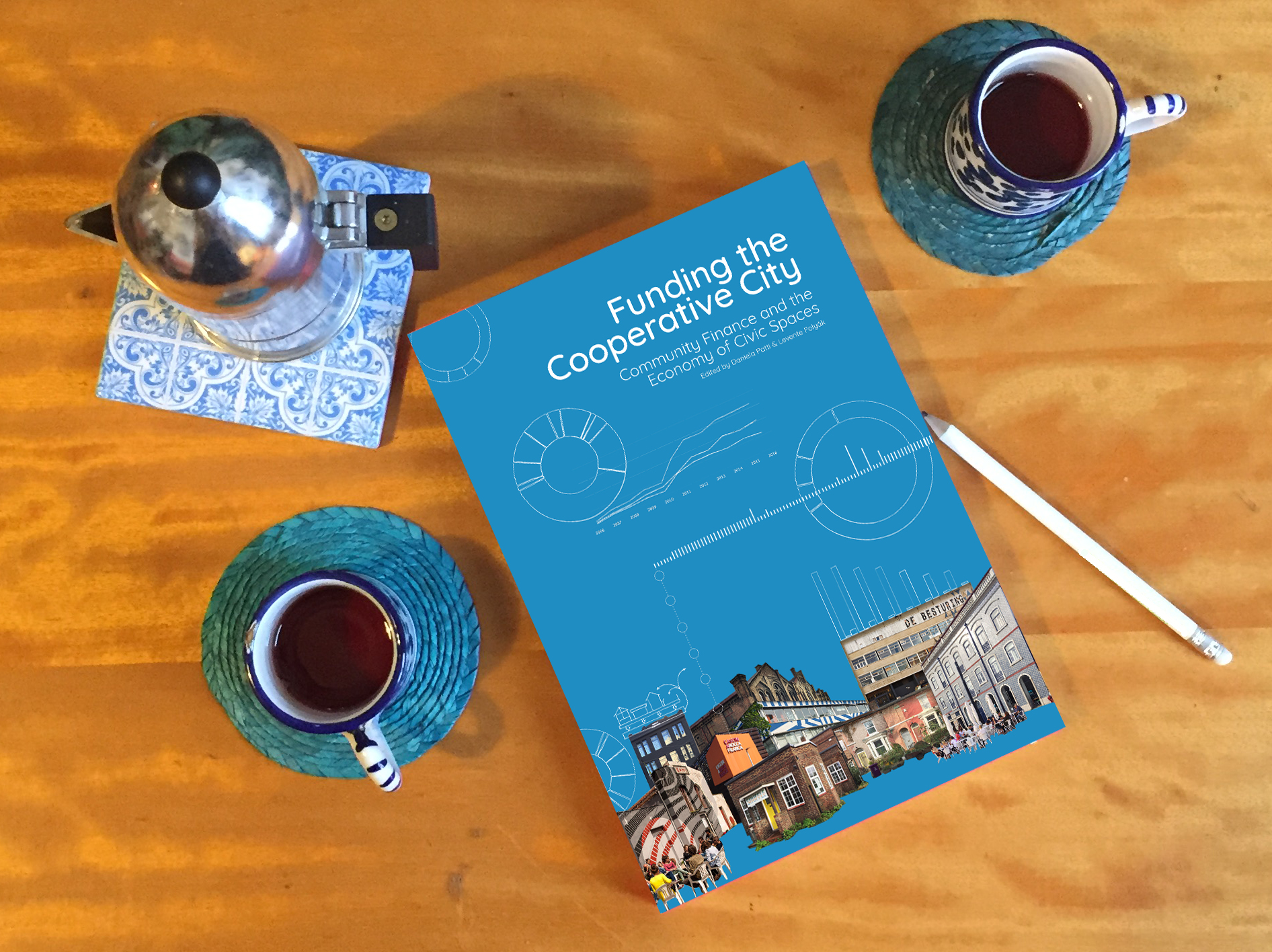
A second layer of civic and climate bodies makes the housing model legible. The re-MODULEES climate office runs a one-stop renovation hub where the Eco Fund's advisers route residents to retrofit subsidies, the kind of shared infrastructure a low-carbon housing programme needs. LINA, the architecture-fellowship programme run from Ljubljana, connects emerging architects with the institutions shaping sustainable practice, and the city's own Ljubljana 2025 green plan — more than 40,000 new trees, 120 hectares of new park on former brownfields — is the spatial frame the housing sits inside. A study of community finance and adaptive reuse across central Europe is the playbook these actors are slowly importing.
It is a thinner institutional layer than Vienna's or Zurich's, and almost everything genuinely cooperative here is still ahead of it rather than behind. But the pieces are assembling: a national financing law with a ten-year target, a city fund building at scale, a pioneer cooperative with a legal door finally ajar, and a green-capital identity that ties new homes to the climate goal. Whether Ljubljana builds the rental tier back fast enough — and securely enough — is the question the next decade answers.
References
Statistics17Click on any number to see the source
Housing market
Tenure & affordability
Cooperative, social & public
Adaptive reuse & vacancy
Population & migration
From our library9
- Unaffordable and inadequate housing in Europe — Knowledge
- Understanding the housing crisis: Staff Working Document accompanying the European Affordable Housing Plan — Knowledge
- ZADRUGATOR — Organisation
- MOBA: Rethinking needs and financing for affordable rent and cooperative housing in Central and South-Eastern Europe — Knowledge
- Cooperative Housing Pioneers in Central and South- Eastern Europe: Mainstreaming Alternatives through Translocal Networks — Knowledge
- Catalytic capital investment as an enabler of affordable rental and cooperative housing - Investor Report — Knowledge
- re-MODULEES Final Report — Knowledge
- LINA — Organisation
- Funding the Cooperative City: Community Finance and the Economy of Civic Spaces — Knowledge
Further sources16
- JSS MOL — Public Housing Fund of the City of Ljubljana — JSS MOL
- Ljubljana acquires new public rental flats (Zelena Jama) — The Slovenia Times
- Soseska Novo Brdo — neighbourhood presentation — Housing Fund of the Republic of Slovenia
- Housing Fund of the Republic of Slovenia — SSRS
- 20,000 public rental flats in ten years — the 2025 financing law — RTV Slovenija
- Amended Housing Act and public-rental financing law (2025) — Uradni list RS
- Joint response to the 2025 housing-law amendments — IPoP — Institute for Spatial Policies
- Minister Simon Maljevac on the 2025 housing laws — RTV Slovenija
- Klemen Ploštajner on Slovenia’s housing policy — Megafon
- Airbnb to be confined to July and August in Ljubljana — Forbes Slovenija
- Zadrugator — about the cooperative — Zadrugator
- Ljubljana: our determination to make community-led housing a reality — MOBA Housing SCE
- Zadrugator cooperative — pilot project — SEED2SCALE
- Ljubljana (overview) — Green Capital, Plečnik, the Castle — Wikipedia
- Ljubljana 2025 green plan + nature-positive circular economy — Ellen MacArthur Foundation
- Mayor Zoran Janković — Ljubljana city projects — Zoran Janković