The city that builds because it had to
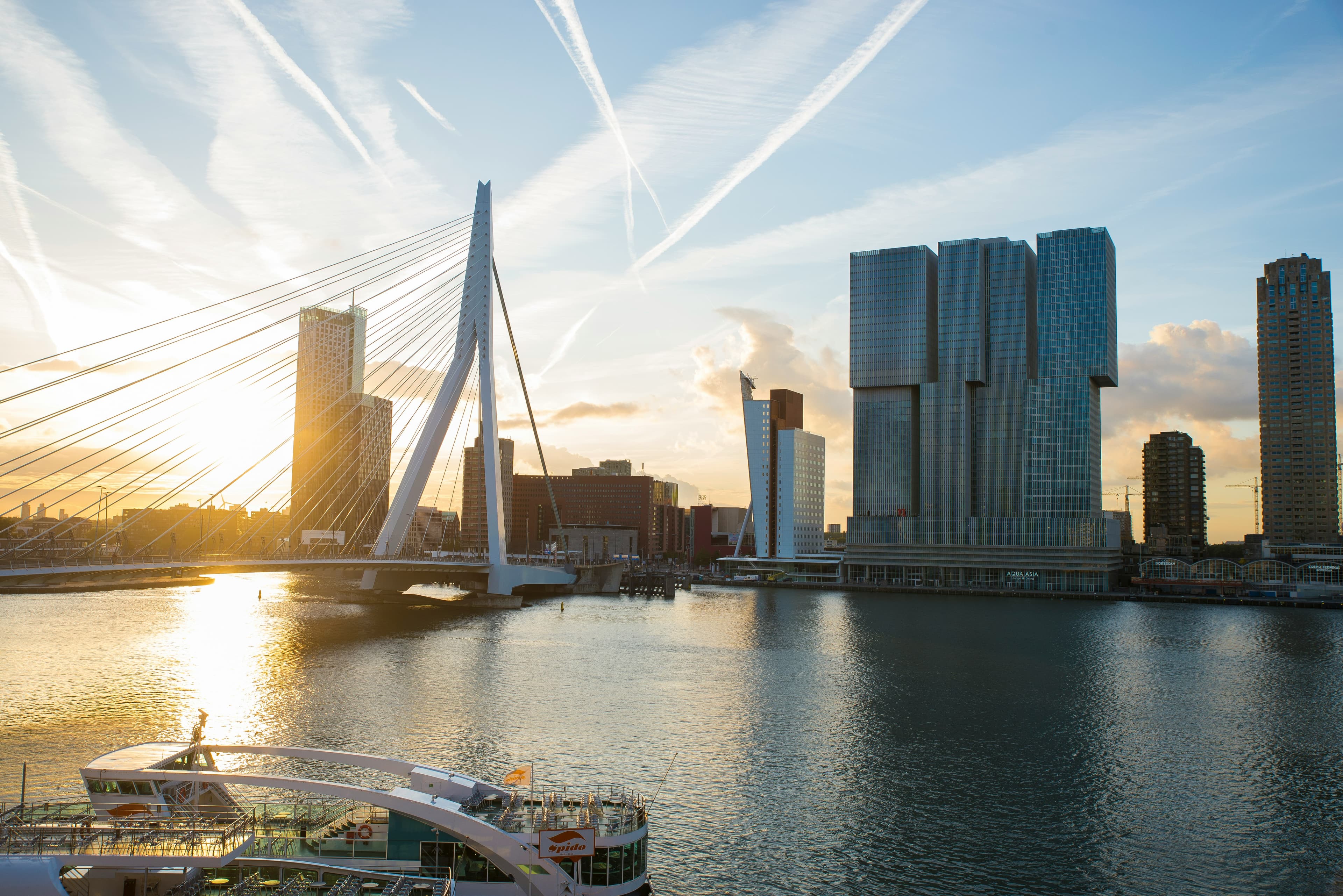
Rotterdam is the city the war erased and the planners rebuilt. A single air raid in May 1940 flattened the medieval centre, and what rose in its place is the Netherlands' boldest experiment in modern architecture, anchored by the largest seaport in Europe. That history left a working habit the city still keeps: when housing is short, Rotterdam builds. Its 664,311 residents live in a stock that leans more on the rental sector, and more on the housing associations, than almost any peer city on the continent.
Few large European cities tip the tenure balance the way Rotterdam does. Here renting is the default and ownership the exception: 67% of households rent and just 33% own. What makes the city singular is who the landlord is. The non-profit housing associations — the woningcorporaties — dominate the rental sector, owning about 44% of all dwellings, some 137,000 homes, the backbone of the city's affordable supply; private landlords let a further 23%. The housing cooperative, by contrast, barely registers as a legal tenure. It is close to 0% of dwellings, with effectively a single formal cooperative on the city's register, because the Dutch built their social housing through associations rather than member-owned cooperatives.
- Owners
- Owner-occupier33.0%
- Renters
- Public & non-profit rental44.0%
- Cooperative0.00%
- Private rental23.0%
Social housing here is a regulatory rule, not a tenure of its own. About 48% of Rotterdam's dwellings carry a social-housing rent rule, a layer that sits across the tenure pie rather than forming a slice of it. Most of it is association stock, but the points-based rent system now also caps regulated mid-market lets in the private sector. Roughly 53% of households would qualify for a regulated social home on income grounds, a measure of how widely the affordability rule reaches into ordinary working life.
What a tenant pays depends almost entirely on which door they came through. An association tenancy runs around €7.85 per square metre, the city's nascent cooperatives about €9.31, and the deep regulated sector pulls the all-stock figure down to roughly €10.20. Sign a new private contract, though, and the price jumps to a median €22.78 per square metre; furnished, serviced lets reach €26 gross. That step from the regulated floor to a fresh market lease — close to three to one — is the seam where Rotterdam's affordability problem actually opens up.
- Public/municipal housing
- Cooperative
- All-stock median
- New contracts
- Furnished / serviced (gross)
Net-cold monthly rent per square metre by tier (furnished is gross, all-in). The regulated association floor sits far below the market; a newly-let private contract runs nearly three times the association rate.
What scarcity Rotterdam has is not made worse by homes standing idle or sold to tourists. Residential vacancy sits low at around 2.1%, roughly 6,600 dwellings and mostly normal market churn. The slack is in the offices: about 396,750 square metres are empty, some 11.5% of the office stock, and the city has started treating that as ground to convert rather than waste. Short-term letting is contained too — only an estimated 312 dwellings run as full-time entire-home rentals, enough to cluster in the centre and along the Maas waterfront but too few to hollow out the long-term supply.
The arithmetic of arrivals against new homes is what keeps the pressure on. Roughly 38,500 people a year move into Rotterdam, while the city issues only about 2,800 housing permits annually — a gap the shortage cannot close. The Affordable Rent Act was meant to ease the middle, yet its first effect was a sharp fall in new mid-market listings as landlords sold up. So the strain has spread upward: students, key workers and young professionals now chase the same scarce mid-market homes, and a recent European Parliament study flags Rotterdam's allocation quotas as a device that can ration access rather than cure the scarcity behind it. The lowest earners still carry the heaviest load, but the city has grown hard to afford for a whole band of middle incomes too.
The cooperative Rotterdam is only now inventing
The Dutch wooncoöperatie is a housing cooperative in the European sense: the building belongs to an association of residents, never sold on, so rents can stay low across generations. It is the inverse of the Czech or German model where a member buys an equity share close to ownership. Here the cooperative owns collectively and lets to its members, which is precisely why it is rare in a country that solved affordability another way.
Rotterdam's affordable tradition is associational, not cooperative. For more than a century the woningcorporaties — large, regulated non-profit landlords — carried the social-housing mission that elsewhere fell to member-owned cooperatives. They built and still manage the bulk of the city's affordable stock. The wooncoöperatie was effectively legalised as a distinct form only in the 2015 Housing Act, and for years it stayed a paper category: a study of demand for Dutch housing cooperatives found strong interest but almost no supply, blocked by land prices and the absence of bridging finance.
What exists today is a small, deliberate revival, and it clusters into three kinds. RoCoCo, the Rotterdam Coalition for Housing Cooperatives, is the convening body, bringing residents, designers, the municipality and a cooperative bank around the same table. Cooplink, the national cooperative-housing network, supplies the know-how and the contracts; VrijCoop carries the permanently non-saleable, Mietshäuser-Syndikat-style model into the Dutch context. The clusters share one problem above all: land. Without municipal plots and patient finance, a cooperative cannot outbid a commercial developer in a port city where every riverside parcel has a buyer. Their second shared problem is scale, since each project is still measured in dozens of homes, not thousands.
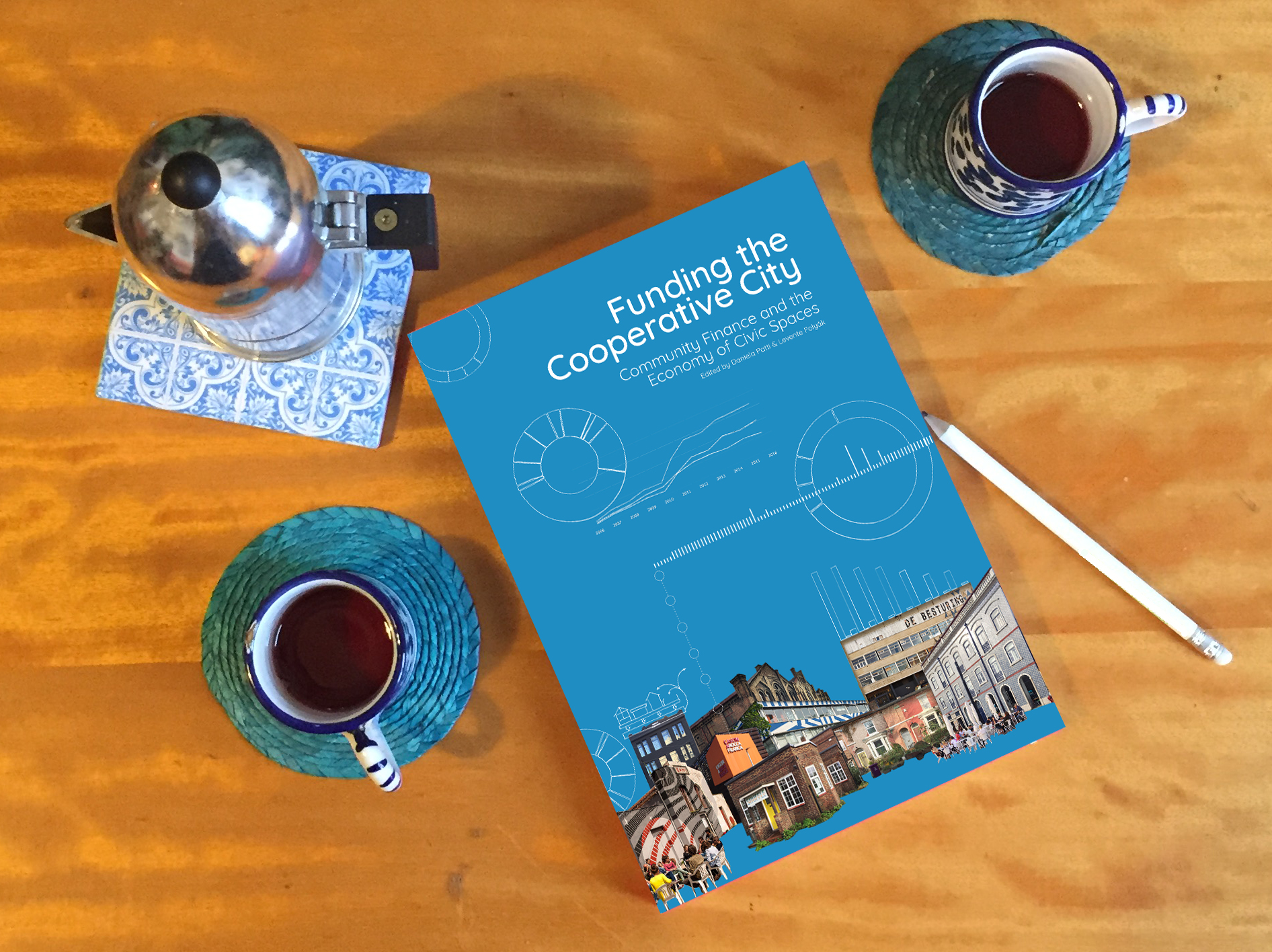
Where the cooperative sits in Rotterdam's housing strategy is the thread that leads into its politics. The city has begun to read the wooncoöperatie as a channel worth seeding rather than a curiosity: RoCoCo has asked the council to reserve at least 15% of homes in the Schiehaven-Noord redevelopment for a cooperative, most of them affordable. The community-finance models that make this work elsewhere in Europe are well documented, and the open question is whether Rotterdam can graft them onto a system built for a century around associations rather than members.
Building fast, and the fight over who it is for
Rotterdam's housing politics turns on a single bet: build enough, fast enough, and affordability follows. Chantal Zeegers of the liberal D66, the alderman for Climate, Building and Housing, has made volume the headline. Her instrument is the Doorbouwakkoord, a deal with developers and associations to keep cranes turning through high interest rates, and the Woonvisie target of roughly 42,000 new homes by 2030, a fifth of them social and a third mid-market. Early figures suggest the building deal is working: the city completed several thousand homes in its first year, a third of them social.
I am a strong supporter of building as much as possible.Three hands shape what gets built. The city allocates land and sets the social-mix rules; the associations build and manage the affordable stock; the national government writes the law and holds the money. Minister Mona Keijzer's Wet versterking regie volkshuisvesting — the law to strengthen housing direction — would require two-thirds of new homes to be affordable and 30% social rental per region. The Wet betaalbare huur, the Affordable Rent Act in force since 2024, pushes the points-based rent cap up into the mid-market. Both set the outer bounds of what Rotterdam can do, and both have proven easier to pass than to deliver.
The cooperative is being written, cautiously, into this programme. The city has begun to treat reserved land in redevelopment areas as a way to let the first wooncoöperaties form, the Schiehaven-Noord ask being the test case. It is a modest instrument beside the association machine, and a frank one: a cooperative needs a plot it could never buy at auction, so the question is how much land a building-first city is willing to set aside for a form that delivers slowly and in small numbers.
Regeneration is where the building bet gets contested. Rotterdam's signature approach is renewal of its poorer districts, above all in the south through the National Programme Rotterdam South, which ties housing to schooling and jobs. But renewal has a hard edge. In the Tweebosbuurt the association Vestia demolished 599 social rental homes and returned only 137, evicting long-tenured residents and drawing a rebuke from a UN rapporteur. The empty offices noted earlier offer a gentler frontier, and adaptive reuse is increasingly the city's preferred answer, as a study of office-to-housing conversion sets out.
- ~2030[source]
The Woonvisie horizon
Rotterdam aims to add roughly 42,000 homes by 2030, with a fifth social and a third mid-market, the test of whether supply can finally outrun the affordability squeeze.
- 1940[source]
The city centre is bombed flat
A German air raid on 14 May 1940 destroys almost the entire medieval core, clearing the ground for a modernist rebuild and a city that learned to plan housing at scale.
- 2011[source]
National Programme Rotterdam South
The city, the national government and local partners sign the NPRZ, a long-run pact tying housing renewal in the deprived southern districts to schooling and jobs.
- 2019[source]
Tweebosbuurt demolition begins
The association Vestia starts clearing the Tweebosbuurt: 599 social rental homes are demolished and only 137 social homes return, triggering years of resident protest and a UN rapporteur’s rebuke.
- 2023[source]
A new Woonvisie to 2040
Rotterdam adopts a housing vision that drops the earlier plan to shed social homes and instead pledges to keep the social-rental count stable while adding mid-market supply.
- Jul 2024[source]
Affordable Rent Act takes effect
The national Wet betaalbare huur extends the points-based rent cap into the mid-market segment, regulating tens of thousands of lets that were previously free-market.
- 2025[source]
Building deal and a cooperative revival
The city signs a Doorbouwakkoord with developers to keep construction going, while the RoCoCo coalition pushes the council to reserve land for the city’s first modern housing cooperatives.
- Feb 2025[source]
Stronger national steering
Minister Mona Keijzer sends the revised Wet versterking regie volkshuisvesting to parliament, requiring two-thirds of new homes to be affordable and 30% social rental per region.
- 2026[source]
Targets missed a third year
National completions fall again, to about 80,000 homes against a 100,000 goal, keeping the shortage severe and the pressure on cities like Rotterdam high.
- Jul 2026[source]
Wet versterking regie volkshuisvesting in force
The housing-governance law takes effect on 1 July 2026, giving the state, provinces and municipalities binding powers over where and for whom homes are built. Its implementing decree, the Besluit regie, follows on 1 January 2027.
From the May-1940 bombing and post-war reconstruction to the Tweebosbuurt fight, the Affordable Rent Act and the city’s building deal.
The climate question rides on the same building it cannot ignore. Rotterdam's stock averages around 55 years old, only about 26% of dwellings are energy-efficient, and the renovation rate crawls at roughly 1.4% a year. Its mass-timber pilots and the associations' retrofit programmes are the main vehicles for cutting the sector's carbon, which binds the city's emissions target to the very affordable tier it is straining to expand.
Nobody in Rotterdam disputes that the cranes should keep turning; the argument is over who the new city is for. Alderman Chantal Zeegers frames volume as the route out of the crisis, arguing the city should build as much as it can and accept higher density to do it. Gwen van Eijk, a spokesperson for the residents' movement Recht op de stad, counters that the city has treated housing as a tradable asset and let its social stock shrink, and presses for the right to housing to sit at the centre of policy. The shared premise is more building; the open quarrel is whether more building, on its own, keeps the people already here in place.
Housing is seen as merchandise; you can make money from it.On the rubble: timber towers, a reclaimed squat and a neighbourhood that runs itself
Rotterdam's working examples run from association-built timber towers to a neighbourhood cooperative that pools its own labour, and the thread connecting them is a rebuilt city still arguing about what affordable should mean. The examples below move from the most institutional schemes to the most self-organised, before turning to the design and research layer that lets any of them be repeated.
Valckensteyn is the clearest sign that affordable can also be low-carbon. The twelve-storey block in the southern district of Pendrecht is built in cross-laminated timber, with bird and bat boxes worked into the facade and 82 affordable rental homes inside, one of the city's first mass-timber social schemes. Its caveat is the one timber faces everywhere: the engineered-wood premium is real, and a single tower proves the method without yet proving it can be built at the scale the shortage demands.
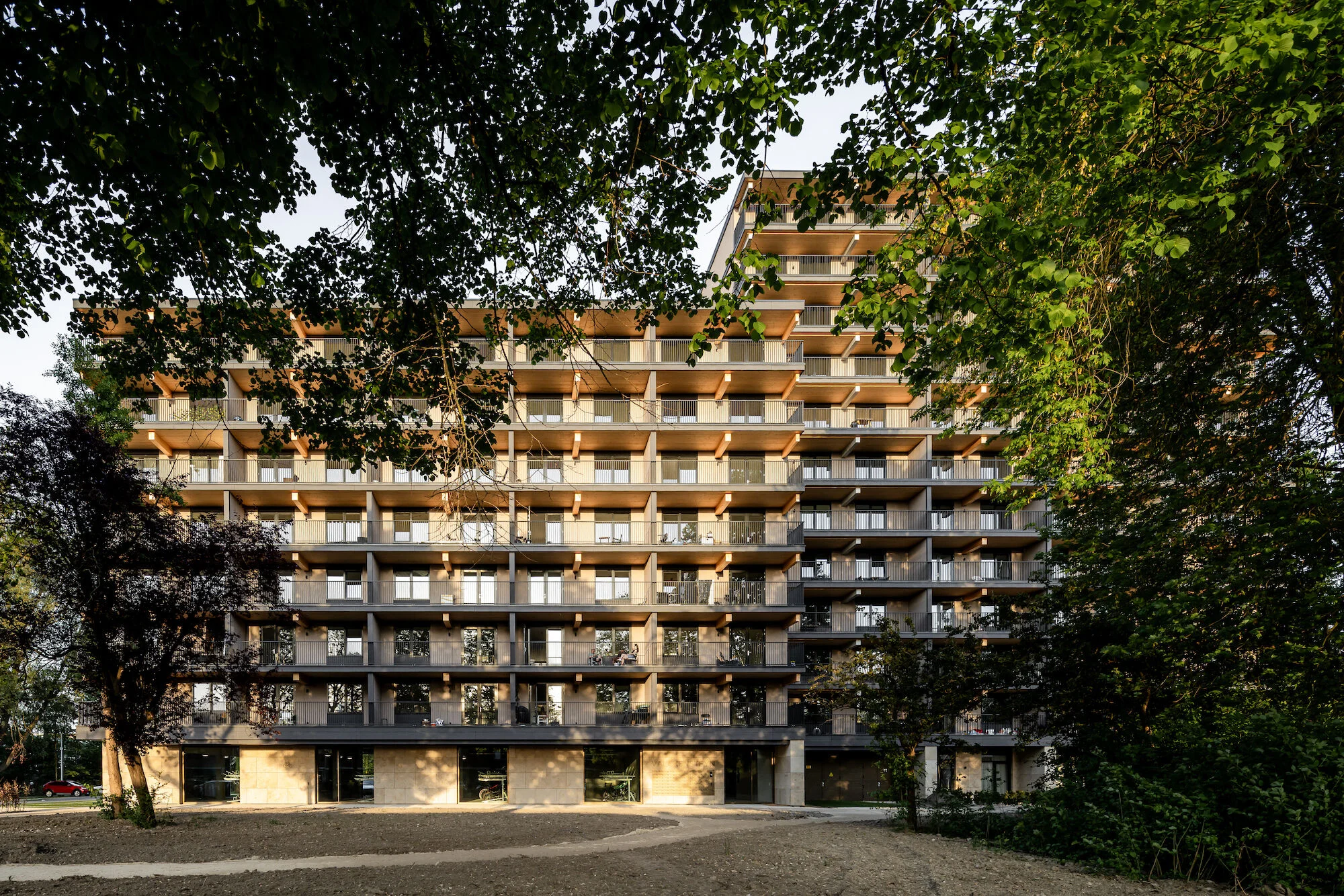
Kop Dakpark stacks affordability onto one of Europe's largest rooftop parks. The scheme threads 153 affordable homes and 600 square metres of commercial space along a zigzag of galleries above the elevated Dakpark, with rainwater management built in. It is a neat answer to a dense city's land problem, building homes on top of infrastructure rather than over scarce ground, though the same complexity that makes it clever also makes it slow and costly to repeat.
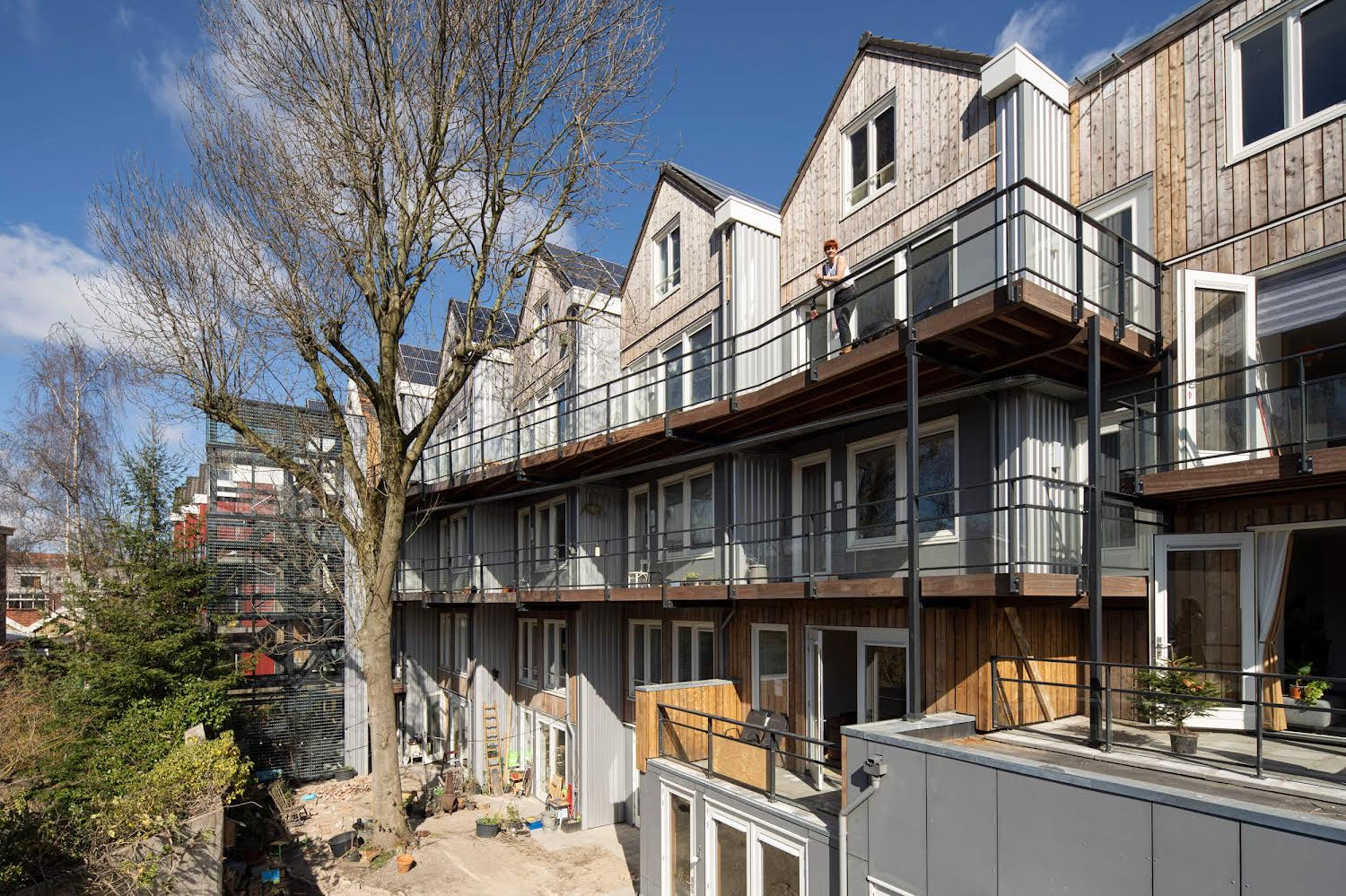
W1555 is the most decommodified version of the idea, and the closest Rotterdam has to a self-organised cooperative. A former squatted pre-war building on the Wolphaertstraat has been turned into 46 circular housing units and five communal creative spaces, financed and run collectively rather than sold on. The scale is tiny and the financing improvised, but it is a living proof of the wooncoöperatie the city is otherwise only planning, and a reminder that Rotterdam's housing movement grew partly out of its squats.
The Afrikaanderwijk Cooperative works a different seam: not new buildings, but a poor southern neighbourhood organising its own economy. Grown out of an art project in Feijenoord, it links residents' workshops, a kitchen and a cleaning company through a neighbourhood common in a former pumping station. The cooperative impulse in Rotterdam South is older than the housing pilots. Turning that social capital into homes, though, remains the unsolved step, since the cooperative owns its enterprises but not yet the buildings its members live in.
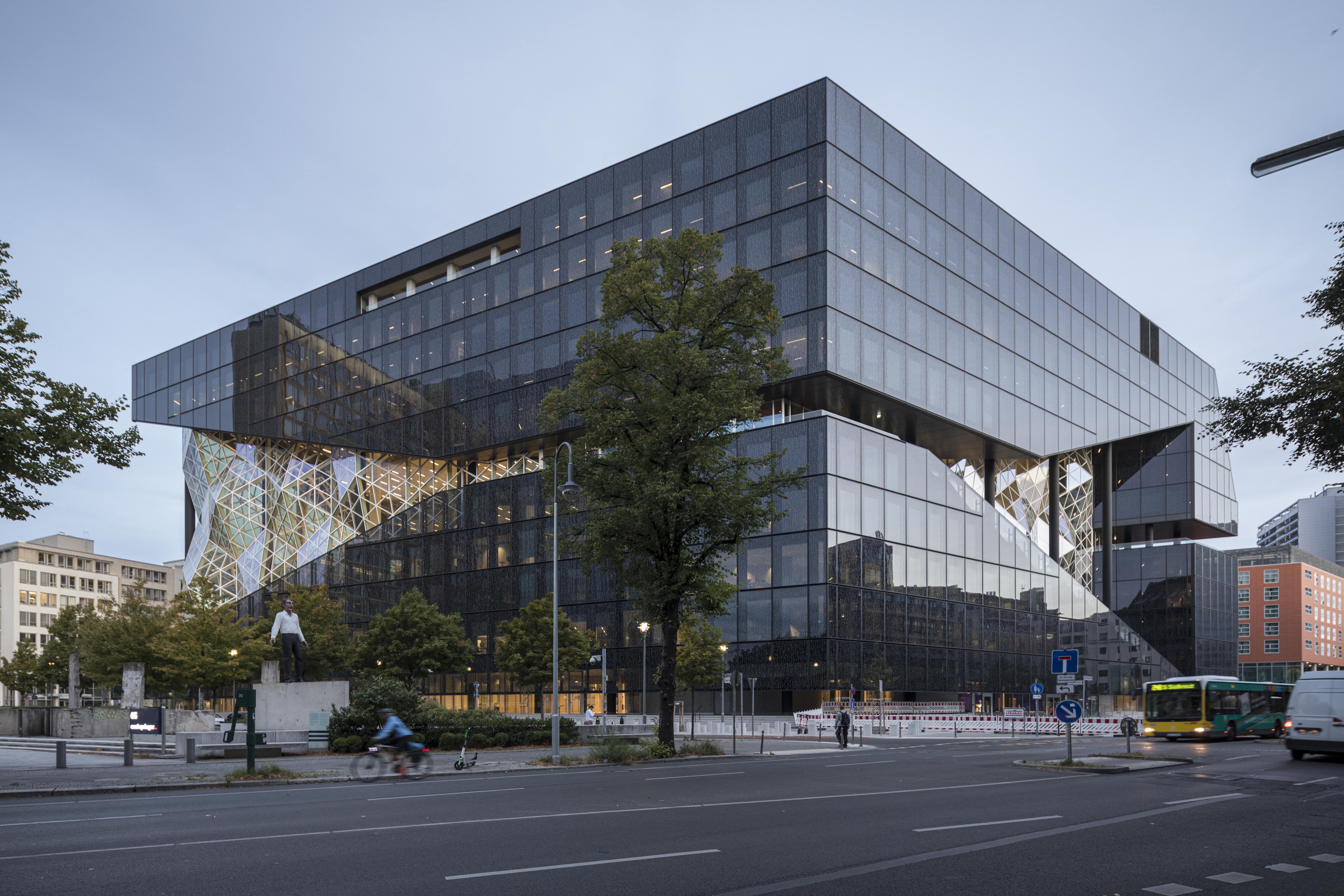
What ties these schemes together is a design and research base that is Rotterdam's real export. OMA, founded here by Rem Koolhaas, made the city a global laboratory for dense, mixed housing. MVRDV, whose Markthal put 228 flats inside a market arch, pushed the same idea into commercial form, though critics note the Markthal's homes are far from affordable. De zwarte Hond carries the design ambition into everyday neighbourhood work, where budgets are tighter and the architecture quieter. The IHS – Institute for Housing and Urban Development Studies, attached to Erasmus University, trains housing planners from across the world and keeps the city honest about what works. For a city this size the concentration of expertise is unusual, and it is the asset on which Rotterdam can build the rest of the model.

References
Statistics17Click on any number to see the source
Housing market
Tenure & affordability
Cooperative, social & public
Adaptive reuse & vacancy
Population & migration
From our library14
- Part 1: Mapping the housing needs in the EU, assessing the impacts of scarcity and providing an overview of relevant EU legislation — Knowledge
- The demand for housing cooperatives in the Netherlands — Knowledge
- RoCoCo - Rotterdamse Coalitie voor WoonCoöperaties — Organisation
- cooplink — Organisation
- VrijCoop — Organisation
- Funding the Cooperative City: Community Finance and the Economy of Civic Spaces — Knowledge
- Adaptive Reuse for Housing — Knowledge
- Valckensteyn — Project
- Kop Dakpark — Project
- W1555 — Project
- OMA (Office for Metropolitan Architecture) — Organisation
- MVRDV — Organisation
- De zwarte Hond — Organisation
- IHS – Institute for Housing and Urban Development Studies — Organisation
Further sources18
- Chantal Zeegers — alderman for Climate, Building and Housing — Gemeente Rotterdam
- Chantal Zeegers: 'I am a strong supporter of building as much as possible' — de Kanttekening
- Doorbouwakkoord lijkt te werken: meer woningbouw in Rotterdam — Stadszaken
- Rotterdamse Woonvisie — koers tot 2040 — Gemeente Rotterdam
- Affordable Rent Act (Wet betaalbare huur) — brochure — Volkshuisvesting Nederland
- Wetsvoorstel Versterking regie volkshuisvesting — Rijksoverheid
- Netherlands again misses construction target — NL Times
- Three months after the Affordable Rent Act came into force — CMS
- Rotterdam blaast wooncoöperaties nieuw leven in — Cooplink
- RoCoCo — Rotterdam Coalition for Housing Cooperatives — RoCoCo
- Sloop huizen Rotterdam na jaren protest (Tweebosbuurt) — NOS
- Action against evictions in the Tweebosbuurt — Bond Precaire Woonvormen
- Recht op de stad on the new Rotterdam Woonvisie — Recht op de stad
- Gwen van Eijk: 'Housing is seen as merchandise' — Rijnmond
- National Programme Rotterdam South — mid-term report — NPRZ
- Afrikaanderwijk Cooperative — pooling neighbourhood resources — Cooperative City
- Housing Cooperative W1555 / Wolphaertstraat — Superuse Studios
- OECD Economic Survey: Netherlands 2025 — housing — OECD