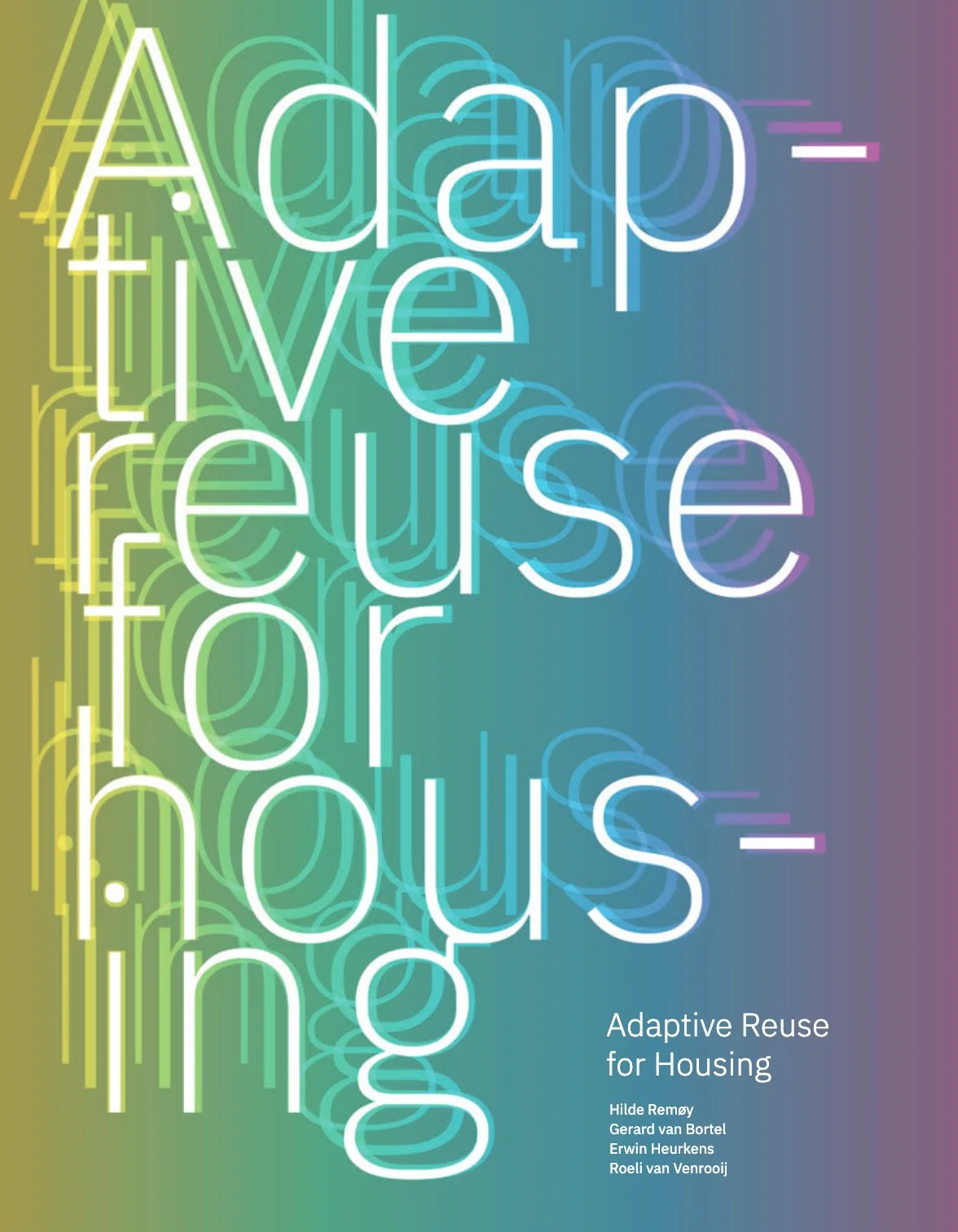
Overview of the Publication
“Adaptive Reuse for Housing” is a scholarly work edited by Hilde Remøy, Gerard van Bortel, Erwin Heurkens, and Roeli van Venrooij, published by Delft University of Technology in 2025. The authors are researchers and practitioners in built environment management, bringing academic rigor and industry experience to the topic. The book examines how vacant buildings—offices, retail spaces, schools, churches, hospitals, and industrial sites—can be transformed into residential units, addressing Europe’s housing shortage while promoting sustainability.
Housing Shortage and Adaptive Reuse Potential
The Netherlands requires roughly 90 000 new homes annually to meet demand. Adaptive reuse could contribute 10–15 % of yearly housing production, adding 9 000–12 000 homes per year (2015‑2022). Between 2015 and 2022, adaptive reuse supplied 10 000‑12 000 homes annually, representing about 15 % of total housing output, though recent years show a slight decline toward the 9 600 homes added in 2022. This modest share suggests significant untapped capacity across Europe.
Market Dynamics and Vacancy Trends
Office vacancy rose from about 5 % in 2001 to nearly 15 % in 2013, driven by the dot‑com crash, financial crisis, and flexible‑working trends. Post‑2014, office surplus shifted from a supply‑side issue to a demand‑driven opportunity for housing. Retail vacancy also fell to 5.5 % by end‑2022 after adaptive reuse interventions. Churches face a 20‑80 % risk of closure by 2030, with over 1 500 already repurposed, highlighting diverse adaptive‑reuse candidates.
Financial Feasibility and Economic Challenges
Financial feasibility hinges on comparing rental income from office use with sale or rent of residential units. High office values reduce the budget available for conversion, while rising construction costs and energy prices increase renovation expenses. The book notes that a typical conversion may require additional funding beyond the “legally obtained level” of building quality, especially for energy‑efficiency upgrades. The Crisis and Recovery Act, amended in 2014 to allow ten‑year leases, improves financial attractiveness for temporary adaptive reuse projects.
Legal and Policy Framework
Dutch adaptive‑reuse projects must navigate the Environment and Planning Act, obtaining both an environmental plan amendment and a construction‑activity permit. Participation requirements now obligate initiators to engage stakeholders, particularly for projects that conflict with existing spatial plans. Similar regulatory structures exist across Europe, emphasizing the need for coordinated planning and clear legal pathways.
Technical Considerations: Structure and Facade
The load‑bearing structure, independence, and space availability dictate the ease of conversion. Buildings with flexible structural systems and sufficient ceiling heights (≥2.6 m for residential use) allow easier addition of partitions, services, and extra floors. Facade interventions range from minor glazing upgrades to full replacements, depending on thermal performance and fire‑risk mitigation. The book stresses that fire‑resistance requirements for residential load‑bearing elements are higher than for commercial use.
Installation Adaptations for Residential Use
Office installations typically feature centralized HVAC and low sanitary density. Residential conversion demands individual water, sewage, heating, and ventilation systems, often necessitating new pipe shafts, raised floors, or pressure‑boosted water supplies. Energy‑efficient solutions such as district heating, heat‑pump retrofits, and renewable façade shading are highlighted as ways to meet European sustainability targets.
Fire Safety Implications
Conversion increases fire load because residential units contain more combustible furnishings. Each apartment becomes a separate fire compartment, raising the need for robust fire‑resistant walls, fire‑stops at façade connections, and potentially sprinkler systems. The book cites case studies where inadequate fire‑stop detailing contributed to rapid fire spread, underscoring the importance of integrated fire‑risk design.
Environmental and Social Benefits
Adaptive reuse conserves embodied carbon by avoiding demolition waste and new material extraction. The approach supports circular economy principles, reduces urban sprawl, and preserves cultural heritage. Socially, it provides affordable housing options for students, seniors, and low‑income households, fostering mixed‑use neighborhoods and community cohesion.
Key Recommendations for Europe
- Identify and map vacant building stock across regions.
- Align financial incentives (subsidies, low‑interest loans) with sustainability goals.
- Streamline permitting procedures while ensuring stakeholder participation.
- Prioritize flexible structural systems and high‑performance facades in design.
- Incorporate fire‑risk mitigation early, especially at façade‑wall interfaces.
- Leverage interdisciplinary collaboration between architects, engineers, policymakers, and investors to scale adaptive‑reuse projects. By integrating these findings, European cities can harness adaptive reuse as a viable, sustainable strategy to alleviate housing shortages, reduce carbon footprints, and revitalize underutilized urban fabric.