
A city of owners with the lights off
Rome is the only European capital whose historic centre is itself a UNESCO World Heritage Site, a city of 2.7 million people layered over three thousand years of building. It is also a city of owners. Most Romans own the home they live in, the rental market is thin, and the public-housing tier the post-war borgate built is small and ageing. The defining fact of the market is the gap between a vast inherited stock and the people who cannot reach any of it.
Rome wears the Italian habit of owning more plainly than most capitals. 70.0% of households own their home and only 25.0% rent — a near-four-to-one split. Those two shares fall short of the whole: the remaining 6.3% live rent-free or under another non-market title — usufruct, family-provided housing and informal cohabitation, a tenure category the Italian census counts in its own right. Cooperatives are a rounding error as a legal tenure, only 0.7% of dwellings, around 12,000 homes across some 60 cooperative societies, far below the Vienna or Zurich share. Public landlords hold about 5.7% of dwellings, roughly 73,000 ERP flats split between the city and the regional agency ATER. Private landlords let most of the rest, around 18.6% of the stock.
- Owners
- Owner-occupier70.0%
- Renters
- Public & non-profit rental5.7%
- Cooperative0.70%
- Private rental18.6%
- Other5.0%
- Free use / usufruct5.0%
Social housing is a regulatory layer, not a separate tenure. About 6% of Rome's dwellings carry a social-housing rule, slightly more than the public share because a little privately-built edilizia residenziale sociale — affordable housing let at a capped rent — sits inside the private slice of the pie. Around half of Roman households would qualify on income for public or capped-rent housing, far more than the supply can reach. Italy built its welfare around owning, so for most renters the safety net is family, not the state.
Climb from the regulated floor to the open market and the rent multiplies at every rung. Tenants in the ERP stock pay around €3.50 per square metre; members of the older cooperatives about €6.50. Across the whole stock the median is €16.80. A freshly-signed lease asks a median €19.80, and furnished, serviced lets reach €22.80 per square metre gross. A new market contract runs more than five times the ERP rate. That distance, from a protected floor to an unreachable ceiling, is the whole affordability problem in one line.
- Public/municipal housing
- Cooperative
- All-stock median
- New contracts
- Furnished / serviced (gross)
Net-cold monthly rent per square metre by tier (furnished is gross, all-in). The regulated public floor sits far below the market median; a newly-let private contract runs more than five times the ERP rate.
The paradox is that so much of the stock stands idle. Rome's 2021 census counted a residential vacancy of about 14.8% — roughly 200,000 unoccupied dwellings — though much of that is second homes, inherited flats and unmodernised stock. Offices are looser than the headline suggests: around 829,280 square metres stand vacant, though the prime rate is below 7%. The sharper pressure comes from tourism. Rome's short-let economy now ties up some 16,783 dwellings as full-time entire-home short-term rentals, concentrated in the historic centre, and a European study of the housing-tourism nexus links that growth to higher rents in Rome, Milan and Paris.
The arithmetic underneath all of this is brutal: Rome gains residents far faster than it gains homes. Jobs, universities and the wider Lazio economy pull in roughly 65,000 moves a year, against only about 3,500 housing permits a year. The strain has long since spread past the poorest into the working middle. Around 6,000 eviction proceedings run through Rome's courts each year, and Caritas reports that about 85% of eviction orders in the city stem from an inability to pay rather than any breach. An estimated 8,500 people sleep rough or in emergency shelter. A study of how institutional investors reshape European housing markets places Rome inside the same financialised pressure that is squeezing renters across the continent.
Housing cannot be a luxury, nor a good left exclusively to the dynamics of the market.The cooperative that built the borgate, then thinned
The Italian housing cooperative comes in two forms, and the difference shapes everything. A cooperativa a proprietà divisa — a divided-ownership cooperative — builds flats and then transfers them to members as private owners, so the cooperative dissolves into ordinary ownership once the homes are handed over. A cooperativa a proprietà indivisa — an undivided-ownership cooperative — keeps the building in collective hands and lets members occupy at a cost-based rent for life. Only the second kind leaves a lasting non-market footprint, and it is the rarer of the two.
Rome's cooperative tradition is old but its great wave was post-war. In the boom decades, cooperative societies built large stretches of the outer borgate and the planned estates, often on land released through the piani di zona — the zoned-development plans that allocated public land for subsidised building. Most of that output was divided-ownership, so it converted into private flats within a generation. The cooperative as a living, collective landlord all but thinned out, leaving Rome with a deep memory of cooperative construction but a tiny stock of cooperative tenancy today.
Today the sector clusters into three uneven groups. The legacy federations — Legacoop Abitanti, the national housing-cooperative association, and its sister bodies — still manage the surviving undivided-ownership stock and lobby for the form, with cooperative members making up only about 1.5% of Romans. A second cluster is the financial arm: Coopfond, the Legacoop mutual fund, channels cooperative profits into new ventures, and ethical lenders such as Banca Etica back community projects. A third, more visible cluster is the self-organised occupation movement, which behaves like a cooperative in spirit if not in law. The legacy bodies struggle with ageing stock and the piani di zona scandals, in which some zoned-development flats were sold at near-market prices; the new self-organised projects struggle with legality, land and finance, because Italy still has no strong national framework for not-for-profit housing providers.


What the city asks of the cooperative — and what it offers in return — is where this sector hands over to the policy story. Rome's housing plan treats the cooperative and the broader edilizia residenziale sociale as one channel among several rather than the centrepiece, leaning more heavily on buying and building public stock directly. A scoping review of cooperative-housing models and a survey of international policies that keep resident-run homes affordable both argue the same point: cooperatives scale only where public land, public guarantees and equity caps are wired in from the start. Rome is only beginning to test that wiring.
Buying back what was sold
Rome's housing politics is, for the first time in decades, the politics of expansion. Roberto Gualtieri of the centre-left Democratic Party has led the city since 2021, with Tobia Zevi holding the brief for heritage and housing policy. Their Piano Strategico per il Diritto all'Abitare, the 2023-2025 housing plan, reversed twenty years of selling public flats. In 2025 the city authorised buying around 1,040 homes for roughly €250 million, mostly from the Enasarco pension fund, and added rent-support grants of up to €900 a month for households in difficulty. Gualtieri has called it the largest increase in public housing attempted in Italy in decades.
Responsibility for Rome's housing is split three ways, and no single hand controls it. The city allocates land and runs the purchase programme; the regional agency ATER owns and manages most of the public stock; the national government sets the law and the money. The Ministry of Infrastructure and Transport, led by deputy prime minister Matteo Salvini, launched a national Piano Casa Italia in early 2026 with a first €660 million, a stated target of recovering 60,000 public units and 100,000 affordable homes over a decade, and a state fund, Invimit, to coordinate it. The national plan leans on private investment and faster eviction procedures, which puts it in visible tension with the city's buy-and-build approach.
The cooperative sits at the edge of this programme, not its centre. The city's edilizia residenziale sociale strand can take cooperative developers, and national bodies such as Cassa Depositi e Prestiti, the state investment bank, channel savings into affordable-housing funds. But Rome has no equivalent of the concept-led land tenders that drive cooperative building in Vienna or Zurich. The instruments exist in pieces, without the single pipeline that would let a cooperative project move from idea to keys.

Rome's answer to that vast idle stock runs through this programme too, though it only half-closes the gap. The plan leans on adaptive reuse: converting disused barracks, schools and offices into homes rather than building on the green edge. A European study of office obsolescence finds most surplus offices are unsuitable for housing, so the conversion frontier is narrower than the vacant floor-area suggests, and work on adaptive reuse for housing stresses how project-specific each conversion becomes. There is no vacant-homes tax, and Italy's notoriously slow permitting keeps supply tight, so the answer is as much about administrative capacity as money.
- 2003[source]
Porto Fluviale occupied
Housing-rights movements occupy a disused military barracks in Ostiense. Around 56 families from 13 nations move in, beginning a 20-year occupation that later becomes a flagship recovery project.
- 2009[source]
Metropoliz occupation
Activists occupy a former salami factory on Via Prenestina, later home to the MAAM museum of contested art — one of the most visible of the dozens of residential occupations across the city.
- 2017[source]
Funding the Cooperative City
The Rome-Vienna-Budapest organisation Eutropian publishes its study of community-led urban development, building on its temporary-use framework work with the Rome municipality at sites such as Officine Zero.
- 2023[source]
Piano Strategico per il Diritto all’Abitare
Mayor Gualtieri’s administration approves a 2023-2025 housing plan: maintenance funding for ERP estates, an anti-eviction support fund and the first batch of public-housing purchases.
- 2024[source]
Porto Fluviale Rec House works begin
The PINQuA project, funded with €13.2 million through the PNRR, starts converting the occupied barracks into public housing with shared services and near-zero-energy standards.
- 2025[source]
Piano Casa 2025 + Enasarco purchase
The city authorises buying around 1,040 homes for roughly €250 million, mostly from the Enasarco pension fund, and adds rent-support grants of up to €900 a month for households in difficulty.
- Jan 2026[source]
Piano Casa Italia approved
The national government launches a framework worth a first €660 million, with a stated target of recovering 60,000 public units and creating 100,000 affordable homes over a decade, coordinated through the Invimit state fund.
- 2026[source]
Porto Fluviale completion
The Rec House conversion is due to finish, returning the renovated flats to the former occupants through a special tender — the source of a public dispute about priority over the official waiting list.
- ~2034[source]
The 30,000-unit horizon
Gualtieri has set a target of buying 20,000 ERP and 30,000 ERS homes over the coming years, aiming to lift Rome’s public share towards the average of large European capitals.
From the Porto Fluviale occupation and the piani di zona scandal to the Piano Casa purchase programme, the PNRR-funded conversions and the national Piano Casa Italia.
In Rome the climate question and the housing question have folded into one. The city's housing stock averages around 55 years old, only about 11% of dwellings are energy-efficient, and the renovation rate crawls at roughly 1% a year — far short of the EU's deep-retrofit targets. Around 9% of households are in energy poverty. The PNRR-funded conversions and the city's purchase of newer stock are the main vehicles for cutting the sector's carbon, which ties the climate goal directly to the public tier the city is trying to grow.
In Rome the argument has moved past whether the city should act and onto how far and for whom. Councillor Tobia Zevi argues the new edilizia residenziale sociale must become a permanent pillar, not a one-off, for the households who earn too much for a public flat but cannot carry market rents. The tenant union ASIA-USB, whose national coordinator Angelo Fascetti has long tracked the piani di zona sales, argues the city is still letting public land and empty homes drift toward the market while evictions continue. Neither side disputes that the public tier must expand. Where they part is the pace — and whether buying flats one Enasarco block at a time can outrun the loss at the other end.
For twenty years the line was 'sell, sell, sell'. We, instead, are buying homes and we want to build them.From barracks to commons: the occupations that became projects
Rome's working examples are unusual in Europe: most of them began as illegal occupations, and the interesting question is which ones the city has chosen to legalise rather than clear. They sort along a spectrum — from the barracks the municipality is openly absorbing to the squat it leaves in limbo — and behind them sits a small group of actors trying to make any of it repeatable.
Porto Fluviale Rec House is the clearest sign of a new municipal willingness to absorb the movement. A disused military barracks in Ostiense, occupied since 2003 by around 56 families from 13 nations, is being converted with €13.2 million of PNRR money into public housing with shared services and near-zero-energy standards, due to finish in 2026. The friction is sharp and public: with more than 18,000 households on the official waiting list, critics ask why renovated flats should return to the people who occupied the building rather than to those who queued. The city's answer is that the alternative — eviction into homelessness — costs more.
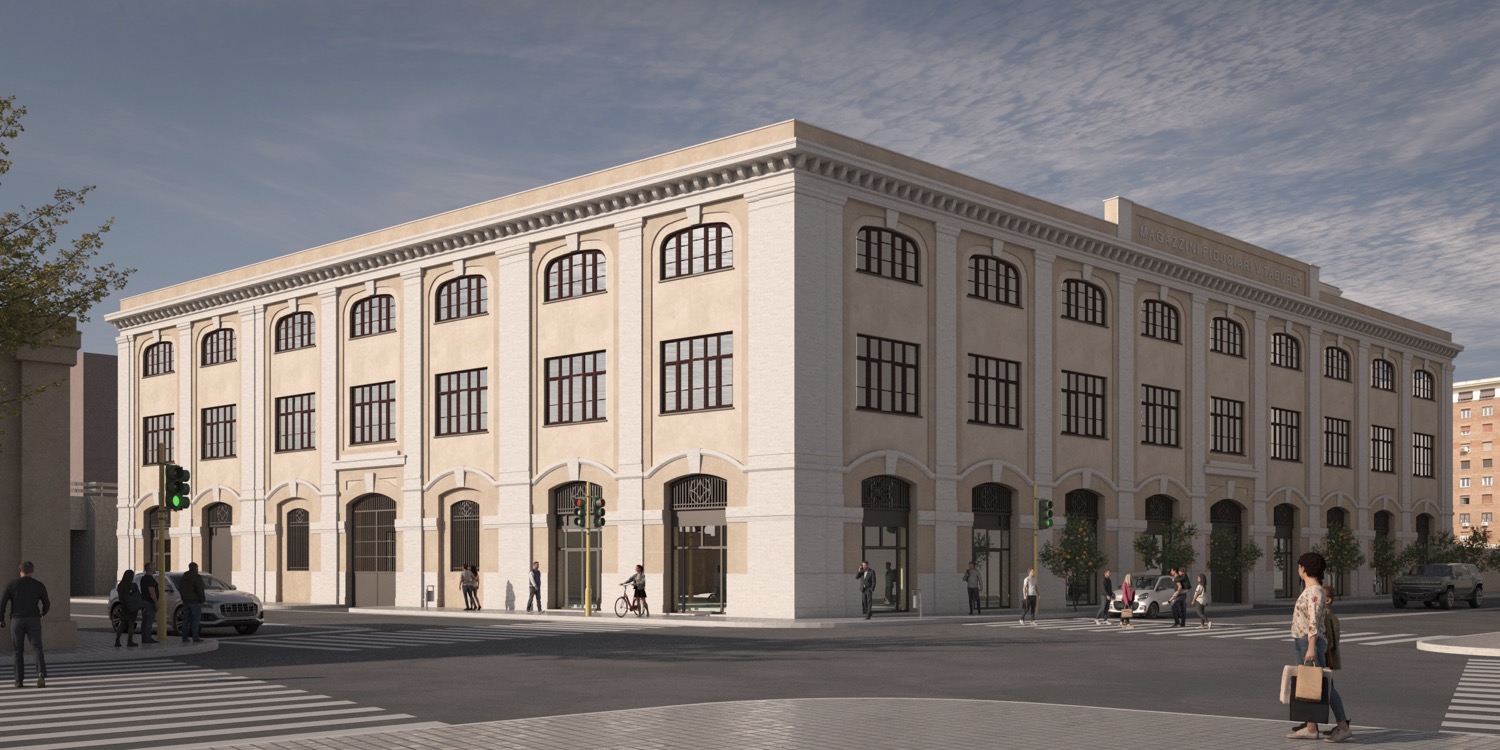
Metropoliz is the version the city has not legalised. A former salami factory on Via Prenestina, occupied since 2009 by a mixed community of Italian and migrant families, it doubles as the MAAM, a museum of contemporary art built into a contested squat. It is the most photographed of Rome's dozens of residential occupations and the clearest illustration of the limit: a self-organised housing commons that survives on cultural visibility and legal stalemate rather than any settled tenure.
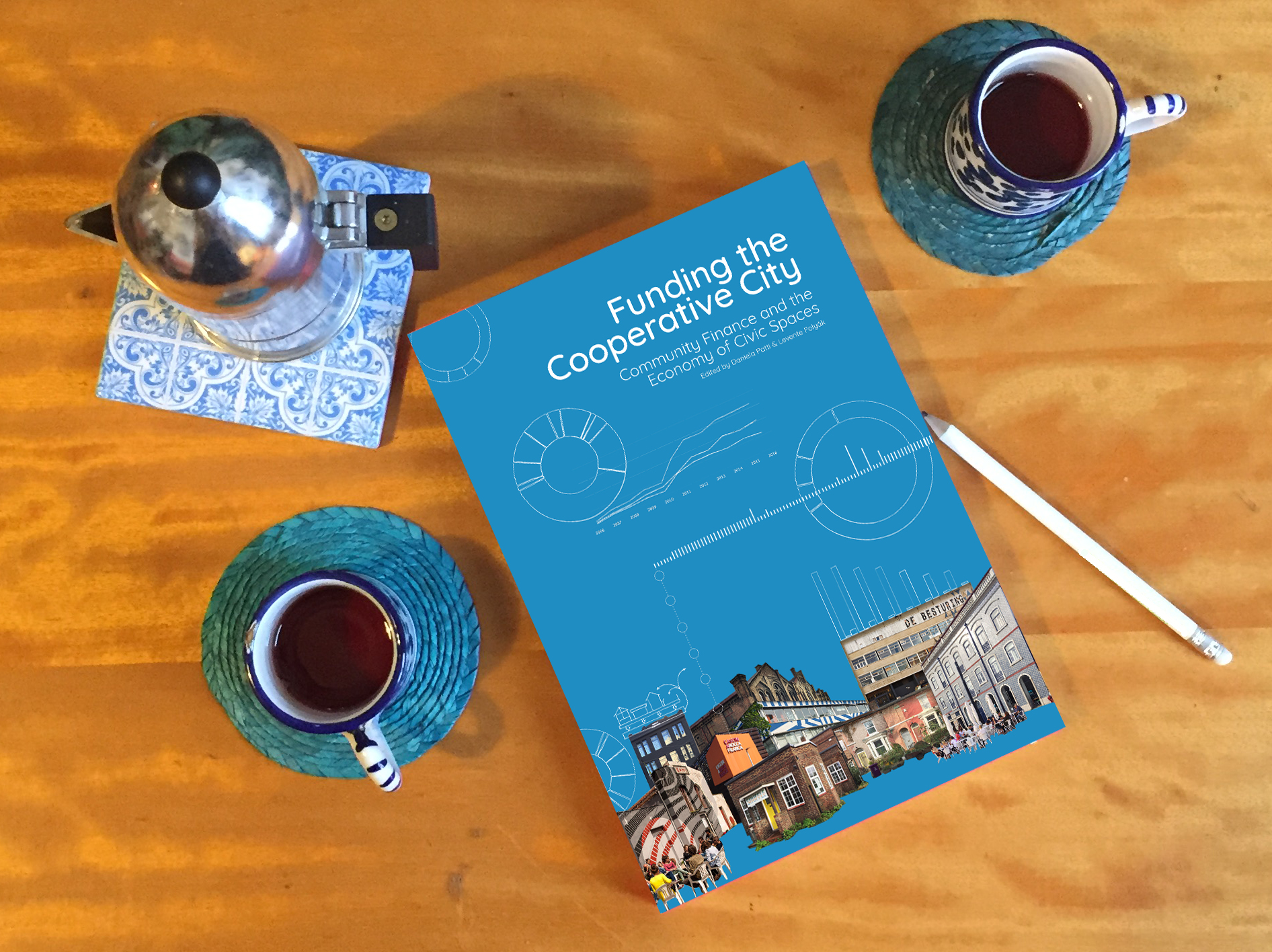
Officine Zero and the wider Eutropian circle show the cooperative-adjacent end of the spectrum. Officine Zero, a former train-repair works in the Casal Bertone district, became a worker-and-student cooperative hub, and the Rome-based organisation behind Funding the Cooperative City has spent years pressing the municipality for a temporary-use framework that would let citizens reach unused public buildings without occupying them. The work is influential across Europe and thin on the ground in Rome, where the framework it argues for still does not properly exist.
In the eastern periphery, the Rome Collaboratory turned adaptive reuse into a neighbourhood method. Working across Centocelle, Torre Spaccata and Alessandrino — a heritage district stitched around an archaeological park — it brought residents, the Fusolab community centre and researchers together to reuse local heritage as a development resource, documented in a study of community-driven adaptive reuse in Europe. Its caveat is the one every participatory project in Rome carries: the energy is real, the legal and funding base is fragile, and the city's institutional follow-through is uncertain.
Holding these projects up is a scaffolding of money and federations that is sparse but genuinely there. Cassa Depositi e Prestiti, the state investment bank, and Coopfond, the cooperative mutual fund, supply patient capital; Banca Etica lends to community ventures; Legacoop Abitanti federates the surviving cooperatives; and design-led practices such as Non Architecture and the Fondazione PICO keep the regeneration conversation alive, alongside the social-innovation networks a study of the urban context maps across Italian cities. Fairbnb.coop, the community-first answer to Airbnb, even tries to turn the tourism pressure back toward local projects. It is a thinner layer than Milan's or Vienna's, and almost everything here is improvised. But it is real, and it is being built on the one foundation Rome cannot sell: a city full of inherited shells and a population that has learned to organise around them.


References
Statistics20Click on any number to see the source
Housing market
Tenure & affordability
Cooperative, social & public
Adaptive reuse & vacancy
Population & migration
From our library17
- Understanding the housing crisis: Staff Working Document accompanying the European Affordable Housing Plan — Knowledge
- Housing policy under the conditions of financialisation - The impact of institutional investors on affordable housing in European Cities — Knowledge
- Legacoop Abitanti — Organisation
- Coopfond — Organisation
- Banca Etica — Organisation
- Housing Needs and Cooperative Housing Models: A Scoping Review — Knowledge
- International policies to promote cooperative housing — Knowledge
- Cassa Depositi e Prestiti S.p.A. — Organisation
- Rethinking European Offices 2030 - Risks and Opportunities from Obsolesence — Knowledge
- Adaptive Reuse for Housing — Knowledge
- Porto Fluviale Rec House — Project
- Funding the Cooperative City: Community Finance and the Economy of Civic Spaces — Knowledge
- Open Heritage - Community-Driven Adaptive Reuse in Europe: Best Practice — Knowledge
- Non Architecture — Organisation
- Fondazione PICO — Organisation
- Social Innovations in the Urban Context — Knowledge
- Fairbnb.coop — Organisation
Further sources14
- Piano Strategico per il Diritto all’Abitare 2023-2025 — Roma Capitale
- Emergenza abitativa a Roma — Piano Casa 2025 — idealista
- Case popolari a Roma — 1.040 nuovi alloggi ERP — idealista
- Zevi: l’ERS deve diventare una colonna delle politiche abitative — idealista
- Gualtieri: vogliamo comprare 20mila case ERP e 30mila ERS — idealista
- ATER Roma — agenzia territoriale per l’edilizia residenziale — ATER Roma
- Casa: MIT, primi 660 milioni per un piano contro il disagio abitativo — Ministero delle Infrastrutture e dei Trasporti
- Il governo vuole recuperare 60mila case popolari (Piano Casa Italia) — RomaToday
- Porto Fluviale Rec House — progetto — Roma Capitale
- Roma, lo scandalo delle case ristrutturate agli occupanti — Il Tempo
- MAAM — Museo dell’Altro e dell’Altrove di Metropoliz — Wikipedia
- Funding the Cooperative City — Eutropian — Cooperative City
- Roma: emergenza casa e speculazione (ASIA-USB / Angelo Fascetti) — Gli Stati Generali
- Dalle parole ai fatti: il blocco degli sfratti — ASIA-USB