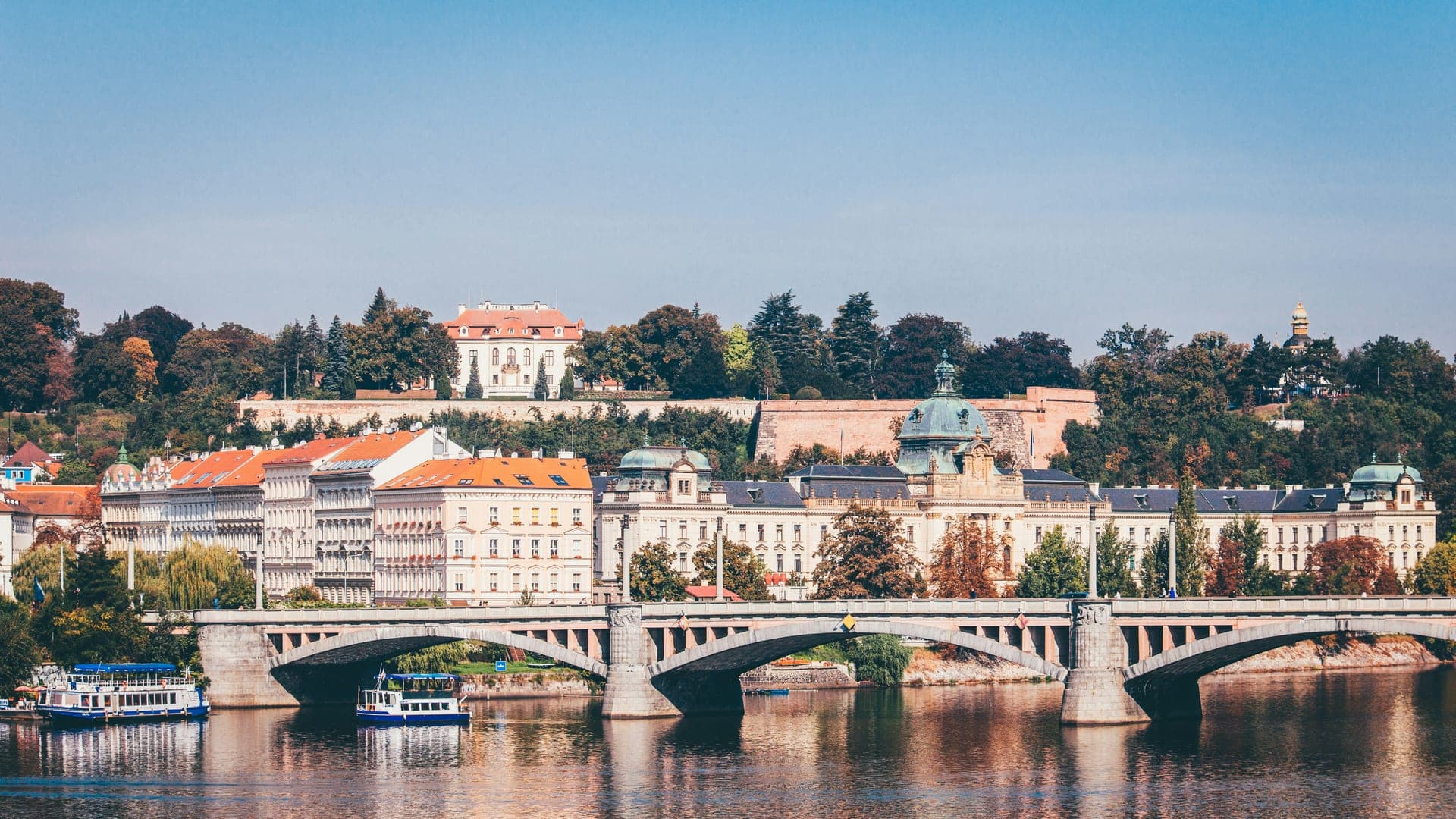
The capital that sold itself
Prague is one of Europe's best-preserved historic capitals, a city of 1.4 million people whose old town, river bridges and brewery yards draw millions of visitors a year. It is also a city that, after 1989, handed almost all of its housing to private owners faster and more completely than almost anywhere on the continent. That choice still defines the market: high ownership, a thin rental sector, and a public stock so small the city is now trying to rebuild it from near zero.
Count the tenures today and the 1990s sell-off is written into every column. About 61.2% of households own their home and 38.8% rent — and the census counts cooperative members among the owners, because a Czech cooperative share works much like ownership. Cooperatives are only 4.9% of dwellings as a legal tenure, but their real footprint is far larger: around 6% of Praguers live in a flat a housing cooperative built, some 35,107 homes across about 380 cooperatives, since much of the late-socialist družstevní stock converted to individual ownership after 1991. Municipal landlords hold just 4.3% of dwellings — about 29,841 flats — and private landlords let the remaining 34.5%.
- Owners
- Owner-occupier56.3%
- Cooperative4.9%
- Renters
- Public & non-profit rental4.3%
- Private rental34.5%
There is no real social-housing tier to speak of in Prague. Only about 0.5% of the city's dwellings are reserved for social-housing purposes, a targeting layer that sits on top of the small municipal stock rather than forming a tenure of its own. Czechia built almost no dedicated social housing after the war, leaving the means-tested housing benefit as the main support: roughly 10% of residents draw it. The first national framework for this, the Housing Support Act, only took effect in 2026.
Set the rents side by side and the gap is the story. Tenants in the city's regulated municipal flats pay around €5.20 per square metre, and members of older cooperatives about €7.45. Out on the open market a tenant pays far more: a median €17.50 across the whole stock, a median €19 on a newly-let apartment, and up to €22 per square metre gross for a furnished, serviced let. The distance from the regulated floor to a new market contract is more than three to one, and it is the whole affordability problem in one line.
- Public/municipal housing
- Cooperative
- All-stock median
- New contracts
- Furnished / serviced (gross)
Net-cold monthly rent per square metre by tier (furnished is gross, all-in). The regulated municipal and old cooperative floor sits far below the market median; a newly-let private contract runs more than three times the municipal rate.
Some of Prague's housing stands idle, and some of it has quietly left the long-term market altogether. When the city was counted in 2021, about 13% of flats — some 93,627 unoccupied flats — showed up vacant, though much of that is second homes, inherited flats and unmodernised stock; the city's own estimate of genuinely empty, usable dwellings is closer to 30,000. Offices are tighter: around 280,700 square metres stand vacant, roughly 5.8% of the office stock. The sharper pressure is tourism, not idleness. Roughly 5,389 dwellings now run as full-time entire-home short-term rentals, heavily concentrated in Prague 1 and the historic core, where they have thinned the long-term supply in exactly the streets most visitors see.
Two numbers explain why the market never loosens. Jobs, universities and the wider Central-Bohemian economy pull in roughly 60,000 moves a year of net inbound migration; against that, the city signs off only about 5,500 housing permits a year, and permitting is famously slow. The pinch is no longer confined to low earners. With a third of an average income, a Praguer can buy only about 21 square metres of a home, among the least of any EU capital. Housing costs now overburden 13.2% of urban households against 6% in the countryside, and one study of how tax breaks inflate property prices reckons it takes close to 20 years of an average wage to buy a Prague flat outright.
Owning your own home is becoming a luxury that most people can no longer afford.The družstvo that almost disappeared
The Czech cooperative is the bytové družstvo, a housing cooperative whose members hold a družstevní podíl — a transferable share that secures the use of a specific flat and, in practice, behaves much like ownership. This is the key difference from the rental cooperatives of Vienna or Zurich: a Czech cooperative member is closer to an owner than a tenant, which is why the census files them among owner-occupiers and why the form privatised so easily after 1989.
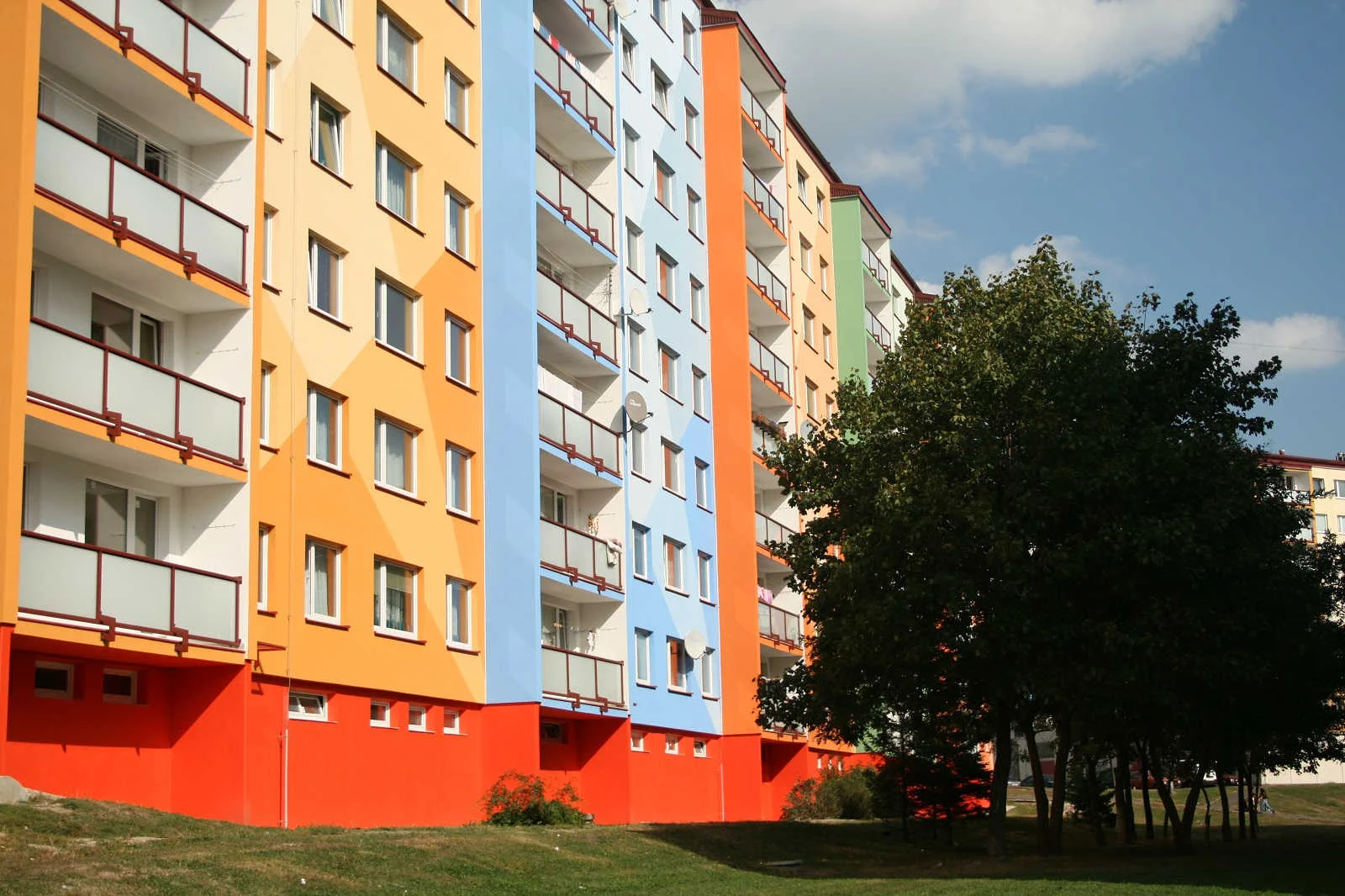
The tradition is old but its great expansion was late-socialist. Cooperatives built apartment blocks between the wars, but the decisive wave came in the 1960s to 1980s, when stavební bytová družstva — construction housing cooperatives — became the main semi-private route to a flat, building a large share of the panelák estates that still ring the city. After 1989 the right to buy emptied the form out: members converted their shares to individual ownership en masse, and for two decades the cooperative all but vanished as a way to build something new.
Today the sector clusters into three groups with different problems. The legacy societies, represented nationally by SČMBD, the Union of Czech and Moravian Housing Cooperatives, now spend most of their energy managing and energy-retrofitting the ageing panelák blocks their members own — a slow, capital-hungry task documented in a study of Polish and Czech cooperatives. A second cluster is the new, city-backed baugruppe cooperatives, organised by future residents on municipal land. A third is the self-organised collective: Sdílené domy runs permanently non-saleable community houses on the model of the German Mietshäuser Syndikat and is a member of the pan-European MOBA network. The legacy coops struggle with retrofit cost and ageing membership; the new ones struggle with land and finance, because Czechia still has no legal or funding framework for not-for-profit housing providers.
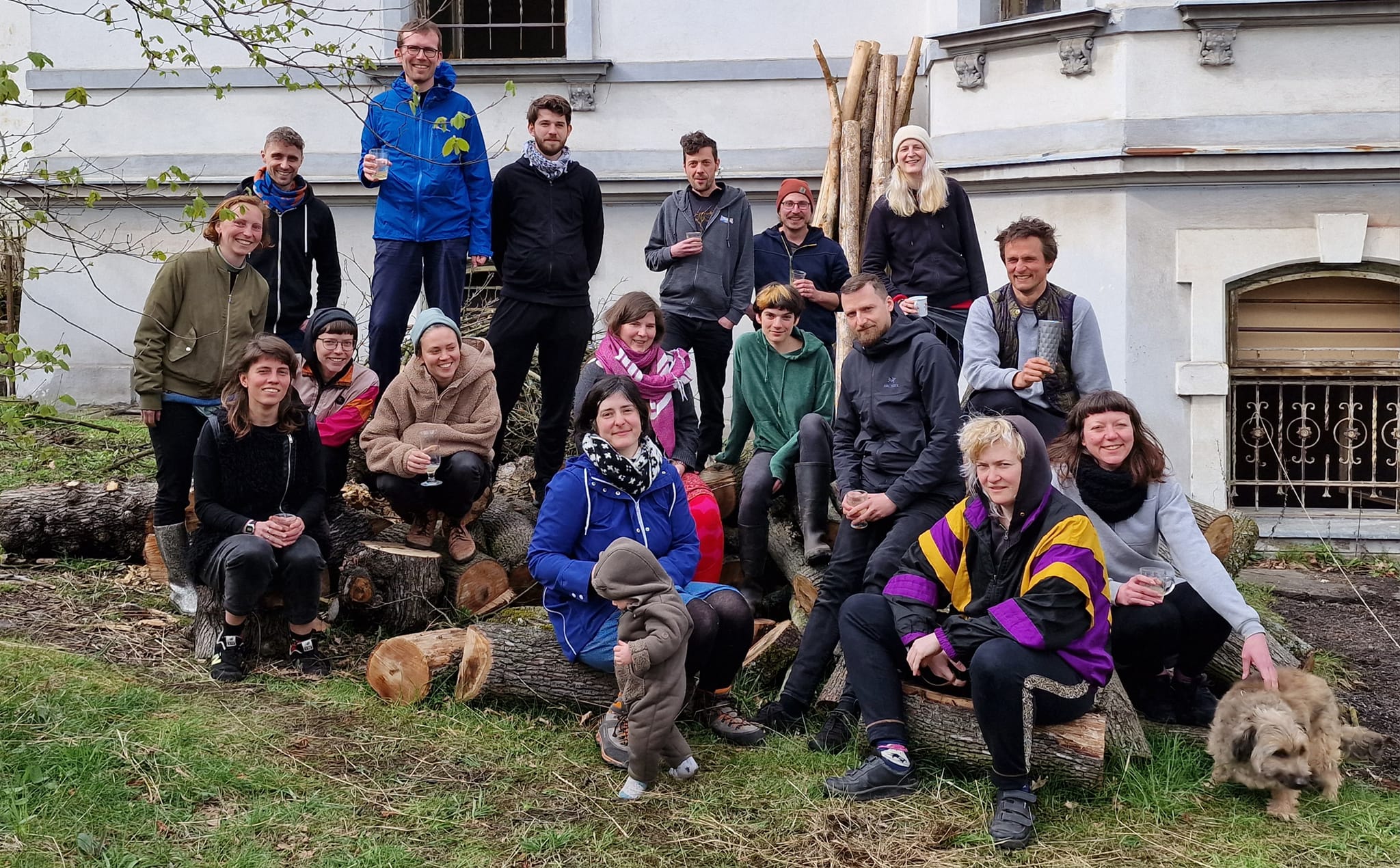
What turns this history into present-day policy is the role the city now assigns the cooperative. Prague treats it as a deliberate affordable-housing channel rather than a private leftover: it leases municipal land on a long building right, asks cooperatives to contribute to an Affordable Housing Fund, and points to a roughly one-third saving against market prices for the households who join. The cooperative revival in central and south-eastern Europe is being knitted together across borders, and Prague is one of its test beds.
Rebuilding a tier the city gave away
Prague's housing politics is the politics of rebuilding what was sold. Bohuslav Svoboda of the centre-right ODS has led the city since 2023, with Adam Zábranský of the Pirates holding the housing brief, and the lead instrument is the city's own developer. Pražská developerská společnost, set up in 2020, has been handed about 800,000 square metres of municipal land and aims to deliver 6,000 to 8,000 rental flats over a decade, prioritising key-worker professions and single parents. Its first scheme, Jalový Dvůr, brings 45 municipal flats in cross-laminated timber, one of the city's first low-carbon municipal buildings.
Responsibility is split between the town hall and the state. The city owns the land and runs the developer and the cooperative pilot; the national government sets the legal frame and the money. The Ministry of Regional Development is the lead author of the Housing Support Act, Act 175/2025, the first national attempt to prevent housing emergency, designed to shield around 1.6 million people at risk. The law took effect in 2026, but a late amendment delayed its support measures to September and critics say the funded scheme has been cut to a fraction of the plan. The State Fund for Investment Support lends below market rates for municipal and cooperative building.
The cooperative sits deliberately inside this programme. The city leases plots to cooperatives on a long building right rather than selling them, asks for a contribution to its Affordable Housing Fund, and treats the baugruppe model as a way to add affordable homes the budget could not build directly. It is a frank policy: Zábranský has argued the city will have to borrow to build municipal flats, and that the cooperative route lets future residents carry part of the cost in exchange for a price well below the market.
The vacant offices and idle plots have their own, half-formed answer in city planning. Prague's Metropolitan Plan steers new housing onto brownfields — the old breweries, distilleries and rail yards — rather than the green edge, and Europe's wave of office obsolescence offers a conversion frontier the city is only starting to use. There is no vacant-homes tax, and slow permitting remains the binding constraint: the OECD finds that changing Prague's land-use plan can take years, so the supply answer is as much about administrative capacity as about money.
- ~2031[source]
Municipal build target
Pražská developerská společnost aims to deliver its first several thousand municipal rental flats within about a decade of its 2020 founding, including timber, low-carbon blocks.
- 1991[source]
Restitution and the right to buy
After 1989, municipal flats are transferred to tenants and residents, and most stavební bytová družstva convert their flats to individual ownership — the start of one of Europe's largest housing sell-offs.
- 2012[source]
Paralelní Polis founded
A civic collective begins converting disused space in Holešovice into a self-organised cultural and co-working hub, an early model for bottom-up adaptive reuse in the city.
- 2020[source]
Pražská developerská společnost
Prague sets up its own development company and hands it roughly 800,000 m² of city land, with the aim of building 6,000–8,000 municipal rental flats over a decade.
- 2021[source]
Baugruppe cooperative pilot
The city council approves an affordable-cooperative-housing scheme: it leases municipal land on a building right and cooperatives pay into an Affordable Housing Fund, cutting the final price by up to a third.
- 2024[source]
Housing Development Strategy
IPR Praha's strategy sets five priorities — affordable construction, municipal housing, sustainable housing for specific groups, attractive housing citywide, and cooperation with key actors.
- Jun 2025[source]
Housing Support Act passed
Parliament adopts Act 175/2025 on housing support, the first national framework for preventing housing emergency, designed to shield around 1.6 million people at risk.
- Jan 2026[source]
Act takes effect
The Housing Support Act enters into force, led jointly by the Ministry of Regional Development and the Ministry of Labour and Social Affairs.
- Jul 2026[source]
City developer wins its first building permit, for 22 flats
After more than 2 years of permitting, Pražská developerská společnost (the city's municipal development company) wins its first building permit: 22 affordable rental flats at Nový Zlíchov in Prague 5. Construction is due to take 18–24 months, so the first flats arrive about 6 years after the company was founded.
- Sep 2026[source]
Support measures delayed
A technical amendment pushes the start of the law’s support measures from summer to September, and critics warn the funded scheme has been cut back to a fraction of the original.
From the post-1989 mass privatisation and cooperative conversion to the municipal developer, the baugruppe pilot and the first national Housing Support Act.
In Prague the carbon question and the affordability question now point at the same buildings. The housing stock averages around 55 years old, only about 17% of dwellings are energy-efficient, and the renovation rate crawls at roughly 1.2% a year — far short of the EU's deep-retrofit targets. The municipal developer's timber blocks and the panelák retrofit programmes the cooperatives run are the main vehicles for cutting the sector's carbon, which ties the climate goal directly to the non-market tier the city is trying to grow.
In Prague the argument has moved past whether to build and onto who should. Mayor Bohuslav Svoboda frames rental building as the city's route out of the crisis, arguing that municipal rental housing is clearly one of the answers and deserves the city's backing. Štěpán Ripka, who founded the Platform for Social Housing, points out that the national support law has been promised for fourteen years, and warns that without it a new generation grows up in housing emergency. Neither doubts the non-market tier has to expand; their quarrel is over the builder and the pace.
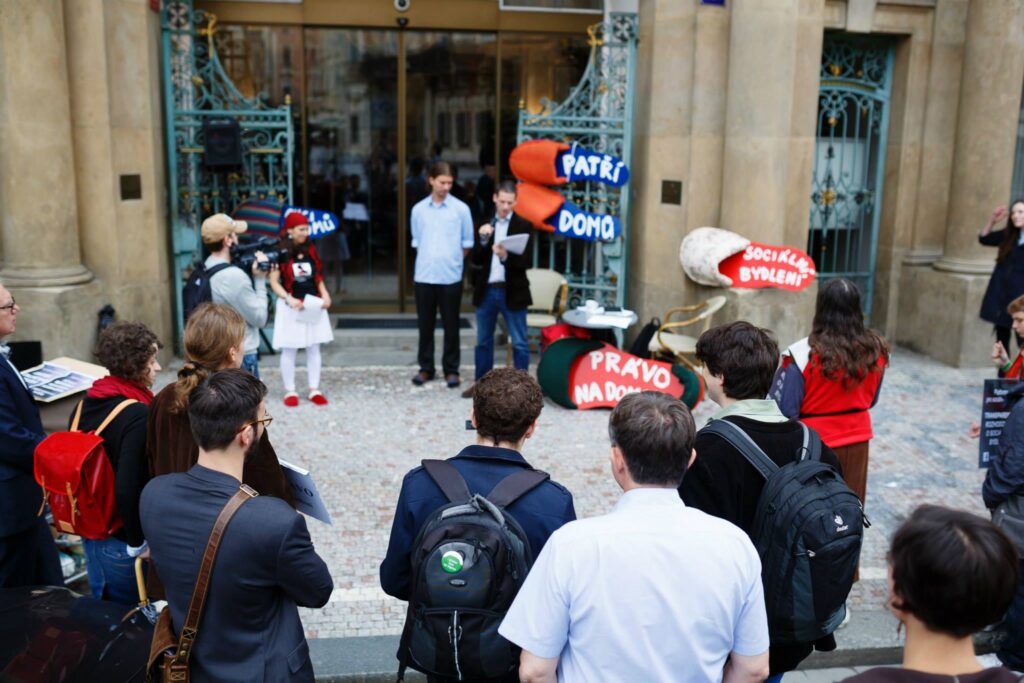
The postponement of the affordable-housing act is no surprise. It has been delayed for fourteen years now.After the sell-off: breweries, timber and the baugruppe revival
Prague's working examples run from giant brownfield conversions to tiny self-built collectives, and the thread that connects them is a city relearning the non-market form after privatising almost everything. The projects below start with the city's own builds and end with its smallest grassroots houses, before turning to the actors trying to make the model repeatable.
Jalový Dvůr is the clearest sign of the new municipal ambition. Built by Pražská developerská společnost, it brings 45 city rental flats in cross-laminated timber, one of Prague's first low-carbon municipal housing schemes and a pilot for the constructional system the city wants to scale. Its caveat is the one Zábranský names: the city developer has been slow to break ground, municipal building is expensive, and Prague will have to borrow to do it at scale.
The Radlická cooperative in Prague 5 is the baugruppe pilot made concrete. Two apartment buildings are planned on municipal land leased to a cooperative of future residents, the first test of the city's affordable-cooperative scheme. It took years of dispute to get there: the councillor for housing insisted the cooperative eventually pay a market value for the land, so the model could be financially sustainable and expand rather than amount to a one-off giveaway.
Sdílené domy runs the most decommodified version of the idea. Its houses — První vlaštovka in Břevnov and the AC254 community space in Holešovice — are self-managed and permanently non-saleable, financed through the German Mietshäuser Syndikat model and connected to the pan-European MOBA cooperative network. The scale is small and the financing improvised, but it is the closest Prague has to a self-organised, anti-speculative housing movement.
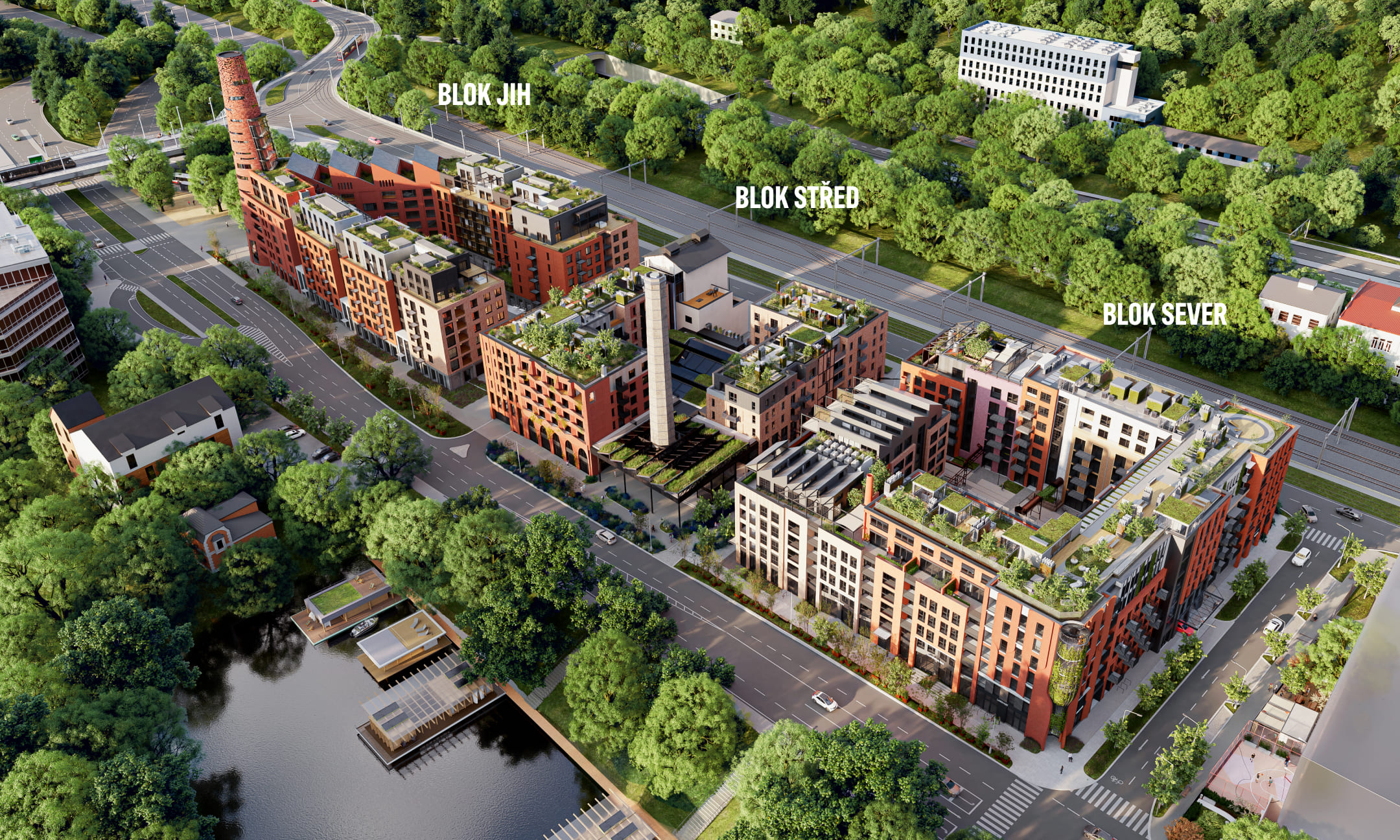
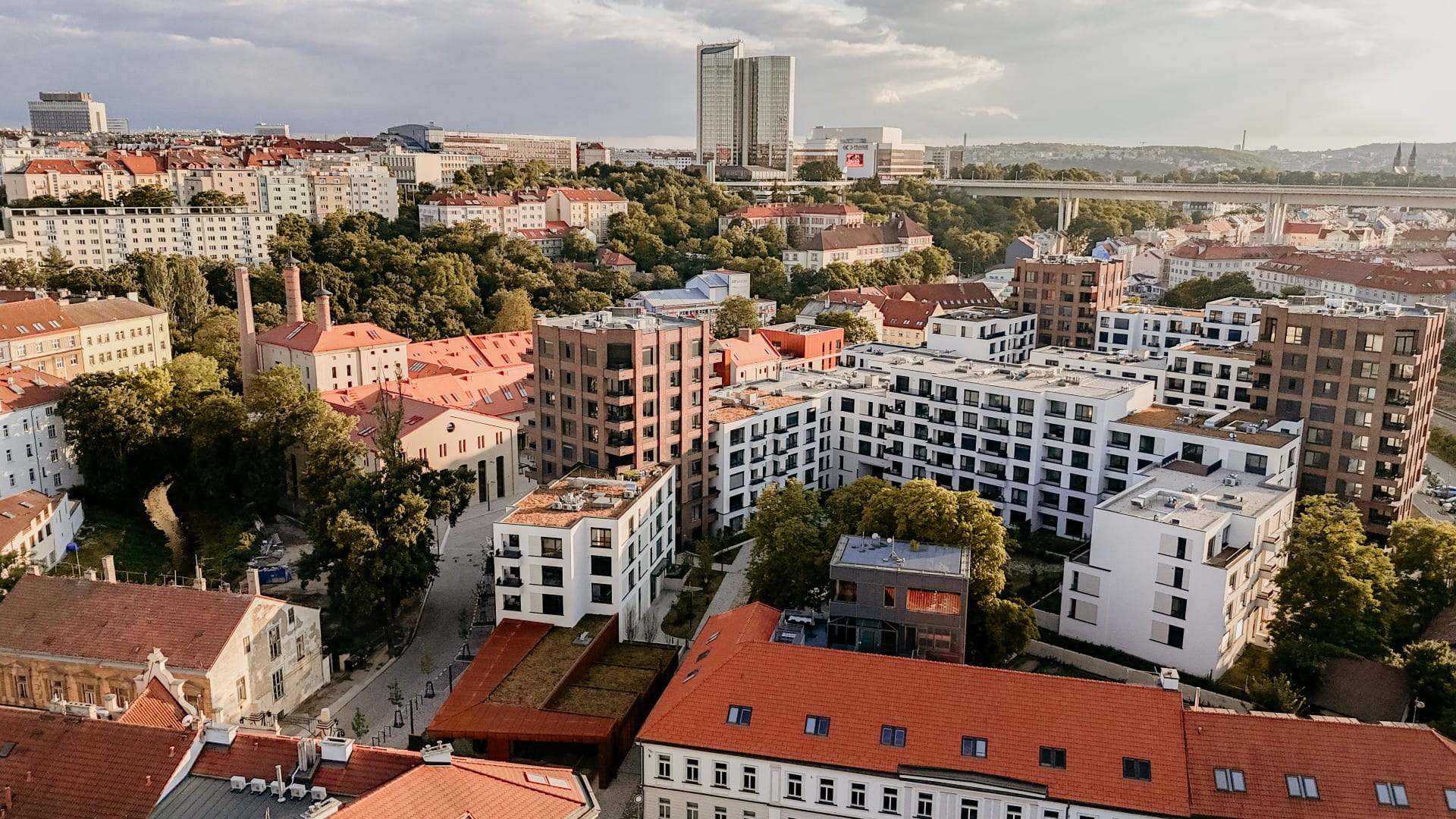
At the other end of the scale sit the brownfield conversions that are remaking Prague's industrial belt. LIHOVAR Smíchov turns the former Fischl distillery on the Vltava into a riverside quarter of around 535 apartments with a food market and an art gallery, due for completion in 2026, though as market-rate rental housing it answers the supply question rather than the affordability one. The Nusle Brewery, a brewing site since 1694, is being reborn as a residential quarter of more than 120 flats with a new footbridge over the Botič stream. Both show how readily Prague's heritage shells become homes — and how rarely those homes are cheap.
The institutions that convene and document this work are still few, but they are multiplying. Paralelní Polis, the self-organised hub opened in Holešovice in 2014, and the Jatka78 cultural centre, crowd-funded into a disused building in 2015, showed that Praguers could turn empty buildings into commons without waiting for a developer — the community-finance side traced in a study of civic-space economics, the conversions in a study of community-driven adaptive reuse across Europe. reSITE, the urban think-tank and festival, convenes the developers, architects and city officials around exactly these questions. It is a thinner institutional layer than Vienna's or Berlin's, and almost everything here is recent. But it is real, and it is being built on the one foundation Prague cannot give away: a deep cooperative memory, and a city full of brick shells waiting to become homes.
References
Statistics20Click on any number to see the source
Housing market
Tenure & affordability
Cooperative, social & public
Adaptive reuse & vacancy
Population & migration
From our library14
- Understanding the housing crisis: Staff Working Document accompanying the European Affordable Housing Plan — Knowledge
- Untaxed - How governments lure capital into real estate and feed the housing crisis — Knowledge
- SČMBD (Union of Czech and Moravian Housing Cooperatives) — Organisation
- Between efficiency and democracy: Explaining support and resistance towards energy transition and prosumer solutions in Polish and Czech housing cooperatives — Knowledge
- Sdílené domy — Organisation
- MOBA: Rethinking needs and financing for affordable rent and cooperative housing in Central and South-Eastern Europe — Knowledge
- Cooperative Housing Pioneers in Central and South- Eastern Europe: Mainstreaming Alternatives through Translocal Networks — Knowledge
- Rethinking European Offices 2030 - Risks and Opportunities from Obsolesence — Knowledge
- Platforma pro sociální bydlení — Organisation
- LIHOVAR Smíchov Riverside — Project
- Nusle Brewery (Nuselský pivovar) — Project
- Funding the Cooperative City: Community Finance and the Economy of Civic Spaces — Knowledge
- Open Heritage - Community-Driven Adaptive Reuse in Europe: Best Practice — Knowledge
- reSITE — Organisation
Further sources16
- Pražská developerská společnost — overview — Wikipedia
- Pražská developerská společnost — projects — PDS
- Strategie rozvoje bydlení v hl. m. Praze — Hlavní město Praha
- Prague’s first cooperative housing project approved — Prague Morning
- Prague plans more cooperative housing for the middle class — Expats.cz
- Act 175/2025 on housing support — Sbírka zákonů
- Zákon o podpoře bydlení — Ministerstvo pro místní rozvoj
- Z podpory bydlení zbyde jen torzo — Česká justice
- Štěpán Ripka on the delayed affordable-housing act — Platforma pro sociální bydlení
- Prague municipal housing — mayor Svoboda — Hlavní město Praha
- Prague will have to borrow for municipal flats — Zábranský — E15
- Lihovar Smíchov — Trigema
- Nusle Brewery to become residential quarter — Radio Prague International
- Sdílené domy — shared-ownership community housing — Sdílené domy
- Metropolitní plán + brownfield housing — Pražský deník
- OECD — Housing Reforms in Czechia and Poland — OECD