A border city's housing, layer by layer
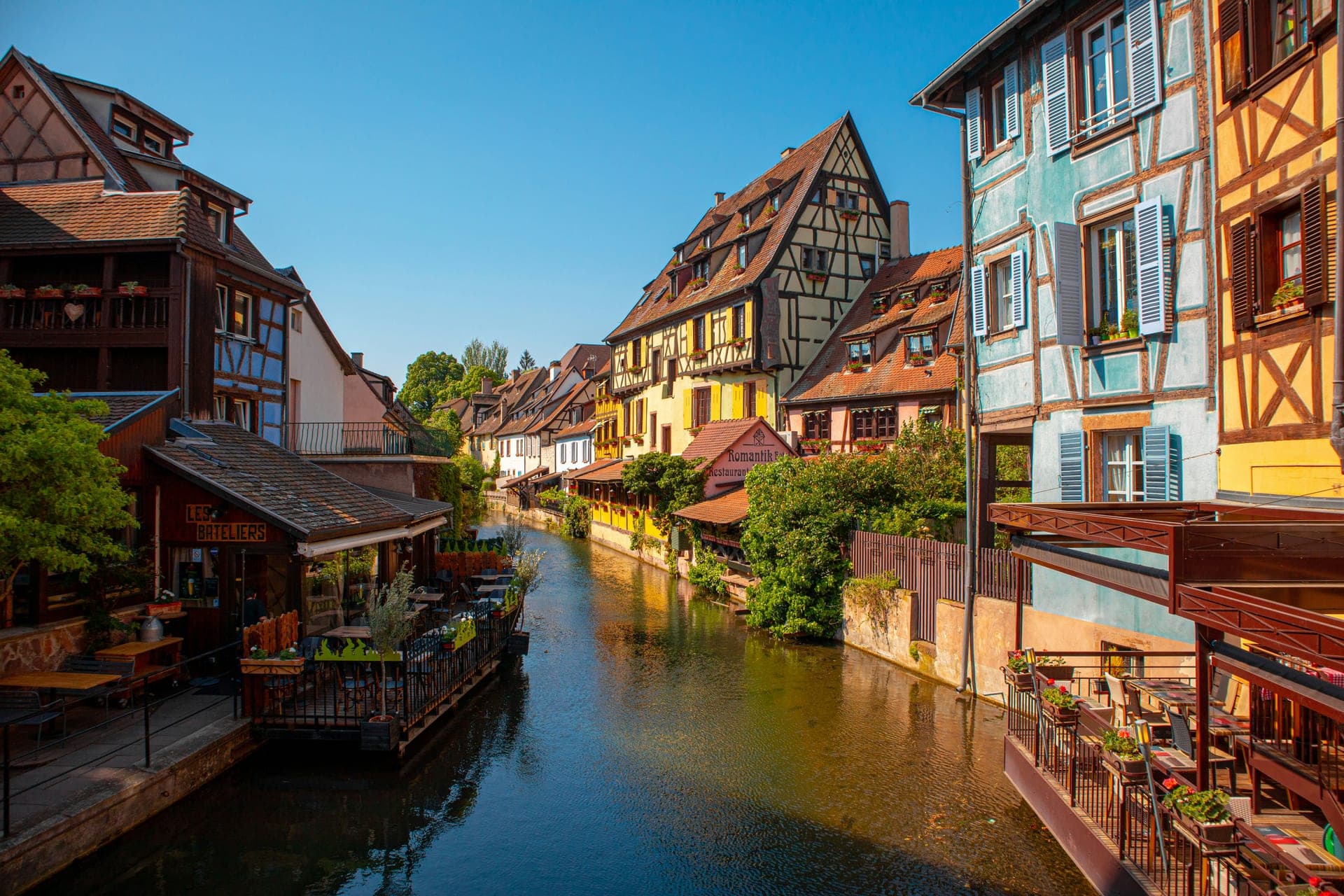
Strasbourg has spent centuries on the border between the French and German worlds, and its streets show it. The city is layered: a medieval island, a German imperial Neustadt, post-war estates on the edge. Today it is also a working capital of Europe, home to the European Parliament and the Council of Europe. For 293,771 residents, the question is whether a city built on so many compromises can still house its own people.
Renting is the norm here. The census puts owner-occupiers at 26.8% of households and tenants at 70.8%. The legal social-housing inventory counts 45,215 homes, or 32.75% of main residences. On that reckoning private landlords house about 38% of households. Cooperative tenure does not register at all: the city has no residents' cooperative yet, only a project group forming to create one. A further 2.2% of households are housed free of charge, usually by family or an employer.
- Owners
- Owner-occupier26.8%
- Renters
- Public & non-profit rental32.8%
- Cooperative0.00%
- Private rental38.0%
- Other2.4%
- Housed free of charge2.4%
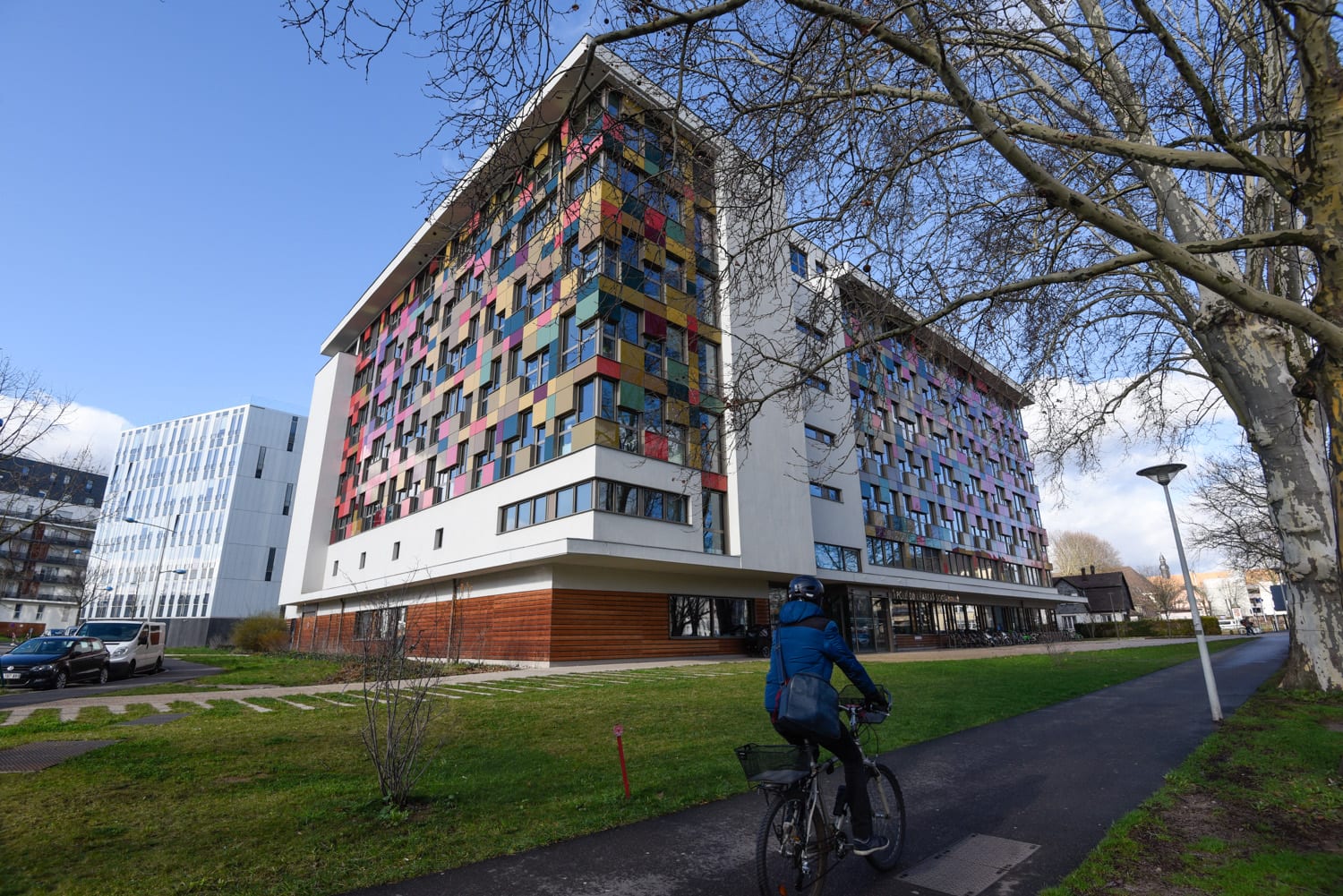
Social housing in France is a rulebook as much as a landlord. The SRU law (the 2000 act requiring larger communes to reach a minimum share of social homes) sets the legal count behind that figure. The census, which asks only who rents from an HLM (the regulated social landlords), finds 22.2%, or 31,560 households. The difference is hostels, student residences and private homes let under social agreements. The largest landlord is Ophéa, the Eurométropole's public housing office, which manages 20,600 homes. Together with two partner landlords in the emha group it runs more than 32,000.
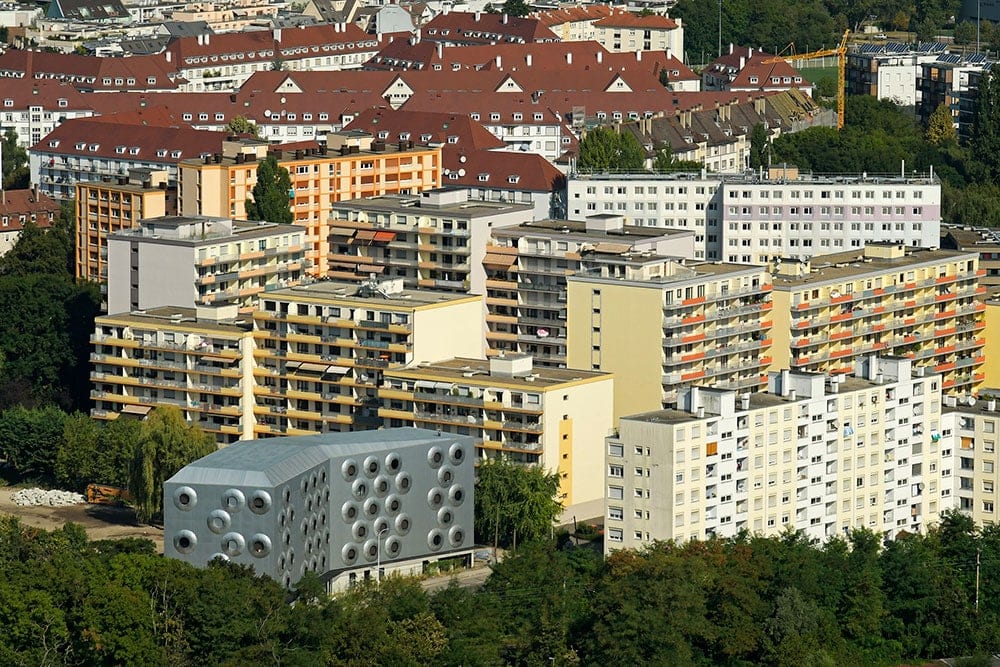
Rents rise with every step away from regulation. Social tenants in the region pay about €6.40 per m² a month. The median private rent across the Eurométropole is €11.10. Households who moved in during the past year pay €12.40, and a one-room flat let to a newcomer reaches €16.60. The local rent observatory finds that newcomers pay €3.50 per m² more than tenants settled for ten years. Buying is no escape. Flats averaged €3,749 per m² in 2026, although prices have eased by 1.8% since 2023.
- Public/municipal housing
- All-stock median
- New contracts
- New contracts, one-room flats
Monthly rent per m², net of charges. Social rent is a regional average; the private tiers cover the Eurométropole.
Not every home is lived in. The census counts 8.6% of dwellings as vacant, some 14,186 homes, many between tenants or awaiting works. Offices have their own slack. Regional surveys put office vacancy at around 6.5%, and a model estimate puts the empty floor space at 253,998 m².
Demand is fed by a large population passing through. Students, trainees and staff of the European institutions add some 65,000 mid-term residents. Supply is moving the other way. The observatory recorded 40% fewer declared building permits across the Eurométropole in 2024 than in 2023. Student rents rose by more than 8% in a year, according to the AFGES student union.
We can't meet all the requests. We are getting an enormous number of calls for help.The pressure lands hardest at the bottom. INSEE puts the poverty rate in the commune at 29.6%, and nearly 35,000 households live below the poverty line. An ADEUS study of social-housing demand counted 27,056 applications in 2023, up 36% since 2015, while allocations fell. By early 2025 more than 30,000 requests were active. Homeless and sheltered households on the list rose from 1,600 in 2015 to 3,845 in 2023.
The squeeze now reaches working households too. Mainstream social housing in France is open to a large share of earners, so the queue is no longer only the poorest. Voters noticed. In a January 2026 Ipsos poll, more than half of Strasbourg voters were dissatisfied with municipal action, and Rue89 Strasbourg asked what six years of ecologist rule had failed to stop in the housing crisis. Against that backdrop, the one cooperative form the city has grown is counted in dozens of homes.
Self-promotion first: how Strasbourg rebuilt the cooperative idea
Strasbourg's cooperative housing takes three forms, and none of them is the classic rental cooperative. The largest is autopromotion (self-promotion): a group of households commissions its own building without a developer. Members usually hold it through an SCA (a société civile d'attribution, a company that allocates each member a flat). The second is the HLM cooperative, a social landlord owned by its members, such as Habitat de l'Ill. The third is the bail réel solidaire (a long lease under which a household buys the home while a land trust keeps the land). The coopérative d'habitants (a residents' cooperative that owns the building and rents to its members) exists in French law but not yet here.
The roots are philanthropic and municipal. The Stockfeld garden city was built from 1910 to house families displaced by the clearance of the old centre. The Ungemach garden city followed in the 1920s, 140 pink and straw-coloured houses built by a private foundation. The city founded its public housing office in 1923. The self-build revival began much later. In 2004 a group of residents formed the association Eco-Quartier Strasbourg, now Réhabiter. In 2009 the city became the first in France to offer municipal plots to self-promotion groups. A 2017 TU Delft thesis on co-housing and the energy transition draws on the practical guide those Strasbourg groups produced.
We wanted to create a third way in urban development, between social housing and private development.Today the sector has three clusters with different problems. The self-promotion groups are the most numerous. By 2020 they had built 92 homes, according to Rue89 Strasbourg, and by 2023 20 projects were occupied with 15 more under way. Their obstacle is land. Habitat Participatif France estimates that half of such projects nationally fail because they cannot buy a site. Social landlords, including the cooperative ones, face a different squeeze. Ophéa and its partners raised rents by 3.5% in 2024, and tenant groups blamed the state's withdrawal of support. The land-trust vehicle depends on public land and the Eurométropole's backing.
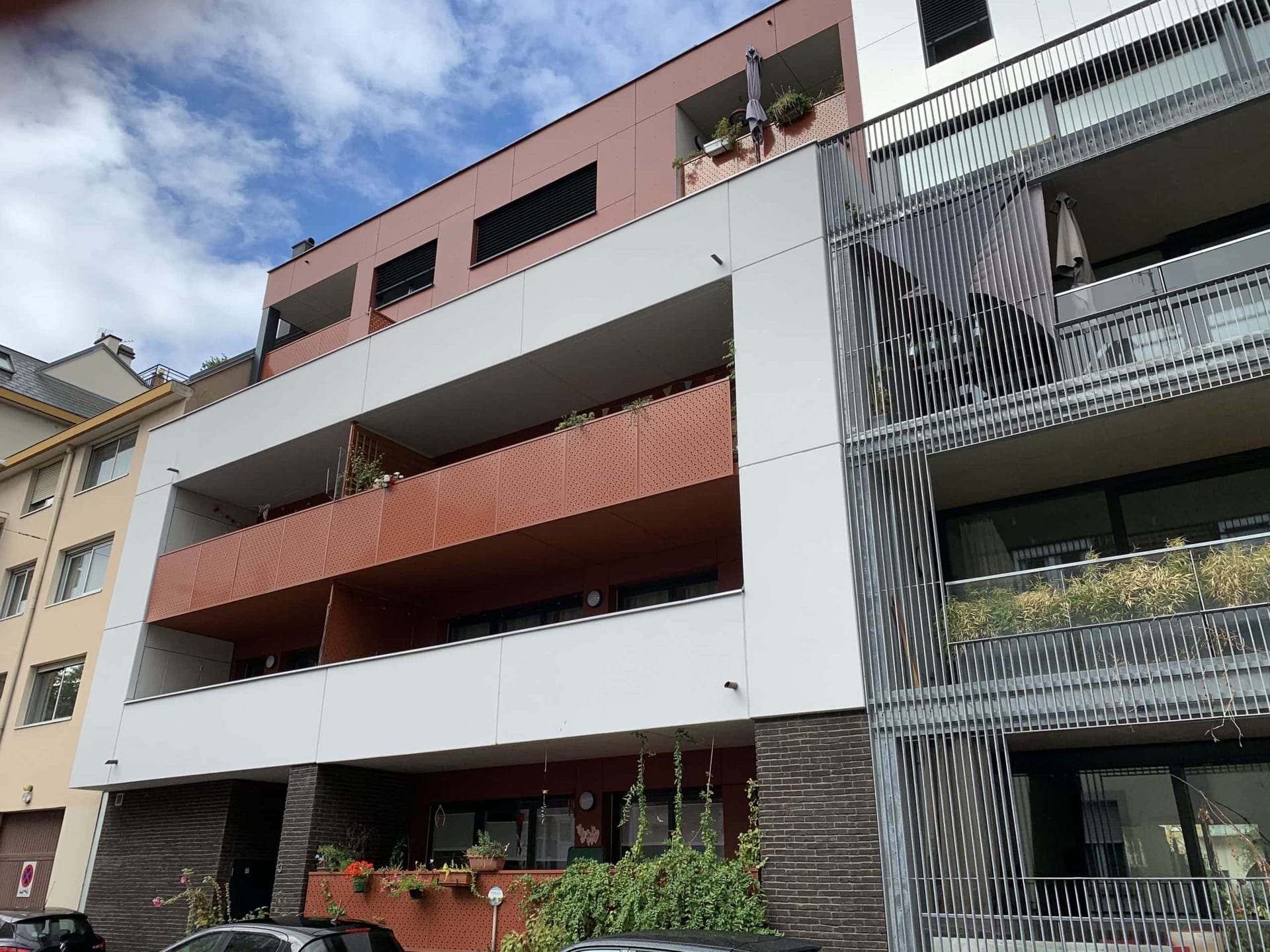
The city treats these forms as part of its affordable offer. It reserves plots and up to 10% of the homes in its new urban projects for participatory housing. The Eurométropole also backs the land trust, whose homes sell at 30 to 50% below market. Strasbourg sits in NETCO, the Network of Cities for Collaborative Housing, alongside Lyon, Barcelona and Amsterdam. Whether that support grows depends on the politics that changed hands in 2026.
A new majority, a missed experiment
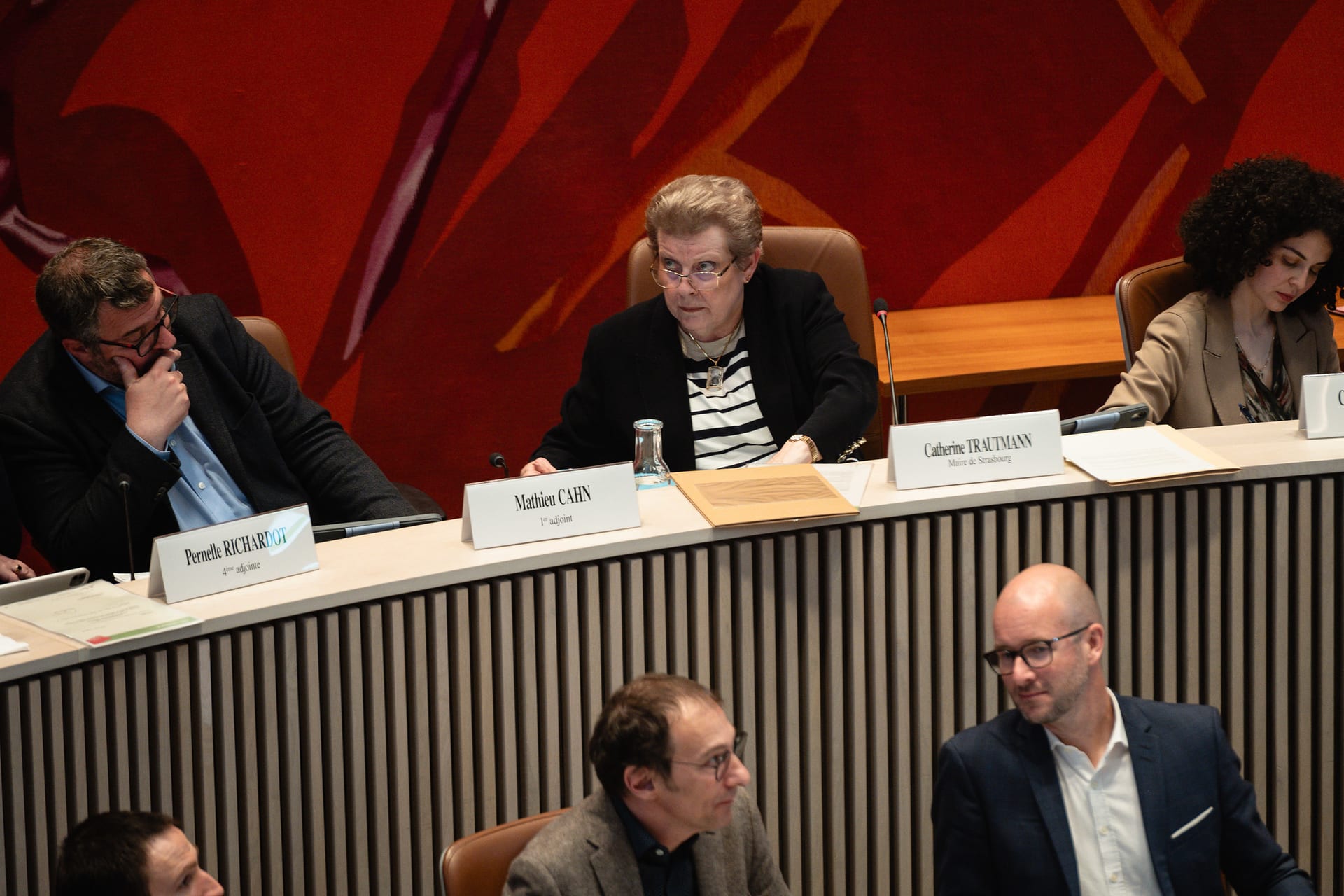
The March 2026 election turned on housing and changed the city's leadership. Catherine Trautmann, the Socialist who had been mayor in the 1990s, won the second round with 37%. The ecologist mayor Jeanne Barseghian took 31.7% and the Les Républicains candidate Jean-Philippe Vetter 31.3%. In April Trautmann was also elected president of the Eurométropole, which holds most housing powers. Her first move on housing is a conference to decide where rent control and new student housing should go.
It is not acceptable that housing, water, energy, health, education, culture and mobility are treated as privileges.Rent control is the sharpest test. France lets a city cap rents only through a national experiment, and Strasbourg's previous majority declined to join it. In June 2026 Paul Meyer, the new deputy mayor for urban planning, told the council that the city had missed that chance and might not be selected now, Rue89 Strasbourg reported. The outgoing mayor had argued for rent regulation too. Her programme promised 3,000 new homes a year, including 1,250 social homes, and a permit system for private lettings.
Rents are out of reach in far too many privately rented homes.Each tier of government holds different levers. The state sets the SRU quota, the rent-control experiment and tenancy law. The Eurométropole writes the combined land-use and housing plan and funds social housing, putting about €30 million a year into the sector. In 2024 it noted that only 3 of its 20 communes subject to the SRU law met their obligations. The city controls planning permission for tourist lets. Under the 2024 Le Meur law it tightened those rules in December 2025, adding an energy-rating test for any flat converted to a tourist let (Eurométropole notice).
Support for non-market forms rests on land. The Eurométropole's land trust, OFS Alsace, has delivered 140 homes under the bail réel solidaire, with 500 more in the pipeline. The model mirrors the urban community land trusts spreading across Europe. The city's self-promotion calls and its participatory quota continue under the new majority, which has not yet published figures of its own.
Empty buildings are the other answer. Since 2016 the Eurométropole has paid owners to bring vacant homes back to the market, and more than 400 have been re-let. That is modest against the census count, and the scheme draws on the carrots rather than the sticks in the menu of tools for vacant housing. Conversions are starting. In June 2025 the former offices of the regional audit chamber reopened as 57 social student homes. Research on office-to-housing conversion in France shows why this stays rare: before the pandemic, conversions supplied only a sliver of new homes.
Climate goals push in the same direction. The Plan Climat 2030 aims to cut emissions by 55% from 1990 levels and to renovate 8,000 homes a year to low-energy standard, half of them occupied by modest households. The urban renewal convention adds €1.36bn of works in eight estates, among them Neuhof, Hautepierre and Elsau, to 2032. Social landlords are the main vehicle for both programmes.
- 1910[source]
Stockfeld garden city begins
Homes for families displaced by the clearance of the old centre.
- 1923[source]
City founds its public housing office
The HBM office that became CUS Habitat and, in 2019, Ophéa.
- 2009[source]
First call for self-promotion groups
Strasbourg becomes the first French city to offer municipal plots to self-promotion groups.
- September 2010[source]
Eco-Logis residents move in
11 homes in Neudorf, the first completed self-promotion building.
- March 2020[source]
Urban renewal convention signed
A €1.36bn programme for eight neighbourhoods, running to 2032.
- June 2025[source]
Offices become student homes
57 social student homes open in the former regional audit chamber.
- December 2025[source]
Tourist-let rules tightened
Councils apply the 2024 Le Meur law to furnished tourist lets.
- March 2026[source]
Trautmann elected mayor
She wins the second round with 37% of the vote.
- April 2026[source]
Trautmann heads the Eurométropole
Elected president of the metropolitan council.
- End of 2026[source]
More offices converted
64 student homes due on a former Orange site, rue Fritz Kiener.
- 2030[source]
Plan Climat deadline
Target: 55% fewer greenhouse-gas emissions than in 1990 and 8,000 low-energy renovations a year.
- 2030[source]
Citadelle quarter completed
102 of its 909 homes designed with their residents.
- 2032[source]
Urban renewal programme ends
Close of the second national renewal programme in eight neighbourhoods.
From garden cities to the Plan Climat deadline.
From Eco-Logis to the Citadelle: homes designed by those who live in them
Eco-Logis is where the city's self-promotion story became real. The group grew out of Eco-Quartier Strasbourg from 2004. Residents moved into its 11 homes on rue de Lunéville in Neudorf in September 2010. The building by the architect Michael Gies is held by its residents through an SCA. It showed that households could commission a city-centre building without a developer, and it became the reference for every group the city's calls have selected since.
Lieu Commun in the Poteries district brought the method into social housing. The HLM cooperative Habitat de l'Ill delivered its 15 social rental homes in April 2018, designed with their future tenants by the architects ArchiEthic. The cooperative movement's federation called it a pioneering project in France. It answers the charge that participatory housing serves only those who can afford to buy.
Star-Dock L'Alternatif at Starlette, on the Deux-Rives waterfront, was the first land-trust scheme in the city. Its 34 homes sell at about €3,300 per m² on an 80-year lease, in a district where market prices are near €6,000. Households pay a small monthly fee for the land. About 200 such homes are planned across Deux-Rives.
The Citadelle quarter, near the Parc de la Citadelle, is set to become the largest participatory district in France. Of its 909 homes, 102 will be designed by their residents, 26 of them as social rentals, by 2030. Nearby, the Coop district turns the former headquarters of Coop Alsace, a consumer cooperative that settled at the Port du Rhin in 1911, into a mixed quarter. The name keeps a cooperative memory alive in a district rebuilt for a new population.
The CohoUsing handbook features Colocation ELSAU, a temporary cohousing project for refugees in the Elsau estate. It offers 12 shared flats with common rooms at a low rent, and shows how shared living can serve people in transition as well as settled households. The converted audit-chamber offices on rue du Faubourg-de-Pierre make a similar point about buildings. With the Fritz Kiener site next, the city is testing whether empty offices can become homes.
Behind these projects stands Réhabiter, which still guides new groups and is now assembling a project group to found the city's first residents' cooperative. The step matters: it would add a rental form with collective ownership to a city that has so far built mainly for owners.
References
Statistics5Click on any number to see the source
Housing market
Population & migration
From our library12
- Ophéa — Organisation
- Observatoire local des loyers du Bas-Rhin – résultats 2024, périmètre Eurométropole de Strasbourg — Knowledge
- La demande de logement social dans l'Eurométropole de Strasbourg : quelles évolutions des besoins ? — Knowledge
- Réhabiter (ex-Eco-Quartier Strasbourg) — Organisation
- Learning from co-housing initiatives — Between Passivhaus engineers and active inhabitants — Knowledge
- L'habitat participatif, une exception strasbourgeoise — Knowledge
- NETCO Network of Cities for Collaborative Housing - 2023-2024 Peer Exchanges Policy Recommendations — Knowledge
- Stationnement, encadrement des loyers : les principaux points débattus au conseil municipal — Knowledge
- Urban Community Land Trust in Europe — Knowledge
- Tools to Deal with Vacant Housing — Knowledge
- The conversion of office real estate into residential real estate: trends following Covid-19 and the surge in teleworking — Knowledge
- CohoUsing handBook — Knowledge
Further sources37
- habitatparticipatif.strasbourg.eu — habitatparticipatif.strasbourg.eu
- INSEE, census 2023 (logé gratuitement) — insee.fr
- Ophéa, qui sommes-nous — ophea.fr
- emha group — ophea.fr
- OLL Bas-Rhin (ADEUS), results 2024 — adeus.org
- SeLoger, March 2026 — edito.seloger.com
- ADEUS, OLL results 2024 — adeus.org
- ici Alsace, 4 September 2026 — ici.fr
- Vert, 23 February 2026 — vert.eco
- ADEUS, demande de logement social 2023 — adeus.org
- Rue89 Strasbourg, 29 May 2026, citing the Chambre régionale des comptes — rue89strasbourg.com
- ipsos.com — ipsos.com
- rue89strasbourg.com — rue89strasbourg.com
- habitatdelill.com — habitatdelill.com
- fr.wikipedia.org — fr.wikipedia.org
- fr.wikipedia.org — fr.wikipedia.org
- habitatparticipatif.strasbourg.eu — habitatparticipatif.strasbourg.eu
- Alain Jund — rue89strasbourg.com
- Rue89 Strasbourg, tenant associations on 2024 rent rises — rue89strasbourg.com
- Eurométropole de Strasbourg, bail réel solidaire — strasbourg.eu
- France 3 Grand Est, 22 March 2026 — france3-regions.franceinfo.fr
- rue89strasbourg.com — rue89strasbourg.com
- pokaa.fr — pokaa.fr
- Catherine Trautmann — pokaa.fr
- Pokaa, 5 March 2026 — pokaa.fr
- Eurométropole de Strasbourg, relance de l'habitat social — strasbourg.eu
- strasbourg.eu — strasbourg.eu
- strasbourg.eu — strasbourg.eu
- Eurométropole de Strasbourg, logements vacants — strasbourg.eu
- Strasinfo, 5 June 2025 — strasinfo.fr
- strasbourg.eu — strasbourg.eu
- Eurométropole de Strasbourg, NPNRU — strasbourg.eu
- Ville de Strasbourg — habitatparticipatif.strasbourg.eu
- ici Alsace — ici.fr
- Les EPL, 30 January 2023 — lesepl.fr
- strasbourgdeuxrives.eu — strasbourgdeuxrives.eu
- strasbourgdeuxrives.eu — strasbourgdeuxrives.eu