
A spa town turned renters' city
Wiesbaden grew up as a spa town for the wealthy. Its population leapt from 26,000 in 1866 to 109,000 by 1910, and most of the centre went up in those few decades as villas, boulevards and grand apartment blocks. Today it is the capital of Hessen and a city of 288,584 people on the Zensus count, a quieter neighbour to Frankfurt and Mainz. That Gründerzeit (the late 19th-century building boom) inheritance still shapes who can live here, because the stock was built for a class of residents the city no longer mainly houses.
Most households rent. Some 72.7% of Wiesbaden households are tenants and only 27.3% live in a home they own. The two municipal companies, GWW and its sister GeWeGe, hold 13,748 homes, or 9.1% of the stock. Housing cooperatives own just 4,062 flats, a thin 2.7% of all dwellings. Private landlords, with the cooperatives counted in their slice below, let the remaining 63.6%.
- Owners
- Owner-occupier27.3%
- Renters
- Public & non-profit rental9.1%
- Cooperative0.00%
- Private rental63.6%
Social housing works differently here. It is a covenant rather than a tenure: a Sozialbindung (a subsidy-linked rent cap and allocation rule that expires after a fixed term) covers around 6% of dwellings, spread across municipal and private blocks. That layer has shrunk hard. Local reporting counts roughly 20,000 subsidised flats in the 1990s, falling to 8,547 by the end of 2022, before a small rise to 8,706 in 2023. Meanwhile about 3,700 households are registered as eligible and waiting, and only about 500 flats a year come free to allocate.
The rent ladder runs from subsidised floor to furnished ceiling. A newly built subsidised GWW flat starts at around €6.80 per square metre cold. The average across all rented homes was €9.21 in the 2022 census, a full €1.93 above the German average. Flats advertised to new tenants now ask a median €14.43, and furnished mid-term lets with bills included reach an estimated €24.50. Anyone who moves pays the top rungs.
- Public/municipal housing
- All-stock average (census)
- New contracts
- Furnished / serviced (gross)
Monthly rent per square metre by tier. Net cold, except the furnished tier, which is gross and all-in. Wiesbaden's cooperatives publish no rent average, so the ladder starts at the subsidised municipal floor.
Supply sits tight. The census found 5,027 empty flats, 3.3% of the stock, and just over half of those were simply between tenants. Offices look looser: an estimated 5.8% of floor space stands empty, around 326,839 square metres on a national apportionment rather than a local count. That gap between idle offices and full flats is small next to Frankfurt's, but it is real.
Demand keeps rising. The city's own register passed 300,000 residents in January 2025, and the Zensus-based count grew by 11,651 people between 2013 and 2023. Completions picked up after 2020 and cleared the council's 1,200-a-year target, with 1,562 in 2021. Yet the local trade-union federation, citing the Pestel Institute, puts extra need at 1,470 homes a year, and the city's statisticians rank Wiesbaden last in its region for stock growth. The Hessen rent brake still applies, though a court has thrown its legal basis into doubt.
The strain reaches well past the poorest. The city's own rent study found that tenant households spend 31% of net income on housing on average, against 20% for owners. Some 31% of renting households are overburdened, paying two-fifths of their income or more. With roughly 45% of households earning little enough for a subsidised flat, the squeeze covers much of the middle class too. Residents see it that way: at least 75% call cheap housing an urgent task for the city, the top item on the list. Nationally, the Deutscher Mieterbund's 2026 rent report describes the same slide, with low earners hit hardest by energy costs.
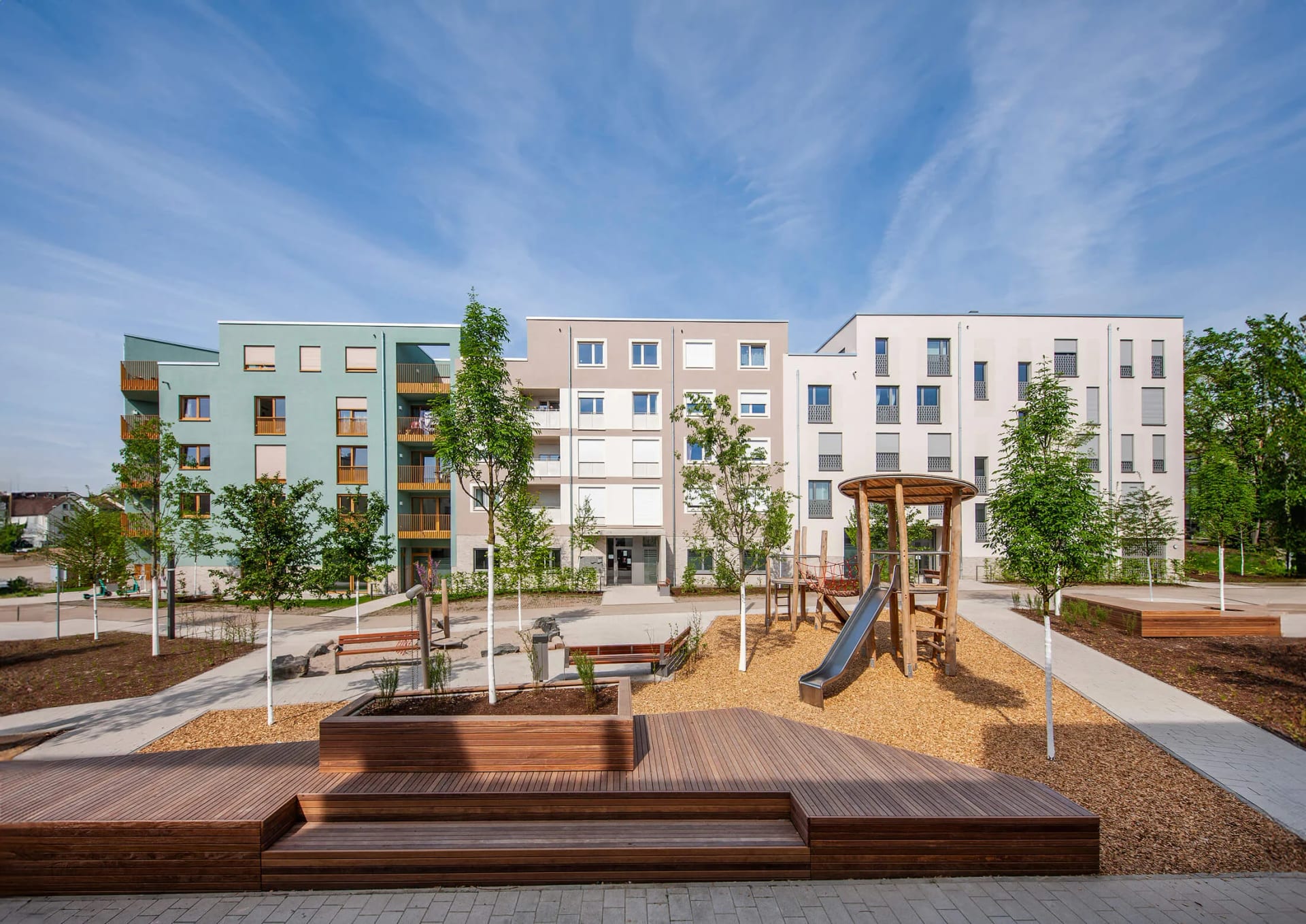
Above all, what is missing in general is affordable housing.Those pressures fall on a city whose non-market sector leans almost entirely on its municipal landlord. Its cooperative sector is one of the smallest among Germany's larger cities.
A single post-war society and a new wave of shared houses
Wiesbaden's cooperatives follow the German Genossenschaft model. Members buy a Genossenschaftsanteil (a share that secures a tenancy rather than a flat to sell), and the cooperative lets its homes at cost for life. The form sits closer to secure renting than to ownership. A history of Germany's housing co-operatives traces this 160-year tradition through war, division and reunification, and nationwide the cooperative federation DGRV counts around 2.2 million homes in the sector. In Wiesbaden it is unusually small, and it is dominated by a single society.
That society was born of a post-war emergency. After 1945 Wiesbaden became a major US Army base, and the occupying forces had requisitioned almost 6,000 flats by 1948. The city answered with two institutions a year apart. GWW was founded in 1949 to rebuild war-damaged housing. On 5 January 1950 a group of citizens founded the cooperative that is now GENO50, finishing its first block of 63 flats by May 1951. Where Berlin or Hamburg carried a dense cooperative tradition from the 1920s, Wiesbaden's villa economy never built one, and the cooperative share has stayed modest ever since.
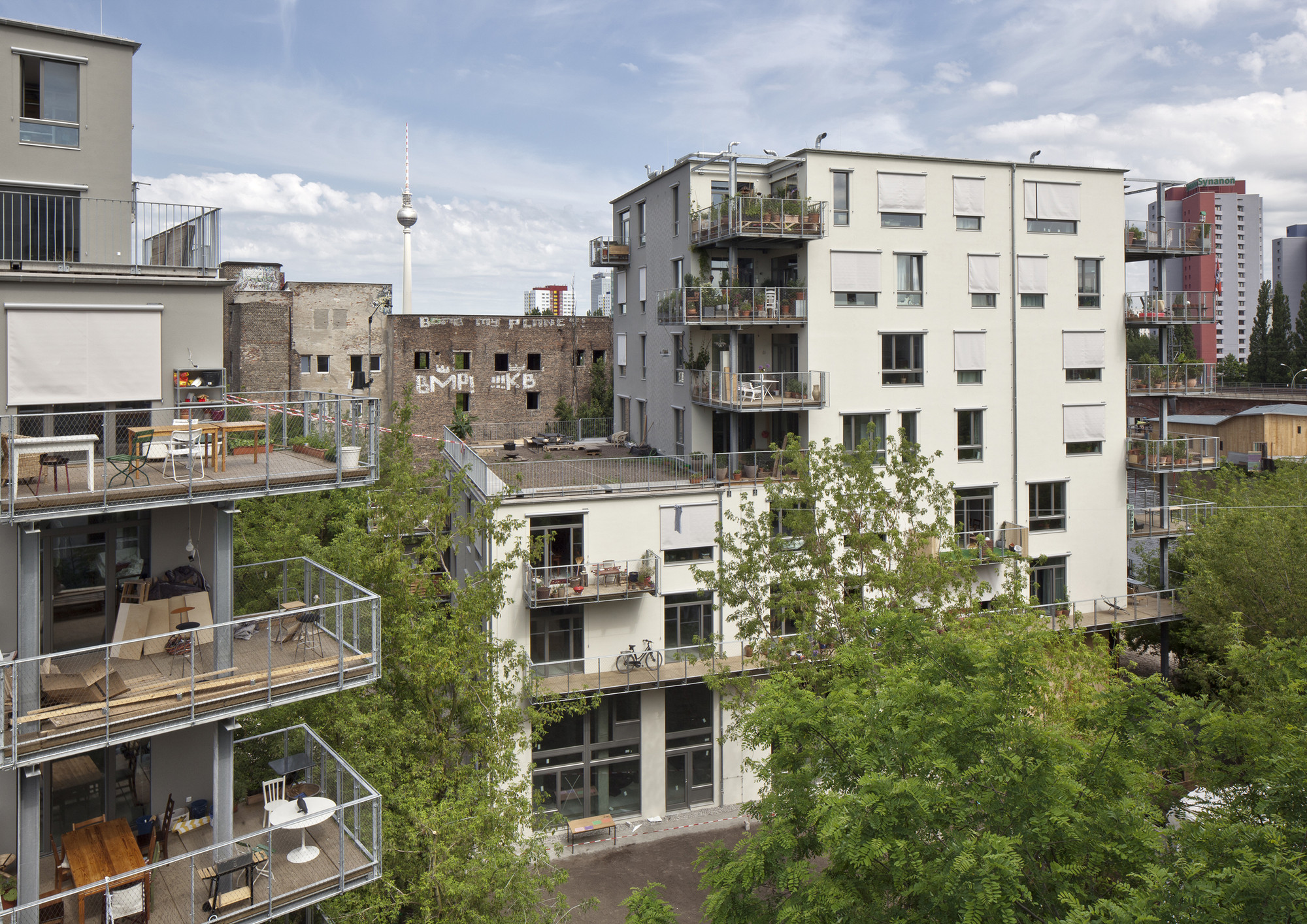
Today the sector falls into four clusters. The first is GENO50 itself, with around 3,500 flats and more than 6,100 members: a classic post-war society whose main work is managing and retrofitting an ageing stock. Its problems mirror those in a study of cooperatives facing energy shocks and subsidy freezes, and new building now carries real risk for societies of its kind. The second is small community-led cooperatives such as Gemeinschaftlich Wohnen eG, founded in 2003 to live less anonymously. The third is the self-organised Mietshäuser Syndikat (a federation that takes houses permanently off the market), which reached the city only in 2024 with KB07. The fourth is Wiesbaden's own habit: cohousing groups organised as associations that rent a whole building from GWW, such as Wohnprojekt Horizonte. The first cluster fights retrofit costs; the others fight for land and equity.
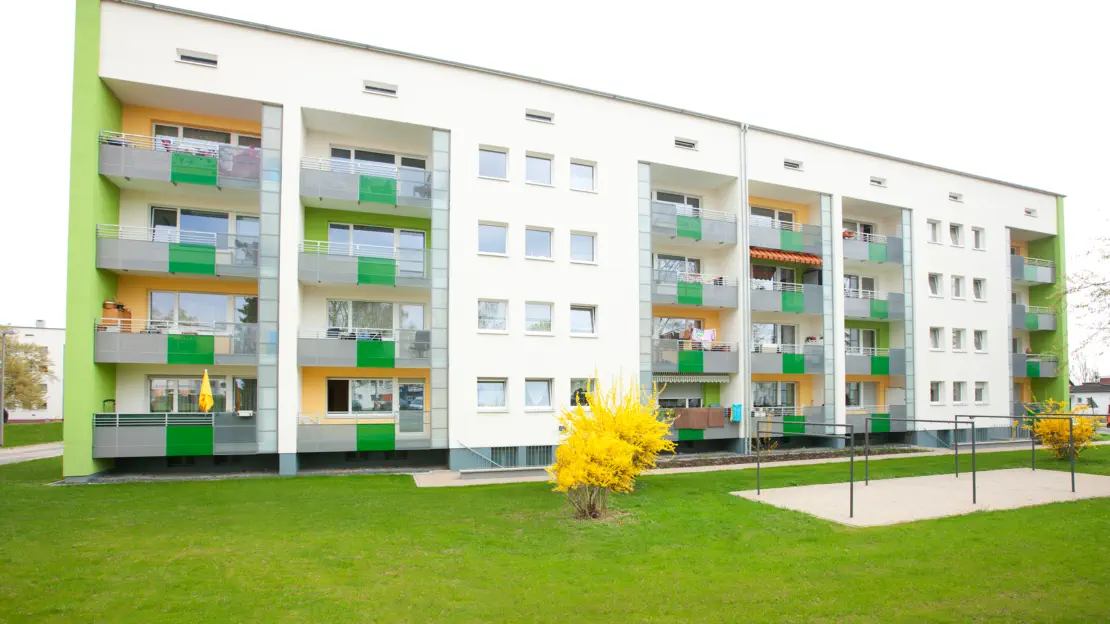
The city now treats community-led housing as part of its affordability toolkit rather than a niche. It lists completed and planned group projects on its own website, and the state-funded Landesberatungsstelle (Hessen's advice centre for community-led housing) holds Wiesbaden project days in October 2026. Federal research, from a BBSR study of cohousing inside cooperatives to the federal ministry's case for cooperatives as municipal partners, gives it a template. What decides the pace is how the city allocates land and subsidy.
Forty per cent, one vote and a new district
Wiesbaden's housing politics changed hands in 2026. Gert-Uwe Mende of the SPD was re-elected Lord Mayor in March 2025 with 58.1% in the run-off. A year later the CDU won the council election, and in August 2026 it formed a four-party "Maracuja" coalition with the FDP, the Greens and Volt. That coalition holds a majority of exactly one vote and has kept the plan for the new eastern district. Since September, housing sits with Andreas Kowol, whose department covers health, social affairs, consumer protection and housing.
The city's headline answer is land policy. Under the WiSoBoN guideline (Wiesbaden's rule for socially fair land use), adopted in July 2025, schemes of more than 40 homes must make at least 40% of them subsidised, split 2 to 1 between low and middle incomes. The previous council coalition also extended a cap on rent rises at GWW and GeWeGe of 2% a year, a step the trade unions welcomed. The largest single lever is the Ostfeld, a planned district for at least 10,000 residents beside a new campus for the BKA (the Federal Criminal Police Office). Its development statute has been in force since 2021, and two court challenges failed in November 2024.
The other levels pull different strings. Hessen's CDU–SPD government, with Kaweh Mansoori as minister for economy, energy, transport and housing, sets the subsidy budget and the tenancy rules. Its Hessengeld pays first-time buyers €10,000 plus €5,000 per child, capped at the land-transfer tax they paid, and a reformed building code passed in October 2025 promises to build "faster, simpler and cheaper". The state's Mietpreisbremse (the rent brake capping new-let rents near the local norm) covers Wiesbaden. But a Frankfurt court ruled in June 2026 that its extension was invalid, and a new ordinance for 71 municipalities instead of 49 is due before the old one lapses. Berlin sets the outer frame: the Bundestag extended the federal rent brake to 2029, and the Bau-Turbo (a fast-track planning clause) lets councils approve housing far more quickly.
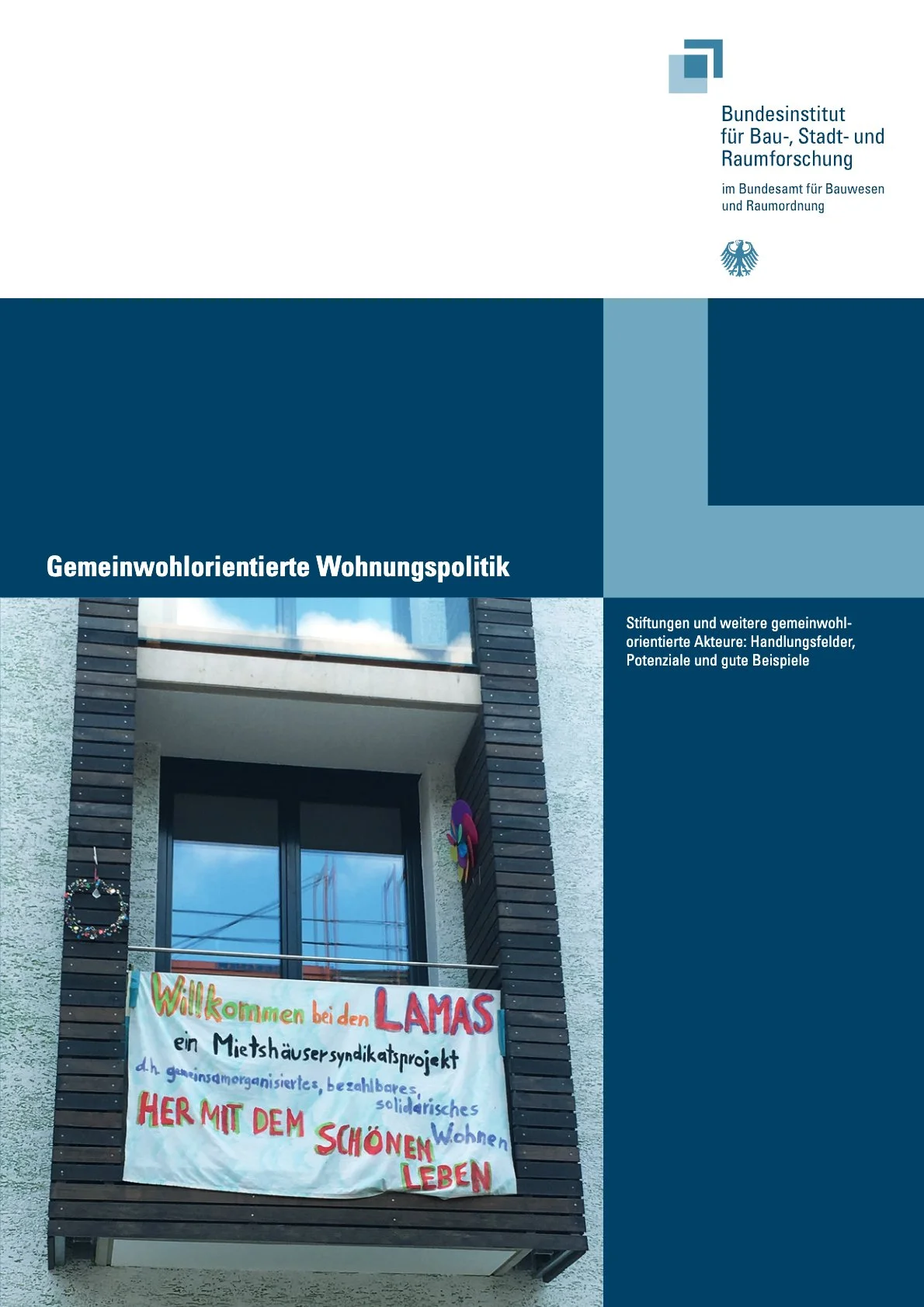
For cooperatives, the instruments are still thin. Wiesbaden has no dedicated cooperative quota in its land sales. Groups instead reach land through GWW partnerships or through the subsidised share of WiSoBoN schemes. A BBSR study of common-good housing policy shows what German cities with deeper sectors use: long ground leases, concept-led tenders scored on quality rather than price, and foundations that hold land in trust. Those tools remain the obvious next step here.
Empty space offers a second front. Most of Wiesbaden's residential vacancy is ordinary turnover, so the real reserve lies in offices and old sites. In the city centre a 1960s office tower is being converted into 65 barrier-free apartments with care and retail space. Nationally, the ifo Institute's work on home-office demand and the federal building ministry's report on office vacancy both see conversion as a real but partial supply source, since only part of the stock suits homes.
- 1866-1910[source]
The spa-town boom
The population grows from 26,000 to 109,000, and most of the historicist city centre is built.
- 1946-1948[source]
Requisitioned homes
The US occupying forces requisition 3,331 flats by 1946 and almost 6,000 by 1948.
- 1949-1950[source]
GWW and GENO50 founded
The municipal housing company GWW is founded in March 1949; the cooperative now called GENO50 follows in January 1950.
- 2021[source]
Ostfeld statute in force
The formal development area for the Ostfeld, a new district beside a BKA campus, becomes legally binding.
- 2024[source]
Ostfeld design and court rulings
The design competition closes in October, and the Hessian administrative court rejects challenges by BUND and landowners in November.
- 2025[source]
40% subsidised-homes rule
The council adopts the WiSoBoN guideline: schemes of more than 40 homes must include at least 40% subsidised flats.
- 2026[source]
A new coalition
After the March council election, a CDU, FDP, Green and Volt coalition takes office with a one-vote majority and keeps the Ostfeld plan.
- 2028[source]
Kostheim quarter complete
GWW aims to finish 222 homes at the Quartier am Bürgerhaus, 30.2% of them subsidised.
- 2029[source]
Federal rent brake expires
The federal Mietpreisbremse, extended by the Bundestag in 2025, runs until the end of 2029.
- 2030-2035[source]
Climate milestones
The city aims to cut emissions by 65% by 2030 and to reach climate neutrality by 2035.
- 2040[source]
Ostfeld completion target
The new district and the BKA campus with about 7,000 jobs are planned for completion.
From the spa-town boom and the post-war requisitions to the Ostfeld, the 40% subsidy rule and the city's climate targets.
Climate policy runs through the same buildings. Wiesbaden aims for climate neutrality by 2035 and a 65% cut in emissions by 2030. New municipal quarters are the testing ground: GWW's Kostheim scheme will heat 222 homes with a cold district-heating grid and geothermal probes. The Ostfeld sharpens the conflict with the soil. Building on open farmland serves housing need but eats land, and that trade-off is now the city's sharpest housing argument.
On one side stands the municipal builder. Thomas Keller, managing director of GWW, frames new quarters as housing "for the broad population", built to last. On the other side, the environmental group BUND fought the Ostfeld in court over the ecological cost of a 450-hectare planning area. Neither side denies the shortage; they disagree on whether the answer lies in new land or in the city that already exists.
We are building a sustainable quarter for the future here and providing housing for the broad population.Given the looming ecological problems on the huge planning area of 450 hectares, we had firmly expected to win in court.From villa quarter to shared house: Wiesbaden's working models
Wiesbaden's alternatives are small, scattered and surprisingly varied. They run from the municipal landlord's new quarters to houses their residents bought outright. Read together, they show a city testing almost every form of non-speculative housing, just at a modest scale.
The Quartier am Bürgerhaus in Kostheim is GWW's current flagship. Construction started in August 2026 on 222 homes in three phases, due by the end of 2028, with 67 flats subsidised for low incomes. The blocks get timber facades, green roofs and no through traffic. Heat comes from 120 geothermal probes feeding a cold district-heating grid run by the local utility ESWE. It is the clearest sign of what the municipal company can deliver when land and subsidy line up.
The Linde-Quartier shows the brownfield route. On the former Linde AG works beside the Kostheim harbour, a new district of 800 homes is taking shape, and GWW built 172 rental flats, most of them subsidised. Industrial land, not farmland, carried the density here.
Kastel Housing turned a former US Army housing area in Mainz-Kastel into a mixed model quarter. A timber-hybrid new build, a fully refurbished barracks block run by GWW and a residential tower by the city's development company share the site. At least 25 homes went to the members of GliK, an association for intergenerational living founded in 2019. The project shows the Army's post-war footprint becoming civic housing.
Gemeinschaftlich Wohnen eG is the city's reference cooperative of the new kind. Founded in 2003 by people who wanted to live "less anonymously, less isolated", it moved into its house on Blücherstraße in 2007. Some 44 residents aged 0 to 85 share 22 flats and run the building themselves. It proves the model works in Wiesbaden, and it has stayed a single house.
KB07 took the most radical step. When the group living in a house in Mainz-Kastel learned in 2022 that it would be sold, they bought it themselves. In January 2024 it became the first Wiesbaden–Mainz member of the Mietshäuser Syndikat, which bars any future sale. A Vienna toolkit for self-organised building describes the financing logic such houses rely on: direct loans from supporters instead of a bank's full equity demand.
Wohnprojekt Horizonte shows the partnership route that suits Wiesbaden's thin cooperative sector. A group of residents in later life founded it in 2013. Since June 2018 they have lived together in 14 flats of a GWW building on Brunhildenstraße, the landlord owning the walls and the group running the community. Similar schemes are in the pipeline, and TUM research on shared reuse of existing buildings suggests the model travels well.
Behind all of them stands GENO50, still the city's largest cooperative after 76 years, and the Mieterbund Wiesbaden, which has represented tenants since 1919 and co-authors the city's Mietspiegel (rent index). The pieces exist: a willing municipal builder, a stable old society, a few pioneering houses and a new district waiting for its plots. What Wiesbaden has not yet done is give cooperatives a fixed share of that land.
References
Statistics8Click on any number to see the source
Housing market
Tenure & affordability
Adaptive reuse & vacancy
Population & migration
From our library20
- GWW Wiesbadener Wohnbaugesellschaft — Organisation
- Auslaufende Fristen: Immer weniger Sozialwohnungen – Wiesbaden plant Neubauten (Merkurist) — Knowledge
- Kommunalpolitische Forderungen des DGB-Kreisverbandes Wiesbaden 2026 — Knowledge
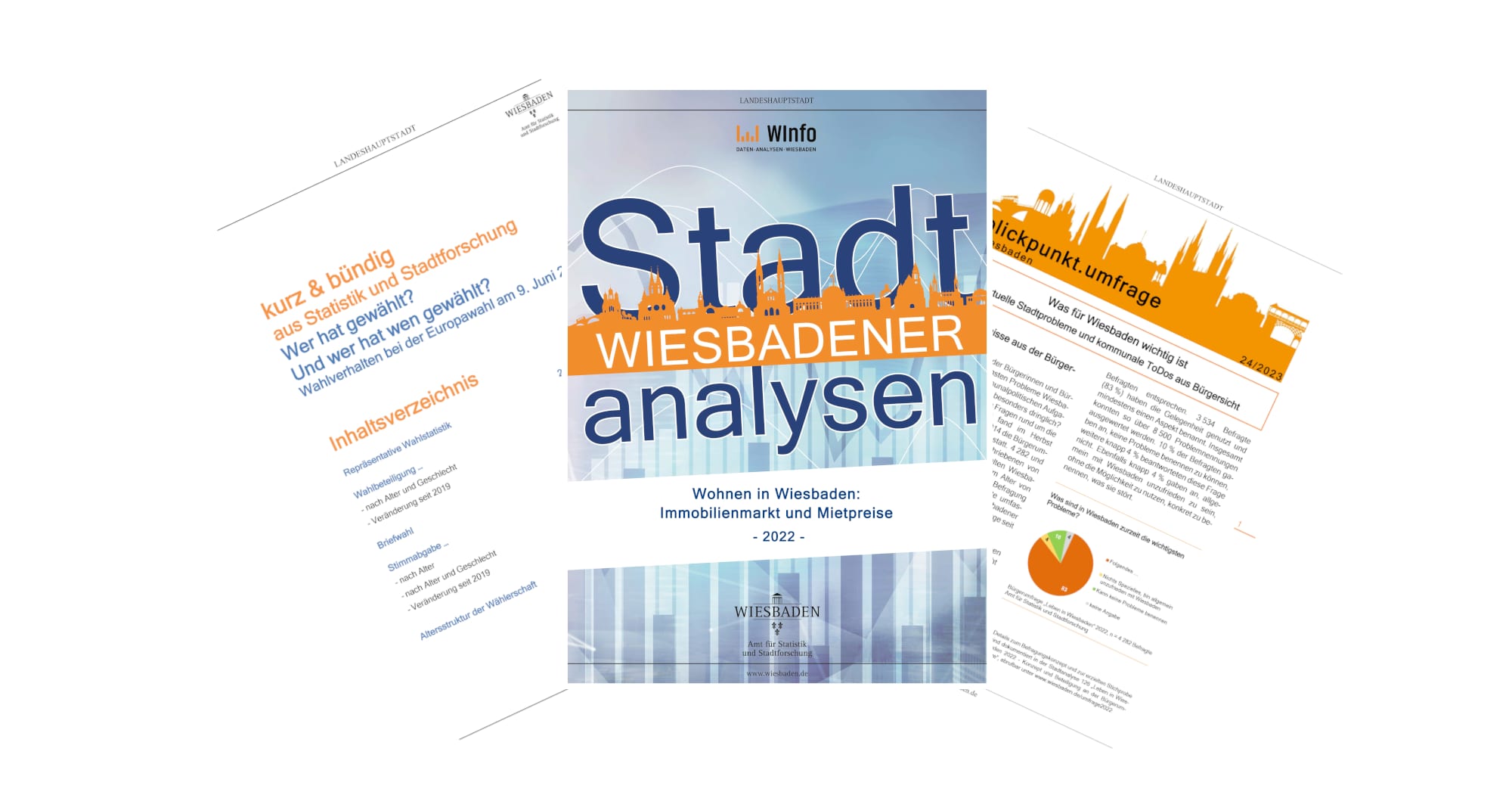
- Wohnen in Wiesbaden: Immobilienmarkt und Mietpreise 2022 (Amt für Statistik) — Knowledge
- Mietenreport 2026 - Deutscher Mieterbund — Knowledge
- Housing co-operatives in Germany: 160 years of evolution and resilience — Knowledge
- Facts and Figures of the Cooperatives (Focus on Germany) — Knowledge
- GENO50 – Gemeinnützige Bau- und Siedlungsgenossenschaft Wiesbaden 1950 eG — Organisation
- Housing Cooperatives in Challenging Times — Knowledge
- Neubau wird für Wohnungsgenossenschaften zum Risiko — Knowledge
- Neues Wohnen – Gemeinschaftliche Wohnformen bei Genossenschaften — Knowledge
- Bündnis für bezahlbares Wohnen und Bauen – Wohnungsgenossenschaften als Partner der Kommunen — Knowledge
- Bundestag: Mietpreisbremse verlängert — Knowledge
- German housing crisis: government plans construction boost — Knowledge
- Gemeinwohlorientierte Wohnungspolitik - eine Studie — Knowledge
- Homeoffice und die Zukunft der Büros: Flexibilisierung, Reduzierung und Umnutzungspotenzial — Knowledge
- Schriftlicher Bericht des BMWSB zum deutschlandweiten Büroleerstand — Knowledge
- Gemeinschaftliches Wohnen und selbstorganisiertes Bauen — Knowledge
- Bestand gemeinschaftlich nutzen: Perspektiven für Familien? (BegeFa-1) — Knowledge
- Mieterbund Wiesbaden und Umgebung e.V. — Organisation
Further sources32
- Stadtlexikon Wiesbaden – Wilhelminisches Wiesbaden — Stadtlexikon Wiesbaden
- Amt für Statistik Wiesbaden – Gebäude- und Wohnungszählung 2022 — Amt für Statistik Wiesbaden
- Merkurist Wiesbaden — Merkurist Wiesbaden
- SPD Wiesbaden, citing the Dezernat für Soziales, Bildung und Wohnen (June 2024) — SPD Wiesbaden
- City of Wiesbaden press release, 11 December 2025 — City of Wiesbaden press release
- City of Wiesbaden press release, February 2025 — City of Wiesbaden press release
- Stadtanalyse 137 (June 2025) — Stadtanalyse 137 (June 2025)
- DGB Kreisverband Wiesbaden – local-election demands 2026 — DGB Kreisverband Wiesbaden
- Amt für Statistik Wiesbaden – Immobilienmarkt und Mietpreise 2022 — Amt für Statistik Wiesbaden
- Amt für Statistik Wiesbaden – blickpunkt.umfrage 24/2023 — Amt für Statistik Wiesbaden
- DGRV – Zahlen und Fakten 2025 — DGRV
- Stadtlexikon Wiesbaden – Amerikaner in Wiesbaden — Stadtlexikon Wiesbaden
- Stadtlexikon Wiesbaden – GWW — Stadtlexikon Wiesbaden
- Stadtlexikon Wiesbaden – GENO50 — Stadtlexikon Wiesbaden
- GENO50 – Über uns — GENO50
- City of Wiesbaden – planned housing projects — City of Wiesbaden
- Landesberatungsstelle Gemeinschaftliches Wohnen in Hessen — Landesberatungsstelle Gemeinschaftliches Wohnen in Hessen
- hessenschau, 30 March 2025 — hessenschau
- hessenschau, 13 August 2026 — hessenschau
- City of Wiesbaden press release, 1 September 2026 — City of Wiesbaden press release
- City of Wiesbaden – WiSoBoN — City of Wiesbaden
- City of Wiesbaden – Ostfeld — City of Wiesbaden
- Konrad-Adenauer-Stiftung – Das Hessengeld — Konrad-Adenauer-Stiftung
- hessenschau – Bauordnung in Hessen wird reformiert — hessenschau
- hessenschau (June 2026) — hessenschau (June 2026)
- Haufe – Mietpreisbremse in Hessen (September 2026) — Haufe
- baulinks, November 2025 — baulinks
- City of Wiesbaden – Klimaschutzziele — City of Wiesbaden
- City of Wiesbaden press release, 13 August 2026 — City of Wiesbaden press release
- hessenschau, 14 November 2024 — hessenschau
- Heinze – 172 Mietwohnungen im Linde-Quartier — Heinze
- City of Wiesbaden – completed housing projects — City of Wiesbaden