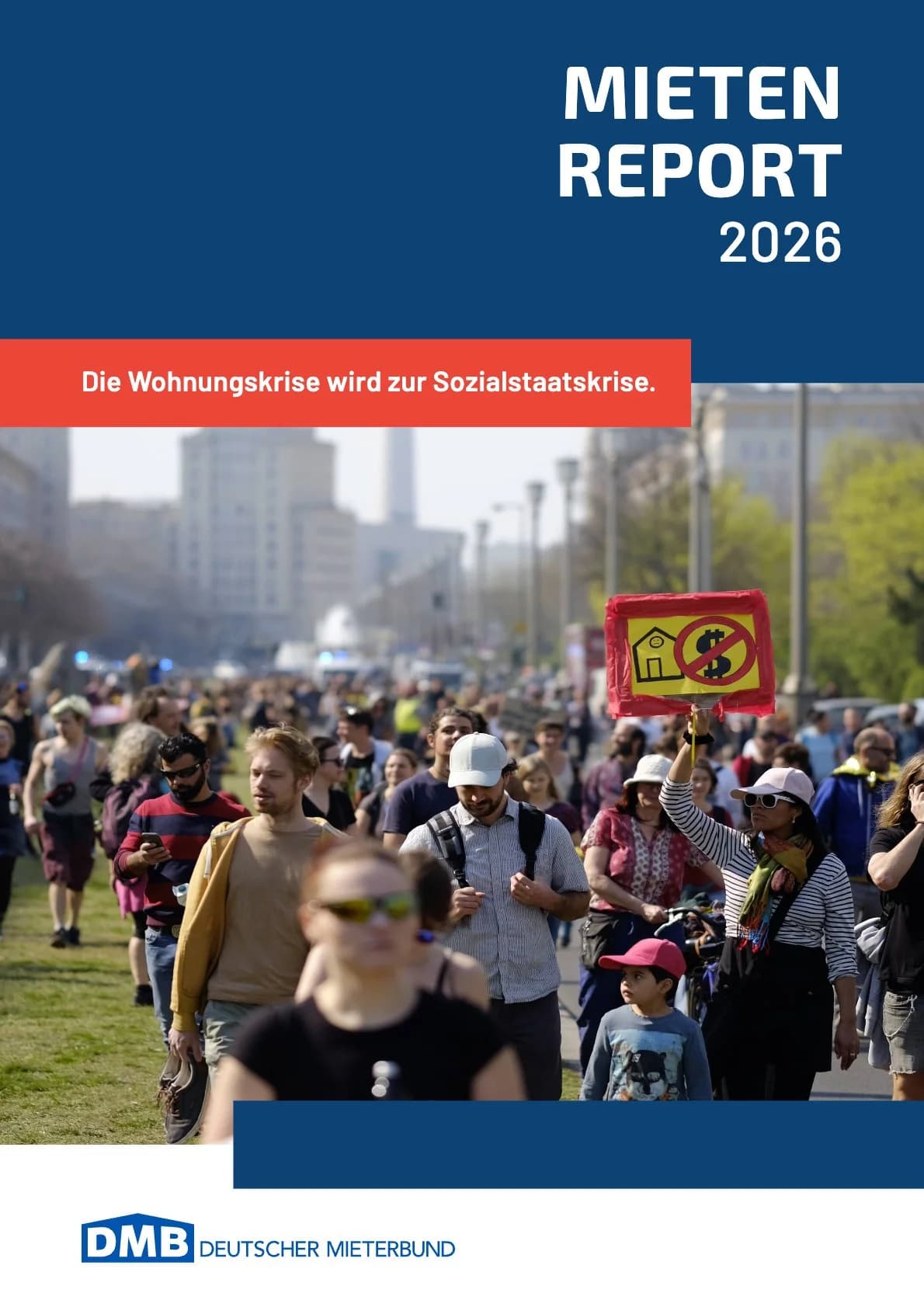
Overview of the 2026 Rent Report
The “Mietenreport 2026” is produced by the Deutscher Mieterbund e.V., Germany’s largest tenants’ association, with research led by Gwendolyn Stilling and analytical support from GKS Consult. The report presents the latest findings on the housing market, focusing on the escalating rent burden, its social repercussions and the widening gap between housing costs and incomes across Germany.
Key Rent Figures and Tenancy Rate
Germany remains the leading “tenant country” in Europe, with a rental‑occupancy rate of 52.8 % – roughly 44 million people living in rented homes. This is markedly above the EU average of 31.5 %. The report notes that 78.4 % of low‑income households now rent, up by 1.7 % from the previous year, while only 47.2 % of households own property.
Rising Housing Costs and Financial Strain
In 2025, 58 % of respondents reported higher housing costs within the past twelve months. Extreme housing‑cost overload (spending over 40 % of disposable income on rent and utilities) affects 11.2 % of the population, with 13.2 % of private renters and 9.2 % of subsidised renters in this bracket. Over‑burdened households cut back on savings, pensions, leisure, essential goods and even health care.
Overcrowding and Under‑occupancy Trends
Over‑crowding remains a significant issue: 11.7 % of the population lives in excessively cramped dwellings, equating to roughly one in five renters. Among low‑income groups, 27.4 % experience over‑crowding. Conversely, 33.2 % of the population lives in under‑occupied homes, a situation concentrated among owners and higher‑income households, especially in rural areas.
Energy Costs and Energy Poverty
Energy expenditures are disproportionately high for low‑income renters, who allocate around 12 % of net income to heating, compared with less than 2 % for the wealthiest quintile. Energy‑related poverty affects about one in eight low‑income individuals, compounding overall housing stress.
Social Welfare Response: Wohngeld and Accommodation Costs
Wohngeld (housing benefit) recipients doubled from 2020 to 2023, reaching roughly 1.2 million households, with annual expenditures rising from €1.3 bn to €3.9 bn. In April 2026, around 2.49 million benefit‑claiming households received accommodation‑cost support, averaging €610 per household per month, while actual housing costs averaged €629. These figures illustrate the growing fiscal pressure on the welfare system.
Housing Supply Shortfalls
The report estimates a deficit of 1.4 million dwellings in Germany, with a remaining shortfall of about 790 000 even after accounting for potential re‑occupation of vacant units. Social‑housing stock fell to a historic low of 1.03 million units in 2025, far below the estimated need of two million units to meet demand.
Policy Recommendations for Sustainable Housing
Key proposals include a nationwide rent freeze, stricter enforcement of rent‑control measures, a doubling of social‑housing stock to at least two million by 2030, and the creation of 60 000 new affordable rentals annually for middle‑income families. The report also calls for measures to curb land speculation, improve energy‑efficiency standards, and ensure that housing policy aligns with broader sustainability and social‑cohesion goals across Europe.