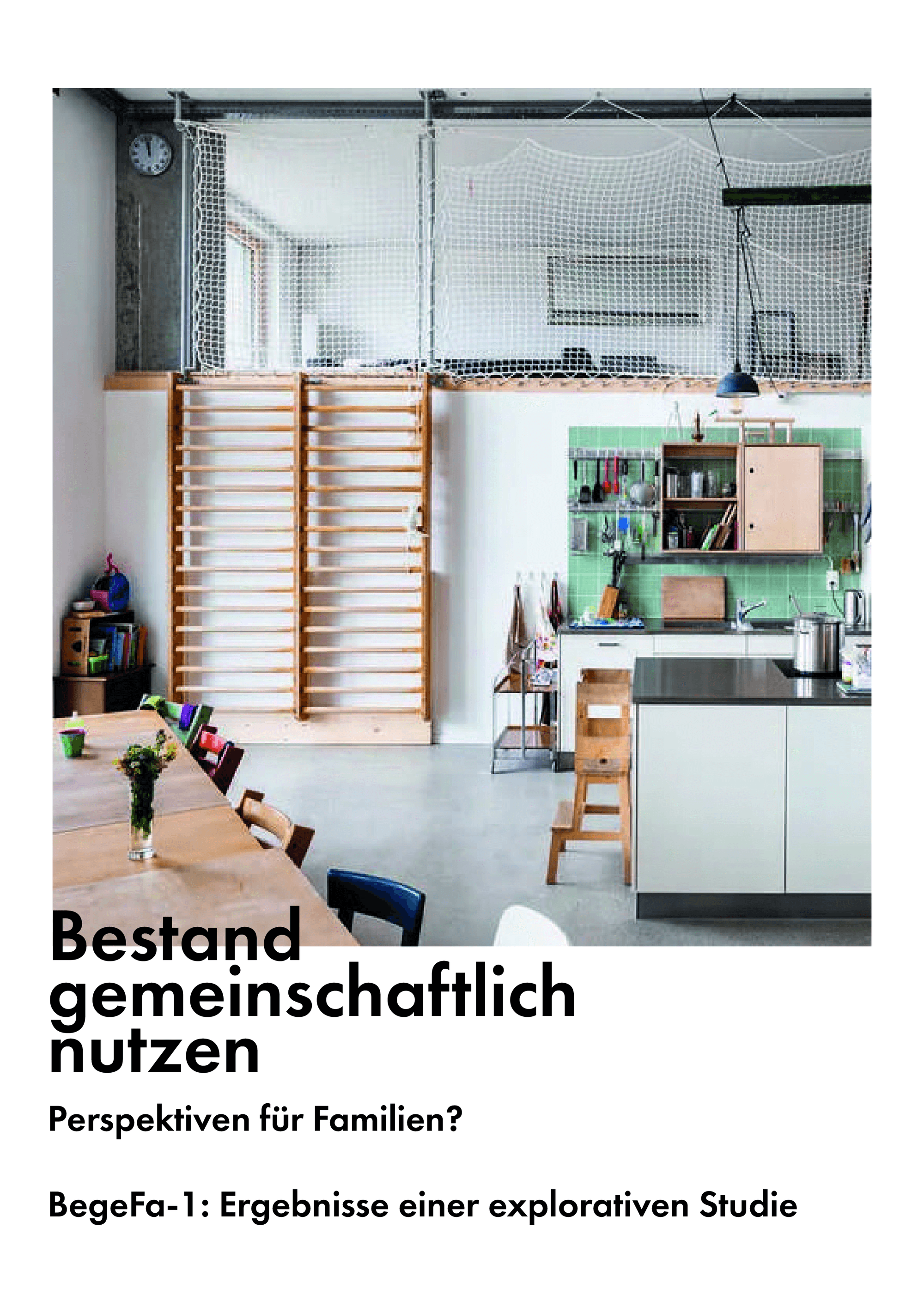
Overview of the Study
The research “Bestand gemeinschaftlich nutzen: Perspektiven für Familien? (BegeFa‑1)” is an exploratory investigation into the adaptive reuse of existing buildings for community‑oriented living in Germany and Austria. It is led by Isabel Glogar, Martina Heitkötter and Lisa Abbenhardt, scholars from the Professorship for Urban Design at the Technical University of Munich (TUM). The project is funded by the Federal Institute for Building, Urban and Spatial Research on behalf of the Federal Ministry for Housing, Urban Development and Construction, reflecting a national commitment to sustainable housing solutions.
Objectives and Scope
The study aims to assess how communal housing projects in existing stock can contribute to socio‑ecological transformation and support families in balancing care and employment responsibilities. It examines case studies across diverse building typologies—such as residential blocks, farmsteads, churches, schools and industrial sites—focusing on mixed‑use models that integrate living, working, cultural and social functions.
Key Findings on Building Types
Analysis of 425 projects revealed that 144 residential buildings, 88 farmsteads and 34 industrial structures have been repurposed for community living. The majority of these adaptations involve structures built before 1954, highlighting the suitability of historic buildings for sustainable conversion. Notably, 30 best‑practice projects were selected for detailed case studies, illustrating a broad geographic spread across urban, suburban and rural areas.
Geographic Distribution
The projects are disproportionately concentrated in Brandenburg (14.7 % of cases), Hamburg (3.3 %), and Thuringia (6.6 %), while Bavaria and North Rhine‑Westphalia exhibit fewer initiatives despite higher population densities. Rural regions and large cities host the highest numbers of projects, with 33.9 % located in sparsely populated areas and 31.0 % in major urban centres.
Community Involvement and Governance
The research identifies the Mietshäuser‑Syndikat (37.68 % of projects) and housing cooperatives (15.88 %) as the predominant organisational forms. These structures enable self‑organisation, collective decision‑making and long‑term affordability, aligning with the study’s emphasis on community empowerment.
Adaptation Strategies
Adaptations range from minimal interventions—preserving original façades and structural elements—to extensive additions such as new residential wings, shared workshops, co‑working spaces and cultural venues. Projects often incorporate energy‑efficient retrofits, renewable energy systems and shared resources, reducing overall environmental footprints.
Family‑Centred Outcomes
Interviews with families and experts reveal that mixed‑use communal housing can alleviate the “care‑crisis” by providing on‑site childcare, shared domestic facilities and proximity to workplaces. Families report improved work‑life balance, enhanced social networks and greater resilience against housing market pressures.
Project Scale and Resident Numbers
Most initiatives accommodate between 1‑10 residents (27.25 %) or 11‑30 residents (36.49 %). Larger projects exceeding 100 occupants are rare, reflecting higher organisational and financial thresholds. Small to medium‑sized projects tend to offer more intensive mutual support and flexible governance.
Innovation and Future Directions
The study highlights the potential of under‑utilised historic assets to address housing shortages, reduce construction waste and foster community cohesion. It recommends scaling up supportive policies, facilitating access to financing for adaptive reuse, and promoting interdisciplinary research to further refine best practices.
Conclusion for Sustainable Housing Stakeholders
“Bestand gemeinschaftlich nutzen” provides comprehensive evidence that repurposing existing buildings into mixed‑use communal habitats is a viable pathway toward sustainable, family‑friendly urban development in Europe. The findings underscore the importance of collaborative governance models, targeted funding, and the preservation of historic structures to achieve long‑term ecological and social benefits.