From Pensionopolis to a city of tenants
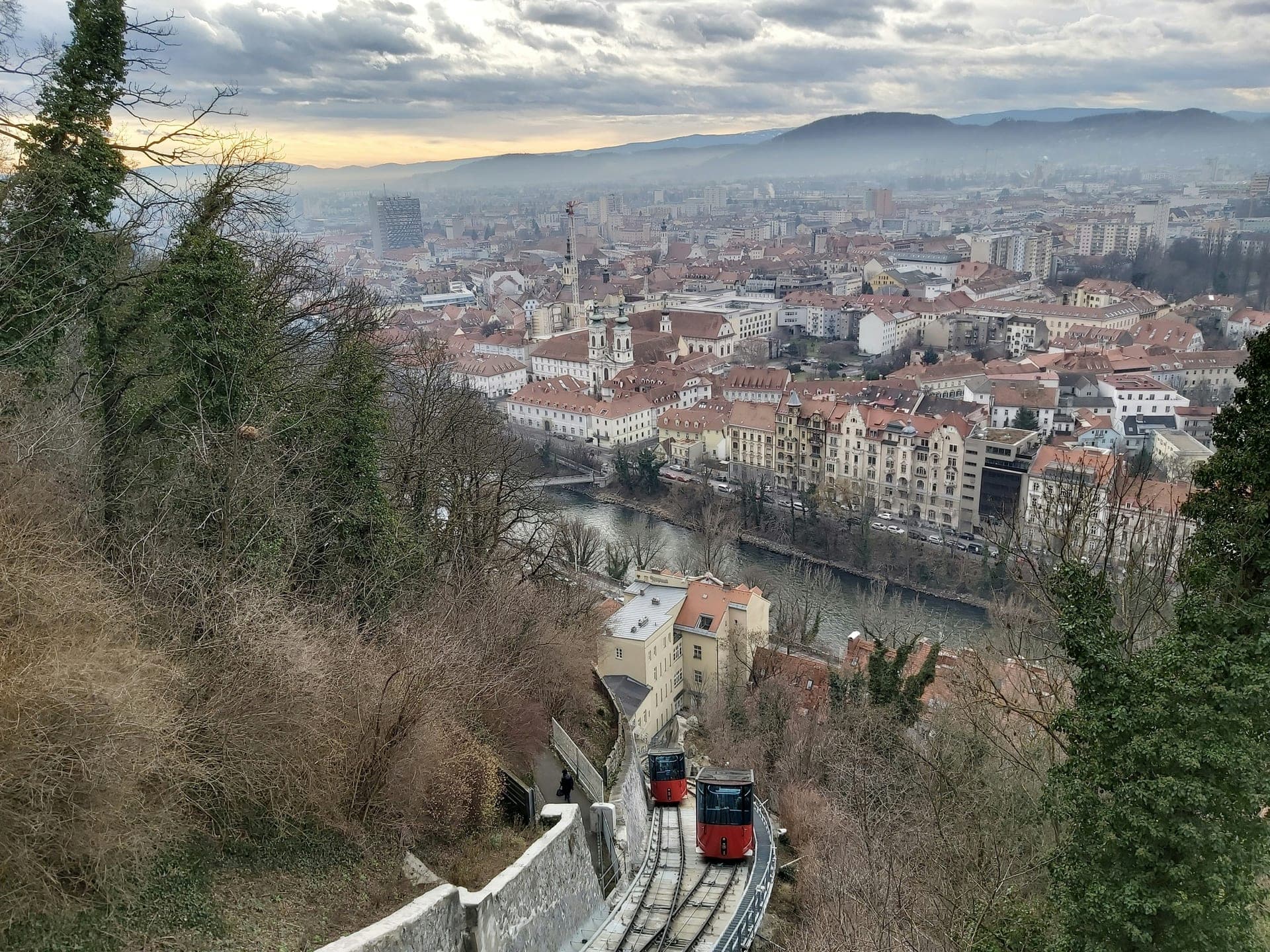
In the 19th century Graz was nicknamed Pensionopolis. Retired Habsburg officers and civil servants settled here because life was comfortable and cheap compared with Vienna, Prague or Budapest. Today the city draws a younger crowd: almost 63,000 students enrolled in 2022/23, a record. Both waves came to stay, and that turns housing into the most practical question Graz faces: who can still afford to settle, and on what terms?
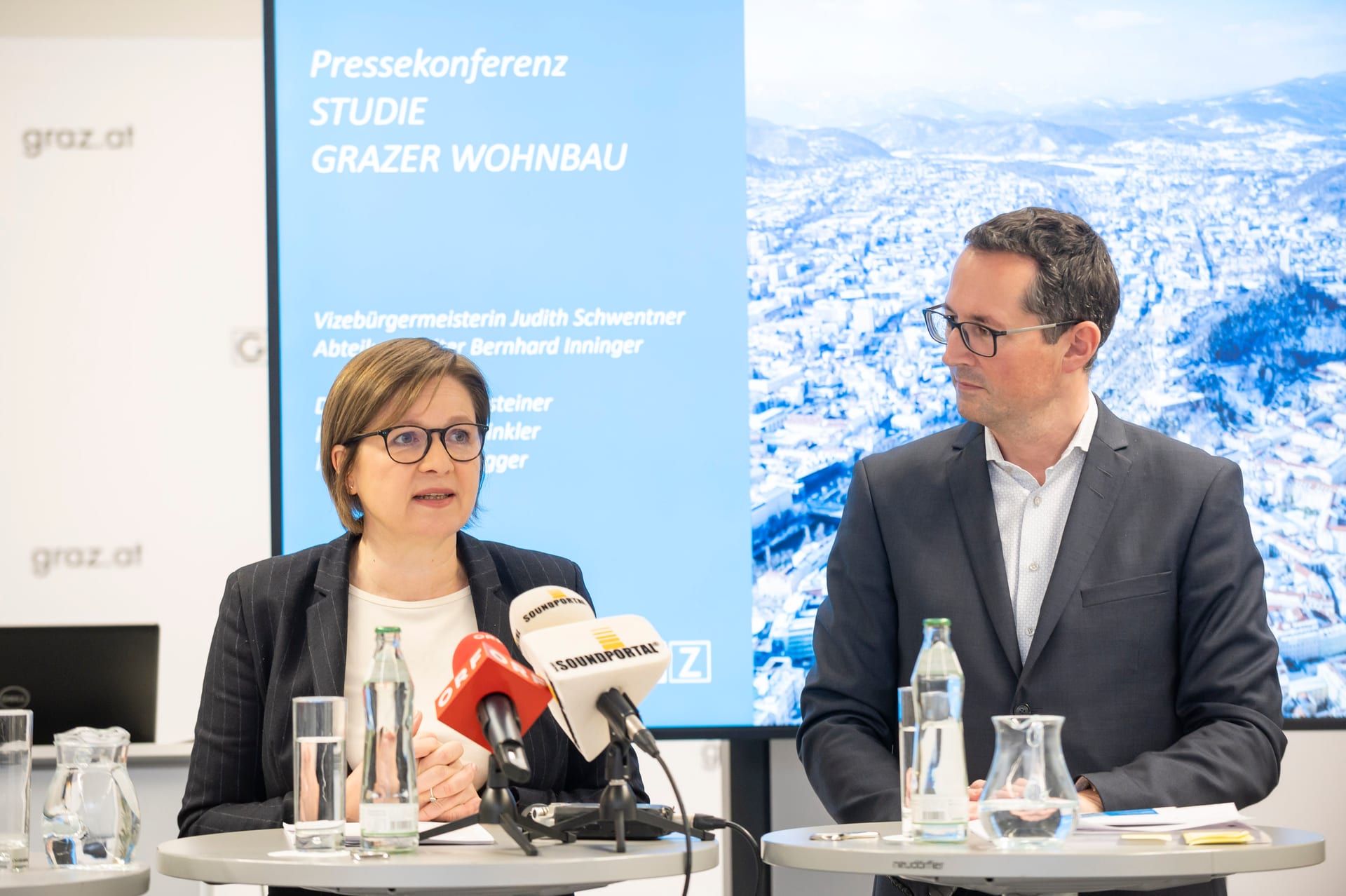
Graz is a city of tenants, but not of the regulated tenancies Vienna is known for. The city’s own housing study, commissioned by its planning department, found that municipal and cooperative flats together make up only about 15% of the stock. Private and commercial landlords dominate the rental market instead, and in buildings from before 1945 they hold 66% of lettings. The city controls around 10,500 municipal flats. It owns about 5,000 of them outright; the rest are Übertragungswohnbauten (flats built by limited-profit associations to which the city holds allocation rights). The balance is shifting further. A May 2026 study by the economic institute EcoAustria found that the number of flats in Graz grew by 23% between 2011 and 2023. Flats owned by private letting companies rose by about 195%, making them the second-largest group of owners after private individuals. Limited-profit stock grew by about 40%, while the public share, above all the city’s own, shrank. No official owner-versus-tenant split is published for the city itself.
Social housing in Austria is a subsidy rule rather than a tenure. Flats financed through Wohnbauförderung (the provincial housing subsidy) carry income limits and cost-based rents, whichever landlord builds them. In Graz that layer has worn thin. Over the decade the study examined, the city received 26% of Styria’s subsidised flats, yet they made up only around 10% of all new homes built in the city.
Rents are low for an Austrian regional capital and rising. A European survey of rental markets placed Graz among the most affordable cities it covered. Across the whole stock, the typical rent is about €11.2 per m² before service charges. New contracts signed over the past five quarters ran from €12.50 per m² gross in Gries and St. Leonhard to €15.10 in Puntigam, a narrow gap between districts. At the regulated end, the Richtwert (the statutory reference rent for older private buildings) for Styria is €9.30 per m² from April 2026. The city’s housing reports rank municipal flats as the cheapest segment and limited-profit flats second.
- Richtwert cap, older private buildings (net)
- All-stock median (net cold)
- New contracts, cheapest districts (gross)
- New contracts, dearest district (gross)
Monthly rent per m² by segment. The Richtwert and the all-stock median are net of service charges; the new-contract figures are gross, including service charges, so the true gap is somewhat narrower than it looks. No current citywide averages are published for municipal or limited-profit flats.
Empty homes are part of the pressure too. The city’s first full vacancy survey, reported in March 2025, counted 5,786 flats left unused for at least 26 weeks of the year, plus 2,296 whose status stayed unclear. Almost a fifth of the empty flats, 1,106, were in Lend, the fast-changing district west of the Mur. Offices offer little slack. Graz has about 1 m² of office space, and the property adviser CBRE reported in September 2026 that the new Smart City district has barely any empty offices. Short lets add a quieter drain. Graz Tourismus watched Airbnb offers climb from about 750 to over 1,100 in 2024, and reckoned that only about 20% of hosts followed all the rules.
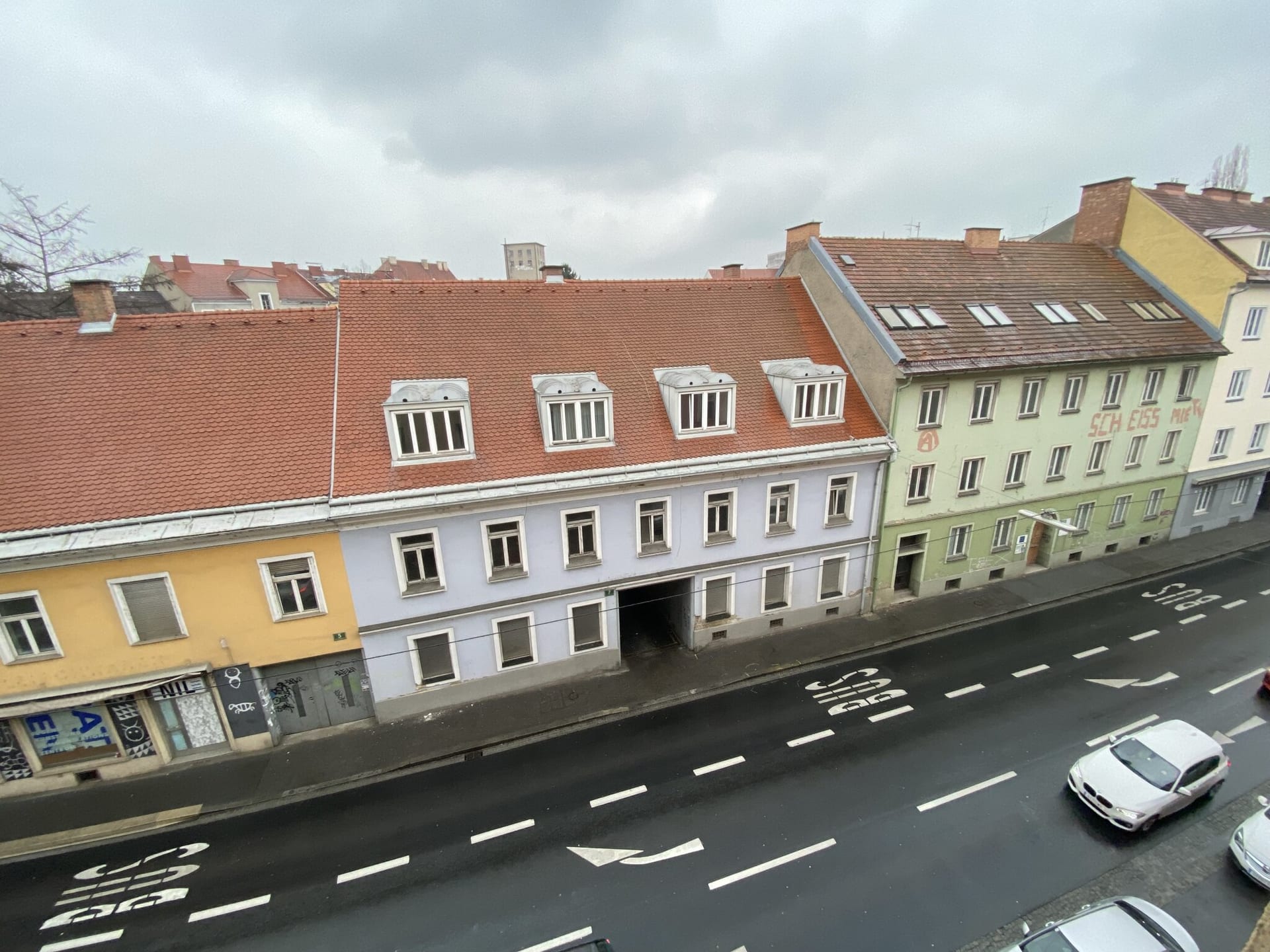
Arrivals keep coming: 21,715 people moved to Graz in 2024. For a while construction kept up. Between 2015 and 2020 the city added 18,131 flats, many of them small units bought as investments. Then building collapsed. The Styrian chamber of commerce expected only 966 completions in Graz in 2025, 55% fewer than the year before. Commercial developers deliver 85% of new homes in Graz, so dearer credit and building costs hit the city harder than the rest of the province.
The strain falls unevenly. The city’s study found that around 19% of Graz households spent more than 40% of their income on housing, roughly twice the Austrian rate of about 9%. It also found Graz had the lowest willingness to pay of any Austrian provincial capital, a sign of incomes that trail the market. The squeeze now reaches working households as well as the poorest. Applications for a municipal flat rose from 1,645 in 2021 to 2,985 in 2023, while only 139 municipal flats stood free in October 2024. The part of the stock designed to hold its price, the limited-profit associations’ flats, is small here by Austrian standards, and it carries much of the city’s hope.
Cost rent, built by Graz’s own associations
Cooperative housing in Graz mostly means limited-profit housing. Its builders are Gemeinnützige Bauvereinigungen (limited-profit housing associations), which may be cooperatives, limited companies or joint-stock companies under the WGG (the federal Limited-Profit Housing Act). All of them must charge cost rent. By law an association may ask no more, and no less, than a project actually costs. A tenant usually pays a Finanzierungsbeitrag (a one-off contribution to building costs) on moving in. It is refunded on moving out, minus 1% a year. Many Styrian flats also carry a Kaufoption, the right to buy the flat after renting it. For contracts signed since August 2019 it opens from the sixth year.
The tradition is old, but today’s large associations were born of post-war shortage. ÖWG Wohnbau was founded in Graz in April 1950 as the Österreichische Wohnbaugenossenschaft. GWS traces its roots to a settlement company founded in 1951. In the 1970s Styria added something of its own. The Modell Steiermark, launched in 1972 by a think-tank of the Styrian ÖVP (the conservative People’s Party), tied housing subsidy to architectural quality and resident participation. Eilfried Huth’s Gerlitzgründe in Puntigam, built from 1975, let future residents help design their homes. The experiment ended in 1991, when a new provincial housing councillor declared that “the Graz School is now on holiday”.
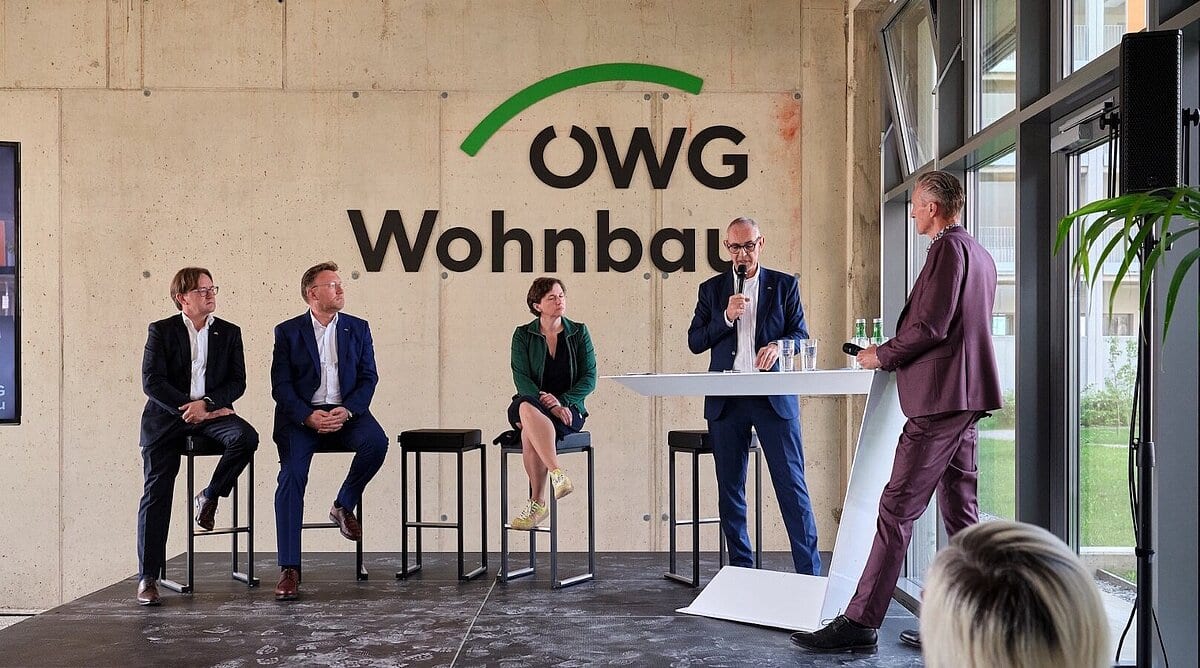
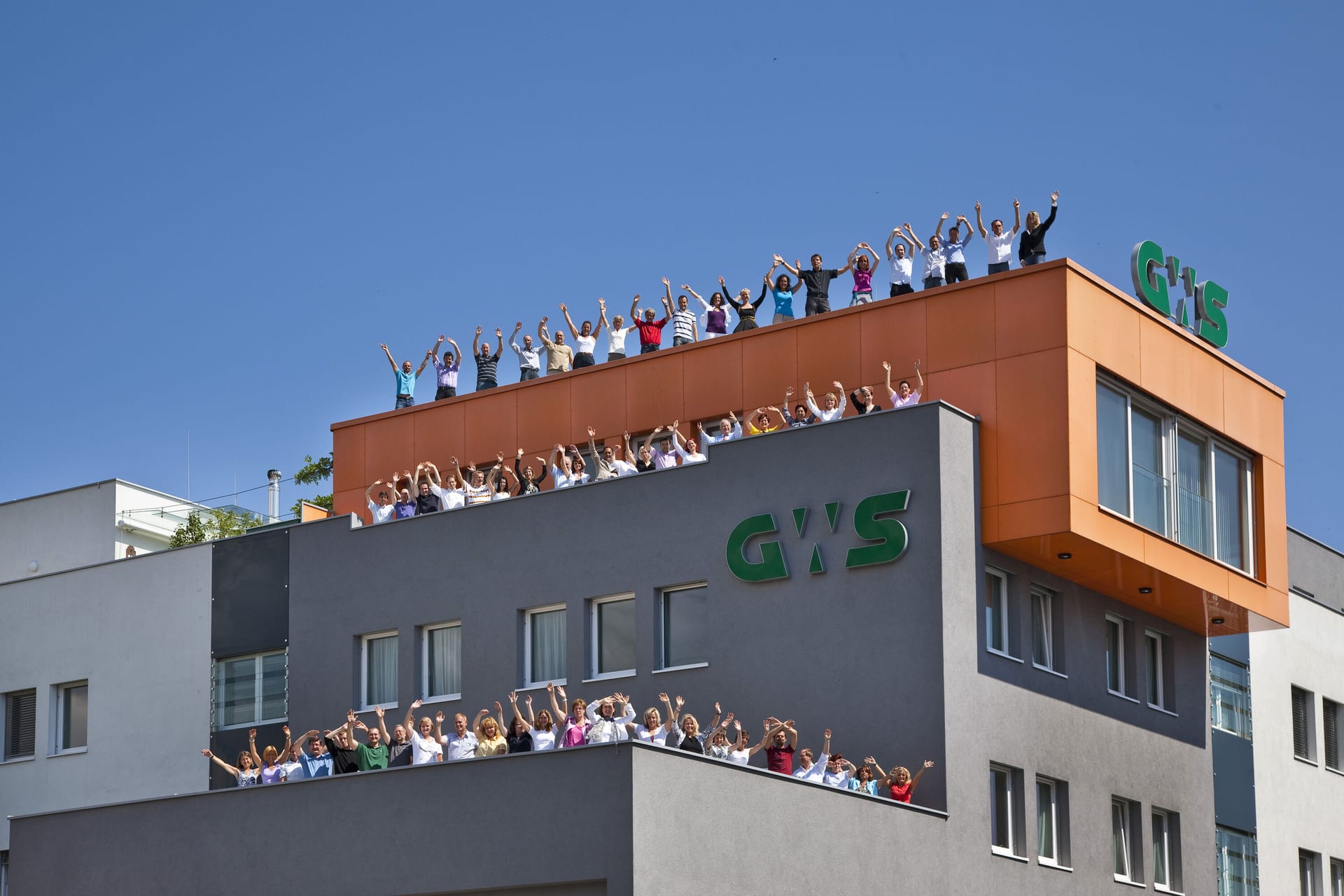
GBV Landesgruppe Steiermark, the provincial federation, counts 26 member associations managing over 134,000 homes for about 370,000 people across Styria. ÖWG is the largest, with more than 33,000 homes. GWS manages about 21,200 units and ENW around 10,000. GGW, a registered cooperative, keeps the older member-owned form alive. The big post-war associations share one problem: ageing estates whose renovation, the federation warns, reserves can barely cover, so the cost lands in rents. New building is harder still. Every point of interest, the federation said in 2023, feeds straight into rents. A third, self-organised strand barely exists inside the city. The WoGen cooperative’s KooWo co-housing sits in Volkersdorf, outside Graz, and a local report noted that Graz offers no subsidy for shared housing projects.
Styria channels most of its housing subsidy through these associations. The federation reports just under 2,000 new subsidised homes and about 8,000 subsidised renovations a year, at rents averaging about 20% below the market. A study by WIFO (the Austrian Institute of Economic Research) and the GBV argues that such stock also dampens prices in the wider market. In Graz the open question is whether city and province lean on that vehicle, or build around it.
A Communist town hall under a conservative province
Graz is the only large Austrian city run by the KPÖ, the Communist Party of Austria. Elke Kahr became mayor in November 2021, and in June 2026 her party won again with 35.8% of the vote. Since August 2026 it has governed with the Greens alone. Housing is the brand the party built here. Ernest Kaltenegger took the housing portfolio in 1998, and the Mietzinszuzahlung (a city rent top-up for municipal tenants) dates from a 1997 citizens’ initiative. It applies when rent, including service and heating costs, exceeds 33% of net household income. The city also pays a Kautionsbeitrag (deposit grant) of up to €1,000 for private lets.
Kahr set herself a target of 500 new municipal flats for her first term, and 301 had been handed over by June 2023. The record is disputed. A 2026 control report found that Wohnen Graz, the city’s housing company, lost €10.7 million in 2024 and had built 100 of 200 budgeted flats, as Wirtschafts-Nachrichten reported. The losses continued. Wohnen Graz lost €5.5 million in 2025 despite a city subsidy, and its main account was overdrawn by €49.8 million at the end of 2024. The KPÖ–Green programme signed on 22 August 2026 still promises more municipal flats, land purchases and plots reserved for municipal housing. It also keeps the rent top-up. Yet the coalition must find €65 million in savings in 2027 and 2028, and it caps investment at €300 million over those two years.
Given unchecked price rises on the free housing market, new municipal flats matter more than ever for a social housing policy.The bigger levers sit above the city. The Land (province) of Styria controls the Wohnbauförderung. In May 2024 it launched a €295 million Wohnraumoffensive (housing offensive) aiming at more than 5,500 subsidised rental, ownership and rent-to-buy homes, with renovation grants covering 75% of eligible costs for low-income owners. The federal government sets tenancy law and the limited-profit statute, a split that a review of Austria’s affordable-housing instruments sets out. Its 2024 Wohnbaupaket (housing construction package) put €1 billion into limited-profit building, sent €134.1 million to Styria and caps interest on subsidy loans at 1.5% until 2028. Since January 2026 the Mieten-Wertsicherungsgesetz (rent indexation act) has limited rises in regulated rents to 1% in 2026 and 2% in 2027. It also lengthened the minimum lease a professional landlord can offer from three to five years.
The empty flats counted in 2025 were meant to feed a tax. Styria’s Leerstandsabgabe (vacancy levy) has let municipalities charge up to €10 per m² a year since October 2022. Graz never levied it, pointing to its unfinished survey. The province’s government of the far-right FPÖ (Freedom Party) and the ÖVP, in office since December 2024, has pledged to abolish the levy. Such levies remain rare in Europe, as a survey of vacant property across the continent shows. The city’s own answer is to build on land it controls, above all former army barracks.
Climate targets pull the same way. Graz has set itself a net-zero target for 2040. Nationally, the provinces rejected a binding cap of 2.5 hectares a day on land take in February 2024. That leaves renovation of the limited-profit and municipal stock as the most direct tool, and the federation says thermal renovation can cut heating demand by up to 70%. A paper on housing bonds for CIRIEC, a research centre on the public and cooperative economy, shows how Austrian associations raise the long-term money such work needs.
In the local press the argument turns on one question: should the city build itself? The business paper Wirtschafts-Nachrichten, in a 2024 report calling Graz’s building policy a case for repair, blamed planning delays for the slump. Philipp Pointner, who chairs the city council’s audit committee for the liberal NEOS party, said in June 2026 that the KPÖ had “led Wohnen Graz into a financial dead end”. Kahr replies that the company cannot be run for profit, any more than kindergartens or public transport. The limited-profit sector has made its own case. The EcoAustria study, commissioned by ÖWG, calls Graz the most indebted provincial capital per head. It argues that each euro of housing subsidy given to the associations triggers about €3.30 of investment, far more than the city can raise by building alone.
The shortage on the housing market will mean that prices certainly will not fall.- 1972[source]
Modell Steiermark launched
A think-tank of the Styrian ÖVP launches a subsidy model that rewards architectural quality and resident participation.
- 1978[source]
Terrassenhaussiedlung completed
Werkgruppe Graz finishes the participatory terraced estate in St. Peter.
- 1997[source]
Mietzinszuzahlung introduced
A citizens’ initiative wins a city rent top-up for municipal tenants.
- 1998[source]
KPÖ takes the housing portfolio
Ernest Kaltenegger becomes housing councillor, beginning the party’s long association with municipal housing.
- Oct 2022[source]
Styrian vacancy levy in force
Municipalities may charge up to €10 per m² a year on empty homes; Graz does not.
- Mar 2024[source]
Federal Wohnbaupaket
€1 billion for limited-profit building, with loan interest capped at 1.5% until 2028.
- Dec 2024[source]
Province pledges to scrap the levy
The new FPÖ–ÖVP government programme commits to abolishing the vacancy levy.
- Mar 2025[source]
Vacancy survey published
The city counts 5,786 empty flats and 2,296 of unclear status.
- Jan 2026[source]
Rent indexation capped
Regulated rents may rise by at most 1% in 2026 and 2% in 2027.
- Jun 2026[source]
KPÖ re-elected
The KPÖ wins 35.8% and 18 of 48 seats in the municipal election.
- Aug 2026[source]
KPÖ–Green coalition renewed
The programme to 2031 promises more municipal flats and land reserved for municipal housing, under a two-year investment cap.
- 2028[source]
Kirchnerkaserne flats due
80 municipal rental flats on former barracks land are scheduled after a 26-month build.
- 2040[source]
Net-zero target
The city’s climate plan aims for net-zero carbon emissions.
Milestones from the Modell Steiermark to the city’s climate target.
Barracks, terraces and a brewery: building on Graz’s old ground
Terrassenhaussiedlung St. Peter is the building Graz architects still argue from. Werkgruppe Graz designed it between 1972 and 1978, and its plan let owners shape their own flats. The estate holds 520 flats. It became a listed monument in 2025, after a first attempt failed in 2020 against residents’ opposition. The friction is unusual: a participatory icon whose owners resisted being preserved.
Hummelkaserne showed what the city could do with military land. ENW built four six-storey timber passive houses there with 92 flats, finished in 2016 as Styria’s first timber housing of that height. Rents came to about €6.70 per m² including heating and service charges. It completed the first part of the city’s special housing programme, and the programme’s pace has been argued over ever since.
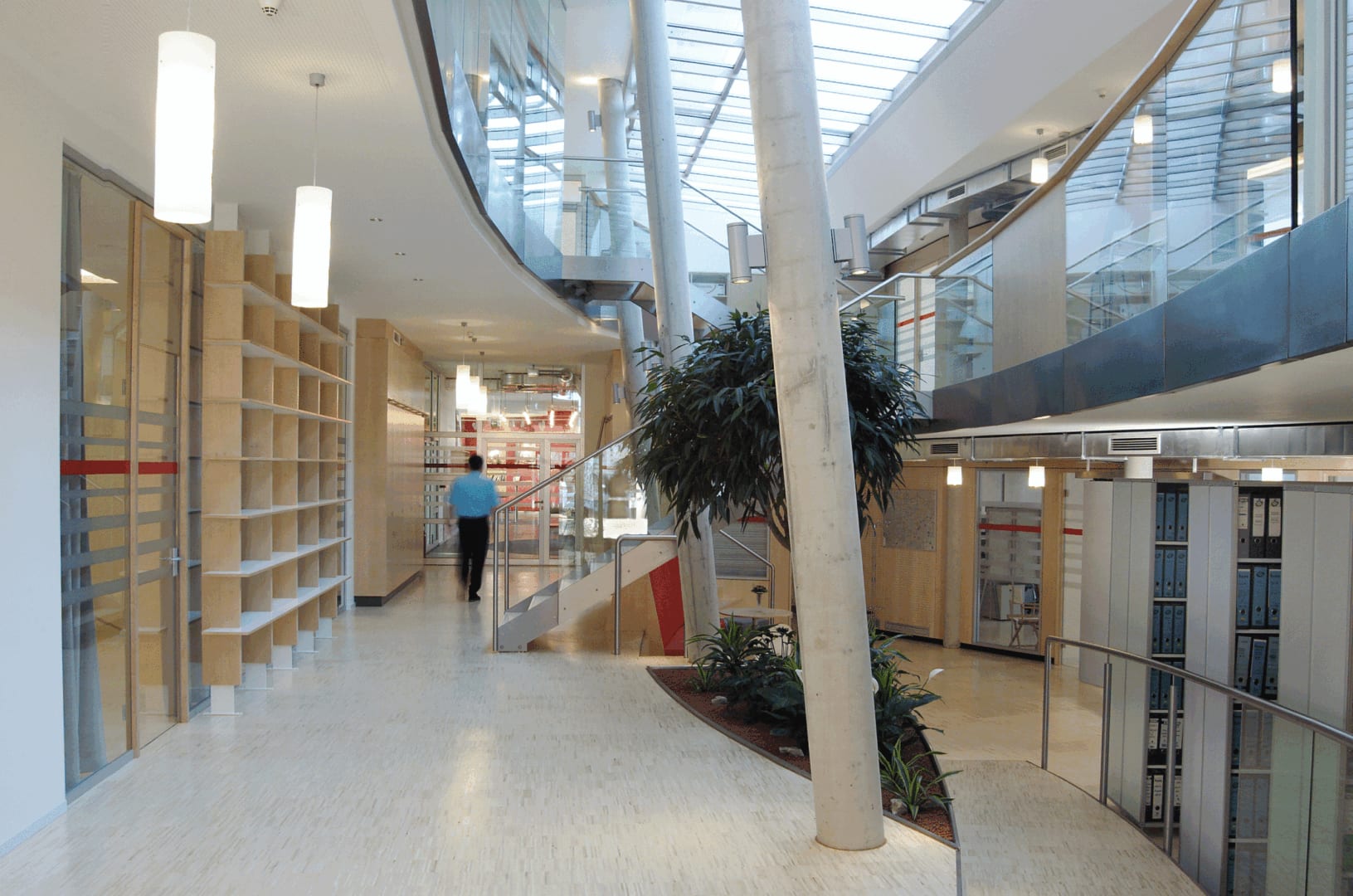
The Kirchnerkaserne scheme takes the barracks idea further. ENW broke ground on 30 April 2026 for 80 affordable rental flats in two municipal buildings, designed by the architect Hohensinn and financed with Styrian subsidy. Kahr had campaigned for housing on barracks land for two decades. The build runs straight into the coalition’s investment cap.
Adlergasse in Puntigam is small and symbolic. Its 20 flats, handed over in April 2026, are the first municipal flats the city has built as its own client in 50 years. Am Grünanger in Liebenau set the tone three years earlier: 60 municipal flats arranged in four car-free courtyard clusters around shared gardens. Both are modest against the waiting list, and the 2026 control report questioned how fast Wohnen Graz can deliver more.
Reininghaus is the counterweight in scale. The former brewery grounds, bought by the Reininghaus family in 1853, are planned for about 5,200 homes for 10,000 people, and ÖWG is among the builders. A tram extension now links the district to the centre. Critics note how much of it, like the privately developed Brauquartier Puntigam with about 800 flats, answers the investor demand that the city’s study flagged rather than the waiting list.
Urban Future carries the conversation outward. It began in 2014 as a local urban mobility workshop in Graz and grew into what it calls Europe’s largest gathering of urban change-makers. The city that hosts it has the pieces for a different housing model: public land in old barracks, associations that know cost rent, and a record of letting residents design. Whether those pieces add up to more than a few hundred flats a year is the question Graz now has to answer.

References
Statistics4Click on any number to see the source
Housing market
Population & migration
From our library16
- Studie Grazer Wohnbau 2021 (Pressekonferenz) — Knowledge
- Housing Shortage in Europe further deteriorates — Knowledge
- Die Ergebnisse der Grazer Leerstandserhebung — Knowledge
- ÖWG Wohnbau — Organisation
- GWS Gemeinnützige Alpenländische Gesellschaft für Wohnungsbau und Siedlungswesen — Organisation
- GBV Landesgruppe Steiermark — Organisation
- ENW Gemeinnützige Wohnungsgesellschaft — Organisation
- GGW Gemeinnützige Grazer Wohnungsgenossenschaft — Organisation
- The price-dampening effect of non-profit housing — Knowledge
- Geht die KPÖ die Wohnraumpolitik besser an? — Knowledge
- Affordable housing in Austria and Vienna: Key policy instruments, challenges, and lessons to learn for other countries and cities — Knowledge
- The empty house: a window into Europe’s vacant property problem — Knowledge
- Housing bonds and their role for limited-profit housing associations in Austria — Knowledge
- Baupolitik in Graz – ein Sanierungsfall — Knowledge
- Urban Future — Organisation
- Leistbares Wohnen in Graz: Politikoptionen, Wirkungen und Rolle gemeinnütziger Bauträger — Knowledge
Further sources51
- austria-forum.org
- www.graz.at
- www.unverwechselbaresgraz.at
- egov.graz.gv.at
- grazjournal.at
- www.mietervereinigung.at
- www.kpoe-graz.at
- www.meinbezirk.at
- steiermark.orf.at
- steiermark.biz
- wirtschafts-nachrichten.at
- wirtschafts-nachrichten.at
- oewg.at
- www.konsumentenfragen.at
- noe.arbeiterkammer.at
- www.wohnbau.steiermark.at
- derive.at
- oe1.orf.at
- www.gbv-steiermark.at
- oewg.at
- www.gws-wohnen.at
- www.wohnbaugruppe.at
- gbv-steiermark.at
- www.gbv-steiermark.at
- ausreisser.mur.at
- steiermark.orf.at
- steiermark.orf.at
- www.kpoe-graz.at
- www.graz.at
- www.graz.at
- www.kpoe-graz.at
- wirtschafts-nachrichten.at
- www.meinbezirk.at
- steiermark.orf.at
- www.salzburg24.at
- www.konsumentenfragen.at
- steiermark.orf.at
- steiermark.orf.at
- www.meinbezirk.at
- orf.at
- www.bda.gv.at
- steiermark.orf.at
- www.graz.at
- www.wohnbaugruppe.at
- www.graz.at
- www.graz.at
- xn--reininghausgrnde-vzb.at
- www.baunetzwissen.de
- urban-future.org
- immobilien-redaktion.com
- www.inside-graz.at