A reconstruction that never quite finished
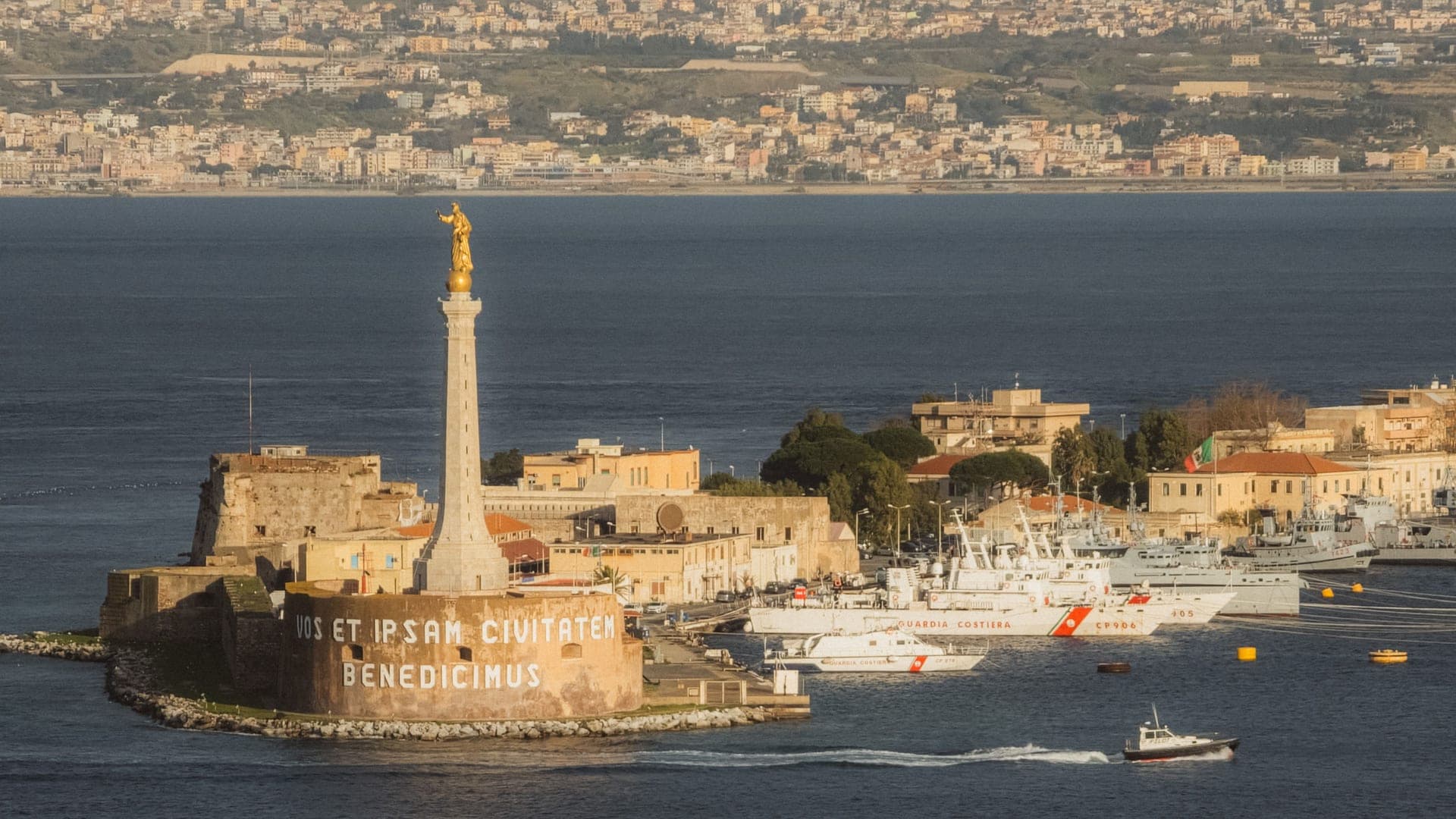
Messina began as Zancle, a Greek-era name meaning sickle, after the curved spit that shelters its harbour on the Strait. On 28 December 1908 an earthquake and tsunami killed about 80,000 of its 140,000 inhabitants. The wooden barracks raised for the survivors were meant to last a few years. Their heirs lived in them for decades, and some still do. That long provisional is the thread through housing in today's city of 216,458 people: plenty of homes, many standing empty, and a core of families who never received a proper one.
Ownership is the default. The 2021 census found that 34.3% of households do not own the home they live in, according to ISTAT's 2024 portrait of the city for the parliamentary inquiry into urban peripheries. In the III Circoscrizione, one of the city's districts, that share reaches 41.4%. Cooperatives do not appear as a tenure in Italian statistics. Homes built by divided-ownership building co-ops pass to members as individual flats and are counted with the owners, so Messina has no cooperative share to report. The public tier is thin. The research institute Svimez counts 7,062 public homes, held mainly by IACP (the Istituto Autonomo Case Popolari, the provincial public-housing agency) and the Comune. The remaining non-owners, roughly a quarter of households, rent from private landlords or live rent-free in a relative's home; the census does not separate the two.
- Owners0.00%
- Owner-occupier0.00%
- Renters
- Public & non-profit rental0.00%
- Cooperative0.00%
- Private rental22.9%
- Unclassified77.1%
- Unknown / Other77.1%
In Italy social housing is largely defined by subsidised rent or sale terms for eligible households, not by a tenure of its own. Almost all of it in Messina is ERP (edilizia residenziale pubblica, whose core is publicly financed housing let to low-income households at an income-based rent). IACP's social rent averages about €52 a month per flat. A court ruling in the Comune's favour now leaves the agency paying IMU (the municipal property tax) of about €500 a year on each one, as Gazzetta del Sud reported on the appeal. Since a 2024 council regulation, access runs through an open waiting list (graduatoria aperta) that takes applications at any time.
It almost feels like reliving the legend of Robin Hood in reverse, where you take from the poor to give to the rich.Rents look modest next to northern Italy. The median across the stock is €7.50/m² and new lets are advertised at €7.97/m². The average new free-market four-plus-four-year lease cost €420 a month in 2025, 14.6% more than in 2018. In the same year 63.8% of new long leases were signed at the canone concordato, a rent agreed between landlord and tenant associations in return for tax relief. That is what MessinaToday found in the tax agency's contract data. Prices are now moving fast: asking rents rose 5.4% in the single month of July 2026. A furnished flat for a stay of several months is estimated at €13.50/m², bills included.
- OMI registered contracts, lowest zone
- All-stock median
- New contracts
- OMI registered contracts, top zone
- Furnished / serviced (gross)
Net-cold monthly rent per square metre, except the furnished tier, which is gross and all-in (an estimate, not a measurement). No per-square-metre figure is published for IACP's public stock, whose social rents average about €52 a month per flat.
Empty homes are the paradox. The Forum dell'abitare is a coalition of unions, tenant groups and other civil-society bodies. It counts 26.4% of the city's homes as unoccupied, and 39.8% across the province, where holiday homes on the coasts and the Aeolian islands swell the figure. Svimez puts the city at 30%. No measured office-vacancy rate exists. The cadastre records 264,089 m² of private offices, and the State itself owns a string of half-used buildings in the centre.
Demand is not driven by growth. ISTAT counted 221,246 residents at the end of 2021, and the city keeps shrinking. What tightens the market is who comes for a season. The university enrolled 27,759 students in 2025/26, and tenant groups count about 10,000 from outside the city against some 300 public beds. Tourism adds 6.7 visitors per inhabitant a year, and short-term lets grew 49% between 2017 and 2024, with listings run by large hosts up 274%. New private building is scarce, and there is no rent cap beyond the voluntary concordato.
The crisis is deep but narrow. It falls first on the shack families: a 2018 survey found 6,400 people in 2,151 households living in the post-earthquake settlements, and tenant groups still counted more than 1,600 families there in 2025. Next come tenants in arrears. Eviction orders rose 13.77% in 2024 to 190, 90% of them for unpaid rent, and ISTAT flags 4.2% of households as in potential economic hardship. For the average tenant the squeeze is milder than in Catania, Palermo, Siracusa or Ragusa: rent takes 22% of income in Messina against 28% in Catania. The province tells a harsher story. ANCE Sicilia, the regional builders' federation, found that the ten most expensive tourist localities in Sicily, by rent as a share of local income, all lie in the province of Messina, among them Taormina at 62.3%. Students feel it in the city itself: over 1,700 applied for a public bed and fewer than 300 got one, La Sicilia reported as the student union UDU and the tenants' union SUNIA protested. Nationally, the Ipsos Housing Monitor finds that most Italians under 35 judge a home harder to buy or rent than it was for their parents, so the grievance is not Messina's alone.
Against that landscape, cooperative housing barely registers in the statistics, though it runs through the city's history.
Building co-ops without land
Italian housing co-ops come in two forms. In a cooperativa a proprietà divisa (a divided-ownership co-op) members build together and then each takes title to a flat. In a cooperativa a proprietà indivisa (an undivided co-op) the society keeps the building and members hold their homes in use (godimento) or in rent (locazione). Legacoop Abitanti is the national association of the housing co-ops that belong to Legacoop. It says co-ops built over 330,000 homes in Italy but hold only about 40,000 in undivided ownership, as its July 2025 hearing at the Chamber of Deputies set out. In Messina the divided form is almost the only one, which is why co-op homes vanish into the owner-occupied count.
The tradition grew out of the long reconstruction. Messina rebuilt again and again under new seismic codes, and a study of Via Risorgimento as a palimpsest of anti-seismic building systems reads the city's streets as layers of those rules. By 1978 the Communist Party's housing plan named as priority groups more than 12,000 families living in ultra-popular houses, as well as families who had formed building co-ops but never obtained land from the council. The piani di zona (municipal development plans for low-income housing) of the following decades finally gave some of them sites. At Tremonti-Ritiro, blocks of the co-ops Il Cerbiatto and La Gazzella ended under eviction orders, and a 2002 regional law authorised an extraordinary contribution to their members, equal to what each had paid to the co-op and to the mortgage lenders.
Today the co-op sector clusters in two quite different groups. The first is that legacy of building co-ops, whose homes long ago passed to their members. Its challenges are those of any ageing condominium: seismic retrofit, energy upgrades and repairs to buildings put up quickly and cheaply. The second is the network of social cooperatives (cooperative sociali, co-ops that deliver welfare and work) around the Fondazione di Comunità di Messina, including Ecos-Med, founded in 1998. These run energy, care and job schemes and helped rehouse shack families, but hold no housing as a cooperative tenure. The regional co-op federations, AGCI Sicilia and Legacoop Sicilia, are based in Palermo, and no residents' co-op letting homes to its members could be found operating in Messina. The two groups face different problems: the first needs money for old buildings, the second lacks land and patient capital to build.
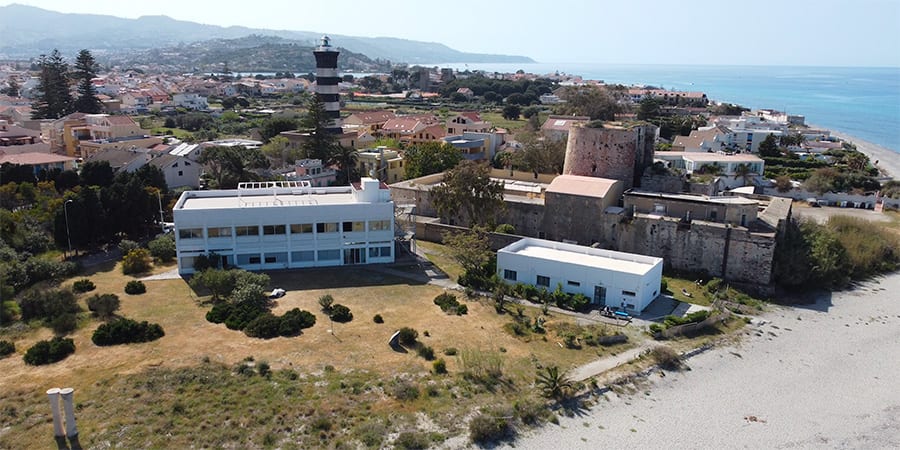
Public policy gives co-ops no named role. The clearance programme buys and builds homes for the public list, and the national Piano Casa leans on renovating public stock and on private developers' discounts. The instruments that have given co-ops a place elsewhere, such as ground leases and concept tenders, are catalogued in a comparative study of public-cooperative policy mechanisms for housing commons. None has been tried here yet.
A commissioner, a funding gap and a bridge
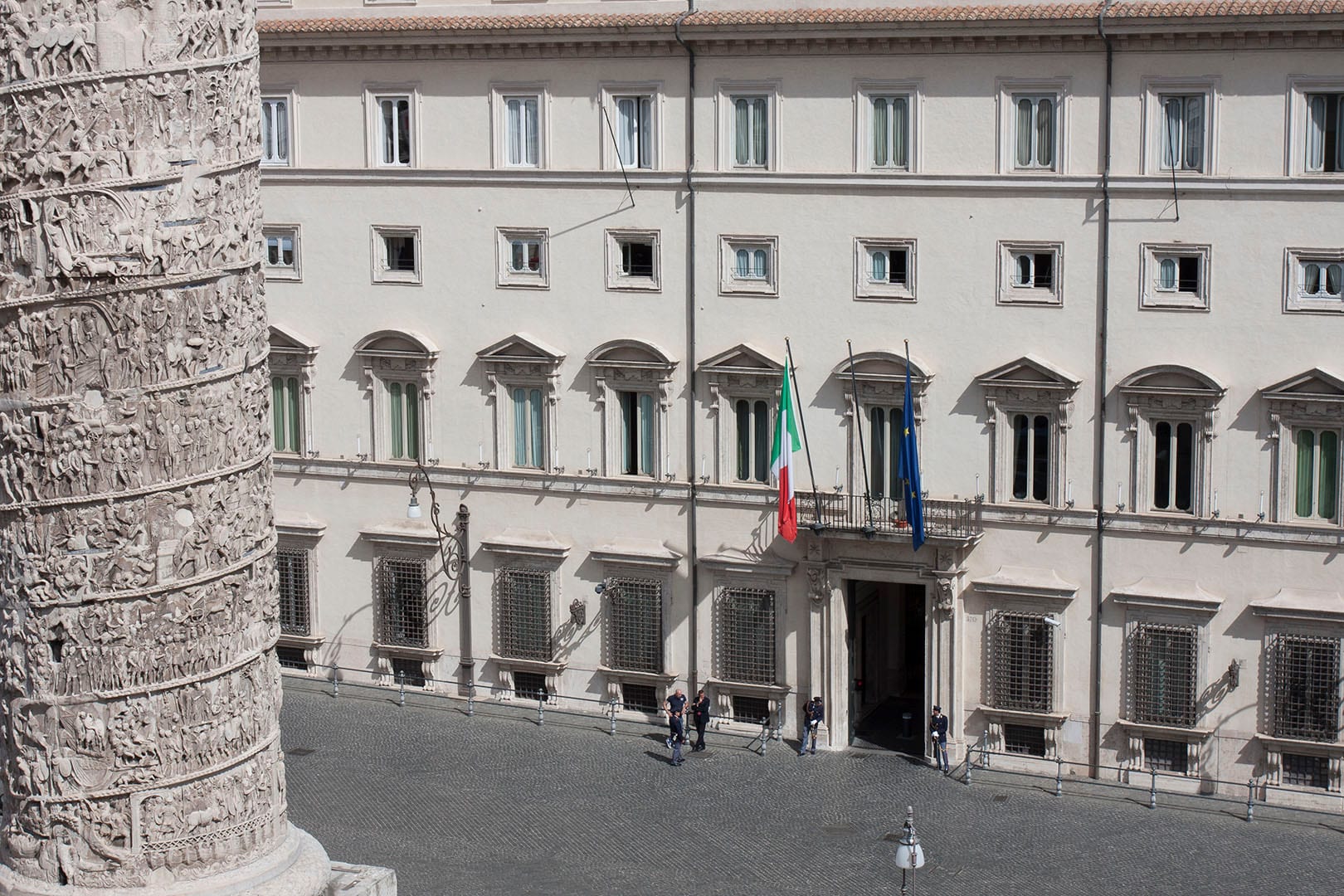
The clearance is run from above the city. Since 2021 a special law has given it to a commissioner with a €100 million fund. The Prefect held the job first. Since January 2023 it has belonged to Renato Schifani, President of the Region, with Santi Trovato, head of the regional public-works office in Messina, as his deputy since February 2025. ArisMe, the city's clearance agency, buys homes and runs the moves. By June 2026, 393 families had left the shacks and more than €56 million had been spent. The national government sets the frame through the Piano Casa, which parliament passed in July 2026 while, as Il Fatto Quotidiano reported, tenant organisations called it inadequate to the emergency.
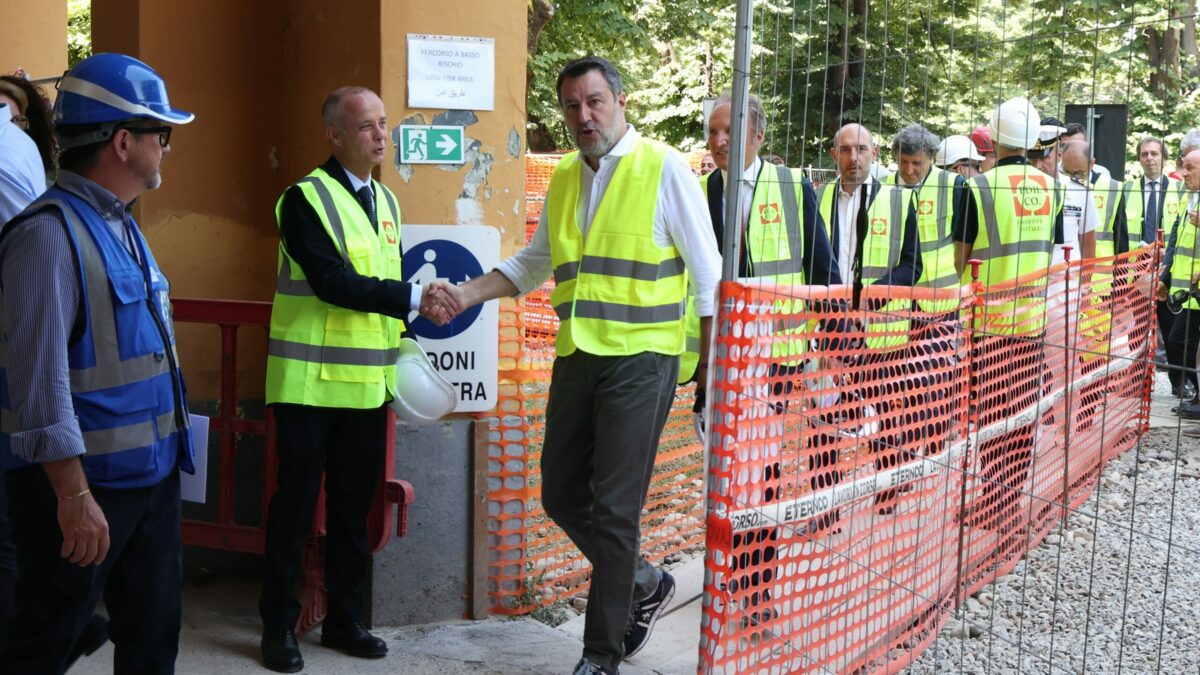
A home is an essential good we cannot give up, and we intend to protect it as fully as we can.The money is running out before the shacks do. In August 2026 the commissioner's office reported just over €3.4 million left against a need of more than €346 million, with 1,479 homes still missing. Mayor Federico Basile resigned in February 2026 to force an early vote and was re-elected in May. He has asked Rome for new funds and a longer mandate so the process would not "suffer slowdowns or interruptions". The relationship is tense: when Basile launched his own plan for the cleared land, the commissioner's office replied that every proposal must go through it. L'Espresso's 2023 investigation had already described the right to a home here as buried under decay and bureaucratic delay.
The city's own levers are small. Its Home scheme pays up to €600 a month towards rent and bills for at most 196 households, in its first income band by the city's own estimate, meant to prevent evictions for arrears. The open ERP list replaced periodic calls, and the canone concordato relies on tax relief, such as a reduced flat-rate tax and an IMU discount, with rents set by local agreements. Cluj-Napoca offers a comparison. A case study of housing for the most deprived in the Cluj metropolitan area describes its effort to dissolve the Pata Rat settlement. It shows what a metropolitan development agency with EEA/Norway Grants funding and psycho-social support can do, though the municipality still needs more homes of its own.
The answer to the empty buildings is only starting. In January 2025 the Region, the State property agency and the city signed a joint Piano Città (city plan for public property). So far it includes the cleared shack area and 20 half-used or disused State buildings, with more to be added and a mix of residences, offices and services planned. Two former army barracks are being turned into homes with EU recovery-plan money, and homes confiscated from the mafia are now going to shack families. Tenant unions want more of the same.
Messina needs student housing, but above all it needs public university housing. It needs to reopen the Casa dello Studente. It needs to recover its unused property. It needs rents that are genuinely affordable.Sustainability arrives mostly through the clearance itself. Asbestos roofs are removed with the shacks, some cleared land is being turned into a park rather than new sprawl, and the rebuilt blocks go up on land that was already built on. Italy's version of the EU buildings directive (the EPBD, which puts the worst-performing homes first in line for renovation) will weigh heaviest on IACP's ageing stock, which the agency says it can barely maintain. The biggest planned project cuts the other way. On the Sicilian side the Strait bridge would expropriate 291 homes, 175 of them main residences, mostly at Torre Faro, with about €215 million estimated as the total cost of the expropriations, according to Il Post's map of the expropriations. After the auditors blocked it in October 2025, a new approval is being prepared.
- 28 Dec 1908[source]
Earthquake and tsunami
A magnitude 7.1 earthquake and tsunami kill about 80,000 of the city's 140,000 inhabitants. Survivors are housed in wooden barracks that their heirs will occupy for decades.
- 1978[source]
A plan for the barrack-dwellers
The local Communist Party's housing plan names as priority groups more than 12,000 families living in ultra-popular houses, as well as families who formed building co-ops but never received land from the council.
- 2002[source]
Regional law to speed up the clearance
L.R. 4/2002 accelerates the risanamento and funds members of two co-ops at Tremonti-Ritiro whose blocks are under eviction orders.
- Sep 2018[source]
ArisMe created
The city council votes, 30 to none with one abstention, to create ArisMe, the municipal agency for the clearance and regeneration of the shanty areas.
- 2021[source]
A special law and a €100 million fund
Rome creates a special fund of €100 million for the clearance and hands it to a commissioner, first the Prefect of Messina.
- Feb 2022[source]
Fondo Fucile demolished
Demolition of the Fondo Fucile shacks begins after 124 families have been rehoused.
- Jan 2023[source]
The Region takes charge
Renato Schifani, President of the Region, becomes commissioner for the clearance, replacing the Prefect.
- Aug 2025[source]
The bridge's expropriation map
Plans for the Strait bridge list 448 property units to expropriate on the Sicilian side, 291 of them homes.
- Oct 2025[source]
Court of Auditors blocks the bridge
The Corte dei Conti refuses to register the government committee's approval of the bridge's final design.
- Jun 2026[source]
393 families out of the shacks
With keys handed to 14 more households, 393 families have left the shacks since 2022, and more than €56 million has been spent.
- Jul 2026[source]
Piano Casa becomes law
Parliament converts the government's housing decree into law; tenant organisations call it inadequate to the emergency.
- 31 Dec 2026[source]
Commissioner's mandate expires
The special powers run to the end of 2026, the mayor is asking for a further extension, with 1,479 homes reportedly still missing.
- 2034[source]
Bridge opening target
The government's timetable foresees the bridge open to traffic in 2034, after 7.5 years of works, if a new approval clears the auditors.
From the earthquake barracks to the special commissioner, the funding gap and the bridge that would expropriate homes of its own.
From Fondo Saccà to the old barracks
Capacity, the programme the Comune led and the Fondazione di Comunità di Messina co-designed and co-funded, cleared the settlements of Fondo Saccà and Fondo Fucile. It moved 205 families, more than 650 people into ordinary homes scattered across the city rather than a new estate. The Fondazione's founder, Gaetano Giunta, has said that a little under half went to live in a home they own. That was possible for the families who chose the personal capital grant, a one-off contribution towards a home they picked, which some topped up with microcredit or ethical finance. An evaluation in the journal Sustainability traces the programme's results, and an ethnography of Maregrosso records the stigma residents carried before it.
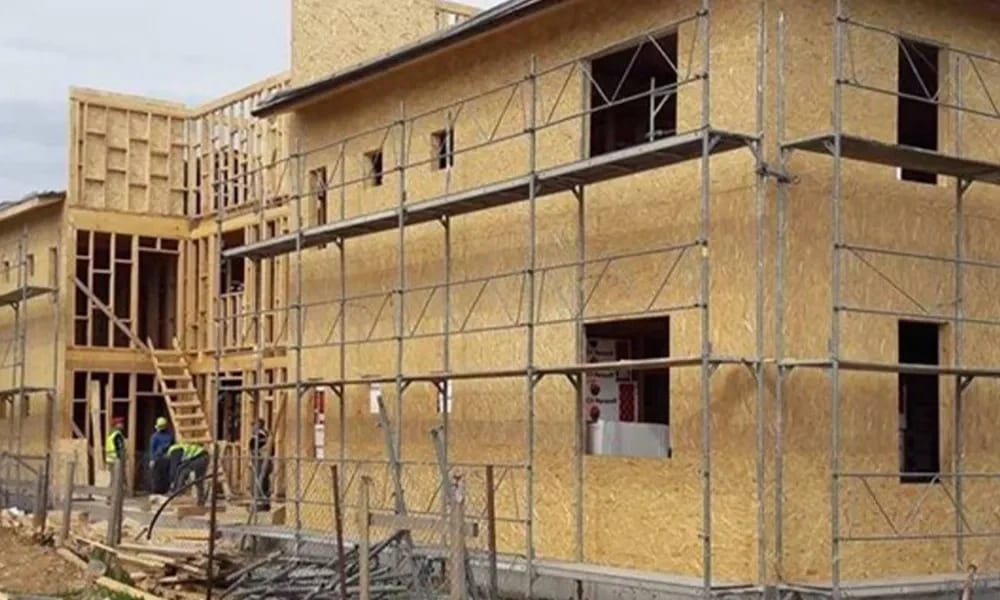
Fondo Saccà did not get a new estate either. On part of the former shanty ground the foundation built prototype homes of pressed straw and timber, with solar panels and greywater recycling. They are now the community hub of Maregrosso with the Il Melograno youth centre, a community reading room and social housing. Six buildings on the site have renewable-energy systems and host an energy community, and the foundation's energy service company puts its profit into social projects, an idea the foundation has spread across the city's rooftops.
Fondo Fucile shows the public route. After 124 families had been rehoused, demolition began in February 2022. The site is now getting 50 flats in three buildings under PINQuA, the national programme for housing quality funded by the EU recovery plan (PNRR). Nearby Bisconte, where the originally planned blocks, dubbed casermoni, were scaled back, will receive 40 new flats for almost €20 million, according to La Sicilia's account of the PINQuA deadline.
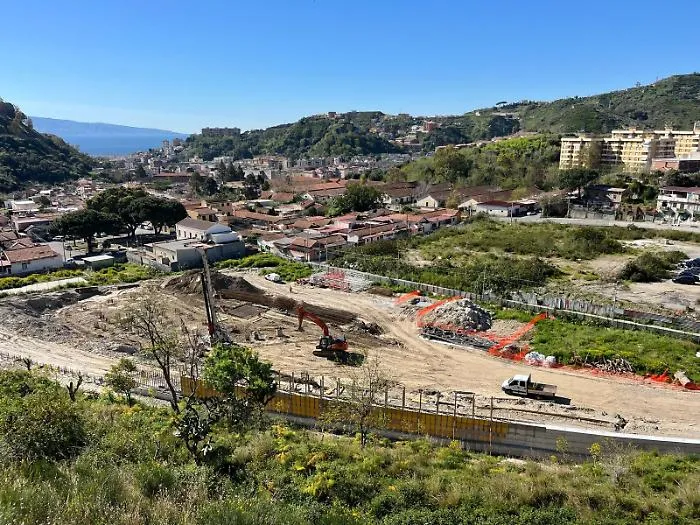
Ex Caserma Sabato is the clearest adaptive-reuse case. The former barracks will hold 56 homes for €9.316 million, and the European Commission lists it as a pilot project of the recovery plan. At Ex Caserma Nervesa, three buildings are to be demolished and rebuilt as 94 homes for €12 million. Both depend on meeting the PNRR deadlines that put several of the city's sites at risk in 2026.
Rione Taormina and the confiscated flats show the pace of the commissioner's programme. In June 2026 13 families from Rione Taormina received keys to new homes, and more than a hundred shacks had come down in under a year. Flats taken from organised crime are part of the supply: four confiscated homes have so far been earmarked for former shack families, one of them assigned and three ready for assignment.
So the materials exist. There is a public agency that can buy and build, and a community foundation that helped many families buy their way out of a shack. There is a city with more empty rooms than households who need them. What Messina has not yet built is a resale-restricted form of ownership that stays affordable after the keys are handed over.
References
Statistics5Click on any number to see the source
Housing market
Population & migration
From our library15
- Report Comune di Messina (ISTAT, Commissione parlamentare sulle periferie) — Knowledge
- Il Comune di Messina vince anche in appello il contenzioso Imu contro l'Iacp — Knowledge
- Affitti, a Messina il canone concordato conquista il mercato: oltre 6 nuovi contratti su 10 sono calmierati — Knowledge
- In Sicilia si aggrava l'emergenza abitativa: 32% del reddito per avere una casa (ANCE Sicilia) — Knowledge
- Caro affitti e studentati, a Messina la protesta di Udu e Sunia: «Stanze solo per ricchi» — Knowledge
- Prezzi delle case, caro affitti e le sfide per i giovani in Italia: il nuovo Ipsos Housing Monitor — Knowledge
- Audizione Legacoop Abitanti — Commissione VIII Camera dei Deputati (luglio 2025) — Knowledge
- Messina: story of a town 'expert' on earthquakes. Via Risorgimento, a palimpsest of 'anti-seismic' building systems — Knowledge
- Fondazione di Comunità di Messina: non finanziamo progetti — Knowledge
- Piano Casa: comunicato del Consiglio dei Ministri n. 173 — Knowledge
- Public-cooperative policy mechanisms for housing commons — Knowledge
- Il Piano Casa è legge con la fiducia. Salvini: 'Ora si deve correre'. Le organizzazioni degli inquilini: 'Inadeguato all'emergenza' — Knowledge
- Baraccopoli di Messina, il diritto alla casa sepolto tra degrado e lentezze burocratiche — Knowledge
- Housing for the vulnerable and most deprived in Cluj Metropolitan Area — Knowledge
- Scade il termine, fondi Pinqua a rischio: Bisconte e altri cantieri in corsa contro il tempo — Knowledge
Further sources32
- Terremoto di Messina del 1908 — Wikipedia
- La casa in Sicilia diventa un sogno proibito: Svimez — La Sicilia
- Bando graduatoria aperta ERP — Città di Messina
- Affitti, canoni in forte accelerazione a luglio — MessinaToday
- Sicilia, il caro affitti pesa sulle famiglie: boom di locazioni brevi — La Sicilia
- L'Ateneo è diventato la Fiat della città — La Sicilia
- Caro-affitti, precarietà, baraccopoli e studenti senza casa — Gazzetta del Sud
- Dossier n. 296: risanamento di Messina — Camera dei Deputati
- Già disponibili 188 miliardi per costruire 5 mila alloggi — L'Unità
- L.R. 15 maggio 2002 n. 4, risanamento della città di Messina — Regione Siciliana
- Risanamento Messina, Schifani consegna le chiavi a 14 famiglie — Regione Siciliana
- Baraccopoli Messina, Schifani commissario — BlogSicilia
- Santi Trovato nuovo sub commissario — Regione Siciliana
- Baracche, l'Sos di Basile: necessari altri 346 milioni — La Sicilia
- Scaduto il tempo, Basile non è più sindaco — La Sicilia
- Risultati elezioni comunali Messina 2026 — Sky TG24
- Sull'iniziativa Rigenera Messina Schifani bacchetta Basile — La Sicilia
- Messina, via al progetto Home — Tempostretto
- Messina, firmato il Piano Città degli immobili pubblici — Regione Siciliana
- Ex baraccopoli, alloggi confiscati alla mafia alle famiglie — La Sicilia
- Quante case verranno espropriate per costruire il ponte sullo Stretto — Il Post
- Messina, sì del consiglio comunale: svolta sulle baraccopoli post sisma — La Sicilia
- Fondo Fucile, al via la demolizione delle baracche — BlogSicilia
- Ponte sullo Stretto, la Corte dei Conti dice no — La Sicilia
- Ponte sullo Stretto, istruttoria per la delibera Cipess — La Sicilia
- Fondazione Messina, Hub di Comunità di Maregrosso — MessinaToday
- Intervista a Gaetano Giunta sul progetto Capacity — Italpress
- Urban Regeneration through Integrated Strategies to Tackle Inequalities and Ecological Transition — Sustainability (MDPI)
- "Non abito a Maregrosso": stigmatizzazione territoriale in una baraccopoli post terremoto — Cambio
- Sharing Energy: comunità energetiche — Intesa Sanpaolo
- Pilot project – Ex Caserma Sabato (Messina, Sicilia) — European Commission
- Baraccopoli Messina, chiavi a 13 famiglie nel Rione Taormina — Regione Siciliana
Funding & land tenure
What a housing cooperative could actually build on hereMessina is not in the funding registry yet — the tenure figures above are national.