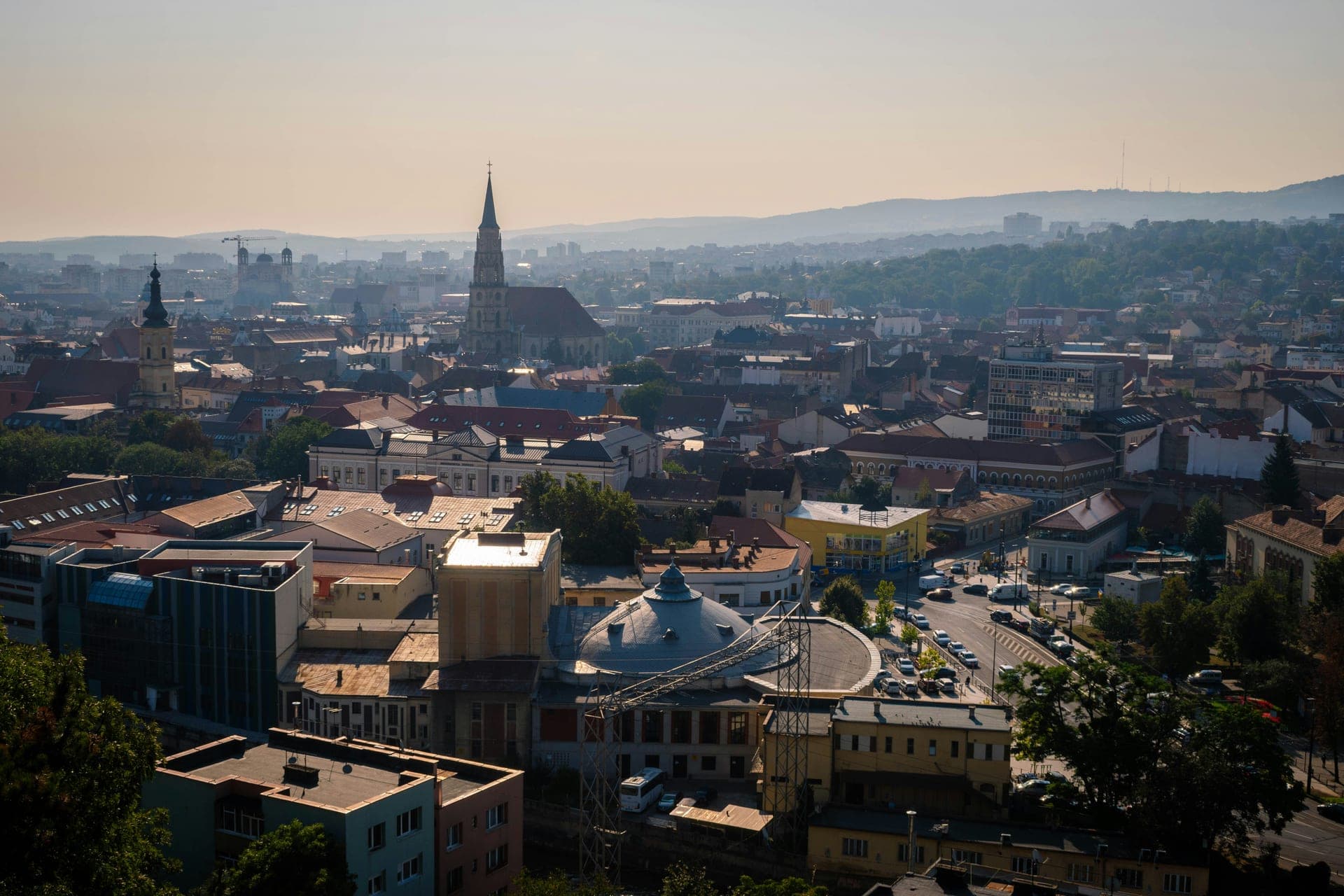
A university town priced like a capital
Cluj-Napoca, Kolozsvár to its Hungarian speakers, is Transylvania's historic capital and Romania's largest university town. It has also become one of the country's main software and services hubs. Both pulls land on a housing stock of socialist-era apartment blocks that the state sold to its tenants after 1990. That sale made Cluj a city of owners, and it left very little room for anyone who arrives without the means to buy.
The census counts 145,000 dwellings for 286,598 residents. Of the households in them, 93% own their home and 7% rent it. All of that rented share reads as private rental (7%), because neither a cooperative nor a public-housing tenure registers in the tenure data. The municipality does own some flats. In 2014 its public stock stood at 1,554 dwellings, too few to show up as a slice of its own. The renter figure also understates the market, because it counts registered leases. At the launch of the Cluj Tenants' Association, one renter reported signing a contract in only two of five flats rented.
- Owners
- Owner-occupier93.0%
- Renters
- Public & non-profit rental0.00%
- Cooperative0.00%
- Private rental7.0%
Social housing is a rule about who may live in a home at what rent, not a tenure of its own. In Cluj it covers 0.7% of dwellings, almost all of it inside that small municipal stock. The city estimates that 30% of households meet the income test. Demand dwarfs supply. In 2019 officials said the city allocated about 15 social homes a year against 400 requests.
Asking rents show where everyone else lands. A new let costs €10.9/m² a month, net of utilities, on the Storia listings index. A furnished one-bedroom flat asks about €480 a month and a furnished family flat about €820. A whole furnished flat taken for six months, bills and furniture priced in, is estimated at €18.5/m². The climb continued through 2025. Euronews Romania's round-up of 2025 rents found a studio up from €370 to €400 and a two-room flat from €550 to nearly €600. No rent regulation applies to private leases.
- 1-bed, outside centre
- 1-bed, city centre
- 3-bed, outside centre
- 3-bed, city centre
Monthly asking rents by flat size and location. Cluj has no cooperative or published municipal rent tier to set against them, which is itself the finding: every point on this line is a market price.
Empty space is not scarce. At the 2021 census 10% of dwellings were unoccupied. Office vacancy stands at 8.6%, the equivalent of about 10 whole office buildings standing empty, while 0 m² of shop space waits for tenants. Short stays compete for the same flats: a one-bedroom on a holiday platform fetches a median €60 a night.
Demand keeps arriving. Roughly 8,500 people move to the city each year, and an estimated 28,000 students, researchers and tech workers stay for three to twelve months. Supply has gone to the edges. Florești, the commune on the city's western edge, grew 2.3-fold between censuses to 52,735 residents, the largest commune in Romania. Inside the city, permits come slowly. City Hall held back housing permits in Borhanci until a ring road was built, until the courts ordered one released. Building costs about €950/m² and residential land €400/m².
The pressure has long since passed the poorest households. Krónika's reporting on Cluj property prices put the average flat at €2,896/m² in autumn 2024, against €1,802/m² in Bucharest. A decade earlier the two cities were level at about €960/m². The economist quoted there argues that only the top earners, many in IT, can still buy. Residents feel it. When the city drafted its first housing strategy, a quality-of-life barometer found 97% of Cluj residents content with life in the city. Yet 75% saying they could not find a home at an affordable price. Students say rising rents push them back into shared rooms.
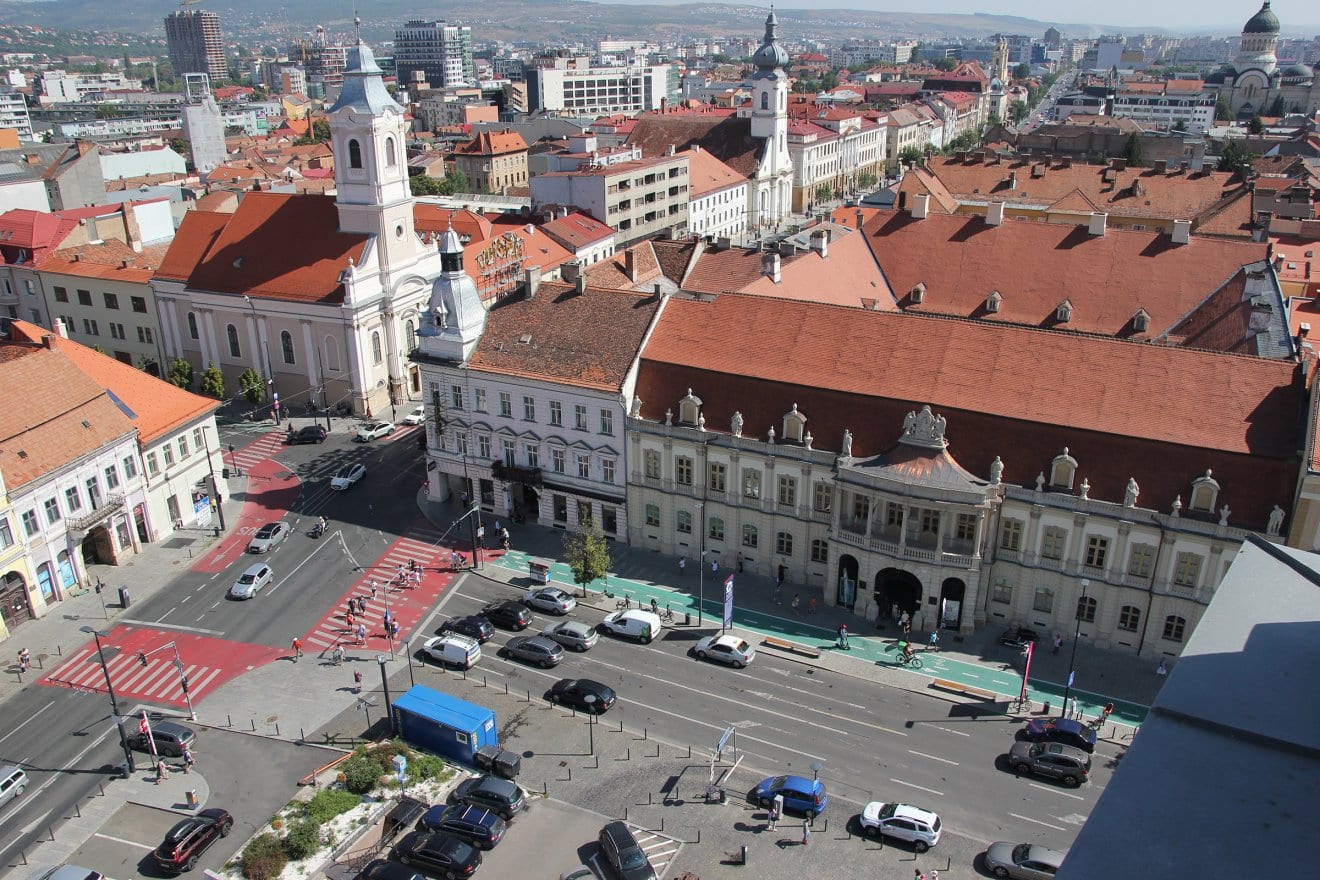
If we break down the numbers behind these indicators, it becomes evident that there are major income disparities. In other words, if everyone in Cluj-Napoca made the average income, then prices would not be at this point.Nowhere in this landscape is there a cooperative. Not one cooperative home registers in the tenure data, and the sector that softens rents in Vienna or Zürich has no counterpart here.
A cooperative law with no cooperatives
Romanian law already has room for housing cooperatives. The Law on Cooperation of 2005 lists the societate cooperativă de locuințe (a housing cooperative society) among its forms. It is defined as an association of people formed to build, buy, conserve, renovate and administer homes for its members. No member-share mechanism or limited-equity rule has grown up around it, because the form has hardly been used. What every Cluj block does have is an asociație de proprietari (an owners' association). It manages the stairwells, roofs and heating risers together, but each household owns its flat outright and can sell it at the market price.
The history explains the gap. Cluj grew fastest in the 1960s and 1970s, when the state housed incoming workers in large estates such as Mănăștur and Gheorgheni. The city's own strategy work found that about three quarters of its blocks date from before 2000, and three quarters of residents live in them. Decree-Law 61/1990 then let sitting tenants buy those flats cheaply. By the 2011 census, 98% of the city's dwellings were privately owned. Even the public rentals built for young people after 1998 by ANL (the National Housing Agency) could be bought by their tenants, draining the one non-market tier the country had rebuilt.
The actors who push for non-market housing today fall into three clusters, and they face different obstacles. The first is public delivery: City Hall and ADI Zona Metropolitană Cluj (the intercommunity association of the city and its communes), which buy and build social homes with EU and Norwegian money. Their constraint is cost, because every flat is bought or built at Cluj prices. The second is a housing-justice movement led by Căși sociale ACUM! (Social Housing NOW!), with its tenants' group Vocea Chiriașilor (Tenants' Voice), and the Cluj Tenants' Association. Its fight is over access: who is eligible, and whether evicted Roma families are shut out. The third is research at Babeș-Bolyai University, where sociologists such as Norbert Petrovici and Enikő Vincze have mapped the city's housing divide for more than a decade. None of them is a cooperative, and none is building one.
Policy frames non-market housing as a safety net rather than a tenure. The municipal strategy speaks of social homes for the poorest and support with rent for others. Nationally, the offer to the middle is ANL rentals for people under 35 and state-backed mortgages to buy. Cooperatives appear in neither. That leaves the politics to decide whether the public stock stays a last resort or becomes a route into the city for teachers, nurses and graduates.
Buying the city back, one flat at a time
Emil Boc, a former prime minister who has been mayor since 2012, answers the crisis by buying and building social homes one block at a time. The city's strategy for its social stock aims at about 475 social homes at maturity, with 350 new units planned for 2026 to 2030. A block of 35 social homes is rising on Sobarilor Street. The city also buys flats on the open market and pays households in difficulty up to €300 a month towards rent. On 28 July 2026 the Local Council approved LOCUS (Housing, Opportunities and Sustainable Urban Cohesion). It will buy 50 homes for families from Pata Rât for 30 million lei, almost all of it EU money.
These homes are let. They do not become anyone's property; they remain public property.The levers sit unevenly across three tiers. Bucharest sets the Housing Law of 1996, which defines who qualifies for a social home, and funds ANL's youth rentals. It adopted a National Housing Strategy to 2050 in 2022. Yet the country has the smallest social stock in the EU. A Friedrich Ebert Foundation data brief counts 16,290 social homes, 0.17% of all dwellings, against more than 40,000 applications. The metropolitan association carries the EU and Norwegian projects across municipal borders, and the city holds the land, the permits and its own budget. It is also the city that sets the allocation rules, and those are now contested in court. In June 2026 the Bucharest Court of Appeal ruled that Cluj's permanent exclusion of anyone once labelled an "abusive occupant" indirectly discriminates against Roma families. The city is appealing.

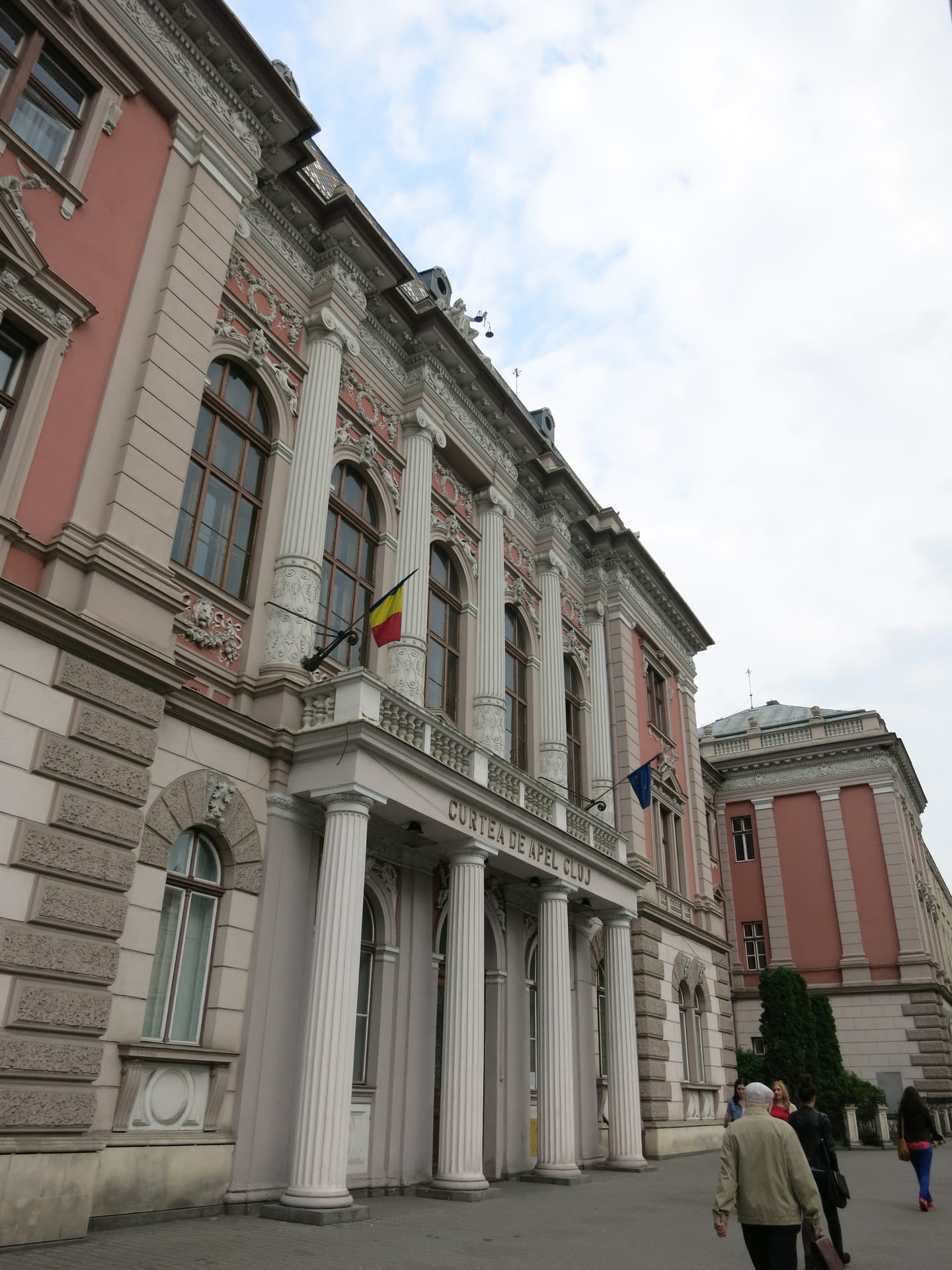
No programme supports cooperatives, so the instruments on the table are municipal ones. The 2021-2030 housing strategy, drafted with Bogdan Suditu of the University of Bucharest and World Bank experts, proposes an urbanisation levy on large private developments. It would need a change in national law. Until then, developers win permits by handing the city roads, bridges and nurseries, a cost that buyers end up carrying. Campaigners want the city to go further. At a public debate on the crisis in 2018, the tenants' association proposed a quota of below-market homes in every large development and a cap on rent rises.
On vacancy, the city's main tool is fiscal. Since 2016, owners who let buildings decay pay a property-tax surcharge of up to 500%. By the end of 2025 1,088 buildings had been restored, though the city collected under 15% of the fines it issued. The measure restores facades; it does not turn empty space into homes. Activists have asked for that step, pointing to an empty railway building on Cantonului Street beside an overcrowded settlement and demanding that idle state property be handed to the city for social housing.
Climate targets run through the same stock. In 2023 Cluj won the EU Mission label for its plan to become climate-neutral by 2030, one of the first 10 cities to receive it. Its bid for Recovery and Resilience funds covered 40 apartment blocks with 2,164 flats for thermal retrofit. Because almost every flat is privately owned, each retrofit needs an owners' association to agree and co-finance it. That makes the public stock the easiest place to meet energy targets, and it is still the smallest.
Public housing is the guarantee that everyone actually has access to a home. It can counter the trends that dominate today, namely the total commodification of housing and its financialisation.- 1990
State flats sold to tenants
Decree-Law 61/1990 lets sitting tenants buy the state-built flats they rent, starting the shift to near-universal ownership.
- Dec 2010[source]
Coastei Street eviction
More than 300 Roma residents are evicted from Coastei Street; many are moved to Pata Rât, beside the city rubbish dump.
- 2014-2017[source]
Pata-Cluj pilot
A Norway Grants project of more than €3.4 million relocates 35 families from Pata Rât into flats in the metropolitan area.
- 2016[source]
Surcharge on neglected buildings
Owners of decaying buildings face a property-tax surcharge of up to 500% until they restore them.
- Jun 2019[source]
City starts buying flats on the market
The Local Council approves buying apartments on the open market as social homes, with a first-year budget of €1-1.5 million.
- Mar 2021[source]
First municipal housing strategy
Cluj opens work on a housing strategy within its integrated urban development plan for 2021-2030.
- Oct 2023[source]
EU climate-neutral mission label
Cluj-Napoca is among the first 10 cities to receive the EU Mission label for its climate-neutral plan.
- Dec 2025[source]
Cluj4Home keys handed over
Six low-income families move into flats the city bought on the market; four more follow.
- Jun 2026[source]
Court finds allocation rules discriminatory
The Bucharest Court of Appeal upholds findings that excluding "abusive occupants" from social housing indirectly discriminates against Roma.
- Jul 2026[source]
LOCUS approved
The Local Council approves buying 50 social homes for Pata Rât families, 98% funded by the EU.
- 2029[source]
LOCUS deadline
The project is due to finish by 31 December 2029, rehousing about 140 people.
- 2030[source]
Pata Rât settlements to close; climate-neutral target
The city aims to dissolve the informal settlements at Pata Rât, add 350 social homes over 2026-2030 and reach climate neutrality.
Milestones in Cluj-Napoca housing policy, with the targets the city and the EU have set for 2029 and 2030.
From the landfill's edge to the city's own flats
Pata-Cluj, the pilot that ADI Zona Metropolitană Cluj ran from 2014 to 2017, was the first attempt to undo the segregation at Pata Rât. More than 1,500 people lived in about 400 households around the landfill, most of them Roma. The European Urban Initiative's case study counts 35 families, 143 people moved into flats in Apahida, Florești and Baciu, twelve of them newly built in Apahida and 23 bought. The method outlasted the money: a participatory way of allocating social homes, shaped by the families' own needs rather than a top-down list.
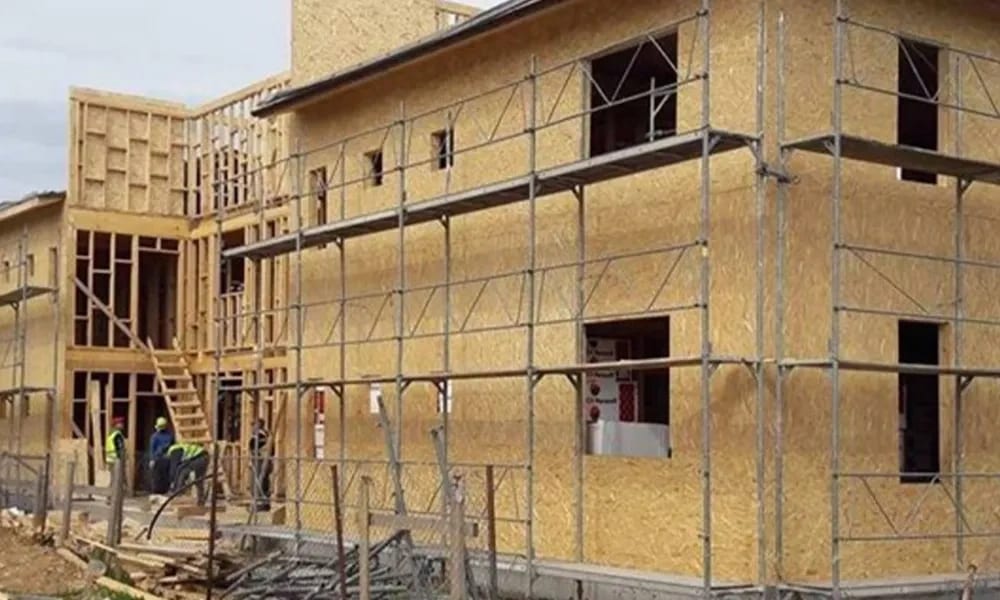
Pata 2, the follow-up funded by the 2014-2021 EEA and Norway Grants, scaled the method. It planned 63 social homes for 61 families and two emergency flats, with support after each move. The Municipality of Bergen partnered on it, and Cluj staff trained in Bergen on building and running social housing.
Cluj4Home, a joint project of City Hall and the metropolitan association, applies the same matching to low-income households across the city. It spent 5 million lei from the local budget on flats bought on the open market. Each home was matched to the family's size, ages, disabilities and ties to relatives. Six families received their keys on 29 December 2025. Across the earlier projects, 123 families from Pata Rât have moved into social homes. LOCUS and the Sobarilor Street block extend that pipeline to 2030.
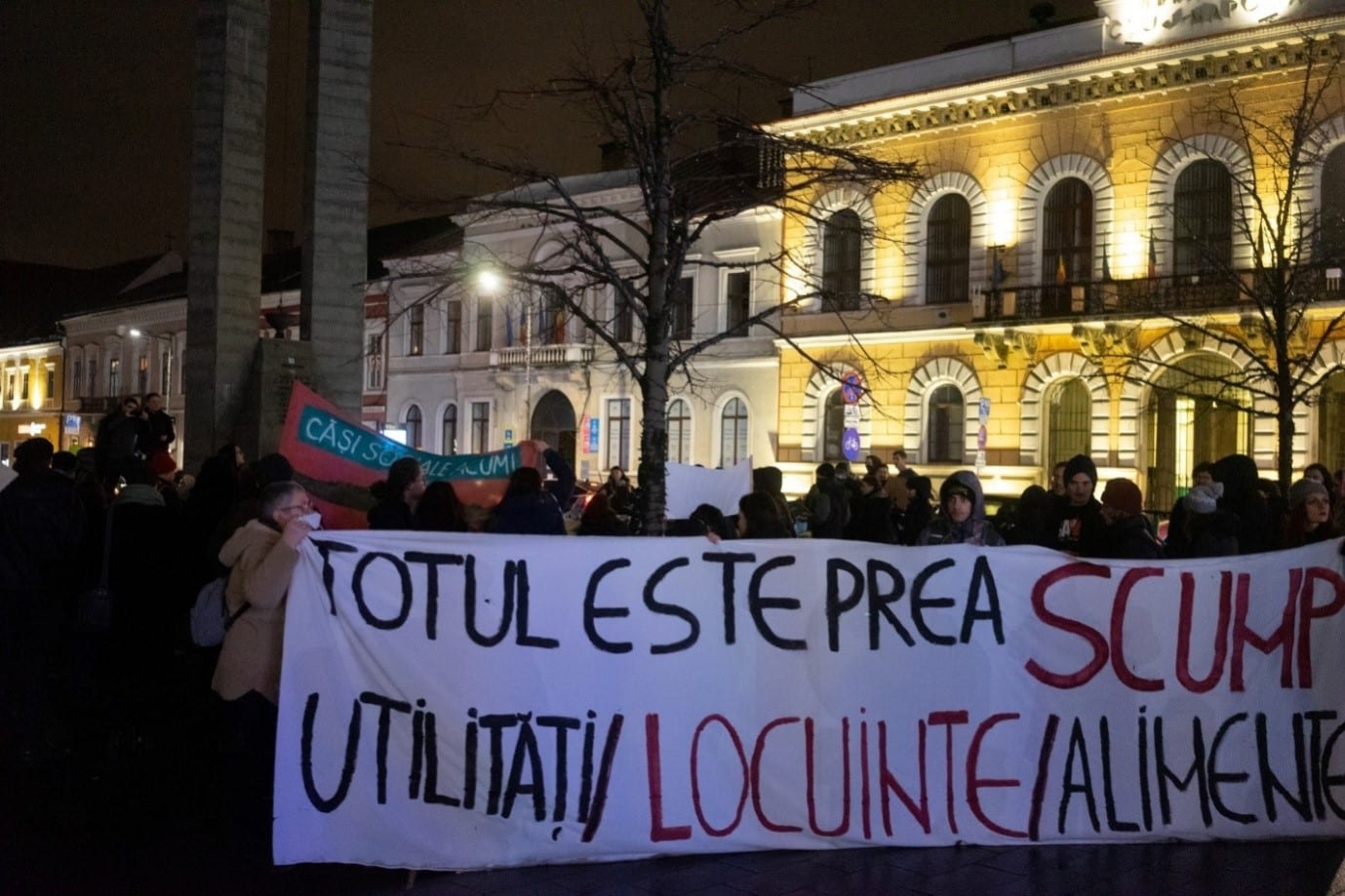
Căși sociale ACUM! is the movement that keeps the pressure on. It took shape in the years after the Coastei Street eviction and brings Romanian, Hungarian and Roma activists together. In 2021 it asked the city to house all 222 applicants it had declared eligible, recalling that more than 270 social homes were allocated in 2008. Its core demand, that evicted families not be shut out of social housing, was upheld in 2026 on complaints brought by the European Roma Rights Centre and the Centre for Legal Resources. Through Vocea Chiriașilor it now organises private tenants as well.
Asociația Chiriașilor Cluj (the Cluj Tenants' Association) gave renters a voice in the country's most expensive city. Its founders documented raises imposed "because that is the market" and leases never registered. They called on universities to build dormitories, noting that Babeș-Bolyai's student numbers had tripled in 15 years while dormitory places lagged. Their proposals, a quota of new homes returning to public ownership and limits on rent rises, remain on the table.
Together these projects answer the headline only in part. Cluj has learned to buy, match and support tenants one family at a time, and to defend their access in court. What it has not yet built is a non-market home for the students, researchers and young workers who fill its lecture halls and festival fields.
References
Statistics15Click on any number to see the source
Housing market
Tenure & affordability
Adaptive reuse & vacancy
Population & migration
From our library9
- Chirii în creștere la final de 2025: Craiova, campioana scumpirilor — Knowledge
- Buying Property in Cluj-Napoca is a Luxury. Is it a Bubble or Reality? – Experts Share Their Views on the Outlook — Knowledge
- Ce-și asumă primarul Emil Boc în prima strategie de locuire din România pregătită la Cluj pentru 2021-2030 — Knowledge
- ADI Zona Metropolitană Cluj (Cluj Metropolitan Area Intercommunity Development Association) — Organisation
- Căși sociale ACUM! (Social Housing NOW!) — Organisation
- Problema locuirii în România: Cererile de locuințe sociale sunt de 2,5 ori mai mari decât fondul locativ social existent — Knowledge
- Romanian Court of Appeal Rules Cluj-Napoca Housing Policy Indirectly Discriminates Against Roma — Knowledge
- The right to a decent life! How the lives of the most disadvantaged community in Cluj-Napoca started to change with the help of Norway Grants — Knowledge
- Housing for the vulnerable and most deprived in Cluj Metropolitan Area — Knowledge
Further sources16
- Primăria Cluj-Napoca cumpără apartamente de pe piaţa liberă, cu destinaţia de locuinţe sociale — Agerpres · 2019-06-18
- S-a lansat asociaţia Chiriaşilor în cel mai scump oraş imobiliar din ţară — actualdecluj.ro
- Florești, cea mai mare comună din România, își dublează populația în 10 ani — actualdecluj.ro · 2021
- Termenul 2026 pentru autorizarea locuințelor în Borhanci demontat de instanțe — actualdecluj.ro · 2022-01-03
- Legea 1/2005 a cooperației, art. 4 — legeaz.net · 2005
- Strategia Naţională a Locuirii: Guvernul vrea chirii mai mari pentru locuinţele ANL — Economica.net · 2016-08-01
- Primăria Cluj, strategie pentru achiziția a circa 500 de locuințe pentru familiile rome de la Pata Rât — G4Media · 2026-07-28
- Cluj-Napoca cumpără 50 de locuințe sociale pentru familiile vulnerabile din Pata Rât — Economedia · 2026-07
- De ce avem prețuri exorbitante la apartamente și chirii — actualdecluj.ro · 2018-12-16
- Numărul clădirilor refațadizate în Cluj-Napoca după supraimpozitări depășește 1000 — actualdecluj.ro · 2026
- Propunere de la Cluj pentru autorităţi: transformarea clădirilor abandonate în locuinţe sociale — actualdecluj.ro · 2017-07
- Cluj-Napoca received the EU mission label for its plan to become climate neutral by 2030 — energynomics.ro · 2023-10
- Primăria va depune proiecte de 80 de milioane de euro pentru finanțarea prin PNRR a reabilitării termice — actualdecluj.ro
- Coastei Street Evicted Roma – 4 Years Fighting for Justice — European Roma Rights Centre · 2014-12-17
- Șase familii din Cluj au primit cheile noilor locuințe sociale — actualdecluj.ro · 2025-12
- Inițiativa „Căși Sociale” cheamă solicitanții eligibili să semneze o petiție — actualdecluj.ro · 2021