An old city, emptying and in demand
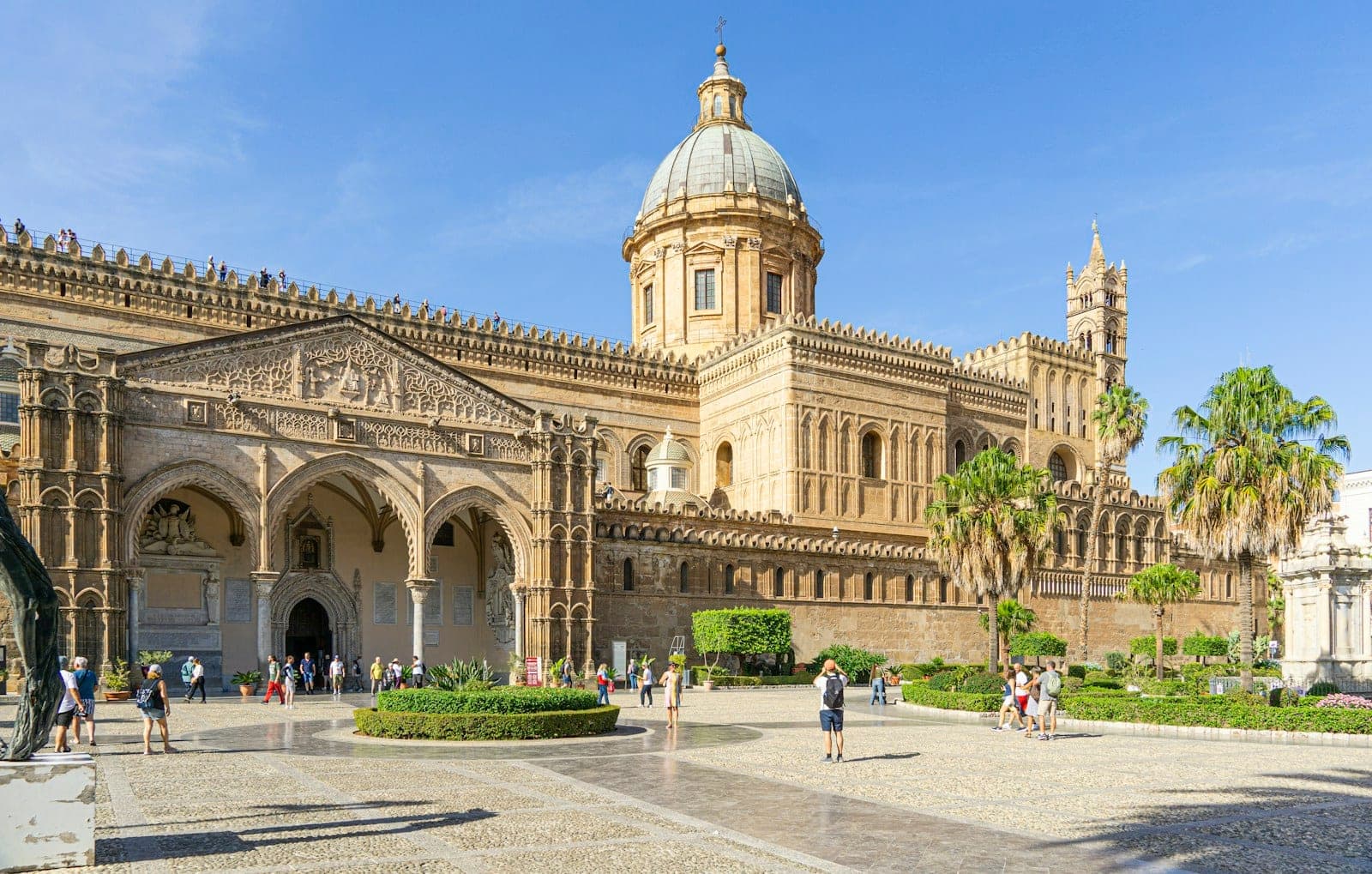
Palermo has been rebuilt by every power that crossed the Mediterranean, and its streets still show it. Arab gardens, Norman domes and Baroque oratories share a historic centre that one generation abandoned and the next rediscovered. That layering now shapes its housing question too: who gets to live in the old city, and who is pushed to the concrete estates at its edge.
Ownership dominates. Around 70% of households own their home and about 24% rent, which leaves an estimated 24% in private rental once non-market landlords are counted. The rest, roughly 6%, live rent-free or by usufruct, a census category ISTAT (the national statistics institute) records as "altro titolo". It is largest on the islands, at 10.3% of households. No published figure isolates cooperative tenure in Palermo. Its public stock, the edilizia residenziale pubblica (council housing let at income-linked rents), numbers over 10,000 homes by the city's own count.
- Owners
- Owner-occupier70.0%
- Renters
- Public & non-profit rental0.00%
- Cooperative0.00%
- Private rental24.0%
- Other6.0%
- Free use / usufruct6.0%
Social housing in Italy is a legal label rather than a landlord. Council homes carry it, and so do privately built convenzionata flats sold or let below market under an agreement with the municipality. No city-level share of homes under that label is published. The council stock itself is under strain. At the ZEN estate in the north of the city, a 2020 survey counted 2,700 public homes but only 700 with regular tenants.
Rents are low by European standards but rising fast. A home in a housing cooperative costs about €4.50/m² a month, against an all-stock median of €6.50/m² and €8/m² on new contracts. Furnished and serviced flats, with utilities and furniture priced in, reach €13.17/m². Asking rents rose 7.6% in 2025. In the historic centre, an IrpiMedia investigation traced rents from €8.20 to €12.10 per square metre between 2020 and 2025.
- Cooperative
- All-stock median
- New contracts
- Furnished / serviced (gross)
Monthly rent per square metre by segment. Cooperative, all-stock and new-contract rents are net cold; the furnished tier is gross, with utilities and furniture included.
Palermo is also a city of empty rooms. The 2021 census found 32.5% of dwellings unoccupied, some 72,000 homes, many of them second homes, inherited flats or ruins. Offices tell a smaller version of the story: an estimated 13.5% stand vacant, around 290,852 m². Meanwhile about 5,600 homes were offered on Airbnb in 2023, 3.5% of the stock that is not someone's main residence.
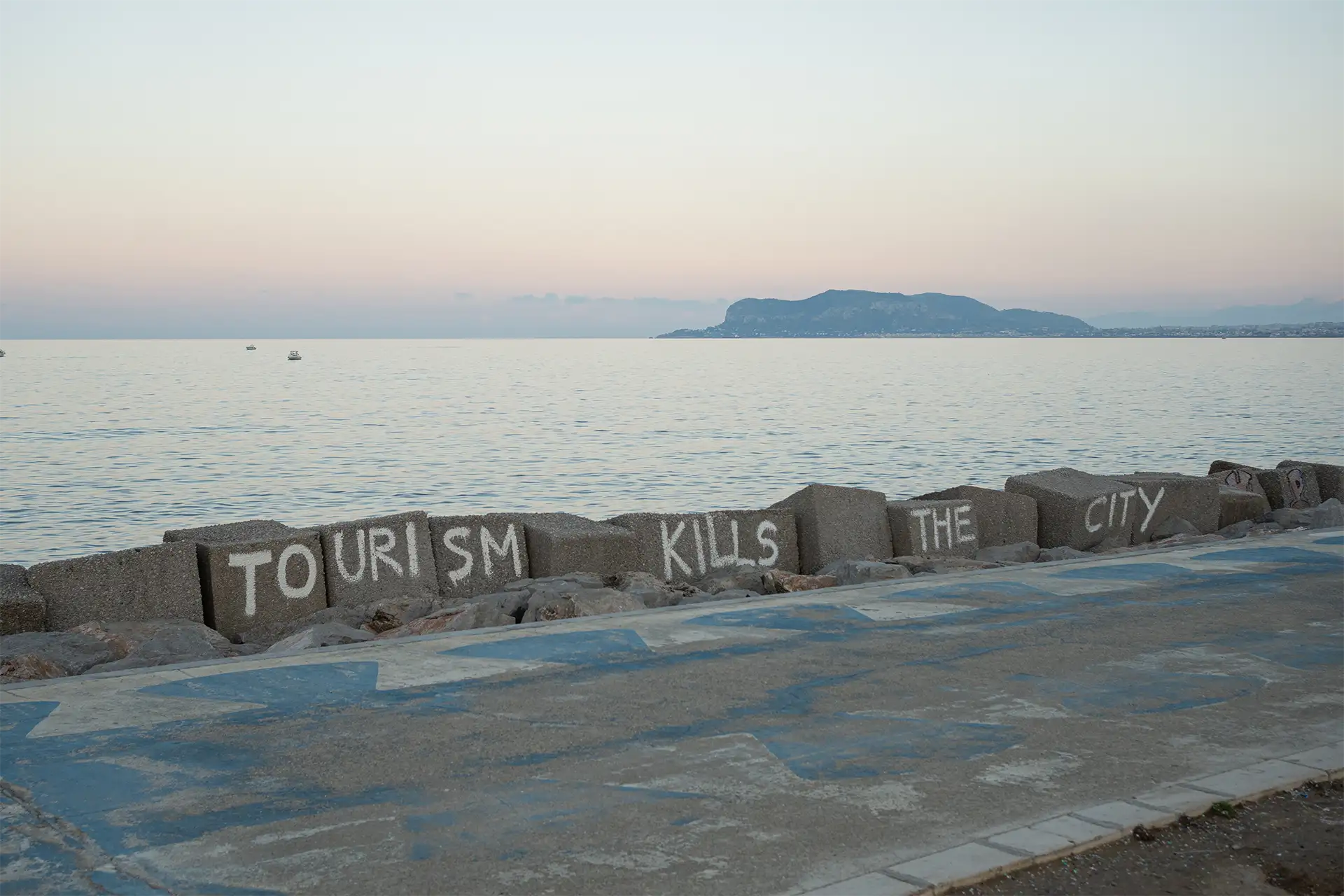
Demand comes from visitors rather than new residents. Tourist arrivals grew from 560,000 in 2016 to more than 860,000 in 2024. The resident population fell to 628,693 in 2024, down 1,734 in a year. The province has the lowest natural balance in Sicily, at -4,578, and loses more people to the rest of Italy than any other. Italy has no rent cap. The nearest instrument is the canone concordato (a contract at an agreed, locally negotiated rent in exchange for tax relief).
The squeeze is sharpest at the bottom. Nearly a third of Palermo's taxpayers declare a gross income under €10,000, and an estimated 26.9% of households are overburdened by housing costs. In the south of Italy, 24.8% of renting families live in absolute poverty. Il Fatto Quotidiano reported, citing the tenant union Asia-USB, that more than 4,500 evictions were scheduled in 2024. Nationally, almost half of the 2,272 eviction rulings for a landlord's own need were issued in the province of Palermo. The pressure now reaches middle-income renters in the centre, and it registers nationally: 47% of Italians name excessive rents as a top housing problem.
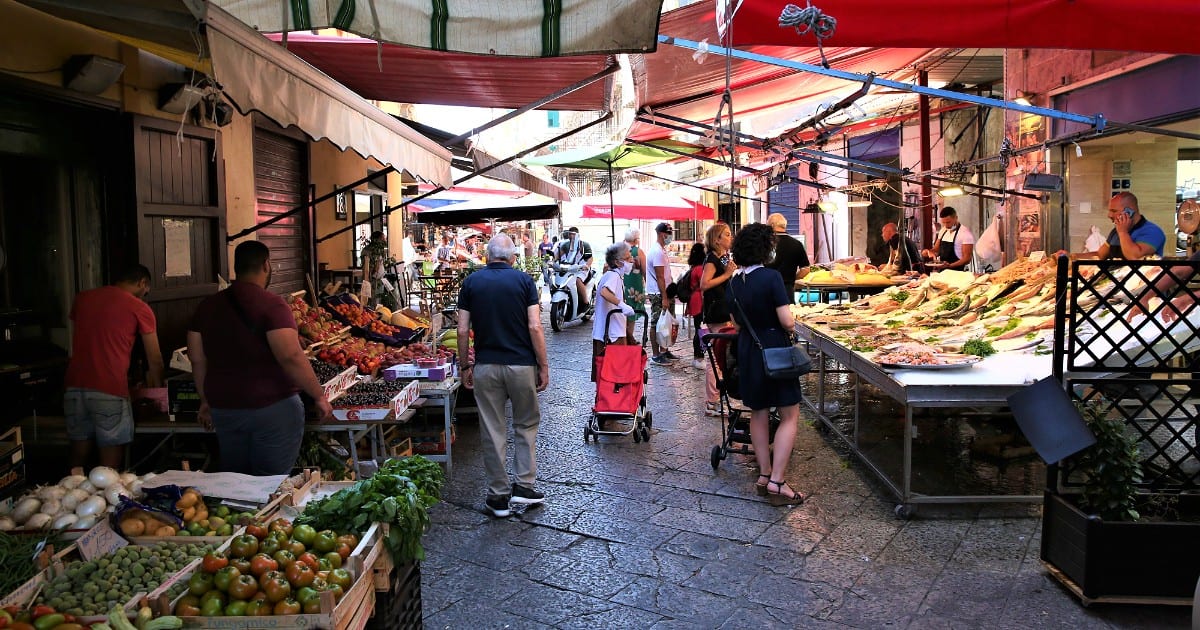
We are looking for somewhere new to live outside the historic centre, because life in the neighbourhood has become unbearable.Against that backdrop, cooperatives are a quiet presence: they build homes, but their share of the stock goes uncounted.
Cooperatives that built and then dissolved
Italian housing cooperatives come in two forms. In a cooperativa a proprietà divisa (a divided-ownership cooperative), members join to receive a home in full ownership and the cooperative usually winds down once the flats are handed over. In a cooperativa a proprietà indivisa (an undivided-ownership cooperative), the cooperative keeps the building and members hold an open-ended right of use. Members pay in through a quota sociale (the share that buys membership), a prestito sociale (a member loan) and a monthly canone di godimento (a use fee). In Bologna, two undivided cooperatives charge an average of €5.12/m², about 60% below the open market.
Sicily took the divided route. Its cooperative building grew on regional subsidy laws of the 1970s and the national housing law of 1978, which AGCI Sicilia still lists as the basis of cooperative programmes. Those decades were also the aftermath of the Sacco di Palermo (the "sack of Palermo"). In five years around 1960, over 4,000 building licences were signed, and the population grew from 503,000 in 1951 to 709,000 in 1981. Public housing followed the same outward push. The ZEN 2 competition of 1969, won by a team including Vittorio Gregotti, produced the estate that still defines the northern edge.
Today the sector clusters in three groups. The first is the legacy of ownership cooperatives from the 1970s and 1980s, now largely dissolved into ordinary condominiums. The second is the national federations. Legacoop Abitanti counts more than 300,000 homes built, and the three federations together report 4,364 housing cooperatives. Their Sicilian arm, Legacoop Sicilia, has only recently turned back to housing in Palermo. The third group is social cooperatives and third-sector bodies that run services rather than own buildings. They manage Housing First flats and homes confiscated from the mafia. They face different problems: the old cooperatives have little left to manage, while the new actors lack land, capital and long leases.

Across Europe, Housing Europe's survey of cooperatives shows the sector scaling where states offer land and patient loans. A comparative history in Housing Studies makes the same point about the state's role. Palermo now tries a version of that bargain. On 7 September 2026 the Comune, Legacoop Abitanti, Legacoop Sicilia and the craft federation CNA Palermo signed a social-housing protocol. It starts by mapping usable buildings, confiscated ones included, and aims for each public euro to draw up to €4 of private money.
Decrees in Rome, estates in Palermo
The national answer is the Piano Casa, approved by the Council of Ministers on 30 April 2026 and issued as Decree-Law 66/2026. It promises about 100,000 homes over ten years and more than €10bn of public money through INVIMIT (the state property-fund manager). It aims to bring about 60,000 empty council homes back into use under an extraordinary commissioner. Private developers get faster permits if at least 70 of every 100 homes are convenzionata, priced at least 33% below market. Parliament converted it on 2 July 2026. The same government had cut the national rent-support fund from €330m in 2022 to nothing in 2023.
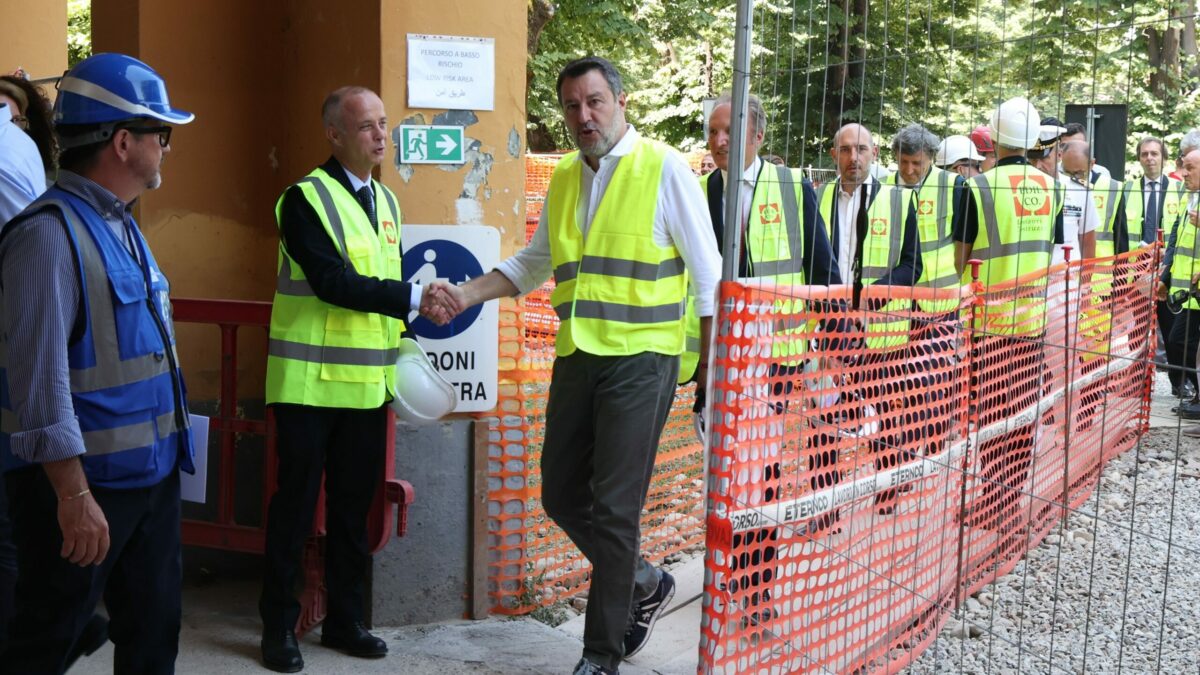
After years of chatter, having 60,000 public homes that are empty today, having the money, the staff and the law to fix them within a few months and give them back to people who have been on waiting lists for years all over Italy makes me proud. Now we have to run.Tenant unions answered the same day. As Il Fatto Quotidiano's report on the vote records, Sunia, Sicet, Uniat and Unione Inquilini called the law inadequate. They argued that €970m over five years cannot repair the empty stock, against about 350,000 families on waiting lists.
This Piano Casa is inhumane because it abandons families and dumps on the municipalities an emergency the government does not want to face.The Region holds the purse for council housing. President Renato Schifani's government raised its EU-funded housing line to about €246m in May 2026. A bill before the Sicilian Regional Assembly would merge the ten IACPs (the provincial public-housing institutes) into a single agency, ASPA. Palermo's own landlord role sits with the Comune. Mayor Roberto Lagalla, elected in 2022 with 47.63%, put housing emergencies under assessore Fabrizio Ferrandelli. The city says it handed over more than 140 homes in a year and admitted 488 households to its new emergency list. Its social-housing agency helped 507 families keep their homes in 2024. Il Post reported the assessore sleeping in a council flat at ZEN to face down illegal occupations.
The estates get the capital. Borgo Nuovo is being rebuilt on the so-called Caivano model, with €25m from central government and €17m from the city, including prefabricated homes in natural materials. A masterplan for ZEN bundles 21 works worth over €50m. Old Gescal money (a defunct payroll levy for worker housing), frozen for two decades, must be spent in ZEN, Sperone and Borgo Nuovo by January 2029.
For cooperatives, the concrete instrument is property, not subsidy. Law 109/1996 (the statute on the social reuse of assets seized from organised crime) followed a Libera petition and lets councils hand those assets to families and associations. Palermo holds about 1,400 confiscated properties. Around 276 serve the housing emergency and 217 go to the third sector. A €794,000 maintenance contract now keeps them habitable. Earlier, the state lender CDP (Cassa Depositi e Prestiti) backed a €60m social-housing plan for Sicily through Fondo Esperia.
Empty homes get less attention than empty council flats. There is no vacant-homes tax and no conversion programme for idle offices. Short lets are managed through revenue instead: since July 2025 guests in holiday flats pay a tourist tax of €4 a night, and every let needs a national identification code, the CIN. Tourism assessore Alessandro Anello has ruled out any freeze on new licences. On the tenants' side, Sunia Palermo opened a standing working group with the city in July 2026.
Climate rules arrive from Brussels. Italy voted against the Energy Performance of Buildings Directive in 2024. It still has to cut residential energy use 16% by 2030 and 20-22% by 2035, and it has missed the first deadline for its renovation plan. Sicily lost 773 ha of soil to building between 2023 and 2024. Reusing seized flats and empty council homes is, in practice, the city's cheapest way to meet both targets.
- 1969[source]
ZEN 2 competition
A national competition for the IACP of Palermo, won by a team including Vittorio Gregotti, sets the design of the northern public estate.
- 1996[source]
Law 109/1996
Parliament allows assets confiscated from the mafia to be reused for social purposes, after a mass petition led by Libera.
- June 2022[source]
Lagalla elected mayor
Roberto Lagalla wins the mayoralty with 47.63% of the vote.
- 2023[source]
Rent-support fund defunded
The national rent-support fund falls from €330m in 2022 to zero in the 2023 budget.
- January 2025[source]
National short-let code mandatory
Every short-term let in Italy must display a CIN identification code.
- February 2025[source]
Borgo Nuovo regeneration plan
A €25m government package and over €17m of city funds start the rebuilding of Borgo Nuovo.
- April 2026[source]
ZEN masterplan
21 works worth over €50m are presented for San Filippo Neri-ZEN.
- July 2026[source]
Piano Casa becomes law
Decree-Law 66/2026 is converted: about 100,000 homes over ten years and more than €10bn of public funds.
- September 2026[source]
Social-housing protocol signed
The Comune, Legacoop Abitanti, Legacoop Sicilia and CNA Palermo agree to map buildings for social housing.
- January 2029[source]
Gescal works deadline
Regeneration works in ZEN, Sperone and Borgo Nuovo funded by old Gescal money must be finished.
- 2030[source]
EPBD first milestone
Italy must cut average residential primary energy use by 16%.
- 2036[source]
Piano Casa horizon
End of the ten-year window for the national target of about 100,000 homes.
Seized, abandoned, handed back
Housing First Palermo is the newest proof that seized buildings can become homes. Since late August 2026, 12 people have lived in flats near via Don Orione and via del Quarnaro. The project offers 25 places over two years with EU recovery funds. A consortium led by the social cooperative La Panormitana runs it with the Waldensian centre La Noce.
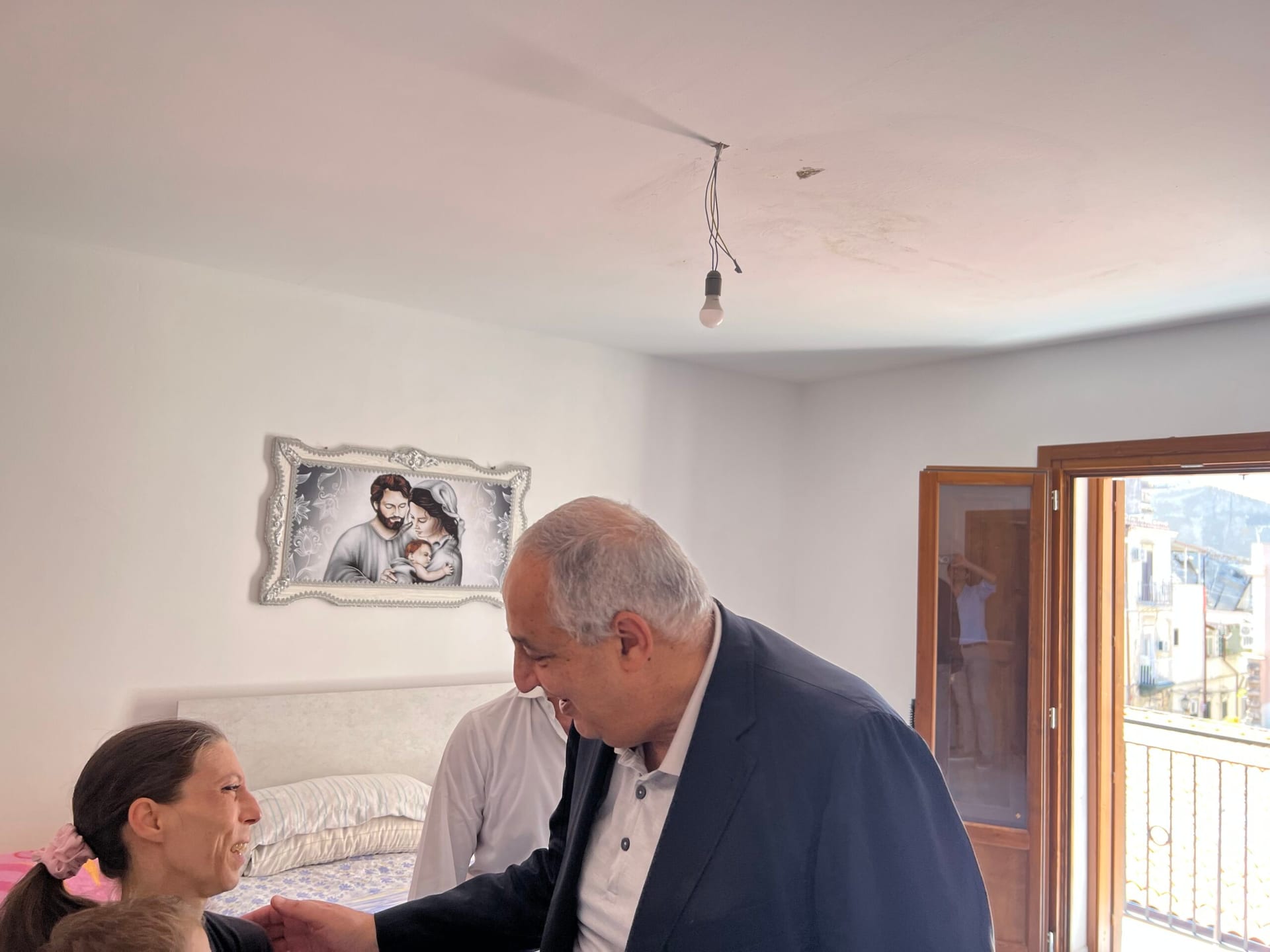
La Casa della Cooperazione takes the same idea to a whole building. A confiscated property on via Ponte di Mare now hosts a solidarity café, shared desks and services. The development NGO CISS leads it with €350,000 from Fondazione CON IL SUD, the southern-Italy foundation. It shows how Law 109 can hand real estate to a cooperative economy rather than only to the council.
The Cantieri Culturali alla Zisa is Palermo's largest piece of adaptive reuse. The Ducrot works once made furniture designed by Ernesto Basile. The city bought the site in 1995 and filled 55,000 m² of sheds with the Academy of Fine Arts, a film school and foreign cultural institutes. Open Heritage, a European study of community-driven reuse, describes the model it follows: public ownership, many tenants, slow conversion.
Ecomuseo Urbano Mare Memoria Viva works on the coast the Sacco left behind. Since 2014 it has occupied a former tram depot at the mouth of the Oreto. Its neighbours curate the story of a shoreline buried under demolition rubble. It is a lighthouse for the southern districts, where land is cheap and neglected.
Moltivolti anchors Ballarò, the market quarter under the most tourist pressure. Founded in 2014 by a team from eight countries, it runs a restaurant, coworking and a small guesthouse that keeps its earnings in the neighbourhood. Nearby, the parish-led community of Danisinni built a social farm and emergency rooms in a valley of about 2,000 residents.
Borgo Vecchio Factory began in the market quarter of the same name in 2015. Children painted fifteen murals on the lanes where they live, with the associations Per Esempio and Push. The street art drew visitors, and it also gave a poor district a say in how it is seen. That tension, between being noticed and being priced out, now runs through every central neighbourhood.
ERSU Palermo, the regional student-support agency, plans to double its 835 student beds by the 2026/27 academic year. Every student in a residence is one fewer furnished flat competing with families in the centre. Together these projects share a method: take a building the market or the mafia left behind, and give it to people who will stay.
References
Statistics8Click on any number to see the source
Housing market
Tenure & affordability
Adaptive reuse & vacancy
Population & migration
From our library11
- Palermo ha scelto il turismo di massa — Knowledge
- Case sfitte e boom di sfratti, Palermo nella trappola dell'overtourism — Knowledge
- Legacoop Abitanti — Organisation
- Legacoop Sicilia — Organisation
- Housing Cooperatives in Europe - Resilience and Adaption to Changing Need — Knowledge
- Housing cooperatives, housing systems and the state. Historical lessons from Europe, Australia and Latin America — Knowledge
- Piano Casa: comunicato del Consiglio dei Ministri n. 173 — Knowledge
- Il Piano Casa è legge con la fiducia. Salvini: 'Ora si deve correre'. Le organizzazioni degli inquilini: 'Inadeguato all'emergenza' — Knowledge
- Housing First Palermo — Project
- Open Heritage - Community-Driven Adaptive Reuse in Europe: Best Practice — Knowledge
- ERSU Palermo — Organisation
Further sources49
- ISTAT, Abitazioni occupate 2021-2023
- Comune di Palermo, 11 Dec 2025
- LiveSicilia, 25 Jan 2026
- La Sicilia / Immobiliare.it Insights, 4 Mar 2026
- Agenzia delle Entrate OMI, Locazioni brevi (2023 data)
- Tuttitalia (ISTAT data)
- ISTAT, Censimento permanente 2023 Sicilia
- ISTAT, La povertà in Italia 2024
- Il Fatto Quotidiano blog, 26 Sep 2025 (Interior Ministry data)
- Ipsos Housing Monitor, Jan 2025
- https://www.diritto.it/le-societa-cooperative-edilizie-di-abitazione/
- Cooperativa Risanamento / cooAbita, Dec 2023
- https://www.agcisicilia.it/index.php/archivio-doc/85-agevolazioni-in-favore-di-cooperative-edilizie-2
- Wikipedia, Sack of Palermo
- Ministero della Cultura
- Legacoop, 6 Jun 2025
- Alleanza Cooperative Italiane, housing sector
- Certifico, DL 66/2026
- Pagella Politica, 3 May 2023
- Silvia Paoluzzi, National Secretary of the Unione Inquilini tenants' union
- Regione Siciliana, 27 May 2026
- https://www.ilmoderatore.it/riforma-edilizia-pubblica-in-sicilia-al-via-il-dibattito-sulla-nascita-dellaspa/
- Money.it, 2022 results
- Comune di Palermo, 10 Sep 2025
- Comune di Palermo, 1 Mar 2025
- https://www.ilpost.it/2026/02/16/zen-palermo-assessore-dorme-casa-popolare-occupazioni/
- Comune di Palermo, 13 Feb 2025
- Comune di Palermo, 20 Apr 2026
- Adriano Varrica
- lavialibera
- l'altroparlante, 25 Oct 2025
- Comune di Palermo, 20 Aug 2026
- CDP, 29 Nov 2016
- Comune di Palermo, imposta di soggiorno
- Ministero del Turismo
- https://www.comune.palermo.it/novita/nessuno-stop-alle-licenze-per-locazioni-turistiche-brevi-dichiarazione-assessore-anello/
- https://www.palermomania.it/news/politica/emergenza-abitativa-a-palermo-sunia-e-comune-aprono-un-tavolo-permanente-intesa-su-fondo-affitti-e-case-popolari-137951.html
- https://www.dire.it/12-04-2024/1029923-case-green-da-consiglio-europeo-ok-a-direttiva/
- Materia Rinnovabile
- SNPA / ARPA Sicilia, Dec 2025
- Wikipedia, Cantieri Culturali alla Zisa
- https://www.italiachecambia.org/2024/03/ecomuseo-mare-memoria-viva-palermo/
- Balarm, 26 Jul 2021
- https://www.artribune.com/attualita/2015/05/borgo-vecchio-factory-palermo-urban-art/
- Balarm, 9 Jul 2026
- Teatro Massimo
- Arab-Norman monuments
- Street food
- Nationalities