
A city rebuilt in lava stone, with a quarter of its homes empty
Catania has been rebuilt more than once. Lava from Etna reached its walls in 1669, and an earthquake flattened it in 1693. The city that rose again was built of black lava stone and pale Baroque stone, and UNESCO now lists it among the late-Baroque towns of the Val di Noto. That habit of rebuilding runs through how Catanesi house themselves. Families built, bought and handed homes down, and the state filled the gaps on the city's edge.
Owning is the norm. About 74% of residents live in a home their household owns, according to the tenants' union SUNIA's reading of the latest census. The share varies sharply by district. An ISTAT portrait of the city found about 45% of families living outside ownership in the central First Municipio, and 46% in the Sixth, which takes in Librino. Cooperatives hardly show up as a tenure, because most built flats for their members to own. Public housing is the landlord of last resort. The Comune and the IACP (the provincial public-housing institute) own about 7,000 homes in the city, mostly on the periphery. Most were built more than 30 years ago. Everyone else rents from private owners.
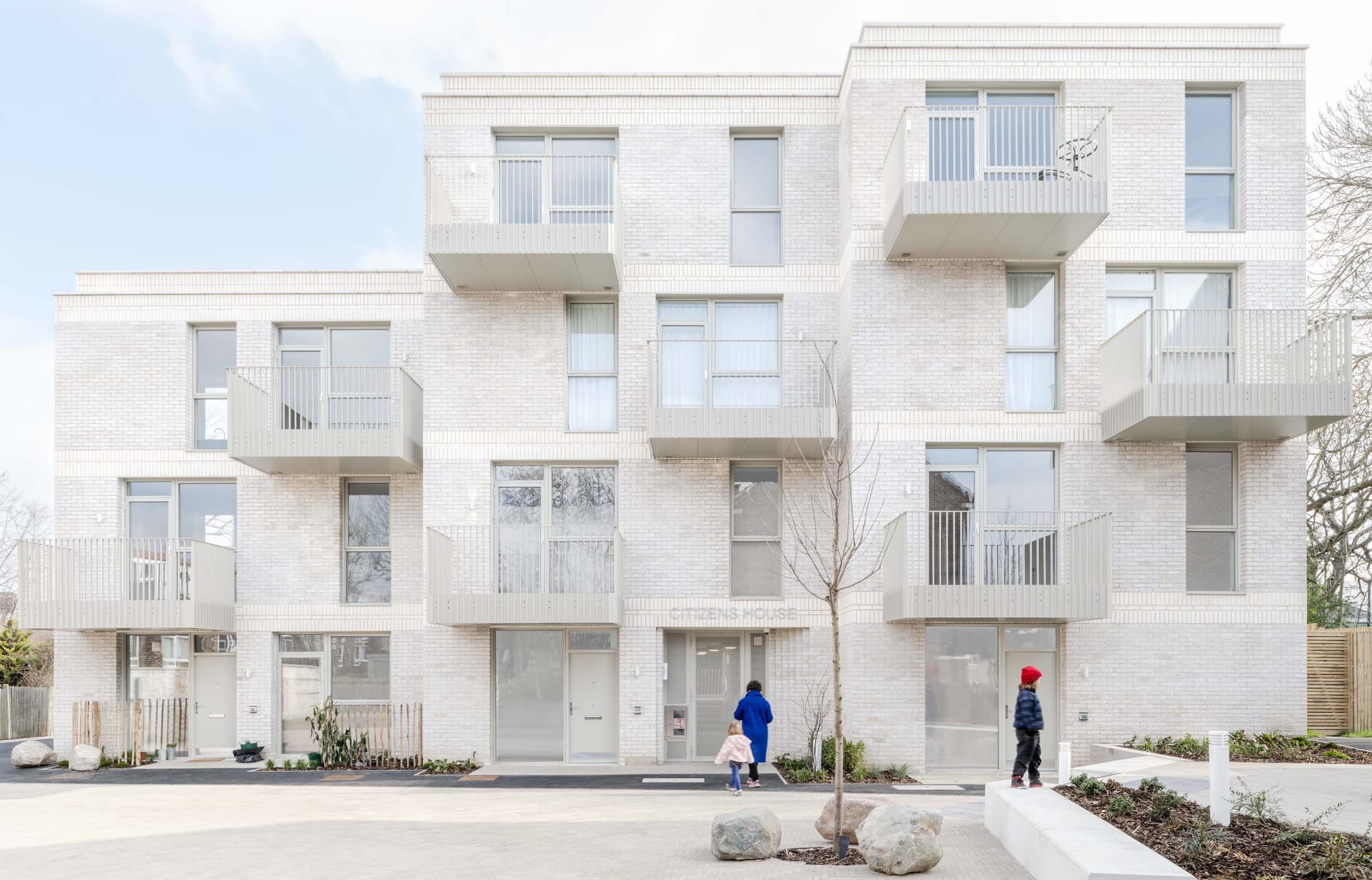
Social housing in Italy is a set of rules rather than a kind of landlord. Its core is edilizia residenziale pubblica (ERP, public housing let at income-linked rents), run by the IACP and the Comune. Around it sit subsidised flats and agreed-rent lets owned by cooperatives and private landlords. That wider layer is spread across the tenure slices, and no city count of it exists. The queue shows how thin the core is. About 5,000 families wait on three lists that date from 2022. Across the whole province the IACP manages about 8,500 homes.
Rents are low by Italian standards, and they are climbing. The average registered lease came to €4.75 per square metre in 2024, according to the tax agency's market observatory (OMI). That is up 93.9% since 2017. A new let is advertised at around €9 per square metre. Idealista put the city average at €8.50 in August 2026, 2.9% higher than a year before. A furnished flat for a stay of about six months costs an estimated €15.30 gross. In monthly terms, a one-bedroom flat in the centre asks about €603, against €338 further out.
- Registered leases (OMI average)
- New lets (asking)
- Furnished mid-stay (gross, estimate)
Monthly rent per square metre by tier. The furnished tier is gross and estimated. A new let is advertised at almost twice the average registered lease, and a six-month furnished stay costs more than three times as much.
Homes are scarce and empty at the same time. The 2021 census found 27.5% of dwellings unoccupied, some 52,000 homes. Many are in poor repair, stuck in inheritance or kept by families who have moved away. Tourism now claims part of the rest: SUNIA estimates that 10% of private housing is in tourist use. Airbnb listings nearly doubled, from 3,265 in 2017 to 6,143 in 2024. The city's own register counted 3,744 short-let flats in June 2025. Office space offers less slack. The land registry records about 457,200 square metres of private offices, and no one counts how much of it stands empty.
The rental market has shrunk in these central areas, but low-income working families still live here, often foreigners too.The population is shrinking slowly. Catania had 298,054 residents at the end of 2024, against 312,205 in 2001. Graduates leave: Sicily lost 56,000 of them in ten years. Students add demand instead, since about 60% of the university's students come from outside the province. Italy has no general rent cap. The canone concordato (a lease whose rent ceilings are agreed locally between landlords' and tenants' associations, in return for tax breaks) offers a voluntary middle tier. Building new is not cheap either, at an estimated €1,450 per square metre.
The strain now reaches well past the poorest. SUNIA counts 8,000 families in absolute poverty and estimates that 18,000 cannot find a home they can afford. Three rooms can cost more than €700 a month, even on the outskirts. The builders' federation ANCE Sicilia calculates that a lower-middle-income household in Catania spends 30.7% of its income on rent, or 31.5% on a mortgage. SUNIA says 90% of evictions follow a lost or reduced income. Across Italy, the Ipsos Housing Monitor finds young people judging a home far harder to reach than it was for their parents. One twist is local. In the streets with the most Airbnbs, University of Catania geographer Teresa Graziano found long-let rents falling, because the better flats had left the long-term market. Cooperatives, the fourth tenure, barely register in any of these counts.
Cooperatives that built to own
Italian housing cooperatives come in two forms. A cooperativa a proprietà indivisa (an undivided-ownership cooperative) keeps the building and houses its members for as long as they stay. A cooperativa a proprietà divisa (a divided-ownership cooperative) builds, then gives each member the title to a flat. Sicilian law backed both. It set a lower income ceiling for members of undivided cooperatives, at 8 million lire a year, than for those who would own outright, at 10 million. Ownership was the easier route, and it is the one most Catanesi cooperatives took.
The tradition grew on regional money. In 1975 the Regione Siciliana passed a law to encourage building cooperatives. Two years later it created a revolving loan fund of 160 billion lire at IRCAC, the regional credit institute for cooperatives. Subsidised homes had to rise inside the piani di zona (zoned plans for low-cost housing under national Law 167 of 1962). Cooperative building therefore followed the same map as the public estates, on the city's edge.
The sector today falls into three clusters. The first is the legacy of those decades. In 2015 Sicily still had 148 cooperatives in Legacoop Abitanti, the housing arm of the Legacoop federation, more than any other region. The second is small and social. Trame di Quartiere, a cooperativa di comunità (a community cooperative run by and for its neighbourhood), was formalised in 2020 in San Berillo and mixes neighbourhood research with shared housing. The third is the social cooperatives that run homeless services, such as Il Mosaico at the city's reception point. Their problems differ. The building cooperatives need land and cheap credit to start again. The community groups need buildings and steady money to keep going.
Governments now treat cooperatives mainly as partners in social housing, not as a tenure to expand. The national housing plan leans on developers and on recovering empty public flats. Catania's own community-housing projects were won through national and philanthropic calls, with cooperatives as one partner among several. Comparative research on public-cooperative partnerships shows what a firmer role could look like: public land on long leases and patient loans, exchanged for homes that stay affordable for good. That trade is exactly what the politics of the city has yet to offer.
A national plan, a regional budget and a bankrupt council
Rome's answer to the crisis is the Piano Casa Italia. The Council of Ministers approved it on 30 April 2026. It promises about 100,000 homes in ten years and more than €10 billion of public money. Decree-law 66/2026 then put €1.7 billion into bringing 60,000 unusable public flats back into use. Of the new building it enables, 70% must serve first homes, let or sold at least 33% below market. Parliament passed it in July 2026. Tenant organisations called it inadequate to the emergency. It follows the government's 2023 decision to cut the national rent-support fund to zero.
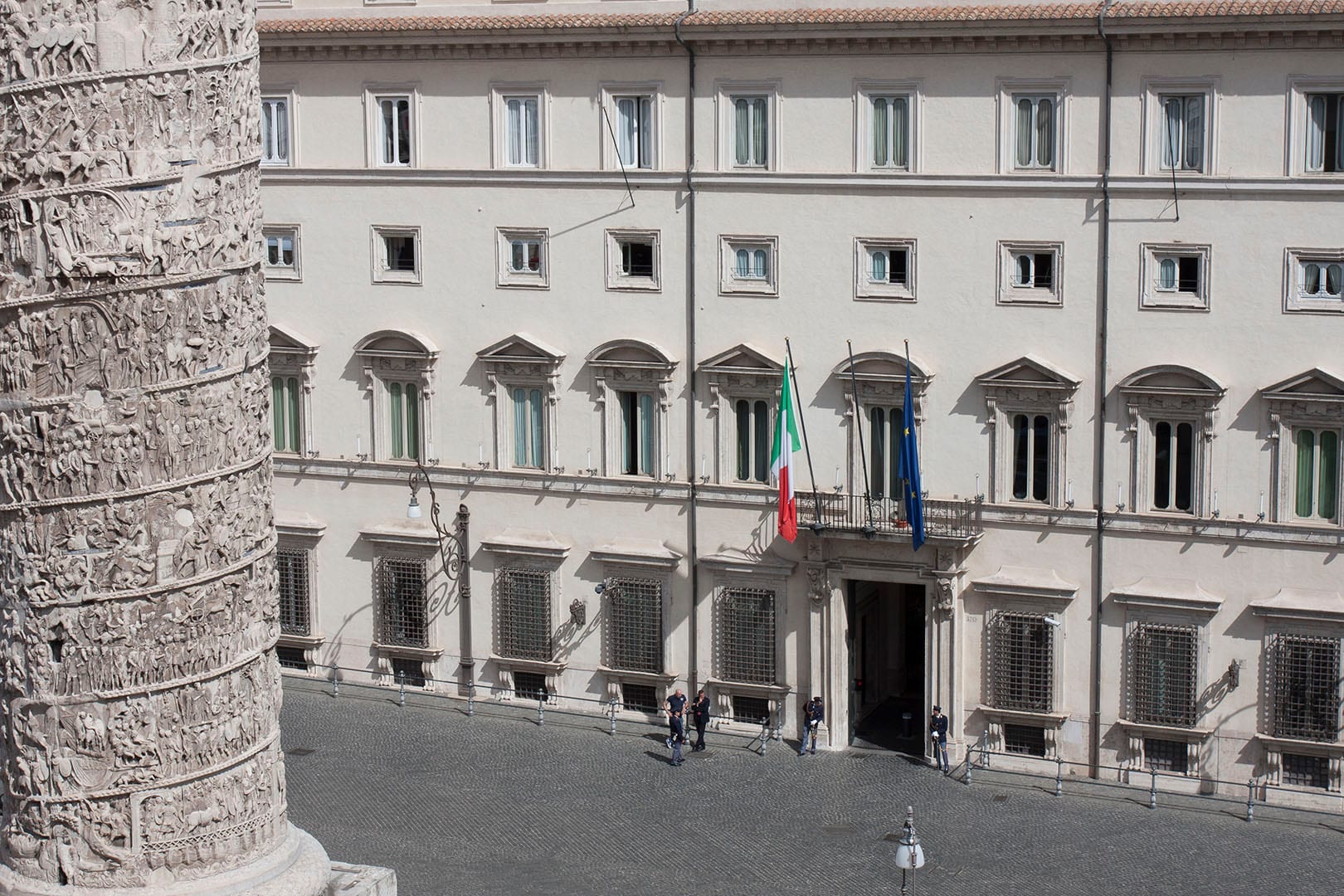
Each level of government holds a different piece. Rome writes tenancy law and funds national programmes. The Regione Siciliana has its own housing laws and oversees the IACPs. On 27 May 2026 Renato Schifani's regional government added about €183 million of EU funds, taking its housing budget to about €246 million. The money covers public and social homes, energy upgrades and student beds. The city holds the land-use plan and part of the stock, but little money. Catania entered dissesto (a formal municipal insolvency, with debts settled by a state-appointed commission) in 2018. In July 2026 its chief accountant listed €141 million of new liabilities, about €35 million of them claimed by the IACP. The council asked to stay in dissesto for longer. Mayor Enrico Trantino of Fratelli d'Italia, elected in 2023, frames housing within a €400 million programme of public works.
Support for community housing arrives through competitive calls rather than a standing programme. PINQuA, the national programme for innovative housing quality, awarded €14.5 million to Librino Città Moderna in 2021. Fondazione Con il Sud, a foundation that funds social projects in southern Italy, backed collaborative housing in San Berillo through its social-housing call. The PNRR (Italy's EU-funded recovery plan) paid for a Housing First scheme for the Catania district, worth €1.09 million. It stalled because the buildings chosen turned out to be unavailable.
On empty buildings, policy is still piecemeal. In the historic centre, via Telefono has been closed since a building collapsed in 2017. Francesco Bassini, president of the First Municipio, has proposed a regional law to transfer abandoned buildings into public hands. In San Berillo the council approved buying three private buildings for €545,000 to create an urban centre. The Comune also manages 149 properties confiscated from the mafia. One of them, a former boss's house, is becoming an albergo sociale (a hostel for homeless people).
Safety and climate goals point to the same stock. Catania was declared a seismic zone in 1981, yet 87.8% of its homes were built before then. Italy's building tax credits, the Superbonus for energy and the Sismabonus for seismic works, moved €6.9 billion of investment in Sicily. Italy then missed the May 2026 deadline to transpose the EU's revised energy performance of buildings directive (EPBD), and seven in ten of its homes sit in the three lowest energy classes. Owners of whole blocks can retrofit at scale where individual owners cannot. Housing Europe's review of climate adaptation in public, cooperative and social housing makes the same argument. Research on energy poverty adds that the tenants of cold, costly homes are usually the least able to pay for fixes.
- 1957[source]
San Berillo cleared
Demolition of the old San Berillo district begins, and its residents are moved to districts far from the centre.
- 1970[source]
Librino commissioned
Kenzo Tange is asked to plan Librino, a self-contained satellite town for 70,000 inhabitants.
- 1977[source]
Cooperative fund
The Regione Siciliana sets up a revolving fund of 160 billion lire for building cooperatives.
- 2018[source]
Council declares insolvency
The Comune di Catania enters dissesto, the formal insolvency procedure for Italian municipalities.
- Jan 2021[source]
Palazzo di cemento reopens
After decades unfinished, the Librino block is completed and its 96 flats are assigned to public-housing tenants.
- Oct 2021[source]
PINQuA award
Librino Città Moderna wins €14.5 million from the national programme for innovative housing quality.
- Jan 2025[source]
Short-let code compulsory
Every short let in Italy must display a national identification code (CIN), with fines for those that do not.
- Apr 2026[source]
Piano Casa Italia
The Council of Ministers approves a plan for about 100,000 homes in ten years.
- May 2026[source]
Regional housing money
The Regione Siciliana raises its housing priority to about €246 million.
- Jul 2026[source]
New debts surface
Catania’s accounts show €141 million of new liabilities, and the council asks to remain in dissesto.
- Aug 2026[source]
Student beds to double
ERSU Catania sets out to take its residences from about 400 beds to at least 800.
- End 2026[source]
Librino towers promised
The mayor’s target for returning 72 public flats in the two Librino towers.
- 2027[source]
Viale Moncada move-in
The date families now expect to move into the 64 PINQuA flats in Librino, after works stalled.
- 2036[source]
Piano Casa horizon
The end of the ten-year window in which the national plan promises its 100,000 homes.
From the clearance of San Berillo and a planned new town to a bankrupt council, EU recovery money and a national plan that runs into the next decade.
The loudest local quarrel is over short lets. Senator Salvo Pogliese, a former mayor, rejects EU limits and credits short lets with about 5,000 jobs in Catania. The tenants' unions reply that the city is a high-stress market in which only agreed rents should be allowed. Catania's own action so far is enforcement of the national code: officers made 450 inspections in spring 2025. A European Parliament study of short-term rental rules maps the tools other cities use. Palermo shows where inaction can lead, with vacant homes and evictions rising together.
Italy considers private property a primary and inviolable good.Catania is a municipality under high housing stress, so options outside the agreed-rent scheme should not even be considered.From Tange's new town to Palazzo De Gaetani
Librino is the city's largest experiment and its hardest lesson. In 1970 Catania asked Kenzo Tange to plan a self-contained satellite town for 70,000 people. The housing was built, but many of the services were not. By 2015 some 80,000 people lived among giant blocks and untended green space, as Il Sole 24 Ore described it. Planners at the University of Catania have called the new town a total failure of modernist planning. They also document the grassroots groups slowly repairing it.
Palazzo di cemento shows how that repair works in practice. The block on viale Moncada stood unfinished for about 40 years and became a stronghold of the drug trade. In January 2021 its 96 flats were finally assigned to public-housing tenants. The work was paid for with savings from other tenders. It proved that an abandoned shell could become homes, and it showed the cost of waiting four decades to do it.
The Torri di Librino follow the same path. The IACP kept ownership of two long-unfinished towers but let the city complete them, for about €12.5 million. Mayor Trantino said in October 2025 that they would return 72 public flats by the end of 2026. Nearby, Librino Città Moderna is building 64 public flats in two energy-class-A buildings. Work began around March 2024 and then stalled. Families now expect to move in during 2027, after the PNRR deadline of June 2026 for such projects.
Trame di Quartiere began in San Berillo with a community mapping in 2011. The district was the scene of Catania's great clearance. From 1957 its old streets were demolished and residents were moved to San Leone, far from the centre. Carla Barbanti of the cooperative puts the number uprooted at 30,000. Since 2015 the group has worked from Palazzo De Gaetani, a nineteenth-century building lent free by its owner. There it runs a social café, and upstairs, with partners, the SottoSopra collaborative-housing project. People of Italian, Nigerian and Gambian origin share its flats.
Social Housing Indipendenza is the IACP's move towards a new kind of tenant. It replaces an old building with 21 efficient social flats. They are meant for people the ordinary waiting list often misses: women leaving violence, separated fathers and young couples.
ERSU Catania, the regional student-welfare agency, plans to take its residences from about 400 beds to at least 800. That matters beyond campus, because every student housed is one fewer bidder for a family flat. Homelessness is the harder case. Housing First guidance from across Europe is clear that the home comes first and the services follow, which is exactly where Catania's own scheme stalled.
Taken together, the pieces are on the table. There are public towers being finished, a community cooperative with a working model, a university that studies its own peripheries, and a quarter of the housing stock standing empty. What the city has rarely had is an owner patient enough to hold land, money and residents together over decades.
References
Statistics8Click on any number to see the source
Housing market
Tenure & affordability
Adaptive reuse & vacancy
Population & migration
From our library14
- ISTAT — Report Comune di Catania (Commissione parlamentare sulle periferie, 2024) — Knowledge
- A Catania Castello Ursino e Duomo invasi dagli alloggi Airbnb, ma il mercato non è saturo — Knowledge
- In Sicilia si aggrava l'emergenza abitativa: 32% del reddito per avere una casa (ANCE Sicilia) — Knowledge
- Prezzi delle case, caro affitti e le sfide per i giovani in Italia: il nuovo Ipsos Housing Monitor — Knowledge
- Più turisti e più Airbnb in centro, ma gli affitti sono meno cari: il paradossale fenomeno etneo — Knowledge
- Public-cooperative policy mechanisms for housing commons — Knowledge
- Piano Casa: comunicato del Consiglio dei Ministri n. 173 — Knowledge
- Il Piano Casa è legge con la fiducia. Salvini: 'Ora si deve correre'. Le organizzazioni degli inquilini: 'Inadeguato all'emergenza' — Knowledge
- Catania, nuovi debiti per 141 milioni di euro: così il Comune rischia di non uscire dal dissesto — Knowledge
- Climate adaptation in public, cooperative, and social housing in Europe — Knowledge
- The hidden link between Europe's housing crisis and energy poverty — Knowledge
- The regulatory aspects of short-term rentals in the EU — Knowledge
- Case sfitte e boom di sfratti, Palermo nella trappola dell'overtourism — Knowledge
- Housing first guide Europe — Knowledge
Further sources38
- Val di Noto — Wikipedia
- Casa, spopolamento e prezzi alle stelle: cosa accade a Catania? — LiveSicilia
- Catania, famiglie in attesa di un alloggio popolare — Quotidiano di Sicilia
- IACP Catania, Sicali: al centro la dignità della persona — ilSicilia
- Il mercato degli affitti frena in Italia — ilSicilia
- Turismo a Catania: 110 mila euro di multe per irregolarità — LiveSicilia
- Affitti in centro a Catania, prezzi dei canoni in calo: ma è perché si paga spesso in nero — La Sicilia
- Catania — andamento demografico — Tuttitalia
- Sicilia, in 10 anni persi 56mila laureati — La Sicilia
- Caro affitti minaccia il diritto allo studio — Quotidiano di Sicilia
- L.R. 27 dicembre 1978 n. 69 — Edizioni Europee
- L.R. 1 agosto 1977 n. 79 — Edizioni Europee
- L.R. 5 dicembre 1977 n. 95 — Interventi in favore delle cooperative edilizie — Edizioni Europee
- L.R. 6 maggio 1981 n. 86 — Edizioni Europee
- Le cooperative di abitazione — rapporto — Legacoop AreaStudi
- A Catania non ci sono dormitori pubblici — USB Sicilia
- Piano Casa 2026 in Gazzetta: quali misure prevede — Money.it
- Emergenza casa: il governo azzera i fondi — Il Fatto Quotidiano
- Edilizia sociale, giunta Schifani: via libera alla riprogrammazione Housing — Regione Siciliana
- Trantino, il penalista con la passione per la politica — La Sicilia
- Catania è un grande cantiere: 400 milioni di lavori — La Sicilia
- Rigenerazione urbana in Sicilia: 116 milioni — Quotidiano di Sicilia
- Edifici abbandonati in centro a Catania — La Sicilia
- L'Urban Center si fa strada a San Berillo — La Sicilia
- Dalla mafia alla solidarietà: la casa del boss diventerà un luogo per i senzatetto — La Sicilia
- Ricordando il terremoto del 1693: focus su Sismabonus — La Sicilia
- Superbonus, report ENEA settembre 2025 — LavoriPubblici
- Recepimento direttiva case green: Italia, Germania, Austria e Spagna a confronto — Ingenio
- Palazzo De Gaetani — FAI — Fondo Ambiente Italiano
- Europan 9 — Catania site brief — Europan
- Parte l’obbligo del CIN dal 1 gennaio — QualityTravel
- Librino, alloggi residenziali in viale Moncada — Quotidiano di Sicilia
- Pogliese: no alle restrizioni UE sugli affitti brevi — La Sicilia
- La rinascita di Librino — Il Sole 24 Ore
- De-growing peripheries: grassroots practices and planning tools for regenerating Librino, Catania — Revista MSEU (UFPE)
- Librino, 64 nuovi alloggi popolari in bilico per il PNRR — La Sicilia
- Il Domenicale di San Giusto n. 135 (Trame di Quartiere) — Diocesi di Trieste
- San Berillo, una periferia centrale — Università di Bologna