The Musicians' city: renters, a municipal giant and a thin cooperative layer
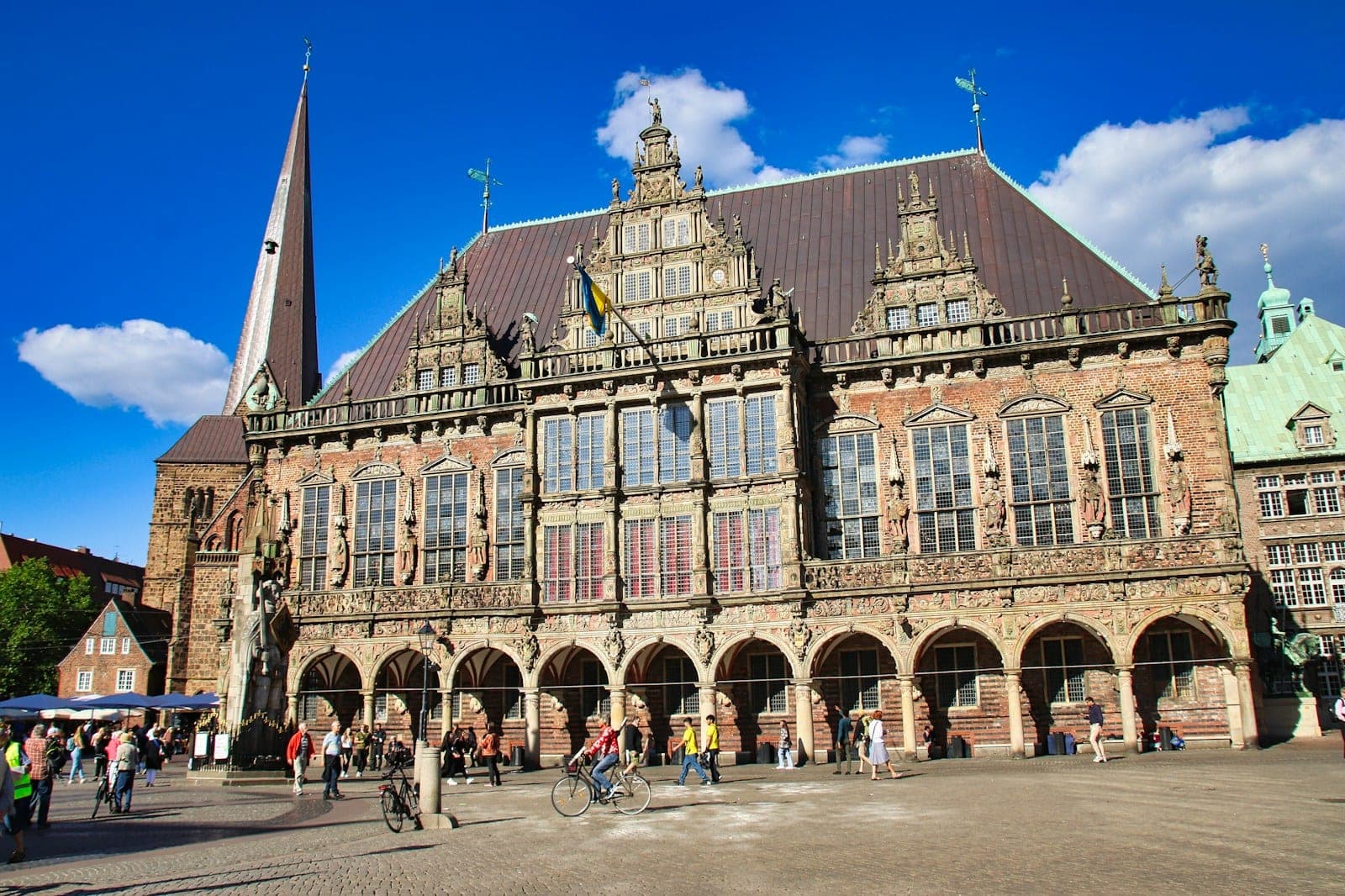
Bremen's best-known story is about housing. In the Grimms' tale, a donkey, a dog, a cat and a rooster set out for Bremen and end up sharing a house in the woods instead. The real city is a Hanseatic port of 588,413 people on both banks of the Weser. It is also Germany's smallest federal state, so one Senat (the city-state government) writes the housing rules and owns the biggest landlord. That habit of civic self-reliance runs deep: citizens still pay for their own Bürgerpark without regular public money.
Count who owns what and Bremen looks like a renters' city with a thin cooperative layer. About 37% of homes are owner-occupied and 63% are rented. Housing cooperatives, or Genossenschaften (member-owned housing societies), hold roughly 3.3% of the stock, some 10,000 flats. Public landlords own a far larger 11.8%. Most of that belongs to GEWOBA, majority-owned by the city, which lets more than 43,000 flats across Bremen and Bremerhaven. Private landlords supply the remaining 47.9% of homes.

- Owners
- Owner-occupier37.0%
- Renters
- Public & non-profit rental11.8%
- Cooperative3.3%
- Private rental47.9%
Social housing here is a rulebook, not a tenure. A flat with a Sozialbindung (a time-limited covenant capping rent and restricting tenants to lower incomes) can belong to GEWOBA, a private investor or a cooperative. By one estimate only about 1% of all dwellings still carry one. A January 2026 Weser-Kurier report on a Pestel Institute study put the share of the rental stock at 2.7%. Yet roughly 50% of households earn little enough to qualify for one.
Prices climb in clear steps. Cooperative members pay about €6.50 per square metre cold, and GEWOBA tenants around €7.09. The city's rent index puts the all-stock median at €8.50, while advertised new lets ask €12.58. Furnished flats reach €22.58 gross. Measured over a decade, asking rents rose 57% between 2015 and 2025, the third-steepest climb among Germany's big cities after Berlin and Leipzig.
- Cooperative
- Public/municipal housing
- All-stock median
- New contracts
- Furnished (gross)
Net-cold monthly rent per square metre by tier (furnished is gross, all-in). A new private contract costs almost twice the cooperative rate.
Little stands empty. The 2022 census found 3.3% of dwellings vacant, some 9,827 homes, much of it churn between tenancies. Offices hold more slack: 7.3% of office space is vacant, around 211,700 square metres. Holiday letting is modest, with a one-bed Airbnb fetching a median €63 a night.
Demand keeps arriving while building stalls. Roughly 36,000 people move into the city each year. The Pestel study estimated that Bremen needs about 1,900 new social flats a year but builds just over 400. It put the gap at 13,000 social homes. Construction costs of about €2,450 per square metre make the maths harder. A Mietpreisbremse (rent brake), renewed in December 2025, caps re-lets at 10% above the local reference rent.
The squeeze reaches well beyond the poorest. An estimated 31.7% of households spend an unaffordable share of income on housing. Students fare worst: the Pestel study says they spend 53% of their monthly budget on rent. The Senate now openly designs its subsidies for care workers, bus drivers and young families. Researchers link that kind of middle-class squeeze to political anger across Europe, as a 2025 study of housing and the far right argued. In Bremen, the cooperative sector is still too small to absorb that pressure.
And with two rent tiers we reach the broad middle: the care worker, the bus driver, the young family who earn too much for a housing-entitlement certificate and too little for the open market.Railwaymen, unions and building groups
Bremen's cooperatives are overwhelmingly the traditional rental kind. Members buy a Genossenschaftsanteil (a refundable share that buys a lifelong right to rent) rather than owning their flat. Rents follow costs, not the market, which is why they sit at the bottom of the city's rent ladder. A younger layer works differently. Baugemeinschaften (self-organised building groups) plan and finance their own buildings, sometimes as a new cooperative. The Mietshäuser Syndikat (a Freiburg-based federation that locks houses out of the market) offers a third route without member capital.
The tradition grew out of the port's industrial workforce. In 1893 railway workers around the blacksmith Heinrich Helmbrecht founded ESPABAU, the Eisenbahn Spar- und Bauverein. A year later a Prussian district official set up the savings-and-building society that became GEWOSIE in Bremen-Nord. The trade unions took a different road in 1924. Their housing company, today's GEWOBA, was built as a union enterprise rather than a member cooperative. After 1954 it passed to Neue Heimat (the unions' giant national developer), which built the 10,000-flat Neue Vahr estate from 1956. When Neue Heimat collapsed in scandal, the city bought GEWOBA back in 1987 for one symbolic mark. Bremen's non-market future became municipal, not cooperative.

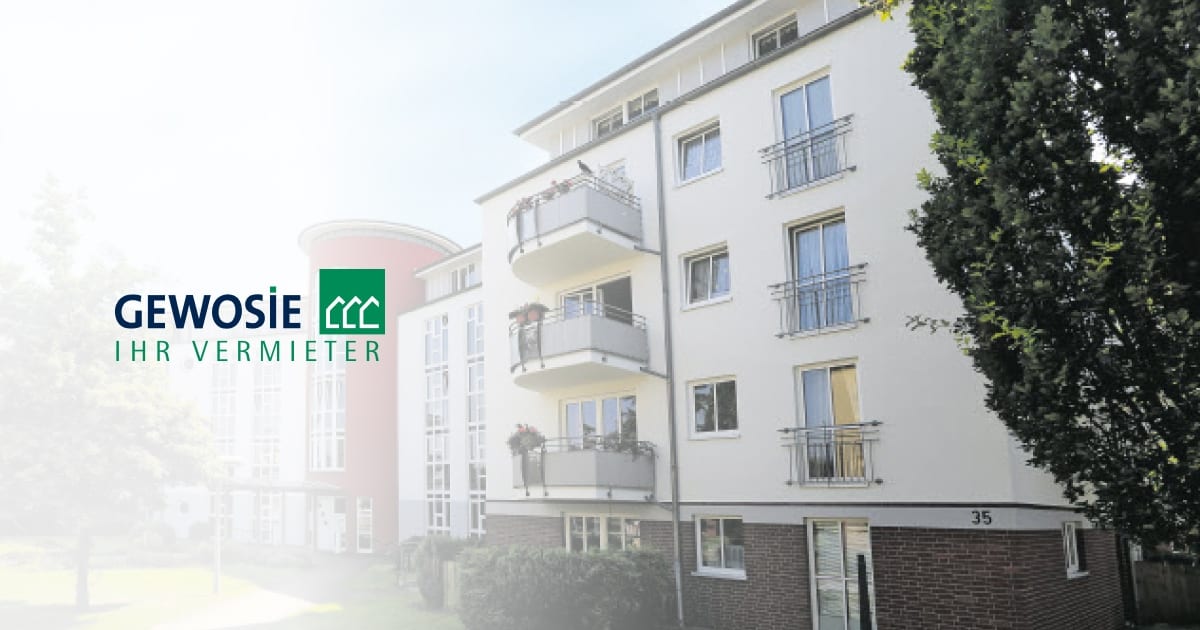
Today the sector has two clusters with different problems. The century-old societies are large and stable. GEWOSIE runs over 4,000 flats for over 7,100 members, and around 6,000 Bremers hold ESPABAU shares. Their worries are energy retrofits and rising interest costs, the same squeeze facing Germany's wider cooperative sector. The new cluster is small and land-hungry. KARL solidarisch bauen und wohnen and the StadtteilGenossenschaft Hulsberg (a neighbourhood cooperative) are fighting for plots on a former hospital site. Syndikat houses such as wallerleben in Walle, a barrier-free Passivhaus shared by about 16 people since 2022, work at an even smaller scale. For these groups the barrier is land price and start-up equity, not ageing stock.
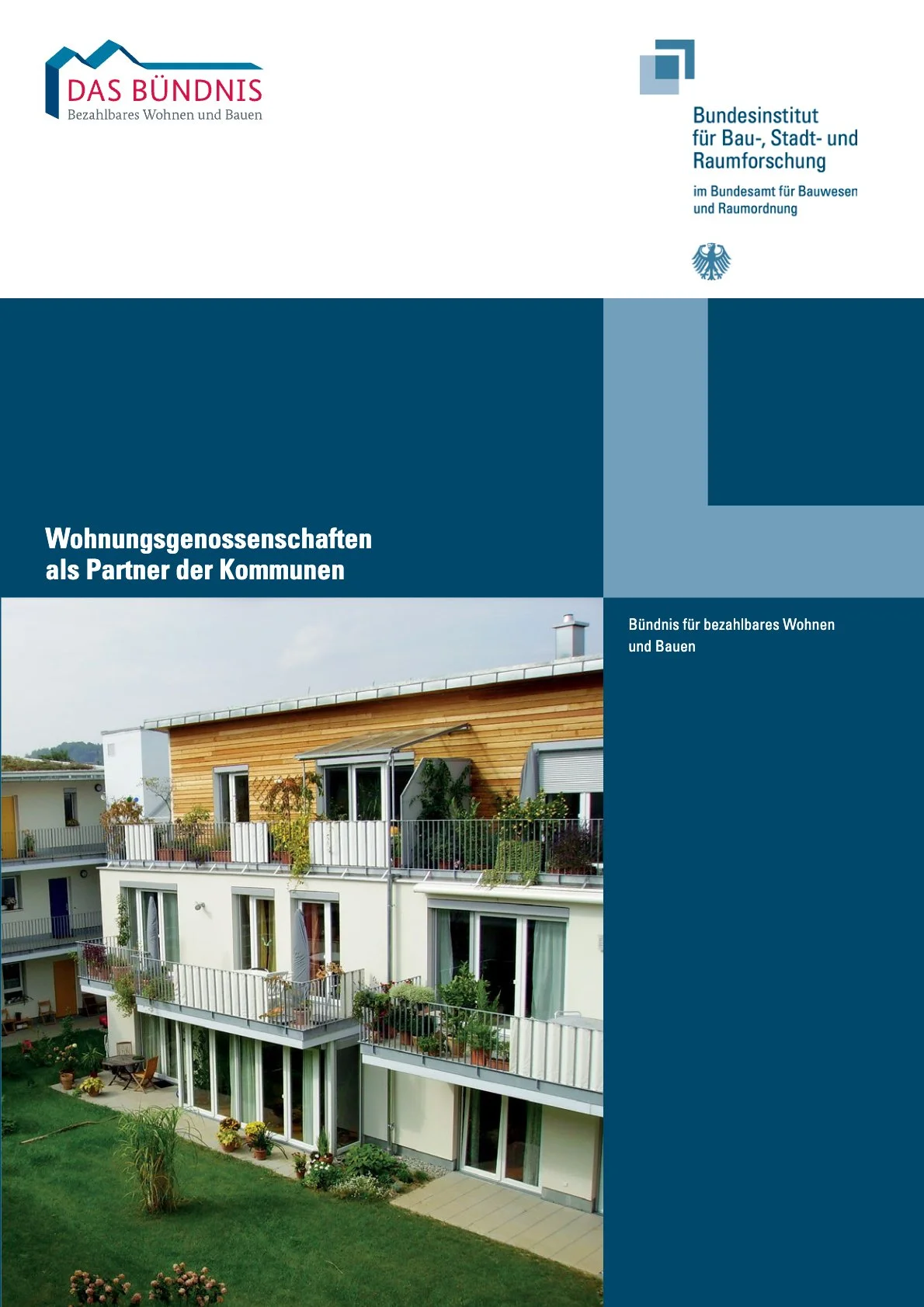
The city has courted both clusters, but on shifting terms. A dedicated grant paid building cooperatives up to €60,000 per flat until it lapsed at the end of 2025. The Senate has reserved 20% of the Hulsberg quarter's land for building groups. Federal research has long urged cities to treat cooperatives as partners in affordable-housing alliances. Whether Bremen sells or leases its land to them is now a live political fight.
Grants, a cheaper building code and the fight over land
Bremen's red-green-red coalition under Mayor Andreas Bovenschulte answers the shortage with money, cost-cutting and regulation. Its biggest lever is the state housing-promotion budget. In June 2026 the Senate approved €140 million for 2026, part of a package worth over €150 million. The money should unlock about 635 affordable flats. Fixed per-flat grants now replace cost-based subsidies. Two rent tiers of €6.80 and €9.00 per square metre are guaranteed until 2030. The 2025 programme had already committed €128 million and up to €27,500 per new flat. Bovenschulte called the spending an investment: "every euro is a well-invested euro", for tenants and for building jobs alike.
The second lever is cost. In November 2025 the Senate's housing commission adopted the Bremer Weg (the "Bremen Way"), distilled from over 200 proposals in a report called "Einfach Bremen". It aims to cut construction costs by up to a third, about €1,250 per square metre, through simpler standards and faster permits.
Regulation is split across levels. The Bundestag (the federal parliament) sets tenancy law and extended the national rent brake to 2029. The Land of Bremen then decides where it applies, and renewed it for the whole city until the end of 2029. Planning, land sales and GEWOBA sit with the Stadtgemeinde (the municipality), which requires a 30% social-housing share when it grants new building rights. Critics doubt the quota works while private building barely pays. Matthias Günther of the Pestel Institute, a housing-research consultancy, called it "window-dressing politics" that pretends to act without real effect.
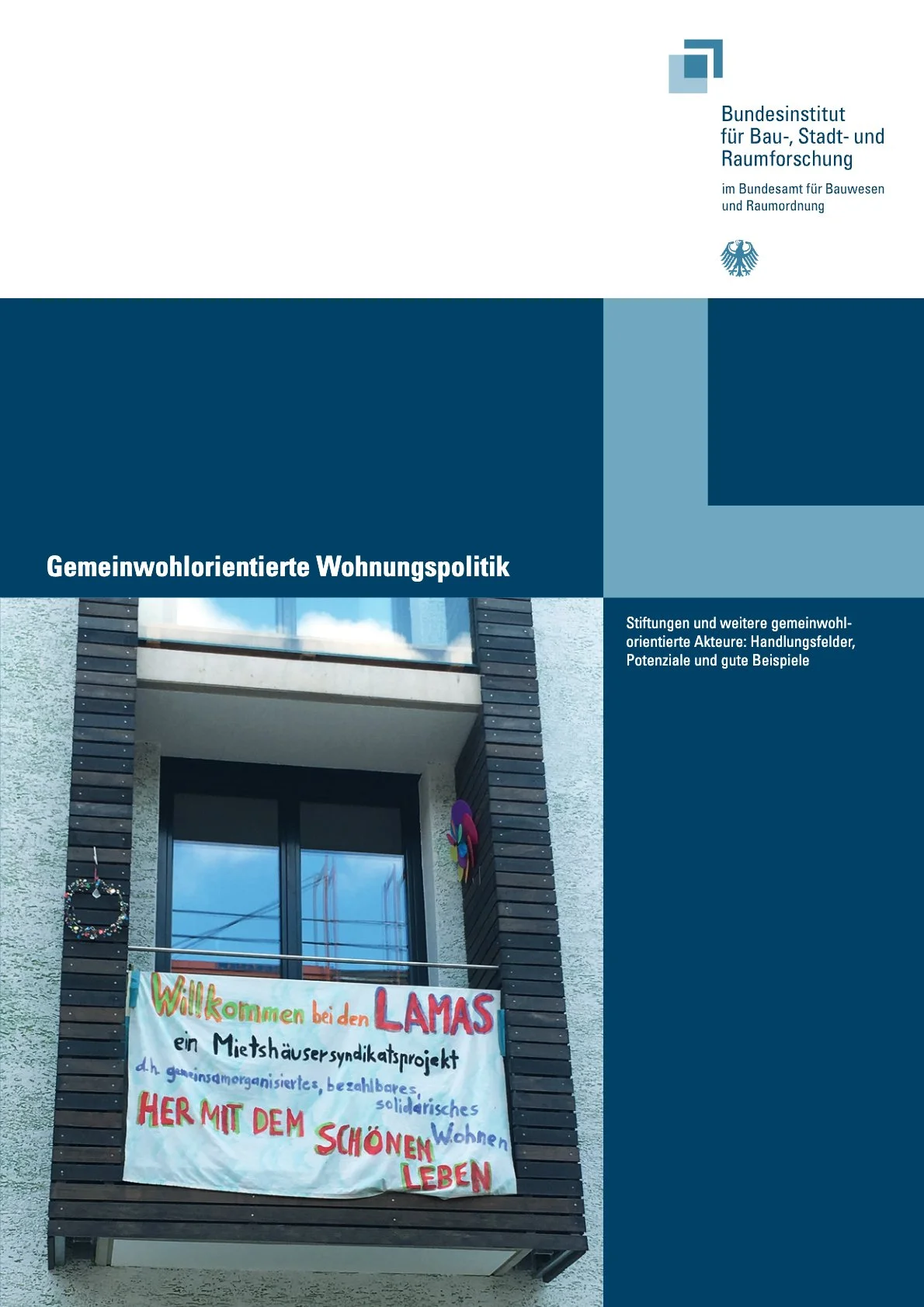
Cooperative campaigners want land leased, not sold. On the Hulsberg site the city first offered the remaining co-housing plots for sale. The Erbbaurecht (a long ground lease that keeps land public) would let groups build without a million euros in up-front land costs. A Weser-Kurier commentary warned that without it the quarter could house only higher earners. Federal research on common-good housing policy makes the same case for leases and concept-led allocation.
Only allocating the land by ground lease can stop the city from flogging off more of the family silver.Empty buildings get a softer answer than empty land. Since 2009 the ZwischenZeitZentrale (ZZZ), commissioned by three Senate departments, has brokered temporary uses for vacant buildings and plots. Permanent conversion is still rare. The former Sparkasse headquarters Am Brill is being rebuilt with more than 60 flats beside a school and offices. Nationally, the federal building ministry now funds office-to-housing conversions, and a study of post-war office blocks shows many can be converted with far less embodied carbon than new build.
Climate targets raise the stakes. Bremen aims to be climate-neutral by 2038, seven years ahead of the national goal. The 2025 promotion programme made the Efficiency House 55 standard compulsory for subsidised new build and pays more for EH 40. GEWOBA and the cooperatives own most of the older stock that must be retrofitted. That makes them the obvious vehicles, and puts climate adaptation in public and cooperative housing on the same balance sheet as affordability.
- 1893[source]
ESPABAU founded
Railway workers found the Eisenbahn Spar- und Bauverein, one of Bremen's first housing cooperatives.
- 1924[source]
Unions found GEWOBA
Trade unions set up a non-profit housing company to tackle the post-war shortage; its first block opens in Gröpelingen in 1929.
- 1956[source]
Neue Vahr begins
Under Neue Heimat, GEWOBA starts a new district of 10,000 flats for about 30,000 people.
- 1987[source]
City buys GEWOBA for one mark
After the Neue Heimat scandal, Bremen takes over the insolvent company for a symbolic mark.
- 2009[source]
ZwischenZeitZentrale starts work
A publicly commissioned team begins brokering temporary uses for vacant buildings and land.
- 2021[source]
First cooperative in the Hulsberg quarter
KARL eG buys a 1,700 m² plot for 29 flats, 4 of them subsidised, on the former hospital site.
- Nov 2025[source]
Bremer Weg adopted
The Senate's housing commission targets construction costs up to a third lower.
- Dec 2025[source]
Rent brake renewed
Re-let rents in the city stay capped at 10% above the local reference rent.
- Jan 2026[source]
13,000 social flats missing
A Pestel Institute study finds Bremen builds just over 400 of the 1,900 social flats it needs each year.
- Apr 2026[source]
Ground-lease campaign on Hulsberg
The StadtteilGenossenschaft Hulsberg demands Erbbaurecht instead of sale for the last co-housing plots.
- Jun 2026[source]
€140m promotion programme
Fixed per-flat grants and two rent tiers of €6.80 and €9.00 per m², guaranteed until 2030.
- 2029[source]
Rent brake expires
The current city-wide rent-brake ordinance runs until 31 December 2029.
- 2030[source]
Subsidised rent tiers guaranteed until here
The 2026 programme's two rent tiers are fixed through 2030.
- 2038[source]
Climate-neutrality target
Bremen's climate strategy aims for a climate-neutral city-state, buildings included.
From railway-workers' cooperatives and a union landlord to the Bremer Weg, the Hulsberg land fight and the city's 2038 climate deadline.
From Tenever's towers to Hulsberg's ground leases
GEWOBA is the place to start, because the city's non-market story runs through it. The company that built the Neue Vahr also rescued Osterholz-Tenever, a 1970s high-rise estate planned for 4,600 flats that stopped at 2,650. From the 2000s GEWOBA bought back blocks, demolished about 950 flats and opened the estate to green space. Tenever now houses people from about 90 nations and is cited as a model of estate renewal.
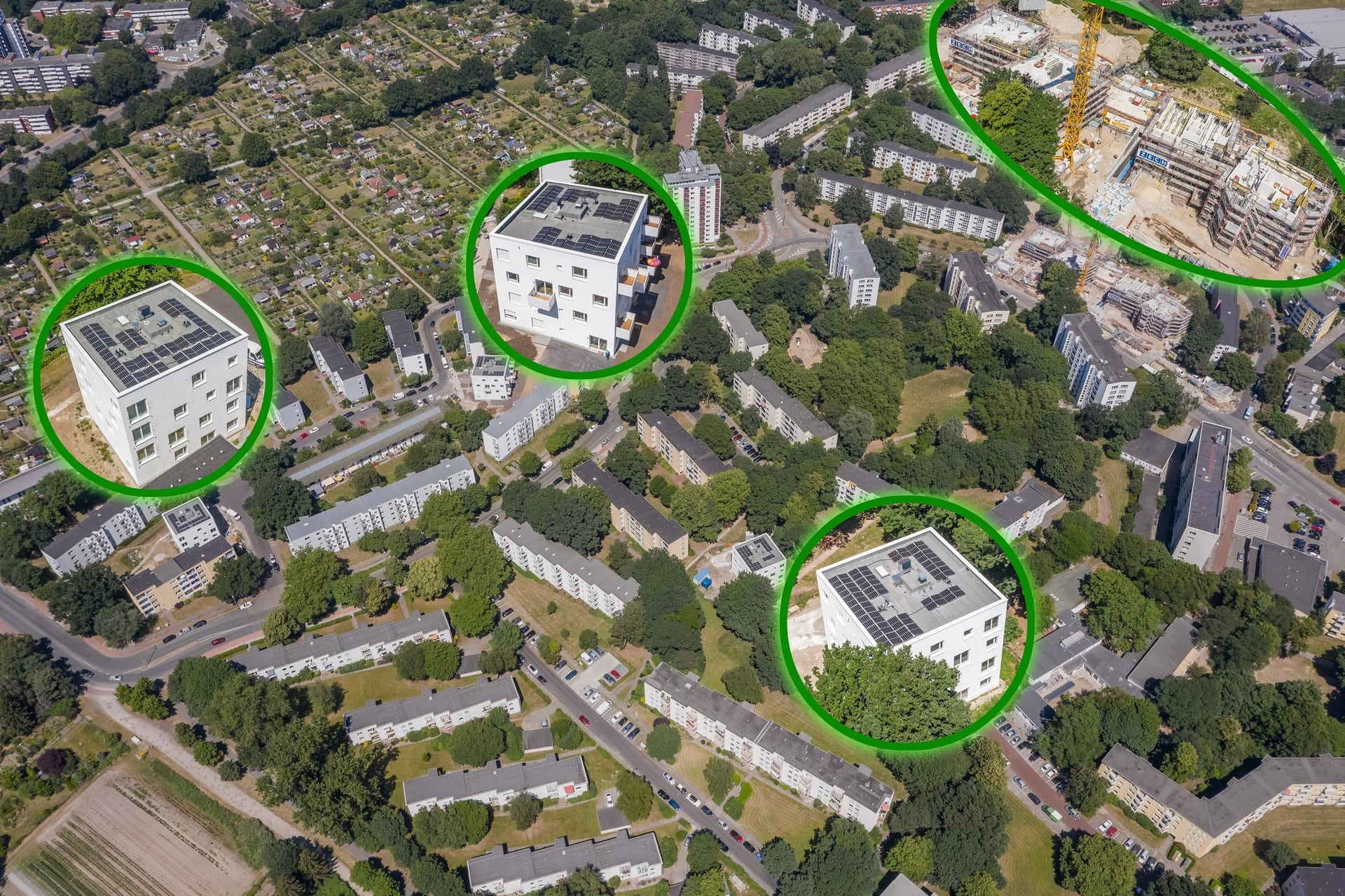
The Bremer Punkt is GEWOBA's answer to where new homes can go. It is a compact timber-hybrid cube of 4 to 11 flats, designed with LIN Architekten Urbanisten and built in series since 2017. Each one slots between existing post-war slabs without new land. Prefabrication keeps building times short, and the design has won architecture awards. It turns the city's own estates into a pipeline for infill.
Ellener Hof shows what a patient landowner can do. The Bremer Heimstiftung, a foundation for older people, owns the 10-hectare site in Osterholz and allocates plots by ground lease. Bremen's first timber quarter is planned for about 500 homes, around 100 of them subsidised, alongside student rooms, a guest house and a daycare centre. Its planners estimate timber saves some 320 tonnes of CO₂.
KARL solidarisch bauen und wohnen is the Hulsberg quarter's cooperative pioneer. In 2021 it bought a plot at Friedrich-Karl-Straße for €2.67 million. Its 29 flats include 4 subsidised units, over a ground floor with a kindergarten, café, event room and workshop. The 14-hectare hospital site around it is Bremen's test of mixed, community-built housing. KARL's Wiebke Lessin warned in 2026 that if community projects fail on political terms, the credibility of the whole social-quarter policy suffers.
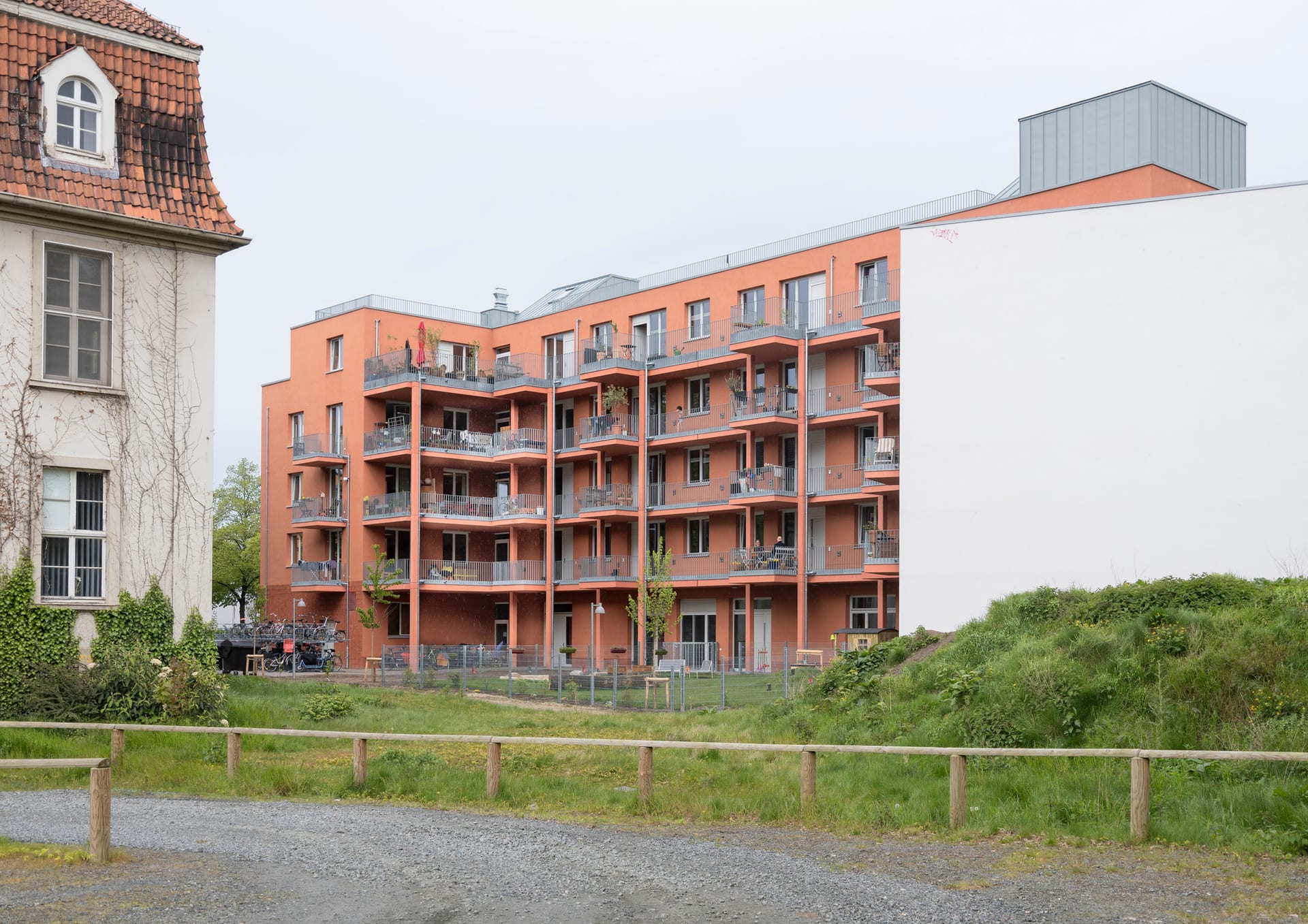
The StadtteilGenossenschaft Hulsberg is pushing that test further. Its members want every remaining building-group plot leased under Erbbaurecht rather than sold, and kept for groups even if unsold. The outcome will decide whether new cooperatives can still start in central Bremen. Frankfurt, by comparison, now leases rather than sells its municipal plots.
ESPABAU and GEWOSIE hold the long view. Together they carry more than a century of member-owned renting through wars, the Neue Heimat era and today's retrofit bill. Between those century-old societies and the self-built houses of the new groups, the toolkit of community-led housing is already present in the city. What it lacks is scale.
References
Statistics17Click on any number to see the source
Housing market
Tenure & affordability
Cooperative, social & public
Adaptive reuse & vacancy
Population & migration
From our library18
- GEWOBA Aktiengesellschaft Wohnen und Bauen — Organisation
- Europe’s housing crisis is fuelling the rise of the far right. Our research shows how to address it — Knowledge
- ESPABAU Eisenbahn Spar- und Bauverein Bremen eG — Organisation
- GEWOSIE Wohnungsbaugenossenschaft Bremen-Nord eG — Organisation
- Housing Cooperatives in Challenging Times — Knowledge
- Facts and Figures of the Cooperatives (Focus on Germany) — Knowledge
- KARL solidarisch bauen und wohnen eG — Organisation
- StadtteilGenossenschaft Hulsberg eG — Organisation
- Bündnis für bezahlbares Wohnen und Bauen – Wohnungsgenossenschaften als Partner der Kommunen — Knowledge
- Bundestag: Mietpreisbremse verlängert — Knowledge
- Gemeinwohlorientierte Wohnungspolitik - eine Studie — Knowledge
- ZwischenZeitZentrale Bremen (ZZZ) — Organisation
- Schriftlicher Bericht des BMWSB zum deutschlandweiten Büroleerstand — Knowledge
- REDEVELOPMENT - Reusing unprofitable and functionally deficient 1950s to 1970s inner-city office buildings for residential purposes – possibilities and chances — Knowledge
- Climate adaptation in public, cooperative, and social housing in Europe — Knowledge
- Bremer Punkt — Project
- Ellener Hof — Project
- Gemeinschaftliches Wohnen und selbstorganisiertes Bauen — Knowledge
Further sources20
- Wohnungsnot in Bremen: 13.000 Sozialwohnungen fehlen — Weser-Kurier · 2026-01-16
- Bremen verzeichnet besonders hohe Mietsteigerungen — buten un binnen · 2025-06-18
- Senat gibt kräftigen Schub für bezahlbaren Wohnraum in Bremen — Pressestelle des Senats · 2026-06-30
- Erfolg im Wohnungsbau wird fortgesetzt (Wohnraumförderungsprogramm 2025) — Pressestelle des Senats · 2025
- Bremen verlängert Mietpreisbremse bis 2029 — Pressestelle des Senats · 2025-11-18
- Wohnungsbau wird günstiger: Bremer Weg — Pressestelle des Senats · 2025-11-04
- Die erste Genossenschaft im Neuen Hulsberg-Viertel — Pressestelle des Senats · 2021-07-13
- 100 Jahre Gewoba: Das ist die Geschichte des Bremer Unternehmens — buten un binnen · 2024
- ESPABAU – Über uns — ESPABAU eG
- Gewosie — Wikipedia
- Klima- und Holzbauquartier Ellener Hof — sdg21
- Bremer Punkt – ausgezeichneter flexibler Würfel — GEWOBA
- wallerleben — Mietshäuser Syndikat
- Pressemeldung: Erbbaurechtsvergabe im Neuen Hulsberg Viertel — StadtteilGenossenschaft Hulsberg eG · 2026-04-30
- Neues Hulsberg-Viertel in Bremen: Baugemeinschaften sind ein Geschenk — Weser-Kurier · 2026-05-19
- Baugemeinschafts-Förderprogramm soll in Bremen neu aufgelegt werden — Weser-Kurier · 2026
- ZwischenZeitZentrale – Über uns — ZZZ Bremen
- Sparkasse am Brill: Ein Innenhof zum Verweilen für alle Bremer — Weser-Kurier · 2026-08-19
- Klimaschutzstrategie 2038 — Senatorin für Umwelt, Klima und Wissenschaft
- Town Musicians of Bremen — Wikipedia