An island capital that rents by the night
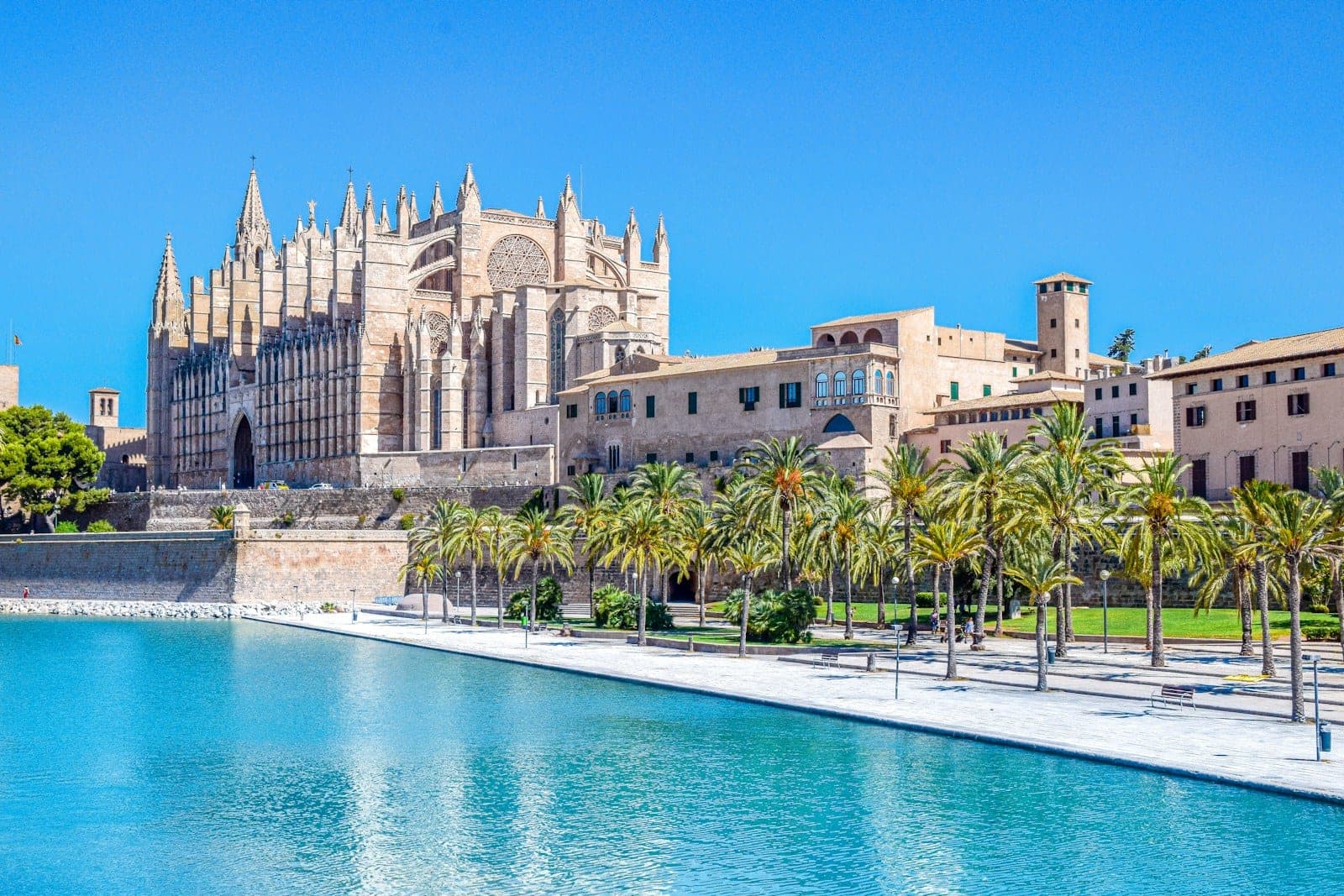
Palma was built to face the sea. Romans, Moors and Catalan kings each left a layer on the bay, and the Gothic cathedral still stands over the waterfront like a ship at anchor. The modern city grew out of a second encounter with visitors. Between 1960 and 1980 its population doubled from 150,000 to 300,000 as workers arrived for the tourist boom. Today 434,786 residents share their island with 13.56 million visitors a year, and the home is where that meeting now pinches hardest.
Renting is more common here than in most of Spain. The 2021 census found 25% of Palma's main homes rented, the third-highest share among Spain's provincial capitals after Barcelona and Girona, according to an idealista analysis of the census. Across the Balearic Islands owners occupied 66% of main homes in 2021, down from 70% a decade earlier. Public renting is thin. IBAVI, the Balearic Housing Institute, lets 1,234 homes in Palma, fewer than one in a hundred of the city's 190,760 dwellings. Cooperative housing hardly registers as a tenure at all, so nearly every tenant rents from a private landlord.
- Owner-occupied66.3%
- Rented (private and public)23.4%
- Provided free / other10.3%
Social housing in Spain is a legal status rather than a landlord. A home counts as vivienda de protección pública (publicly protected housing) when its price or rent is capped in return for public land or subsidy, whoever owns it. In 2023 the islands added a permanent category, vivienda de precio limitado (price-limited housing), whose sale and rental ceilings never lapse under the Balearic emergency housing decree. That makes the protected layer larger than IBAVI's own stock. Nobody yet publishes how much of Palma's housing carries either label.
The price of a lease depends on when it was signed. IBAVI tenants pay around €9/m² a month, and the median across all existing leases is €12.4/m². A flat let today asks €19.1/m², and furnished or serviced flats, priced with utilities and furniture included, reach €22/m². Tourist lets compete for the same flats: a one-bedroom holiday apartment earns a median €229 a night.
- Public/municipal housing
- All-stock median
- New contracts
- Furnished / serviced (gross)
Monthly rent per square metre. Public, all-stock and new-let figures are net of utilities; the furnished/serviced tier is gross, with utilities and furniture priced in.
Very little of the stock stands empty. The 2021 census counted 9,346 vacant dwellings, a rate of 4.9% and the lowest of any Balearic municipality. Free rental flats are estimated at just 1.5% of the market. Offices hold more slack, though the figure is an estimate: applying Spain's average office vacancy of 8.0% to Palma suggests around 0 m² of empty floor. Holiday lets absorb far more. Palma licenses 4,473 tourist beds in homes, and the protest platform Menys Turisme, Més Vida puts Mallorca's homes marketed to visitors, legal and illegal, at more than 105,000.
New arrivals keep coming. The islands record some 43,816 arrivals from abroad a year, and the Govern puts the shortfall built up by recent population growth at about 17,000 homes, as a September 2026 report on the Balearic housing deficit set out. Building permits have risen but slowly. Building projects were certified for 2,139 new homes across Mallorca in 2025, and Palma accounted for 415 flats in the first half of 2026. No rent cap applies: the regional government has not declared any stressed zone under the 2023 state housing law.

Middle-income households feel it too. An idealista study reported by El Debate found that a household on an average income needs 43% of its net pay to rent a typical two-bedroom flat in Palma, second only to Barcelona, and 46% to pay a mortgage. Across the islands, rent swallowed 64% of an average salary in 2025. The young carry the heaviest load. According to the Balearic youth council's emancipation figures, only 15.3% of young people in the islands live independently, and the average rent equals 135.9% of a young worker's wage.
At the sharp end, a city survey of caravan camps counted 156 caravans and motorhomes in informal settlements, with 36 people living at the Son Hugo car park alone, most of working age. IBAVI's waiting list reached 9,296 households in late 2025. Residents see the link to tourism plainly: in a survey for the Govern's tourism agency, 77% said tourist pressure makes housing more expensive. Palma also features as a case-study city in the ESPON housing-affordability database, which compares prices against local and national incomes.

Now these flats that went through evictions have been recycled for the tourist circuit and turned into Airbnbs.That argument, made in an interview with the geographer Iván Murray, frames the question the rest of this portrait follows. Almost no Palma home belongs to a cooperative, yet the cooperative form is exactly what a few local groups now want to try.
Cooperatives that turned into owners
Spain knows two very different housing cooperatives. The familiar one is the cooperativa de viviendas (a building cooperative): members pool money to build at cost, then split the finished block into individually owned flats, and the cooperative winds up. The other is cesión de uso, or cessió d'ús in Catalan (grant-of-use). Here the cooperative keeps the building for good. Members pay a refundable entry fee and a monthly charge, and nobody can sell a flat for profit. A study of grant-of-use housing in Catalonia found the model strengthens trust between neighbours.
Palma's cooperative history belongs almost entirely to the first kind. The post-war estates were largely state-led. Camp Redó, known locally as Corea, was part of the Obra Sindical del Hogar, the Franco regime's housing agency, and its 1954-1955 plan, as Última Hora's history of the estate recalls. The tourist boom then filled new peripheral districts such as Son Gotleu, whose first blocks rose in 1962. Spanish building cooperatives of that era, like those since, were designed to dissolve into private ownership once the flats were handed over. Wherever they built, they left owners behind rather than a lasting cooperative stock.
Today the sector falls into three groups with different problems. Building cooperatives still exist; the islands counted 21 housing cooperatives among their registered co-ops in 2020. They face land prices and lose their affordability at the first resale. Grant-of-use pioneers are fewer still. A 2025 report on REAS Baleares, the islands' network for the social and solidarity economy, found the model only in two micro-cooperatives on Ibiza involving about five families. Senior cohousing groups in Mallorca and Menorca gave up because plots cost too much. REAS has met IBAVI and the councils of Palma and Inca to ask for public land. The third group is public-led. In 2018 IBAVI's Cohabita call offered public plots with finished designs to cooperatives for 75 years, with a refundable entry of €15,000 to €20,000 and rents of €400 to €500 a month. None of its five sites was in Palma.

Land and finance are what separate the Balearic case from Barcelona's, where Catalonia has scaled grant-of-use cooperatives with development-bank lending. The current Balearic housing programme is organised around price-limited homes, private delivery on public and rural land, and guaranteed rentals. Cooperatives appear in it only at the margins, as one possible builder of capped homes rather than as a tenure the government sets out to grow.
Emergency laws, stalled barracks and a freeze on holiday beds
Marga Prohens's Partido Popular government, in office since 2023, has answered with emergency law. Its first decree, later Law 3/2024, created price-limited housing, let owners turn ground-floor shops and offices into flats, and allowed extra storeys. Law 4/2025 added strategic residential projects (proyectos residenciales estratégicos, or PREs): schemes of at least 60 homes that can move quickly through planning, with 30% of their price-limited homes reserved for people under 35. The Alquiler Seguro (safe rent) scheme guarantees payment to owners of empty flats, keeping tenants' rent below €1,050 a month in Mallorca. The Govern says 10,006 affordable homes are now in planning.
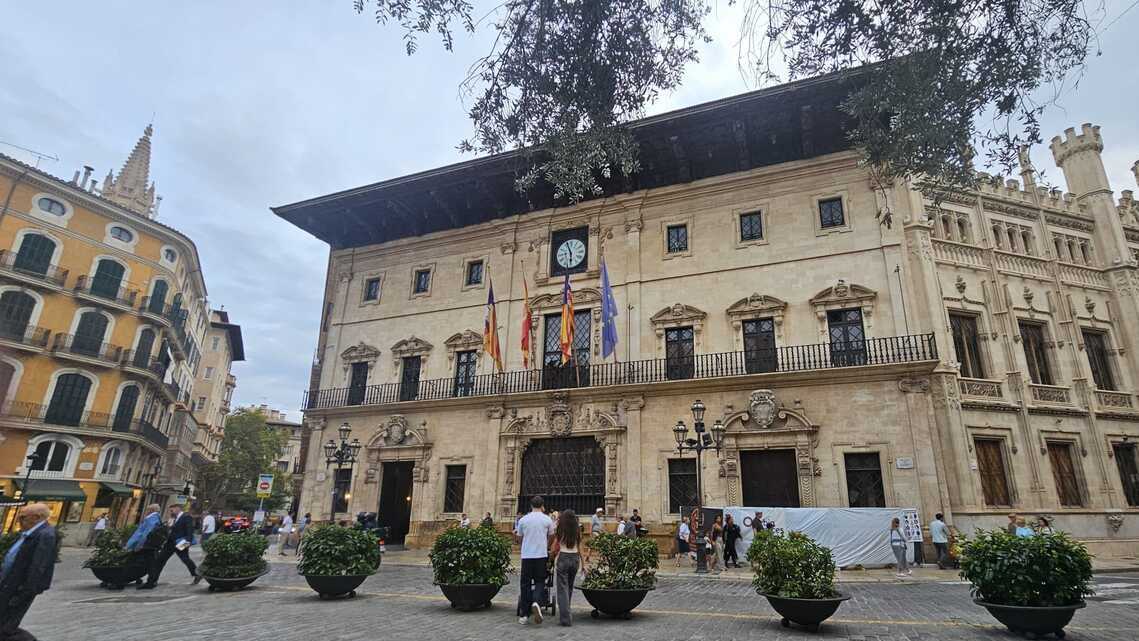
Madrid, the Govern and Cort each hold part of the answer. Madrid sets tenancy law: the 2023 right-to-housing law allows rent caps only where a region declares a stressed zone, which the Balearics has declined to do. The new state housing company CASA 47, the former land agency SEPES, is promoting the Son Busquets site in Palma. Última Hora's account of the state housing plan dispute shows the friction: the 2026-2030 plan brings €168 million to the islands, of which the Govern pays €67.5 million, and the Balearic housing minister wants a free hand over how it is spent. The city council, Cort, led by mayor Jaime Martínez since 2023, has licensed the first 167 municipal price-limited rentals in Camp Redó and Son Ferragut. Its eight PREs could add about 9,000 homes.
Cooperatives have no dedicated instrument. The nearest model is IBAVI's Cohabita offer of long surface rights on public land, which could be reopened for Palma. The PRE law creates another opening: developers must cede 15% of the buildable value to the council, land that could be let to cooperatives under a surface right.
Palma's vacancy answer is aimed at shops, offices and holiday lets. Under the conversion rules, owners filed 120 change-of-use applications by March 2026, enough for about 157 price-limited homes, as a June 2026 report on Palma's conversions set out. The bigger step was on tourism. In February 2026 Palma banned new tourist-rental places in all homes, removing 374 potential places from its General Plan. Óscar Fidalgo, the councillor for planning and housing, summed it up: "Flats are for living in." Neus Truyol, spokesperson for the opposition group MÁS por Palma, replied that the PP "has always been on the side of those who make millions from housing". From May 2026 an EU regulation also obliges platforms to share listing data with cities, as a European Parliament study of short-term rental rules explains.
Climate law sets the other horizon. The islands' 2019 climate law requires a 40% cut in emissions by 2030. Yet 83.4% of certified Balearic homes are rated E, F or G, and some 15,000 Next Generation EU renovation grants have only begun to shift that. Public builders are the testbed: IBAVI's recent Palma blocks use local stone and EU recovery money, while Housing Europe's study of climate adaptation warns that southern Europe's social landlords face intense heat and water scarcity. Environmentalists at GOB argue that PREs on rural land "in no way respond to the public outcry".
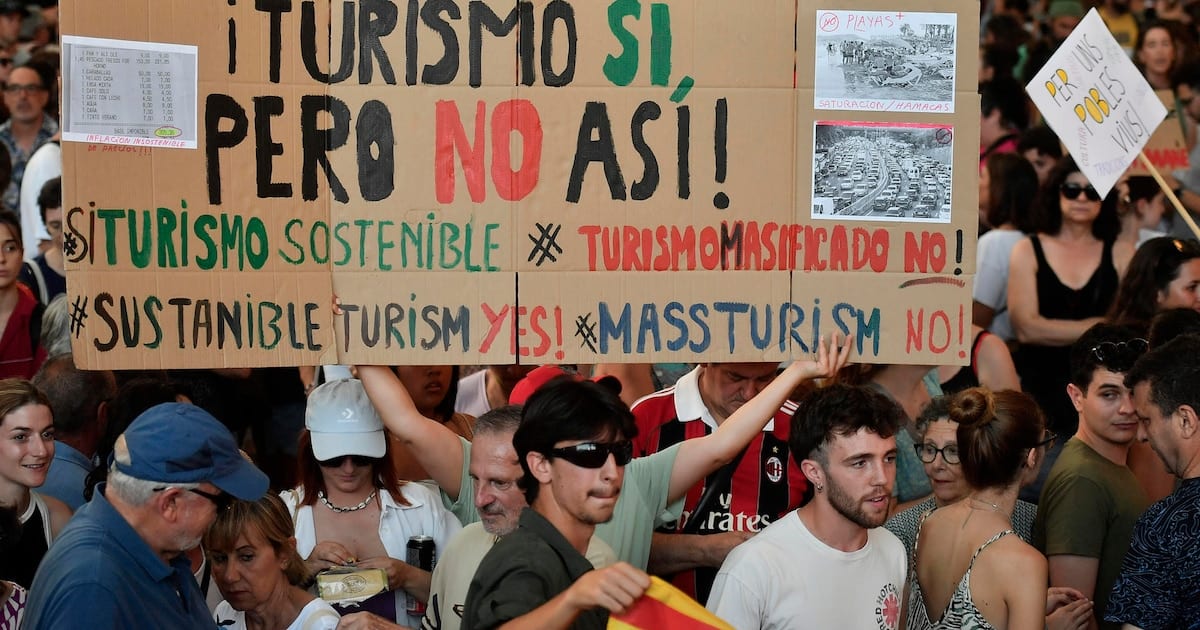
We cannot close our eyes to the reality of our islands. We are in a situation of residential emergency, and we need limits that fit the real market so as not to harm citizens.We have seen that there is a political and police system that will defend the interest of a few businessmen above the general interest of the people.The two voices frame a live dispute. After the July 2026 march, the platform promised permanent mobilisation. The Govern points to its planning pipeline, while the city and the state trade blame over the largest public site in town.

- Nov 2018[source]
Palma bans holiday lets in apartment blocks
The city prohibits tourist rentals in multi-family buildings across the whole municipality.
- Feb 2019[source]
Balearic climate law sets 2030 and 2050 targets
Law 10/2019 commits the islands to cut greenhouse-gas emissions by 40% by 2030 and 90% by 2050 against 1990.
- May 2022[source]
State agrees to build on the Son Busquets barracks
A protocol between the ministry and Palma opens the former military site to homes for more than 800 families.
- Feb 2023[source]
Supreme Court upholds the flat ban
Spain's highest court confirms that Palma may prohibit tourist flats in apartment buildings.
- Oct 2023[source]
Emergency decree creates price-limited housing
The new Prohens government introduces vivienda de precio limitado and lets offices and shops become homes; the decree becomes Law 3/2024 in May 2024.
- Jul 2024[source]
Menys Turisme, Més Vida fills Palma
Police count 20,000 marchers and organisers 50,000 at the first mass protest linking tourism to housing.
- Jul 2025[source]
Strategic residential projects become law
Law 4/2025 lets large projects of at least 60 homes bypass ordinary planning, reserving 30% of price-limited homes for under-35s.
- Feb 2026[source]
Palma freezes holiday-rental places
A change to the 2023 General Plan bans new tourist-rental places in homes, capping the stock at 4,473 places in 632 properties.
- Jul 2026[source]
The largest march yet
Police estimate more than 25,000 people and organisers 70,000 at a protest against tourist saturation and the housing crisis.
- 2030[source]
State housing plan and climate milestone fall due
The 2026-2030 state housing plan, worth €168 million in the Balearics, closes, and the islands must reach their 40% emissions cut.
Milestones in tourist-rental control, emergency housing law and climate targets, with the city, island, regional and state levels intertwined.
Whether these laws deliver will be decided on a handful of plots, most of them public, and some already standing.
From marès walls to army barracks
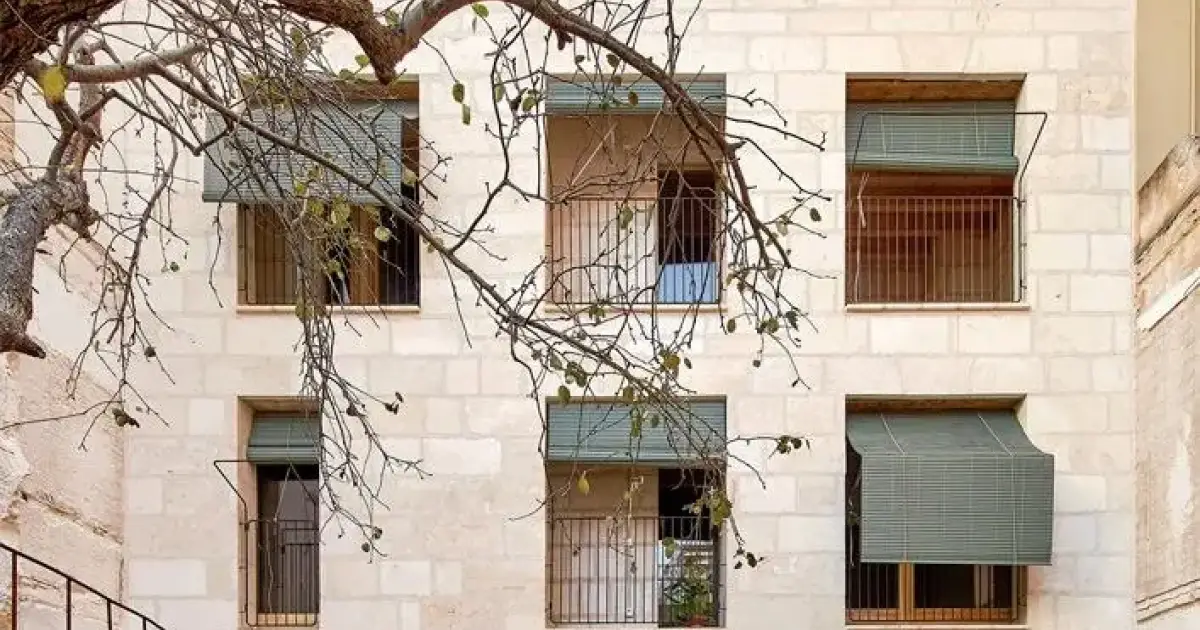
IBAVI's five homes on Carrer Regal in Son Gotleu are the clearest statement of what the island's public builder wants to be. Designed by its in-house architects Carles Oliver, Alfonso Reina, Antonio Martín, Maria Antònia Garcías and Xim Moyà, they revive the terraced building type of the neighbourhood before the 1960s boom. Local marès sandstone is the main building material. The project's shortlisting for the 2022 Mies van der Rohe Award brought it European attention, and it belongs to the Spanish public-housing tradition Dwell has profiled. Its limit is scale: five homes against a waiting list in the thousands.
The block IBAVI handed over on Carrer Magdalena Bonet i Fàbregas in June 2025 shows the slower side of the same effort. Its 30 rental homes cost €3.7 million before VAT, almost €1 million of it from Next Generation EU. Rent is tied to income and never exceeds 30% of it, so half of the first tenants already pay a reduced rent. Building it took four years, from April 2021 to April 2025.
IBAVI's development in the Polígon de Llevant closes a loop that visitors pay for. Its 43 protected homes were financed through the islands' sustainable-tourism tax. Nearby, the private district of Nou Llevant shows the market's answer to the same land: more than 750 new flats, with 70% of the owners in its first building from abroad.
The Can Domenge site beside the Velòdrom Illes Balears is where IBAVI plans its largest ever scheme. The plan for 323 public homes sits on 33,000 m² ceded by the Consell de Mallorca, making it the biggest single public development in the islands. It is also contested. Applicants will need 15 years of legal residence in the Balearics. President Prohens defends the rule as building for people already living on the islands rather than attracting new population, which makes it a test of who public housing is for.
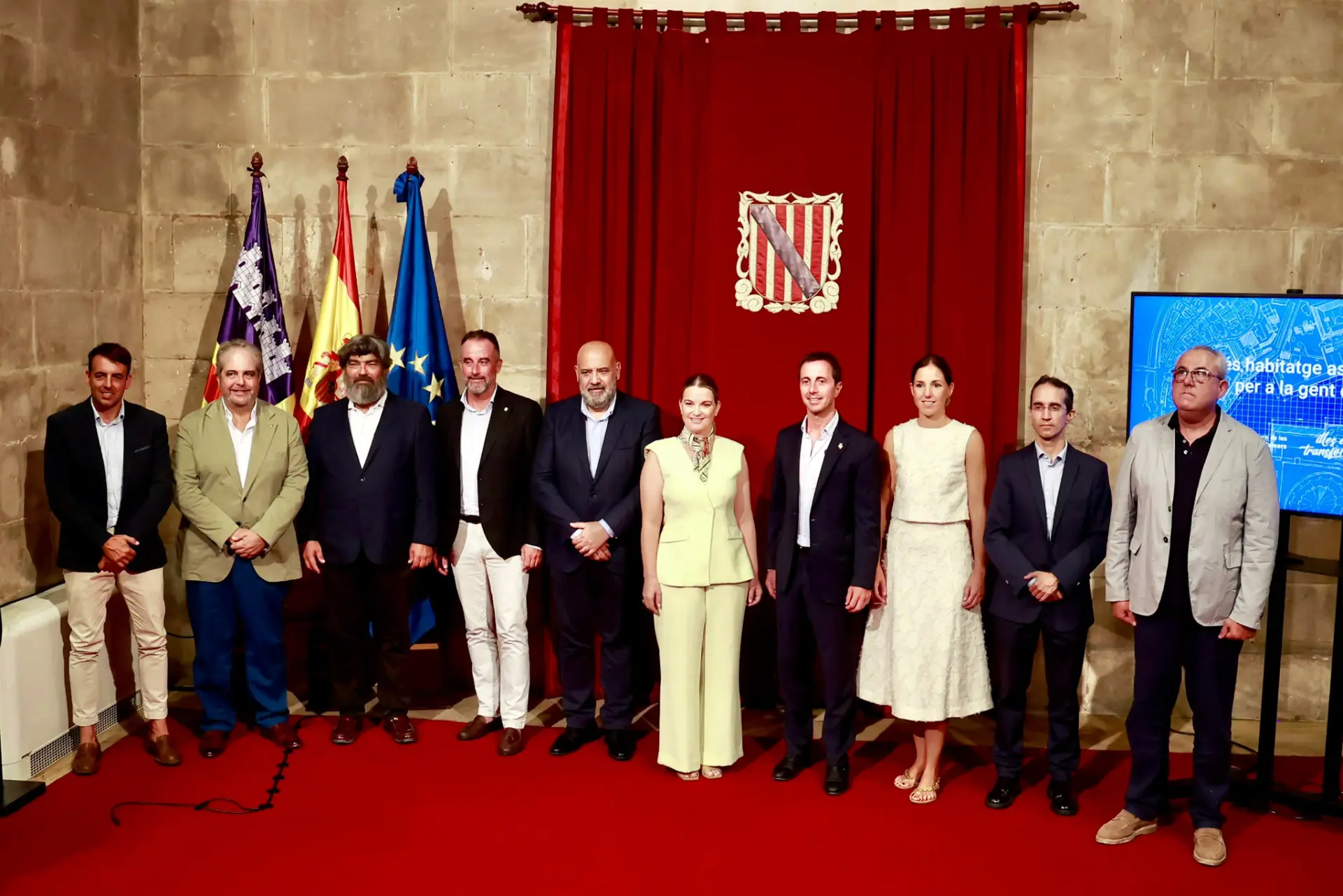
Son Busquets, the former army barracks, could become the city's biggest affordable neighbourhood. CASA 47 plans 831 homes there, and a participatory process with residents began in 2025. Yet the ministry accuses Cort of blocking the site, saying its reform plan has waited for approval since April 2026. Four years after the first protocol, the site is still waiting for its plan.
REAS Baleares and its partners are the institutional thread that could tie these sites to cooperatives. The network already sits at the table with IBAVI and Cort, and the land instruments exist in IBAVI's surface-right model and the PRE cessions. What Palma lacks is the first building where members, not a landlord, hold the keys.
References
Statistics12Click on any number to see the source
Housing market
Adaptive reuse & vacancy
Population & migration
From our library21
- Baleares acumula un déficit de 17.000 viviendas por el crecimiento de población de los últimos años — Knowledge
- Comprar casa en Palma ya supone un esfuerzo mensual mayor que en Madrid o Barcelona — Knowledge
- Los jóvenes de Baleares no pueden irse de casa: solo el 15,3 % logra emanciparse — Knowledge
- El Ayuntamiento de Palma aprueba una ordenanza cívica que permite al final pernoctar en caravanas — Knowledge
- La lista de espera para un piso del Ibavi se dispara: hay casi 10.000 familias de Baleares en la cola — Knowledge
- Tres de cada cuatro baleares creen que hay demasiado turismo y que encarece la vivienda — Knowledge
- Unequal housing affordability across European cities. The ESPON Housing Database, Insights on Affordability in Selected Cities in Europe — Knowledge
- Iván Murray: «Es más fácil imaginar el final de Mallorca que el final del turismo» — Knowledge
- Effects on Social Cohesion of the Grant of Use Cooperative Housing Model in Catalonia — Knowledge
- REAS Baleares negocia con la administración la cesión de solares para hacer viviendas cooperativas — Knowledge
- A new way of living: how Catalonia is making housing more affordable and inclusive — Knowledge
- Baleares acusa al Gobierno de intromisión en su política de vivienda y pide manos libres para invertir los 168 millones — Knowledge
- Urbanismo autoriza seis nuevas viviendas de precio limitado con tres cambios de uso en Palma — Knowledge
- Palma prohíbe crear nuevas plazas de alquiler turístico en viviendas: «Los pisos son para vivir» — Knowledge
- The regulatory aspects of short-term rentals in the EU — Knowledge
- Climate adaptation in public, cooperative, and social housing in Europe — Knowledge
- Menys Turisme Més Vida: «Vamos a mantener una movilización permanente» — Knowledge
- La promoción del Ibavi en Son Gotleu opta al premio Mies van der Rohe 2022 — Knowledge
- Why Is Spain’s Social Housing So Well-Designed? — Knowledge
- Las 323 viviendas públicas que construirá el Ibavi en Palma exigirán 15 años de residencia legal en Baleares — Knowledge
- El Gobierno acusa a Cort de bloquear Son Busquets y defiende que el proyecto incorpora peticiones vecinales — Knowledge
Further sources37
- Son gotleu busca pasado barrio obrero — Última Hora
- Baleares supera millones turistas 2025 encadena otro ano crecimiento — Última Hora
- 806853 cae el peso de la vivienda en propiedad en que ciudades hay mas inquilinos — idealista/news
- Viviendas mallorca precio dispara cada vez hay menos propietarios mas inquilinos — Menorca.info
- Parque_de_viviendas_existente — Govern de les Illes Balears
- Doc.php — Boletín Oficial del Estado
- Palma prohibe crear nuevas plazas de alquiler turistico en viviendas los pisos son para vivir — Infobae
- Manifestacion masiva en palma contra la saturacion turistica y la crisis de vivienda — Hosteltur
- Baleares acumula deficit 17000 viviendas por crecimiento poblacion ultimos anos — Menorca.info
- Construccion nuevas viviendas mallorca aumenta cinco anos — Última Hora
- Comprar casa palma supone esfuerzo mensual mayor madrid barcelona — El Debate
- Precio alquiler bate records balears absorbe 64 sueldo segundo caro espana — elDiario.es
- Jovenes baleares pueden irse casa solo logra emanciparse — Última Hora
- Ayuntamiento palma aprueba ordenanza civica permite final pernoctar caravanas — elDiario.es
- Lista espera para piso del ibavi dispara hay 10000 familias baleares cola — Última Hora
- https://www.economiademallorca.com/articulo/turismo-y-hosteleria/tres-cada-cuatro-baleares-creen-que-demasiado-turismo-que-encarece-vivienda/20250916165800111437.html — Economía de Mallorca
- Ivan murray mas facil imaginar final mallorca final del turismo — Última Hora
- Palma camp redo intenta sacudirse estigma corea — Última Hora
- 282 cooperativas baleares — Última Hora
- 9128380 — Govern de les Illes Balears
- Act.php — Boletín Oficial del Estado
- Ficha_convocatoria.xhtml — Govern de les Illes Balears
- Mar 09122025 1225 — Ministerio de Vivienda y Agenda Urbana
- Baleares acusa gobierno intromision politica vivienda pide manos libres para invertir 168 millones — Última Hora
- https://www.economiademallorca.com/articulo/mercado-inmobiliario/urbanismo-autoriza-seis-nuevas-viviendas-precio-limitado-tres-cambios-uso-palma/20260617081238120777.html — Economía de Mallorca
- 323 viviendas publicas construira ibavi palma exigiran anos residencia legal para acceder — Última Hora
- Doc.php — Boletín Oficial del Estado
- Menys turisme mes vida vamos mantener movilizacion permanente — Última Hora
- Palma prohibe alquiler turistico plurifamiliares — Última Hora
- 270522 vivienda baleares palma — La Moncloa
- Alquiler vacacional palma supremo permite prohibir pisos turisticos — Última Hora
- Masificacion turistica ano manifestaciones contra turismo — Última Hora
- Marea humana toma palma para pedir menos turismo mallorca mas 25000 personas segun policia nacional — Última Hora
- El ibavi entrega las llaves de una nueva promocion de 30 viviendas de proteccion publica en palma — Mallorca Informa
- Nueva promocion de 43 viviendas protegidas en palma — Illes Sostenibles (Govern de les Illes Balears)
- Palma contrastes nou llevant nuevo barrio demandado por alemanes — Última Hora
- https://www.economiademallorca.com/articulo/mercado-inmobiliario/son-busquets-avanza-luz-verde-proceso-participativo-transformacion/20250218172740104286.html — Economía de Mallorca