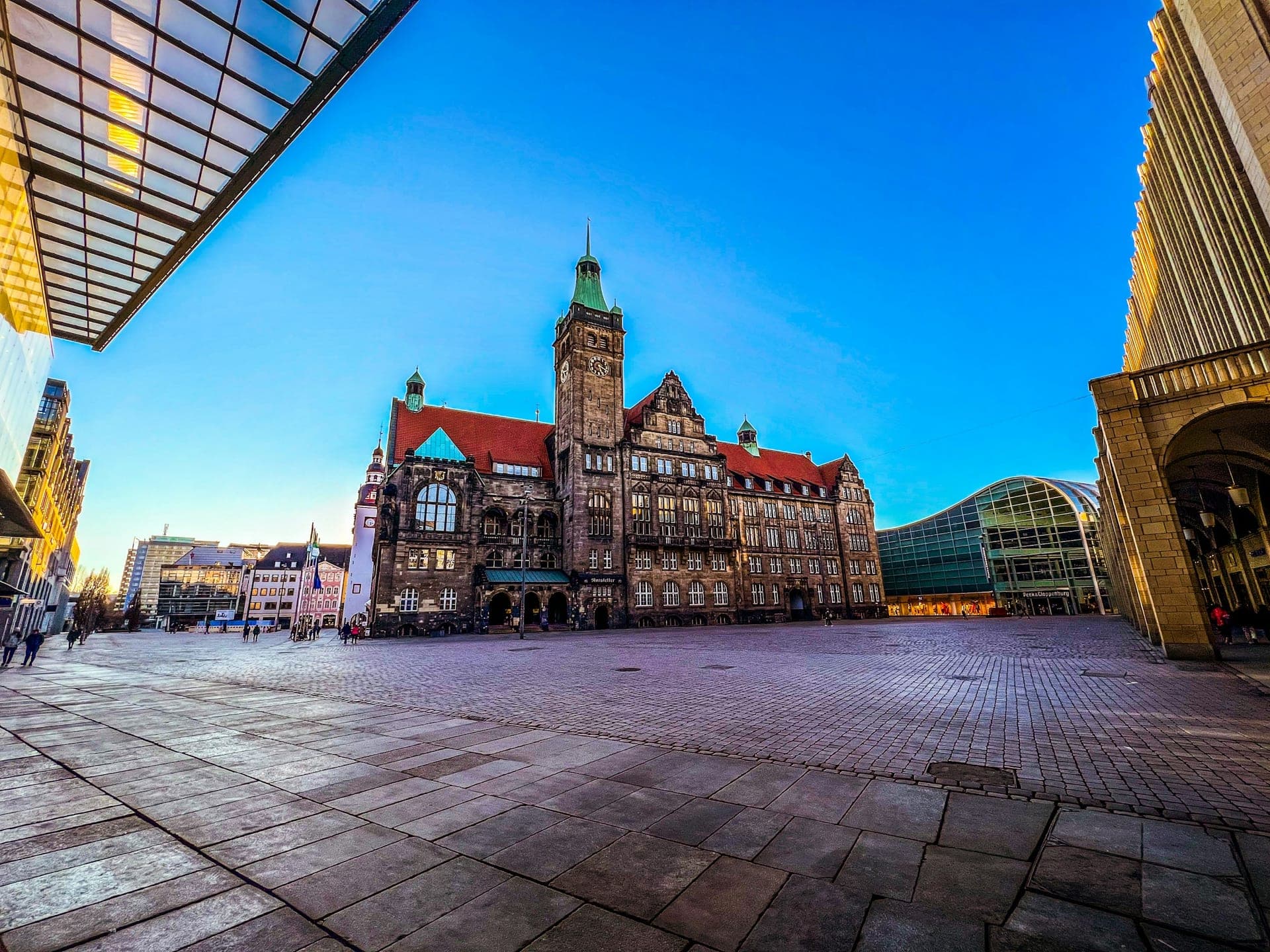
More homes than households
Chemnitz built the machines that clothed half a continent. Johann von Zimmermann opened the first machine-tool factory on the Continent here, and the textile mills earned the city the nickname Sächsisches Manchester (Saxony's Manchester). From 1953 to 1990 it carried the name Karl-Marx-Stadt, and in 2025 it was European Capital of Culture. Industry drew people in, and after 1990 it let them go. The state statistics office counted 315,320 residents in 1990; today the figure is 247,252. So the housing question here runs the other way round from Leipzig or Munich. It is less about finding a flat than about what to do with the flats nobody needs.
This is a city of tenants. Only 19% of homes are lived in by their owners. Housing cooperatives own 18% of the stock, some 27,000 homes. GGG, the city-owned housing company, holds a further 16.5%, about 25,000 flats. Private landlords let the largest slice, 46.5%. The 2022 census counted 151,862 dwellings in all.
- Owners
- Owner-occupier19.0%
- Renters
- Public & non-profit rental16.5%
- Cooperative18.0%
- Private rental46.5%
Social housing in Germany is a rule rather than a tenure: a flat built with subsidy carries a capped rent and an allocation rule for a fixed period, whoever owns it. Chemnitz has almost none, about 1% of homes. Saxony's grant for new rent-bound flats, the FRL gMW, is written for Dresden and Leipzig because of their particularly tight housing markets. Chemnitz does not qualify. Here the cheap end of the market is simply the market.
Rents are the lowest of any large German city. The 2025 Wohnungsmarkt-Report found that tenants in the 2022 census paid €5.26 per m² net cold, 28% below the national average. GGG tenants pay around €4.80. Cooperative members across Saxony paid €5.62 on average in 2025. The survey behind the 2025 rent index has a median of €5.51. Flats offered to new tenants go for about €6.26. Only new-build breaks the pattern, with asking rents of €14.32 in autumn 2025. Furnished flats were offered at €10.22. Asking rents rose 15% between 2020 and 2025, while consumer prices rose 24%.

- Public housing (GGG)
- All-stock median
- Cooperative (Saxony average)
- New contracts
- Furnished (asking)
- New-build (asking)
Monthly rent per m², net cold, except the furnished tier, which is an asking rent with furniture priced in. The cooperative tier is the Saxony-wide average; no Chemnitz-only figure is published.
Empty homes are the defining fact. The census found 11% of dwellings empty, nearly three times the national 4.5%. Leipzig and Dresden each stood at 4%. Of the 16,753 empty flats, 52% had been empty for a year or more, as the city's vacancy analysis shows. The surplus is shrinking, though. The market-active vacancy index of CBRE-empirica fell from 9.0% in 2021 to 7.0% in 2024, and at most 4,000 to 5,000 flats can actually be found to rent online. Offices sit emptier than homes: DZ HYP, a property lender, put office vacancy at 9.8% in 2024.
The long decline has paused. Chemnitz has gained people through migration four years running, 1,300 net in 2025, though deaths still exceed births by about 2,000 a year. Some 19,672 people moved in during 2023. The average resident is 46 years old, and almost 30% are of pension age. Building has been modest, with 4,885 new flats completed between 2008 and 2023. No rent brake applies. Saxony's Mietpreisbremse (the cap on rents for new lets) covers only Dresden and Leipzig, until 30 June 2027.
By the usual yardstick, Chemnitz has no affordability crisis. A Hans-Böckler-Stiftung data sheet on 77 German cities ranked it last for rent burden. Its median household spent 20.9% of net income on gross cold rent, against 26.8% across all the cities. Only 5.2% of households paid more than 40% of income, compared with 18.7% overall. The squeeze that does exist runs through energy and low incomes. Service charges make up 31% of the warm asking rent, and household energy has risen 60% since 2020. At the end of 2023, 7,380 households drew Wohngeld (the state housing allowance), almost twice as many as a year earlier. The Freie Presse calls Chemnitz one of the few large German cities where housing is affordable for everyone. Yet about 10% of benefit recipients find their housing allowance does not cover their costs. For landlords the problem is the reverse, as KATAPULT Sachsen's comparison with Dresden shows: renovated flats let slowly and cheaply.
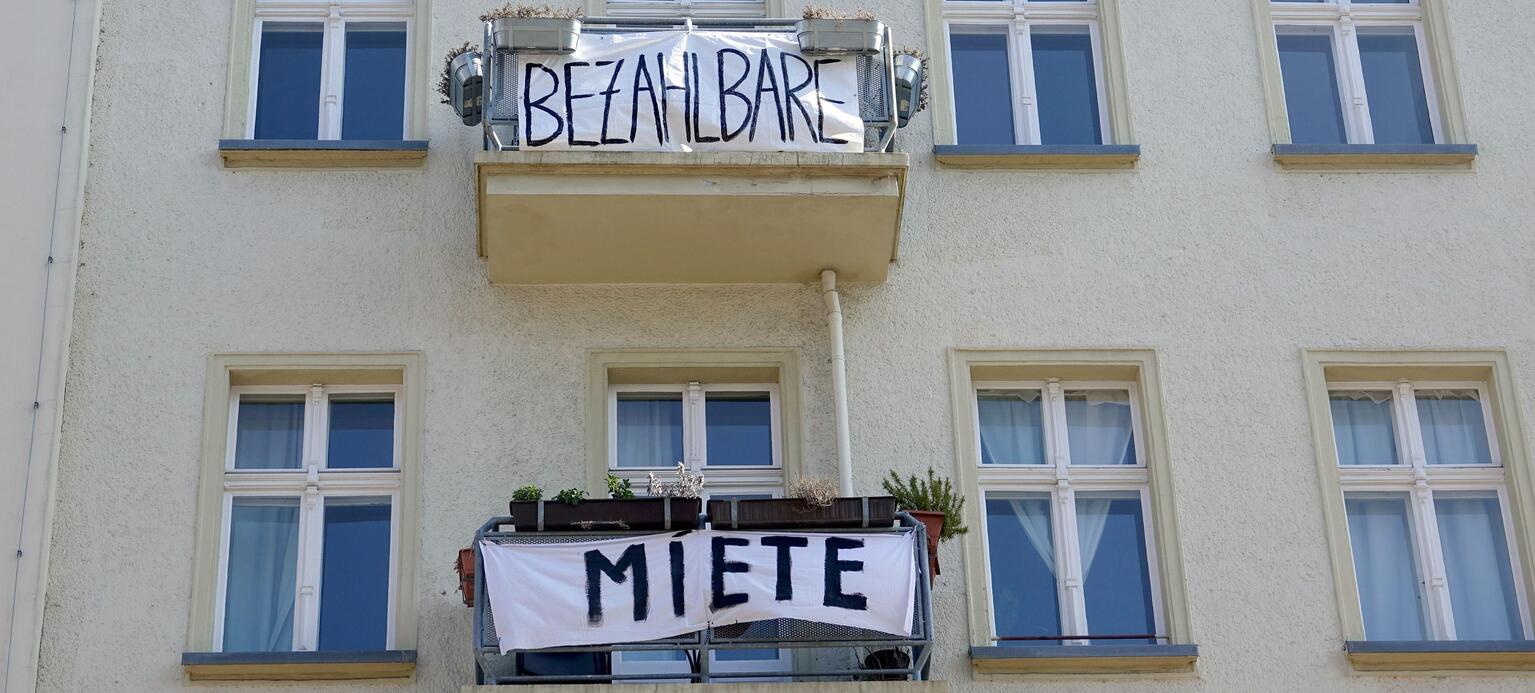
In cities like Leipzig or Dresden, renovated flats can be let quickly and at higher prices, while in Chemnitz letting takes longer and the rents you can achieve are markedly lower.Between the city's own company and the private market stands an owner older than both. Nearly one resident in five lives in a cooperative home.
Six cooperatives that learned to shrink
Chemnitz's cooperatives are rental cooperatives. A household buys Genossenschaftsanteile (member shares that make it a co-owner of the cooperative, not of its flat) and pays a monthly usage fee. The shares are repaid when the member leaves, and the flat cannot be sold on. Six large cooperatives dominate, as a 2025 Chemnitz Inside portrait sets out. WG Einheit is the largest, with about 6,100 homes and more than 6,750 members. CAWG, the Chemnitzer Allgemeine Wohnungsbaugenossenschaft, manages more than 6,000 across five districts. CSg (the Chemnitzer Siedlungsgemeinschaft), WCH (based in Helbersdorf) and SWG (the Sächsische Wohnungsgenossenschaft Chemnitz) follow. WCW, the cooperative of Chemnitz West, is the smallest of the six, at about 3,000 flats.
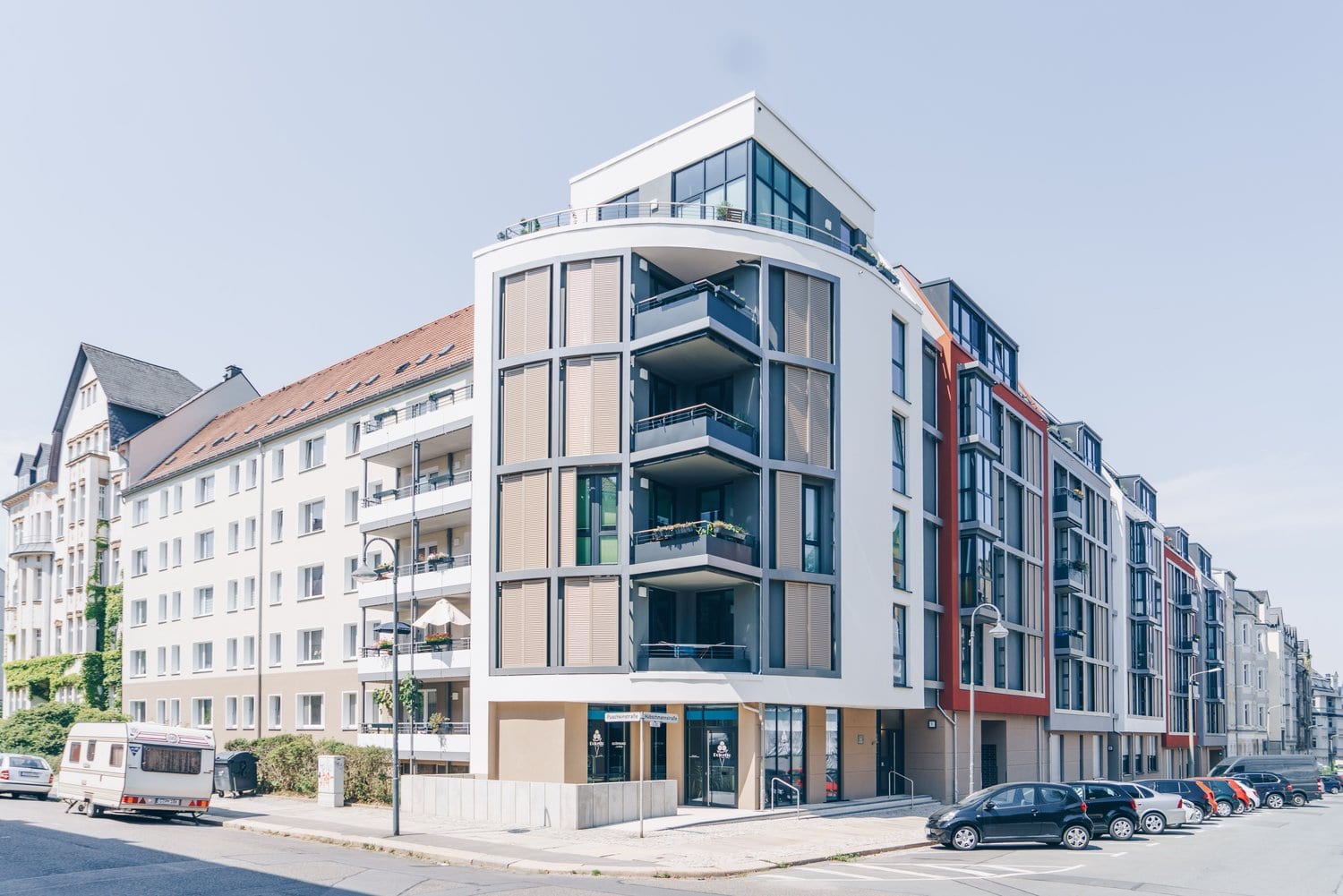
The form is older than the GDR. SWG traces its roots to building societies of 1910 and 1911, and its first house, on Ziegeleistraße, was handed over to 12 families in 1911. CSg began on 22 May 1912 as a building society for civil servants. The GDR revived the idea as the AWG (workers' housing cooperative). WCH started on 30 November 1954, when 15 workers from a cotton-spinning mill picked up spades to build their own flats. By 1974 nine smaller cooperatives had been folded into six large AWGs, and by 1989 each managed 5,000 to 7,000 homes. The Fritz-Heckert panel-block estate, begun in 1974, took WCH alone past 8,000 flats. A study of 160 years of German housing cooperatives traces how the form survived both German states and their reunion.
Today the sector splits by problem more than by age. The large cooperatives spent three decades shrinking. They only received title to their land under a 1993 law, and took on the GDR's Altschulden (legacy housing debts) with it. SWG alone removed 309 flats on the southern Sonnenberg by 2009. Their vacancy fell to 7.3% at the end of 2024, or 5.2% counting only lettable flats. Ringo Lottig, who heads CSg, still says the co-op should have taken even more floor space off the market. CSg charges about €6 per m² and keeps waiting lists for 20 to 25% of its buildings. Across Saxony, municipal companies and cooperatives still carry about €1 billion of legacy debt, €435 million of it at cooperatives, as the Leipziger Zeitung reported. New building is now a risk for the whole Saxon sector: its cooperatives completed just 176 flats in 2025, according to the annual figures of the VSWG, the Saxon cooperative federation.
A second, much smaller cluster is self-organised. In Hilbersdorf, tenants of AlteCäcilie founded their own cooperative in 2020 and bought their house. GemeinGut Chemnitz eG signed for a former women's shelter on Reinhardtstraße, bought from GGG after a tender, in summer 2024. Their problem is not empty flats but equity, advice and time.
The city backs the small end with advice rather than land. Since 2018 its planning office has paid for Kooperative Wohnformen Chemnitz, a service run with the Leipzig collective MIR that helps groups buy empty houses. Saxony's 2025 FRL Familienwohnen (home-ownership grant) now funds group housing projects, cooperatives included. The traffic between town hall and sector runs both ways. Michael Stötzer, the city's building mayor until August 2025, joined CSg's board as technical director that September, as Chemnitz Inside reported.
Demolish, repair or convert: the choice rent rules cannot reach
The city's programme is written in INSEK Chemnitz 2035, the integrated development concept the council adopted in April 2024. It records that in 2002 43,000 homes, 25% of the stock, stood empty. Since 2001 about 19,000 flats have been demolished with subsidy, about 11,000 of them in the Fritz-Heckert estate. The concept now looks inward. It calls for a Leerstandskataster (a register of empty buildings) and for new ways to reuse and convert what stands empty. Mayor Sven Schulze (SPD) has led the city since 2020. Thomas Kütter became mayor for urban development and building in September 2025.
Each level of government holds different tools. The federal parliament sets tenancy law and has extended the rent brake to 2029. Its 2025 Bau-Turbo lets councils waive planning rules for housing until the end of 2030, including where empty space is made habitable again. The Free State of Saxony holds the money. It is run by a CDU–SPD minority government under Michael Kretschmer, and housing sits with SMIL, the ministry for infrastructure and regional development. Its minister, Regina Kraushaar, renewed the rent brake for Dresden and Leipzig while promising to make it unnecessary through building. The city holds planning, advice and GGG.
The hardest argument is about demolition. Saxony dropped its programme for demolishing housing, Rückbau Wohngebäude, from the 2025/26 budget, Haufe reported. Members of vdw Sachsen, the association of municipal and private landlords, had reported a need to demolish up to 5,000 flats across the state by 2030. Heritage campaigners see it the other way round. They count the gaps that subsidised demolition has already torn into the Gründerzeit blocks (the ornate tenements of about 1870 to 1914).
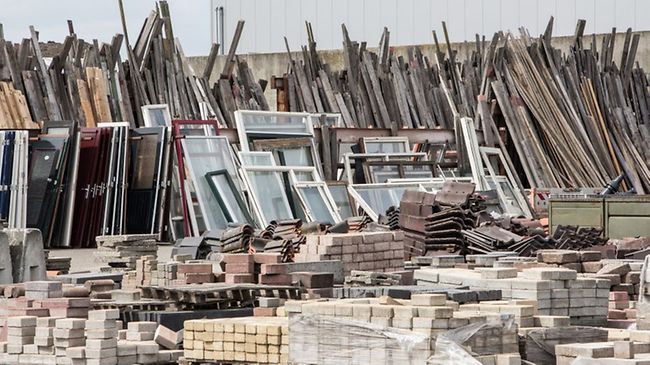
This short-notice decision sends a disastrous signal. Instead of reliable, plannable conditions, which the housing industry cannot do without, uncertainty reigns once again.But the subsidised 'urban restructuring' also left the Sonnenberg with a number of ugly gaps, on Palmstraße and Hainstraße for instance.Chemnitz answers empty space with repair, advice and its own company rather than with penalties. Offices matter too, given the vacancy DZ HYP reports. The federal building ministry's 2025 report on office vacancy treats conversion to housing as a national lever. Housing Europe's toolkit for dealing with vacant housing and the Obsolete Stadt study of reusable urban space describe the same move from demolition to reuse. The federal page on cooperatives as partners of municipalities sets out how councils can bring co-ops into it.
Climate goals run through the same stock. The city aims to be greenhouse-gas neutral by 2040 at the latest. In January 2024 the utility eins closed the lignite units of its Heizkraftwerk Nord and switched to gas-fired plants, which it says cut CO₂ emissions by 60%. It is investing about €400 million in rebuilding the city's energy supply, and calls gas a bridge rather than the end point. The cost of the heat transition lands on low-rent landlords such as the cooperatives and GGG. A 2024 BBSR study on reconciling affordable housing with climate protection (BBSR is the federal institute for building and urban research) sets out the trade-offs that follow for low-rent landlords.
- 1912[source]
Civil servants' building society
The Baugenossenschaft Beamtensiedlung, forerunner of today's Chemnitzer Siedlungsgemeinschaft, is founded on 22 May.
- 1953[source]
Chemnitz becomes Karl-Marx-Stadt
The city is renamed on 10 May and keeps the name for 37 years.
- 1974[source]
Fritz-Heckert estate begins
The foundation stone is laid on 5 October; by 1990 some 32,500 flats house about 92,000 people, a third of the city.
- 1990[source]
The name returns
Residents vote 76% for 'Chemnitz'; the city council confirms the change on 1 June.
- 2002[source]
One home in four empty
About 43,000 homes, 25% of the stock, stand empty; subsidised demolition under Stadtumbau Ost removes some 19,000 flats in the following two decades.
- 2016[source]
Tenants become owners
Residents buy the Kompott houses on Leipziger Straße within the Mietshäuser Syndikat.
- October 2020[source]
Capital of Culture award
Chemnitz wins the German competition to be European Capital of Culture 2025.
- 2022[source]
Census counts the surplus
16,753 of 151,862 dwellings stand empty, a vacancy rate of 11.0%.
- April 2024[source]
INSEK Chemnitz 2035 adopted
The council adopts the integrated development concept, including a register of empty buildings for the centre.
- 2025[source]
Capital of Culture year
The programme reaches about 3.5 million people, well above the target of two million.
- 2025–2026[source]
Demolition subsidy dropped
Saxony's 2025/26 budget has no money left for demolishing housing; landlords report need for up to 5,000 demolitions by 2030.
- 30 June 2027[source]
Saxon rent brake expires
The state's rent cap for new lets in Dresden and Leipzig runs out unless renewed; Chemnitz is not covered.
- 2029[source]
Federal rent brake ends
The Bundestag's extension of the rent brake runs to the end of 2029.
- 2030[source]
Bau-Turbo sunset
The fast-track exemption in §246e of the Federal Building Code expires on 31 December.
- 2040[source]
Climate-neutral target
The city aims for greenhouse-gas neutrality by 2040 at the latest.
From the first cooperative building societies through the Karl-Marx-Stadt years, mass vacancy and demolition to the targets the city and state have set.
From cut-back panel blocks to tenant-owned houses
WCW's Haus Sonne in the Kappler Stadtgarten shows what a panel block can become. WCW took a GDR panel block of the P2 type, cut part of it back and redrew the floor plans, and brought the rest up to new-build energy standards. The result is 10 generous three- and four-room flats. The building is meant to cover more than 50% of its own energy. Tenants pay one flat rate that bundles rent, service charges and energy, and 90% of the flats were let before completion. The price of the model is fewer homes on the same footprint.
CAWG is doing the same at the scale of a street. On Kutusowstraße in the Yorckgebiet, it will demolish the middle section of a long 1970s block in 2026 to open up a green centre. The remaining entrances become service housing from 2027. It trades flats for light, which only works in a city with too many of them.
The Fritz-Heckert estate is the scale behind those choices. Around 1990 it housed about 92,000 people, a third of the city. Then nearly 11,000 flats, a third of the estate, were torn down with urban-restructuring money. Norbert Engst, a civil engineer and local historian of the estate, calls the demolition without alternative, and an upgrade that opened up space between the blocks. Cooperatives such as WCH, founded there, still own much of what remains. A 2026 study of large housing estates in Germany's major cities asks whether such estates are now the last bastion of affordable housing.
GGG brought people back to the Brühl, a once lively shopping street that emptied after 1990. At Brühl 65 it filled a gap left since the war with a six-storey building of 54 places for students and apprentices, tested in the federal Variowohnungen programme (flexible small homes for students and trainees). Cellar uses moved to the ground floor, so the plan shrank from 60 places, and the start slipped from 2017 to 2018. Next door, a group of friends called Die Strassbürger took on Brühl 71. GGG repaired the shell, the group fitted out the flats itself, and the lease runs 15 years, with an option for 15 more.
Das Kompott on Leipziger Straße is where tenants became owners. The residents bought the four houses in 2016 within the Mietshäuser Syndikat, a federation that co-owns each house with its residents so it can never be resold. About 40 people live and work there, with a free shop, a reading café and a club on the ground floors. It remains the only Chemnitz house in the Syndikat's register, which shows how rare the model still is here.
Agentur StadtWohnen works on the houses nobody else wants. Set up as a federal research pilot in 2006, and run since 2011 by the renewal company WGS, it brokers between owners of empty Gründerzeit buildings and people who might use them. URBACT, the EU's urban-exchange programme, lists it as a good practice: more than 140 buildings were monitored and 50 changed hands. Progress is slow and building by building, which is also why it works.
CSg closes the circle back to 1912, and shows the tension at its heart. In 2013 it bought two city plots on Kaßbergstraße with the highest bid, €440,000, sold on price rather than on concept. It has since added new flats on the Kaßberg, where rents run clearly above its average. Asked how such upmarket homes fit the cooperative idea, Ringo Lottig says the co-op is responding to the demand that exists in Chemnitz. The large cooperatives hold the stock and the know-how, and the small groups hold the new ideas. Whether the two can meet in the empty houses of the Sonnenberg and the Kaßberg is the question the city's next decade will answer.
References
Statistics6Click on any number to see the source
Housing market
Cooperative, social & public
Population & migration
From our library16
- Der Wohnungs- und Immobilienmarkt in Chemnitz im Kulturhauptstadtjahr 2025 – Kernbefunde des Wohnungsmarkt-Report Chemnitz 2025 — Knowledge
- Wohnungsleerstand in Chemnitz (Chemnitz in Zahlen) — Knowledge
- Datenblatt Mietbelastungsquoten in 77 Großstädten (Hans-Böckler-Stiftung) — Knowledge
- Zwischen Leerstand und Wohnungsnot (KATAPULT Sachsen) — Knowledge
- Ehrensache – Chemnitzer Wohnungsgenossenschaften (Chemnitz Inside) — Knowledge
- Housing co-operatives in Germany: 160 years of evolution and resilience — Knowledge
- Buchkredite der Treuhand mit Folgen: Sachsens Wohnungsgesellschaften haben immer noch eine Milliarde Euro Altschulden — Knowledge
- Bezahlbares Wohnen im Freistaat Sachsen unter Druck – VSWG Jahresstatistik 2025 — Knowledge
- Bundestag: Mietpreisbremse verlängert — Knowledge
- Wohnungsunternehmen in der Krise: Sachsen streicht Rückbauförderung (Haufe) — Knowledge
- Schriftlicher Bericht des BMWSB zum deutschlandweiten Büroleerstand — Knowledge
- Tools to Deal with Vacant Housing — Knowledge
- Obsolete Stadt - Raumpotenziale für eine gemeinwohlorientierte, klimagerechte und koproduktive Stadtentwicklungspraxis in wachsenden Großstädten — Knowledge
- Bündnis für bezahlbares Wohnen und Bauen – Wohnungsgenossenschaften als Partner der Kommunen — Knowledge
- Analysen und Empfehlungen zur Vereinbarkeit von bezahlbarem Wohnen und Klimaschutz — Knowledge
- Large Housing Estates in Germany's Major Cities: A Last Bastion of Affordable Housing? — Knowledge
Further sources46
- Chemnitz — Wikipedia
- Regionalisierte Bevölkerungsvorausberechnung – Chemnitz — Statistisches Landesamt Sachsen
- RL gMW – Förderrichtlinie gebundener Mietwohnraum — REVOSax Sachsen
- Wohnungsmarkt-Report Chemnitz 2025 – Kernbefunde — Chemnitz in Zahlen / FOG-Institut
- Neubau wird für Wohnungsgenossenschaften zum Risiko — Die Sachsen
- Mietspiegeldokumentation 2025 — Stadt Chemnitz
- Datenreport Wohnungsmarkt Chemnitz 2026 — Chemnitz in Zahlen / FOG-Institut
- Wohnungsleerstand in Chemnitz — Chemnitz in Zahlen
- Marktbericht Ostdeutschland 2025/2026 — DZ HYP
- Bauen in Chemnitz — Chemnitz in Zahlen
- Mietpreisbegrenzungsverordnung für Dresden und Leipzig — Sächsische Staatsregierung
- Datenblatt Mietbelastungsquoten — Hans-Böckler-Stiftung
- Anzahl der Wohngeldhaushalte in Sachsen Ende 2023 fast verdoppelt — Statistisches Landesamt Sachsen
- Wohnkosten in Chemnitz steigen nur moderat — Freie Presse
- Zwischen Leerstand und Wohnungsnot — KATAPULT Sachsen
- Die WG Einheit — WG Einheit Chemnitz
- CAWG — CAWG
- Ehrensache — Chemnitz Inside
- Über uns — SWG Chemnitz
- Historie — Chemnitzer Siedlungsgemeinschaft
- Die WCH — WCH
- Sachsens Wohnungsgesellschaften haben immer noch eine Milliarde Euro Altschulden — Leipziger Zeitung
- VSWG Jahresstatistik 2025 — VSWG
- AlteCäcilie — Kooperative Wohnformen Chemnitz
- Reinhardtstraße 22 – GemeinGut Chemnitz — Kooperative Wohnformen Chemnitz
- Kooperative Wohnformen Chemnitz — Stadt Chemnitz / MIR
- FRL Familienwohnen — REVOSax Sachsen
- INSEK Chemnitz 2035 — Stadt Chemnitz
- Thomas Kütter wird neuer Bürgermeister — Stadt Chemnitz
- §246e BauGB — Bundesministerium der Justiz
- Wohnungsunternehmen in der Krise — Haufe
- Eckhäuser auf dem Sonnenberg — Stadtforum Chemnitz
- Klimaschutz — Stadt Chemnitz
- Ausgequalmt: Chemnitz ist raus aus der Braunkohle — ZfK
- Eine der größten DDR-Plattenbausiedlungen feiert Geburtstag — Nordkurier (dpa)
- Aus Karl-Marx-Stadt wird wieder Chemnitz — Bundesregierung
- Das Kompott — Mietshäuser Syndikat
- Chemnitz wird Kulturhauptstadt Europas 2025 — European Commission
- Bilanz Kulturhauptstadt — TU Chemnitz
- https://www.bundestag.de/dokumente/textarchiv/2025/kw26-de-mietpreisbremse-1084786
- Wohnen neu gedacht — WCW
- Kutusowstraße 44–78 — CAWG
- Variowohnungen Chemnitz – Endbericht — BBSR Zukunft Bau
- Projekthaus Brühl 71 — Kooperative Wohnformen Chemnitz
- Housing agency for shrinking cities — URBACT
- Stadtrat stimmt Verkauf von zwei Grundstücken für neue Wohnanlage zu — Stadt Chemnitz
Funding & land tenure
What a housing cooperative could actually build on hereChemnitz is not in the funding registry yet — the tenure figures above are national.