Warmer homes, same rent?
Paying to heat the street
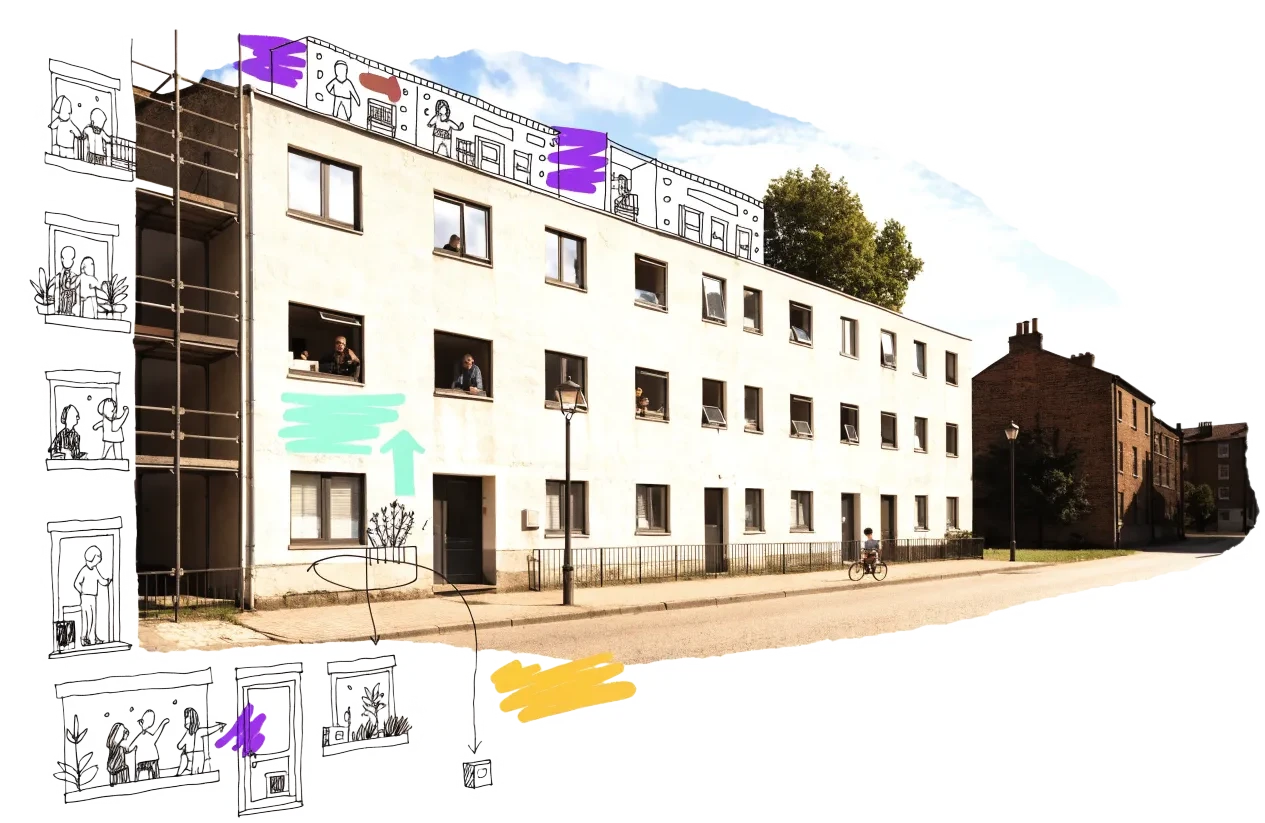
Put your hand on the bedroom wall of an uninsulated flat in January and you can feel the heating bill leaving the building. In the Vogelstang district of Mannheim, where many residents have a migrant background and the blocks are energy-inefficient, people told researchers they were struggling to heat their homes in winter and cool them in summer at a price they could afford. Many in the city administration had not picked this up as a problem in its own right.
That blind spot runs through a 2026 Horizon Magazine feature on two EU-funded research teams. One is led by Michael Janoschka, who treats rising housing costs and energy use as a single crisis. Almost 10% of EU citizens already spend more than 40% of their disposable income on rent, mortgage and utilities, and the wider squeeze on rents has its own deep dive. The energy part of that bill is the part a renovation can shrink.
Housing affordability is not only about rent or mortgage payments, but also about heating and, more and more, cooling.The cold-home figure moves with the energy market. The European Parliament’s study of housing needs reports that 9.2% of the EU population could not keep their home adequately warm in winter in 2024, down from 10.6% in 2023 at the height of the price shock but well above the 7.5% of 2020. The people who shiver are rarely the ones who can fix it: low- and middle-income households live in the least efficient dwellings and spend more of their income on energy, as Bruegel points out.
Share of the EU population. The 2022–23 energy price shock pushed it up; it has eased since, but stays above where it was in 2020. Source: European Parliament, Mapping the housing needs in the EU (2025)
The map below shades each country by the share of people who cannot keep their home warm enough. Look at where the darkest countries sit.
The darkest patches run along the south and south-east, from Portugal and Spain to Greece, Cyprus and Bulgaria, while Finland and Norway, with the longest winters, report some of the lowest shares. Being cold at home depends less on the climate than on the building, and on what the household can afford.
Both research teams in the Horizon feature reached the same conclusion: making homes greener will not automatically make them fairer. The first thing to know is how much greener Europe has promised to make them, and how fast.
The renovation Europe signed up to
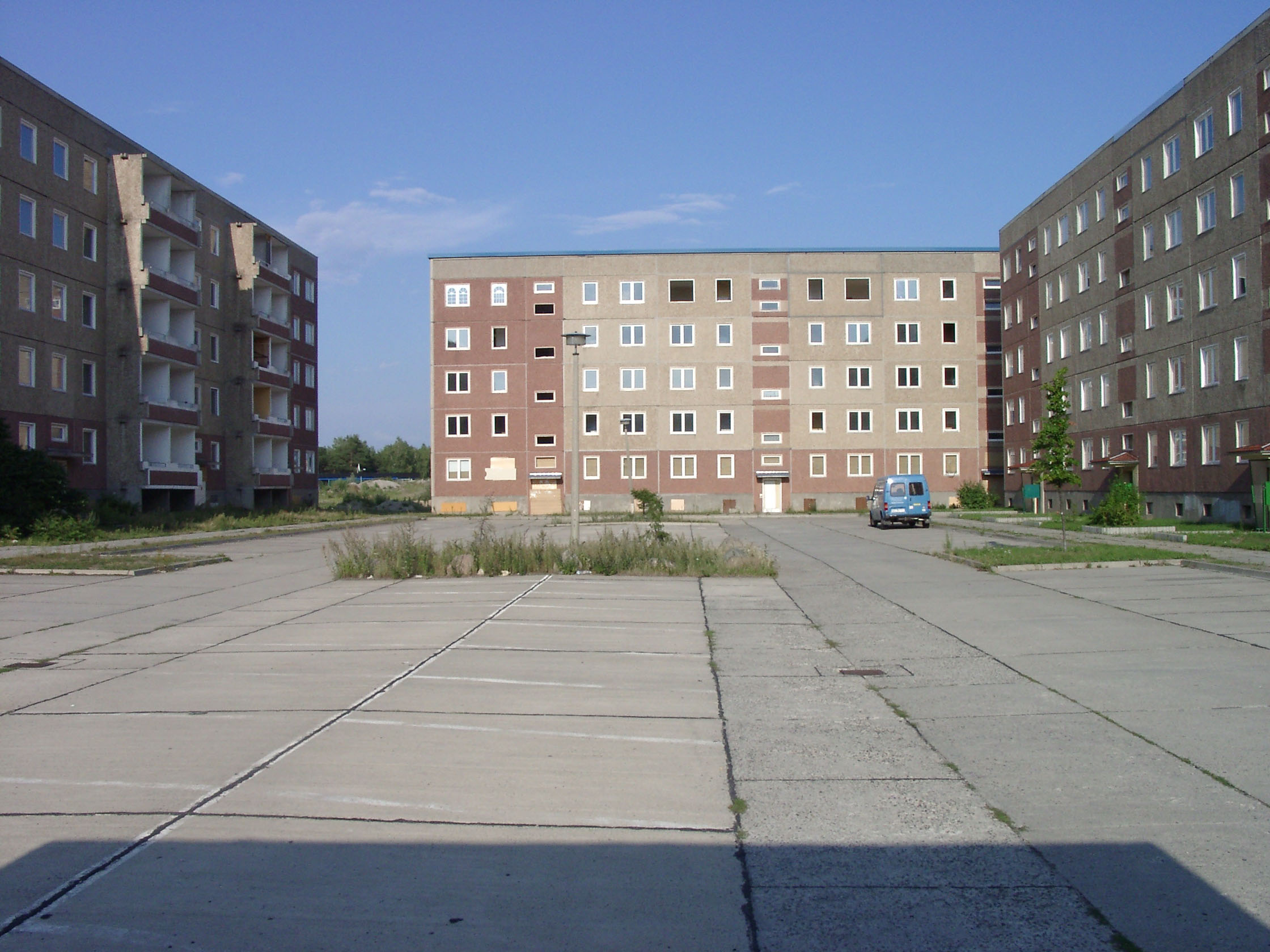
Most of the homes Europeans will live in by the middle of the century are already standing. The European Environment Agency expects more than 85% of today’s buildings to still be in use in 2050, so the climate question for housing is mostly a renovation question.
The EU’s answer is the Renovation Wave, which aims to renovate 35 million buildings by 2030 by at least doubling the yearly rate of energy renovation. The recast buildings directive gives it force. Every member state was due to draft a national building renovation plan by 31 December 2025, and the directive was due to be written into national law by the end of May 2026. It also carries a social promise: tenants are to be protected from eviction when the works arrive.

Promise and pace are far apart. Between 2016 and 2020 only 1% of EU buildings were renovated each year, and deep renovations that cut primary energy demand by at least 60% reached 0.2% of residential buildings a year, according to Bruegel. National rates, on Commission estimates quoted by Correctiv, range from 0.4 to 1.2%, and the recast directive itself says that at the current pace decarbonising the building sector would take centuries. To bring the remaining 75% of the stock up to standard by mid-century, the yearly rate would have to roughly triple, to 3%.
The ranking below sets each country’s yearly rate of deep renovation against that target line.
Not one country reaches the line. Denmark, Sweden and Austria lead, and much of the south and east renovates at a pace closer to zero than to the target.
Closing that gap costs money. Bruegel puts the shortfall in investment for decarbonising buildings at €150 billion a year up to 2030, and the main EU instrument so far, the Recovery and Resilience Facility, which set aside €81 billion for it, expires in 2026. The social-housing sector has priced its own share. Housing Europe’s State of Housing report finds French social housing already ahead of the market, with 46% of it in the three most efficient energy classes against a quarter of all homes. Renovating its worst performers, which the report counts at almost 1.8 million dwellings, by 2034 means raising investment from €5 billion a year to at least €7.5 billion.
Part of the money is meant to come from a new source, and it will reach every household that still burns gas, oil or coal.
A carbon price on every radiator
Picture a family in a coal-heated house in Poland, a country with no carbon price on heating today. When the EU’s new one arrives, the Bertelsmann Stiftung’s study of its impact expects coal to cost about 42% more at the price anticipated at launch, and a typical coal-heated household to pay roughly €500 a year more to stay warm.

The new price is ETS2, the EU’s second emissions trading system. It puts a market price on the carbon in gas, heating oil and coal burned in homes, and in road fuel, and it starts in 2028. It was due in 2027; in November 2025, amid fears of a backlash over heating and petrol prices, the start was put back a year. In nine member states it replaces an existing national carbon price. In the other 18 it prices heating carbon for the first time.
Who pays? The study models all 188 million EU households and finds that ETS2 reaches the 103 million that heat with fossil fuels. At a starting price of about €60 a tonne, the average among them pays about €60 a year more. The tenth hit hardest, some 10 million households, face about three times that. Their disposable incomes average around €20,000, half the EU average, and more than 80% of them own their homes, more often single- or two-family houses than flats. They live mainly in Poland, Hungary and Slovakia, with smaller clusters in Spain, Italy and Greece.
So the households most exposed are mainly homeowners in the east and south who cannot find the tens of thousands of euros a new heating system typically costs. Tenants meet ETS2 by another road: it makes renovation more urgent, and in a rented flat the landlord decides when, how and at whose expense.
The Social Climate Fund is ETS2’s twin. It channels up to €65 billion of auction revenue to member states between 2026 and 2032, or €87 billion with national co-financing of at least 25%. No more than 37.5% of a national plan may go on direct income support; the rest is meant for investment, such as energy efficiency and clean heating. At the expected starting price that is enough to cushion the most exposed households in most member states, though not to replace heating systems at scale.
- 31 Dec 2025[source]
Renovation plans due
Member states owed the Commission a draft national building renovation plan.
- 2026[source]
The Social Climate Fund opens
Up to €65 billion of auction revenue for 2026–2032, €87 billion with national co-financing.
- May 2026[source]
The buildings directive becomes national law
The deadline for transposing the recast Energy Performance of Buildings Directive.
- 2028[source]
ETS2 starts
The carbon price on heating fuel begins, postponed from 2027.
The fund starts paying out two years before the carbon price reaches households: the window in which homes can be renovated first.
The authors are clear about its limits. The fund offsets the carbon price; high housing costs, tight rental markets and long-standing energy poverty need housing policy, including stronger tenant protection. That is where renovation becomes a question of who gets to stay.
When the renovation is the eviction
In Amsterdam, a better flat can lawfully cost more to rent. Dutch rents are regulated with a points system, and a renovation earns points. Stadsherstel, which restores historic buildings and has renovated and let 750 properties without seeking a profit, told researchers that it sees renovation as one way to gain points and raise rents, and that deep works are easiest when a flat falls empty between tenants.
That is how a renoviction works: the upgrade lifts the rent, or the value of the building, until the people who lived there can no longer afford to stay. A 2026 study for the Foundation for European Progressive Studies, which followed Amsterdam, Athens and Paris, found the risk even where landlords mean well. In Athens, which has no social rental sector, it found mostly cautionary tales.
England and Wales show the pattern in numbers. Since 2010, fuel poverty among owner-occupiers fell from 16% to 9%, while among private renters it rose from 19% to 24%, E3G reports. Its case for a warmer, fairer private rented sector starts with renters’ rights: insulation raises a home’s market value and may force tenants out during the works, and without secure tenure a rent rise after the upgrade becomes a back door to eviction.
In 2010 and in E3G's latest figures. Owners and social tenants got warmer; private renters are the only group that got colder. Source: E3G, A warmer, fairer private rented sector (2024)
Landlords describe the same arithmetic. At a Euractiv debate in early 2026, Philip Grosse, chief financial officer of the housing company Vonovia, called refurbishment “always a big struggle from a tenant perspective”, because tenants must still be able to pay the higher rent. Better-off tenants, he said, can absorb rises of 20 to 30%, less once lower utility bills are netted off; he wants subsidies aimed at those who cannot.
The FEPS study’s first rule is blunt: tenants should not pay. In public housing, any rent increase should be offset by the fall in energy bills. For cooperative, association and private rentals, public money or bank guarantees should come on condition that rents do not rise after the works. Amsterdam’s long-term plan already says housing costs for low- and middle-income households “should not rise as a result of the energy transition”, though the study finds it vague on how.
At EU level, the Commission’s Housing Advisory Board has recommended banning renovation-driven evictions in projects that receive EU money. Some landlords already plan around their tenants. In Salzburg, the social landlord Heimat Österreich gave the tenants of its Wir inHAUSer complex a say in the plans, and the city’s social landlords lent flats from their own stock while the works went on.
Rules can stop the worst cases. The larger question is whether renovation can be done at a scale and a price that does not have to be won back from the people living inside.
Renovating a street at a time
On the edge of a forest in Hagen-Helfe stands a housing complex built in 1966. Wohnungsverein Hagen, the city’s largest housing cooperative with around 6,000 flats, is renovating it serially, contracting ecoworks for the main works while taking down the old facades and adding new balconies itself. The project costs about €27 million, four-fifths of it financed with subsidised loans, and meeting the efficiency standard with serial methods earns a 30% grant towards repayment.

The cooperative is candid about the economics. Once subsidies are counted, it says, the cost is roughly on a par with a traditional renovation, and it expects costs to fall as more projects like it are built. What it gains is control of the outcome: it neither depends on high returns nor has to pay dividends, so it could set the rents after the works with its tenants in mind.
Scaling that up is mostly about people. The EU-funded re-MODULEES project tested renovation hubs in seven pilot markets and found that owners are often moved more by neighbours’ experience than by data, and that condominiums move slowly because each owner wants something different. Anne Kantel, who coordinates the HouseInc research project at the Fraunhofer Institute, draws the lesson: measures “need to go to the building and neighbourhood level”.
Cooperatives are built for that. A 2025 study of housing cooperatives found that collective ownership and long-term planning make it easier to invest over a building’s whole life and to buy in bulk, though decisions are slower and finance harder to raise. Renovating for winter alone can backfire: Housing Europe’s 2026 report on climate adaptation warns that insulation without ventilation and shading raises the risk of summer overheating, and in France renovations that combined energy efficiency with adaptation covered only three in every hundred square metres renovated.
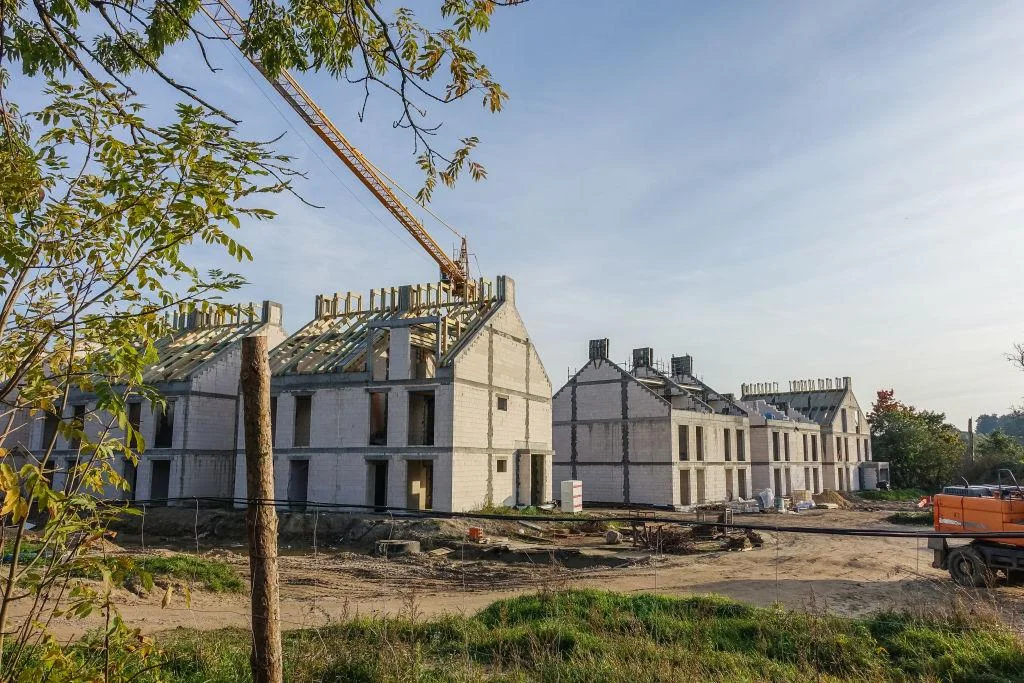
The option that looks cleanest on a developer’s spreadsheet is demolition. The Commission told Correctiv it has no official EU-level data on it. Germany’s statistics office recorded 12,600 buildings demolished in 2022, taking 16,500 homes with them, and the campaign HouseEurope! estimates that somewhere in Europe a building is destroyed every minute. In its film The Demolition Drama, contributors argue that the extra cost booked against renovation is often unanalysed risk plus dearer finance.
Bordeaux shows the alternative. At the Grand Parc estate, Lacaton & Vassal, with Druot and Hutin, transformed 530 social flats while every resident stayed at home, standing prefabricated winter gardens in front of the old facade. Each flat took about two weeks. In his TED talk, the architect Olaf Grawert puts the cost at €55,000 a flat, a third of the €165,000 a new one would cost.
Transforming a flat with its residents at home cost a third of building a new one. Source: Olaf Grawert, TED (2026)
The most sustainable house is the one already built.Whether a renovation like that lowers the bills of the people inside or raises their rent depends less on the crane than on who owns the building.
Who owns the upgrade?
Every renovation creates value: lower bills now, and a healthier home that lasts longer. This whole story turns on who keeps it. In a rented block the landlord pays and the tenant saves, so the landlord recovers the cost through the rent. In a cooperative the residents are both owners and users, which, the study of housing cooperatives found, eases that split incentive and lines up sustainability with affordability.
Not-for-profit owners already show it. Of the roughly 260,000 rental homes built before 1980 that Austria’s limited-profit housing associations own and manage, only about 4% have yet to be retrofitted and insulated; across all Austrian housing of that age the figure is about two in five.
The European Housing Coop is built on the same logic. Its buildings are renovations of existing stock, and its cost-rent model lets the residents’ cooperative own the upgrade, so an energy saving lowers what members pay instead of raising what a landlord can charge. That is the social half of its climate case.
To see how that works for one building, from what the works cost to what a household pays in year one and in year thirty, open the economic model. For the other half of the climate case, putting empty buildings back into use, read Turning empty offices into homes.
References
From our library22
- The hidden link between Europe's housing crisis and energy poverty — Knowledge
- Part 1: Mapping the housing needs in the EU, assessing the impacts of scarcity and providing an overview of relevant EU legislation — Knowledge
- The solution to Europe’s housing affordability crisis must include building decarbonisation — Knowledge
- Building renovation: Where circular economy and climate meet — Knowledge
- Avoiding Renovictions in European Cities — Knowledge
- REPORT on the housing crisis in the European Union with the aim of proposing solutions for decent, sustainable and affordable housing — Knowledge
- Jede Minute wird in Europa ein Gebäude zerstört — Knowledge
- The State of Housing in Europe 2023 — Knowledge
- Heating Up Inequality? Socio-spatial impacts of ETS2 on European housing and cohesion — Knowledge
- A warmer, fairer, private rented sector (for England and Wales) — Knowledge
- Housing affordability - How can capital markets and real estate deliver Europe’s housing transition? — Knowledge
- Housing Advisory Board recommendations to the European Commission — Knowledge
- Wir inHAUSer — Project
- Renovating Homes the Cooperative Way in Germany: Serial Renovation at Wohnungsverein Hagen — Knowledge
- ecoworks — Organisation
- re-MODULEES Final Report — Knowledge
- Enabling and embedding circularity goals in housing cooperatives — Knowledge
- Climate adaptation in public, cooperative, and social housing in Europe — Knowledge
- HouseEurope! — Organisation
- The Demolition Drama — Knowledge
- Lacaton & Vassal — Organisation
- Why Are We Demolishing Homes During a Housing Crisis? | Olaf Grawert | TED — Knowledge
Further sources5
- Michael Janoschka, professor of regional science at the Karlsruhe Institute of Technology — Michael Janoschka, professor of regional science at the Karlsruhe Institute of Technology
- European Parliament, Report on the housing crisis in the EU (2026) — European Parliament, Report on the housing crisis in the EU (2026) · 31 Dec 2025
- Bertelsmann Stiftung, Heating Up Inequality? (2026) — Bertelsmann Stiftung, Heating Up Inequality? (2026) · 2026
- Correctiv (2025) — Correctiv (2025) · May 2026
- Olaf Grawert, architect and co-initiator of HouseEurope!, speaking at TEDxBerlin — Olaf Grawert, architect and co-initiator of HouseEurope!, speaking at TEDxBerlin