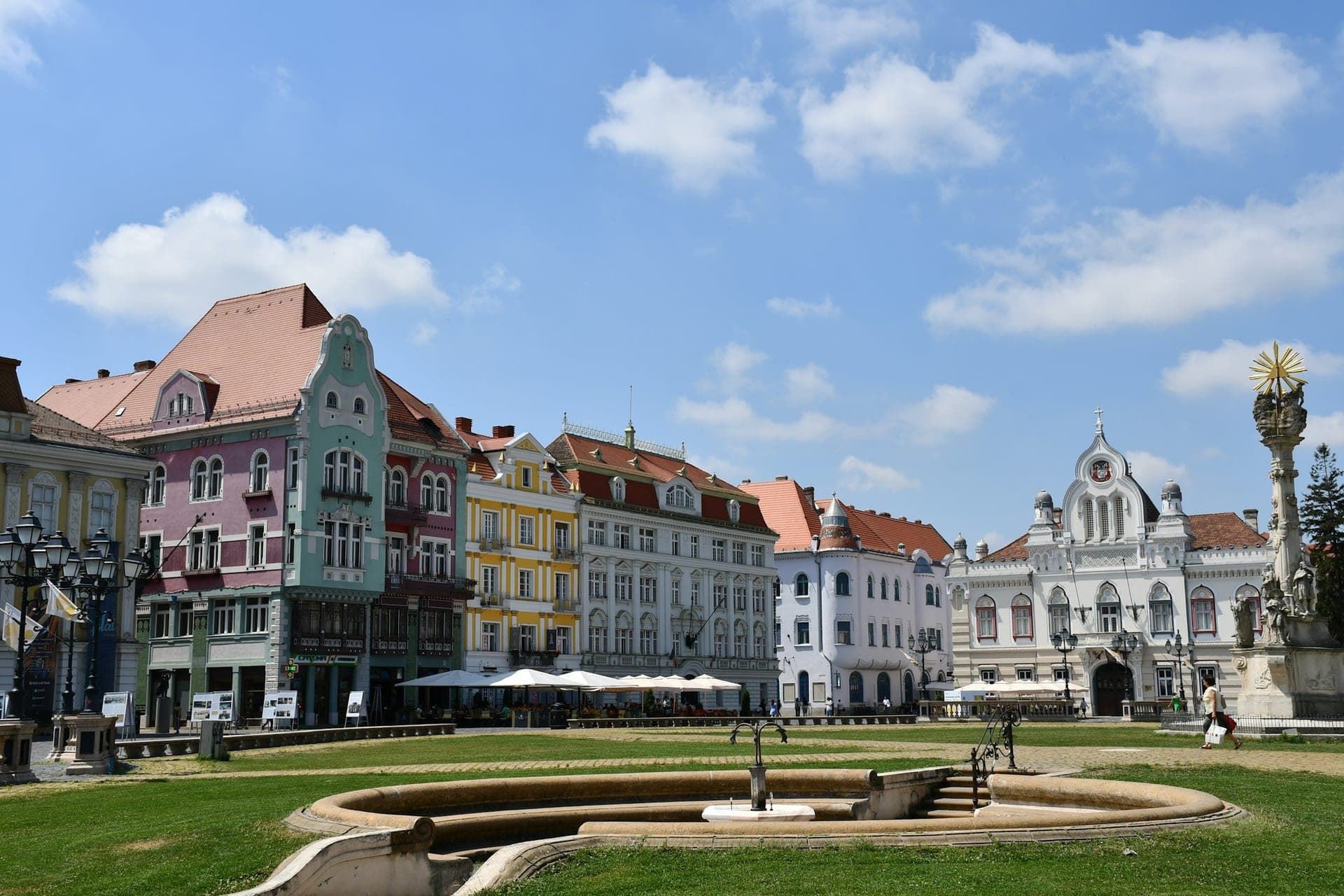
A city of owners, spilling into its fields
Timișoara grew up as a Habsburg fortress town on the Bega canal, and it still mixes peoples. Timiș county holds Romania's largest Serb and German communities, 10,100 and 8,500 people at the 2011 census. The city has made history twice. It lit its streets with electricity in 1884, and in December 1989 it started the uprising that ended Ceaușescu's rule. What came after shaped its housing as much as its politics. Within a few years, almost every tenant of a state flat had become its owner.
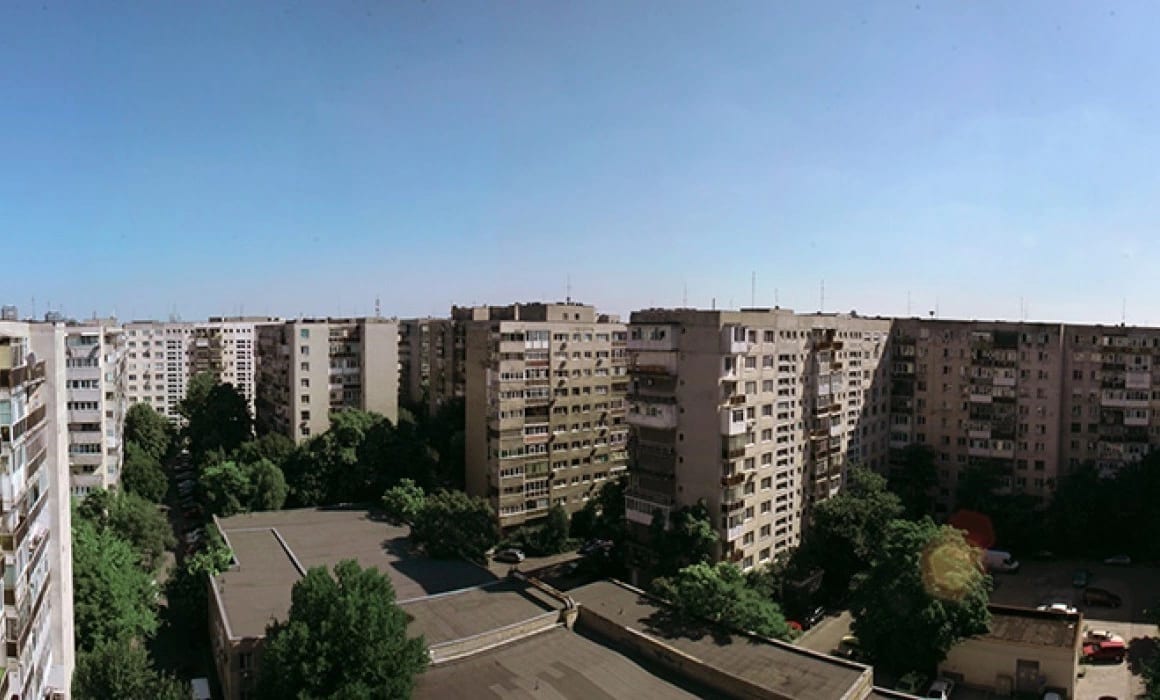
The result is a city of owners. At the 2021 census, 94% of households owned their home and 6% rented. Romanian statistics record no cooperative tenure, and we found no housing cooperative at work in the city. Public housing, meaning flats the municipality or state owns and lets, is too small to appear as a slice of its own. So the renting minority is almost entirely private: 6% of households rent from a private landlord, many informally. The pattern is national. In the 1990s Romania sold 2.2 million public rental flats to their tenants, 27% of its stock, as the Housing Europe country profile for Romania records.
- Owners
- Owner-occupier94.0%
- Renters
- Public & non-profit rental0.00%
- Cooperative0.00%
- Private rental6.0%
Social housing works differently. Under Law 114/1996 (Romania's housing law), a social home is a flat let at a subsidised rent to people who cannot afford to buy or rent on the market. It is a rule attached to a tenancy, not a tenure of its own, so it cuts across the slices above. In Timișoara it covers about 0.6% of dwellings. Nationally, the FES Social Monitor brief on social-housing demand counts 16,290 social homes, 0.17% of the stock, against more than 40,000 applications. In April 2026 the city hall asked earlier applicants to update their files under new allocation rules. They put low-income families, homeless people, single parents and older people without support first.
Rents are low by European standards and rising fast by Romanian ones. A new two-room let asks about €7.8/m² a month. Storia put a two-room flat at €450 a month in July 2026, 5% up on a year earlier. In the year to spring 2026 Timișoara was the only big city where rents rose markedly, by 16.7%. A whole furnished flat taken for about six months, bills included, costs an estimated €13.3/m². Buying gets dearer every year. Asking prices for new flats reached €2,189/m² in March 2026, 12% up in a year. Older flats averaged €1,875/m², still the cheapest of Romania's big cities and far below Cluj, as a Krónika feature on Cluj's price boom shows.
- New contracts
- Two-room flat, July 2026 (Storia)
- Furnished / serviced (gross)
Asking rents per m² of floor area. Romania publishes no realised-rent series, and there is no cooperative or public-housing rent to anchor the lower end.
Empty homes are part of the picture. The 2021 census found 11% of the city's dwellings unoccupied. Some belong to owners who moved abroad or out to the suburbs. Others stand in the historic districts, where the city judged about 250 buildings neglected in 2023–2024 and raised their property tax. Offices tell a milder story. Timișoara's 280,000 m² of modern office space stood 13% empty in 2025, and no office-to-flat conversion is on record.
The larger shift is outward. The city counted 250,849 residents in 2021, against 319,279 in 2011. Sociologists told Radio Free Europe that some of the fall is under-counting. The villages beyond the ring road tell their own story, though. Giroc grew to 22,270 people, Dumbrăvița to 20,014 and Moșnița Nouă to 16,424, each up about 165% in a decade. Around 5,500 people still move into the city each year. Another 22,000 students, trainees and posted workers stay for three to twelve months, mostly in the private rental market.
Who carries the strain? Nationally, families and the young. Romania has the EU's highest overcrowding rate, 40.7% of people in 2024 against an EU average of 16.9%. The FES brief on overcrowding finds 59.3% of families with children in overcrowded homes and 9.6% of Romanians in severe housing deprivation. Young people leave their parents' home after 28, later than the EU average of 26.3. In Timișoara the squeeze has reached salaried people. Tenants here pay the lowest rents of the big cities and earn among the highest wages. Even so, a flat takes about 43% of an average salary of €1,167, according to an Economedia analysis of rent against salaries. A Euronews România round-up of year-end rents found students in other university cities starting to organise as tenants.
The public mood matches. In autumn 2025, rising prices and the cost of living were Romanians' first concern in the Standard Eurobarometer, named by 39%. And 65% of tenants surveyed by Imobiliare.ro expected their rent to go up. The authors of a Social Europe essay on Central and Eastern Europe call it high ownership and low access: homes are plentiful where jobs are scarce, and scarce where the jobs are. In a city where almost everyone owns and nobody belongs to a housing cooperative, the obvious question is why that form never took root.
A cooperative law without cooperatives
Romanian law already knows the form. Law 1/2005 on cooperatives lists the societate cooperativă de locuințe (housing cooperative society): people who join to build, buy, renovate and manage homes for their own members. The law leaves the tenure open, so a society could own the building and let flats to members, or help members buy their own. Almost none has been set up. What Timișoara runs instead is the asociație de proprietari (owners' association), which every block must form to manage its roof, stairs and heating pipes. It is shared management without shared ownership. Each flat is a separate freehold, bought and sold at the market price.
The local tradition was paternalist rather than cooperative. Early in the 20th century the Kendes brickworks family parcelled out its land and let its workers buy cheap plots in what became Fratelia. The Kuncz family's Roma brickmakers were given land in return for their work and built homes on it without permits. Communism then replaced the plot with the block, putting up state estates for industrial workers around the old districts. After 1990, Decree-Law 61/1990 and Law 85/1992 let tenants buy those flats. The cooperative step between renting and owning was skipped entirely.
Today the sector is a set of intentions rather than a set of actors, and it falls into two clusters. The first is institutional. In May 2026 the World Bank and the European Commission held a workshop in Bucharest on housing cooperatives as a tool for social and affordable housing. The development and labour ministries took part, alongside the OECD and the Council of Europe Development Bank. The second cluster is activist. The Blocul pentru Locuire (Bloc for Housing) coalition includes Căși Sociale ACUM! (Social Homes NOW!) and the Frontul Comun pentru Dreptul la Locuire (Common Front for the Right to Housing). It ran a campaign in 2020. It wanted the city halls of Timișoara, Cluj and Bucharest to house every eligible applicant within two years. The two clusters want different things. Ministries want a legal and financial framework; activists want public rental homes first. Both would need the same missing pieces: land, long-term finance and a legal home for a non-profit landlord.
The nearest thing to a residents' housing community in Timișoara is small. The Jakab Toffler House Association was founded by the tenants of one historic building in the Fabric district to organise shared life in it: screenings, workshops and neighbourhood tours. Across the region the picture is further along. Groups in Belgrade, Budapest, Ljubljana, Prague and Zagreb have formed MOBA to finance cooperative buildings together. The MOBA study of needs and financing sets out how, and a study of cooperative housing pioneers in Central and South-Eastern Europe maps the groups behind it. No Romanian group has joined yet. So far the state treats cooperatives as a subject for technical workshops. None has yet become a line in a housing budget, and that gap runs straight into the politics.
New strategies, old levers, a mayor’s exit
The national framework is new and thinly funded. The government adopted Romania's first National Housing Strategy, covering 2022 to 2050, in June 2022. The minister who brought it said the country had never had one. Delivery still runs mainly through the ANL (Agenția Națională pentru Locuințe, the national housing agency), which builds rental flats for young people and key workers. In April 2025 the development ministry announced it would abolish the ANL. It survived, and its 2026 budget plans spending of more than 2.13 billion lei. Ownership remains the main lever. The Noua Casă (New Home) programme guarantees first-time buyers' mortgages, with a 500 million lei guarantee ceiling proposed for 2026.
We are starting with 'affordable housing', or social housing that is not necessarily social in the sense we use in Romania, but at an affordable price. We are proposing a new mechanism. We would like to reinvent the ANL.Fiscal policy has pulled the other way. VAT on new homes rose from 9% to 21% on 1 August 2025. From January 2026 the taxable value of a serviced home rose from 1,492 to 2,677 lei per m², lifting property tax by roughly 70%. The European Commission's 2026 housing annex for Romania notes that Romania now receives EU technical support to reform how social housing is run. The developers' side wants a definition first. Constantin Sebeșanu, president of the FIDES developers' federation, calls for a national definition of affordable housing that stresses decent, energy-efficient and well-connected homes over the cheapest ones.
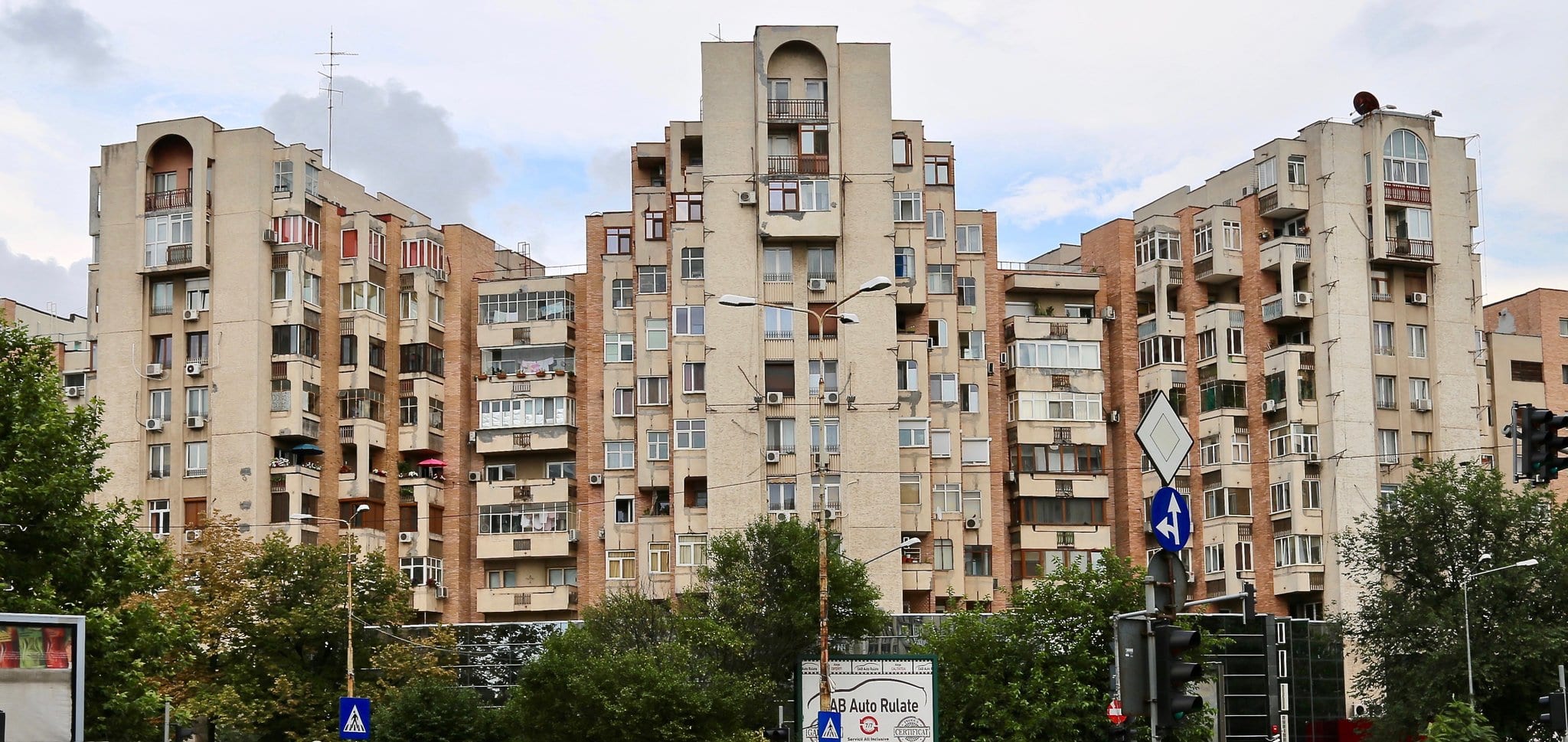
The municipal level holds the land and the plan. In October 2023 the council adopted a new General Urban Plan (Planul Urbanistic General, the city's master zoning plan), the first in 20 years. Dominic Fritz, mayor since 2020, had campaigned on a housing partnership: planning concessions for developers who set aside social flats in new blocks. We found no scheme of that kind delivered. His strategy for the Zona Antenelor, a 44-hectare former industrial area, aims to bring people back into the city with denser, better-connected streets. It names no affordable share. Fritz's term ends today, 30 September 2026, after the national integrity agency found a conflict of interest and the High Court upheld it. Vice-mayor Ruben Lațcău takes over his duties. The county works through the ANL. In 2018 it announced 88 ANL flats in suburban Giroc, half for young renters and half for the defence ministry.
If you want children who don't repeat their parents' story of vulnerability, those children must live in at least a minimally decent home, and go to school, to secondary school, to university.Timișoara's reply to its empty and decaying buildings is fiscal. Romanian law lets councils raise property tax on neglected buildings, and the city applies surcharges of up to 500%. The number approved rose from 34 in 2022 to about 250 in 2023–2024. The carrot sits beside the stick. Under a facade-restoration programme running since 2004, owners in the priority zones get 30% of eligible works as a grant. They can take up to 70% as a loan, repaid through a local tax over at most ten years. Neither tool turns an empty building into an affordable home. They only push owners to repair.
Energy is where the housing and climate agendas meet. EU money has insulated the blocks. About 3,400 apartments were renovated under the 2014–2020 regional programme, and 13 more blocks with over 1,000 flats were due by the end of 2025. The district-heating company Colterm, meanwhile, lost 3,000 subscribers in a year, falling to about 51,000 in 2023. The EBRD (European Bank for Reconstruction and Development) is lending €30 million for the heat network and urban regeneration. Romania's recovery-plan deadline for all reforms and investments fell on 31 August 2026.
- 1990[source]
State flats go on sale
Decree-Law 61/1990 lets the state sell the flats it built to the people living in them.
- 1992[source]
Law 85/1992
Tenants of flats built by state companies and institutions gain the right to buy them on request.
- 1996[source]
Housing law defines social housing
Law 114/1996 defines a social home as one let at a subsidised rent to people who cannot afford the market.
- 2005[source]
Housing cooperatives written into law
Law 1/2005 on cooperatives includes housing cooperative societies; almost none are founded.
- 2014[source]
City buys a distressed block
Timișoara buys a bank-repossessed block of 129 studios on Strada Polonă for €900,000 and lets it as social housing.
- June 2022[source]
First National Housing Strategy
The government adopts Romania’s National Housing Strategy for 2022 to 2050.
- October 2023[source]
New General Urban Plan
Timișoara’s council adopts its first new master plan in two decades.
- August 2025[source]
VAT on new homes rises
VAT on new homes rises from 9% to 21%.
- May 2026[source]
Cooperatives on the ministries’ table
The World Bank and the European Commission hold a Bucharest workshop on housing cooperatives as a tool for social and affordable housing.
- 30 September 2026[source]
Mayor Fritz leaves office
Dominic Fritz’s mandate ends after a conflict-of-interest ruling; vice-mayor Ruben Lațcău takes over his duties.
- 2028[source]
Tram depot conversion due
The 24-month conversion of the former tram halls into the MultipleXity centre, contracted in March 2026, is due to finish.
- 2050[source]
Strategy horizon
End date of the National Housing Strategy, whose aim is an inclusive, affordable and low-carbon housing system.
Milestones in Romanian and Timișoara housing policy, with the targets now on the books.
Factory halls, tenement courtyards and a block bought at auction
FABER is the city's clearest sign of what patient, shared ownership can do with an old industrial building. It occupies the former Farber family paint works on the Bega, later the Azur factory. Three founders from the IT sector bought and rebuilt it with the architects FOR and the social enterprise AMBASADA, who each hold a stake. It opened in 2020 as a hub for small creative firms and civic events, and it was a New European Bauhaus finalist for circular renovation. As Cooperative City's case study explains, its owners expect to wait more than a quarter of a century for their money back. It houses work, not people. Its ownership model is the part worth copying.
MultipleXity is the municipal version of the same idea. The city is turning its historic tram depot on Bulevardul Take Ionescu into an art and technology centre, with exhibition halls, co-working and a few residency flats for artists. The project costs 148.8 million lei, about half of it EU money, and the funding contract was signed in March 2026. Part of the site already runs as a tram museum.
The social block on Strada Polonă shows a cheaper route to public housing. In 2014 the city bought a privately built block in Freidorf after its builder defaulted and the bank auctioned it. It paid €900,000 for 129 studios, a fraction of what building them would have cost. Some units were joined to make homes for large families and disabled residents. The mayor of the day, Nicolae Robu, warned that the city could not become a welfare city. A decade on, the purchase is still the city's largest single addition to its social stock that we could trace.
The PressOne long-read on the city's second revolution is the best guide to the historic districts, where the housing question is mostly one of repair. In Fabric, it found 60% of heritage buildings in need of rehabilitation and dozens abandoned. The NGO Asociația PRIN BANAT documents those buildings one by one on its Heritage of Timișoara platform, down to the tenement houses built for rent before 1914. The facade loans and the neglect surcharge are the city's tools here. The tenants' Jakab Toffler House Association shows what residents can add once a building is sound again.
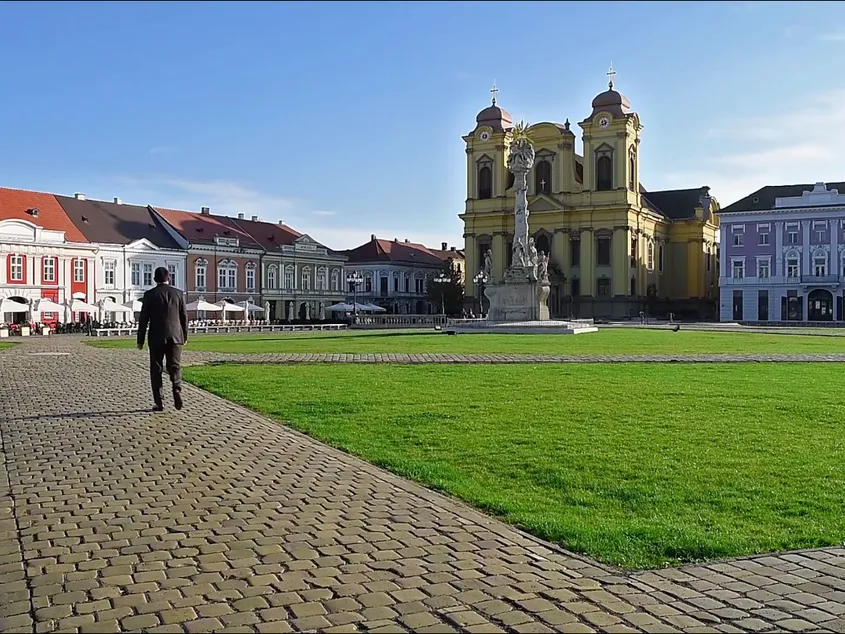
Kuncz, a Roma neighbourhood on the city's edge, is the hardest case. The families built their homes informally on land that passed to the city in 2004, so the municipality now owns the ground under them. Secure tenure there would be the most direct housing gain the city could make.
The next decade's homes will come mainly from the brownfields. On the former Solventul plant, founded in 1869 and closed in 1998, the Reuben Brothers and Nhood plan a mainly residential district on about 45 hectares. The old Spumotim foam factory is being cleared for 2,300 apartments. Mulberry Development's ISHO riverside quarter adds a new tower with duplex penthouses. The announcements published so far name no affordable share. Nothing in the city's plans yet requires one.
So the materials are on the table. There are industrial halls and old owners who know how to share them, a stock of tenement houses the city pays to repair, and a proven habit of buying distressed buildings. Timișoara has already shown that one former factory can be owned in common. Doing the same with homes would be new, and Timișoara has done new things first before.
References
Statistics6Click on any number to see the source
Housing market
Population & migration
From our library14
- Social and Public Housing in the EU & UK – Romania — Knowledge
- Problema locuirii în România: Cererile de locuințe sociale sunt de 2,5 ori mai mari decât fondul locativ social existent — Knowledge
- Buying Property in Cluj-Napoca is a Luxury. Is it a Bubble or Reality? – Experts Share Their Views on the Outlook — Knowledge
- The housing problem in Romania: 1 in 10 Romanians live in extremely poor housing conditions and most families with children live in overcrowded homes — Knowledge
- Analiză imobiliară: În unele orașe, chiriașii dau până la două treimi dintr-un salariu mediu pe chirie — Knowledge
- Chirii în creștere la final de 2025: Craiova, campioana scumpirilor — Knowledge
- Housing Crisis Threatens to Fracture Central and Eastern Europe — Knowledge
- Schimb de experiență: Cooperativele de locuințe ca instrument pentru locuințe sociale și accesibile ca preț în România — Knowledge
- MOBA: Rethinking needs and financing for affordable rent and cooperative housing in Central and South-Eastern Europe — Knowledge
- Cooperative Housing Pioneers in Central and South- Eastern Europe: Mainstreaming Alternatives through Translocal Networks — Knowledge
- Desființarea Agenției Naționale pentru Locuințe: ce înseamnă pentru accesul tinerilor la locuințe — Knowledge
- 2026 Romania Housing Annex (European Commission) — Knowledge
- FABER Timișoara (Cooperative City) — Knowledge
- A doua revoluție a Timișoarei — Knowledge
Further sources44
- Digi24 on the 2011 census, Timiș county
- Law 114/1996
- asked earlier applicants to update their files
- Express de Banat, Storia data for July 2026
- Newsweek România, June 2026
- Antena 3 on the Imobiliare.ro index, April 2026
- Primăria Timișoara, report on neglected buildings, 2025
- BusinessForum on Griffes office data, January 2026
- Digi24 on the 2011 census
- Radio Free Europe
- Wikipedia, 2021 census
- Wikipedia, 2021 census
- Wikipedia, 2021 census
- Cyprus Mail on Eurostat, December 2025
- Edupedu on Eurostat, September 2026
- Standard Eurobarometer
- Economica.net on an Imobiliare.ro survey, February 2025
- Law 1/2005
- parcelled out its land
- given land in return for their work
- Decree-Law 61/1990 and Law 85/1992
- ran a campaign in 2020
- National Housing Strategy
- 2026 budget
- Economedia, April 2026
- Economica.net, July 2025
- Economedia, December 2025
- calls for a national definition of affordable housing
- General Urban Plan
- 20 years
- housing partnership
- strategy for the Zona Antenelor
- takes over his duties
- Mediafax, September 2018
- Primăria Timișoara, report on neglected buildings, 2023
- facade-restoration programme
- Ediția de Timiș, May 2025
- lost 3,000 subscribers
- EBRD project 56078
- fell on 31 August 2026
- The social block on Strada Polonă
- former Solventul plant
- Ziua de Vest, August 2026
- ISHO
Funding & land tenure
What a housing cooperative could actually build on hereTimişoara is not in the funding registry yet — the tenure figures above are national.