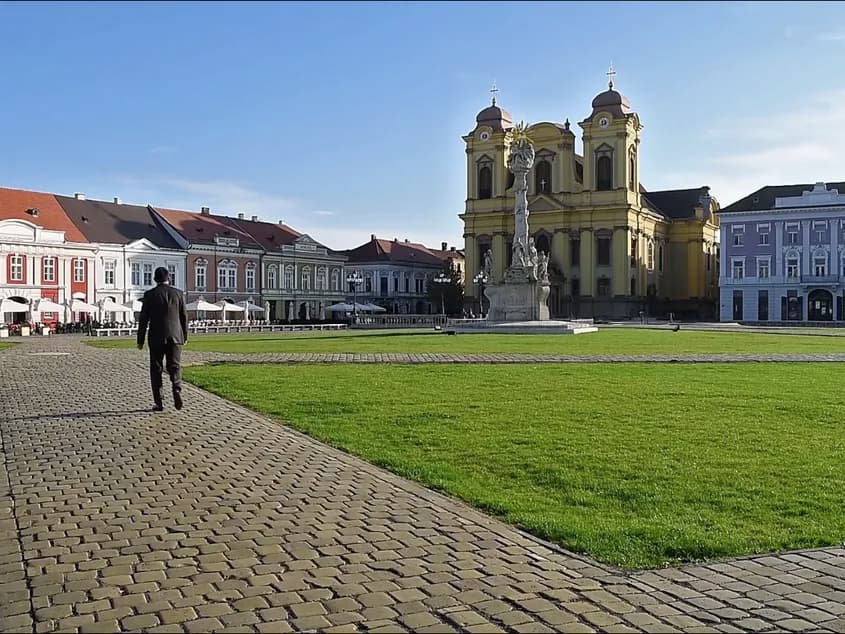
Heritage and Urban Decay in Timișoara
The article “A doua revoluţie a Timișoarei” is a long‑read produced by PressOne and authored by Bianca Felseghi. It examines the deteriorating historic fabric of Timișoara, Romania, and the municipal programmes aimed at restoring façades, roofs and other building elements in the city’s old districts. The piece was automatically extracted from the PressOne website and is part of the EHC profile routine, cited in the “city/timisoara § lighthouse‑projects” collection.
Restoration Funding and Mechanisms
Since 2005 the city has accessed a €5 million non‑repayable credit from the German GTZ agency for historic‑building rehabilitation, yet the funds remained largely unused due to legal constraints. In 2015 a amendment to Romania’s Law 153 allowed local authorities to co‑finance façade, carpentry and roof works and to recover costs through a “heritage‑rehabilitation tax”. The 2016 municipal programme offered owners up to 50 % of project costs as non‑repayable public funding, with the possibility of receiving 100 % of the invoice if the owner later reimbursed half of the amount. Approximately €9 million was earmarked for these subsidies, to be spent by 2019.
Scope of the Historic Building Stock
Official 2011 data listed more than 14 500 historic structures in Timișoara, many in advanced states of decay. The majority are concentrated in three zones: the Citadel (centre), Iosefin (south‑west along the Bega River) and Fabric (north‑east). In the Citadel, half of the significant buildings are unrepaired, with 17 abandoned. In Fabric, Iosefin and Elisabetin, around 60 % of heritage buildings need rehabilitation and 34 are abandoned. The city’s total heritage inventory is estimated at roughly 14 000 buildings.
Sustainable Urban Renewal Goals
The municipal plan stresses “re‑habilitation and pedestrianisation of the historic centre”, standardising the urban layout of the Corso area and other historic districts. The long‑term objective is to integrate sustainable housing solutions within the restored fabric, reducing energy loss through façade upgrades and roof insulation. By improving building envelopes, the programme aims to lower heating demand and preserve cultural identity simultaneously.
Economic Impact and Employment
Timișoara’s low unemployment (just above 1.2 %) is attributed to large foreign investors, particularly in the automotive sector (Continental, Siemens). However, the article notes that reliance on big‑scale industry limits space for smaller, innovative firms that could drive sustainable housing innovation. Candidates for the European Capital of Culture 2021 highlighted the need for more small‑scale enterprises in IT, services and green technologies to support the city’s reinvention.
European Relevance and Cultural Capital Status
Timișoara was awarded the European Capital of Culture title for 2021, a distinction that has heightened international interest in its urban regeneration model. The city’s budget for culture reaches €11.7 million annually (excluding the €20 million multi‑annual capital‑culture programme), illustrating substantial public investment that can be leveraged for sustainable heritage projects.
Key Facts at a Glance
- Publisher: PressOne
- Author: Bianca Felseghi
- Historic buildings: >14 500 (2011)
- Funding available for rehabilitation: €9 million (target 2019)
- Legal change: Amendment to Law 153 (2015) enabling co‑funding
- Unemployment: ~1.2 % (lowest in Romania)
- European Capital of Culture 2021 – cultural budget €11.7 million per year The summary presents the factual context of Timișoara’s heritage challenges, the financial and legislative tools deployed for building restoration, and the broader sustainable‑housing implications for a pan‑European audience.