More flats, barely more people
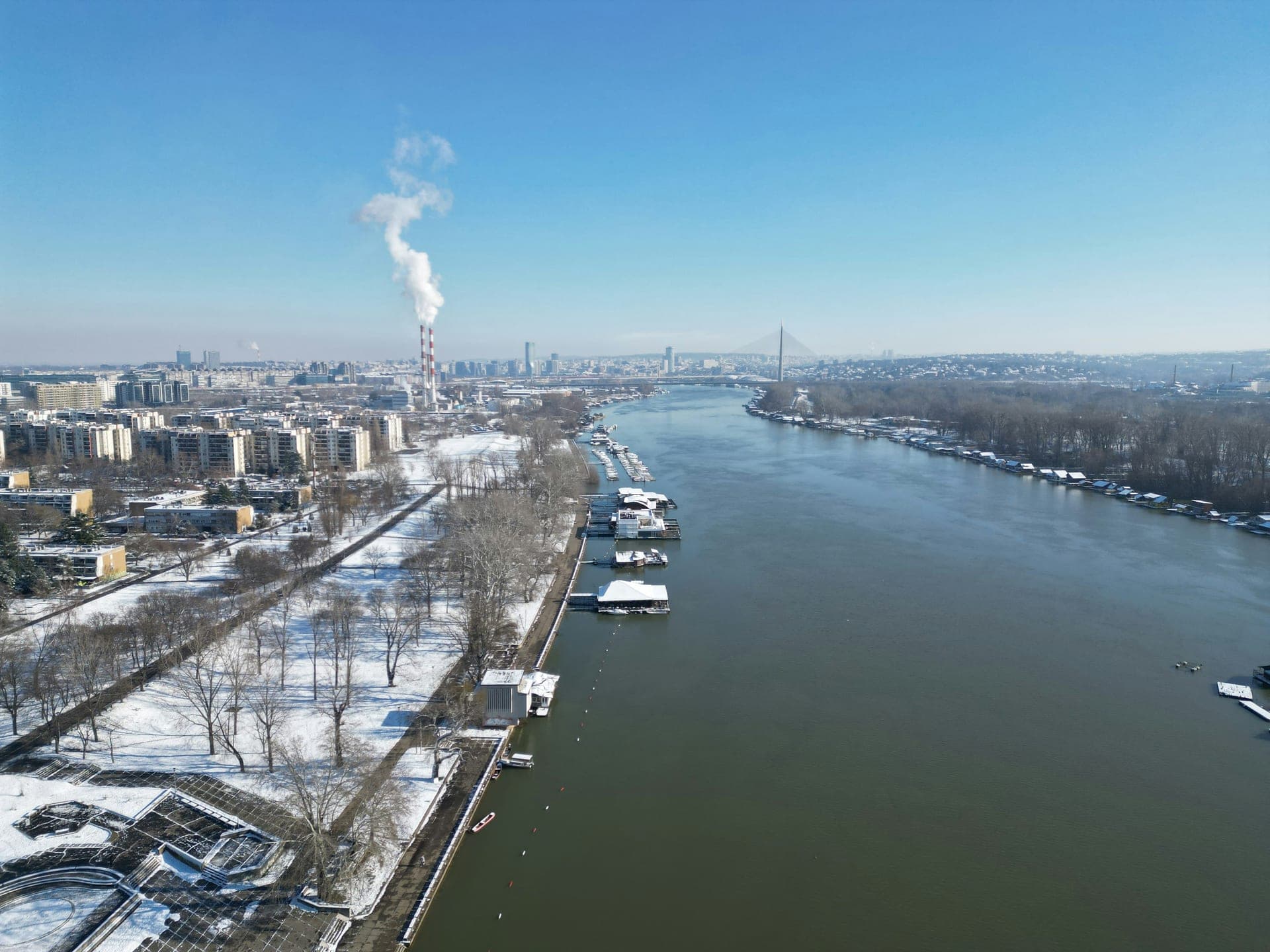
Belgrade sits where the Sava meets the Danube, a crossing so useful to armies that the city has been battled over in 115 wars and razed 44 times. Every rebuild answered the housing question in a different language. The last big one broke ground on 11 April 1948, when sand dredged from both rivers was spread over marshland and the 72 blocks of New Belgrade were set out for a socialist republic. The rebuild under way now is being written by private buyers and a state mortgage subsidy.
The tenure mix is the most lopsided in this portfolio. Of some 754,000 dwellings, 86% are lived in by an owner and 8% by a tenant on a contract. There is no municipal landlord at scale and no cooperative sector. Private renting therefore accounts for that entire tenant share, at 8%. Across Serbia, publicly owned housing comes to 0.54% of occupied dwellings. The four-country comparison by Sónia Alves, Hans Thor Andersen, Els Keunen and Zlata Vuksanović-Macura sets that against Denmark's fifth of the national stock. Cooperative tenure does not appear in the figures at all. The remaining 6% is households in a relative's flat or living rent-free, a group Serbia's census counts together with tenants.
- Owners
- Owner-occupier86.0%
- Renters
- Public & non-profit rental0.00%
- Cooperative0.00%
- Private rental8.0%
- Other6.0%
- Relative's home / rent-free use6.0%
Social housing in Belgrade is a register rather than a sector. Marko Vasiljević of Initiative A11, a Belgrade social and economic rights group, puts the number of flats still on the city's books at 285. The city's one estate of consequence, Kamendin in Zemun Polje, holds about 1,500 flats whose tenants mostly moved in during 2008. Rent there is cost-based. In practice the bill climbed from 11,000 dinars to 24,000, and 56 families are now in forced-eviction proceedings. No new municipal housing has been built for a decade, and the last allocation competition was held in 2018.
Rents are cheap by Western European standards and expensive against Serbian wages. The whole-stock median runs at €9.50 per square metre a month net cold, a new contract at €10, a furnished long let at €11 and a serviced flat at €17, with utilities adding roughly €2. In money rather than metres, a one-bedroom flat in the centre asks €759 a month against €505 beyond it. What the ladder lacks is a rung below the market.
- All-stock median
- New contracts
- Furnished (standard lease)
- Serviced / flexible
Net-cold monthly rent per square metre by tier; furnished and serviced are gross. Peer cities in this portfolio open their ladder with a cooperative or municipal rung far below the market. Belgrade has neither, so the cheapest rung on the chart is the open market itself.
Empty space is the strangest part of the picture. The dwelling vacancy rate stands at 18%; the census counted 10,021 abandoned dwellings in the Belgrade region and a further 108,714 classed as only temporarily inhabited. Danijela Rabrenović, an architect, reckons the abandoned flats alone come to half a million square metres and €5 billion of idle capital. Offices are the opposite case. Vacancy there is only 4%, or 56,000 square metres in a stock of 1,400,000. The conversion prize other cities chase is not here.
Supply has outrun population growth by a wide margin. Between the last two censuses Belgrade's population rose 1.6% while its housing stock grew by nearly 20%. Registered in-migration adds about 18,000 people a year, with another 14,000 staying for three to twelve months. Building is cheap by regional standards. Construction runs near €750 per square metre and residential land near €350. Prices still rose 10.2% nationally in a single year, from €1,601 to €1,765 per square metre. The Belgrade region gained 11%. Serbia has no rent cap and no rent index.
Who this hits is no longer a question about the poorest households alone. The Ministry of Space, a Belgrade urban-research and advocacy collective, reports that more than 80% of citizens cannot rent or buy on the market unaided. It also finds that every second tenant spends over 40% of monthly income on rent, heating and utilities, and that 70% of Belgraders consider flat prices unaffordable. Its listings analysis put under 10% of advertised flats within reach of most residents. The cross-European rent comparison by the European Data Journalism Network puts a Belgrade apartment at 58% of the average local wage, on figures gathered by the investigative outfit CINS. The pressure reaches the middle class. The investor report by Zsuzsanna Pósfai and Csaba Jelinek puts 20% to 30% of the regional population in housing-cost difficulty, middle-income households included.

The Russians came here without asking how much the rent was, and we already had a shortage of rental apartments on the market. What used to rent for €300 went up to €600 or €700 with the arrival of the Russians.The appetite for something else is measurable. MOBA is the transnational cooperative-housing network of Central and South-Eastern Europe. A conversation piece in the Radical Housing Journal reports its four-capital survey, in which 56% of Belgrade households said someone at home wanted to move within three years. That was the highest share of the four. The tier that might absorb the demand barely exists. Belgrade has one registered housing cooperative, and it has yet to lay a foundation.
One cooperative, and a century of them before it
Serbia's cooperative vehicle is the stambena zadruga, the housing cooperative, governed by the 2015 Law on Cooperatives, which lets five people found one. The contemporary version is use-based rather than ownership-based. A member pays an entry deposit and then a monthly contribution covering loan repayment, running costs and utilities, while the cooperative keeps title to the building so no flat can be resold at a profit. Pametnija Zgrada, the model built on that logic, aims to hold those monthly costs at roughly two-thirds of the market average. It is the local answer to the Genossenschaftsanteil of German-speaking Europe, the share a member buys to join, without the century of balance sheet behind it.
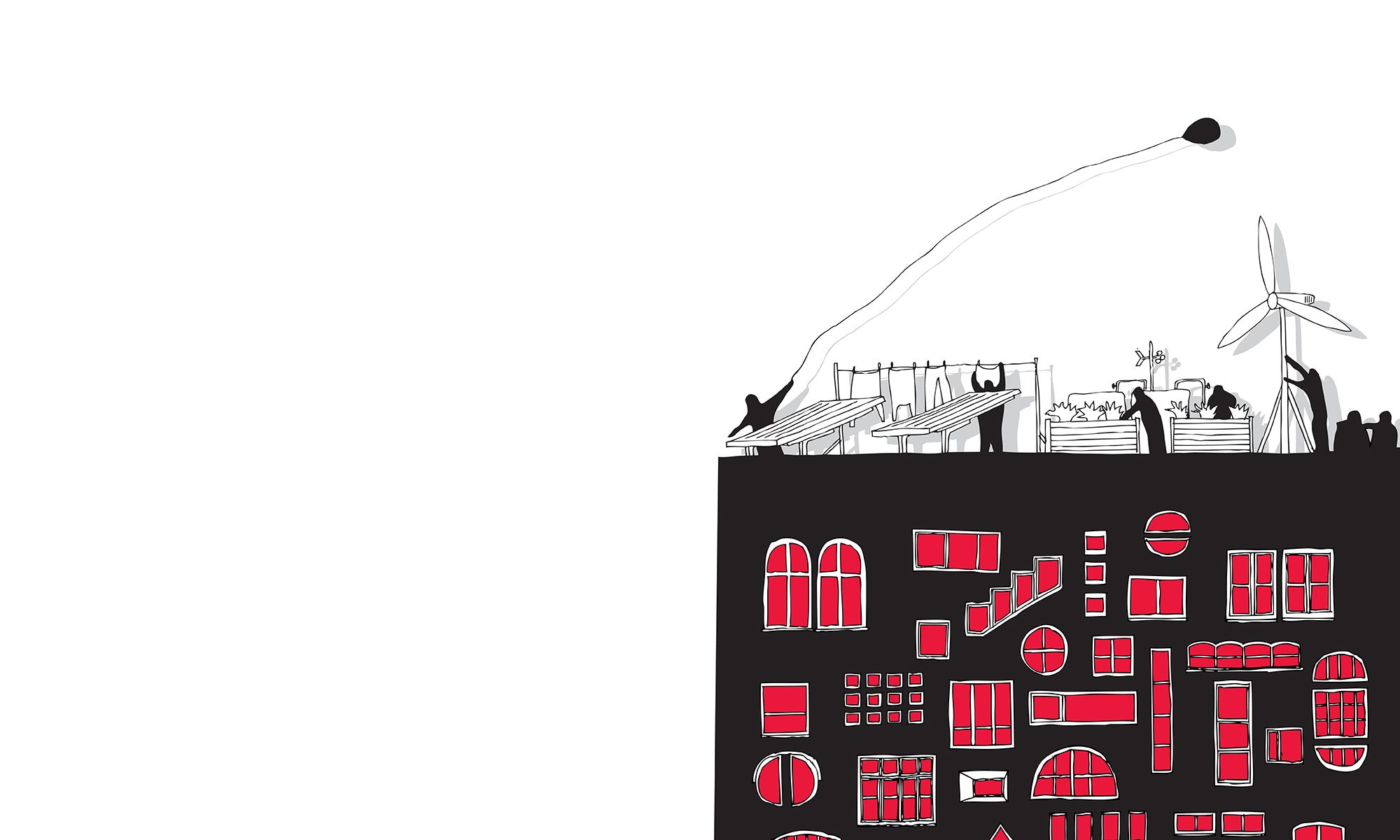
This is a revival, not an invention. Housing cooperatives grew out of Belgrade's savings-and-credit cooperatives in the second half of the nineteenth century. From the late 1960s to 1990 they built 5,000 to 8,000 flats and 10,000 to 15,000 family houses a year, about a third of everything built in the country in that period. The 1990s stripped away their privileged access to land and credit, and a 2004 change to value-added tax removed the relief they had enjoyed on construction materials. What survived was mostly the legal form, emptied of members and projects.
Today's sector divides into three groups that do not share a problem. A handful of legacy zadruge persist as small development companies with no pipeline of members. The single new project cooperative, Pametnija Zgrada, was incorporated in Belgrade in 2019. Its founders describe it as the first housing cooperative registered in the city in nearly twenty years. Its obstacle is finance, not demand. Organisational lending in the region runs to two or three years and is calibrated for developers building flats for sale. That does not fit a building repaid over decades. Third comes a civic research layer, Ko Gradi Grad and the Ministry of Space collective, which supplies the legal argument, the data and the advocacy the other two lack. Its work on what community participation actually delivers in cooperative housing is the subject of the RE-DWELL review of participatory practice in the sector.
What the cooperative idea has instead of a national framework is a regional one. MOBA Housing SCE, registered in 2020 as a European Cooperative Society, brings together members from Croatia, Czechia, Hungary, Serbia and Slovenia, with Ko Gradi Grad carrying the Serbian seat. Corinna Hölzl's study of cooperative pioneers in Central and South-Eastern Europe traces MOBA's two financing instruments. The first is an accelerator fund, a revolving pilot that starts at €1 million and aims at €15 million. The second is a European ethical bank, now seeking a licence in Lithuania after Croatia refused one. Both exist because domestic policy offers cooperatives nothing. That absence is where Serbian housing politics begins.
A mortgage subsidy, a snap election and no land
The sitting government's answer to the housing crisis is a mortgage, not a building. A law passed in early 2025 lets Serbians aged 20 to 35 buy a first home with a deposit of 1% instead of the usual fifth. The state guarantees 40% of the loan for a decade and subsidises the interest for six years. First Deputy Prime Minister and Finance Minister Siniša Mali put the opening instalment on a €75,000 flat at €93 a month. Demand overran the design. The guarantee scheme opened at €400 million and was raised to €600 million in autumn 2025, then to €900 million in June 2026. By then 7,400 applications had been filed and roughly 4,400 loans approved.
Only stable economies and strong states such as Serbia can offer this kind of help.When state aid comes to €600 per square metre and the price of the flat rises by €300 because demand has gone up, the borrower actually gains only €300.The levers are stacked unevenly. Tenancy law, the guarantee scheme and the subsidy line all sit in Belgrade ministries. The Ministry of Finance runs the money. The Ministry of Construction, Transport and Infrastructure, under Aleksandra Sofronijević, holds planning and legalisation. Serbia's 2016 Law on Housing and Building Maintenance defines five categories of housing support and hands delivery to municipalities. That is where it thins out, as the four-country study of social housing systems records. The City of Belgrade allocates land and keeps the social-housing register. It sells non-profit flats to qualifying households at €450 per square metre before tax, but it does not build them any more. All of this is being argued over during a campaign. Prime Minister Đuro Macut asked the president to dissolve parliament on 7 September 2026, setting up a vote on 18 or 25 October. Protests over the Novi Sad railway-canopy collapse had run for nearly two years by then.
For cooperatives, the policy shelf is bare. There is no concept-led land tender of the kind German cities run, no ground-lease instrument, no federation pact and no dedicated credit line. When the draft national housing strategy went out for consultation, the Ministry of Space collective and the Housing Equality Movement filed formal objections. The document set out possibilities and initiatives where it needed targets. The consultation window had also been placed across the holidays. So the gap that Corinna Hölzl's work on translocal cooperative networks describes is not a funding gap alone. It is the absence of a counterpart on the public side.
On empty homes the state has chosen amnesty over penalty. Serbia levies no vacancy tax and keeps no empty-homes register, and with office vacancy in the low single digits there is no office glut to convert. What it does run is legalisation. Under the "Svoj na Svome" scheme, or Own Your Own, Sofronijević reported 2,500,000 applications against an estimated 2,300,000 unregistered buildings, and expects 800,000 to a million to be resolved within six months. Heritage protection has moved the other way. On 7 November 2025 parliament passed a special law stripping the bombed General Staff complex of its protected status. The site was to carry a $500 million hotel and apartment scheme by Jared Kushner's Affinity Partners. The developer walked away that December after weeks of protest.
Serbia is not an EU member, so the recast Energy Performance of Buildings Directive does not bind it directly. Its Energy Community treaty obligations still pull its building rules towards the European acquis, and the retrofit money is already moving. The Public ESCO programme is worth €64.5 million, of which €50 million comes from the EBRD, the European Bank for Reconstruction and Development. It covers half the cost of renovating more than 500 district-heated residential buildings from the 1960s to the 1980s, chasing energy savings above 35%. That stock is New Belgrade's stock. Retrofitting it is the largest non-market housing intervention the city has running. It is being delivered through building associations rather than cooperatives, because cooperatives are not there to deliver it.
- 1880s[source]
Stambene zadruge grow out of the savings banks
Belgrade's first housing cooperatives emerge from credit and savings cooperatives in the second half of the nineteenth century.
- 11 April 1948[source]
New Belgrade breaks ground
Sand from the Sava and Danube is spread over marshland; the district is eventually laid out in 72 blocks and now houses 209,763 people.
- 1968-1990[source]
The stambene zadruge peak
Housing cooperatives build 5,000 to 8,000 flats and 10,000 to 15,000 family houses a year, around a third of all Yugoslav housing output.
- 2004[source]
VAT removes the stambene zadruge advantage
The value-added tax reform ends the relief cooperatives held on construction materials, accelerating their decline.
- 2008[source]
Kamendin fills up
Tenants move into Belgrade's largest social estate, about 1,500 flats in Zemun Polje let on cost-based rents.
- 22 December 2016[source]
Law on Housing and Building Maintenance
Serbia rewrites its housing framework, defining five housing-support programme types and assigning delivery to municipalities.
- 2019[source]
Pametnija Zgrada is incorporated
The first housing cooperative registered in Belgrade in nearly twenty years is founded inside the Ko Gradi Grad platform.
- 2020[source]
MOBA becomes a European Cooperative Society
The regional network registers as an SCE with members in five countries, giving Serbian cooperative housing a cross-border financing route.
- 1 March 2025[source]
Subsidised first-home loans open
Buyers aged 20 to 35 can borrow with a 1% deposit, and the guarantee scheme opens at €400 million.
- 7 November 2025[source]
Special law on the General Staff complex
Parliament votes 130 to 40 to remove the site's heritage protection for a $500 million Affinity Partners development.
- December 2025[source]
The developer withdraws
Affinity Partners abandons the General Staff scheme after sustained public protest.
- June 2026[source]
Guarantee scheme reaches €900 million
A third expansion follows 7,400 applications; economists warn the subsidy is feeding the price of smaller flats.
- October 2026[source]
Snap parliamentary election
The government asks for parliament to be dissolved on 7 September, with the vote set for 18 or 25 October.
- 2027[source]
Expo Belgrade and its housing legacy
A residential complex of 532 flats and 21 commercial units in Block 45, New Belgrade, is among the schemes riding the Expo programme.
- 2027[source]
Public ESCO retrofit runs through the panel blocks
The €64.5 million programme covers half the cost of renovating more than 500 district-heated residential buildings, targeting energy savings above 35%.
- 2031[source]
The subsidy cliff
The six-year interest subsidy on the first cohort of 2025 loans expires and monthly instalments step up, the risk economists flagged when the scheme was expanded.
Milestones that shaped the city's tenure mix, and the target dates now written into policy.
Proof at the scale of one building
Belgrade's demonstrators are small, and that is the honest measure of where the city stands. What follows is one cooperative and the collectives around it. Then one municipal estate that shows what cost-rent needs and lacks. Then the two public programmes large enough to change the existing stock.
Pametnija Zgrada, the Smarter Building cooperative, is the proof of concept. Its members collectively develop, finance, own and run a single multi-apartment building, and the cooperative keeps title so no flat can be flipped. The founders make the case plainly: in Belgrade most people reach a home through inheritance or risky borrowing, and this is the third route. The years since incorporation have gone on land, credit and the tax treatment of a legal form the state stopped thinking about. It has also been presented as a prototype other Serbian cities could copy.
Ko Gradi Grad, Who Builds the City, is the platform the cooperative grew inside. It began in 2010 as an informal response to a development pattern marked by privatisation and thin public oversight, and registered as a citizens' association in January 2016. The Smarter Building model has been in development there since December 2012, pursued through legal advocacy and direct action rather than architecture competitions. Ko Gradi Grad also holds Serbia's seat in MOBA, which is how a single Belgrade project connects to a regional balance sheet.
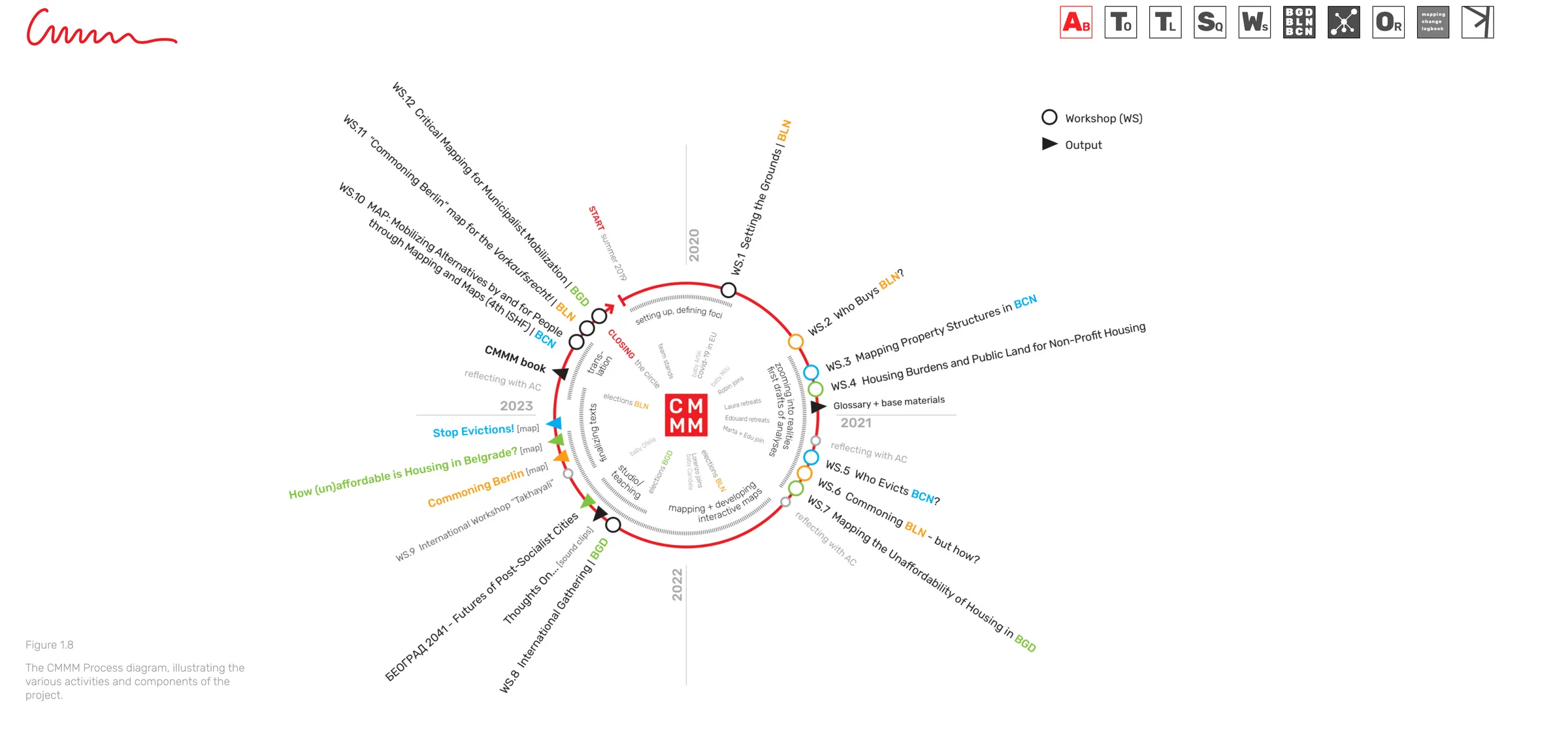
The Ministry of Space collective, founded in 2011, supplies the evidence the sector argues from. It publishes affordability research on Belgrade and built the listings analysis that found only a small minority of advertised flats within reach of ordinary residents. It also files formal objections when planning documents and national strategies go out for consultation. Its work sits alongside Critical Mapping for Municipalist Movements, a 2019 to 2023 project that put Belgrade beside Barcelona and Berlin and handed housing campaigners feminist data-visualisation tools instead of another report. Belgrade appears in that comparison as the high-homeownership case, where the crisis runs through prices rather than through landlords.
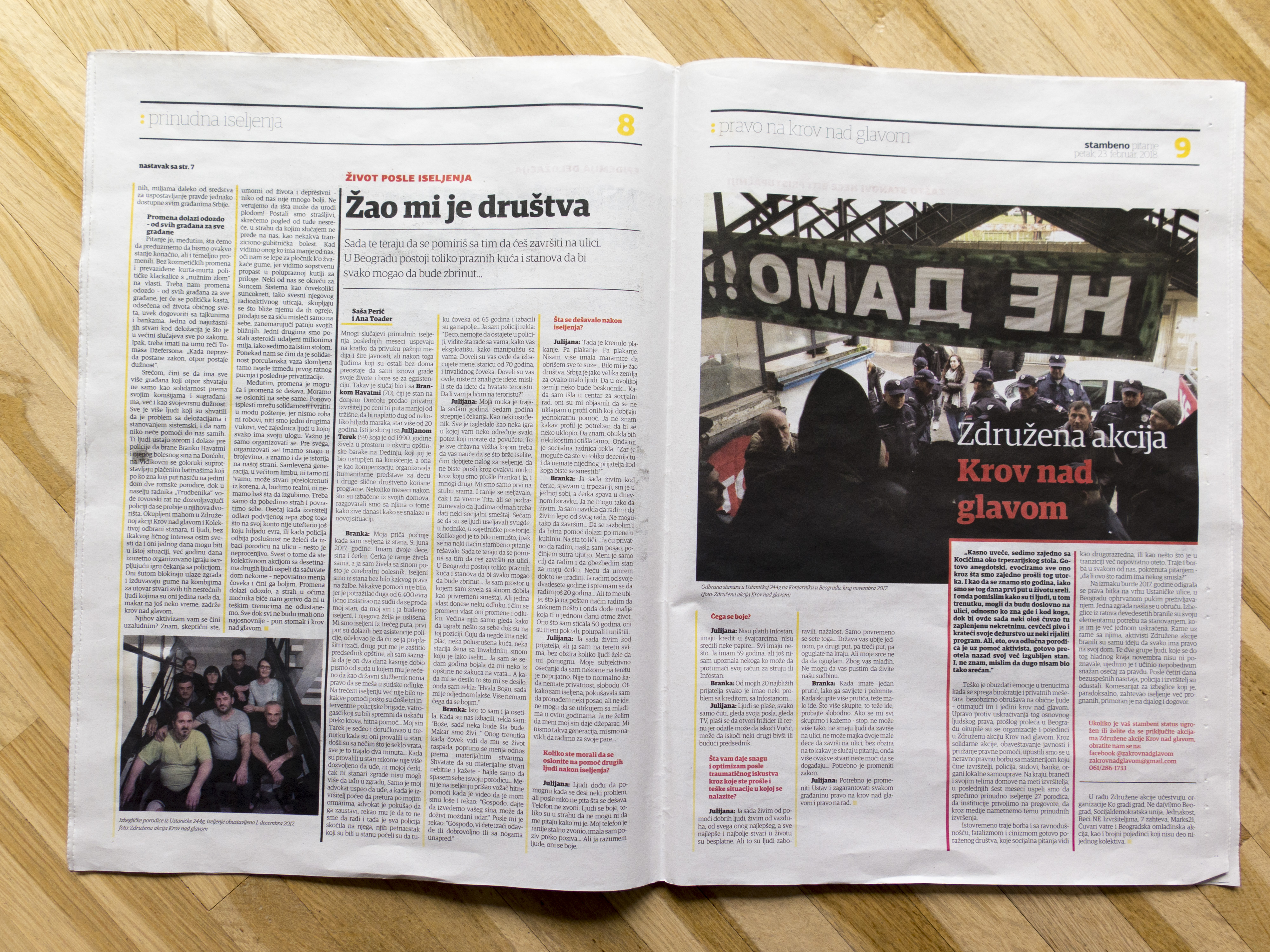
Kamendin, in Zemun Polje, is the cautionary case, and it belongs here because the lesson is transferable. The city built the estate and let its flats on cost-based rents, which track actual costs. With no rent pooling, no maintenance fund and no cooperative governance to absorb a shock, the bill kept climbing. Tenants who had qualified on low incomes ended up in arrears. Of the households now in dispute, 17 have been evicted or are awaiting enforcement. Violeta Filip, who chairs the Socio-Economic Council, told the public broadcaster RTS that plans to address the estate are still only an idea in its infancy.
The city promised us these were social flats, that they would be treated as social flats, that we would pay 3,000 or 4,000 dinars. By 2014 a bill for 20,000 dinars arrived.The Public ESCO programme is the largest thing the state does to homes that already exist. The district-heated blocks it renovates add up to roughly 1 million square metres of floor area, at an average of €2,500 per flat. Maja Vukadinović, then Assistant Minister of Mining and Energy, framed it as lower bills and higher property values. For New Belgrade's towers it is also the only route by which the socialist-era stock gets a second life instead of a demolition argument.
The Belgrade Linear Park is the city's one large adaptive-reuse commitment. A 4.6 kilometre green corridor will cross 48 hectares of disused railway land, running from Beton Hala below the fortress to the Pančevački bridge. It is budgeted at €55 million and divided into ten themed sections. It converts infrastructure rather than buildings, and it sits on land that could have carried homes. That was the argument the Ministry of Space made when the detailed plan went to public inspection. Belgrade Waterfront, the Eagle Hills joint venture on the Sava, is the counter-model, and it is where the city's development capacity has actually gone.
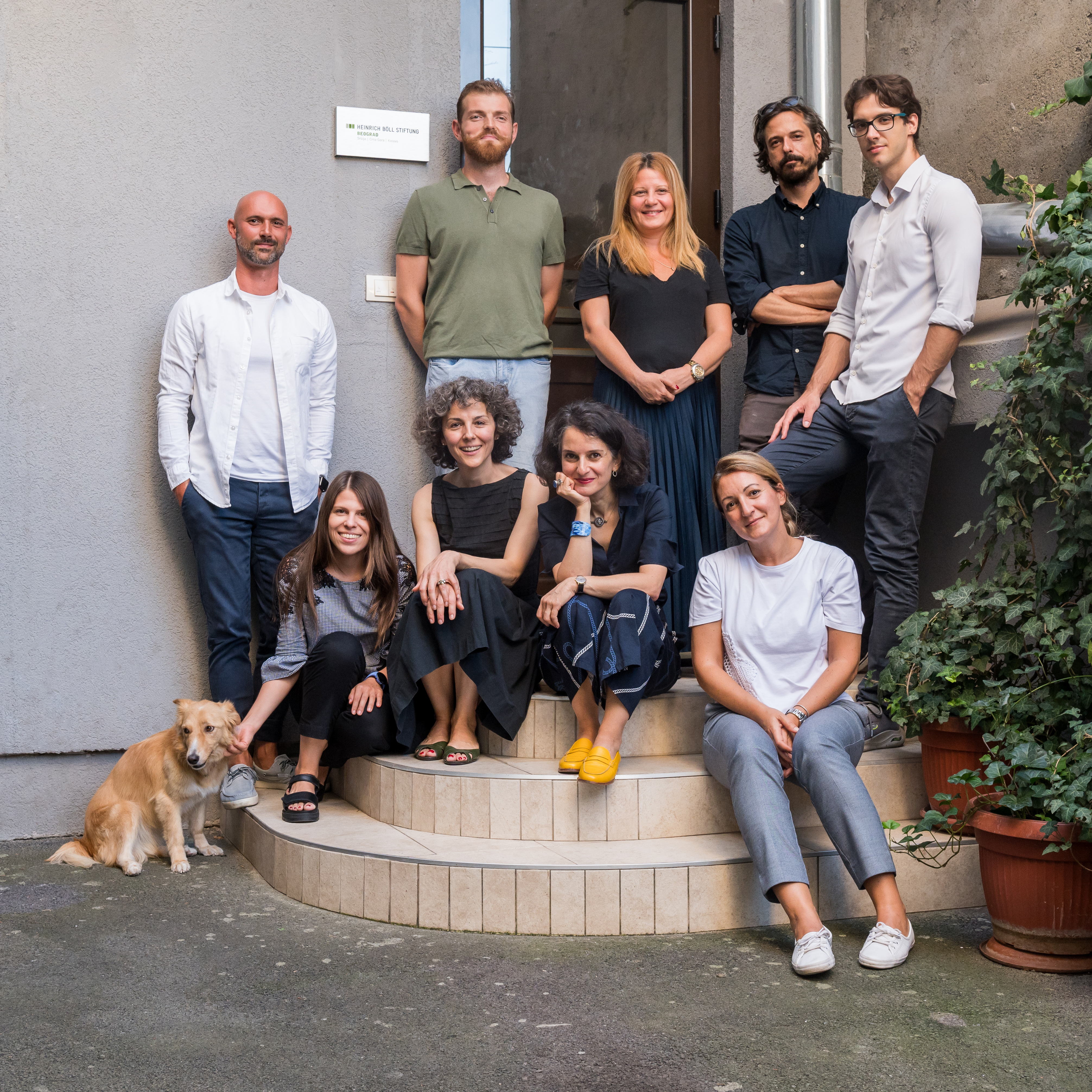
Heinrich Böll Stiftung Belgrade is the convenor that keeps the argument funded. Its regional office has been in Belgrade since 2006 and was restructured in 2010 to cover Serbia, Kosovo and Montenegro, working on urban development, ecological transformation and shared resources. Between the foundation's convening, the collectives' research, MOBA's regional finance and one incorporated cooperative, Belgrade has assembled every part of a cooperative housing sector except the building. A century ago the same city built thousands of flats a year this way. The next one it completes will be the first in twenty years, and the argument will move from whether the form works to how fast it can be repeated.
References
Statistics16Click on any number to see the source
Housing market
Adaptive reuse & vacancy
Population & migration
From our library10
- Social housing opportunities and challenges: Perspectives from Denmark, Germany, Portugal and Serbia — Knowledge
- Europe’s rents are on the rise: Who’s hardest hit? - European Data Journalism Network - EDJNet — Knowledge
- Catalytic capital investment as an enabler of affordable rental and cooperative housing - Investor Report — Knowledge
- MOBA: Rethinking needs and financing for affordable rent and cooperative housing in Central and South-Eastern Europe — Knowledge
- Pametnija Zgrada (Smarter Building) — Organisation
- Ko Gradi Grad (Who Builds the City) — Organisation
- Review of the participatory and community-based approach in the housing cooperative sector — Knowledge
- Cooperative Housing Pioneers in Central and South- Eastern Europe: Mainstreaming Alternatives through Translocal Networks — Knowledge
- CMMM — Knowledge
- Heinrich Böll Stiftung Belgrade — Organisation
Further sources20
- Belgrade — Wikipedia
- Avala Tower — Wikipedia
- New Belgrade — Wikipedia
- Nikola Tesla Museum — Wikipedia
- Ada Ciganlija — Wikipedia
- Stambene zadruge — Ekonomska demokratija
- Housing — Ministry of Space
- Od povoljnog zakupa do dugova - kako su socijalni stanovi u Beogradu postali teret — RTS
- Stanovi u Beogradu: ni 10.000 praznih ne zaustavlja gradnju — Bloomberg Adria
- Sinisa Mali: Stambeni krediti za mlade - veliki ekonomski poduhvat Srbije — Ministry of Finance of Serbia
- Krediti za mlade, godinu i po kasnije — Radar
- Serbian parliament enacts special law enabling controversial Trump family investment in Belgrade — Global Voices
- Kushner-Linked Firm Reportedly Drops Belgrade Project Amid Controversy Over Site — RFE/RL
- Serbian government sets up snap vote with call to dissolve parliament — Al Jazeera
- Cetiri meseca nakon prijava za akciju Svoj na Svome — Insajder
- Serbia kicks-off Public ESCO project - subsidies for energy renovation of residential buildings — Balkan Green Energy News
- The Law on Housing and Building Maintenance has been Adopted — Social Inclusion and Poverty Reduction Unit
- Linear Park in Belgrade — eKapija
- EXPO 2027 Expansion Brings New Residential Complexes to New Belgrade — The Region
- Belgrade Waterfront — Wikipedia
Funding & land tenure
What a housing cooperative could actually build on hereLand tenure has not been assessed for Serbia yet — that is a gap in the research, not a finding.