Overview of the Report
The document “Social and Public Housing in the EU & UK – Romania” is a research report prepared by Anna Katona for Housing Europe and published in 2025. It is part of the Housing Europe series on social and public housing and was produced with the support of the Metropolitan Research Institute. The study offers a concise country brief on Romania’s housing market, focusing on the legacy of 1990s privatisation, current tenure structures and recent policy initiatives aimed at sustainable and inclusive housing.
Current Tenure Structure
Romania’s housing stock totals approximately 9.6 million dwellings. Owner‑occupied homes account for around 95 % (≈9.1 million units), private rentals about 3 % (≈288 000), and public rentals roughly 2.6 % (≈249 000). The high home‑ownership rate is a direct result of massive post‑communist privatisation, which transferred most former public rental units to private owners. Public rental housing therefore represents a very small share of the overall market, limiting the sector’s capacity to address affordability and sustainability challenges.
Historical Context and Privatisation Impact
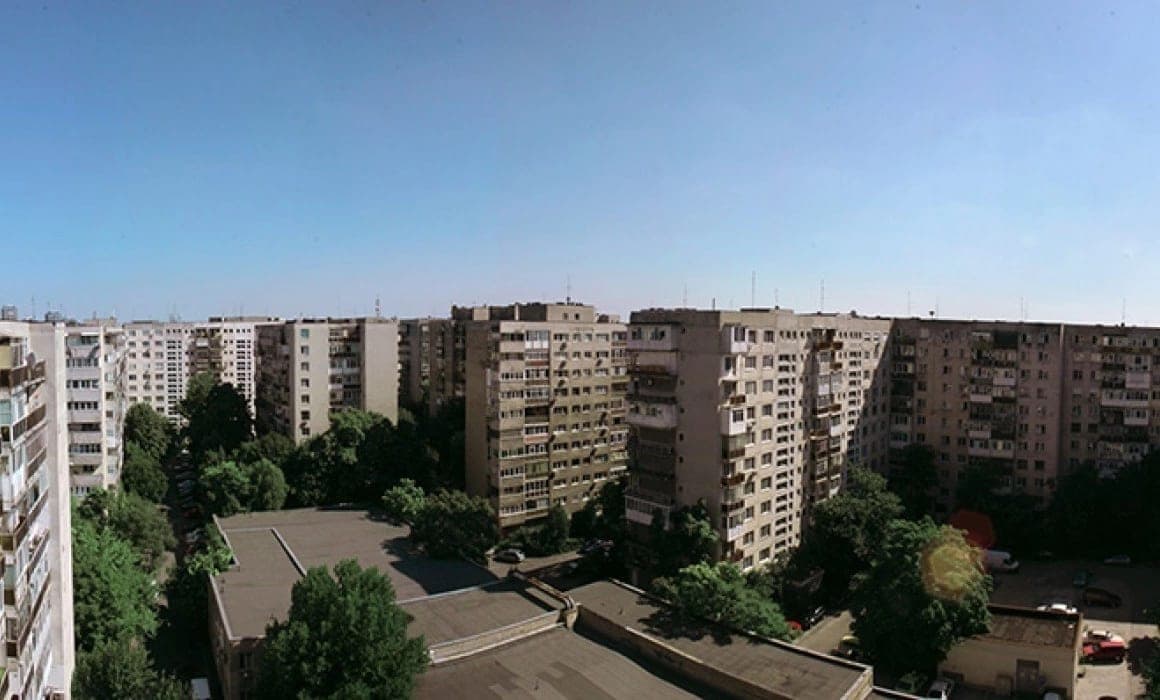
During the communist era (1947‑1989) the state built large quantities of uniform apartment blocks to provide affordable housing for urban workers. After 1989, a rapid privatisation programme sold 2.2 million public rental dwellings—about 27 % of the national stock—to tenants at low prices. This drastically reduced the availability of social housing and created a housing market dominated by owner‑occupied units. The transition also left a legacy of ageing, energy‑inefficient buildings that now require substantial retrofitting to meet EU sustainability targets.
Sustainable Housing Policies
Romania’s recent housing strategy, the National Housing Strategy (2022‑2050), places sustainable housing at its core. It seeks to increase the supply of social and affordable homes, improve energy efficiency, and address overcrowding (currently 40 %). Funding is largely EU‑driven, with the European Regional Development Fund, European Social Fund Plus and the National Recovery and Resilience Plan supporting new construction, renovation and green retrofits. Specific targets include building 3 490 social homes for vulnerable youth between 2022‑2026 and reducing the overcrowding rate by 6.1 percentage points by 2026.
Financing Mechanisms
Investment in Romanian social housing combines local, national and EU resources. Municipalities lead project delivery but often lack sufficient budgets, making EU grants the primary source of capital. The Multi‑Annual Social Housing Construction Programme, administered by the Ministry of Development, Public Works and Administration (MDPLA), provides loans for new builds. The National Housing Agency (ANL) implements rental programmes, especially for young professionals, though many ANL units are later sold into private ownership, limiting long‑term social stock.
Access and Eligibility
Eligibility for social housing is income‑based, prioritising evicted tenants, young people leaving care, disabled persons, pensioners, veterans and disaster‑affected households. The poorest groups, including many Roma communities, face barriers due to limited municipal capacity and local biases. Social rents are capped at 10 % of a household’s net income, with local authorities subsidising the shortfall.
Challenges and Opportunities for Sustainability
Key challenges include an ageing housing stock, low public‑rental supply, fragmented funding and limited administrative capacity at the municipal level. Opportunities lie in leveraging EU green funding to retrofit existing blocks, using municipal land for new developments, and integrating housing policy with broader social inclusion programmes. The strategy’s four pillars—inclusive housing, affordable housing and public services, green transition, and improved administrative capacity—aim to create a more sustainable, equitable housing system across Romania and, by extension, the wider European context.