Overview of the Report
The report “The housing problem in Romania” is authored by Maria‑Luiza Apostolescu and published by the Friedrich‑Ebert‑Stiftung, a German political foundation known for research on social issues. It provides a detailed analysis of severe housing deprivation and overcrowding in Romania, drawing on recent Eurostat and national statistics.
Key Statistics on Housing Deprivation
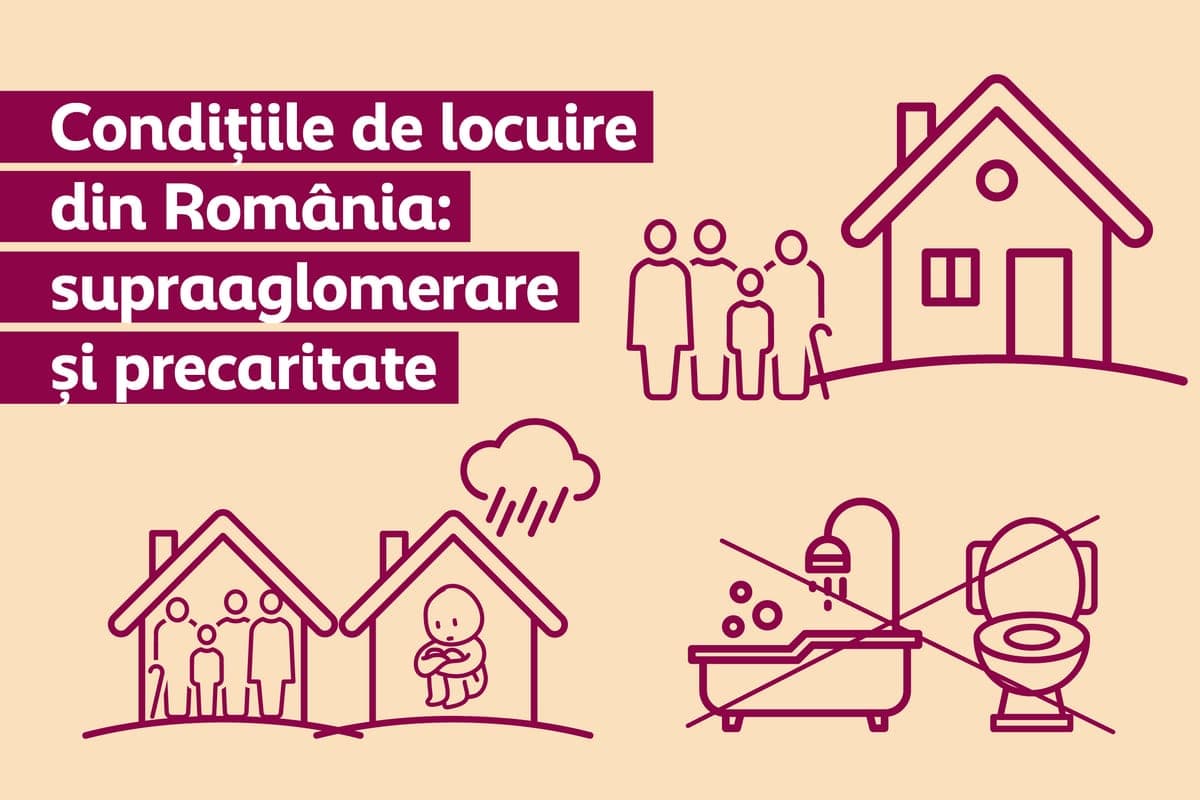
Romania ranks among the EU countries with the highest share of people living in extremely poor housing conditions, with 9.6 % of the population classified as severely deprived in 2023‑2024. This figure has fallen from 19.8 % in 2015 and 14.2 % in 2020, indicating a gradual improvement but still placing Romania behind only Latvia (11.5 %). Other nations with notable deprivation rates include Greece (6.9 %), Bulgaria (6 %), Portugal (6 %) and Italy (5.8 %).
Overcrowding Among Families with Children
The most striking finding is that 59.3 % of Romanian families with children live in overcrowded homes, the highest proportion in the EU. Comparable rates are seen in Bulgaria (52.9 %) and Latvia (52.2 %). At the other extreme, the Netherlands (6.2 %), Malta (5 %) and Cyprus (3.8 %) report much lower overcrowding among families.
Lack of Basic Sanitary Facilities
A further dimension of housing inadequacy is access to sanitation: 13.9 % of the Romanian population lacks a bathroom, shower or indoor flushing toilet. This is considerably higher than in Latvia (5.2 %), Bulgaria (4.7 %) and Lithuania (4.5 %).
Policy Recommendations for Sustainable Housing
The author recommends accelerating investment in social housing and revising the National Housing Strategy 2022‑2050 to prioritise public housing as a strategic response to overcrowding and substandard conditions. Strengthening the supply of affordable, energy‑efficient dwellings aligns with broader EU sustainability goals.
European Context and Implications
Romania’s housing challenges are part of a wider European pattern where a minority of member states exhibit very high deprivation rates while others report minimal problems. The data underscore the need for coordinated EU‑wide policies that support member states in delivering sustainable, adequate housing, especially for vulnerable families.
Trends and Outlook
Although the severe deprivation rate has declined over the past decade, the persistently high overcrowding and sanitation gaps suggest that further targeted interventions are required. Monitoring through Eurostat indicators will be essential to assess the impact of policy reforms and to ensure progress towards the EU’s Sustainable Development Goal 11 – inclusive, safe, resilient and sustainable cities and human settlements.