Seven hills, one owner per flat
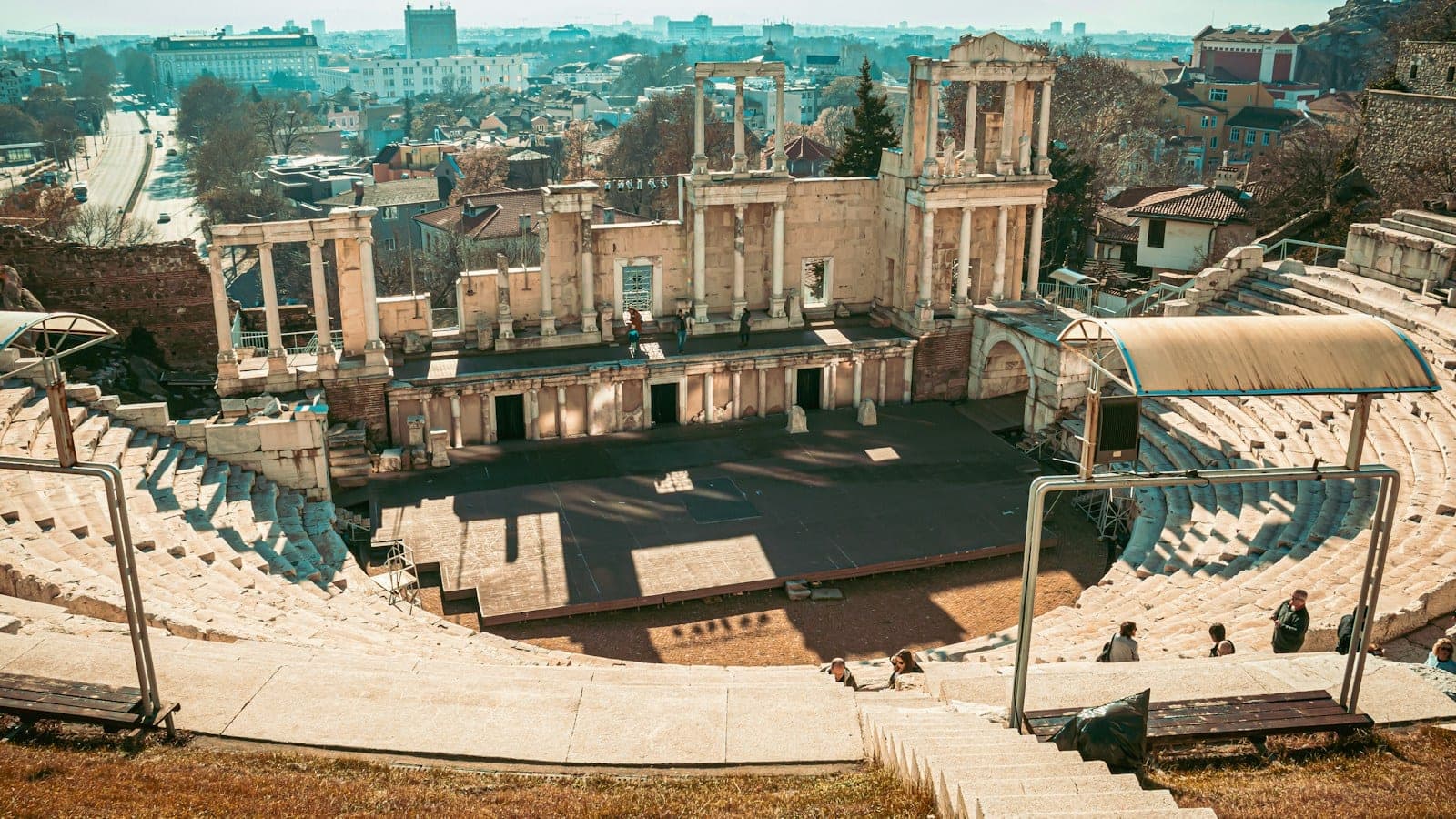
Plovdiv calls itself the oldest continuously inhabited city in Europe, with traces of settlement reaching back to the 6th millennium BC. Its Old Town climbs a cluster of syenite hills, and the remains of a Roman theatre and stadium lie among its streets. Bulgaria's second city is home to 333,994 people. It carries that long memory into its housing as well: almost every family owns the walls around it, and most of those walls rose within a single socialist generation.
Ownership is close to universal. 86% of Plovdiv households own their home, and 10% rent. No cooperative tenure is recorded at all. The municipality owns around 800 flats, just 0.5% of the stock, and that is the whole public-housing sector. Private renting, much of it informal lets of inherited flats, covers roughly 9.5% of households. The census shares also leave about 4% of households unassigned to either owners or tenants.
- Owners
- Owner-occupier86.0%
- Renters
- Public & non-profit rental0.50%
- Cooperative0.00%
- Private rental9.5%
- Unclassified4.0%
- Unknown / Other4.0%
Social housing in Plovdiv is a rule attached to council flats rather than a tenure of its own. Bulgaria never built a separate social-rented sector. The municipality lets its flats at rents set by local ordinance to households it judges in housing need. Across the country, municipal housing has shrunk to a sliver of the stock since most state-built flats were sold to their tenants, as Housing Europe's review of Bulgarian housing policy records. In Plovdiv, the social layer and the public tenure are therefore the same small group of homes.
The rent ladder is short, but each rung is a big step. A municipal tenant pays about €0.7 per square metre a month. The occupied stock as a whole rents at a median of €5.2, and new lets ask about €6.5. Furnished and serviced flats, priced gross with utilities and furniture included, reach roughly €7.5. That puts a new market let at about nine times a council rent. Deloitte's Property Index still ranks Plovdiv's asking rents, at €5.7 per square metre, among the cheapest of the European cities it surveys.
- Public/municipal housing
- All-stock median
- New contracts
- Furnished / serviced (gross)
Monthly rent per square metre by tier (net cold; furnished is gross, all-in). Click a value for its source.
Empty flats are the city's paradox. The 2021 census counted about 42,000 unoccupied dwellings in Plovdiv, roughly a quarter of a stock of 165,000. National research links Bulgaria's vacancy to depopulation, title disputes and flats bought as investments and then left unused. Offices tell a tighter story. Colliers counts 290,300 m² of modern office space in the city, with vacancy down to 7.8%, the lowest since 2019, which leaves about 22,600 m² standing empty. Holiday lets are a minor pressure by comparison, with a one-bedroom flat listed at a median of about €45 a night.
Demand keeps arriving all the same. Around 5,500 people move to Plovdiv each year, and an estimated 5,000 more stay for between three and twelve months. IT and outsourcing firms account for most new office take-up. Building a flat costs about €780 per square metre, and residential land about €180. Bulgaria joined the euro on 1 January 2026, and prices kept climbing: national house prices rose 14.8% in the year to the first quarter of 2026, with Plovdiv adding 3.9% in that quarter alone.
The squeeze falls unevenly. Households outside the ownership boom are hit hardest: 32% of Bulgarians lived at risk of poverty or social exclusion in 2022. Stolipinovo, home to about 40,000 people and the largest mainly Roma district in the Balkans, has seen almost no public investment since 1989. Young people come next, and the EU's comparative study of youth housing policy places Bulgaria among the countries with the worst overcrowding. The middle is exposed too. Research on patient capital for Central and South-Eastern Europe finds middle-class households among those struggling with housing costs. Eurostat also ranks Bulgarian households among the most likely in the EU to find it hard to make ends meet. Habitat Bulgaria argues that dangerous housing is still not among the state's priorities.

We are working in places where economic and housing poverty reach terrifying scale. People live in conditions unacceptable for the 21st century, and it is unacceptable for such neighborhoods to exist in an EU country.With no cooperative tenure on the books, the more useful question is where a collective form could come from.
A cooperative that ends at the deed
In Bulgaria, the cooperative was a way to build a home, never a way to hold one. The zhilishtno-stroitelna kooperatsia, or ZhSK (a housing-construction cooperative through which members jointly finance and build a block), pools members' contributions to pay for design and construction. Once the building is finished, each member takes title to a flat of their own. Nothing resembles the Genossenschaftsanteil (the share a German member buys in a cooperative that goes on owning the building). The collective ends where the individual deed begins. That is why Plovdiv's cooperative share reads as nil, even though the form helped put up apartment blocks across the country.
The form has a long history. Cooperative building societies were active in Bulgarian towns before the Second World War and were halted in 1946. They came back under socialism as a sanctioned route to a flat, and a Law on Housing-Construction Cooperatives codified them in 1978. The state, meanwhile, built at scale: work on Plovdiv's Trakiya estate began in 1973. After 1989, most flats in state-built blocks were sold to their tenants, and ownership swallowed almost the whole stock. Research on the region's cooperative pioneers calls the outcome "super-homeownership".
Three collective forms coexist today, and none is a cooperative in the Vienna or Zurich sense. The first is the ZhSK itself, still used by groups who want to finance a new block together. The second is etazhna sobstvenost (condominium ownership, in which owners share a block's common parts). Its general meetings now decide whether a block joins the energy-renovation programme. The third is the regional push for new, non-speculative cooperatives. The MOBA network grew from groups in Belgrade, Budapest, Ljubljana, Prague and Zagreb, and its research on catalytic capital covered Bulgaria. None of its founding groups is Bulgarian. The three clusters face different problems. A ZhSK dissolves on completion, condominiums struggle to agree on and pay for repairs, and new cooperatives lack land and long-term credit.
The state has not yet given cooperatives a role of their own. National policy runs through two channels: renovation grants for owners, and a small municipal stock for the poorest. The collective form matters mainly as the owners' association that unlocks renovation money. A new national housing strategy, due by the end of 2027, is the first opening in years to write in a third channel.
Grants for facades, a strategy still in draft
Bulgaria's headline answer to its housing problems is renovation. In March 2026 Nikolay Naydenov, Minister of Regional Development and Public Works (the MRRB, the ministry responsible for housing), presented a National Plan for Building Renovation. It aims to renovate nearly 56 million m² of residential floor space by 2030. The ministry puts the cost of renovating the whole stock by 2050 at about €20 billion. "The goals are ambitious, but they are not a political choice," Naydenov said, because they follow from European law. The same ministry is also drafting a national housing strategy, due by the end of 2027 and looking ahead to 2040. Social housing and informal settlements sit at its centre.
Plovdiv's town hall works inside that national frame. The state sets tenancy law, pays housing benefits and channels most EU money. The municipality owns its flats, sets their rents by ordinance and bids for EU projects. Mayor Kostadin Dimitrov, in office since 2023, has made block renovation his most visible housing policy. Work is under way on more than 30 residential blocks, 24 of them close to completion, and 2,046 families should see lower heating bills. For 2021-2027, Plovdiv is one of ten cities named for integrated urban-development funding.
Years ago they scared you that they would take your flats, and what happened? Two or three renovated blocks appeared, and the owners of all the neighbouring buildings immediately started submitting their papers.Cooperatives have no instrument of their own. There are no concept-led land tenders (plots awarded on the quality of a project rather than its price), no ground-lease pacts and no cooperative loan line. The nearest precedents are EU-funded. The JESSICA urban fund offered owners' associations renovation loans at a fixed 3% over 20 years. Over 2014-2020, 18 social-housing projects worth €22 million were delivered across the country.
Empty flats have no policy of their own either. None of these programmes targets vacant dwellings directly. Reuse has so far been cultural rather than residential, led by the Tobacco City programme in the old warehouse district.
Climate targets run through the same blocks. The EPBD (the EU's Energy Performance of Buildings Directive) sets the renovation plan's pace. Its money is to come from the state budget, EU funds, the Social Climate Fund and the Decarbonisation Fund. Owners' associations are the delivery vehicle, because a block enters the programme only when its owners apply together. Municipal housing is the other vehicle, and Plovdiv's newest social flats were built with EU regional funds.
- 1973[source]
Trakiya estate begins
Construction starts on the panel estate that becomes a district in 1983, today home to 61,920 people in 252 blocks.
- 1978[source]
Housing-construction cooperatives law
A dedicated law codifies the ZhSK, the building cooperative whose members each end up owning their own flat.
- 1990s[source]
Flats sold to tenants
Most flats in state-built blocks pass to their occupants; about 87% of Bulgarian households now own their home.
- 2018[source]
SKLAD opens in a tobacco warehouse
Ahead of the 2019 European Capital of Culture year, the Plovdiv 2019 Foundation moves into a 1920s tobacco warehouse and opens SKLAD.
- Oct 2024[source]
Vladaya Street social housing opens
A new municipal block of 40 one-room, 22 two-room, 8 three-room and 4 four-room flats opens, with tenancies of 2 years.
- Jan 2026[source]
Bulgaria joins the euro
The lev is replaced by the euro, and house prices keep rising through the first quarter.
- Mar 2026[source]
National renovation plan
The MRRB publishes its National Plan for Building Renovation to 2050, costed at about €20 billion.
- Jul 2026[source]
Block renovation at scale
Plovdiv reports works on more than 30 residential blocks, with 2,046 families due to benefit.
- 2027[source]
National housing strategy due
The first new national housing strategy in years, focused on social housing and informal settlements, is due by the end of 2027.
- 2030[source]
Renovation milestone
Target of nearly 56 million m² of residential floor space renovated nationwide.
- 2040[source]
Strategy horizon
The new national housing strategy is to cover housing policy until at least 2040.
From the panel estates and the cooperative law to euro-era renovation targets and a national strategy still being written.
The debate turns on who the next housing euro reaches first. Dimitrov presents renovation as proof that owners will act together once they see results next door. Mincho Benov, head of Habitat Bulgaria, argues that the poorest neighbourhoods remain outside the state's priorities. There, he says, municipalities have tolerated illegal building on a large scale for 30 years, and overcrowding keeps rising. One camp asks how to modernise the blocks people already own. The other asks what happens to those who hold no legal title at all.
Panel blocks, tobacco warehouses and a first new social building
Plovdiv's block-renovation programme is the most visible change in the city's housing today. Socialist-era blocks across the city are being insulated and refitted one after another under the national energy-efficiency programme. The mayor's point is social as much as technical. Once 2 or 3 blocks were finished, neighbouring owners' associations queued to apply. The limit is built into the model. It renews homes that people already own and adds no new affordable one.
The Vladaya Street social housing block is the city's newest public housing. It opened in October 2024 in the East multifunctional zone with 74 furnished flats, for families with young children and for people left without income or shelter. Tenants pay reduced rents and may stay for 2 years, with retraining offered so that they can return to work. The ERDF (the European Regional Development Fund), the state and the municipality co-financed it. At 74 flats it adds almost a tenth to a municipal stock of about 800 homes.
The Tobacco City project shows what Plovdiv's empty industrial buildings could hold. The 1920s tobacco warehouses near the centre are, with few exceptions, abandoned, and many are in very poor condition. For the 2019 European Capital of Culture, the Plovdiv 2019 Foundation moved into one of them and opened SKLAD, with exhibition spaces, rehearsal halls and co-working. The organisers describe the district as a clash between architectural heritage and the city's economic interests. None of the warehouses has become affordable housing yet. They are large, central and mostly unused.
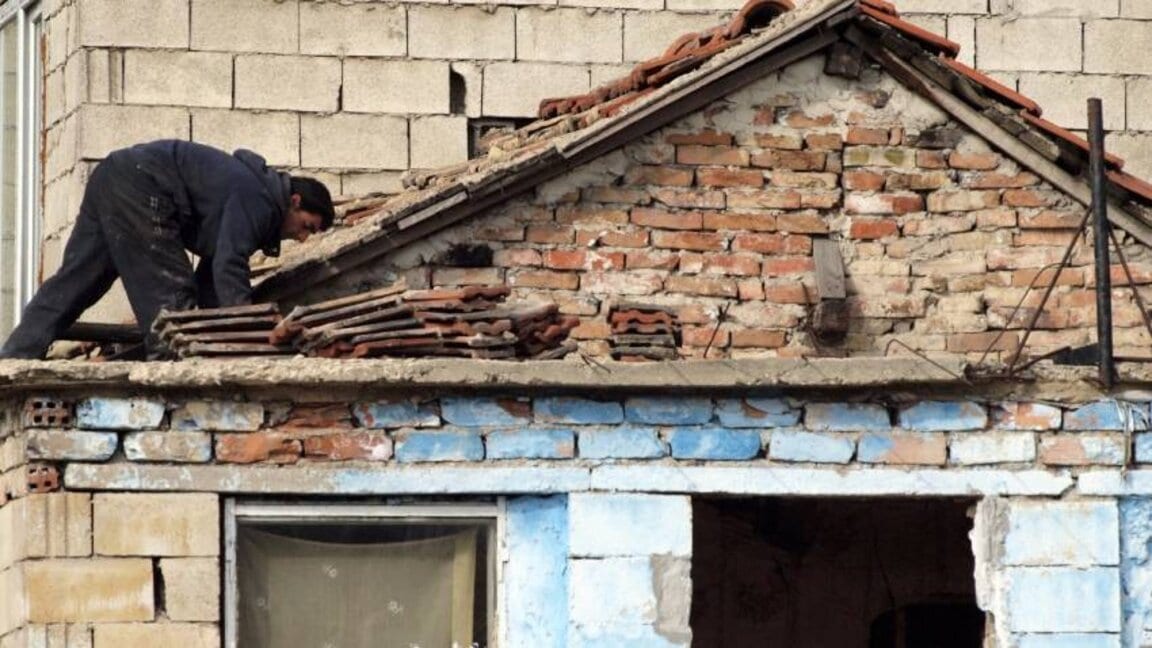
Habitat for Humanity Bulgaria works at the other end of the scale. Its interest-free microloans of up to BGN 1,200 help families in poor neighbourhoods repair roofs and bathrooms and improve insulation. Borrowers repay within a year, so the money passes to the next applicant, and training covers how to build legally. The model reaches households that formal programmes rarely touch. It mends single homes, however, rather than adding new ones.
Housing Europe's review with UN-Habitat is the most complete map of what Bulgaria has tried with EU housing money since 2014. The MOBA conversation on rethinking needs and finance sketches how patient money could fund cooperative and affordable rental homes across the region. Neither has a Plovdiv project to show yet. The raw materials are nonetheless in place: owners who have learned to organise a block, a municipality that has built new social flats, and a belt of empty warehouses and flats waiting for a use.
References
Statistics12Click on any number to see the source
Housing market
Adaptive reuse & vacancy
Population & migration
From our library10
- Housing Development in Bulgaria – Learning from 2014-2020 to Take a Step Further in 2021-2027 — Knowledge
- Property Index - Overview of European Residential Markets — Knowledge
- Office Markets in Bulgaria's Major Regional Cities Remained Resilient In 2025 and Early 2026 — Knowledge
- Youth access to affordable and quality housing: A comparative analysis of national policies — Knowledge
- Catalytic capital investment as an enabler of affordable rental and cooperative housing - Investor Report — Knowledge
- Key figures on European living conditions – 2025 edition — Knowledge
- Habitat Bulgaria: The big problem with dangerous housing is not among the state's priorities — Knowledge
- Cooperative Housing Pioneers in Central and South- Eastern Europe: Mainstreaming Alternatives through Translocal Networks — Knowledge
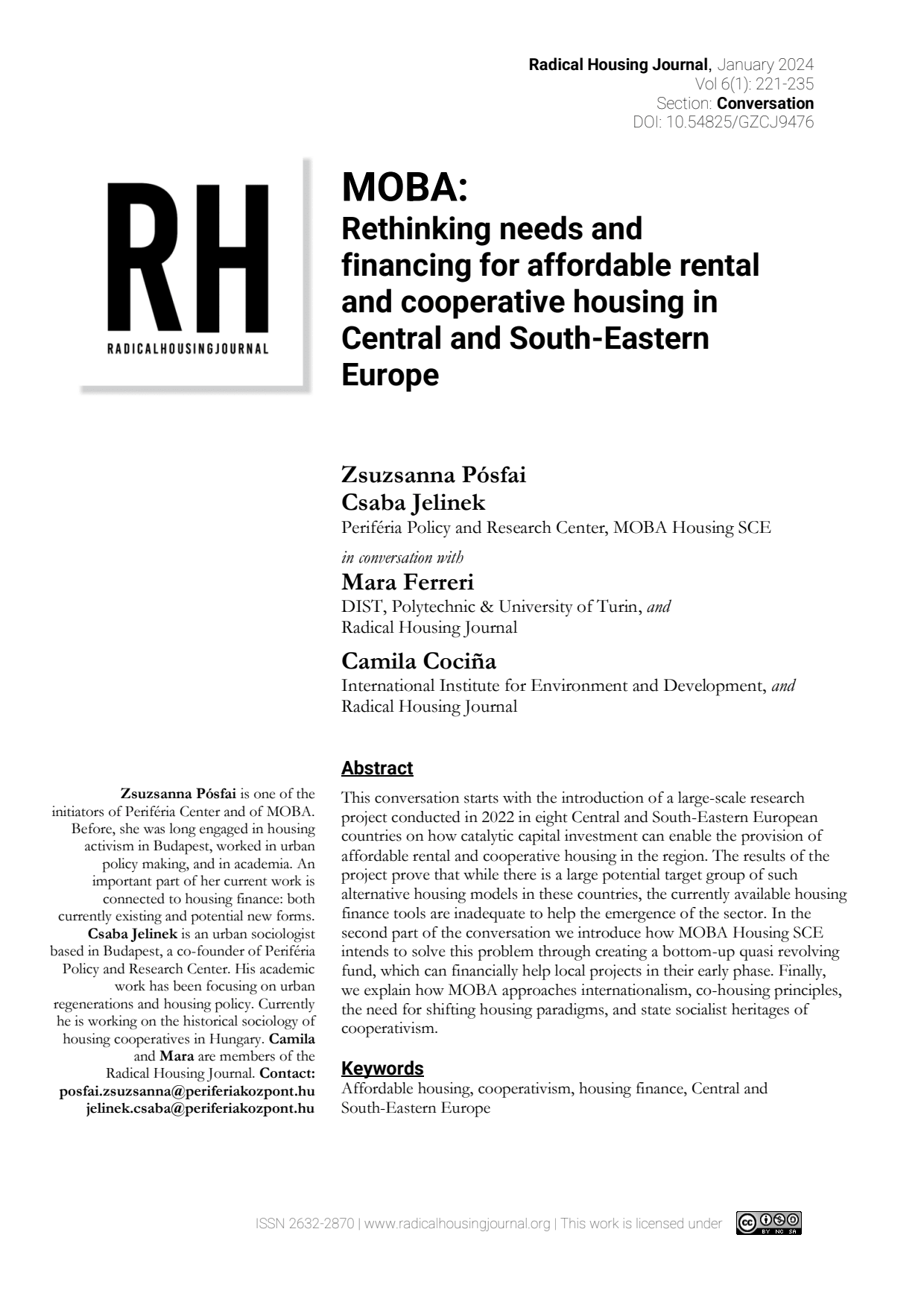
- MOBA: Rethinking needs and financing for affordable rent and cooperative housing in Central and South-Eastern Europe — Knowledge
- New National Housing Strategy Expected by End-2027, Officials Say — Knowledge
Further sources10
- Plovdiv — Wikipedia
- Stolipinovo — Wikipedia
- Trakiya district — Wikipedia
- Жилищна кооперация — Wikipedia (BG)
- Property Index 2025 — Overview of European Residential Markets — Deloitte · 2025-08
- Housing Development in Bulgaria — OPRG/PDR analysis — Housing Europe / UN-Habitat
- Bulgaria ready to use the euro from 1 January 2026 — Council of the EU · 2025-07-08
- Bulgaria to renovate nearly 56 million square metres of residential buildings by 2030 — MRRB · 2026-03-16
- Костадин Димитров: Плашеха хората, че ще им вземат жилищата, а сега всички искат — Plovdiv24 · 2026-07-23
- Вижте как изглеждат отвътре новите социални жилища в Пловдив — Plovdiv24 · 2024-10-15