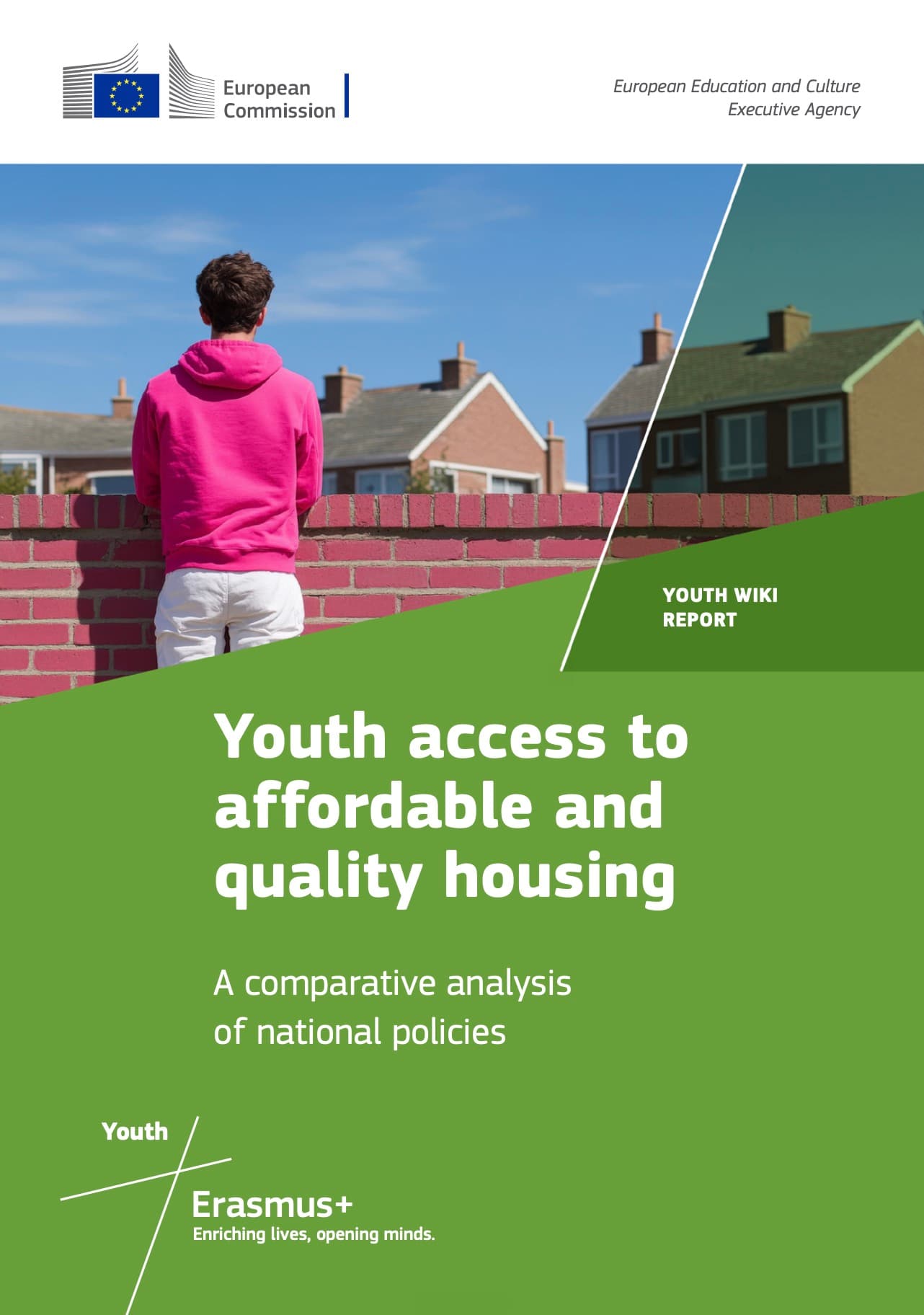
Overview of the Report and Its Creators
The report “Youth access to affordable and quality housing: A comparative analysis of national policies” is a comprehensive study commissioned by the European Education and Culture Executive Agency (EACEA). It is authored by Giulia Paolini and Diana Antonello, researchers with expertise in youth policy and housing analysis. Published under the auspices of the European Commission’s Youth Wiki initiative, the document synthesises data collected from 34 European nations, covering EU Member States and several non‑EU countries participating in Erasmus+.
Key Findings on Youth Housing Conditions
Across the European Union, 7 % of young people aged 15‑29 experience severe housing deprivation, rising to 14 % among those at risk of poverty. Overcrowding affects more than one‑quarter of this age group, with rates exceeding 50 % in Bulgaria, Latvia and Romania. Housing‑cost overburden – where housing expenses surpass 40 % of disposable income – impacts over 10 % of young adults aged 20‑29, with particularly high incidences in Denmark (38 %) and Greece (31 %).
Quantitative Overview of Policy Coverage
The analysis identifies that 21 countries have dedicated youth‑housing policies, while an additional eight incorporate young people as a specific target group within broader housing legislation. However, only three nations address all examined policy dimensions (financial support, social housing, quality standards, and monitoring).
Financial Instruments Supporting Young Renters
Eleven countries provide means‑tested housing allowances; Sweden caps monthly subsidies at €123 for renters under 29. Publicly supported private renting schemes operate in five states, exemplified by Greece’s Kalypsi programme, which offers rent‑free accommodation for up to three years to vulnerable young adults. France’s Loca‑Pass supplies interest‑free loans for security deposits, and Italy’s Bonus Affitto Giovani grants a 20 % tax reduction on annual rent up to €2 000 for individuals aged 20‑31 with limited incomes.
Measures Facilitating Home‑Purchase for Youth
Mortgage guarantees are employed in six countries, notably Estonia’s KredEx guarantee for young families and individuals under 35. Direct subsidies are used in seven states, such as Cyprus’s scheme covering up to 50 % of eligible purchase costs for young couples and singles. Tax exemptions, including the Dutch starters‑vrijstelling, eliminate transfer tax for first‑time buyers aged 18‑34.
Social Housing Allocation Policies
Eighteen countries have explicit preferential criteria for allocating social housing to young people, with twelve also investing in expanding the stock dedicated to this group. Iceland, for example, earmarks 35 % of new developments for youth‑focused social or non‑profit housing.
Quality Standards and Energy Efficiency Focus
Fifteen countries set energy‑efficiency requirements for youth housing, recognising the link between energy performance and affordability. Space‑and‑occupancy standards are codified in 15 nations, preventing overcrowding by defining minimum room sizes and maximum occupant numbers. Structural safety, essential services, and accessibility for disabled youth are mandated in 14, 13 and ten countries respectively.
Monitoring Systems and Data Collection
Twenty European states have established national monitoring mechanisms for youth housing, predominantly through statistical offices (e.g., Statistics Denmark, CYSTAT, Statistics Finland). These bodies collect disaggregated data, produce regular reports, and in many cases evaluate policy implementation outcomes.
Recommendations Aligned with Sustainable Housing Goals
The report underscores the need for greater investment in social housing, expanded rent‑support schemes, and the integration of energy‑efficiency upgrades into youth‑focused programmes. It also calls for harmonised EU‑wide indicators to enable comparable cross‑country analysis, and for earmarked EU funding to catalyse national actions that promote affordable, high‑quality, and environmentally sustainable housing for young Europeans.