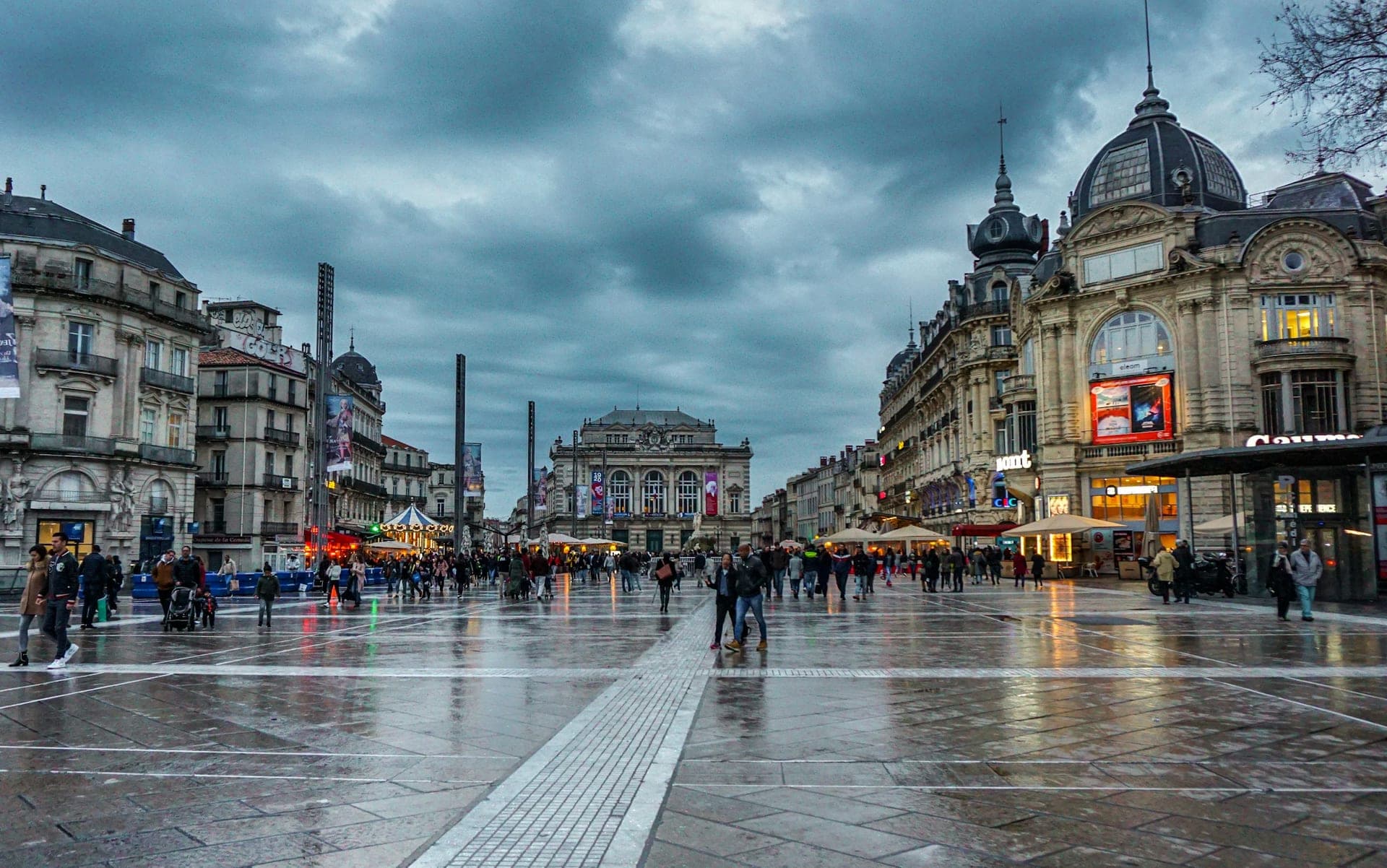
A university town that keeps on growing
Montpellier has trained doctors since the thirteenth century and filled its lecture halls ever since. Today more than 80,000 students study here, and the city keeps adding people faster than almost any large French urban area, at 1.4% a year. That pull of youth and sunshine is the root of its housing story.
Most residents rent. The census puts owner-occupiers at 31% of households and tenants at 66.7%. The SRU inventory (the national count of homes that qualify as social housing) lists 37,149 homes, or 25% of main residences, and that public and non-profit tier is chiefly the HLM stock (habitations à loyer modéré, France's rent-capped social homes). Private rental, derived from those figures, comes to 41.6%, and that is a floor, since the SRU count includes student halls and sheltered housing. A cooperative tenure in the Swiss or Danish sense is too small to register in the census. Another 2.3% of households live rent-free in a home provided by family or an employer.
- Owners
- Owner-occupier31.0%
- Renters
- Public & non-profit rental25.1%
- Cooperative0.00%
- Private rental41.6%
- Other2.3%
- Housed free of charge (logé gratuitement)2.3%
Social housing in France is a set of rules, not a landlord. The SRU count and the census measure different things. The census finds 16.6% of households renting an HLM flat; the SRU inventory reaches a quarter because it also counts student halls, sheltered housing and private flats let under a state agreement. ACM Habitat, the Métropole's public housing office, owns most of the city's share.
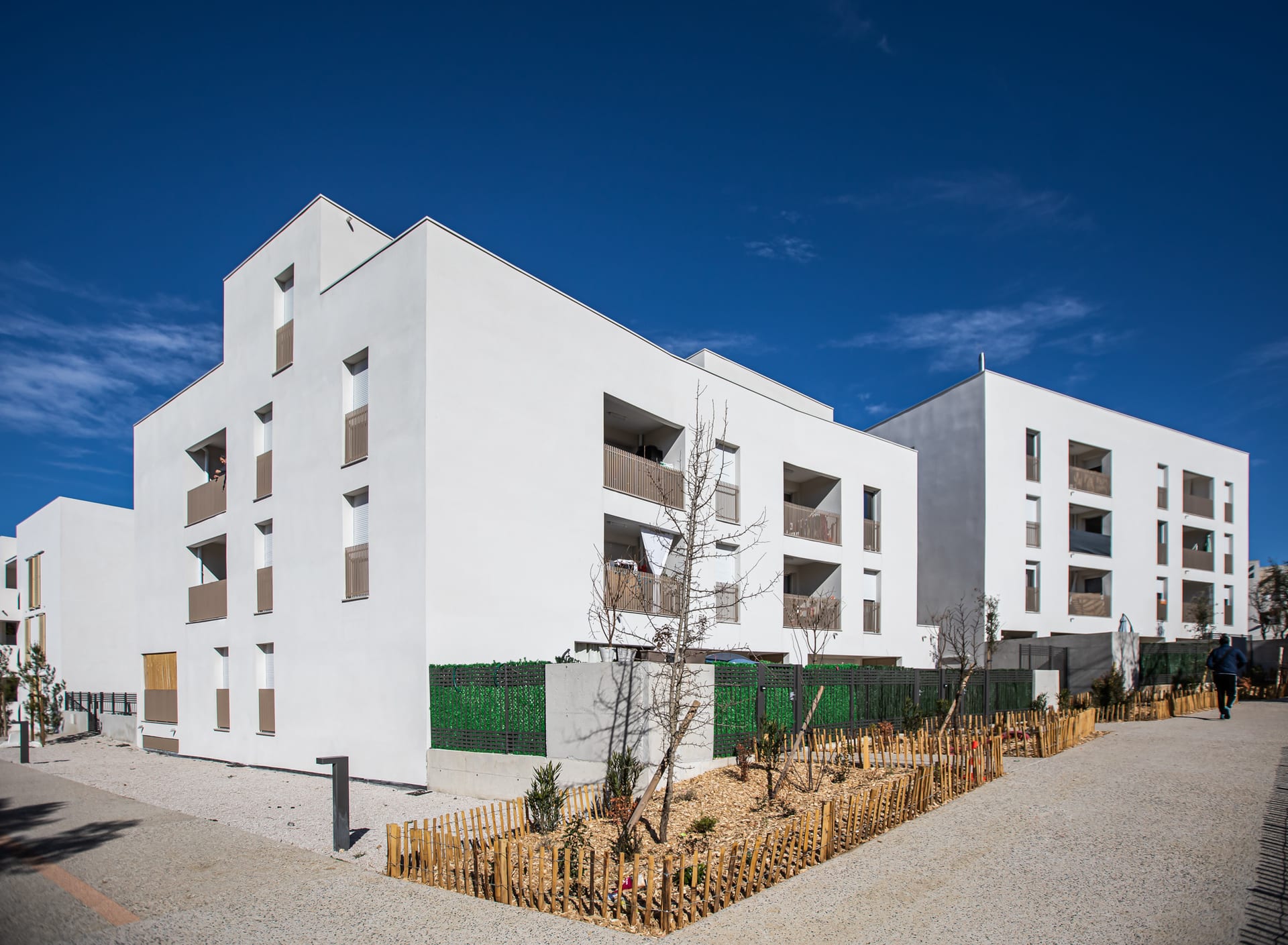
Rents climb steeply from that regulated floor. A social tenant pays around €5.8/m². The all-stock median in the agglomeration is €13.7/m². INSEE ranks the agglomeration's private-market rents among the highest in France, behind only Nice and Marseille. Asking rents on new listings reached €15.8/m² in 2026, and the smallest flats, the students' market, let at €17.2/m².
- Public/municipal housing
- All-stock median
- New listings (asking rents)
- One-room flats (T1), private market
From the regulated social rent to the studio market that most students rent in.
Empty homes are fewer than the headlines suggest. The 2023 census counted 12,946 vacant dwellings in the city, 6.9% of the stock. According to the DREAL's 2026 housing key figures, only 2.0% of the Métropole's private homes have stood empty for more than two years. Offices are tighter still, with vacancy near 5.1%, and firms took up 99,993 m² of office space in 2025.
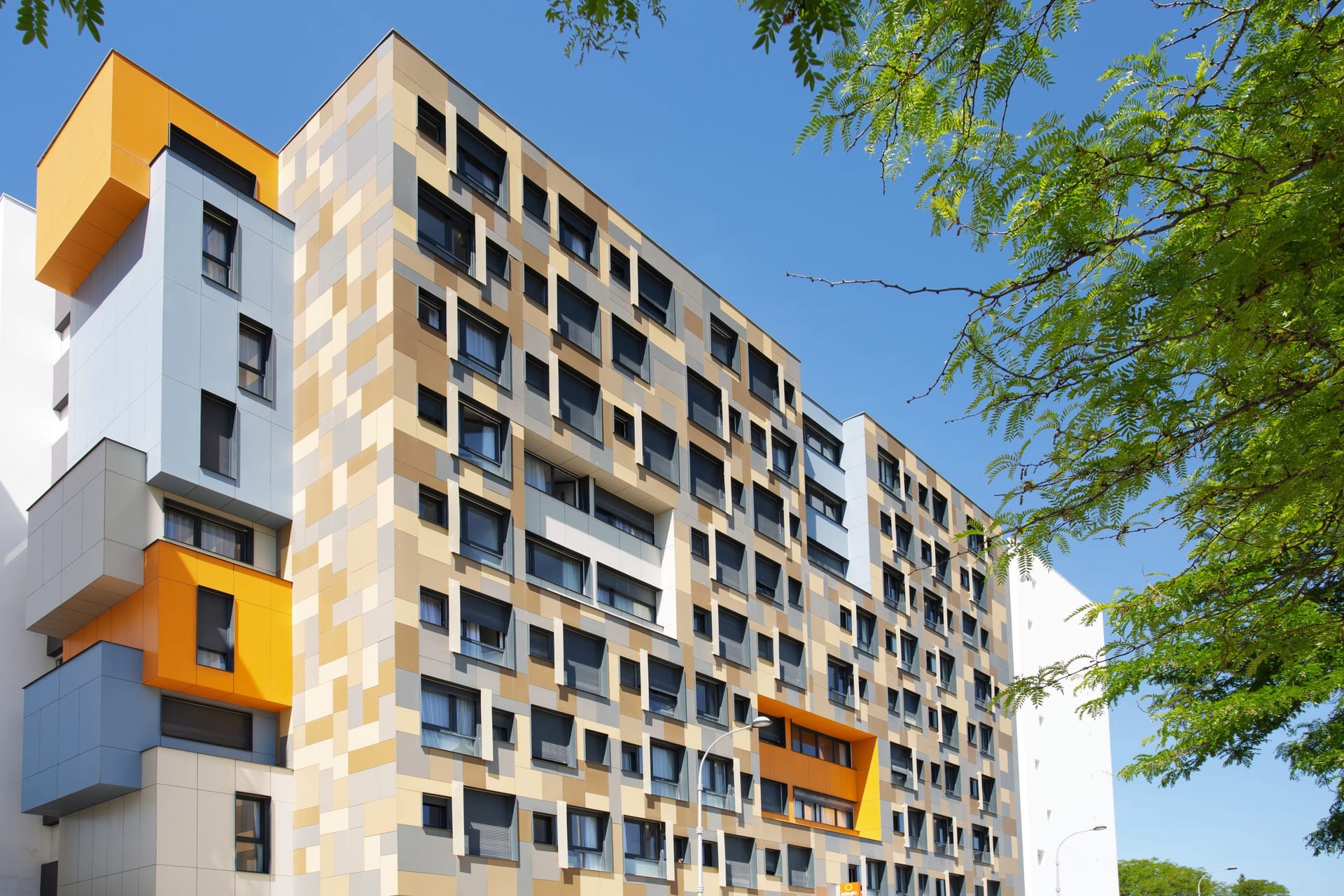
Newcomers keep arriving. The Métropole's population grew from 472,217 to 522,542 between 2017 and 2023, mostly through migration. Supply has lagged. The last local housing plan aimed for 5,000 to 5,400 homes a year, yet housing starts across the Hérault fell 13% in 2025. Developers stayed afloat in the city itself largely through sales of below-market homes and bulk sales to social landlords.
Who feels it most? Poverty touches 30.9% of the city's residents, against 22.4% across the Métropole. Students are squeezed hardest: the CROUS (the state student-welfare agency) housed only 10.9% of them in 2021, and 26% of students in the urban core still live in an overcrowded parental home. Families with middle incomes are not spared either. A median-income household could buy 56 m² in 2020 and only 50 m² in 2026, as mortgage rates rose from about 1% to 4.2%. The Métropole now has 11.3 applications for every social home allocated, against 6.7 for mainland France, with a 23-month average wait. Local business press calls finding a home in Montpellier a "mission impossible".
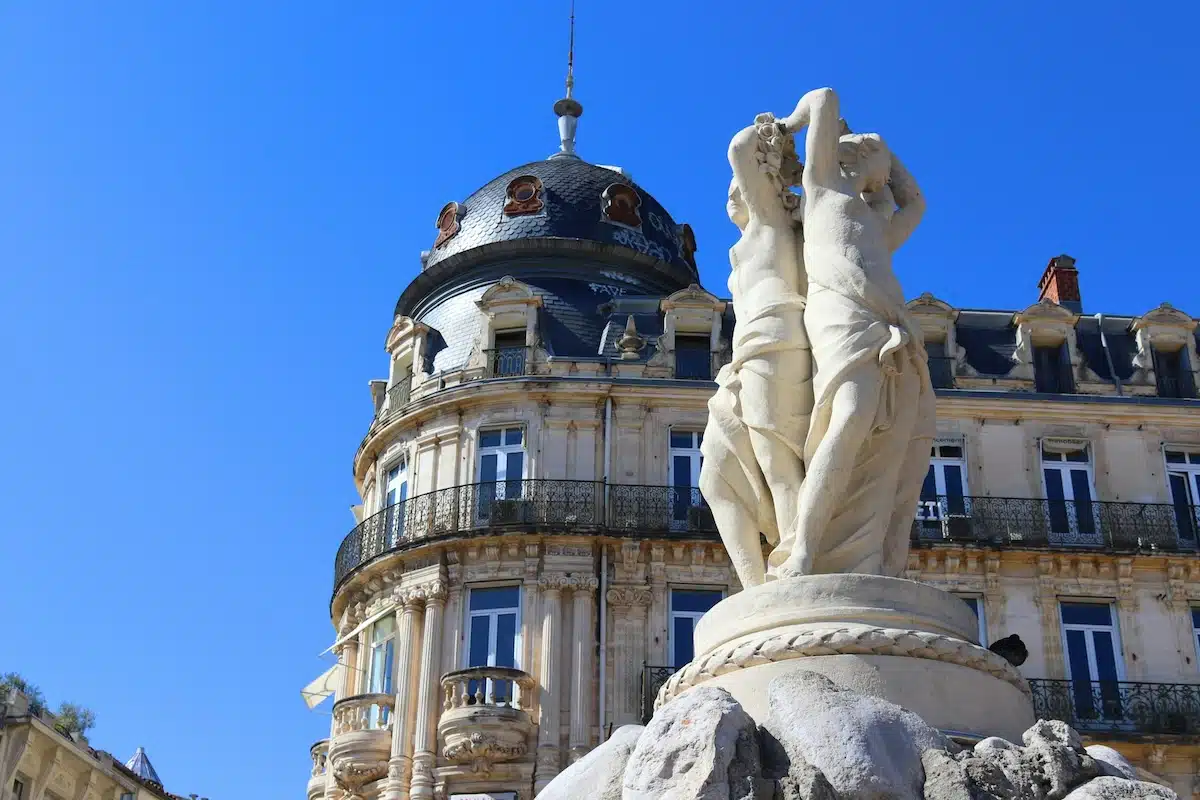
Beneath the landlords and the students sits a quieter current: a small number of households who build their homes together, in a city with almost no cooperative stock to speak of.
Cooperation in borrowed shapes
France never built a Genossenschaft sector of the German kind, so cooperative housing here comes in borrowed shapes. The oldest are the HLM cooperatives, social-housing companies owned by their members that mainly help households buy. Since the ALUR law of 2014 there are also coopératives d'habitants (residents' cooperatives that own the building while members hold shares and pay a monthly fee), and sociétés d'attribution et d'autopromotion (companies through which a group commissions and then divides a building). Organisations may join either form but hold no more than 30% of the capital, so residents stay in control.
Montpellier's own path ran through public urbanism rather than self-help. Its post-war and 1980s growth was steered by the city and its development company, with Antigone and the ZAC districts (zones d'aménagement concerté, planned development zones) delivering social rental on a large scale. Cooperation arrived late and small. Gambetta Occitanie, an HLM cooperative, moved its seat to Montpellier in December 2016 when its parent group took over a local cooperative for home-buyers. Participatory housing followed in the 2010s, when the city first reserved plots for resident groups.
Three kinds of actor make up the field now, and each hits a different wall. The first is the HLM cooperatives, part of a national federation of 162 such companies, whose shared-ownership sales now compete with the Métropole's own below-market scheme. The second is the resident groups behind habitat participatif (co-designed, often co-owned housing). Hab-Fab, a collective-interest cooperative (SCIC) founded in 2015 that coaches such groups, sits at its centre. Like any SCIC it runs on one member, one vote, and puts its profits into reserves that can never be shared out. These groups depend entirely on the city releasing land, and they often end as co-ownerships rather than cooperatives. The third is the land-trust model of the Organisme de Foncier Solidaire, which owns the ground and sells only the building on a 99-year lease. It borrows cooperative logic (no speculative resale) without cooperative membership.

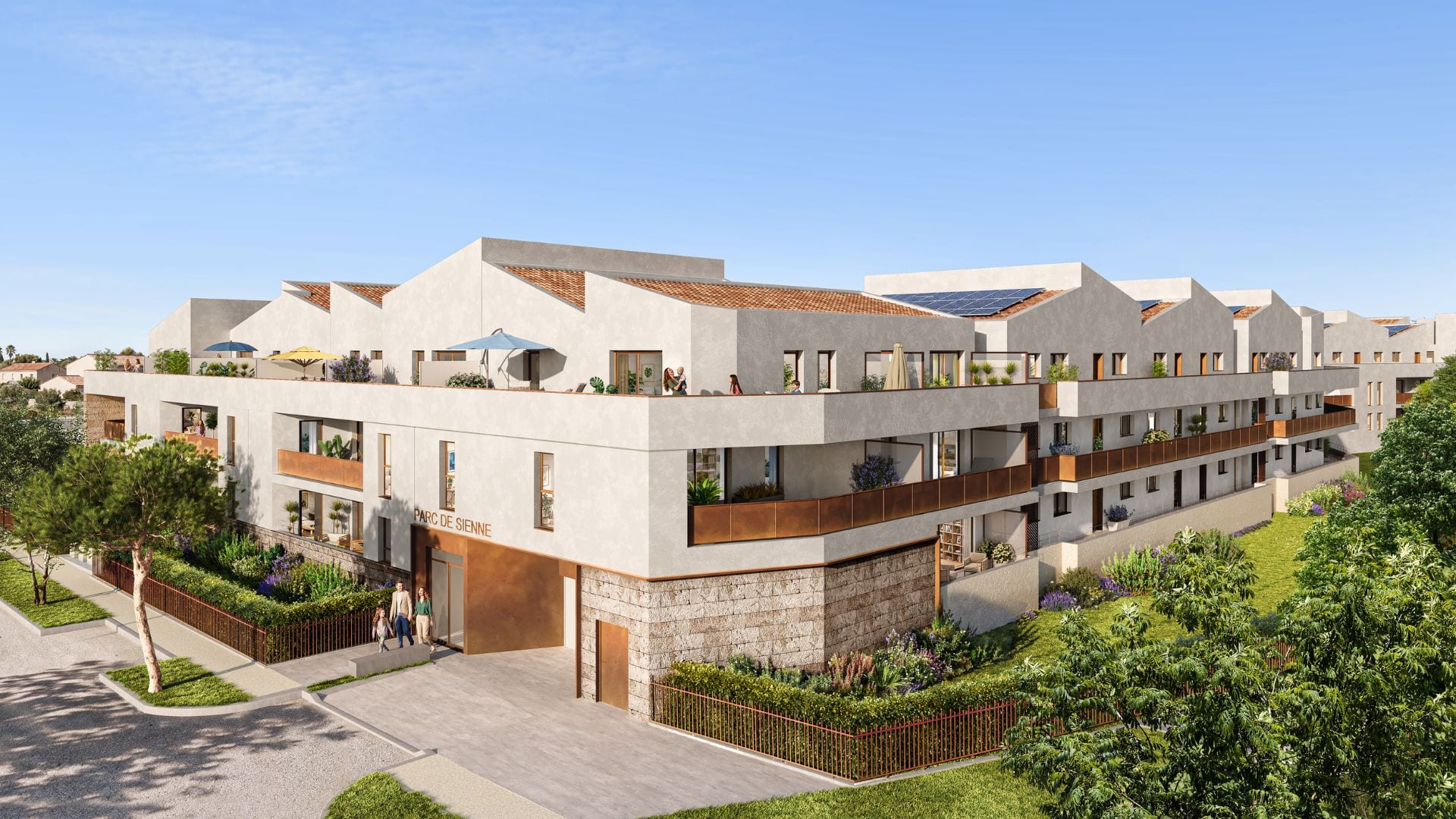
City hall treats these forms as tools for keeping ownership within reach of ordinary earners. It sees them less as a tenure to grow in its own right. That framing shapes its housing politics.
Ceilings, leases and the limits of the law
Michaël Delafosse won a second term as mayor in March 2026 and was re-elected president of Montpellier Méditerranée Métropole on 9 April for 2026 to 2032. His mandate sets three housing targets. The first is 4,000 new homes sold under the bail réel solidaire (BRS, a lease that separates land from building and caps resale prices). The others are 1,000 social homes for students and holding the city at the legal 25% social-housing share. Clara Gimenez, vice-president for housing, also carries the next local housing plan (PLH), due for 2027 to 2032 after the previous one expired in February 2025.
Each level of government holds a different lever. Paris writes tenancy law and the rent-control experiment. The prefecture, the state's local arm, fixes Montpellier's rent ceilings, which have applied since 1 July 2022. The Métropole plans land and housing targets, and the city decides on tourist lets. Rent control has bitten, as a September 2026 report from the Hérault Tribune shows: the share of listings above the ceiling fell from 37% in 2022 to 12%, and the average overcharge from €160 to €63 a month. Landlords lost a court challenge in May 2024. The national experiment ends in November 2026 unless Parliament makes it permanent, and Montpellier joined eleven other cities in September 2026 to demand exactly that. ADIL 34, the departmental housing-advice agency, explains the ceilings to both sides.

Our view of housing is that it is a right, not a commodity. Everyone must be able to find a home.The cooperative-minded instruments are mostly about land. The Organisme de Foncier Solidaire, approved in June 2022 and backed by the Métropole, ACM Habitat and other social landlords, keeps the ground in trust and charges buyers a monthly ground fee of €1.30 or €1.50/m². Its homes sell 30 to 50% below market, to households under the income ceilings of intermediate social housing. The city has also set aside plots in its planned districts for resident groups since its 2012 call for projects.
Vacancy offers little slack here, so the policy answer targets use rather than emptiness. The national vacant-homes tax has applied since the city was classed a tight market in 2013. In October 2025 the council capped tourist lets in the historic Écusson at 770, cut the days a main home may be let to tourists from 120 to 90, and limited authorisations to four years. Some 5,728 tourist lets had been declared by then. Those powers come from the Le Meur law of November 2024, which also raised fines for illegal changes of use to €100,000. A June 2025 law now lets mayors override the land-use plan to turn offices into homes.
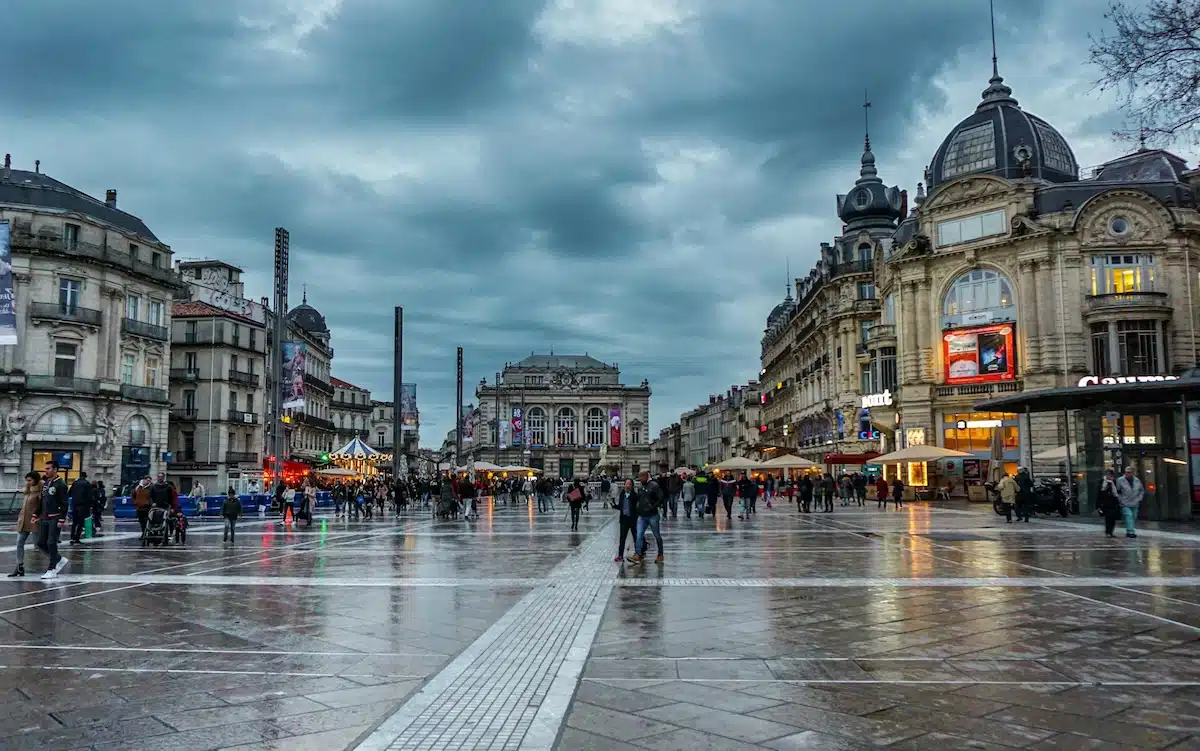
Climate goals run through the same institutions. The 2021 Climate and Resilience law requires France to reach zero net land take by 2050, which pushes a fast-growing city towards density and reuse. ACM Habitat is spending €30M to retrofit 493 homes and aims to own 30,000 homes by 2030. At the Nombre d'Or in Antigone, a €7.26M thermal renovation of its 1980s social flats must clear the heritage architect on every façade detail.
Property owners see the same record differently. Philippe Calafell, a lawyer who chairs the ANDPI 34 landlords' association, argues that rent control drives heirs to sell rather than let. The Fondation pour le logement's regional director, Sylvie Chamvoux, counters that the experiment "has proved itself" and should be made permanent.
It's a bad law!- 1984[source]
First social homes in Antigone
Ricardo Bofill's neoclassical district, planned from 1979, delivers its first social flats near the historic centre.
- 2013[source]
Classed a tight housing market
Montpellier enters the zone tendue, bringing the vacant-homes tax.
- Jul 2016[source]
MasCobado completed
The city's first participatory housing project, 23 homes in the Grisettes eco-district, is handed over.
- 23 Jun 2022[source]
Community land trust approved
The Métropole's Organisme de Foncier Solidaire is approved to sell homes on 99-year solidarity leases.
- 1 Jul 2022[source]
Rent control begins
Rent ceilings set by prefectoral order apply to new leases in Montpellier.
- 21 Dec 2023[source]
Free transport for residents
Trams and buses become free for residents of the Métropole.
- Nov 2024[source]
Mosson renewal convention
State, Anah and the Métropole sign a ten-year convention for the Mosson district, running to 2034.
- Oct 2025[source]
Tourist-let rules tightened
A cap of 770 tourist lets in the Écusson and a 90-day limit for main homes.
- 9 Apr 2026[source]
A second term for Delafosse
Re-elected Métropole president with pledges of 4,000 homes on solidarity leases and 1,000 student social homes.
- Nov 2026[source]
Rent-control experiment ends
The national experiment lapses unless Parliament makes it permanent; Montpellier has joined the cities calling for that.
- 2027–2032[source]
Next local housing plan
The Métropole's new PLH is due to replace the plan that expired in February 2025.
- 2030[source]
ACM Habitat stock target
The public housing office aims to own 30,000 homes.
- 2050[source]
Zero net land take
The national goal set by the 2021 Climate and Resilience law.
Neither camp disputes where the alternatives already stand: in a handful of districts the city has planned since the 1980s.
From Antigone's colonnades to the Guillaut barracks
Antigone is where Montpellier first proved that planned public housing could be grand. Ricardo Bofill's district of colonnades and courtyards, 36 hectares built from 1983, put social flats a short walk from the Place de la Comédie. It was controversial at first and now carries a national architecture label. That label is today's friction: renovating the original 1984 windows of the Nombre d'Or means consulting the heritage architect on every change.
MasCobado is the city's pioneer of building together. Twenty-three households designed two low blocks in the Grisettes eco-district and moved in in July 2016, four years after the city's call for projects. The HLM company Promologis built it, and it mixes open-market homes, rent-to-buy homes and five social rentals. Its members had no certainty of finding land until the city reserved two plots for resident groups. The second went to the Écohabitons group. Legally it ended as a co-ownership, not a cooperative, and service charges for a 60 m² flat run to €89 a month.
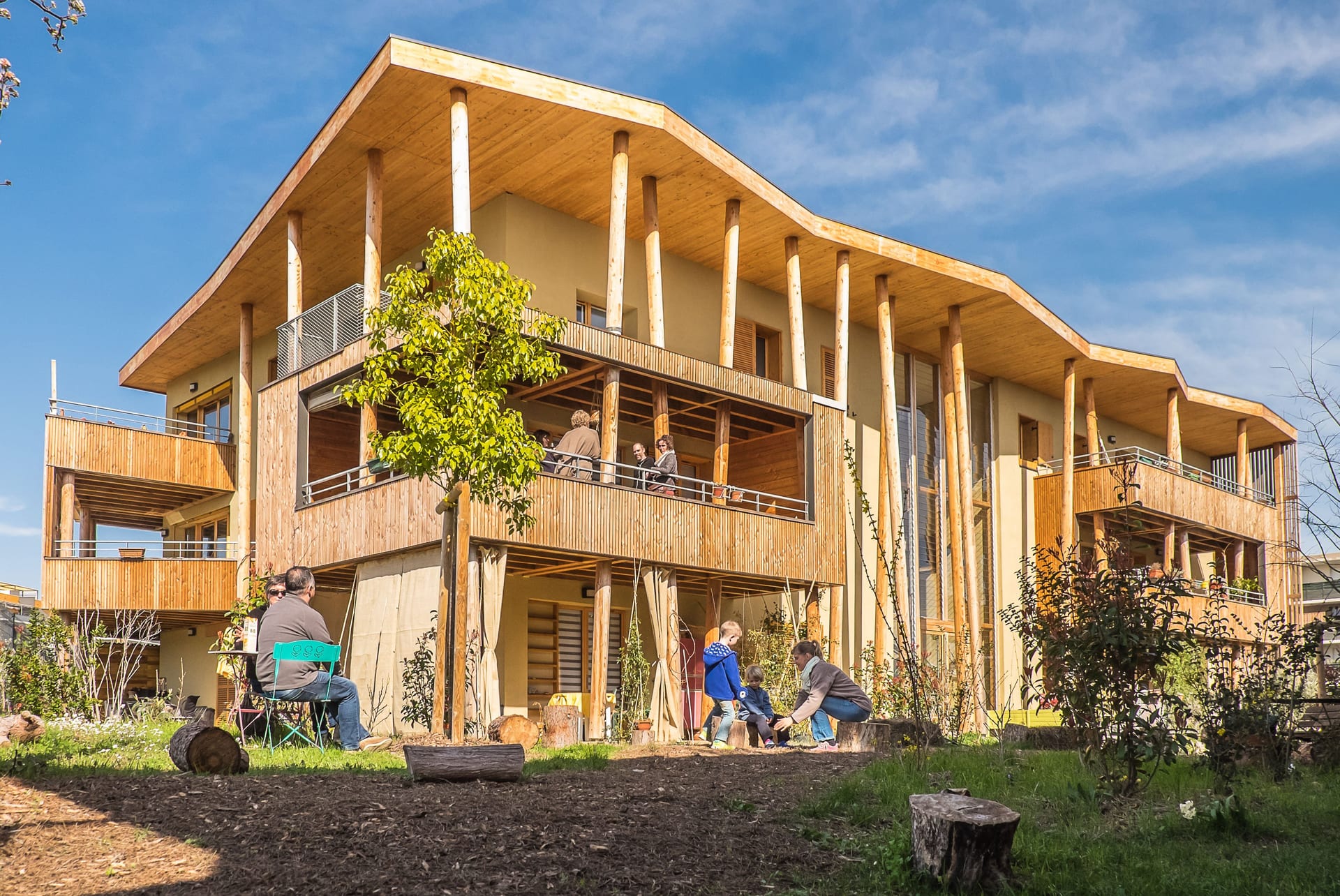
Hab-Fab now coaches groups across the Métropole, from first meeting to handover, including those aiming for a genuine residents' cooperative. Its work is slow by design. A group that forms today still waits for the next plot the planners release.
The Organisme de Foncier Solidaire turns the same anti-speculative idea into volume. Its first sale was an 85 m² flat in Port Marianne valued at €500,000 on the open market and sold for €249,000. By September 2024 more than 100 households had bought this way. At Mellifera, in the Cité créative district, ACM Habitat offered 17 such homes from €139,000. Buyers must stay under strict income ceilings, with no margin for those just above them, and they resell at a capped price.
Cité créative is the city's large adaptive-reuse bet. On the former Guillaut barracks of the infantry school, a 40-hectare district is planned for about 2,500 new or renovated homes, 1,900 on the barracks land. The plans include social, student and participatory housing. Its social share has not been published as a single figure, which makes the district's affordability hard to judge from outside.
The Mosson renewal in La Paillade runs the other way, rebuilding by first taking down. The €500M programme with ANRU, the national urban-renewal agency, demolishes around 850 social homes and refurbishes 1,100 more. The Tour d'Assas came down in spring 2025, and more than 600 families have already been rehoused. Critics asked why a city short of social housing was knocking it down. City hall answers that every demolished home will be rebuilt elsewhere.
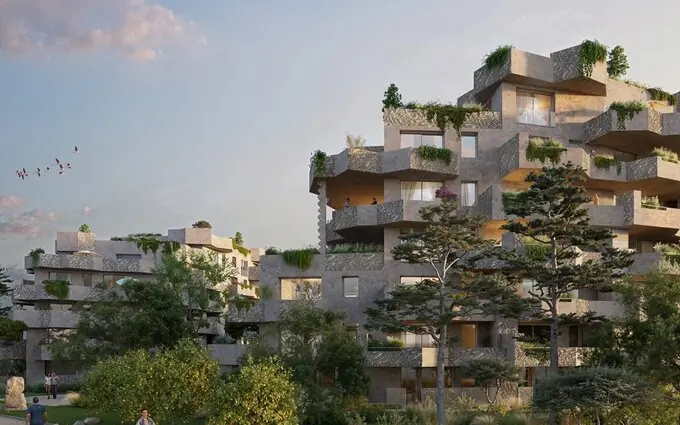
Altémed, the public group formed by ACM Habitat and the development companies SERM and SA3M, is the institution that ties these sites together. It plans districts, lets homes and supplies energy under one roof, and its development arm lays out the planned districts where the land trust and resident groups find their plots. L'Arbre Blanc, Sou Fujimoto's balconied tower completed in 2019, shows the market's alternative: 113 flats that sold quickly at an average €5,500/m², well beyond most local earners.
References
Statistics6Click on any number to see the source
Housing market
Adaptive reuse & vacancy
Population & migration
From our library13
- ACM Habitat — Organisation
- Les chiffres clés du logement en Occitanie, édition 2026 (DREAL Occitanie) — Knowledge
- Immobilier : à Montpellier se loger devient mission impossible — Knowledge
- Hab-Fab — Organisation
- Organisme de Foncier Solidaire de Montpellier Méditerranée Métropole — Organisation
- Montpellier : entre locataires en galère et propriétaires à cran, l'encadrement des loyers au pied du mur — Knowledge
- ADIL 34 — Organisation
- Montpellier dit stop à l'explosion des Airbnb — Knowledge
- Antigone (Montpellier) — Project
- MasCobado — Project
- Cité créative (ex-EAI) — Project
- Renouvellement urbain de la Mosson — Project
- Altémed — Organisation
Further sources34
- L'Etudiant, palmarès des villes étudiantes
- Insee Flash Occitanie n°151, Dec 2025
- Dossier complet — Commune de Montpellier (34172)
- https://www.insee.fr/fr/statistiques/fichier/9010481/lm_ina_169.pdf
- SeLoger, March 2026
- Observatoire de l'immobilier d'entreprise, March 2026
- Le Programme Local de l'Habitat (PLH)
- FPI Occitanie Méditerranée, Flash marché 4T 2025
- Habiter en participant : tout savoir sur l'habitat participatif
- Gambetta crée Gambetta Occitanie
- Fédération des Coop'HLM, brochure 2025
- Hab-Fab, la SCIC
- https://www.resultats-elections.interieur.gouv.fr/municipales2026/ensemble_geographique/76/34/34172/
- En Commun, Métropole magazine, April 2026
- L'encadrement des loyers à Montpellier
- Fondation pour le logement barometer, via Le Journal Toulousain
- Montpellier : encadrement des loyers confirmé par la justice
- Encadrement des loyers : Montpellier s'associe à onze grandes villes
- Organisme de Foncier Solidaire
- Métropole magazine n°26, Jan 2024
- MasCobado, épisode 1
- Loi Le Meur: renforcer les outils de régulation des meublés de tourisme
- Transformation de bureaux en logements : la loi est publiée
- Climat et résilience : atteindre le ZAN en 2050
- Banque des Territoires Occitanie, 23 Sept 2025
- Montpellier : une résidence sociale effectue sa rénovation thermique
- BailFacile
- Transbus
- Urban renewal: Mosson district
- L'Info Durable
- Métropole magazine n°30, Sept 2024
- Renouvellement urbain Mosson — comité 2025
- L'Arbre Blanc
- Futura Sciences
·
Funding & land tenure
What a housing cooperative could actually build on hereMontpellier is not in the funding registry yet — the tenure figures above are national.