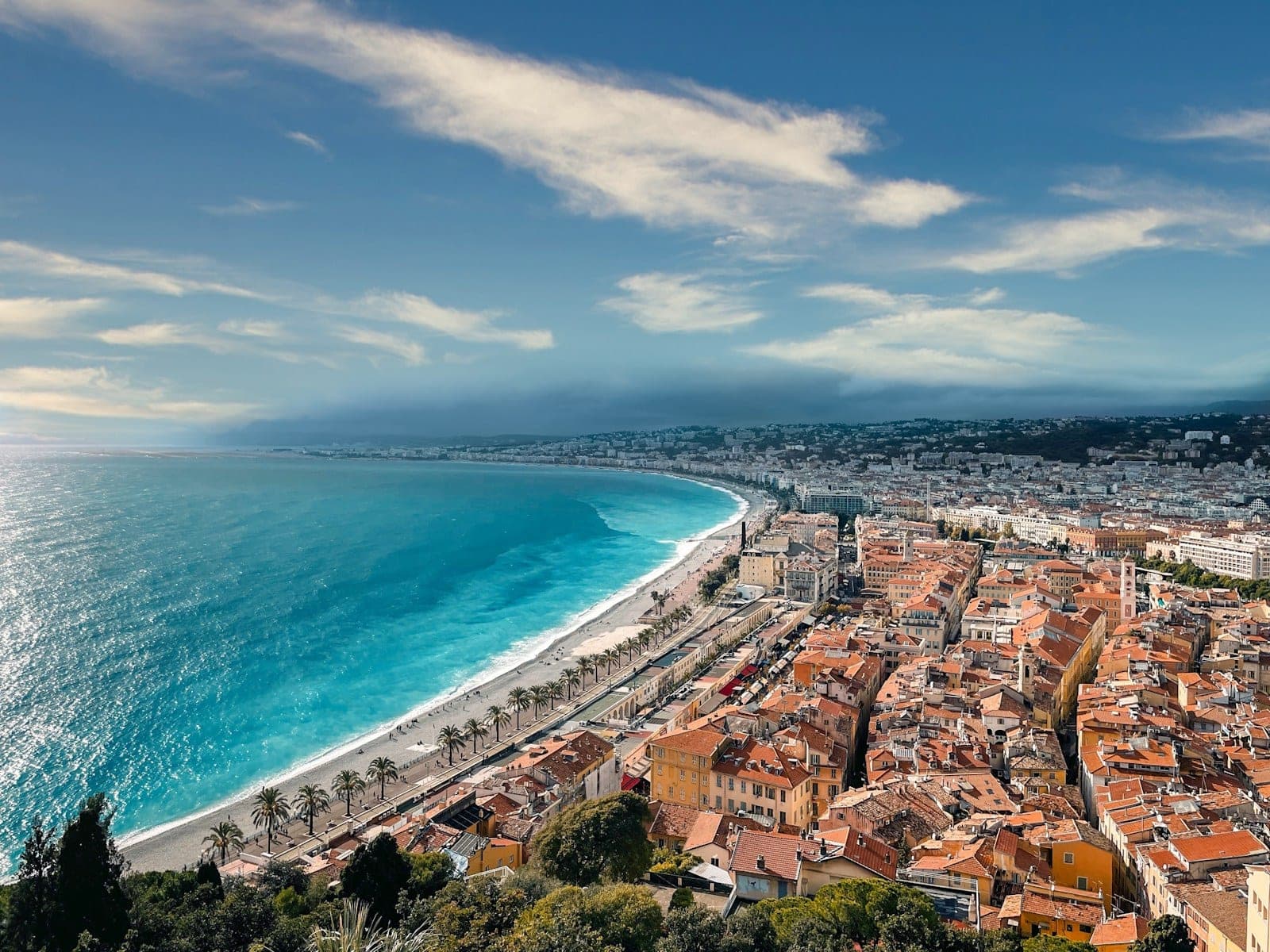
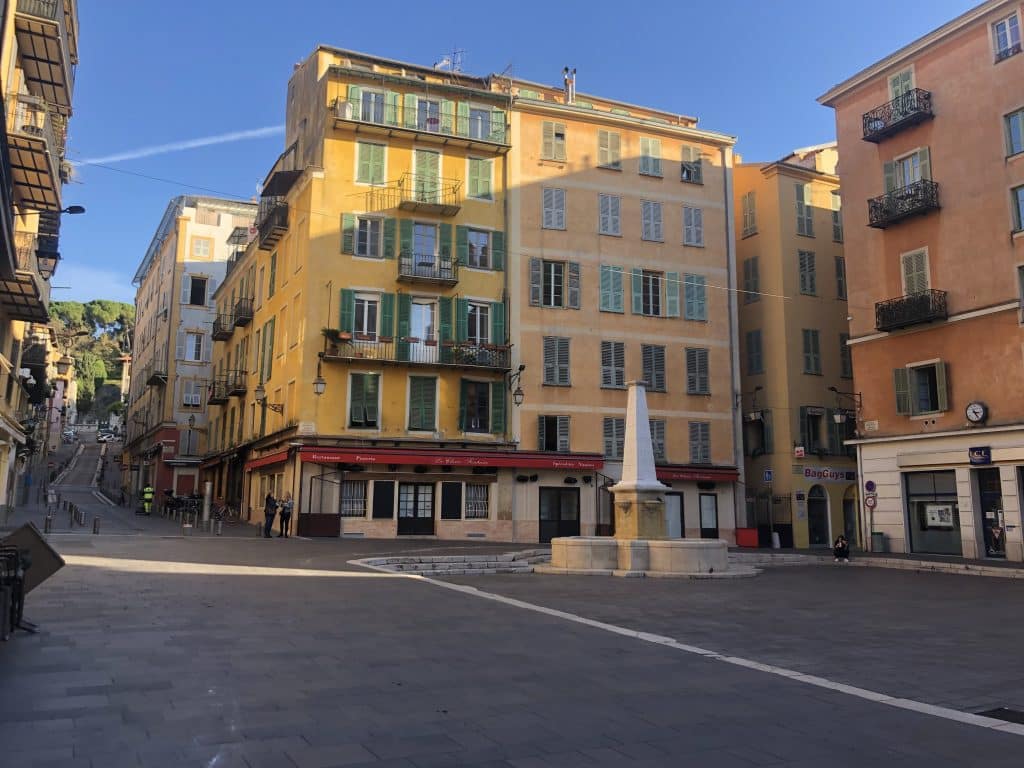
A riviera that rents by the night
Nice learned its trade as a host. Through the 19th century it filled each winter with residents from Britain, Russia and across Europe, and in 2021 UNESCO listed it as the winter resort town of the Riviera. The villas, hotels and rental blocks built for those guests still shape the city. They also frame its housing question: how much of Nice belongs to visitors, and how much to the people who work there all year?
Nice is a city of flats, and renters outnumber owners by a whisker. Owner-occupiers hold 47.3% of main residences and tenants 49.7%. The public and non-profit HLM landlords (habitations à loyer modéré, France's rent-regulated social housing) house 11.5% of households, or about 20,192 homes. Private landlords house the remaining 38.2%. Cooperative tenure of the Zurich or Copenhagen kind has no measurable share, because French law abolished rental cooperatives in 1971. Another 3.1% of households are housed free of charge, usually by family or an employer.
- Owners
- Owner-occupier47.3%
- Renters
- Public & non-profit rental11.5%
- Cooperative0.00%
- Private rental38.2%
- Other3.0%
- Housed free of charge3.0%
Social housing in France is defined by the rules a dwelling carries, not by who owns it. By the census measure, the social-housing share simply mirrors the HLM tenancies above. The Loi SRU (the 2000 Solidarity and Urban Renewal Act, which obliges towns like Nice to reach a 25% social share) uses a wider inventory. On that count Nice reached 14% in 2022, up from 11% in 2008. Nationally, 70% of households earn little enough to qualify, so eligibility reaches well into the middle class.
Rents climb steeply once a tenant leaves that regulated tier. An HLM flat costs about €6.15 per m² a month. The median across the department's rental stock is €15.1, and new lets in Nice itself ask €15.5. Furnished and serviced flats, with utilities and furniture priced in, run to about €19. Buying is further out of reach, with flats trading at about €4,937 per m².
- Public/municipal housing
- All-stock median
- New contracts
- Furnished / serviced (gross)
Monthly rent per m². Regulated HLM tenancies sit at the floor; the open market, new lets and furnished flats sit more than twice as high.
Empty homes are a large part of the local picture. The 2022 census found 12.9% of Nice's dwellings vacant, and Eurostat counts about 34,563 empty dwellings. Second and occasional homes add another 13.8% of the stock. Offices tell the opposite story: only 5.0% stood empty in 2024. Holiday lets sit inside the private-rental slice, where an estimated 4,259 flats operate as full-time short-term rentals.
Newcomers keep arriving. In a single census year about 14,605 people moved to Nice from another French commune. Many stay for a season rather than a lifetime, from Université Côte d'Azur students to engineers at Sophia Antipolis. The catalogue estimates 32,000 mid-term residents a year. Almost every home they compete for is a flat: 92.7% of dwellings, squeezed between the sea and the foothills.
The strain falls hardest on tenants and the young. INSEE's income data put Nice's poverty rate at 22%, rising to 33% of renting households against 10% of owners. Households headed by someone under 30 sit at 30%. A modelled rent-to-income estimate suggests 42.8% of households spend beyond the affordability line, which would mean the pressure has reached salaried middle earners too. Local reporting has tracked the fallout, from the penalty dispute over Nice's social-housing shortfall to a September 2026 warning over Côte d'Azur Habitat's future, after reports that 4,000 public homes could be sold.
Social housing is not an asset to be managed like any other.With no cooperative sector to speak of, Nice's non-market housing rests almost entirely on its HLM landlords. The cooperative idea survives here in smaller, newer vehicles.
Cooperatives by other names
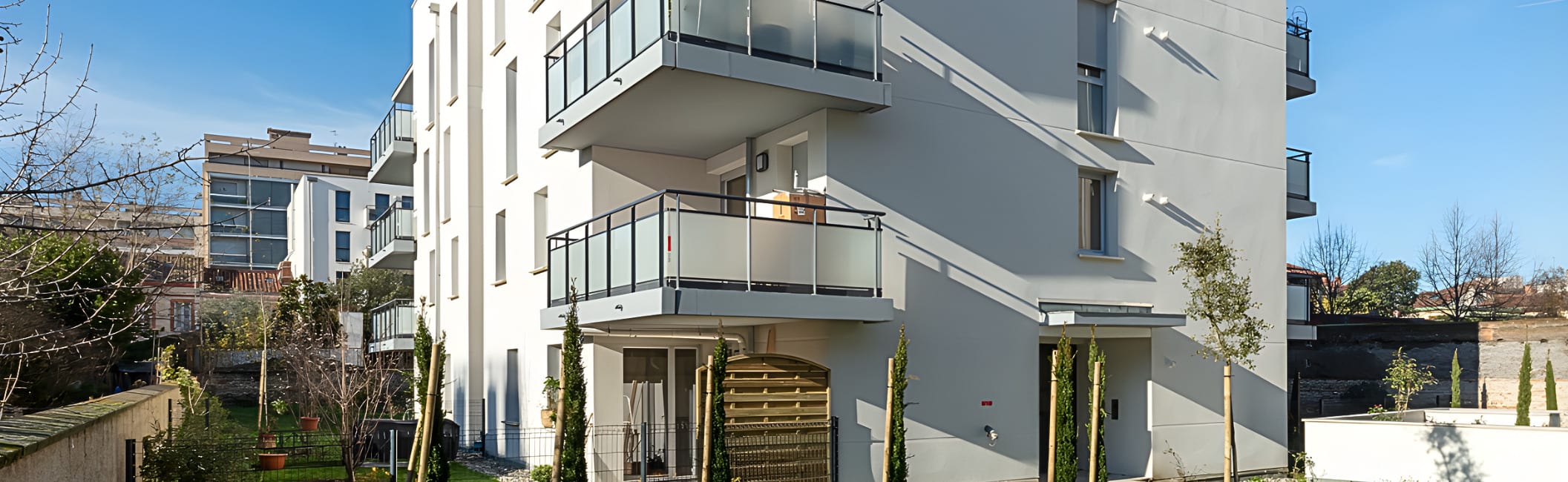
France has no rental cooperative tenure of the Swiss or German kind. It has three related forms instead. The first is the coopérative d'habitants, a resident cooperative whose members jointly own the building. They hold shares rather than titles to single flats, and the form regained a legal basis under the Loi ALUR (the 2014 Access to Housing and Renewed Urban Planning Act). The Coop'HLM (cooperative social-housing companies) build homes that modest households can buy. The third form, the bail réel solidaire or BRS, is a long leasehold that splits the land from the building. An organisme de foncier solidaire, or OFS (a French community land trust), keeps the land, and the household buys the flat. A 2025 study by Toulouse's urban-planning agency describes leases of 18 to 99 years, a small monthly ground rent and resale prices capped for the next buyer.
The cooperative tradition is older than it looks. On 13 January 1908, 50 cooperative societies founded a national federation of low-cost housing cooperatives in Paris. Under their location-attribution formula, members rented a home while repaying a cooperative loan, then took ownership. More than 400,000 families became owners that way. Laws passed on 16 July 1971 abolished location-attribution and location-coopérative, and the tenant-cooperative route closed with them. Resident cooperatives only returned in 2014. France now counts about 110 resident-led cooperatives, 42 of them occupied.
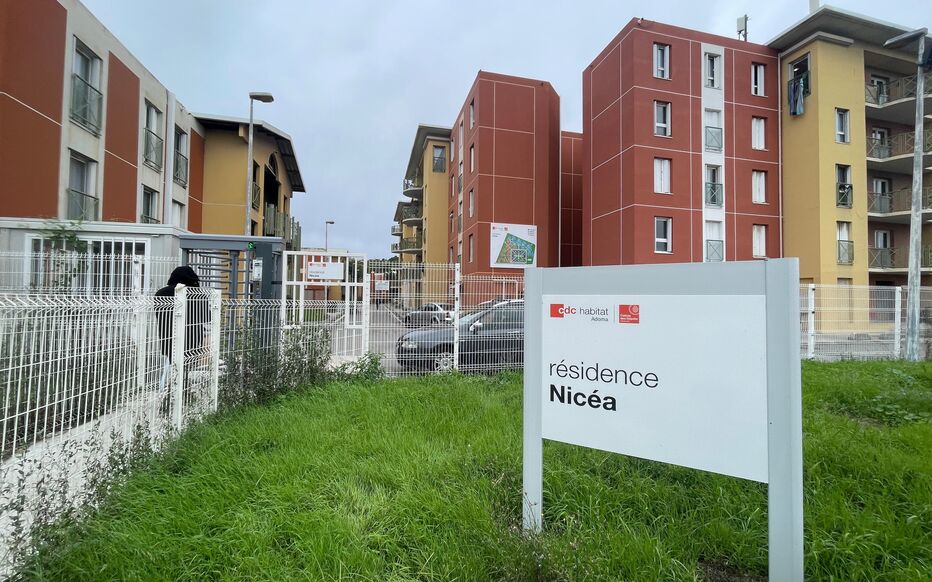
In Nice the cooperative idea now travels in three clusters. The largest is municipal. Côte d'Azur Habitat, the Métropole's public housing office with more than 21,000 rental homes, is also the city's OFS. Its first BRS scheme, Villa Candide, sold its first flats behind Avenue Jean Médecin in September 2025 for 30% to 40% below market. The second cluster is citizen-led. Maïoun HaPaNi, a habitat participatif group (housing planned and run by its future residents), gathered six households in 2025 and aims at 11 homes, possibly with a social landlord as partner. The third is the solidarity sector around Habitat et Humanisme Alpes-Maritimes, which houses people on low incomes and those living alone.
All three clusters hit the same wall first: land. Building plots in Nice fetch about €519 per m², before a single wall goes up. Beyond that, their problems diverge. The BRS model struggles with unfamiliarity among buyers, banks and notaries, the Toulouse study found. Participatory groups struggle to secure any site at all.
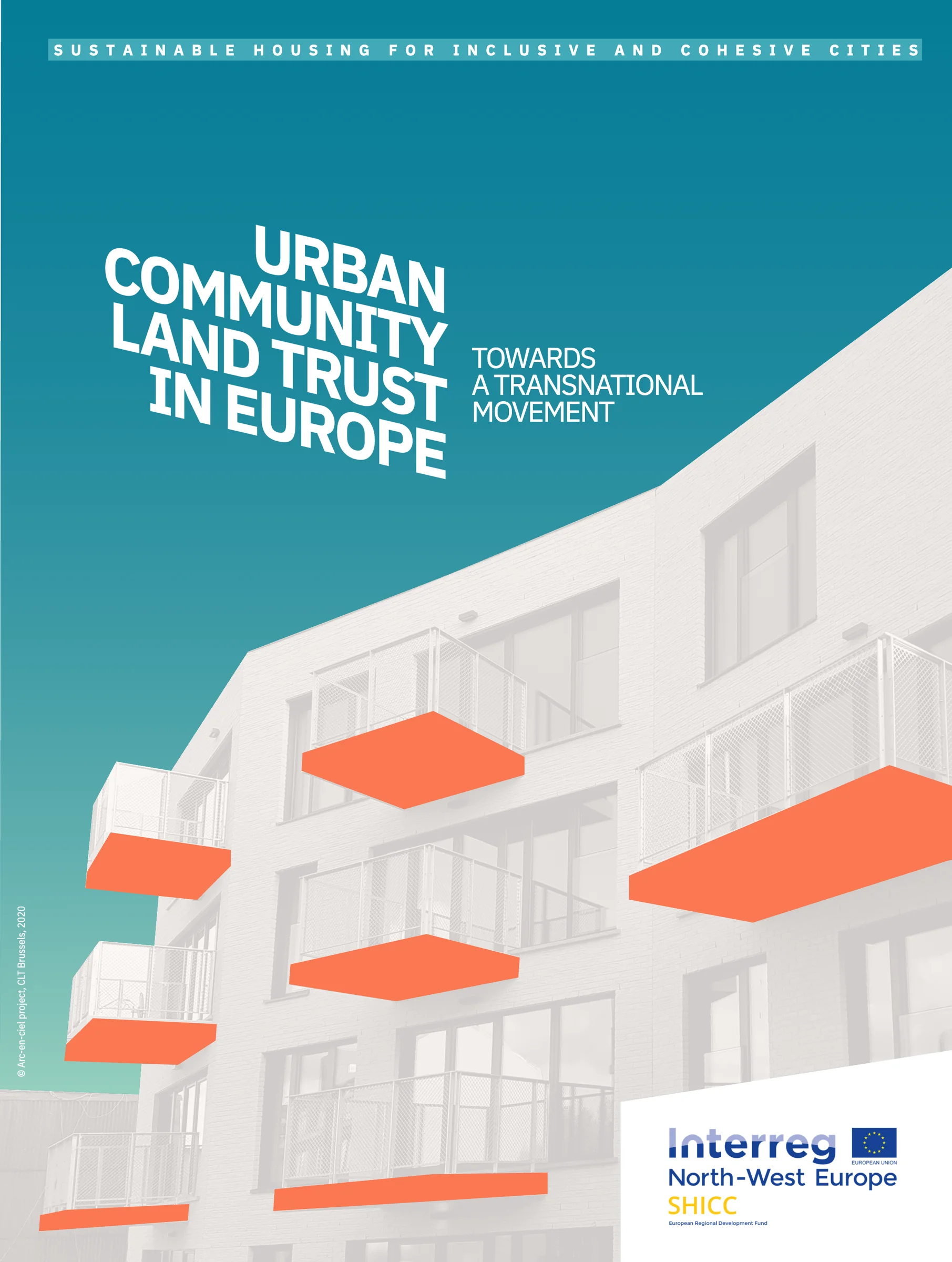
Government treats these forms as tools of social policy rather than as a tenure of their own. A European guide to urban community land trusts presents France's OFS and BRS framework as one of the continent's working models. The 2025 state-of-the-sector report on Europe's land trusts singles it out as a route to scale. In Nice, the Métropole's housing plan files BRS homes inside the same social quota as HLM rentals. That puts cooperative-style ownership squarely in the political argument over how many social homes the city owes.
From SRU fines to a 120-day cap
Nice changed direction in March 2026. Éric Ciotti's UDR list (Union of the Right for the Republic) won the run-off, ending Christian Estrosi's run as mayor since 2017. Marie-France Cesari became the deputy mayor for housing and urban planning. The new team's programme, set out in April 2026, promises €500 million to renovate run-down HLM estates, paid for by selling public housing outside the Métropole. It gives working people such as police officers and nurses priority for HLM flats, helps tenants buy their homes, and cuts property tax by 19%.
Short lets mark the sharpest break with the past, since the April programme promised to end the city's 'war on Airbnb'. In June 2026 the council raised the cap on letting a main home from 90 to 120 days a year, and extended change-of-use permits from 3 to 5 years. The mayor said 'Il ne faut plus qu'on augmente le nombre de locations meublées touristiques' (the number of tourist flats should stop growing). He also accused the Macron years of treating owners as 'vaches à lait' (cash cows). The Métropole's new rules took effect on 22 June 2026 and cap new permits in three central zones at 691 between September and December 2026. France as a whole is among Europe's largest short-let markets, a 2025 European Parliament study notes.
The far right claims to defend the people of Nice by replacing its residents with people pulling wheeled suitcases.Responsibility is split three ways. Paris sets the Loi SRU and collects its levies: Nice faced about €10 million in 2024 and more than €8 million in 2025, the highest in the department. National law also governs tourist lets and energy standards. The Alpes-Maritimes département (the county-level council) runs its own landlord, Habitat 06, now under discussion for a merger with Côte d'Azur Habitat. The Métropole, which Ciotti also chairs, writes the housing plan. Its 2025-2030 programme targets about 2,800 homes a year, split 40% social rental or social ownership, 20% intermediate and 40% open market. For Nice itself that means 742 social homes a year.
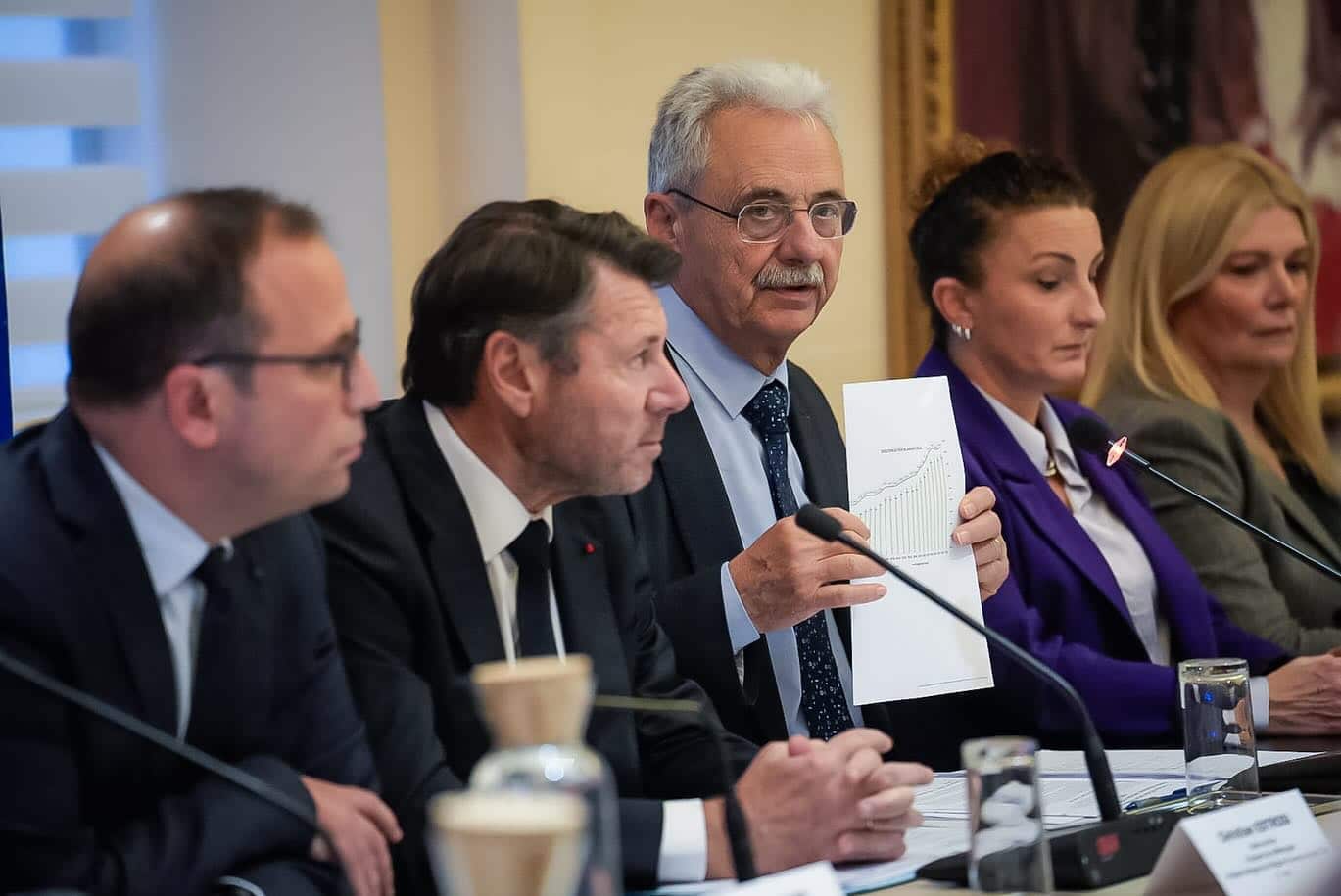
This fine is a racket by the State that does nothing to solve the underlying problem.The ecologist councillor Jean-Christophe Picard answers that the plan lowers the bar. The previous programme aimed at 1,700 social homes a year, against 1,250 now and 3,400 demanded by the SRU trajectory. He argues that 'il est aussi possible de créer des logements sociaux dans le tissu existant' (social homes can also be created in existing buildings).
Dedicated cooperative programmes are thin, so the work runs through land. The regional land agency, EPF PACA, buys and holds sites for public projects. It bought the plot for Résidence Oz in neighbouring Cagnes-sur-Mer, where 50 BRS homes are due by the end of 2026. Banque des Territoires, the public investment arm of the Caisse des Dépôts, co-finances it. Inside Nice, Côte d'Azur Habitat's OFS is the main vehicle for cooperative-style ownership.
Nice's empty space is residential, not commercial, so the conversion answer is unusual. In the quota zones, each new tourist flat must be offset by turning offices or shops into housing, or by buying that right from someone who does. The Ciotti programme adds an audit of city and Métropole buildings to find empty offices that could become homes. A Banque de France study of office conversions recorded very few conversions in Riviera employment zones such as Menton and Fréjus. BPIE's 2025 report for the European Commission points to Marseille's Rue Acquaviva as a nearby example of an office block turned into homes. FEANTSA's work on reclaiming vacant space notes that France already maps long-term vacancy through its LOVAC database, a tool the city could turn on its empty flats.
Climate rules now drive much of the renovation agenda. The 2021 Climate and Resilience Act bars landlords from letting G-rated homes since 2025, F-rated homes from 2028 and E-rated homes from 2034. The European Parliament's 2025 mission to Paris recorded that short-term lets will face the same energy floor. That makes the HLM estates the city's largest retrofit vehicle. The Les Moulins renewal combines demolition, rehabilitation and new building on one estate.
- 1908[source]
Cooperative housing federation founded
Fifty cooperative societies found the national federation of low-cost housing cooperatives in Paris, the root of today's Coop'HLM.
- 1971[source]
Tenant cooperatives abolished
The laws of 16 July 1971 end location-attribution and location-coopérative, closing the rent-to-own cooperative route.
- 2000[source]
Loi SRU sets a social-housing floor
Article 55 obliges towns of Nice's size to reach a 25% social-housing share, with annual levies on those that fall short.
- 2009[source]
Les Moulins renewal begins
The first renewal programme demolishes 547 homes, rehabilitates 1,244 and builds 652 in the west-Nice estate.
- 2014[source]
Loi ALUR revives resident cooperatives
The Access to Housing and Renewed Urban Planning Act gives coopératives d'habitants a legal framework again.
- July 2021[source]
UNESCO lists Nice
Nice is inscribed as the winter resort town of the Riviera, recognising the architecture built for its foreign guests.
- February 2024[source]
Nice contests its SRU penalty
Facing a fine of about €10 million, the city and Métropole call the levy a 'racket' and appeal; Nice's SRU share stands at 14%.
- September 2025[source]
First BRS homes in central Nice
Côte d'Azur Habitat sells eight Villa Candide flats on a land-trust lease at 30% to 40% below market.
- October 2025[source]
Housing plan 2025-2030 adopted
The Métropole targets about 2,800 homes a year, 40% of them social rental or social ownership.
- March 2026[source]
Éric Ciotti elected mayor
His UDR list wins the run-off with 48.54% and 52 of 69 seats, ending Christian Estrosi's tenure.
- June 2026[source]
Holiday-let cap raised to 120 days
The council lets residents rent out their main home for 120 days a year instead of 90, and extends change-of-use permits from 3 to 5 years.
- September 2026[source]
Alarm over Côte d'Azur Habitat sale
Opposition councillors question a plan that could sell 4,000 public homes and merge the office with Habitat 06.
- 2028[source]
F-rated homes leave the rental market
Under the 2021 Climate and Resilience Act, F-rated homes may no longer be let, after G-rated homes in 2025.
- 2030[source]
Housing plan horizon
The 2025-2030 plan closes; its social-housing delivery will be judged against the SRU 25% floor.
- 2034[source]
E-rated homes and holiday lets meet the energy bar
E-rated homes join the rental ban, and short-term lets must reach at least a D rating under the national framework.
From the first cooperative federation to the energy rules still ahead.
Housing for the people who stay
Les Moulins is Nice's biggest bet on the social homes it already has. The west-Nice estate's first renewal programme, launched in 2009, demolished 547 homes, rehabilitated 1,244 and built 652. The second, drawn up with residents in 2021, will demolish 235, rehabilitate 748 and add 177. Côte d'Azur Habitat delivers it with ANRU (the national urban renewal agency), the EU, the State, the Region, the city and the Métropole. Tower 17 is being taken down in 2026. The estate shows a public landlord rebuilding at scale while the city argues about selling its stock.
Joia Méridia shows the market bending toward affordability. The new quarter in the Écovallée, on the plain of the Var, holds about 800 homes in 12 buildings. When buyers pulled out after 2022, its developers re-planned it, and it now reserves 35% of homes for social housing and 40% for intermediate rents. The social landlord 3F Sud builds alongside Pitch Immo, Woodeum and Eiffage Immobilier. Sou Fujimoto's 17-storey Hana tower gives the district its landmark.
Villa Rossa carries the land-trust model into its second building. Côte d'Azur Habitat lists 12 BRS homes facing the Gare du Sud for September 2026, built by Icade, with another 12 at Cimiez Garden due in 2029. Buyers pay 30% to 50% below market and hold a lease of about 85 years, renewed at each sale. Every resale keeps the discount for the next household.
Résidence Fabrice Cayol turns an old institution into a shared home. Habitat et Humanisme Alpes-Maritimes renovated a former priests' retirement home in the Valrose district between 2014 and 2017. It now holds 11 homes for older residents and 27 pension-de-famille flats (small supported homes for people leaving isolation or insecure housing). Two staff and a team of volunteers run shared activities, so neighbours of different ages look out for one another.
Maïoun HaPaNi is the most open-ended of the five. Its households are looking for an existing building to rehabilitate rather than a plot to build on. Their charter rests on mutual aid, shared governance, conviviality and ecology. A city once built for guests who left in spring now holds the first pieces of housing for people who stay. They are a public land trust, an estate rebuilt rather than sold, and neighbours ready to share a roof.
References
Statistics15Click on any number to see the source
Housing market
Tenure & affordability
Adaptive reuse & vacancy
Population & migration
From our library13
- Logements sociaux : Nice dénonce le racket de l'État et formule un recours contre des millions d'euros de pénalités — Knowledge
- Nice : Julien Picot alerte sur l'avenir de Côte d'Azur Habitat — Knowledge
- Bail réel solidaire : une solution pour l'accession abordable — Knowledge
- Urban Community Land Trust in Europe — Knowledge
- Community Land Trusts in Europe: State of the Sector Report — Knowledge
- Plan pour les HLM, fin de la guerre contre Airbnb, taxe foncière en baisse... Ce que la mairie d'Éric Ciotti prévoit pour le logement à Nice — Knowledge
- Immobilier. Airbnb : les propriétaires de Nice peuvent désormais louer leur résidence principale cent vingt jours par an — Knowledge
- The regulatory aspects of short-term rentals in the EU — Knowledge
- La Métropole Nice Côte d'Azur fixe sa feuille de route pour le logement, l'opposition alerte sur le social — Knowledge
- The conversion of office real estate into residential real estate: trends following Covid-19 and the surge in teleworking — Knowledge
- Conversion of offices into affordable housing — Knowledge
- Reclaiming Vacant Spaces to Tackle Housing and Homelessness Crises in Europe — Knowledge
- Report of the HOUS mission to Paris, France — Knowledge
Further sources24
- Nice : Julien Picot alerte sur l'avenir de Côte d'Azur Habitat — Presse Agence · 2026-09-22
- Ville de la villégiature d'hiver de riviera à Nice — Wikipédia
- Dossier complet – Commune de Nice (06088) — INSEE · 2026
- L'article 55 de la loi SRU — Ministère de la Transition écologique
- Logements sociaux : Nice dénonce le « racket de l'État » — Nice-Presse · 2024-02-19
- Revenus et pauvreté des ménages en 2021 – Commune de Nice — INSEE · 2024
- France – co-operative housing — Cooperative Housing International
- Un peu d'histoire… — Les Coop'HLM
- Des logements en bail réel solidaire livrés au cœur de Nice — Nice Premium · 2025-09-26
- À Nice, des appartements en plein centre-ville proposés à moitié prix grâce au bail réel solidaire — ICI Azur · 2025-09-26
- Airbnb : les propriétaires de Nice peuvent désormais louer leur résidence principale cent vingt jours par an — Nice-Presse · 2026-06-19
- Projet de Rénovation Urbaine des Moulins — Métropole Nice Côte d'Azur
- Le Programme Local de l'Habitat 2025-2030 — Métropole Nice Côte d'Azur · 2025-10-22
- 2026 Nice municipal election — Wikipedia · 2026
- Interdiction de location DPE F : où en est-on en 2026 ? — Homelior · 2025-12-16
- Report of the HOUS mission to Paris, France — European Parliament · 2025-09
- Sécurité, éducation, logement, entreprises… les adjoints de la mairie de Nice — France 3 Provence-Alpes-Côte d'Azur · 2026-03-27
- Ce que la mairie d'Éric Ciotti prévoit pour le logement à Nice — Nice-Presse · 2026-04-13
- Logements en meublés touristiques — Métropole Nice Côte d'Azur · 2026
- Une trentaine de communes des Alpes-Maritimes sanctionnées par l'État pour manque de logements sociaux — ICI Azur · 2025-03-18
- La Métropole Nice Côte d'Azur fixe sa feuille de route pour le logement — Nice Premium · 2025-10
- Des logements neufs en Bail Réel Solidaire (Résidence Oz) — Banque des Territoires
- Nice : dernière ligne droite pour Joia Méridia — Mesinfos / TPBM · 2025
- Bail Réel Solidaire — Côte d'Azur Habitat