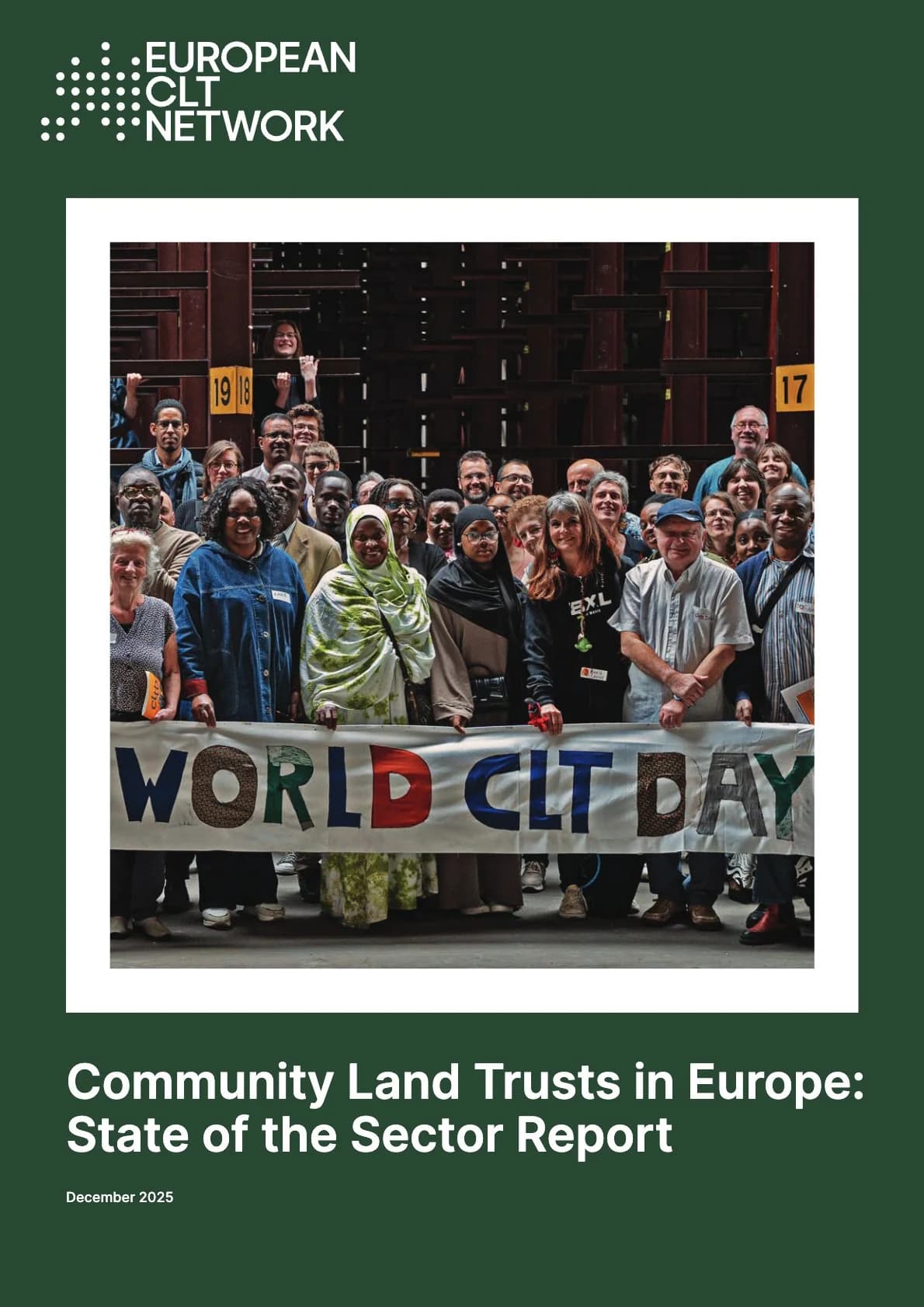
Overview of the Report
The “Community Land Trusts in Europe: State of the Sector Report” (December 2025) was commissioned by the European Community Land Trust Network and prepared by The Good Economy Partnership Limited, an independent impact advisory firm. It presents findings from interviews with network members and analyses of data supplied by over 500 CLTs across Europe, representing more than 31,500 homes. The report is publicly available and was last edited on May 5 2026.
Scale of CLT Housing
Across Europe, CLTs have delivered 31,503 homes: 71 % owned, 20 % rented, and 9 % cooperative. Current occupancy stands at 180 homes (9 % of projects) while 1,144 homes are in development (59 %). Pre‑development projects number 251 (13 %) and 132 sites are actively being sought (7 %). Funding secured to date totals €145.7 million.
Financial Landscape
The sector’s primary funding sources are regional government grants (75 % of members), loans (13 %), and donations (13 %). Total budget reported for the report is $4,500.00 (non‑financial context). European CLTs have accessed €1.89 billion in projected social value and €2 billion in capital‑intensive projects, with an estimated €1.2 billion in public investment leveraged.
Impact on Housing Affordability
CLTs keep land permanently out of the speculative market, ensuring homes remain affordable. In the UK, 78 % of members set rents at or below national social‑housing levels; in Spain, 8.3 times higher satisfaction with home size, price, or neighbourhood is reported compared with conventional rentals. Resale prices are capped, often at 27 % of market value (London) or 37 % below market (Barcelona).
Geographic Reach
Members span 18 countries, including the United Kingdom, Ireland, Portugal, Spain, France, Belgium, the Netherlands, Germany, and others. The network’s map shows representation in all major European regions, with 500+ CLTs collectively delivering the housing stock mentioned above.
Partnerships and Collaboration
Key partnerships involve local governments (land donation, long‑term leases), social‑housing providers (co‑financing, expertise), developers (site allocation), and citizen movements (grass‑roots initiation). Notable examples include Citizens House in London (first UK CLT led by residents) and the Upcycling Trust project delivering climate‑smart retrofits across five cities.
Sustainability and Circular Economy
CLTs integrate green infrastructure, renewable energy, and circular construction methods. Examples include solar‑PV micro‑grids in Barcelona, modular timber construction in Bristol, and adaptive reuse of vacant buildings in Glasgow. Over 100 % of homes in certain pilots achieve energy‑A labels, with annual energy savings of €562 per household reported.
Social and Economic Inclusion
Beyond housing, CLTs provide 80 community assets (green spaces, community hubs, cafés) and plan an additional 116 assets. In Brussels, 83 % of residents are foreign‑born, representing 66 nationalities, and 64 % of households are single‑parent families. CLTs contribute to community wealth building, social cohesion, and empowerment through democratic governance.
Barriers to Scaling
Challenges include fragmented legal recognition (varied across Ireland, Netherlands, Portugal, Belgium), limited access to finance, high land costs, and regulatory complexity. Pre‑development financing remains the most constrained stage, with many projects relying on oversubscribed grant programmes.
Opportunities for Growth
The report recommends stronger EU‑level policy support, streamlined land‑allocation mechanisms, dedicated low‑interest financing, and enhanced cross‑border learning platforms. Successful models in England & Wales (National CLT Network) and France (OFS framework) illustrate how legal definition, public funding, and developer partnerships can accelerate scaling.
Future Outlook
The network aims to increase CLT‑delivered homes to represent at least 5 % of new European housing, expand community assets, and embed CLTs in mainstream housing policy. Continued data collection, impact measurement, and advocacy are highlighted as essential for achieving these objectives.