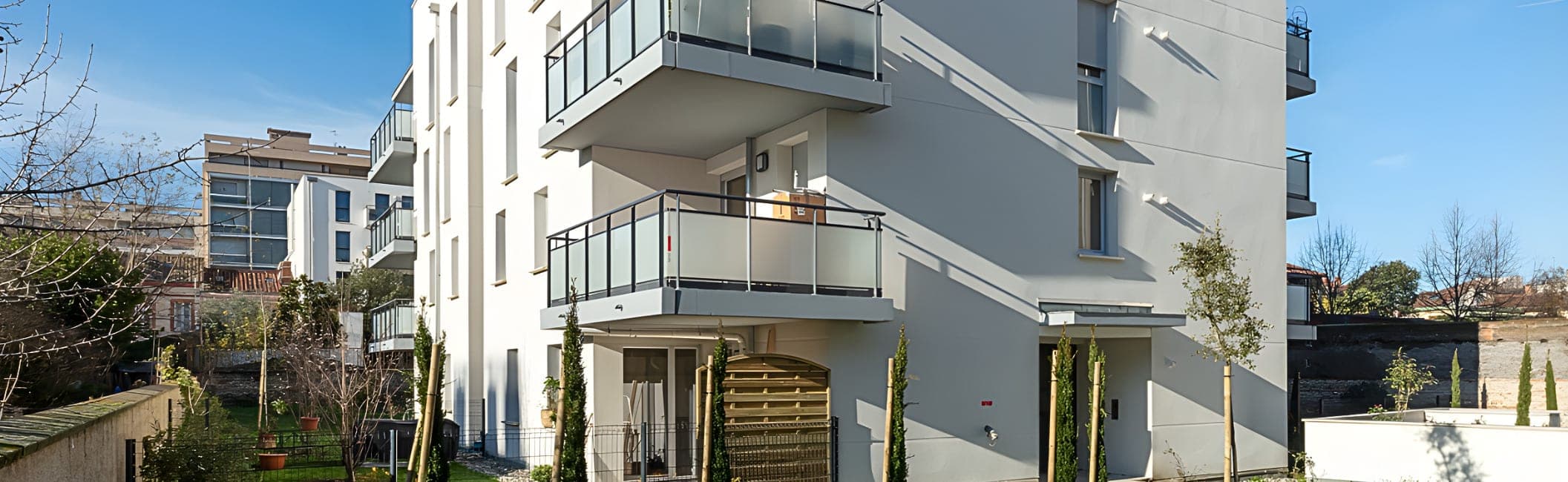
Overview of the Bail Réel Solidaire Initiative
The report “Bail réel solidaire : une solution pour l’accession abordable (AUAT)” is an analysis produced by the Association Urbaine d’Aménagement du Territoire (AUAT), a collaborative body of local authorities in the Toulouse metropolitan area. AUAT’s research team, including Hélène Morel (Lab’URBA researcher) and project managers Pauline Jolly and José Sanchez, examines the French “Bail Réel Solidaire” (BRS) scheme as a tool for sustainable, affordable housing. The study draws on data from the local market and presents a concise picture of how BRS functions, its impact on housing costs and its potential for wider European adoption.
Core Mechanism of the BRS Model
BRS separates land ownership from building ownership. An “Organisme de Foncier Solidaire” (OFS) retains the land, while the buyer becomes the owner of the dwelling. Tenants sign long‑term leases of 18 to 99 years and pay a modest ground‑rent (typically €1.5‑3 per m² per month). When the property is sold, the price is capped to preserve affordability, ensuring that future buyers benefit from lower acquisition costs.
Key Market Figures in the Toulouse Area
- Approximately 400 BRS homes are currently on the market in the Toulouse attraction area.
- Median acquisition price: €2 900 per m², roughly 30 % below comparable market rates.
- Around 80 % of BRS projects are led by social landlords, with private developers now accounting for about one‑quarter of new schemes.
- Target households are modest‑income families, with average annual incomes near €19 000.
Practical Implementation and Benefits
The BRS framework offers several tangible advantages:
- Lower purchase price (20‑30 % below market) improves entry into home ownership for low‑income families.
- The ground‑rent is modest, reducing ongoing housing costs.
- A resale clause limits capital gains, preventing speculative price escalation.
- The model is highlighted as “the most secure real‑estate product” by Florence Mizzi, project leader for habitat strategy at OFS‑Toulouse Métropole.
Challenges and Barriers to Wider Adoption
Despite its promise, the BRS scheme faces notable obstacles:
- Limited public awareness among prospective buyers, banks and notaries.
- Administrative and legal complexity, including the absence of favourable tax treatment such as partial exemption from property tax.
- High land costs in constrained urban zones hinder the financial viability of small‑scale projects (under 20 units).
- Insufficient funding mechanisms and limited access to the zero‑interest “Prêt à Taux Zéro” for successive buyers.
Conditions for Scaling Up the BRS Model Across Europe
Stakeholders agree that successful expansion requires:
- Enhanced communication and training for all actors in the housing chain.
- Adjustments to urban planning documents to set explicit targets (e.g., 10 % of new housing as social accession).
- Strong public sector backing to avoid the drift of the scheme toward higher‑income groups.
- Secure financing through subsidies and favourable loan products for successive owners.
Conclusion: Sustainable Housing Potential for Europe
The Bail Réel Solidaire model demonstrates how separating land and building ownership can deliver long‑term affordable housing while maintaining stability for occupants. Its evidence‑based results from the Toulouse region—30 % price reductions, modest ground‑rent, and a high proportion of social‑sector involvement—offer a replicable framework for other European cities confronting housing unaffordability and speculative pressures. By addressing awareness, administrative simplicity and financing, the BRS could become a cornerstone of sustainable, inclusive urban development across the continent.