From free building plots to a scarce city
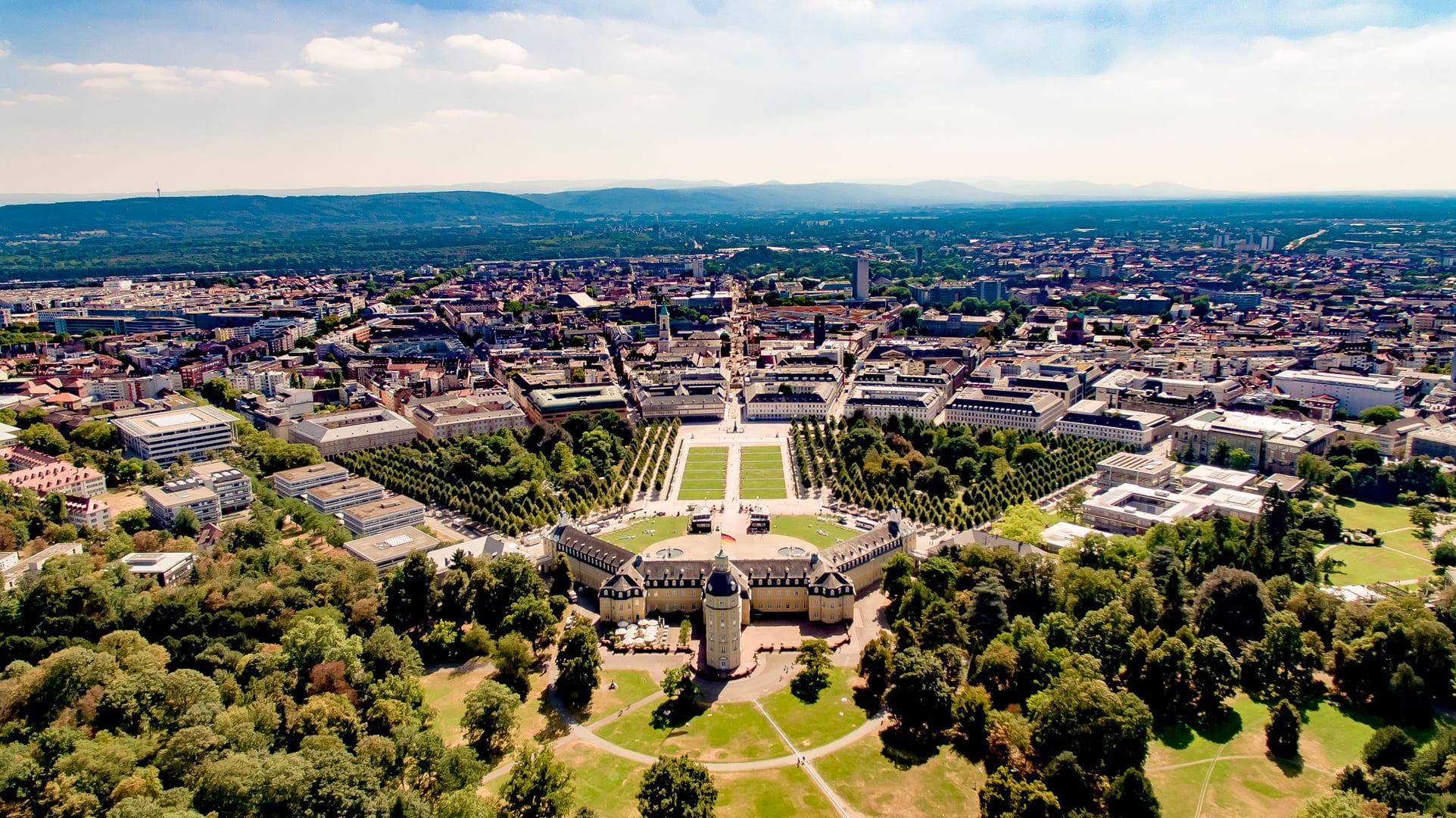
Karlsruhe was drawn before it was built. In 1715 Margrave Karl Wilhelm laid out 32 roads running from his palace like the ribs of a fan. His founding charter then promised every newcomer a building plot free of charge. Three centuries later, the fan holds 309,247 people, and land has turned from the city's gift into its scarcest good.
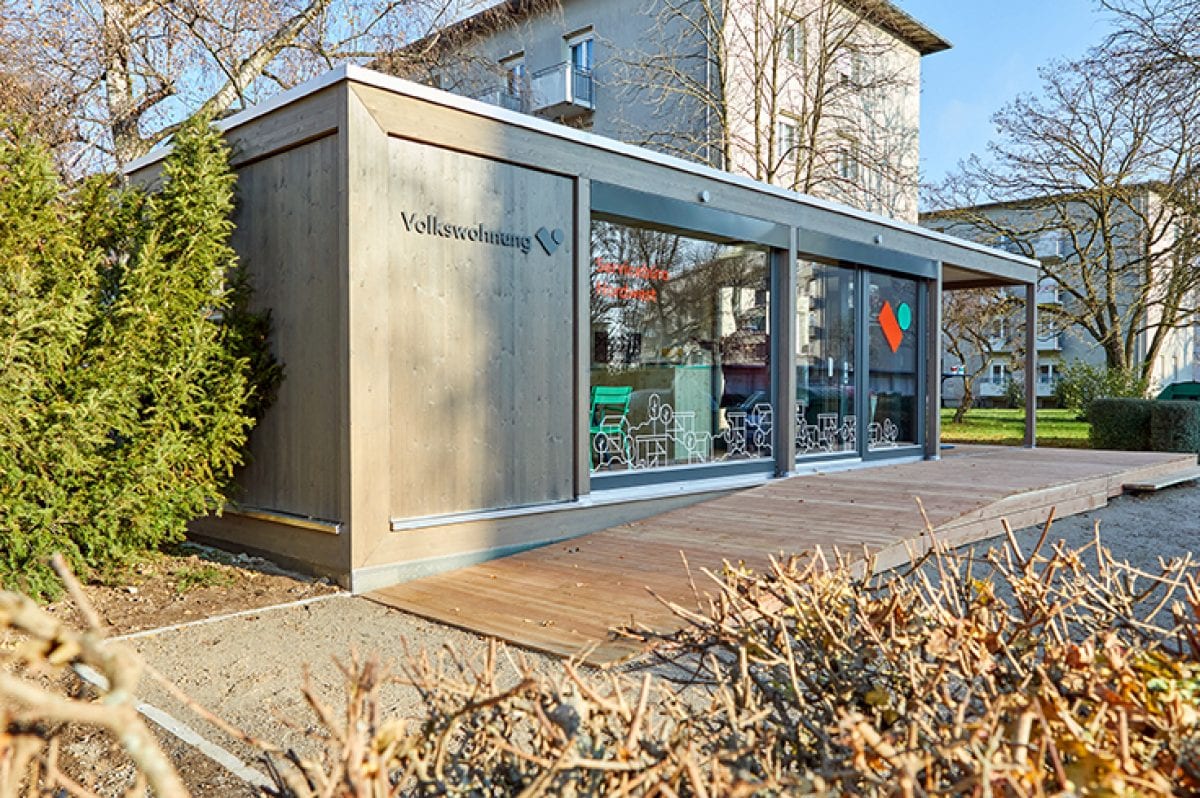
Most households here rent. The 2022 census puts owner-occupiers at 29.1%, which leaves 70.9% of households renting their home. Cooperatives own about 5% of the stock, or roughly 8,000 homes. Public housing means a single landlord, the municipal VOLKSWOHNUNG. Its 13,200 flats make up 8.2% of the city's 161,422 dwellings. The company says one rental flat in eight in Karlsruhe is one of its own. Private landlords let the remainder, about 57.7% of all homes.
- Owners
- Owner-occupier29.1%
- Renters
- Public & non-profit rental8.2%
- Cooperative5.0%
- Private rental57.7%
Social housing is a rulebook laid over these slices, not a slice of its own. About 5% of homes carry a Belegungsbindung (a rent and occupancy covenant attached to public subsidy). These homes are spread across Volkswohnung flats and subsidised private and cooperative new build. The pool of people who qualify is far larger. An estimated 45% of households fall under the income limits for a Wohnberechtigungsschein (the certificate that unlocks a subsidised flat).
Rents climb steeply from one front door to the next. Volkswohnung's subsidised flats let for about €6.50/m² net cold. Sitting tenants paid an average of €8.46/m² at the 2022 census. Flats advertised in 2026 ask €13.78/m², after new-let rents rose 3.7% in 2025. A furnished flat for a six-month stay, bills included, is estimated at €23.40/m² gross.
- Public housing (Volkswohnung, subsidised)
- All-stock average (census 2022)
- New contracts (advertised)
- Furnished mid-stay (gross, estimate)
Monthly rent per m². The first three tiers are net cold rents; the furnished mid-stay tier is a gross, bills-included estimate.
The census found few idle homes. Residential vacancy stood at 3.4% in May 2022, or 5,432 flats. The administration's own reading, in a July 2025 reply to the council, is that about half were being readied for a new tenant or a sale. Most of the rest waited on building work, demolition or an owner's return. Offices tell a different story. A building boom and weaker demand pushed office vacancy from about 3% before 2019 to 5.9% in 2024, some 159,149 m² of empty floor space. Short lets remain a thin layer. A city hotel study counted 379 active Airbnb units in 2023, at a median €105 a night for a one-bedroom.
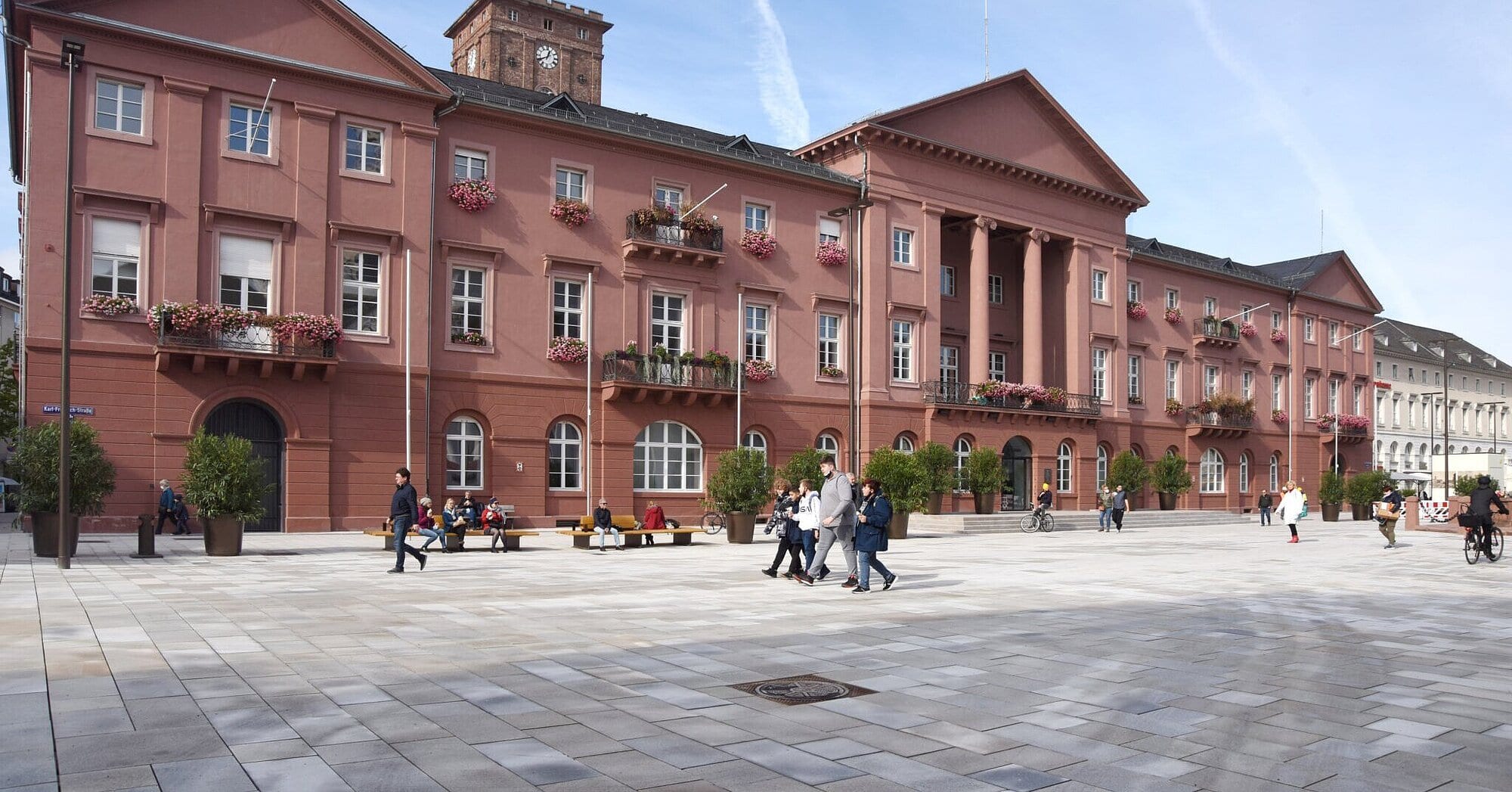
Demand arrives faster than homes are finished. Around 25,000 people move to the city each year, in a university town anchored by KIT (the Karlsruhe Institute of Technology). Completions swung from 443 homes in 2023 to 904 in 2024, then fell back to 618 in 2025. Permits for new residential buildings reached a historic low of 259 flats in 2024. The Pestel Institute reckons the city alone is 5,100 homes short.
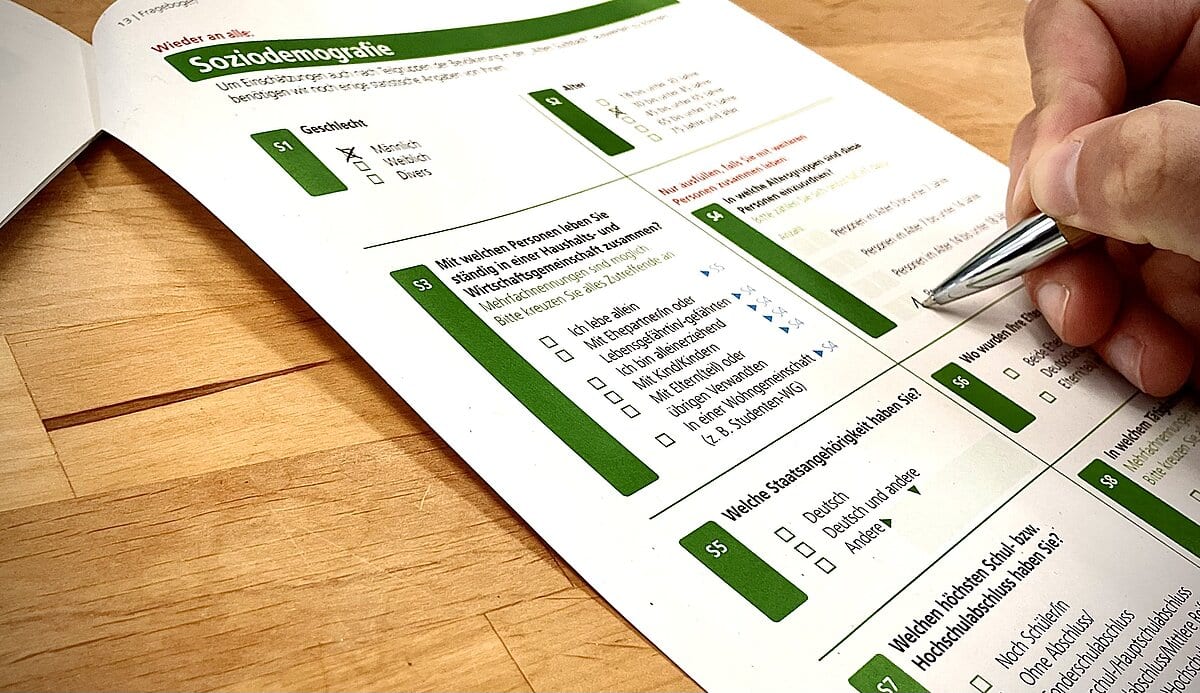
Who carries the strain? A Hans-Böckler-Stiftung data sheet on large cities found that 38.5% of Karlsruhe's renting households spend more than 30% of net income on rent. For 17.8% the figure passes 40%. The pressure has reached the middle. In the city's 2024 residents' survey, 51% named the housing shortage the biggest challenge to 2040, ahead of climate change at 38%. Middle-income families and middle-income workers put it first, as did every other group. Across Germany, the tenant federation's Mietenreport 2026 finds that 29% of tenants fear they will not manage their rent in future.
Housing must remain affordable for people on low and middle incomes too.Set against that pressure, the cooperatives hold only a small slice of the stock. Their roots, though, reach back to the city's first housing shortage.
Garden cities, tenant-owners and a barracks cooperative
Karlsruhe's cooperatives are rental cooperatives. Members buy a Genossenschaftsanteil (the share that brings membership and a vote at the general meeting). In return they gain a secure tenancy at rents set to cover costs, not to earn a return. At MiKa one share costs €255.65. The Hardtwaldsiedlung cooperative calls its members Miet-Eigentümer (tenant-owners): they rent their flat, yet through their shares they own the landlord. Several cooperatives, Gartenstadt Karlsruhe among them, also run a Spareinrichtung (a members' savings scheme) backed by their own housing stock.
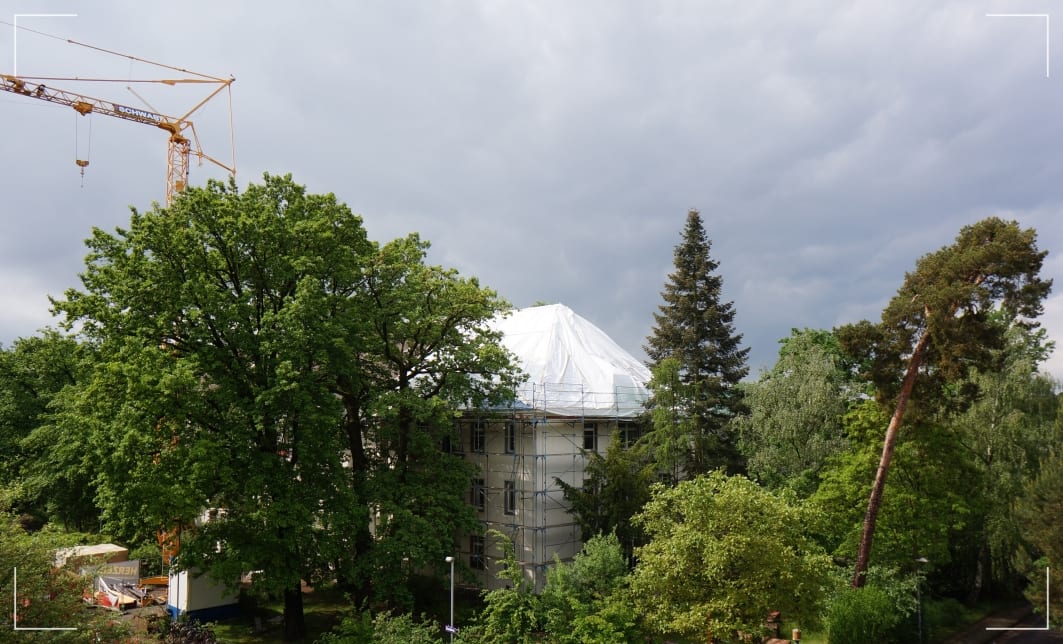
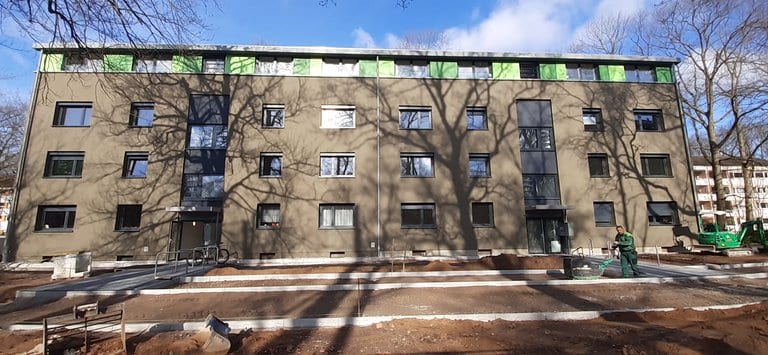
The tradition grew out of the reform movements around 1900. The Mieter- und Bauverein dates from 1897. In 1907 Hans Kampffmeyer, Friedrich Ostendorf and others founded the Gartenstadt cooperative, which began building houses with gardens in Rüppurr in 1911. The Hardtwaldsiedlung, which began as a tenants' cooperative, followed in the Weimar years, when the city also turned to Neues Bauen (the functional modernism of the 1920s).
Today the sector splits into two clusters that rarely meet. The first is the century-old landlords: the Mieter- und Bauverein, Gartenstadt, the Hardtwaldsiedlung and Familienheim, part of 8 cooperatives in the city. Gartenstadt alone houses 3,157 member households and has put €179 million into modernisation and energy retrofits since 2004. Their pressures are listed heritage estates and retrofit bills. The second cluster is small and self-organised, with MiKa's converted barracks as its one built example. Newer groups such as GeWoKa, Okapi and Soleika have waited years for land. A 2023 Kontext:Wochenzeitung report counted 23 house projects of the Mietshäuser Syndikat (a federation that takes buildings off the market for good) in Freiburg, and none in Karlsruhe.
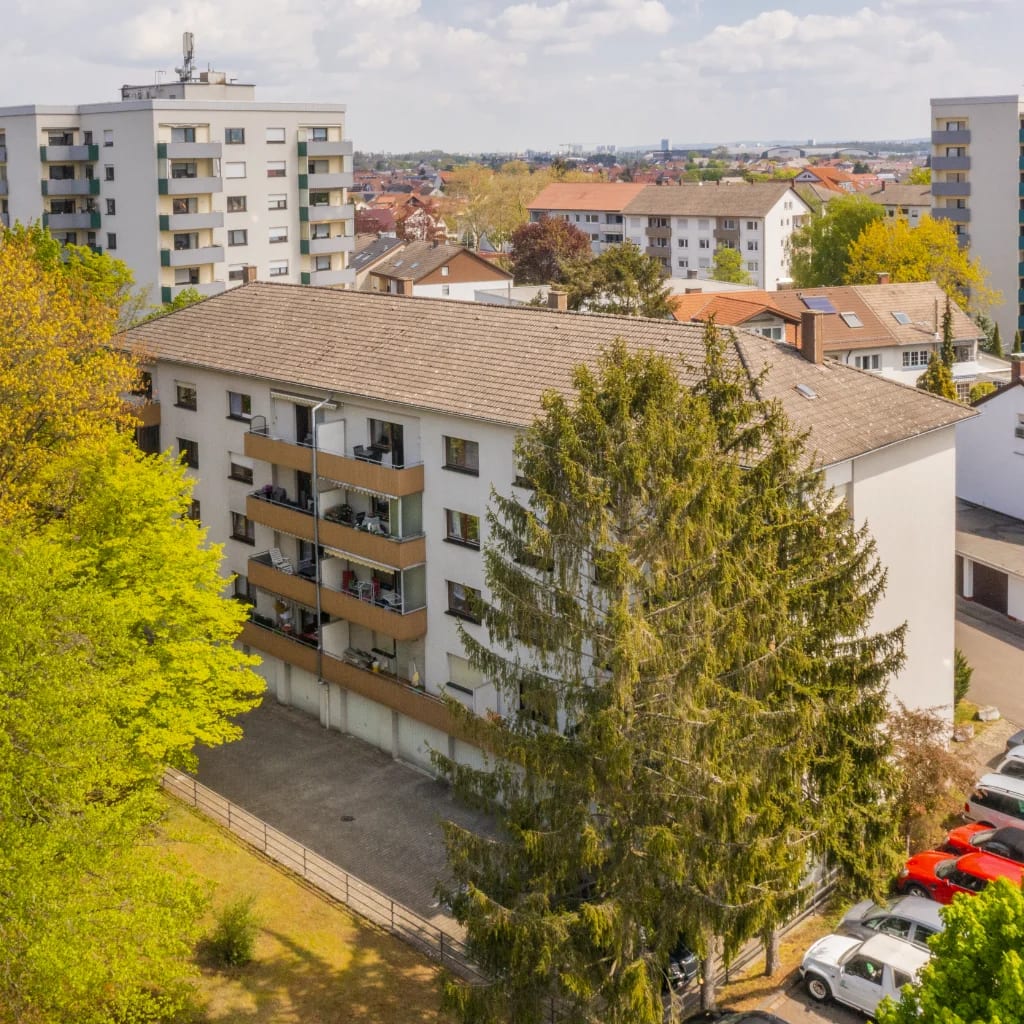
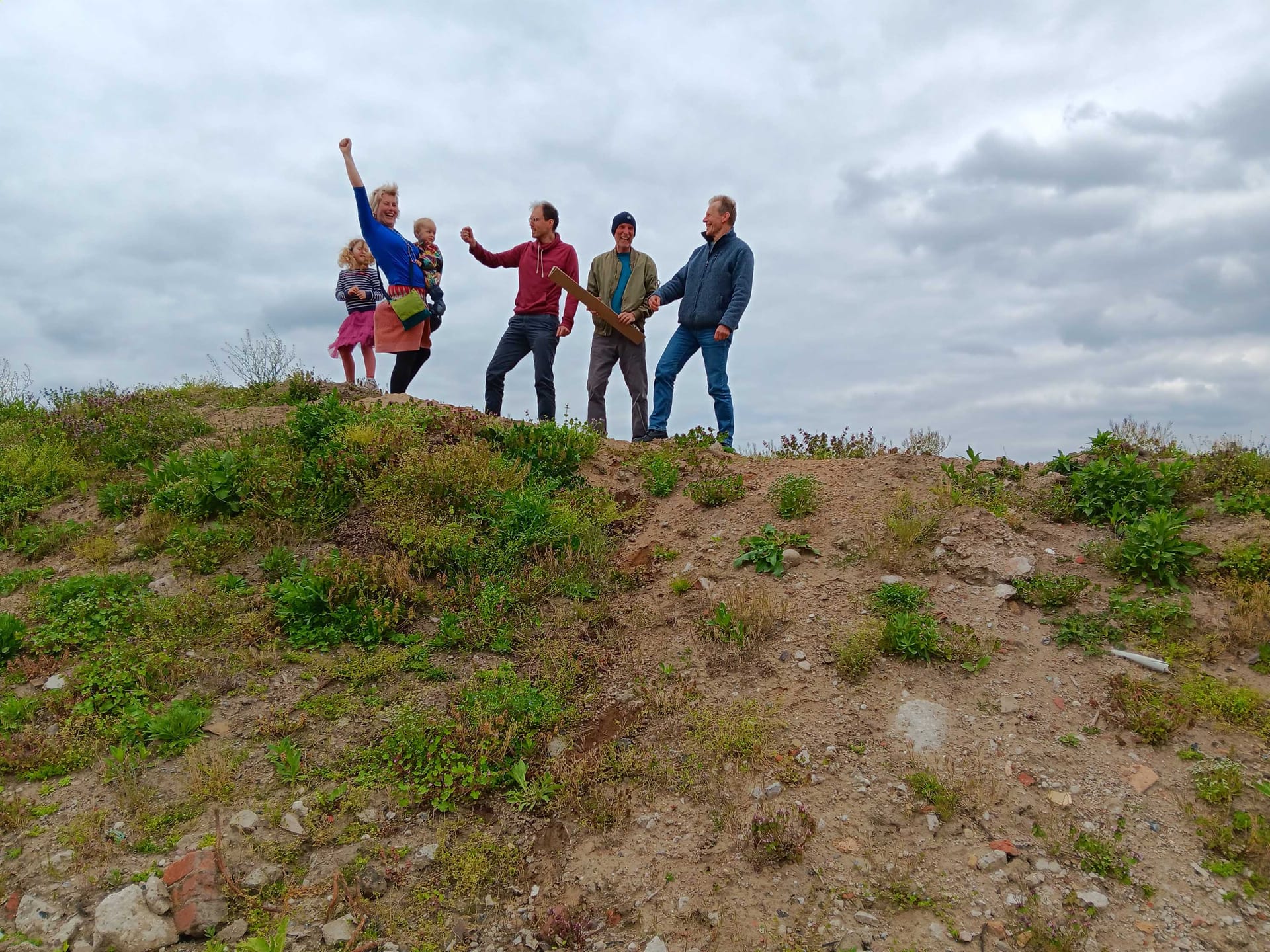
This used to be a niche topic for the left and for squatters. Now it has moved into the middle of society.Both clusters face rising build costs, but their bottlenecks differ. The old cooperatives need capital for retrofits; the new groups need a plot. Federal research has long cast cooperatives as partners for municipalities and as pioneers of communal forms of living. In Karlsruhe that role now depends on how the city hands out the little land it owns.
A 30% quota, plots by concept and a ground lease
Berlin, Stuttgart and the town hall each hold part of the answer. In Berlin, the Bundestag extended the federal rent-brake framework to the end of 2029 in June 2025. In October it passed the Bau-Turbo, a clause that lets municipalities approve homes that depart from existing zoning plans. The Land of Baden-Württemberg decides where the Mietpreisbremse (rent brake) applies. Its December 2025 ordinance caps new-let rents in Karlsruhe at 10% above the local reference rent until the end of 2026. The Land also funds social housing, and that pipeline is thinning. The Staatsanzeiger reported that affordable completions by municipal and cooperative landlords across the Land came to 3,972 homes in 2024, with only 2,400 expected in 2026.
The city's own programme is the Stadtentwicklungsstrategie 2035 (its housing and building strategy to 2035). It targets 4,200 new homes between 2024 and 2027, a goal the administration called doubtful in July 2025. Since 2017 the Karlsruher Innenentwicklungskonzept, or KAI (the inner-development concept), has required at least 30% subsidised floor space whenever a new zoning plan creates homes. That share is split between social rent, affordable rent and affordable ownership. Volkswohnung is the delivery arm. In 2022 its board raised the subsidised share of its new build from 50% to an average of 70%. The July 2025 reply also warned that its intensive building will not continue, as budget consolidation shifts the company towards modernisation.
Land is where cooperatives come in. In April 2021 the council adopted a Grundstücksvergabekonzept Wohnen (a land-allocation concept for housing). City plots are to be awarded on the quality of the concept rather than the price, and normally on Erbbaurecht (a long ground lease that keeps the land public). A Green amendment asked for the plots to be split in thirds between cooperatives, municipal companies and Baugruppen (self-organised building groups). Federal research on common-good housing policy describes this toolkit, and Freiburg's Kleineschholz tender shows it at district scale. Karlsruhe's first test is Quartier Zukunft Nord. On 29 April 2025 the council approved the selection criteria for its building fields 4 and 5 and special ground-lease terms for common-good building groups. The month before, an underground car park required by the zoning plan had split the chamber.
Because an underground parking space costs somewhere between 30,000 and 60,000 euros. That is simply an extra cost, assigned one to one to the flat.All the social romanticism here gets us nowhere if, at some point, the budget rules simply no longer allow us to do it.The answer to empty space is piecemeal. Karlsruhe lost its Zweckentfremdungsverbot (a ban on turning homes into offices, holiday lets or long-term empties) in 2002, when the Land took the city off its shortage list. Stuttgart, Mannheim, Freiburg and Heidelberg have such a ban today. The administration's May 2025 assessment said reviving it would need at least three new posts, which the current budget makes hard to fund. There is no vacancy register either. Instead the city relies on conversion and acquisition. Changes of use created 687 homes between 2018 and 2023. The social department's Wohnraumakquise durch Kooperation (a scheme that persuades private landlords to let to people the market shuts out) had housed 3,333 people in 1,391 flats by 2024. The long-empty Paracelsus clinic reopened in 2021 with 100 homes. At federal level, a ministry report on office vacancy weighs the prospects of turning offices into homes nationwide.
Climate targets now shape what gets built. In December 2021 the council committed to climate neutrality by 2040 and kept its goal of cutting CO2 by at least 58% against 2010 by 2030. Volkswohnung's first prefabricated timber project, at Buschwiesenweg in Grünwinkel, replaces 1930s rows and lifts the floor area from about 2,800 m² to 6,120 m². Residents are torn on density. In the 2024 survey they backed taller buildings and building over car parks, but on average rejected infill that costs green space. Public and cooperative landlords are where these targets are carried out first.
- 1907[source]
Gartenstadt cooperative founded
Hans Kampffmeyer, Friedrich Ostendorf and others found the Gartenstadt Karlsruhe cooperative; building in Rüppurr starts in 1911.
- 1929[source]
Dammerstock estate opens
A model social-housing estate by Walter Gropius, Otto Haesler and others; 228 of 750 planned dwellings are built.
- 1997[source]
MiKa cooperative founded
Housing initiatives found MiKa and convert four former barracks buildings in the Nordstadt into homes by 1999.
- 2002[source]
Misuse ban lapses
Karlsruhe leaves the Land's list of areas with a housing shortage, and its ban on converting homes to other uses ends.
- 2017-09[source]
KAI quota adopted
The council requires at least 30% subsidised floor space whenever a new zoning plan creates homes.
- 2021-04[source]
Land allocation concept for housing
City plots are to go to cooperatives, municipal companies and building groups by concept, normally on ground leases.
- 2021-12[source]
Climate-neutrality target
The council commits to climate neutrality by 2040 and keeps its target of cutting CO2 by at least 58% against 2010 by 2030.
- 2022-03[source]
Volkswohnung raises subsidised share
The municipal company lifts the subsidised share of its new build from 50% to an average of 70%.
- 2025-04[source]
Zukunft Nord tender rules approved
The council adopts selection criteria for building fields 4 and 5 and ground-lease terms for common-good building groups.
- 2025-10[source]
Federal Bau-Turbo
The Bundestag lets municipalities approve housing that departs from existing plans, as a trial clause until 2030.
- 2026-01[source]
Rent brake renewed for Karlsruhe
The Land's ordinance keeps new-let rents in Karlsruhe capped at 10% above the local reference rent until 31 December 2026.
- 2027[source]
Housing target deadline
End of the 2024-2027 period for which the city's strategy targets 4,200 new homes.
- 2029[source]
Federal rent-brake mandate ends
The federal framework that lets the Land cap new-let rents runs to 31 December 2029.
- 2030[source]
Interim climate target
Karlsruhe aims to cut CO2 emissions by at least 58% against 2010.
- 2040[source]
Climate neutrality
The city's target year for climate neutrality, which will reach every public and cooperative estate.
Milestones in the city's housing policy, with targets that run into the next decade.
From Bauhaus rows to homes on garage roofs
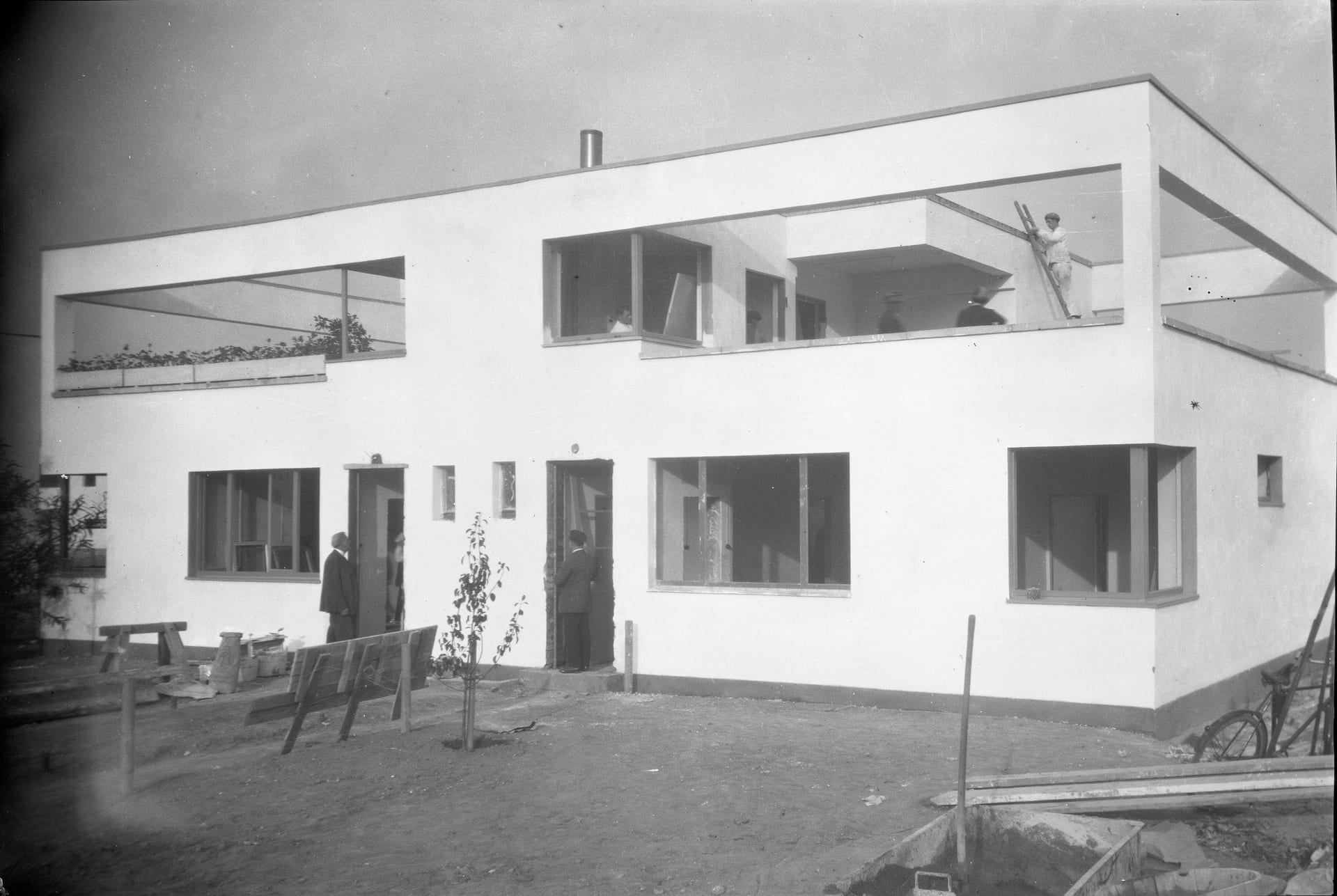
The Dammerstock estate is still the city's best-known proof that social housing can be fine architecture. After a 1928 competition won by Walter Gropius, it went up in seven months in 1929. Only 228 of 750 planned dwellings were built. Gropius, Otto Haesler and others set the rows north to south, so bedrooms caught the morning sun and living rooms the evening light. The city presented it in the exhibition "Die Gebrauchswohnung" (the functional dwelling). Restored and fully lived in, the flats still belong to the Hardtwaldsiedlung and Volkswohnung, as a regional guide notes.
MiKa turned a barracks into a neighbourhood. Housing initiatives began planning in 1994 to save part of the Smiley Barracks in the Nordstadt from demolition. Founded as a cooperative in 1997, they rebuilt four former Wehrmacht buildings cheaply and with few new materials. Residents planned their own flats and gardens, and a fifth building became a culture house in 2002. It remains Karlsruhe's clearest case of self-organised adaptive reuse.
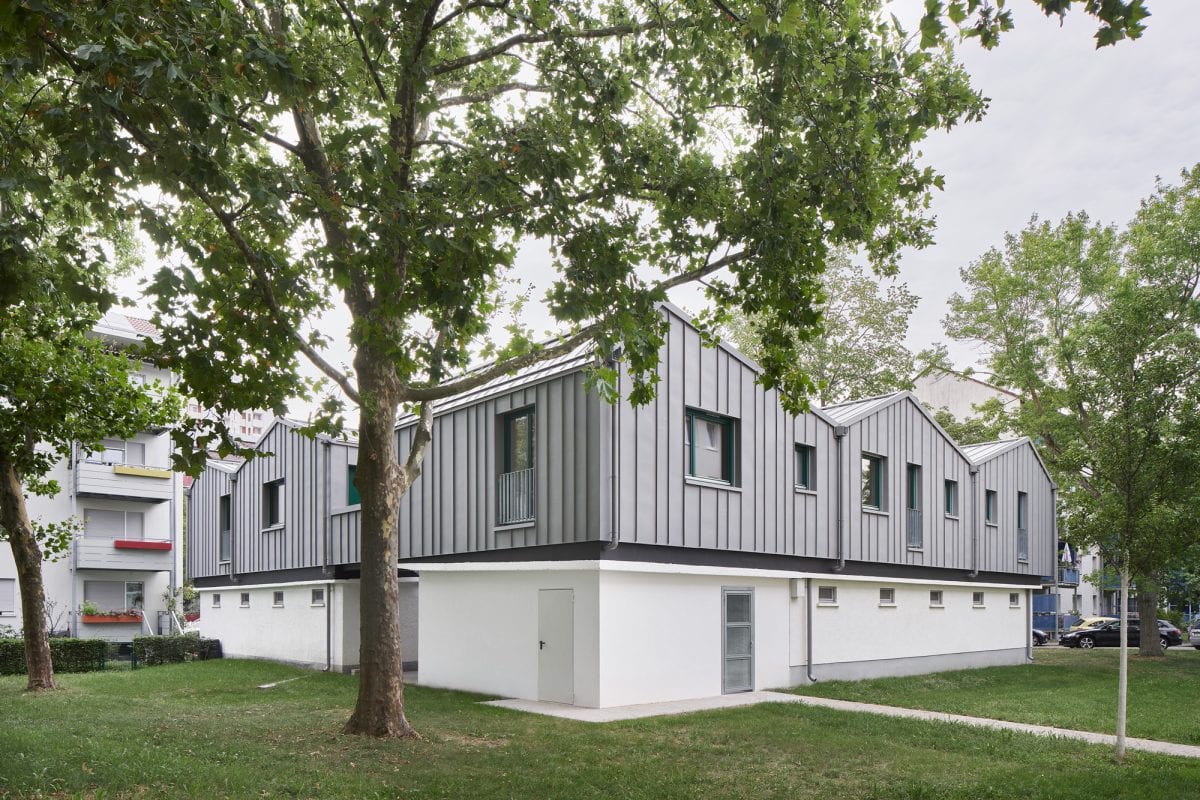
The Rintheimer Feld shows the municipal route at scale. Volkswohnung renewed this estate of more than 1,100 homes over twelve years under the federal-state Soziale Stadt programme. In March 2026 it completed 106 flats at Staudenplatz, 64 of them subsidised, in a largely car-free setting. Nearby, the garage top-ups added 12 mostly subsidised flats on three 1960s garage courts. That project took first prize for circular construction at the Deutscher Baupreis 2026.
The August-Klingler-Areal in Daxlanden adds a quieter lesson. Volkswohnung finished its new homes there in October 2025, then restored the listed clubhouse of FV Daxlanden as an inclusive neighbourhood café. The old building keeps the new quarter tied to the district's memory.
Quartier Zukunft – Labor Stadt works on streets that already exist. In the Oststadt, a district about 130 years old, KIT researchers work with residents to make everyday life more sustainable. The lab won the Transformative Science research prize in 2018. Designing Sustainable Urban Futures, a KIT Scientific Publishing volume, sets such district experiments beside cases from other countries.
Quartier Zukunft Nord is where the self-organised groups hope to build next. Its building fields 4 and 5 are tendered by concept, with special ground-lease terms for common-good building groups and cooperatives in view. Research on German Baugruppen sets out why households choose to build this way and what they have learned. If the tender works, Karlsruhe gains a third kind of cooperative beside the garden city and the barracks.
The Privilegienbrief of 1715 answered the housing question with free plots for all comers. Today's answer is smaller and slower: a quota, a concept tender and a ground lease. The materials are on the table, from a century-old garden city to a prize-winning garage roof. What they could become depends on how much land the city still chooses to give.
References
Statistics13Click on any number to see the source
Housing market
Tenure & affordability
Cooperative, social & public
Adaptive reuse & vacancy
Population & migration
From our library24
- VOLKSWOHNUNG GmbH — Organisation
- Der Wohnungsnot in Karlsruhe wieder Herrin werden – Stellungnahme der Stadtverwaltung (2025/0617) — Knowledge
- Datenblatt Mietbelastungsquoten in 77 Großstädten (Hans-Böckler-Stiftung) — Knowledge
- Bürgerumfrage 2024 – Lebensqualität und Zukunftsfragen (Stadt Karlsruhe) — Knowledge
- Mietenreport 2026 - Deutscher Mieterbund — Knowledge
- MiKa MieterInneninitiative Karlsruhe Wohnungsgenossenschaft eG — Organisation
- Hardtwaldsiedlung Karlsruhe eG Baugenossenschaft — Organisation
- Gartenstadt Karlsruhe eG — Organisation
- Mieter- und Bauverein Karlsruhe eG — Organisation
- Baugenossenschaft Familienheim Karlsruhe eG — Organisation
- Wohnprojekte in Karlsruhe: Der weiße Fleck auf der Karte — Knowledge
- Bündnis für bezahlbares Wohnen und Bauen – Wohnungsgenossenschaften als Partner der Kommunen — Knowledge
- Neues Wohnen – Gemeinschaftliche Wohnformen bei Genossenschaften — Knowledge
- Beim Bau von preiswerten Wohnungen in Baden-Württemberg droht eine Durststrecke — Knowledge
- Volkswohnung erhöht den Anteil an geförderten Wohnungen im Neubau — Knowledge
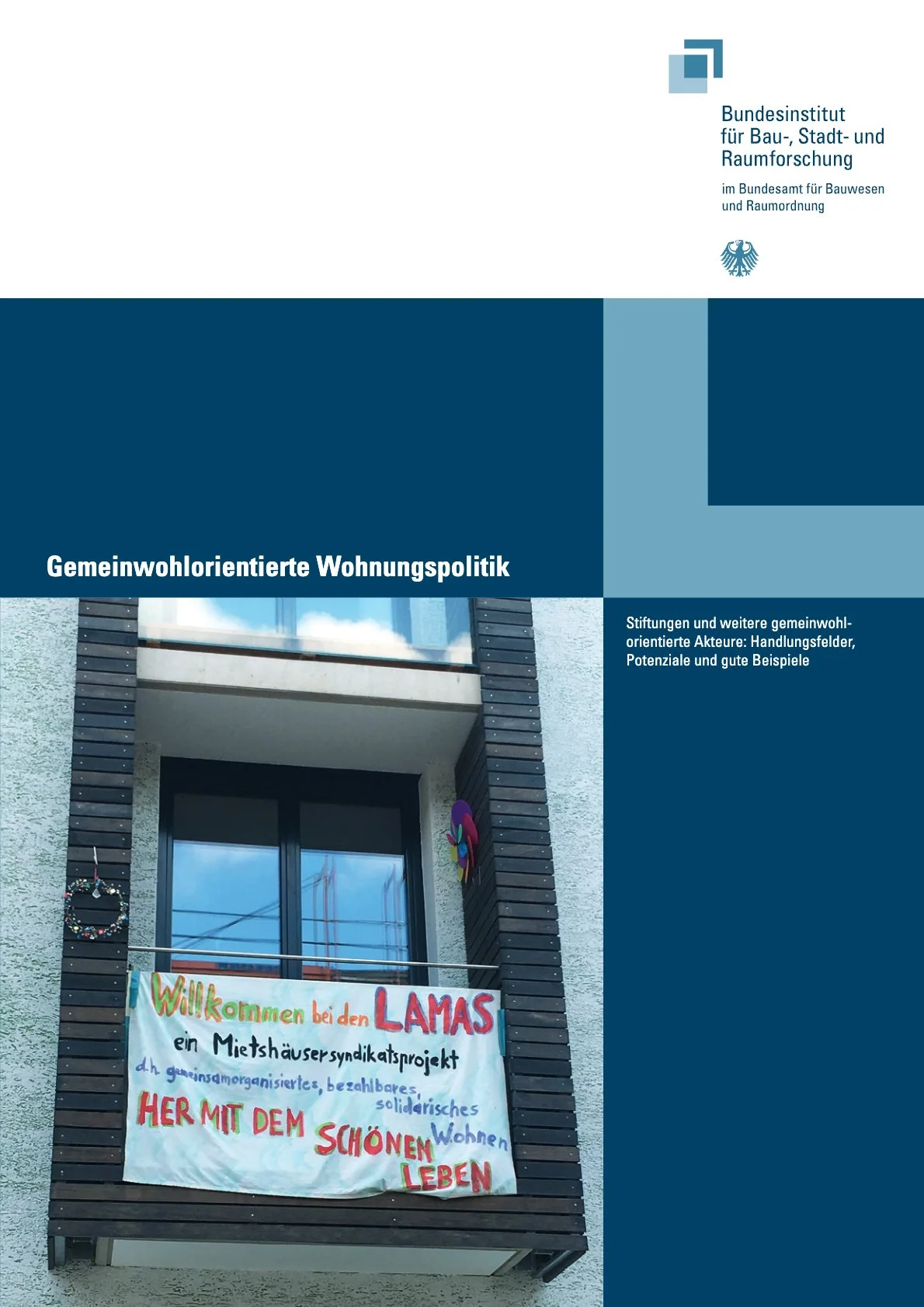
- Gemeinwohlorientierte Wohnungspolitik - eine Studie — Knowledge
- Towards a Freiburg Model of Housing for the Common Good? Fostering Collaborative Housing in Urban Development — Knowledge
- Zweckentfremdungsverbotssatzung für mehr Wohnraum in Karlsruhe – Stellungnahme (2025/0307) — Knowledge
- Schriftlicher Bericht des BMWSB zum deutschlandweiten Büroleerstand — Knowledge
- Dammerstock-Siedlung — Project
- Garagenaufstockungen Rintheimer Feld — Project
- Designing Sustainable Urban Futures - Concepts and Practices from Different Countries — Knowledge
- Self-build communities: the rationale and experiences of group-build (Baugruppen) housing development in Germany — Knowledge
- Wohnungsmarkt Karlsruhe: 13.200 Einheiten fehlen, Mieten steigen — Knowledge
Further sources34
- Deutsches Historisches Museum
- https://volkswohnung.de/
- Zensus 2022 via Wahlatlas
- Börse Express, July 2026
- Stadt Karlsruhe, answer to council question 2025/0307 (May 2025)
- Stadt Karlsruhe, answer to council question 2025/0617 (July 2025)
- Stadt Karlsruhe, Bautätigkeit 2025
- Hans-Böckler-Stiftung
- Stadt Karlsruhe, Bürgerumfrage 2024
- Deutscher Mieterbund, Mietenreport 2026
- Stefan Storz, Managing Director of VOLKSWOHNUNG, Karlsruhe's municipal housing company (March 2022)
- MiKa eG
- https://www.hardtwaldsiedlung-karlsruhe.de/
- https://katalog.bibliothek.kit.edu/bib/859218
- https://en.wikipedia.org/wiki/R%C3%BCppurr
- Gartenstadt Karlsruhe eG
- https://www.mika-eg.de/stand_historie.html
- Kontext:Wochenzeitung, 10 May 2023
- https://www.bundestag.de/dokumente/textarchiv/2025/kw26-de-mietpreisbremse-1084786
- https://www.gleisslutz.com/en/know-how/bundestag-adopts-legislation-accelerate-residential-construction-what-new-law-means-planning-and-approval
- https://www.umwelt-online.de/recht/bau/laender/bw/mietschv26.htm
- Staatsanzeiger, May 2025
- https://web1.karlsruhe.de/ris/oparl/bodies/0001/downloadfiles/00648670.pdf
- https://web1.karlsruhe.de/ris/oparl/bodies/0001/downloadfiles/00624945.pdf
- https://web1.karlsruhe.de/ris/oparl/bodies/0001/downloadfiles/a/00667352.pdf
- Aljoscha Löffler, Green member of Karlsruhe city council, in the council debate on Zukunft Nord (March 2025)
- https://web1.karlsruhe.de/ris/oparl/bodies/0001/downloadfiles/a/00635049.pdf
- Volkswohnung, April 2026
- Bauhaus Kooperation
- https://www.schwarzwald-tourismus.info/schwarzwald/online-magazin/geschichten-aus-dem-schwarzwald/kultur/wie-das-bauhaus-nach-karlsruhe-kam
- Volkswohnung, March 2026
- Volkswohnung, March 2026
- https://volkswohnung.de/presse/pressemitteilungen/letztes-puzzlestueck-fuer-das-neue-quartier-volkswohnung-eroeffnet-denkmalgeschuetztes-vereinsheim-im-august-klingler-areal/
- https://www.kit.edu/kit/english/pi_2018_156_real-world-lab-wins-transformative-science-research-prize.php
·