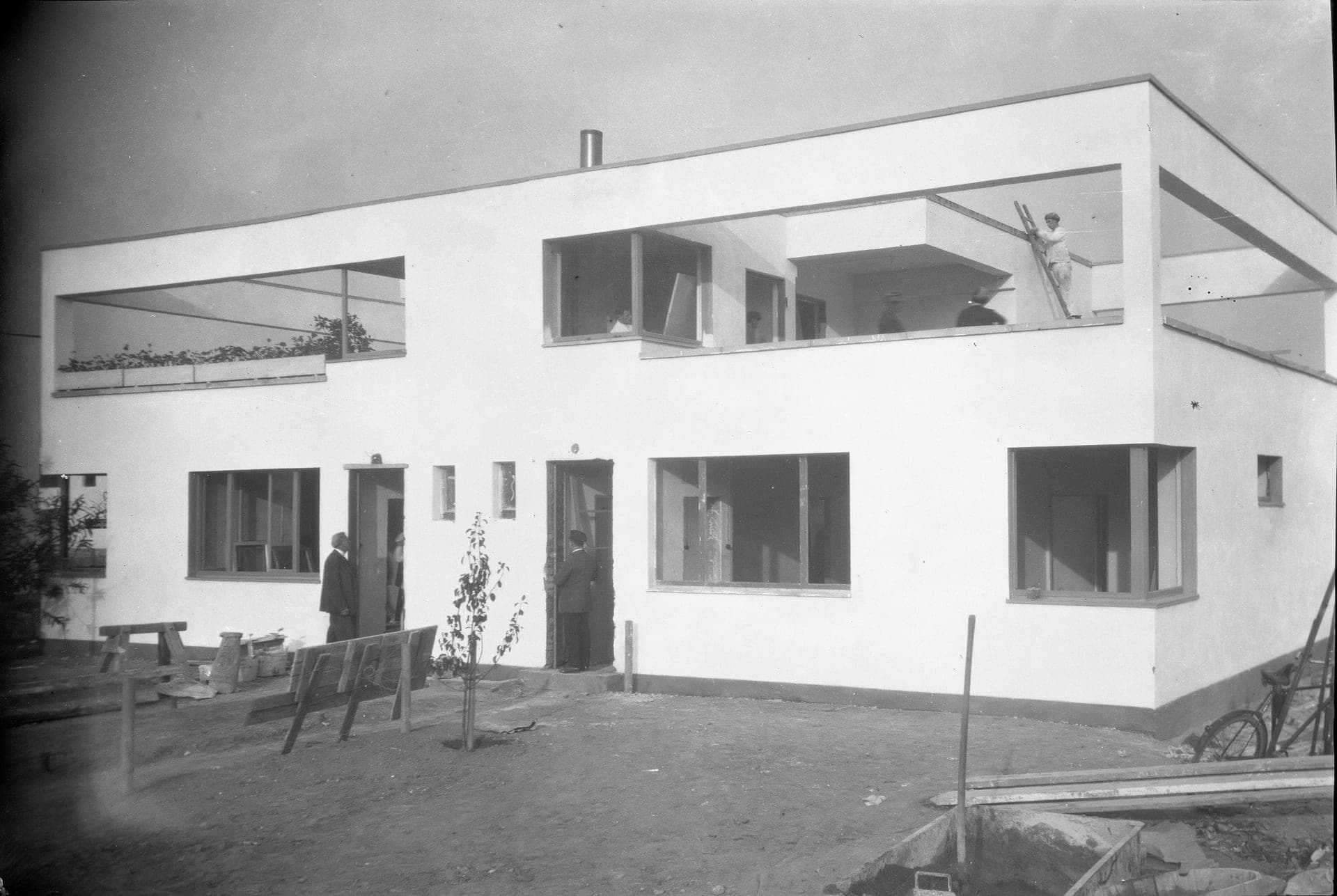
The Dammerstock Housing Estate is a social-housing development in Karlsruhe, Germany, built in 1929 as an experiment in practical responses to housing needs. The City of Karlsruhe initiated a competition in 1928 as part of its housing programme; Walter Gropius won, with Otto Haesler placed second, and Gropius took artistic direction of the scheme. 237
Designed by Gropius, Haesler and other participating architects, the estate was built in seven months. Of 750 planned homes, 228 were completed in the first phase. 27 The intended residents were people on middle and lower incomes, and the small flats incorporated standardised furniture and modern sanitary facilities. 2
The plan replaced conventional perimeter blocks with parallel rows running north–south, intended to make effective use of daylight in the homes. 27 Karlsruhe presented the development to the public in 1929 through the exhibition Die Gebrauchswohnung (“The Functional Dwelling”). 2
The Great Depression left the project incomplete. Conventional buildings were added during the 1930s, and the city resumed construction in 1949 in line with Gropius’s original ideas. The estate has since been renovated in accordance with historic-preservation requirements and remains inhabited. 23
The project’s developer was the City of Karlsruhe, which commissioned the competition and planned the site as part of its social-housing programme. 27 The estate is an important example of New Architecture in south-western Germany. 2