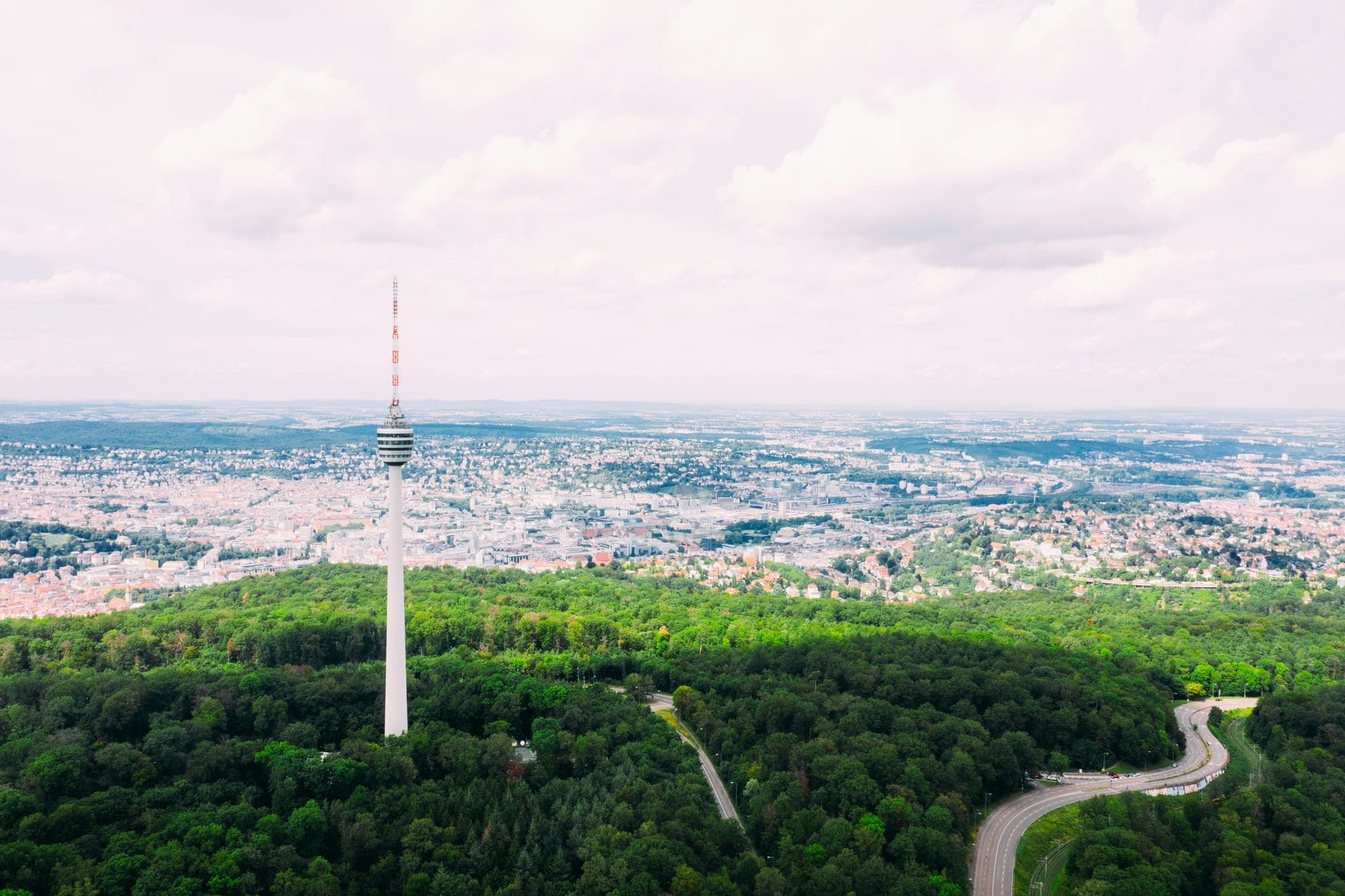
A rich city in a narrow valley
Stuttgart sits in a valley basin its residents call the Kessel, the cauldron, ringed by vineyards and wooded ridges. The engineers of the region helped invent the motor car, and Mercedes-Benz, Porsche and Bosch are still run from the city and its hinterland. That industrial wealth created jobs faster than the steep slopes could take new streets. What the city has always lacked is flat land, and housing is where that shortage shows first.
Most people here rent. The 2022 census counts 67.6% of dwellings as rented and 31.1% as lived in by their owners. Cooperatives hold 5.9% of the stock, some 18,600 flats run by the 15 cooperatives of the city's cooperative alliance. The municipal company SWSG owns 19,580 homes, or 6.2% of the total. Private landlords let the remaining 55.5%. Together, cooperative and municipal homes make up a non-market tier of 12.1%, roughly one home in eight.
- Owners
- Owner-occupier31.1%
- Renters
- Public & non-profit rental6.2%
- Cooperative5.9%
- Private rental55.5%
- Unclassified1.3%
- Unknown / Other1.3%
Social housing in Stuttgart is a rule attached to a flat, not a kind of landlord. About 4.6% of dwellings are Sozialmietwohnungen, rent-capped flats let only to households holding an eligibility certificate. They sit inside SWSG estates, cooperative blocks and private new-build alike. On income alone, some 45% of households would qualify. The city's 2025 housing-market report counted 5,435 households on the waiting list at the end of 2024, 4,023 of them emergency or urgent cases.
The price of a square metre depends heavily on who owns the building. Tenants of the region's cooperatives and non-profit landlords pay an average of €7.16 net cold, and SWSG tenants about €8. The Mietspiegel, the official local rent index, puts the all-stock median at €11.15. A flat let today asks around €15.99, while a furnished one reaches about €25.99 gross. Moving from a cooperative flat to a fresh private contract more than doubles the rent per square metre.
- Cooperative
- Public/municipal housing
- All-stock median
- New contracts
- Furnished (gross)
Monthly rent per square metre by tier, net cold except furnished (gross, all-in). The cooperative and municipal floors sit well below the rent index; a newly let private flat costs more than twice the cooperative average.
Empty homes are an open quarrel in this city. The census found 11,152 vacant flats, 3.5% of the stock. The tenants' association counts 6,105 that had stood empty for more than six months, and accuses the city of playing the figure down for years. Offices are emptier still. About 1 m² of office space stands unlet, a vacancy rate of 6.7%.

Demand has cooled a little without easing. Some 45,000 people move into Stuttgart every year, and the number of households grew by 0.8% in two years while the population stalled. The car industry adds uncertainty: Bosch announced 13,000 further job cuts in Germany in September 2025. Supply has fallen much further than demand. The statistical office's latest count shows only 661 homes completed in 2025, half the previous year's total, although permits recovered to 1,330. New contracts are covered by the Mietpreisbremse, the federal rent brake on new lettings.
The strain is wide as well as deep. Renting households spent 29% of their net income on rent in 2024, and nearly 20% paid more than 40%. Across Baden-Württemberg, households on under €1,500 a month spend almost 50% of income on rent. The city's own 2025 resident survey shows the problem has reached the middle: 69% name high rents as Stuttgart's biggest problem and 77% want more spent on housebuilding. Housing scored lowest of every area of life the survey measured.
The vacancy figures gathered in the 2022 census show only the tip of the iceberg.One small tenure has kept its rents apart from all of this for well over a century: the cooperative, with its modest share of the city's homes.
From workers’ associations to refugee cooperatives
Stuttgart's cooperatives are almost all rental. A new member buys Genossenschaftsanteile, shares that carry the right to a flat and are repaid at face value on leaving. In return the member signs a Dauernutzungsvertrag, a permanent right of use. The city's cooperative alliance promises members they can stay a whole life long. There is no resale gain, so the flat never returns to the market. Owner-occupied cooperative flats are rare here.
The idea took root early and in waves. In 1866 the industrialist Eduard Pfeiffer founded the Verein für das Wohl der arbeitenden Klassen (Association for the Welfare of the Working Classes). Today it is the Bau- und WohnungsVerein Stuttgart, a non-profit association rather than a cooperative, with almost 5,000 flats. The Baugenossenschaft Bad Cannstatt followed in 1893, and the Landes-Bau-Genossenschaft Württemberg has built since 1921. Social democrats and trade unionists founded Bau & Heim in 1924. The largest wave came with the refugees after 1945. FLÜWO was founded in 1948 by the refugee Fritz Kleiner, and Neues Heim the same year, in a camp for Danube Swabian families.
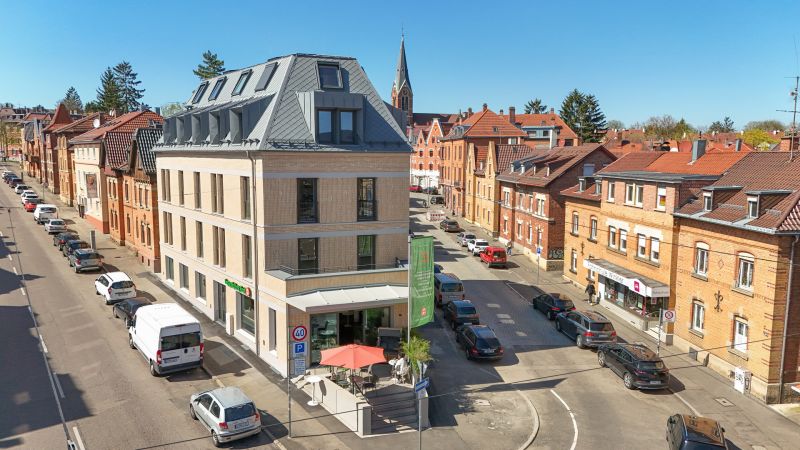
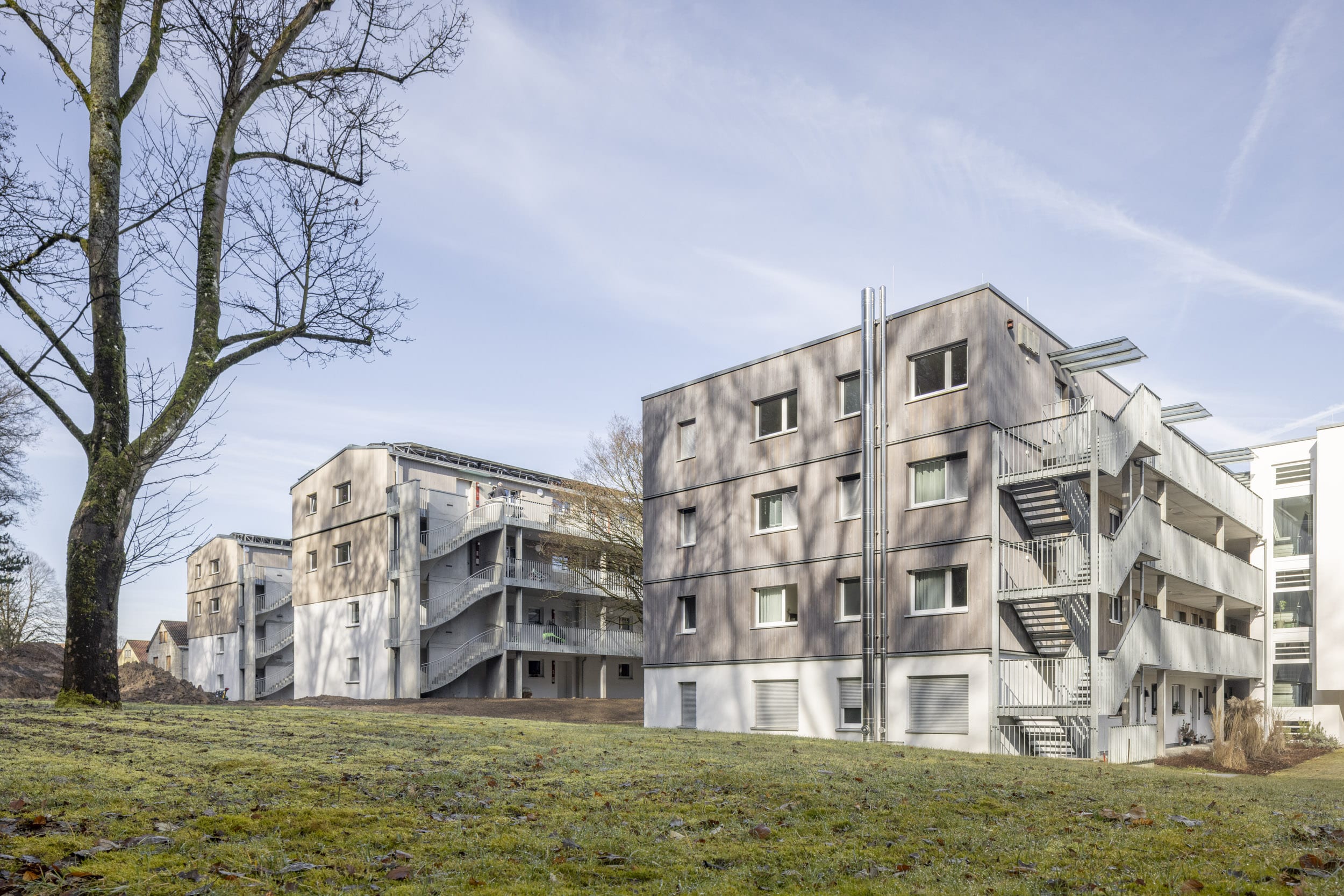
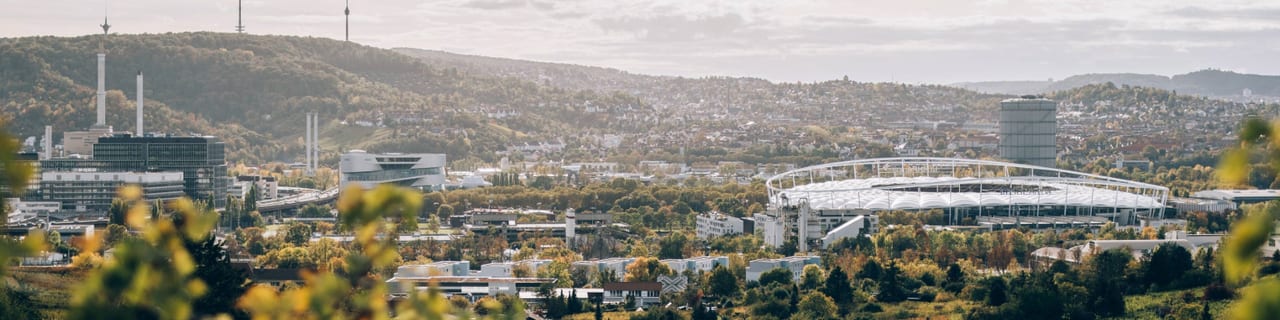
Today's sector falls into three clusters. The post-war and interwar cooperatives hold most of the homes. FLÜWO alone has 12,340 members and over 10,492 flats across 33 sites, not all of them in Stuttgart, while LBG counts over 5,785 across the state and Bau & Heim 2,549. Their problem is renewal, because post-war blocks need deep retrofits or replacement at today's building costs. A second cluster of joint-building groups and small newcomers, such as pro… gemeinsam bauen und leben eG, needs plots more than capital. The third is a handful of Mietshäuser Syndikat houses, collectively owned through a network that can veto any sale. The first, the Linkes Zentrum Lilo Herrmann, was bought in 2010.
The whole sector is building less. Members of vbw, the regional federation of cooperatives and non-profit landlords, completed 31% fewer homes in 2025 than the year before. Its director Iris Beuerle put the reason plainly: members invest less because building costs are what they are. The old cooperatives meet that squeeze with paid-off estates behind them, while the newcomers have none.
The city now names cooperatives as partners rather than bystanders. They sit beside SWSG in the Bündnis für Wohnen (Alliance for Housing). Since 2022 they may also choose between buying city land and taking it on Erbbaurecht, a long ground lease. A federal study of cooperatives as municipal partners describes the same bargain in other German cities. Whether Stuttgart backs it with enough land is now a political question.
Quotas, ground leases and a stalled pipeline
Stuttgart is governed by Frank Nopper of the CDU as Oberbürgermeister, the city's lord mayor. Housing sits with the Green Peter Pätzold, mayor for urban development, housing and environment. Their headline programme is the Bündnis für Wohnen, renewed in July 2024, which aims to enable 20,000 new homes by 2033. The city adds cheaper land and a top-up of €300 per square metre for new social flats. On 12 March 2026 the council raised the quotas on city-owned land to 50% social rent, 20% price-dampened and 30% free-market. Pätzold called affordable housing "one of the central social questions in our city".
On private land, the Stuttgarter Innenentwicklungsmodell (SIM, the city's rule for developers who gain building rights) reserves at least 40% of new floor space for social and price-dampened rent. SWSG has 1,243 new flats under construction in 2026, a record for the company. The gap between targets and output is still wide. Hitting the alliance target would take roughly three times the 2025 completion rate.
Much of the toolkit is written in Berlin, and some of it in the state ministries a few streets from city hall. The Bundestag extended the Mietpreisbremse to the end of 2029. The federal Bau-Turbo, a fast-track clause in the Baugesetzbuch (the federal building code), took effect on 30 October 2025. Federal funding for social housing reaches €23.5 billion by 2029. Baden-Württemberg decides where the rent rules bite: its regulation names 130 municipalities, Stuttgart among them. Since May 2026 a Green–CDU coalition under Cem Özdemir has governed the state, with Theresa Schopper as minister for regional development and housing. She inherits a Wohnungsbau BW subsidy programme raised to a record €1.5 billion for 2025 and 2026. The city itself has less room to act. It closed 2025 with a deficit of about €785 million.
Land terms are the city's most direct support for cooperatives. A council decision of February 2022 set the ground rent on residential Erbbaurecht plots at 2% of land value. It also gave SWSG, the cooperatives and alliance partners the choice between buying and leasing. Since 2012 the council has sold plots to Baugemeinschaften (joint-building groups) at a fixed price instead of to the highest bidder. Federal money helps members join. The KfW programme 134 (the state development bank's cooperative-share loan) now lends up to €150,000 per member, with 15% of it written off.
- 1866[source]
Eduard Pfeiffer founds a housing association
The Verein für das Wohl der arbeitenden Klassen, today the Bau- und WohnungsVerein Stuttgart, begins building homes for working families.
- 1927[source]
Weissenhof estate
Seventeen architects build a model estate of 21 buildings and 60 dwellings for the Deutscher Werkbund exhibition.
- 1948[source]
Refugee cooperatives founded
FLÜWO and Neues Heim are founded to house refugees and expellees, the start of the largest cooperative wave in the city.
- 2012[source]
Fixed-price plots for joint-building groups
The council decides to tender city plots to Baugemeinschaften at a fixed price rather than to the highest bidder.
- 2016[source]
Ban on misusing homes
A Zweckentfremdungsverbot bylaw makes long-term vacancy and unlicensed holiday letting subject to approval.
- Feb 2022[source]
New ground-lease terms
Ground rent on residential leases falls to 2% of land value; SWSG and cooperatives may choose lease or purchase.
- Jul 2024[source]
Bündnis für Wohnen renewed
City, cooperatives and SWSG commit to enabling 20,000 new homes by 2033.
- Jun 2025[source]
Rent brake extended
The Bundestag extends the Mietpreisbremse to the end of 2029.
- Mar 2026[source]
New quotas on city land
The council sets 50% social rent, 20% price-dampened and 30% free-market housing on city-owned plots.
- Jun 2026[source]
Rosenstein delay
The delay to Stuttgart 21 pushes back housing on the Rosenstein site, planned for 10,000 people, by at least five years.
- 2027[source]
IBA'27 exhibition year
A century after Weissenhof, the regional building exhibition presents its projects, including the cooperative Quartier am Rotweg.
- 2029[source]
Rent brake expires
The federal Mietpreisbremse runs out at the end of the year unless extended again.
- 2033[source]
Alliance target
The Bündnis für Wohnen aims to have enabled 20,000 new homes.
From the first non-profit housing association to the IBA'27 exhibition and the alliance target of 2033.
Vacancy is where the city is most often accused of timidity. A bylaw against misusing homes has applied since 2016. By late 2024 it had brought back 389 flats out of more than 1,500 cases, with 720 still open, as the Kontext weekly reported. The tenants' association contrasts that with Munich's 40-plus enforcement officers against Stuttgart's five. For empty offices the main funding line is federal. The Gewerbe zu Wohnen programme (commercial to housing) has €360 million for 2026. A Robert Bosch Stiftung study, Obsolete Stadt, maps how such redundant space could serve the common good.

The largest future site shows how fragile the pipeline is. The Rosenstein quarter, on railway land freed by the Stuttgart 21 station project, is planned for 10,000 people. The Staatsanzeiger reported in June 2026 that the rail delay pushes it back at least five years. Nopper called the news a "Hiobsbotschaft", a disaster for the city.
Climate goals now compete with the budget. Stuttgart set itself climate neutrality by 2035, but the city now expects to emit about 1 million tonnes of CO₂-equivalent that year. Heat pumps rose only to some 3,100 in 2025, a small fraction of the number the city wanted by 2035. The municipal energy-saving programme for homes drew about 300 applications worth some €18 million this spring, and its rates were cut. Baden-Württemberg already requires solar panels on new homes. The cooperatives' timber-hybrid replacement quarters are among the few places where low-carbon building and low rents arrive together.
Tenants and landlords read the same numbers differently. Ralf Brodda, chair of the tenants' association since November 2025, says the city "must live up to its social responsibility" and keep affordable housing available for everyone. The landlords' association Haus & Grund Stuttgart wants the rent brake abolished in the city, arguing it blocks new building and energy retrofits.
The rent brake has failed. It creates not a single new flat, it prevents new building, it slows investment and torpedoes climate protection.Weissenhof’s heirs: the IBA’27 generation
IBA'27, the international building exhibition of the Stuttgart region, opens a century after the Weissenhof estate of 1927. There, 17 European architects built a model settlement of 21 buildings to show what modern living could be. The new exhibition asks the same question of affordable, low-carbon neighbourhoods. Its director Andreas Hofer said of one cooperative scheme that what is being built there should be normal in twenty years.
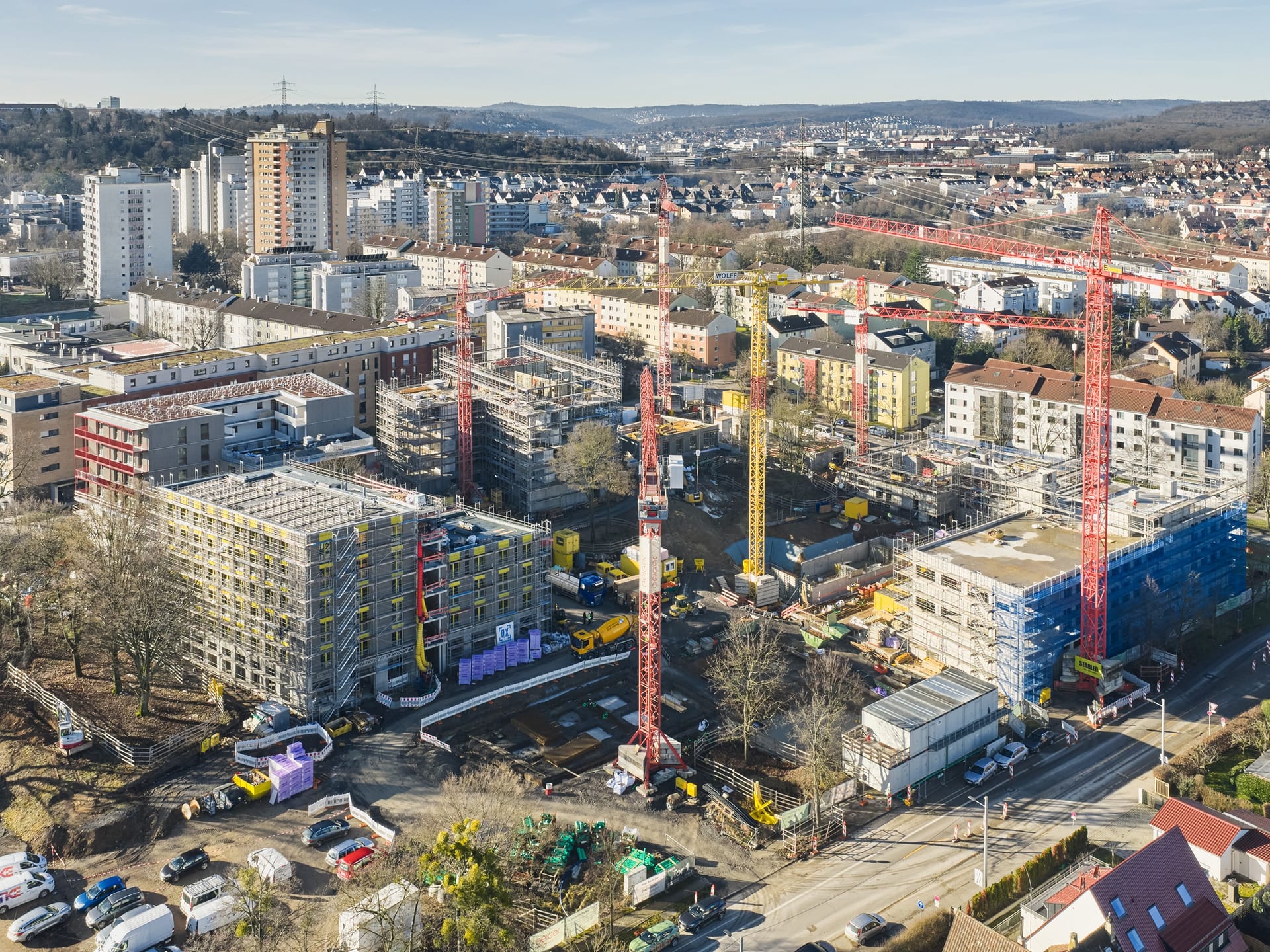
Quartier am Rotweg is that scheme, and the clearest sign of the cooperatives' second life. Neues Heim and the Baugenossenschaft Zuffenhausen are replacing their late-1940s blocks in Stuttgart-Rot with 217 rental flats in timber-hybrid buildings. Barrier-free homes, childcare and care communities share the site. Nopper called it a project for people of different backgrounds "at fair and affordable rents". It is due to open in the exhibition year.
Quartier Böckinger Straße, also in Rot, is the municipal counterpart. SWSG and the charity Evangelische Gesellschaft are rebuilding a 5.5-hectare estate with around 460 new homes for different groups of residents. They cluster around a shared district centre designed by Hild und K with Studio Vulkan. Completion is also planned for 2027.
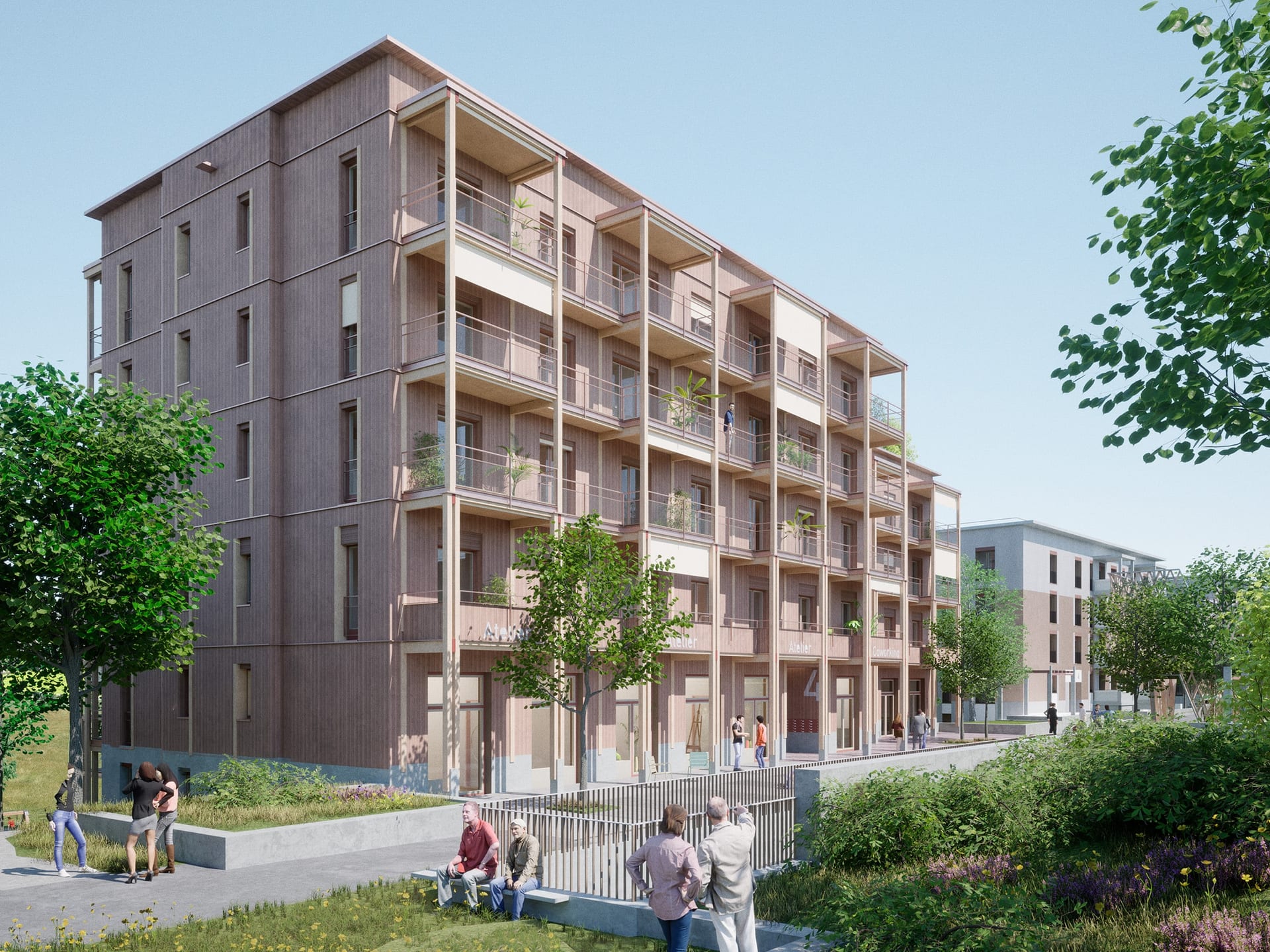
The Olga-Areal in Stuttgart-West shows what citizens can force. When the Olgahospital children's hospital moved out, a residents' initiative pushed the city to sell plots at a fixed price rather than to the highest bidder. After 12 years the site holds 224 homes. Seven Baugemeinschaften built 90 of them, and 117 are subsidised, mixing social rent, middle-income rent and affordable ownership.
NeckarPark turns a former freight yard in Bad Cannstatt into a quarter of about 850 homes for some 2,000 people. The city bought the land in 2000 for an Olympic bid that never came. Its IBA'27 plot, Q11, is being built with partners from the housing alliance, cooperatives among them, and mixes subsidised flats with self-financed shared-living groups.
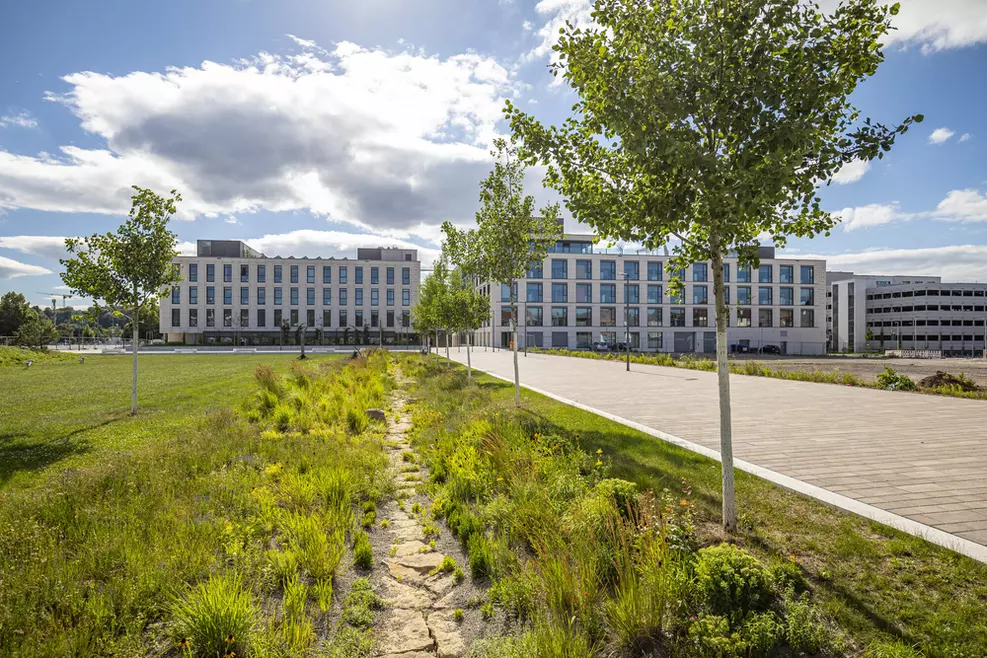
Der Kesselhof in Botnang is the smallest and most radical of the exhibition projects. It is a Mietshäuser Syndikat house where several generations live together in renovated buildings, owned collectively and kept off the market for good. It proves the self-organised model can work in Stuttgart, though at the scale of one house rather than a district.
Der neue Stöckach, on a former EnBW utility site in Stuttgart-Ost, is the cautionary tale. It was planned for about 800 homes, 40% of them subsidised, and its designs won praise. The energy company paused it in 2023, citing sharply higher building costs, and it has not restarted. Much of Stuttgart's pipeline hangs on the same arithmetic, which is why the cooperative and municipal schemes that did start matter so much.
References
Statistics16Click on any number to see the source
Housing market
Tenure & affordability
Cooperative, social & public
Adaptive reuse & vacancy
Population & migration
From our library26
- SWSG Stuttgarter Wohnungs- und Städtebaugesellschaft — Organisation
- Stadt legt neuen Bericht zum Wohnungsmarkt vor (Wohnungsmarktbericht Stuttgart 2025) — Knowledge
- DMB-Mieterverein Stuttgart — Organisation
- Der Zensus belegt, dass die Stadt Stuttgart den Wohnungsleerstand seit Jahren verharmlost — Knowledge
- Wohnungsbau stabilisiert sich — Knowledge
- Stuttgart-Umfrage 2025: Mehrheit der Bürger lebt gerne in Stuttgart — Knowledge
- Bau- und WohnungsVerein Stuttgart — Organisation
- Landes-Bau-Genossenschaft Württemberg eG — Organisation
- Bau- und Heimstättenverein Stuttgart eG (Bau & Heim) — Organisation
- FLÜWO eG — Organisation
- Neues Heim – Die Baugenossenschaft eG — Organisation
- Wohnungsbau auf Talfahrt – politischer Einsatz gefordert — Knowledge
- Beim Bau von preiswerten Wohnungen in Baden-Württemberg droht eine Durststrecke — Knowledge
- Bündnis für bezahlbares Wohnen und Bauen – Wohnungsgenossenschaften als Partner der Kommunen — Knowledge
- Neue Förderquoten für Wohnungsbau auf städtischen Flächen — Knowledge
- Bundestag: Mietpreisbremse verlängert — Knowledge
- Diskussion ohne Durchblick (Leerstand in Stuttgart) — Knowledge
- Im Leerstand von 11.152 Wohnungen in Stuttgart steckt erhebliches Potenzial zur Verringerung der Wohnungsnot — Knowledge
- Schriftlicher Bericht des BMWSB zum deutschlandweiten Büroleerstand — Knowledge
- Obsolete Stadt - Raumpotenziale für eine gemeinwohlorientierte, klimagerechte und koproduktive Stadtentwicklungspraxis in wachsenden Großstädten — Knowledge
- IBA27 in Stuttgart — Organisation
- Quartier am Rotweg — Project
- Quartier Böckinger Straße — Project
- Olga-Areal in Stuttgart: Stadtreparatur mit Bürgern — Knowledge
- NeckarPark Stuttgart — Project
- Der Kesselhof — Project
Further sources42
- Ministerium für Landesentwicklung und Wohnen BW
- IBA'27: NeckarPark Q11 — IBA'27
- LBG, about us
- Weissenhof Estate — Wikipedia
- Bau-Turbo: § 246e BauGB in force — WEKA
- Landeshauptstadt Stuttgart, NeckarPark
- Pause of the Stöckach quarter development — EnBW
- Stuttgarter Zeitung, 11 March 2026 — Stuttgarter Zeitung
- Staatsanzeiger, 8 August 2024 — Staatsanzeiger
- KONTEXT:Wochenzeitung, 6 November 2024
- FLÜWO, the cooperative
- Landeshauptstadt Stuttgart, May 2026
- Minister Theresa Schopper — Ministerium für Landesentwicklung und Wohnen BW
- Bau- und WohnungsVerein Stuttgart
- SWSG, 24 March 2026
- Does the S21 delay slow Stuttgart’s most important housing project? — Staatsanzeiger
- vbw, 15 June 2026
- DMB-Mieterverein Stuttgart
- BFW newsroom, 5 November 2025
- Magazin QUARTIER
- Stuttgart-Umfrage 2025
- Landeshauptstadt Stuttgart, Bündnis für Wohnen
- Landeshauptstadt Stuttgart, March 2026
- Baugemeinschaften: what has changed in Stuttgart — Architektenkammer Baden-Württemberg
- Linkes Zentrum Lilo Herrmann on the Kesselhof — Linkes Zentrum Stuttgart
- pro… gemeinsam bauen und leben eG — pro eG
- Wohnungsbaugenossenschaften Stuttgart
- Landeshauptstadt Stuttgart, December 2025
- Mitbauzentrale München on KfW 134
- BMWSB, 28 November 2025
- Landeshauptstadt Stuttgart, May 2025
- Stuttgarter Zeitung, 25 September 2025 — Stuttgarter Zeitung
- Landeshauptstadt Stuttgart, housing construction 2025
- Landeshauptstadt Stuttgart, Böckinger Straße
- Landtag Baden-Württemberg, 15 May 2025
- Budget negotiations: tenants must come first — DMB-Mieterverein Stuttgart
- Baugenossenschaft Bad Cannstatt — about us — Baugenossenschaft Bad Cannstatt
- Landeshauptstadt Stuttgart, social rented housing
- Bau & Heim, history
- Deutscher Erbbaurechtsverband, 18 February 2022
- KONTEXT:Wochenzeitung, 15 July 2026 — KONTEXT:Wochenzeitung
- Landeshauptstadt Stuttgart, housing-market report 2025