A research city that mostly rents
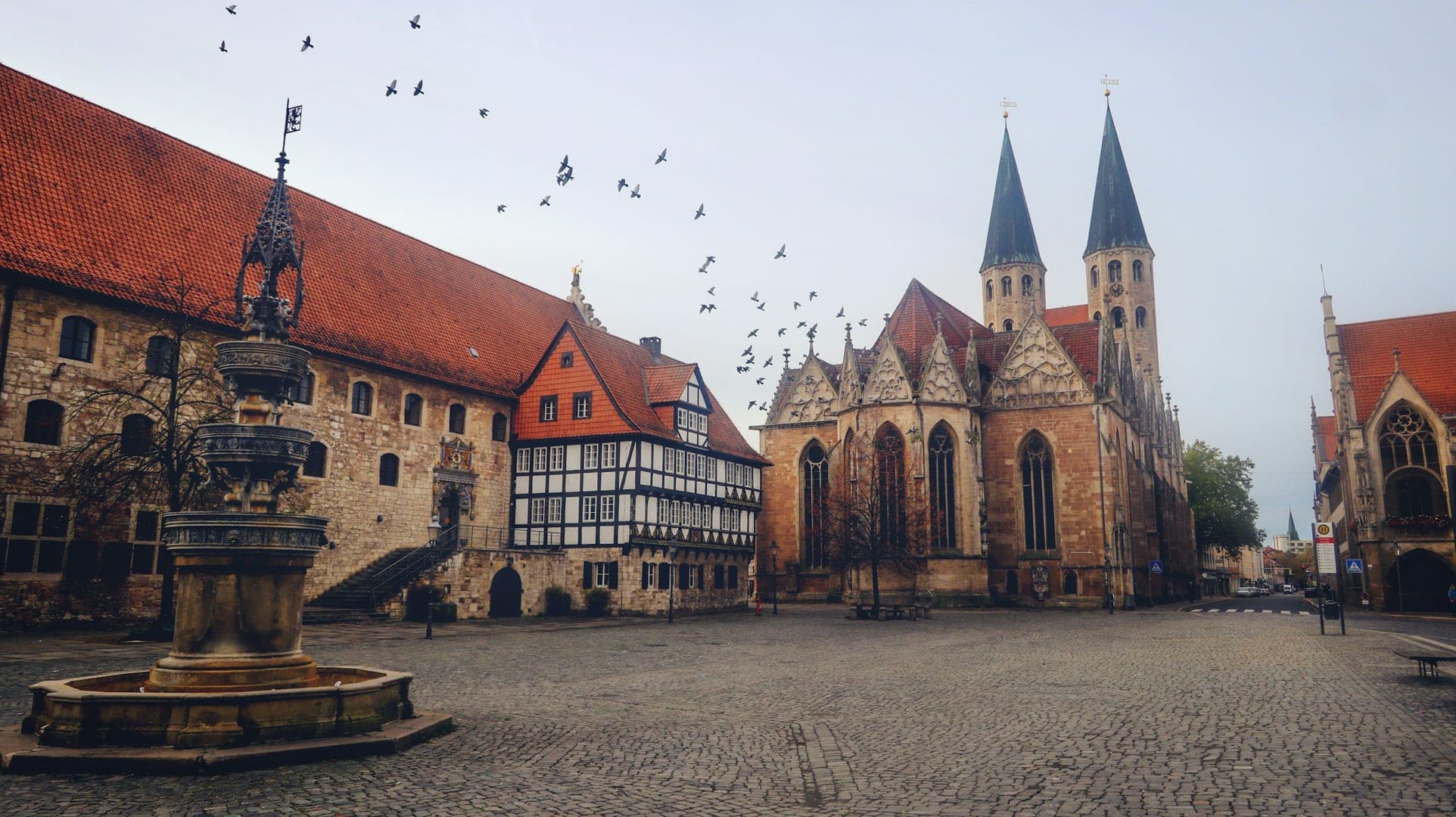
Braunschweig was the seat of Henry the Lion, and the bronze lion he had cast in 1166 still guards the castle square. Today it is a city of engineers. The Collegium Carolinum, founded in 1745, grew into TU Braunschweig, and the surrounding region spends a larger share of its output on research than any other in the EU. That mix of civic pride and technical work shaped how the city houses people. Its oldest housing cooperative predates the car factories of the region, and most of its residents rent.
Of the roughly 130,000 dwellings counted by the 2022 census, 32% are lived in by their owners and 68% are rented. Cooperatives hold about 12,000 homes, or 9% of the stock, spread across six societies. Public and other non-profit landlords own about 11,000 homes, or 8.5%. The largest is the city's own Nibelungen-Wohnbau, with 7,500 flats. Private landlords let the remaining 50.5%. They range from small owners of Ringgebiet tenements (the late-19th-century districts around the old town) to national investors such as Vonovia.
- Owners
- Owner-occupier32.0%
- Renters
- Public & non-profit rental8.5%
- Cooperative9.0%
- Private rental50.5%
Social housing is a set of rules rather than a kind of landlord. A flat counts as social while public money has bought a Belegungsbindung (the right to fill it with a tenant who holds a Wohnberechtigungsschein, or WBS, the income certificate for subsidised homes) and a capped rent. Only about 4% of Braunschweig's dwellings carry such a binding. They sit in Nibelungen's stock, the cooperatives' and private owners' alike. Far more households could claim one. An estimated 42% earn little enough to qualify for a WBS.
What a household pays depends mostly on its landlord. Public and non-profit rents average about €6.30/m² net cold. Members of the Braunschweiger Baugenossenschaft pay a usage fee averaging €6.55/m². The 2025 Mietspiegel (the city's official index of local comparable rents) puts the average across existing tenancies at €7.60/m². Anyone signing a new lease meets asking rents near €10.52/m². A furnished one-bedroom flat costs about €800 a month all-in, and furnished mid-stay lets run to about €17.90/m².
- Public & non-profit
- Cooperative (BBG average)
- All-stock (Mietspiegel 2025)
- New-let (advertised)
- Furnished mid-stay (estimate)
Public, cooperative, all-stock and new-let figures are net cold rent; the furnished mid-stay figure is gross, all-in, and an estimate.
Empty homes are scarce. The census found about 3,400 empty dwellings, a vacancy rate of 3%. Only 2% of the stock stood empty and ready to let. Offices offer little slack either. About 1.5% of office space was vacant, roughly 0 m². Braunschweig's empty space is retail. The Burgpassage arcade and the former Karstadt store at the Gewandhaus stood empty for years in the heart of the old town.
Demand keeps arriving. About 18,000 people move to Braunschweig each year, many of them students and researchers. Some 8,000 stay only between three months and a year. Building did respond for a while. Completions reached 1,064 homes in 2018 and 844 in 2021. The city planned building rights for about 6,000 more homes by the end of 2025. Its mayor still puts the need at 12,500 new homes by 2035. New-let rents are also held down by the Mietpreisbremse (the rent brake, which ties new-let rents to the local comparative rent). Lower Saxony keeps Braunschweig on its list until the end of 2029.
How far does the squeeze reach? The research behind the Hans-Böckler-Stiftung's study of missing homes in German cities measured rent burdens city by city. In Braunschweig, 41.1% of renter households paid more than 30% of their net income in warm rent. Some 18.7% paid more than 40%. The median household paid 26.3%. That placed the city 42nd of 77, milder than Bremen, where 47.5% of renters crossed the same line. The strain is no longer confined to the poorest. The city now obliges developers to build 10% of new floor space for middle incomes, on top of the subsidised share. Its own housing pages open with a blunt diagnosis: a growing city with little affordable housing The city's largest cooperative has said much the same about its own members.
Through all of this, one form of tenure has barely changed in 140 years. Around 6% of residents live in homes owned collectively by their members.
Shares, savings banks and a brickworks
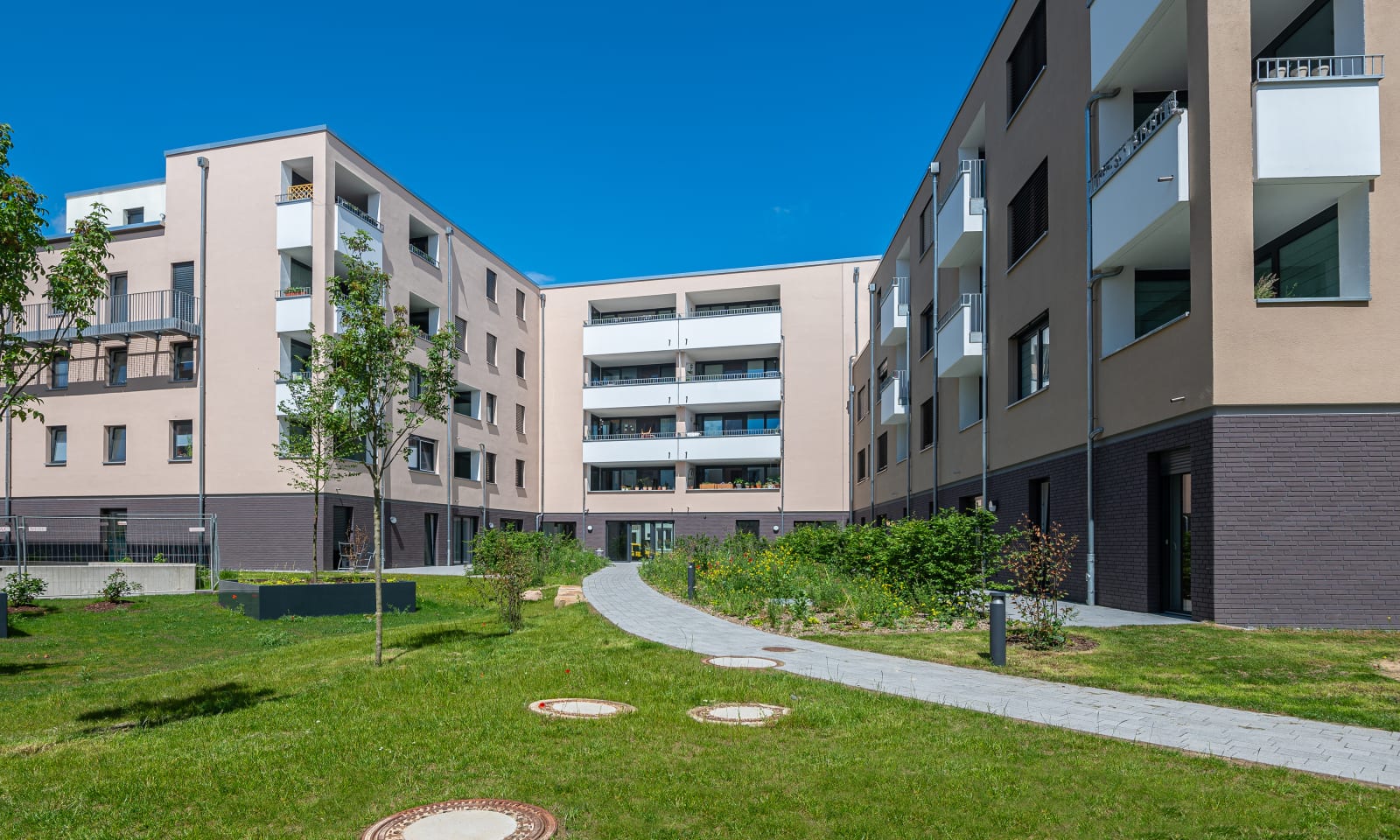
Braunschweig's cooperatives are rental cooperatives. A household joins by buying Genossenschaftsanteile (cooperative shares, repaid at face value when a member leaves). At Baugenossenschaft Wiederaufbau a single share costs €150, and further shares stand in for a deposit. In return, members hold open-ended tenancies at a cost-based usage fee and elect the assembly that oversees the board. Nobody owns an individual flat. The one exception proves the rule. The BBG sells worn terraced houses in the Siegfriedviertel only to its own members, who must then stay members for at least ten years.
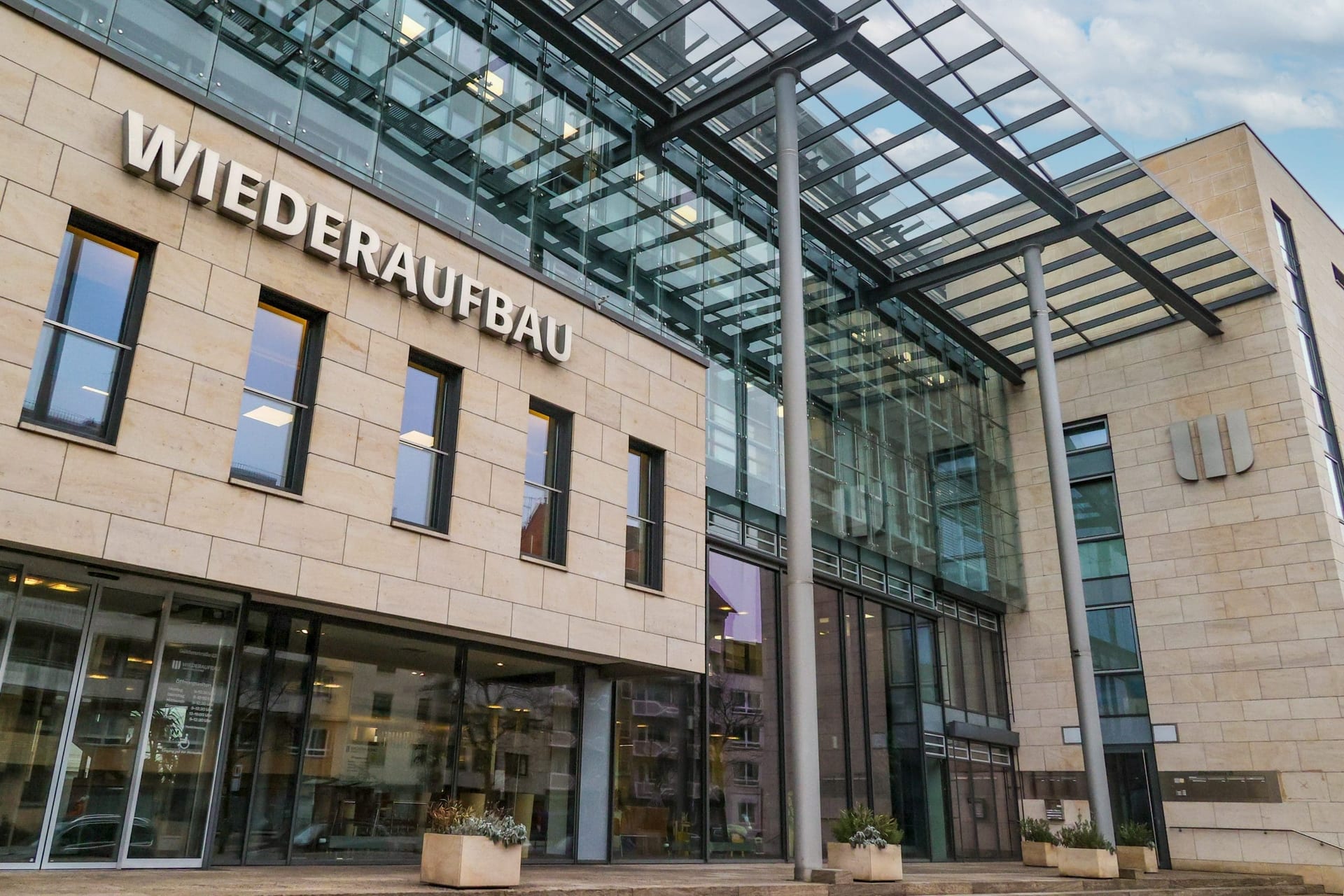
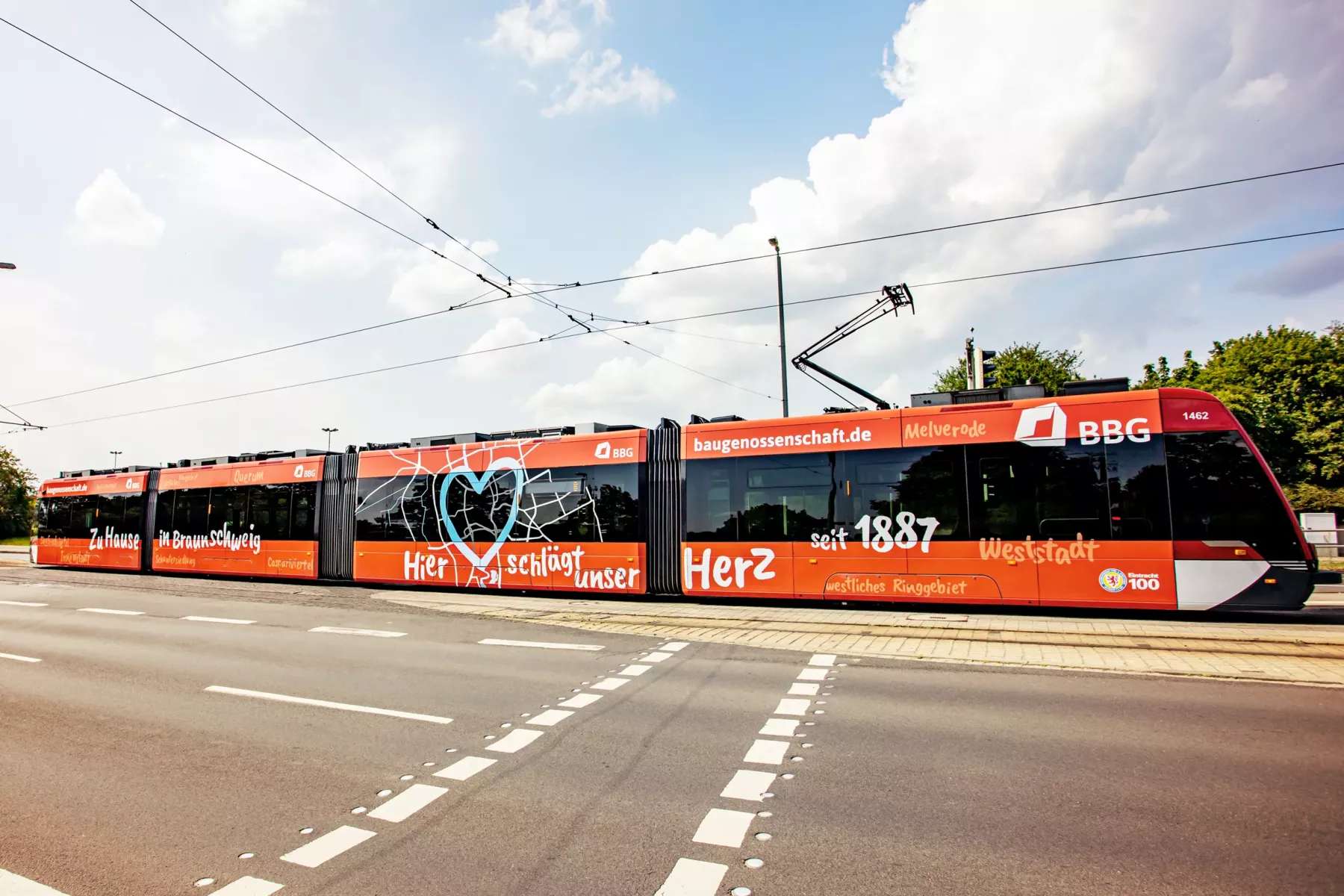
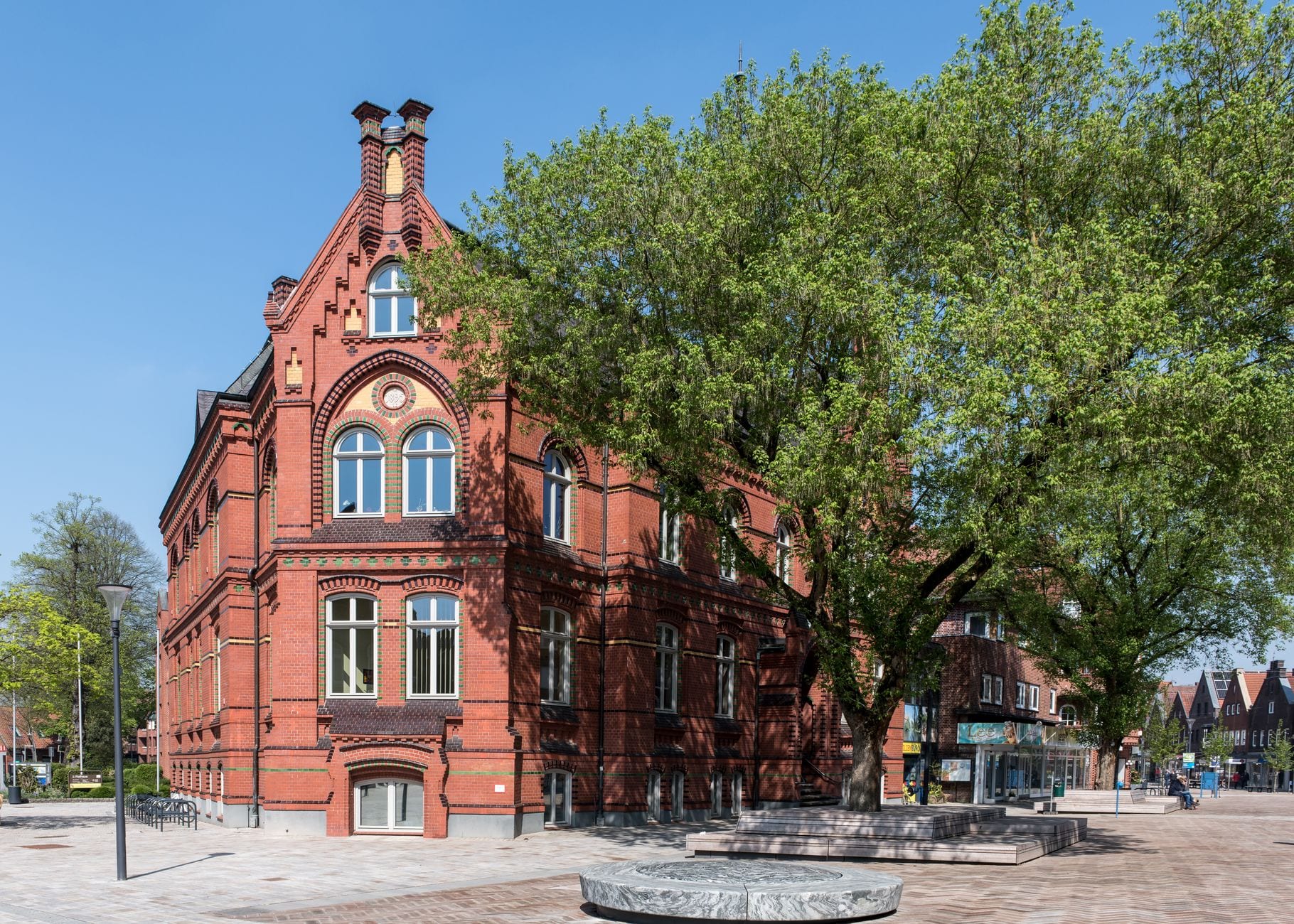
The tradition began as philanthropy. On 4 June 1887 a group of wealthy citizens, among them the industrialists Max Jüdel and Albert Natalis, founded the BBG in the old town hall. By 1900 it had its own savings bank, still run for members today. From 1909 it kept its own masons, carpenters and roofers, and between 1919 and 1934 even a brickworks. By the First World War it had built 100 houses for about 2,000 members. A second wave came out of need. The Vereinigte Wohnungsgenossenschaft (VWG) grew from a 1923 house society and a 1926 cooperative for the war-disabled, veterans and bereaved families, which merged in 1941. After the air raid of October 1944 destroyed most of the old town, the city's craft guilds founded HaWo in 1949 to take part in rebuilding. Werder eG followed in 1950 and Wiederaufbau, literally 'reconstruction', in 1951. The BBG alone built 1,894 homes between 1948 and 1962. With 18,095 members in 1962 it was briefly the largest housing cooperative in West Germany.
Today the sector falls into three groups. Two large societies own most of it. The BBG counts 23,023 members and 6,652 homes. Wiederaufbau manages more than 9,000 homes across south-east Lower Saxony and Saxony-Anhalt. A middle tier of post-war societies is far smaller: the VWG with 1,363 homes, Bauen + Wohnen with more than 800 in the city, Werder with about 600 and HaWo with fewer than 200. The third group barely exists yet. It is made up of Wohngruppen (community-housing groups that want to build and live together), which the city now seeds with land. Their problems differ. The large societies face retrofit bills and the price of new building. The BBG spent €13.2 million on its stock in 2025 and aims to be climate-neutral by 2045. The small ones have largely stopped building. HaWo has limited its investment to upkeep and modernisation for years. The groups lack land and start-up equity. A BBSR (federal institute for building, urban and spatial research) study of cohousing inside cooperatives found that about half such projects nest inside established cooperatives rather than founding their own. The big two do not always agree either. The BBG recognised the city's 2025 rent index, while Wiederaufbau and the landlords' association Haus + Grund declined to recognise it.
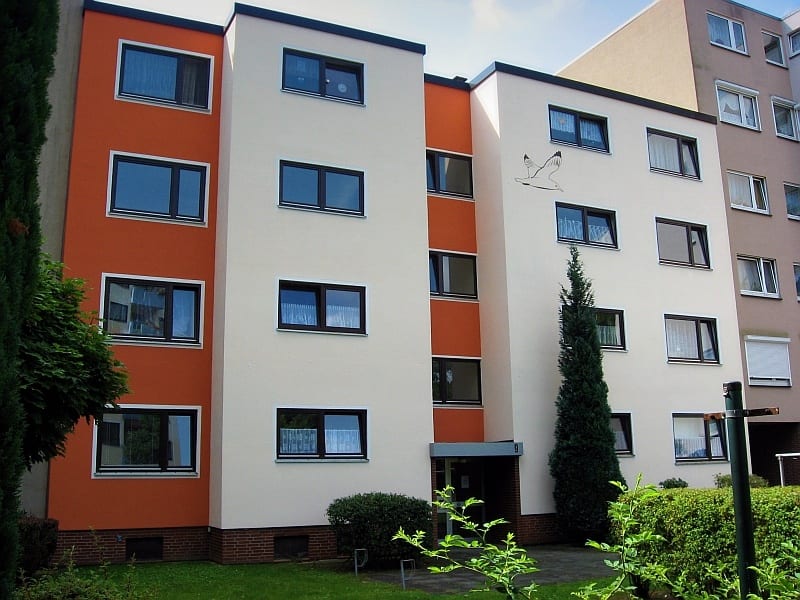
The city treats cooperatives as partners in subsidised building rather than as a programme of their own. In its largest new district, the council says, the city's building cooperatives play an essential role in meeting the social quota. A BBSR study of housing cooperatives as partners of municipalities describes that kind of alliance across Germany. It works where land, subsidy and a quota arrive together, and Braunschweig has begun to write all three into its land policy.
A land model, a rent brake and a 2030 deadline
Thorsten Kornblum of the SPD has been Oberbürgermeister (lord mayor) since 2021. On 27 September 2026 he won a second term with 75.6% of the runoff vote against the CDU's Maximilian Pohler. His main housing instrument predates the campaign. The wohnvision – Baulandmodell Braunschweig (the city's land model) was adopted in 2022. It applies wherever new building rights are created for 12 homes or more. Developers must build 30% of the permitted floor space as subsidised housing. The city also buys at least 50% of the land in each new area, at a price net of development costs. It then sells plots by Konzeptvergabe (concept-led tenders, scored on quality and social criteria rather than price). Landowners keep at least a third of the rise in land value. Up to two-thirds pays for roads, nurseries and green space.
Braunschweig is a liveable city in which many people find a home. Because the population has grown in recent years, we have to face the challenge of creating enough housing for different needs, and that includes affordable housing.Each level of government holds a different lever. The federal parliament writes tenancy law, and it extended the rent brake until 2029. It also created the Bau-Turbo (construction turbo), which lets councils approve homes without first drawing up a new zoning plan, as Deutsche Welle's report on the federal building push explains. Lower Saxony decides where the rent brake applies and pays the main housing subsidy. Its Niedersächsisches Wohnraumfördergesetz (the state housing subsidy act) has governed that money since 2010. The city then tops up state grants by up to €310/m² for rental homes with occupancy bindings. It controls land, zoning, the quota and its own company, Nibelungen.
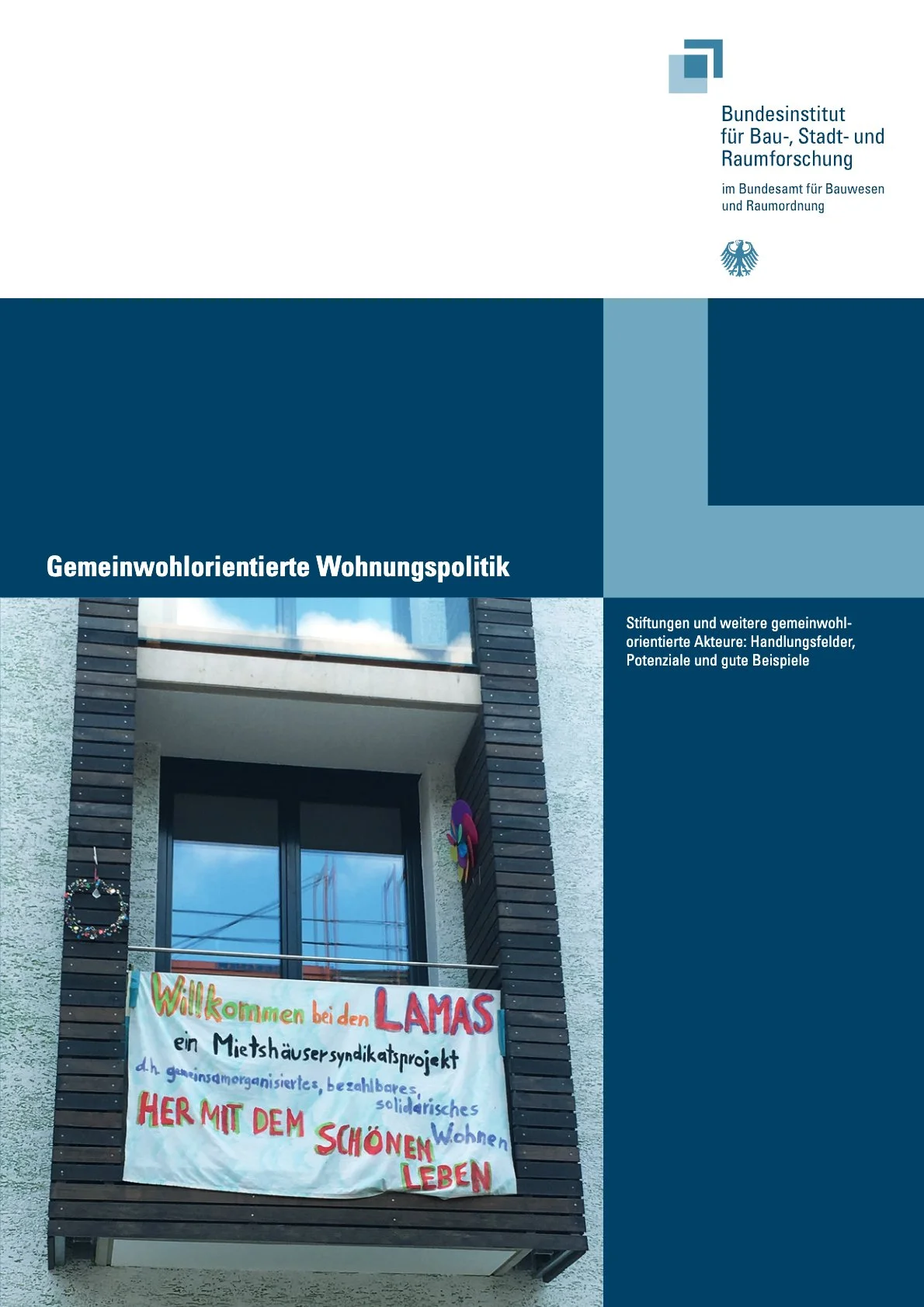
For cooperatives and groups, the land model holds two concrete promises. City plots can go to new or existing housing cooperatives, building groups and common-good projects. And under the council's land-policy resolution of 23 February 2021, every new city development area must include at least one plot for community housing. Tenders for such plots have already run at the Trakehnenstraße and at Stöckheim-Süd. A federal study of common-good housing policy sees concept tenders like these as a way to keep land out of speculation. The cooperatives' own leaders remain wary of the cost of building on it.
If we want to build new homes for our target group, we have to cross-subsidise the rent with the strength of our community of members, and we only do that after very careful thought.On empty space, the city has bought its way in. In April 2024 its development company, Struktur-Förderung Braunschweig, agreed to buy the empty Burgpassage. The site is to hold a school extension, a hotel and barrier-free flats, with completion planned for the end of 2028. The former Karstadt store is to become a Haus der Musik (a music centre). Neither will add social housing, because the Burgpassage flats are to be sold to pay for the school. Office conversions are rare across Germany, as a Gensler analysis of office-to-residential conversion shows. With so little empty office space here, Braunschweig's reserve lies in old retail and in under-used buildings of the kind the Obsolete Stadt research project mapped in Hannover and Hamburg.
Climate targets add a second deadline. In October 2021 the council resolved to make the city greenhouse-gas neutral, if possible by 2030. Its Klimaschutzkonzept 2.0 (climate protection plan), adopted in September 2022, lists 38 measures. They include energy retrofits for almost 30,000 homes and businesses and a 23% cut in final energy demand. Nationally, the reform of Germany's heating law pushes new heating towards renewables. The non-market landlords are where the plan meets real buildings. Nibelungen builds to the KfW Efficiency House 55 EE standard (KfW is the German state development bank) and has begun fitting heat pumps into existing blocks. The serial retrofit at the Wohnungsverein Hagen cooperative shows how a member-owned landlord can renovate whole estates at once.
- 1887[source]
Braunschweiger Baugenossenschaft founded
Wealthy citizens found the city's first housing cooperative in the old town hall; a members' savings bank follows in 1900.
- 1926[source]
Nibelungen-Wohnbau founded
The city and the Free State of Braunschweig create a housing company; its first 150 flats rise in the Siegfriedstraße.
- 1948–1962[source]
Post-war building boom
The BBG alone builds 1,894 homes and reaches 18,095 members, briefly the largest housing cooperative in West Germany.
- 2021-02[source]
Land-policy resolution
The council requires at least one plot for community housing in every new city development area.
- 2022[source]
wohnvision land model adopted
New building rights come with 30% subsidised housing, at least 10% in the lower-price segment, and municipal purchase of at least 50% of the land.
- 2022-09[source]
Klimaschutzkonzept 2.0
The council adopts 38 measures aimed at greenhouse-gas neutrality, if possible by 2030, including retrofits for almost 30,000 homes and businesses.
- 2024-06[source]
Jütenring plan approved
The third phase of the Nördliches Ringgebiet opens the way for about 340 homes, bringing the district to about 1,300.
- 2025-11[source]
Rent brake extended
Lower Saxony keeps Braunschweig among 57 municipalities under the rent brake and conversion protection until the end of 2029.
- 2026-09[source]
Kornblum re-elected
The SPD mayor wins a second term with 75.6% in the runoff.
- 2028[source]
Burgpassage redevelopment due
School extension, hotel and barrier-free flats planned for completion at the end of 2028.
- 2029[source]
Rent brake expires
The current state ordinance runs until 31 December 2029 unless renewed.
- 2030[source]
Climate-neutrality target
The council's target year for greenhouse-gas neutrality, "if possible".
- 2035[source]
Housing need horizon
The mayor puts the need at 12,500 new homes by 2035.
- 2045[source]
BBG climate-neutral
The largest cooperative aims to replace every failing gas boiler with climate-neutral heat by 2045.
From the first cooperative to the climate, rent-brake and housing-need deadlines ahead.
From the Siegfriedviertel to the Sackring
Nibelungen-Wohnbau is where the city's own housing story starts. The city and the Free State of Braunschweig founded it on 22 July 1926 to fight a shortage of homes. Its first 150 flats went up in the Siegfriedstraße, and by 1929 the Siegfriedviertel held 500. After the war it rebuilt at speed, finishing 4,859 homes by 1956. In 1979 its Frankfurter Straße complex was among the first to plan homes for older and disabled residents into an ordinary block. Its tenants paid an average of €6.24/m² at the end of 2023.
The Nördliches Ringgebiet is the city's largest new district in decades. About 1,300 homes are going up in three phases on under-used land north of the ring road. The Braunschweig practice Ackers Partner Städtebau won the 2013 Europe-wide design competition. The first phase brought about 485 homes. The second added about 500 more from six builders, among them the BBG and Wiederaufbau. In the Lichtwerk-Höfe 2, Nibelungen completed 69 subsidised homes and 18 apartments for supported shared living in 2023. The care association ambet and the disability charity Lebenshilfe provide the support. In June 2024 the council approved the third phase, Jütenring, for about 340 homes.
The Zukunftsquartier Sackring is the BBG's bid to renew its own heartland. The Sackringviertel holds more than 1,200 of the cooperative's homes, many of them no longer barrier-free or efficient. With TU Braunschweig's Institute for Urban Design (Institut für Städtebau und Entwurfsmethodik) and the city, the BBG has drawn up a plan. Small comb-shaped blocks would give way to a continuous street front along the Sackring. Unsealed, park-like green space would cool the quarter in heatwaves and absorb heavy rain. The cooperative has promised members two years' notice before any move, offers to stay in the quarter and subsidised homes in the new buildings. It is a rare case of a cooperative planning its own densification with the people who live there.
Stöckheim-Süd shows the land model at work in the south of the city. Nibelungen finished 73 subsidised homes in the Hillenwiese at the end of 2024. WBS holders there pay €6.40 to €7.80/m², and demand far outstripped supply. The company built them with a shared 3D model and a modular flat kit to save time. Nineteen more, fully funded by Lower Saxony, are due in Berghey 3 in November 2026, with a shared roof garden. The same district also offered a plot reserved for a community-housing group.
Wiederaufbau works at a smaller, quieter scale. In 2007 it turned a listed old building on the Humboldtstraße, beside the TU campus, into student and apprentice apartments with high ceilings and a shared laundry. Its Wohnen mit Zukunft (living with a future) schemes pair ordinary tenancies with care services for older members. At the Helene-Künne-Allee in Broitzem, 44 flats share common rooms and a care partner on site.
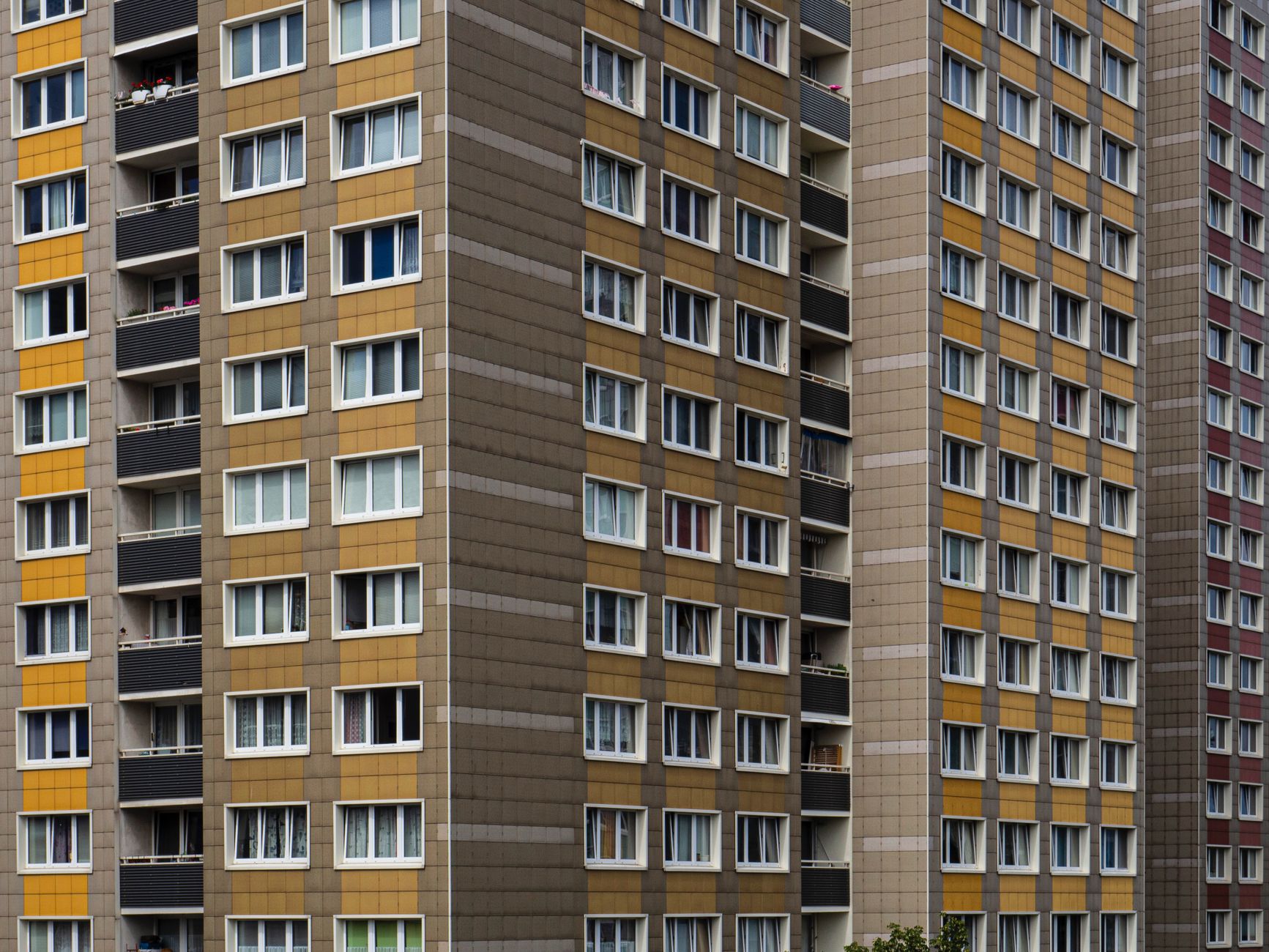
The BBG's post-war estates pose the harder question. In the 1960s the Weststadt was the fifth-largest new-build area in West Germany. A TU Dortmund study of large housing estates calls such estates a last bastion of affordable rent. Keeping them affordable while retrofitting them is the work of the next 20 years. Andrej Holm and Christoph Laimer's volume on community living and self-organised building argues that the groups the city now seeds with land are social infrastructure too. Put together, these projects answer the opening question. Europe's most research-intensive region has already built most of a non-market housing system: century-old cooperatives with their own savings banks, a municipal builder and a land model that reserves plots for groups. What it still lacks are new cooperative founders and the patient money to let them build.
References
Statistics17Click on any number to see the source
Housing market
Tenure & affordability
Cooperative, social & public
Adaptive reuse & vacancy
Population & migration
From our library19
- Nibelungen-Wohnbau-GmbH Braunschweig — Organisation
- Braunschweiger Baugenossenschaft eG — Organisation
- Wie viele (und welche) Wohnungen fehlen in deutschen Großstädten? — Working Paper 217 — Knowledge
- Baugenossenschaft Wiederaufbau eG — Organisation
- Vereinigte Wohnungsgenossenschaft eG (VWG) Braunschweig — Organisation
- Handwerker-Wohnungsbau-Genossenschaft eG (HaWo) — Organisation
- Werder eG Baugenossenschaft — Organisation
- Bauen + Wohnen eG — Organisation
- Neues Wohnen – Gemeinschaftliche Wohnformen bei Genossenschaften — Knowledge
- Bündnis für bezahlbares Wohnen und Bauen – Wohnungsgenossenschaften als Partner der Kommunen — Knowledge
- Bundestag: Mietpreisbremse verlängert — Knowledge
- German housing crisis: government plans construction boost — Knowledge
- Gemeinwohlorientierte Wohnungspolitik - eine Studie — Knowledge
- Office-to-Residential Conversion: A New Value Proposition for the German Market — Knowledge
- Obsolete Stadt - Raumpotenziale für eine gemeinwohlorientierte, klimagerechte und koproduktive Stadtentwicklungspraxis in wachsenden Großstädten — Knowledge
- Germany reshapes housing and heating (as of 15 December 2025) — Knowledge
- Renovating Homes the Cooperative Way in Germany: Serial Renovation at Wohnungsverein Hagen — Knowledge
- Large Housing Estates in Germany's Major Cities: A Last Bastion of Affordable Housing? — Knowledge
- Gemeinschaftliches Wohnen und selbstorganisiertes Bauen — Knowledge
Further sources30
- Braunschweig — Wikipedia
- Geschäftsbericht 2023 — Nibelungen-Wohnbau-GmbH · 2024
- Geschäftsbericht 2025: Wohnen im Wandel — Braunschweiger Baugenossenschaft eG · 2026
- Methodenbericht Mietspiegel Braunschweig 2025 — Stadt Braunschweig · 2025
- Schule, Hotel, Wohnen: Burgpassage bekommt völlig neue Nachnutzung — Stadt Braunschweig · 2024-04-04
- Unverändert starke Bautätigkeit: 844 neue Wohneinheiten — Stadt Braunschweig · 2022-07-04
- Niedersachsen verlängert Mietpreisbremse bis Ende 2029 — Niedersächsische Staatskanzlei · 2025-11-25
- Datenblatt: Mietbelastungsquoten — Hans-Böckler-Stiftung / Humboldt-Universität zu Berlin · 2021
- wohnvision – Baulandmodell Braunschweig: weiterführende Informationen — Stadt Braunschweig
- wohnvision – Baulandmodell Braunschweig — Stadt Braunschweig
- Braunschweig, Helene-Künne-Allee 2/4 — Baugenossenschaft Wiederaufbau eG
- Hausverkäufe im Siegfriedviertel — Braunschweiger Baugenossenschaft eG
- Die VWG — Vereinigte Wohnungsgenossenschaft eG
- Baugenossenschaft Wiederaufbau eG — Baugenossenschaft Wiederaufbau eG
- Bauen + Wohnen eG — Bauen + Wohnen eG
- Über uns — Werder eG
- Unsere Geschichte — Handwerker-Wohnungsbau-Genossenschaft eG
- Rat beschließt Bebauungsplan Jütenring — Stadt Braunschweig · 2024-06-11
- Kornblum setzt sich in der Stichwahl mit 75,6 Prozent durch — regionalHeute.de · 2026-09-27
- Deckenfest für 19 neue Wohnungen in Stöckheim-Süd — Nibelungen-Wohnbau-GmbH · 2025-09-16
- Wohnraumförderung — Stadt Braunschweig
- Kommunales Wohnraumförderprogramm — Stadt Braunschweig
- Gemeinschaftliches Wohnen — Stadt Braunschweig
- Neues zum Baugebiet Stöckheim-Süd — Stadt Braunschweig · 2021
- Klimaschutzkonzept 2.0 verabschiedet — Stadt Braunschweig · 2022-09-27
- Geschichte — Nibelungen-Wohnbau-GmbH
- Zweiter Bauabschnitt im Nördlichen Ringgebiet — Nibelungen-Wohnbau-GmbH · 2020-08-26
- Zukunftsquartier Sackring — Braunschweiger Baugenossenschaft eG
- Studentenwohnungen für kleines Geld — Baugenossenschaft Wiederaufbau eG
- Braunschweig — Wikipedia
Funding & land tenure
What a housing cooperative could actually build on hereBraunschweig is not in the funding registry yet — the tenure figures above are national.