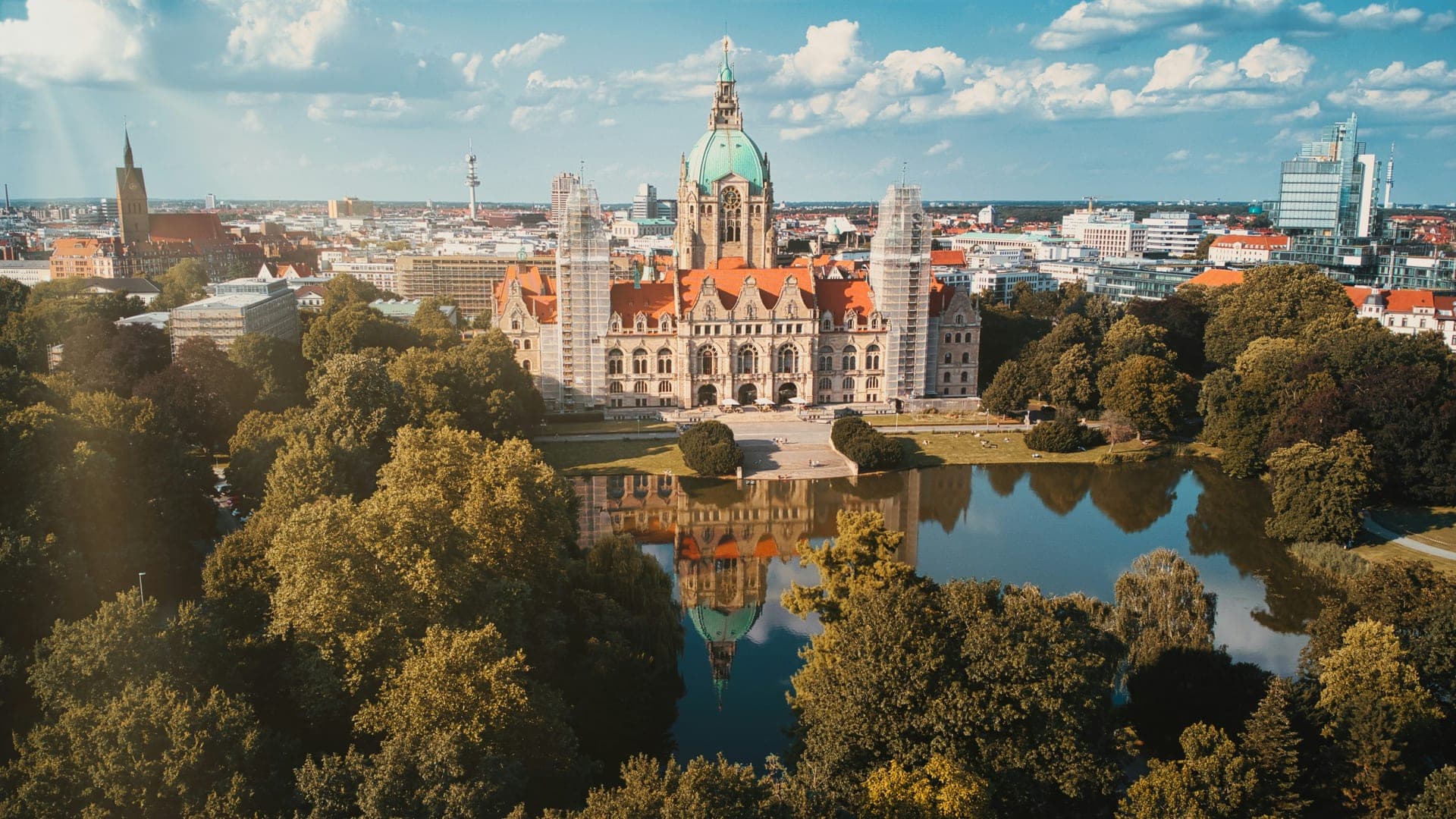
A renters' city between forest and fairground
Hannover likes to call itself a green city, and the claim holds. The Eilenriede forest is nearly twice the size of Central Park. The Herrenhausen gardens have been clipped into Baroque geometry since the 17th century. The same practical, planned temperament shaped how the city houses people. It rebuilt after the war as a renters' city, and its first housing cooperative has been letting homes since the 1880s.
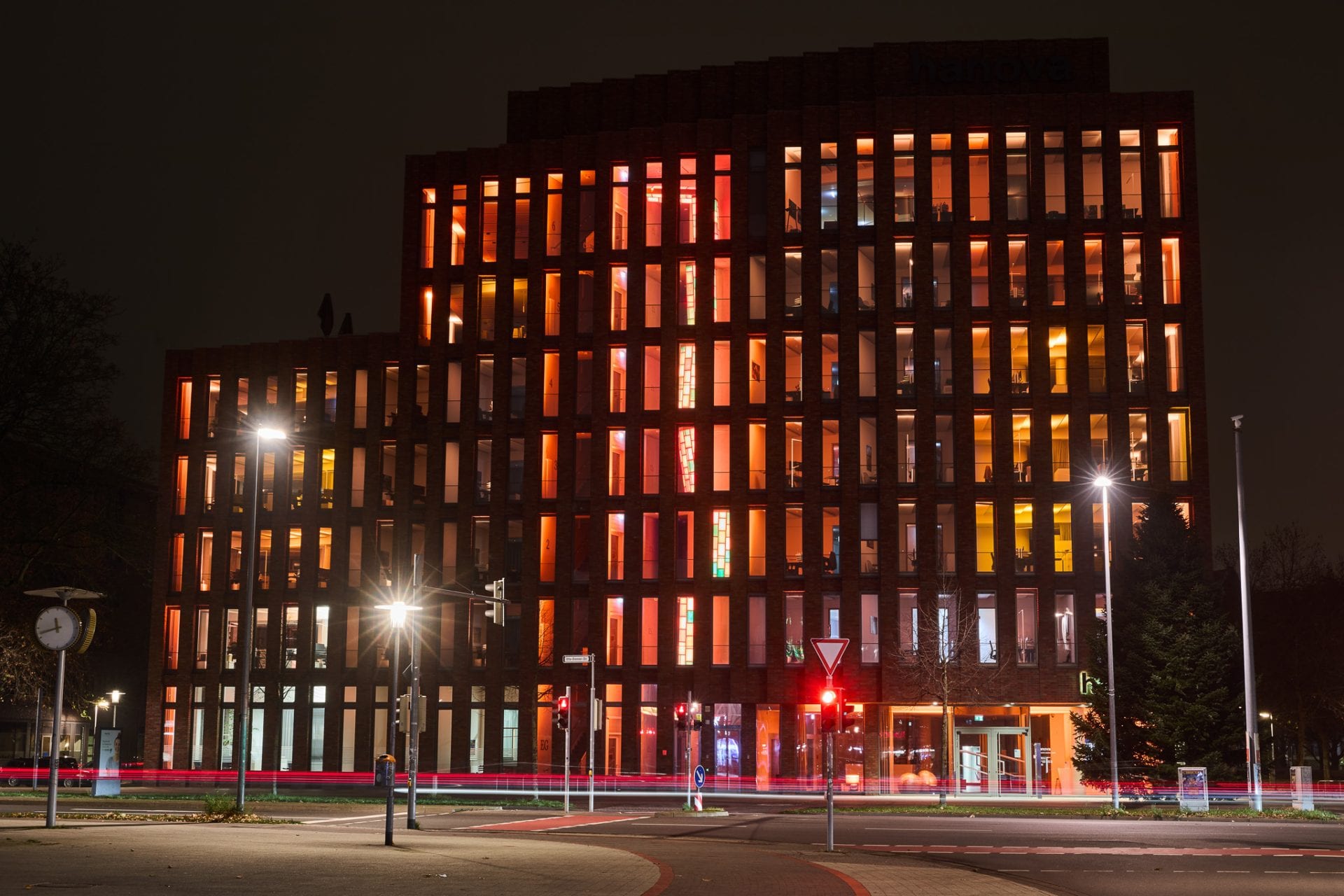
Ownership is the exception here. Of 302,018 dwellings counted by the 2022 census, only 23.4% are lived in by their owners, while 76.6% of households rent. Cooperatives own about 25,000 homes, or 8.3% of the stock. The municipal company hanova holds roughly 15,000 flats, which makes public housing 5.0%. Private landlords let the remaining 63%, from small owners in Gründerzeit (late 19th-century) terraces to listed investment companies.
- Owners
- Owner-occupier23.4%
- Renters
- Public & non-profit rental5.0%
- Cooperative8.3%
- Private rental63.3%
Social housing works differently. It is a set of legal bindings, not a type of landlord. About 5.6% of Hannover's dwellings carry a Belegungsbindung (an occupancy binding that lets the city nominate tenants) and a capped rent. Those flats sit inside hanova's stock, the cooperatives' and private owners' alike. Demand far exceeds them. An estimated 45% of households earn little enough to hold a Wohnberechtigungsschein (WBS, the income certificate needed to rent a subsidised flat).
What a household pays depends mostly on who its landlord is. hanova's average net cold rent is about €6.50/m², and members of the Spar- und Bauverein pay around €6.82/m². The city's Mietspiegel (official rent index) puts the median across all tenancies at €8.20/m². Anyone signing a new lease meets asking rents near €12.49/m². Furnished flats cost about €22.49/m² all-in, and serviced apartments around €21/m².
- Public (hanova)
- Cooperative
- All-stock median
- New-let (advertised)
- Furnished
- Serviced
Cooperative, public, all-stock and new-let figures are net cold rent; furnished and serviced figures are gross, all-in.
Hannover is not short of buildings so much as short of the right ones in the right hands. The census found 10,334 empty dwellings, a vacancy rate of 3.4%. Office space is looser still. About 5.8% of it stands empty, some 0 m². The emblem is the Ihme-Zentrum, a brutalist complex on the River Leine whose shopping floors have stood largely unused for years.
Newcomers keep arriving, about 36,070 people a year on the ten-year average. For a while construction kept pace. The Wohnkonzept 2025 (the city's housing plan) targeted 12,300 new homes and expected almost 16,000 by 2025. The next decade needs another 16,800. Momentum has since broken. Completions across the Region Hannover fell to 2,600 in 2024, down 55%. New-let rents are capped by the Mietpreisbremse (rent brake), which limits them to 10% above the local comparative rent.
Who feels the squeeze? A 2021 Hans-Böckler-Stiftung working paper on missing homes in German cities gives Hannover's answer. Here 50.6% of renter households pay more than 30% of their income, and 13.0% hand over more than half. Across Germany's big cities, households below 60% of median income spend 46.2% of their income on warm rent. The strain now reaches working households on middle incomes too. The housing federation vdw argues for a new subsidy track for the "working middle" at €8 to €12 per m². An estimated 31.5% of households are overburdened by housing costs. Public mood has shifted with it. A February 2026 report on hannover-entdecken.de called it "Mietenwahnsinn" (rent madness). It described holiday lets and fitters' rooms pushing tenants out of Linden-Süd as the city joined nationwide rent protests.
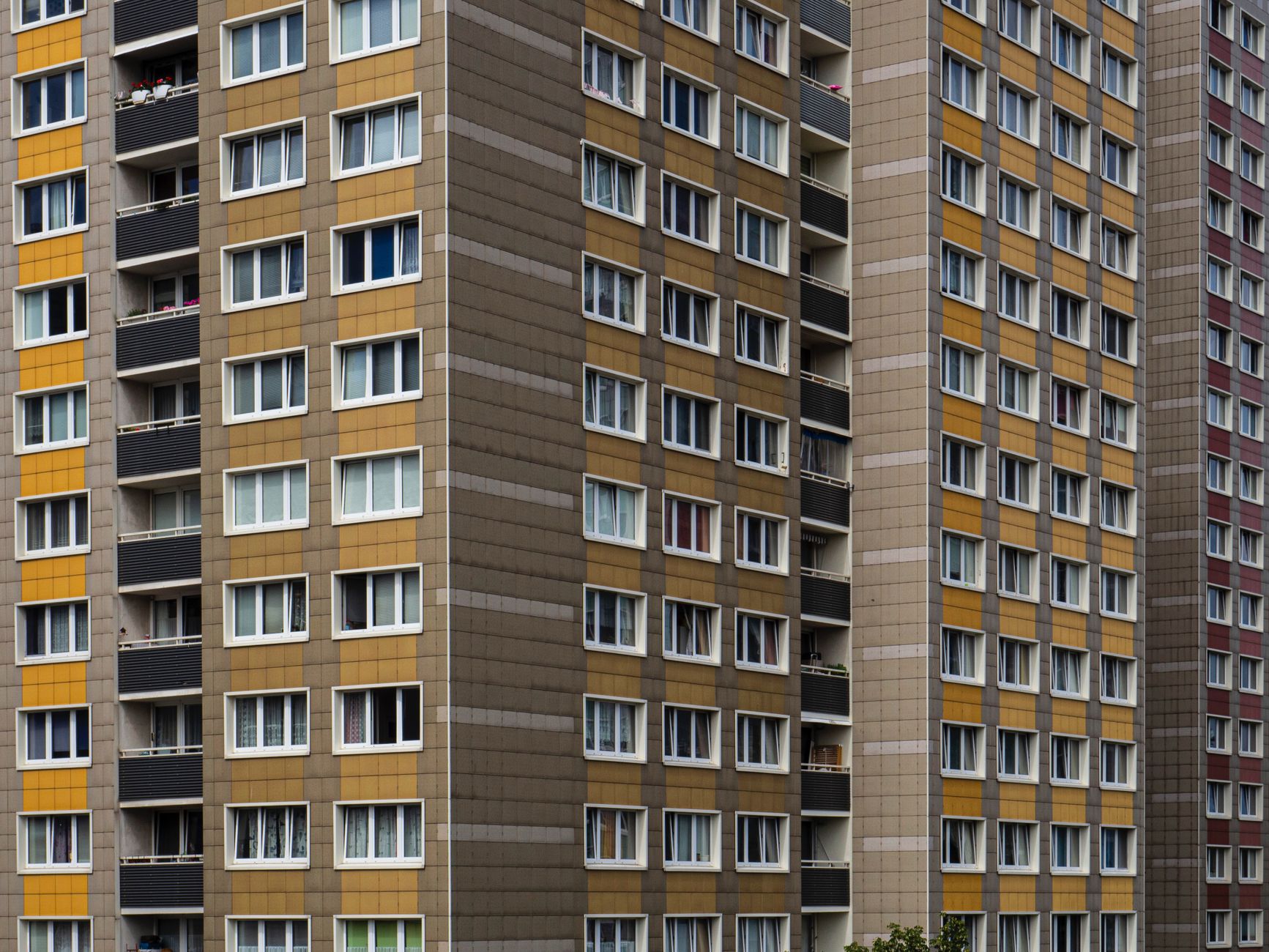
One part of the stock has barely moved through all this: the homes owned by the people who live in them collectively.
Shares, savings and self-help
Hannover's cooperatives are overwhelmingly rental cooperatives. A household joins by buying Genossenschaftsanteile (cooperative shares, repaid at face value when the member leaves). In return it gains a lifelong right to rent at close to cost. Nobody owns an individual flat, and nobody can sell one. The largest, the Spar- und Bauverein, adds a savings bank for members, whose deposits help to finance the housing. That hybrid of landlord and savings club is older than most of the city's streets.
It began in 1885, when 65 people in the Oststadt set out "to build healthy and affordable homes" and to take in members' savings. By 1900 the society had 487 flats and 3,000 members. The Brüggemannhof followed in 1912. About half the stock was destroyed in the war and rebuilt by the 1950s. A second founding wave came from below. In 1983 tenants caught up in the renewal of Linden-Süd registered Selbsthilfe Linden, renovating old houses with their own labour. It was the first new cooperative in Lower Saxony and Bremen for 25 years. Two more tenant cooperatives followed in the Nordstadt and Vahrenheide-Sahlkamp renewal areas.
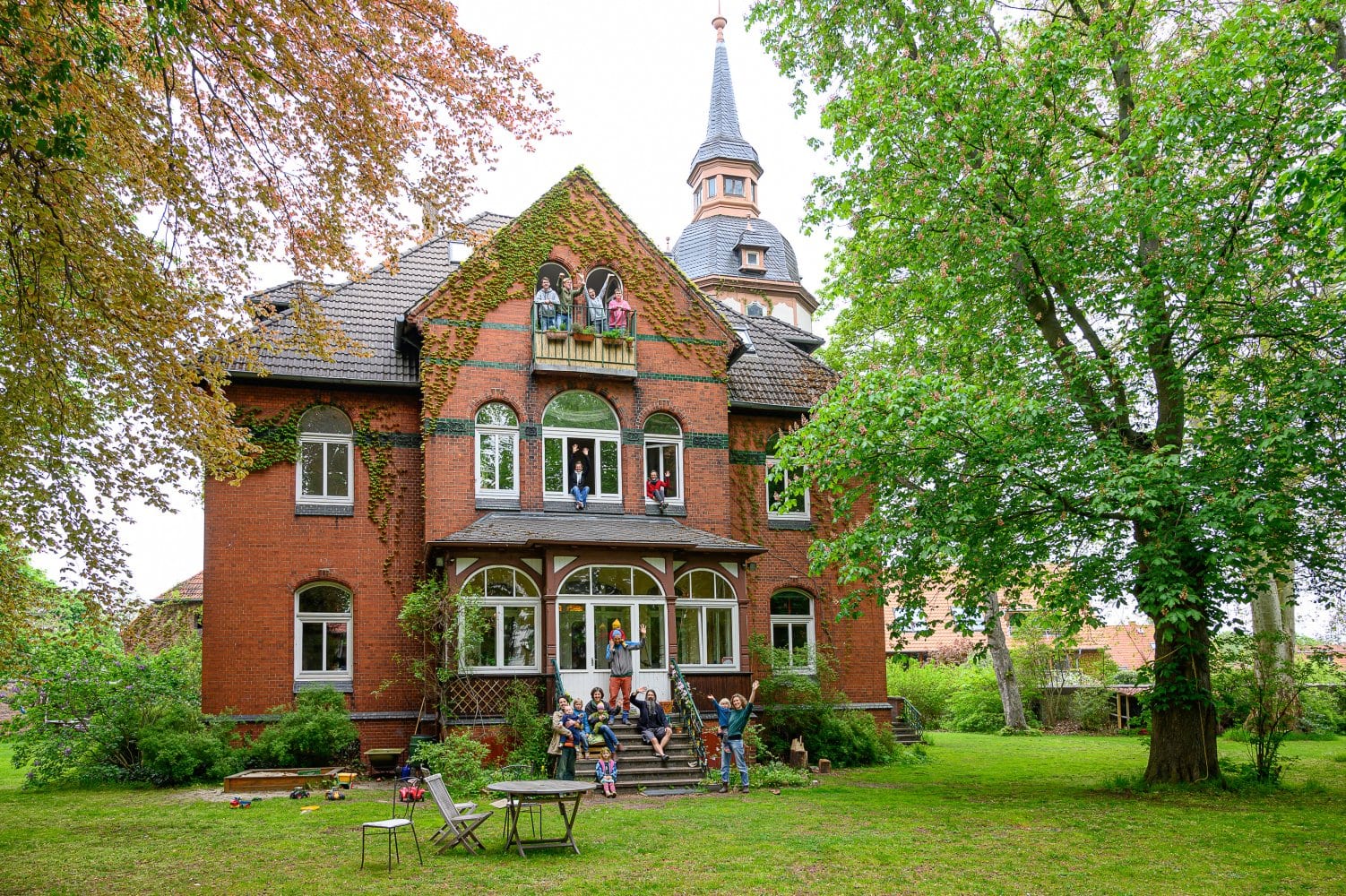
The sector now runs in three clusters. The traditional societies own most of the stock, led by the Spar- und Bauverein with more than 8,200 homes and 27,500 members. Small project cooperatives build a single house for a defined community, like Alle unter einem Dach. Self-organised houses such as Stadtteilleben follow the Mietshäuser Syndikat model, a federation that holds a veto share in every house so it can never be resold. Their challenges differ. The old societies face ageing buildings, energy retrofits and a new-build slump. Across Lower Saxony, vdw members' completions fell from 2,061 in 2022 to 1,236 in 2024. The young groups fight for land and start-up equity instead. A federal BBSR study of cohousing inside cooperatives found roughly half such projects are new project cooperatives, the other half nested in established ones. The failure of the ecovillage cooperative, covered below, showed how exposed the newcomers are to rising costs.
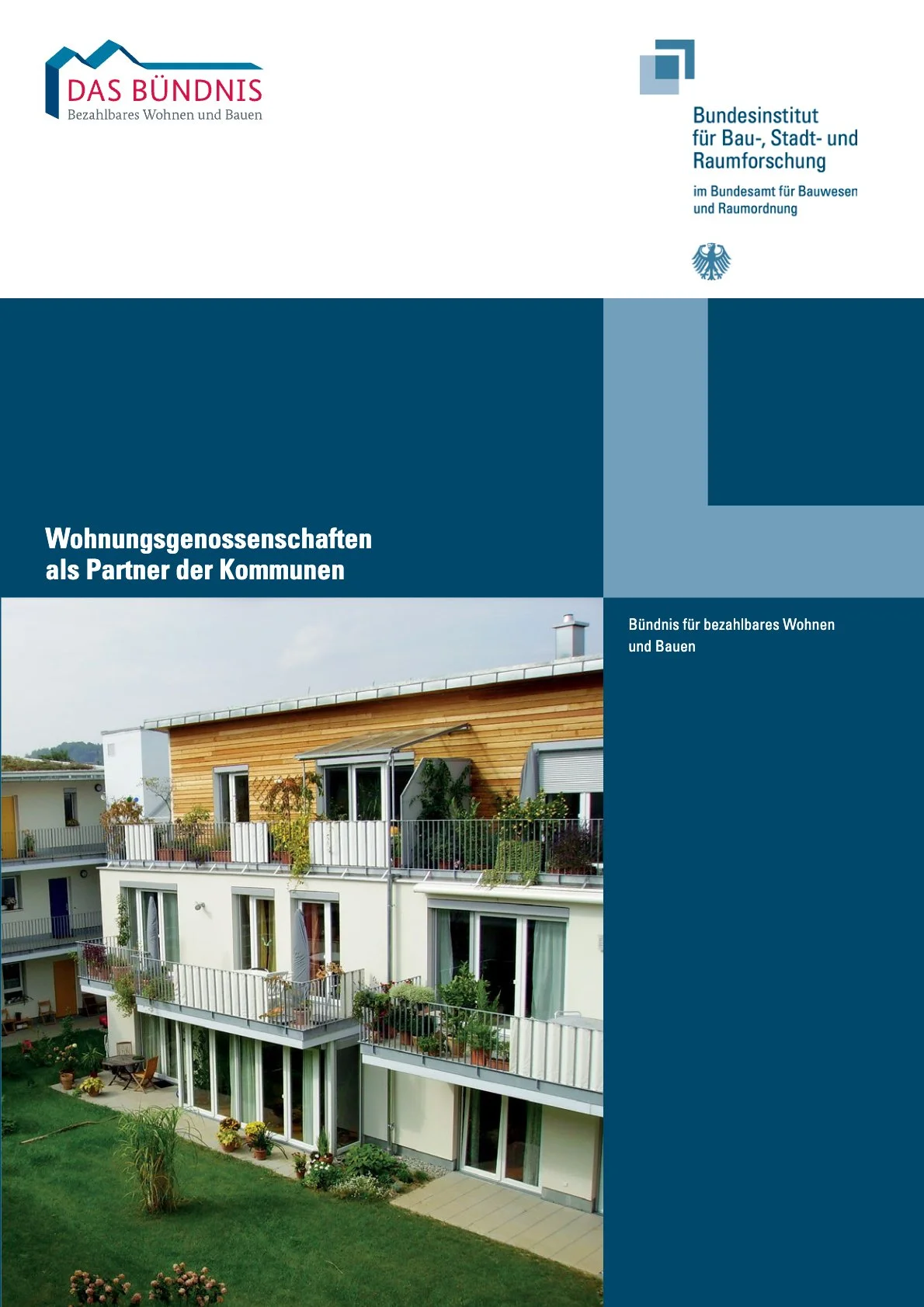
Public policy treats cooperatives chiefly as partners in subsidised building. The Region Hannover's housing programme funds rental and cooperative homes on the same terms. Project cooperatives such as Alle unter einem Dach have won plots in new quarters in return for flats the city can fill. A BBSR study of housing cooperatives as partners of municipalities describes that kind of pact nationally. It works best where land, subsidy and a quota arrive together.
A turbo, a rent brake and a ground-lease giant
Belit Onay of the Greens has run the city as Oberbürgermeister (lord mayor) since 2019. He won 45.6% in the first round of the September 2026 election and meets Axel von der Ohe of the SPD in a runoff on 27 September. His administration's main housing answer is the Bau-Turbo (construction turbo). The federal clause behind it, §246e of the Baugesetzbuch (Federal Building Code), took effect in October 2025. It lets a council approve homes without first drawing up a new zoning plan, as Deutsche Welle's report on the federal building push explains. Hannover adopted it in 2026 with a condition attached. On larger schemes, at least 30% of the newly permitted homes must be subsidised.
The situation on the housing market calls for decisive action. With the Bau-Turbo we are creating the conditions for new homes to be built faster. At the same time we are making sure that core requirements such as affordable housing, social infrastructure and urban design quality remain binding.Each tier of government holds a different tool. The federal parliament writes tenancy law, and it extended the rent brake until 2029. Lower Saxony decides where it applies. Its November 2025 ordinance names 57 municipalities, Hannover among them, and also restricts turning rented flats into condominiums. The state founded WohnRaum Niedersachsen in December 2023 with €100 million of capital. The Region Hannover pays the subsidy. Its programme covers 23% of building costs in exchange for start rents of €5.60 or €6.50 per m² and bindings of 30 to 35 years. The city itself controls land, zoning, the subsidised quota and hanova.

Land decides whether a cooperative can build at all. The city can sell plots it no longer needs or lease them out on an Erbbaurecht. Hannover is also home to the Klosterkammer, Germany's largest issuer of Erbbaurechte (ground leases, where a building stands on land rented for decades). It manages about 16,700 of them. A federal study of common-good housing policy treats such leases as a way to keep land out of speculation. They can also sting. In 2024 the Klosterkammer raised the ground rent on about 2,000 contracts by roughly 25% to catch up with inflation.
The regional federation of cooperatives and municipal landlords, the vdw, reads the moment differently. It welcomed Lower Saxony's extra €200 million for subsidised housing, but noted that affordable housing gets less than 3% of a €14.45 billion investment budget. Its director wants the structure of subsidy changed rather than topped up.
To really get the diggers rolling, it is not enough to pour out money from a horn of plenty. What is urgently needed is a new subsidy structure.On empty space, the city has chosen its hardest case. In April 2026 it began a new Bebauungsplan (binding zoning plan) for the Ihme-Zentrum, restricting retail and allowing offices and shops to become flats. Onay said the city "cannot afford" central sites lying idle while homes are lacking. The Obsolete Stadt research project mapped such under-used buildings in Hannover and Hamburg as a reserve for climate-friendly, common-good uses. Conversions are still rare nationally. A Gensler analysis of office-to-residential conversion in Germany found only Frankfurt with a real pipeline among the seven largest markets.

Climate targets add a second deadline. The Klimaschutzprogramm Hannover 2035 aims to cut emissions by 95% against 1990 and halve the city's final energy demand. Nationally, the reform of Germany's heating law requires new heating to run mostly on renewables and obliges large cities to finish heat plans in 2026. Landlords that plan for decades are the natural vehicle. The serial retrofit at the Wohnungsverein Hagen cooperative shows a member-owned landlord renovating whole estates at once. Kronsberg's Expo settlement proved the point early. Its low-energy homes use about 40% less heating energy than conventional ones.
- 1885[source]
Spar- und Bauverein founded
Founded in the Oststadt to build healthy, affordable homes and take in members' savings; first flats occupied in 1887.
- 1983[source]
Selbsthilfe Linden registered
Tenants in the Linden renewal area found the first new cooperative in Lower Saxony and Bremen for 25 years.
- 2000[source]
Expo settlement at Kronsberg
Around 3,000 homes on more than 70 ha built entirely to low-energy standard for the world exposition.
- Dec 2023[source]
WohnRaum Niedersachsen founded
Lower Saxony creates a state housing company with €100 million of start capital to restart stalled projects.
- Feb 2024[source]
Ecovillage insolvency
The ecovillage cooperative, planning 500 homes at Kronsberg, files for insolvency; the city buys the land back for €6 million in 2025.
- Oct 2025[source]
Federal Bau-Turbo in force
A new clause in the Federal Building Code lets councils approve housing without a new zoning plan.
- 25 Nov 2025[source]
Rent brake extended
Lower Saxony keeps the rent brake and conversion protection in 57 municipalities, Hannover included, until the end of 2029.
- Apr 2026[source]
New zoning plan for the Ihme-Zentrum
The city starts a binding plan that limits retail and allows offices and shops to become homes.
- 2026[source]
Hannover adopts the Bau-Turbo
Larger schemes adding more than ten homes must still deliver at least 30% subsidised housing.
- 27 Sep 2026[source]
Mayoral runoff
Incumbent Belit Onay (Greens, 45.6% in round one) faces Axel von der Ohe (SPD, 21.5%).
- 31 Dec 2029[source]
Rent-brake designation expires
End date of the current state designation of tight housing markets, unless renewed.
- 2035[source]
Climate-neutrality target
Hannover aims to cut greenhouse gas emissions by 95% on 1990 and halve final energy demand; the city also needs 16,800 more homes by then.
From the first cooperative to the climate and rent-brake deadlines ahead.
From the Brüggemannhof to Kronsrode
The Spar- und Bauverein's Brüggemannhof is the place to start. Built in 1912, the courtyard block is now a listed landmark and the cooperative's head office. It holds the society's founding idea in brick: decent flats around shared green space, financed by members' savings. The society's estates run through the former working districts of the Nordstadt, Vahrenwald and Limmer. It still builds new neighbourhoods with shared rooms, 140 years after its founding.
Selbsthilfe Linden turned a renewal zone into a commons. Its members rebuilt run-down Linden-Süd houses with their own hands and swapped that sweat equity for secure rents and a say in their buildings. Today it runs 53 buildings with 378 homes and 19 commercial units. Its model spread to two more tenant cooperatives in the city's renewal areas.
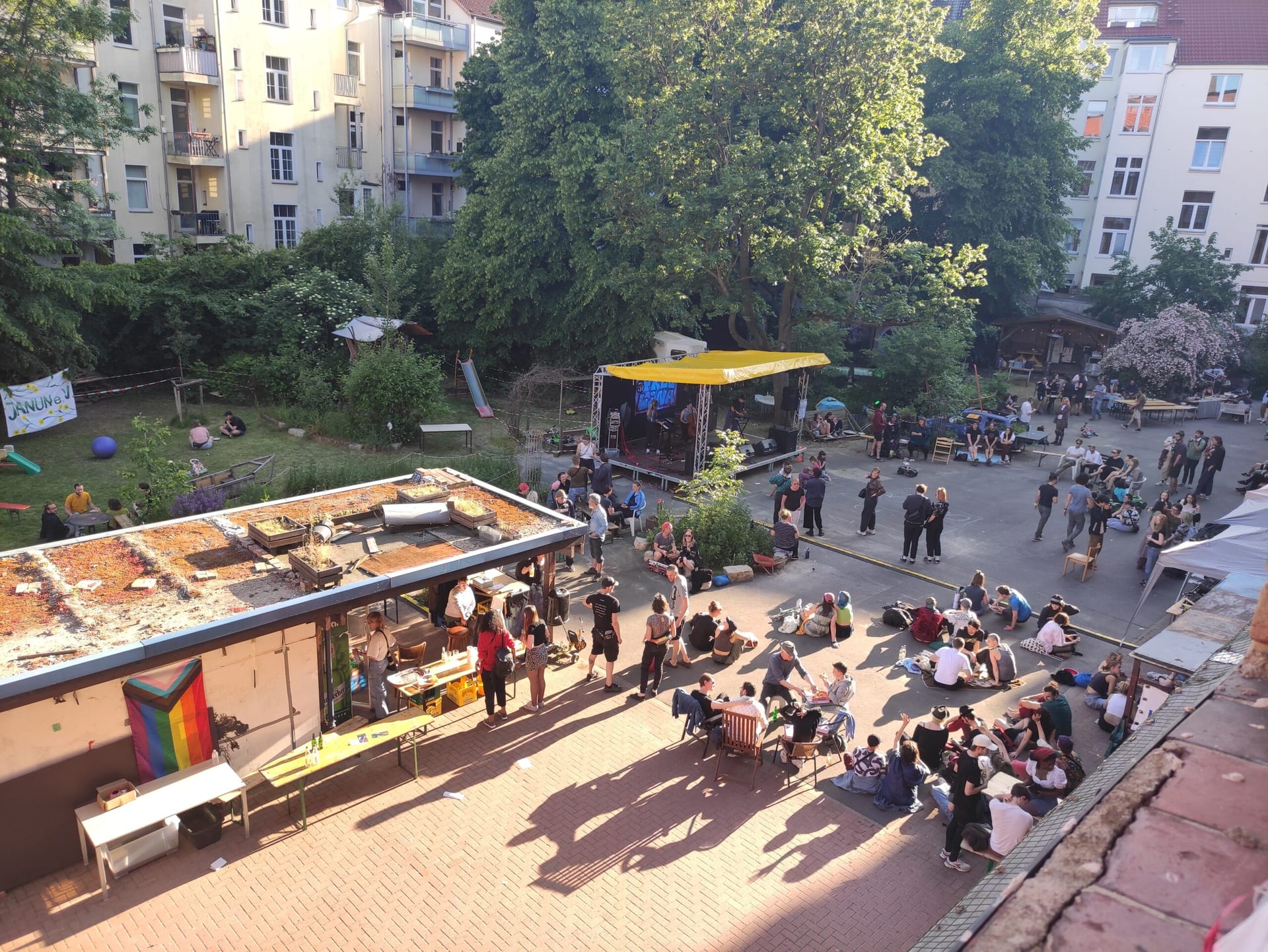
Stadtteilleben occupies a listed former primary school in Linden. Residents bought it from the city in 2012 with backing from the Mietshäuser Syndikat. It now holds 16 homes plus a seminar room, a self-run bicycle workshop and an event space. Because the Syndikat keeps a veto share, the building can never return to the market. It is a rare case of a public building passed to its users rather than to the highest bidder.
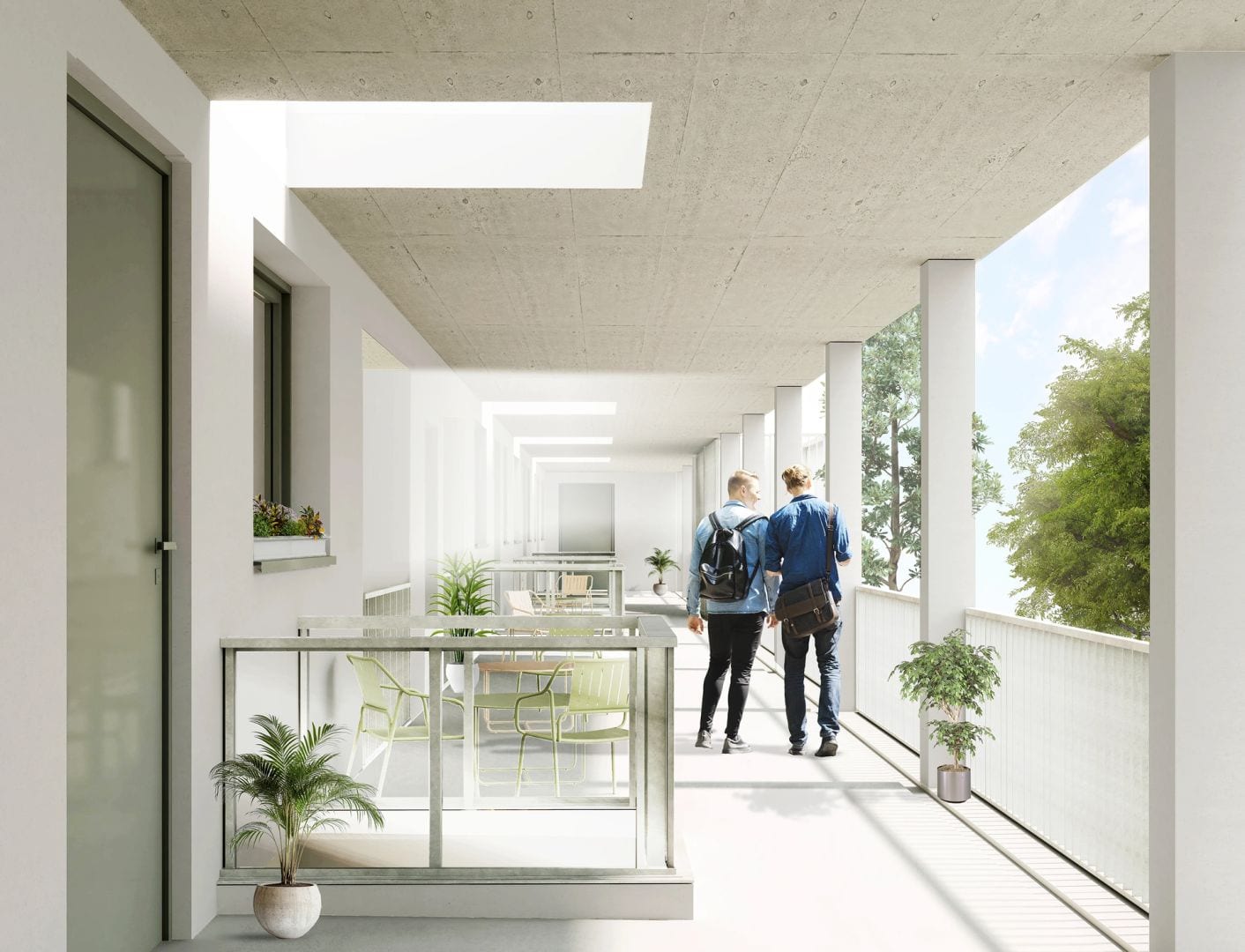
Alle unter einem Dach is small by design. The cooperative won its plot in the new Ohe-Höfe quarter in 2016 and moved in in 2021. Its 12 flats house singles, a shared flat, families with babies and people over 60. The city holds nomination rights for four of them. The building meets passive-house standard, with solar panels and green roofs and façades. It shows the city's subsidised quota working at the scale of one house.
Kronsberg is where Hannover experiments at district scale. For Expo 2000 it built about 3,000 low-energy homes on more than 70 ha, Germany's first estate of that size built entirely to the standard. Next door, Kronsrode is Lower Saxony's largest housing project, with about 4,000 homes for more than 9,000 people. The site also holds the city's hardest lesson. The ecovillage cooperative grew to over 900 members and planned 500 homes, about 40% of them subsidised. Costs outran its finances, and it collapsed into insolvency in 2024. The city bought the land back for €6 million in 2025 and will develop it for housing.
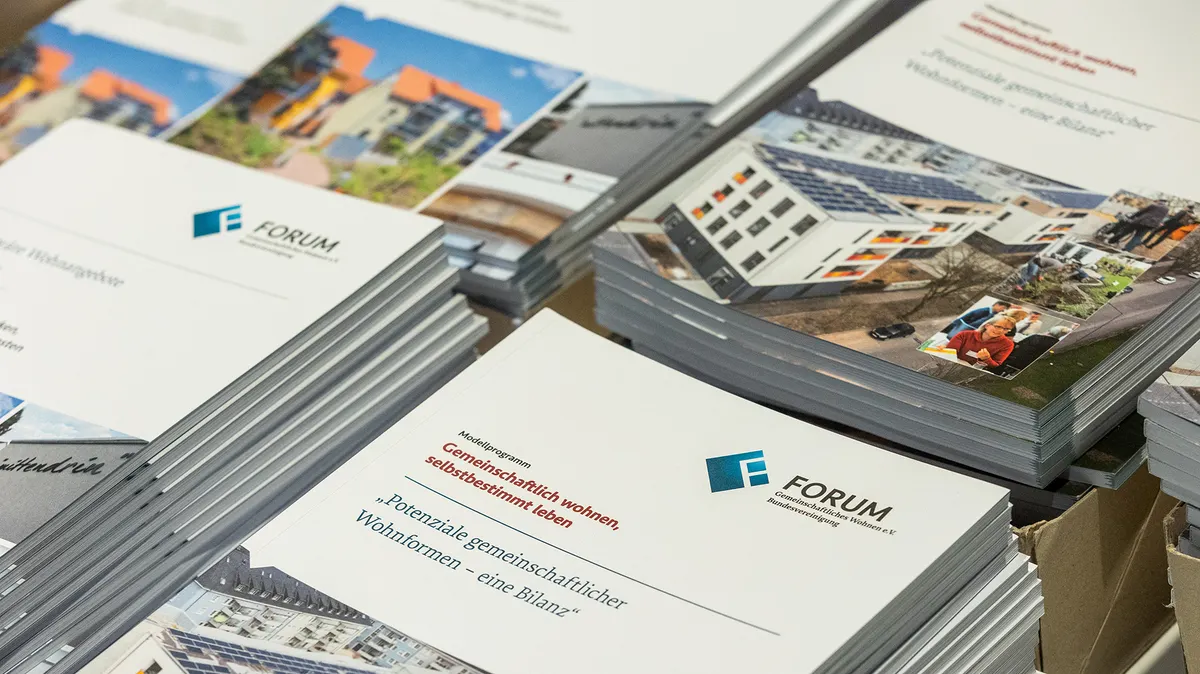
FORUM Gemeinschaftliches Wohnen gives the city a national role. The federal association for community-led housing grew from a first nationwide meeting in Hannover in 1988 and has had its head office here since 1996. It advises councils, trains project groups and runs the Niedersachsenbüro Neues Wohnen im Alter (the Lower Saxony office for new housing in later life). Its work echoes Andrej Holm and Christoph Laimer's volume on community living and self-organised building, which treats such projects as social infrastructure rather than niche lifestyles.
hanova is the landlord the city can steer directly, and the existing stock matters as much as new building. A TU Dortmund study of large housing estates calls Germany's post-war estates a last bastion of affordable rents. Put together, Kronsberg, the Linden cooperatives, the old societies and the city's own company answer the opening question. A green city of renters has already built the parts of a non-market system. What it lacks is the land and the scale to join them up.
References
Statistics17Click on any number to see the source
Housing market
Tenure & affordability
Cooperative, social & public
Adaptive reuse & vacancy
Population & migration
From our library21
- hanova WOHNEN GmbH — Organisation
- Spar- und Bauverein eG — Organisation
- Wie viele (und welche) Wohnungen fehlen in deutschen Großstädten? — Working Paper 217 — Knowledge
- vdw Verband der Wohnungs- und Immobilienwirtschaft in Niedersachsen und Bremen — Organisation
- Wohnungsgenossenschaft Selbsthilfe Linden eG — Organisation
- Alle unter einem Dach eG — Project
- Stadtteilleben — Project
- Neues Wohnen – Gemeinschaftliche Wohnformen bei Genossenschaften — Knowledge
- Bündnis für bezahlbares Wohnen und Bauen – Wohnungsgenossenschaften als Partner der Kommunen — Knowledge
- German housing crisis: government plans construction boost — Knowledge
- Bundestag: Mietpreisbremse verlängert — Knowledge
- WohnRaum Niedersachsen — Organisation
- Klosterkammer Hannover — Organisation
- Gemeinwohlorientierte Wohnungspolitik - eine Studie — Knowledge
- Obsolete Stadt - Raumpotenziale für eine gemeinwohlorientierte, klimagerechte und koproduktive Stadtentwicklungspraxis in wachsenden Großstädten — Knowledge
- Office-to-Residential Conversion: A New Value Proposition for the German Market — Knowledge
- Germany reshapes housing and heating (as of 15 December 2025) — Knowledge
- Renovating Homes the Cooperative Way in Germany: Serial Renovation at Wohnungsverein Hagen — Knowledge
- FORUM Gemeinschaftliches Wohnen — Organisation
- Gemeinschaftliches Wohnen und selbstorganisiertes Bauen — Knowledge
- Large Housing Estates in Germany's Major Cities: A Last Bastion of Affordable Housing? — Knowledge
Further sources21
- Hannover setzt auf Bau-Turbo und schnellere Planungsverfahren — Landeshauptstadt Hannover · 2026-05
- Neuer Bebauungsplan für das Ihme-Zentrum — Landeshauptstadt Hannover · 2026-04
- Stichwahl um das Amt des Oberbürgermeisters — Landeshauptstadt Hannover · 2026-09
- Niedersachsen verlängert Mietpreisbremse bis Ende 2029 — Niedersächsische Staatskanzlei · 2025-11-25
- Mieten in Hannover: So viele Haushalte leben zu teuer oder zu eng — t-online Hannover · 2024-04
- 13 Prozent der Mieterhaushalte in Großstädten unter Existenzminimum — Hans-Böckler-Stiftung · 2021-08-04
- Soziale Wohnungswirtschaft begrüßt Investitionsoffensive des Landes — vdw Niedersachsen Bremen · 2025-07-01
- vdw zieht Bilanz: Wohnungswirtschaft zwischen Hoffen und Bangen — vdw Niedersachsen Bremen · 2025-08-07
- Bis 2025 entstehen in Hannover deutlich mehr Wohnungen als geplant — hannover-entdecken.de · 2023-09-18
- Mietenwahnsinn Hannover — hannover-entdecken.de · 2026-02-05
- Immobilienmarktbericht 2025 — Wirtschaftsförderung Hannover · 2025-09-30
- Fakten zur Klosterkammer — Klosterkammer Hannover
- Inflation wirkt sich auch auf Erbbaurechte aus — Klosterkammer Hannover · 2024
- Das Wohnraumförderprogramm der Region Hannover — Region Hannover
- Klimaschutzprogramm Hannover 2035 — Landeshauptstadt Hannover
- WohnRaum Niedersachsen — Niedersächsisches Ministerium für Wirtschaft, Verkehr und Bauen
- Chronik des Spar- und Bauvereins — Spar- und Bauverein eG
- 40 Jahre Wohnungsgenossenschaft Selbsthilfe Linden eG — punkt-linden.de · 2023
- ecovillage hannover — Wikipedia
- Kronsberg (Stadtviertel) — Wikipedia
- Kronsrode: größtes Wohnungsbauprojekt in Niedersachsen — t-online Hannover