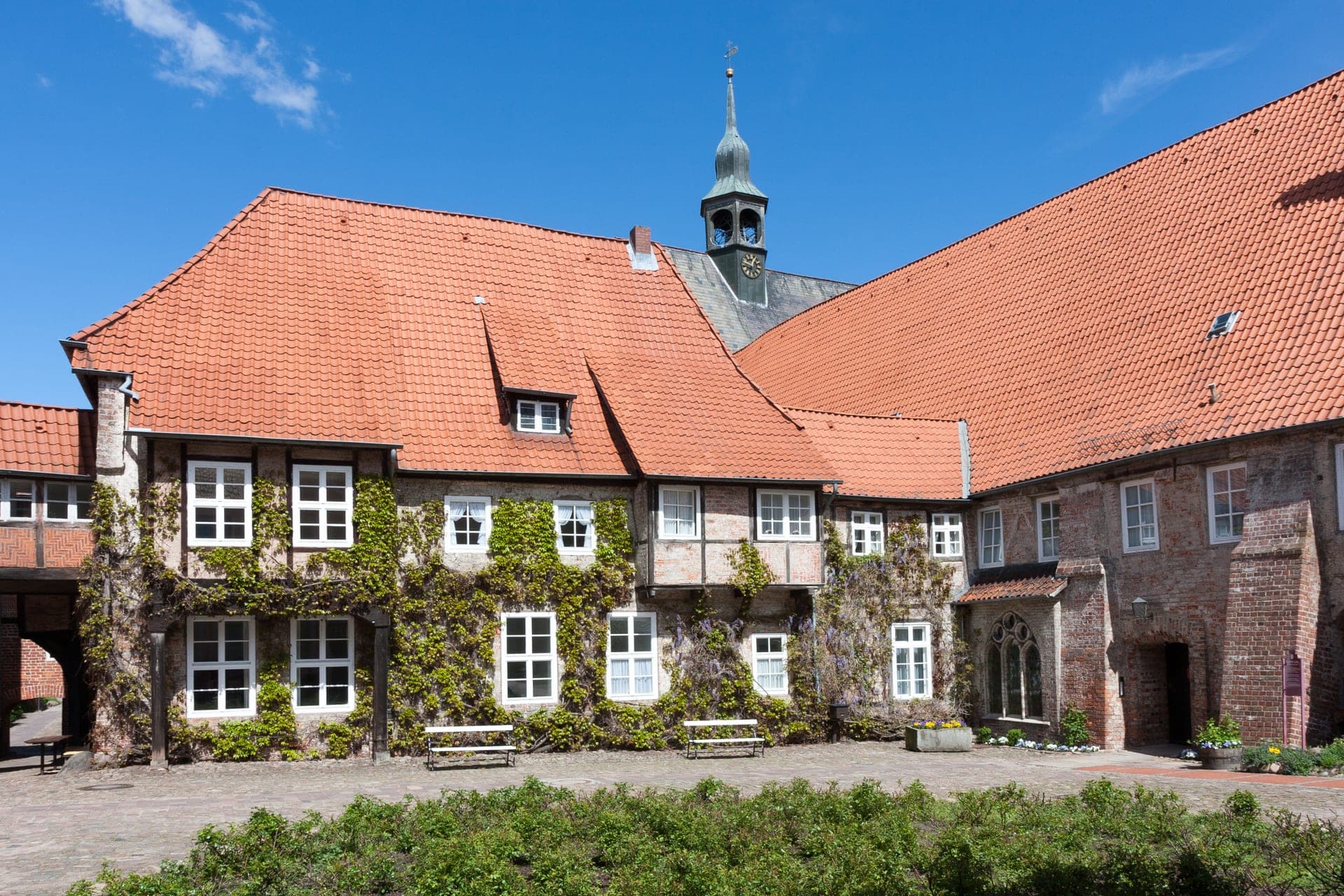
Klosterkammer Hannover is a state authority in Lower Saxony, under the legal supervision of the state’s Ministry of Science and Culture. It administers former monastic assets held in four public-law foundations: the Allgemeiner Hannoverscher Klosterfonds, the Domstrukturfonds Verden, the Hospitalfonds St. Benedikti Lüneburg and Stift Ilfeld.361
The authority was formally established in 1818. On 8 May that year, Prince Regent Georg signed its founding patent; the administration opened on 26 June.3 Its roots reach back to 1542, when Duchess Elisabeth of Calenberg-Göttingen took steps to preserve and separately administer former monastic property.6
Its headquarters are in Hannover. The Klosterkammer is self-financing and independent of the state budget, with around 160 employees across its central office and other locations in Lower Saxony. Its work is organised into five departments, covering general administration, property, building and art conservation, subsidiary management, and grants, monasteries and foundations.1
Property is central to its finances: about 95 percent of the foundation assets consist of real estate. The authority manages around 40,000 hectares of land and approximately 16,700 hereditary building rights, making it Germany’s largest issuer of such rights. Its forestry operations manage extensive forest holdings and produce more than 170,000 cubic metres of timber annually.1
The Klosterkammer also maintains more than 700 buildings and around 12,000 works of art. Its responsibilities include supporting 15 active Protestant women’s monasteries and collegiate foundations in Lower Saxony, alongside its wider stewardship of the foundations’ assets and heritage.41 Thela Wernstedt is identified as its president.211