
Blast furnaces, a titanium museum and the 30% line
Bilbao has rebuilt itself once already. The steelworks and shipyards that lined the estuary closed late in the last century. The city answered with a metro, a riverside promenade and, in 1997, the titanium curves of the Guggenheim Museum on its old port land. That renewal turned the city's name into shorthand for urban reinvention. It also made Bilbao somewhere people want to live, which is exactly where its housing question now starts.
Ownership is the norm. 70% of households own the flat they live in, and 30% rent. The public tier is small but unusually solid for Spain. Viviendas Municipales de Bilbao, the city's own housing body, lets 4,224 homes, or 2.5% of the stock. Private landlords house the remaining 27.5%. Cooperatives leave no separate mark on these figures. Basque housing cooperatives have long built flats and then handed them to members in ownership, so their homes sit inside the owner-occupier share.
- Owners
- Owner-occupier70.0%
- Renters
- Public & non-profit rental2.5%
- Cooperative0.00%
- Private rental27.5%
Social housing works differently here. In Spain it is mostly a status rather than a landlord. Vivienda de protección oficial, or VPO, means price-capped housing built with public support. The status attaches to a flat for a period, whether it is sold or let. Spain has built such housing to a high standard, as an appraisal of Spanish social housing design argues, yet it has rarely kept it out of the market once the protection lapses. Demand for the rented kind is the clearest gauge. In 2023 the Basque housing register, Etxebide, counted 14,305 Bilbao households seeking a public rental home, against 6,193 public rental homes of every kind in the city.
The rent ladder is long. A municipal flat costs about €4.90 per square metre a month, net of bills, and the average municipal rent is €279 a month. The median across all private stock is €11.10. A contract signed today asks €15.90, a furnished let €18.30 and a serviced flat €27 all-in. Utilities add around €1.90. Advertised rents run higher still. Fotocasa, the listings portal, put Bilbao at €17.99 per square metre in early 2026, second only to San Sebastián among Basque cities.
- Municipal rent (Viviendas Municipales)
- All-stock median
- New contracts
- Furnished long-let (gross)
- Serviced / monthly let (gross)
Monthly rent per square metre by tier, net of bills except where marked gross. The municipal rung sits less than half way to the private median; no cooperative rent is curated for Bilbao because its cooperatives have sold rather than let their homes.
Empty homes are scarce by Spanish standards. The 2021 census found 5.5% of dwellings vacant, 9,141 in all, and rental vacancy is estimated at just 2%. The council's own count is lower, at around 8,000 empty flats, of which 1,197 are enrolled in Bizigune (the Basque scheme that leases empty private flats for social rent). Commercial space is looser. An estimate apportioned from national data puts office vacancy at 11.8%, or 49,316 square metres, with a further 69,960 square metres of empty shops and ground-floor premises. Tourism claims its slice: the city counted 1,300 tourist flats in 2025, and an estimated 452 entire homes are let short-term all year.
Newcomers keep arriving faster than homes are finished. Bizkaia, the province around Bilbao, receives some 21,321 people from abroad each year. The city also hosts an estimated 20,000 medium-term residents: students, researchers and staff posted to its engineering and energy firms. The Basque Government has 807 homes under construction in Bilbao and 1,035 more in design. The general plan leaves room for 16,264 further homes, mostly in Deusto, Basurto-Zorroza and Rekalde. Sale prices have moved first. Flats averaged €4,201 per square metre in August 2026, 10.6% above a year earlier. Since October 2025 the whole city has been a stressed residential market, which caps rises on existing leases.
The strain has climbed the income ladder. The official diagnosis put average housing costs at 30.24% of household income, just over the legal threshold. The hillside districts feel it most: Begoña at 34.47%, Rekalde at 33.33% and Otxarkoaga-Txurdinaga at 32.69%. Denis Itxaso, the Basque Government's minister for housing, said the pressure had widened to reach the middle classes as a whole. For a new tenancy, rent-to-income estimates run to 58.2%. At the bottom, municipal tenants mostly earn €10,000 to €15,000 a year, and 36.8% of new tenants are under 35.
Public opinion has caught up with the numbers. In the Sociómetro Vasco, the Basque Government's own survey, 57% of people named housing the region's main social problem in March 2026, well ahead of jobs at 47%. Only 20% called it a problem in their own daily life. That gap between collective alarm and personal hardship is what a city of owners looks like when prices run away. A comparative ESPON study of housing affordability across European cities places Spanish cities among the continent's most stretched.
Beneath all this sits a cooperative tradition older than most of the city's public housing, and almost invisible in its statistics.
Cooperatives that built to sell, and a model that keeps the building
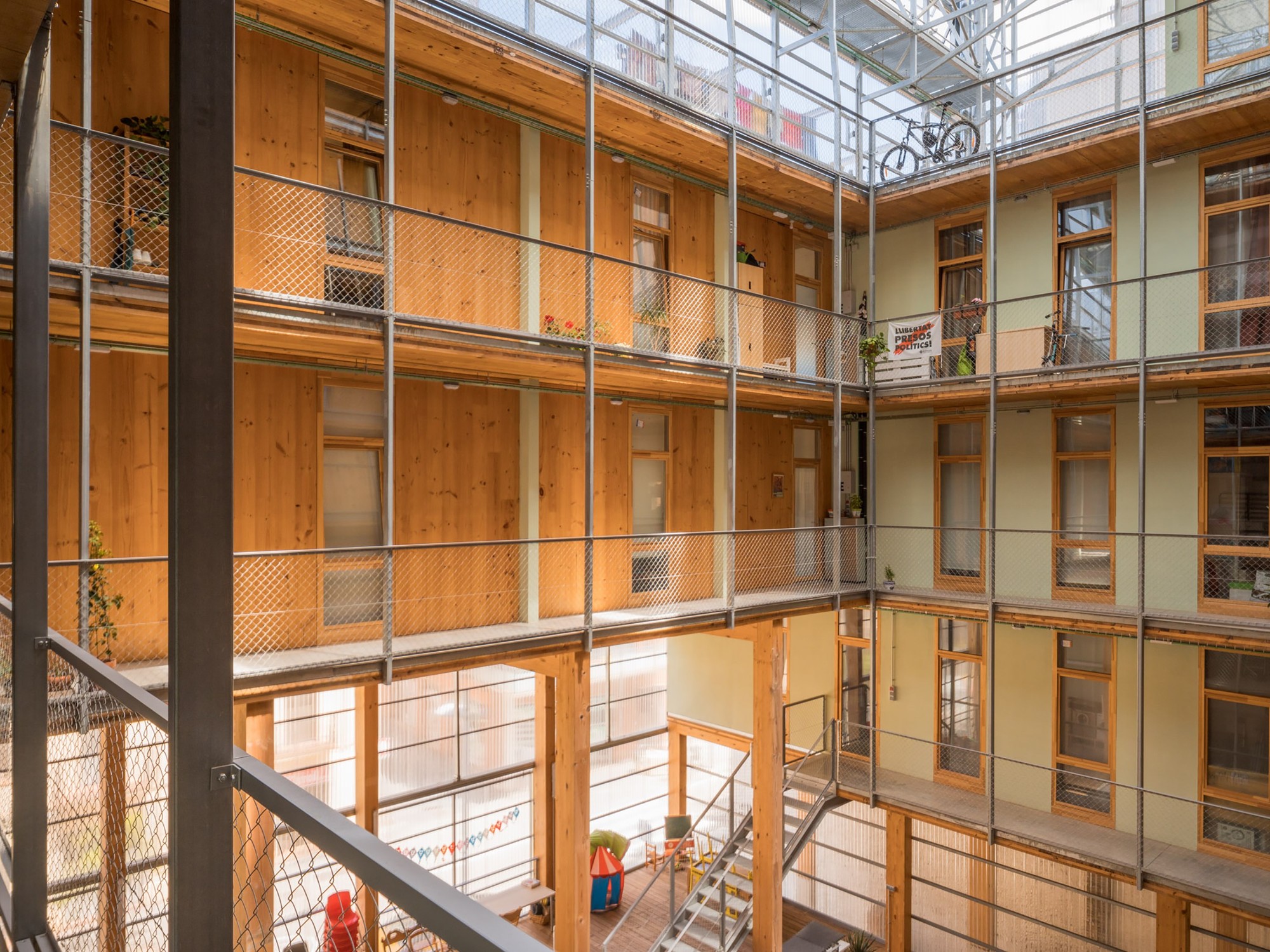
Basque housing cooperatives have mostly been ways to build, not ways to hold property together. Future residents form a cooperative and pay in stages. A professional manager, the gestora, handles land, design and loans. When the building is finished, each member takes a flat in ownership. DeustuBerri, a cooperative building 47 flats on Avenida Madariaga in Deusto with the manager Grupo Arrasate, works this way. The newer form keeps the building. In a cesión de uso cooperative (a grant-of-use cooperative) the cooperative owns the property permanently and members hold the right to live in their home. An international typology of affordable cooperative housing sets this non-profit model apart from cooperatives whose members can resell at market prices.
The habit is a century old. Spain's cheap-housing law of 1911 offered public aid to cooperatives of workers and employees, and Bizkaia used it heavily. In 1922 city council employees and local journalists founded La Ciudad Jardín Bilbaína. From 1923 they built a garden suburb of 56 two-family houses below Mount Artxanda, designed by the architect Pedro Ispizua. Industry built alongside them, from the cheap-housing society of Altos Hornos de Vizcaya on the Left Bank to smaller firms inside Bilbao. The cooperative idea then spread far beyond housing. The Story of Social Economy in the Basque Country traces how worker-owned firms became a pillar of the regional economy. That culture still frames cooperatives here as a way to build and own.

Today the sector falls into three clusters. The first is the traditional ownership cooperative, run by managers such as Grupo Arrasate and federated in Bizikoop, the Basque federation of housing cooperatives. The second is the grant-of-use movement. Its network, Koobizitza, links pioneers such as Ametxe in Gordexola and Ankurkulu in Mendata, both in rural Bizkaia. Inside Bilbao the geographic catalogue identifies just one grant-of-use project. The third cluster is a support layer based in the city. Ametsak Sortzen Elkartea, a cohousing association founded in 2018, trains new groups. Fiare Banca Etica, the ethical cooperative bank, finances social-economy projects from Bilbao. The clusters face different obstacles. Ownership cooperatives compete for land like any developer, while grant-of-use groups lack plots and patient finance.
Government has started to back the second model. The Basque Cooperatives Act of 2019 regulates grant-of-use housing cooperatives explicitly, as an alternative to allocation in ownership. In San Sebastián the cooperative Bizikide is completing 109 protected homes at Txomin Enea on public land leased for 75 years. Members paid €35,000 up front and will pay about €750 a month, all costs included. Itxaso called it a before and after in Basque housing policy and wants to extend the formula. Evidence from Catalonia supports him: a 2026 study of grant-of-use cooperatives in Catalonia finds stronger neighbourly trust and more shared activity among residents. Bilbao's own plans, by contrast, still lean almost entirely on public rent.
Two governments, one stressed market
Housing policy for Bilbao is written in two buildings. The Basque Government holds the heavy levers: planning law, protected-housing programmes and the public developer Visesa. Its minister for housing and urban agenda, Denis Itxaso of the Basque Socialists, presents a comprehensive plan for access to housing built on reforms, resources and agreements. It promises more than 10,000 protected homes this term, with every new build let rather than sold. A social housing fund is meant to leverage €2 billion for another 10,000. Law 6/2025 on urgent housing, land and planning measures, passed in December 2025, adds a strategic land reserve and a priority procedure that halves approval times.
The rent rules come from Madrid. Spain's 2023 right-to-housing act lets a region declare a stressed residential market where housing costs take more than the legal share of income. Bilbao applied for the whole city, and the declaration agreed by the Basque Government and the council took effect in October 2025. Rents on existing leases may rise only by a national index. New lets by large landlords, and homes new to the rental market, must respect a reference price index, which reached Bizkaia in April 2026. In January 2026 the council, on a motion from the opposition EH Bildu, lowered the large-landlord threshold from ten homes to five. That brought 730 owners under the rules.
The city's own answer is a three-year action plan of 40 measures and 1,090 new public homes by 2028, most of them regional. The council is led by Juan Mari Aburto of the Basque Nationalist Party (PNV), governing with the Socialists since 2015. He will not stand again in May 2027. The council's own contribution is 200 alojamientos dotacionales (publicly owned transitional homes for people in housing need) at Amezola, Gaztelondo and Arabella.
Cooperatives get the instruments on paper rather than the plots. The 2015 Basque Housing Act makes housing a right that can be claimed in court. The new land reserve could lease plots by derecho de superficie (surface rights, a long lease that keeps the land public), as at Txomin Enea. A review of land-policy instruments for social and affordable housing shows how such leases keep public land affordable for good. Research on public-cooperative policy mechanisms maps how cities pair them with cooperative builders. Work on access to land and finance for community-led housing names the same two bottlenecks that stall Basque grant-of-use groups.
Empty homes are the second front. From January 2027 Bilbao will charge a 75% surcharge on the property tax (IBI) of empty flats, up from 25%. Owners who lease through public schemes such as Bizigune get a 99% rebate instead. Carlos Urgoiti, the councillor for finance, said the aim was to mobilise housing, not to raise revenue. A regional decree of April 2026 lifted Bizigune's payment to owners to as much as 95% of market rent in stressed areas. It also set tenants' rent at 30% of their income. Tourist flats face tighter zoning: a 2026 amendment to the general plan names ten high-concentration zones where no new tourist apartments may open. Itxaso has also urged converting empty ground-floor shops into homes. A review of tools to deal with vacant housing sets these measures in a wider frame. A European Parliament study of short-term rental regulation shows where city rules meet the EU's new platform-data law.
Climate goals ride on the same ageing stock. Bilbao's 166,259 homes average more than 55 years old. In 2024 the council agreed to raise its renovation rate from 1.5% to 3.5% a year by 2036, through Surbisa, its urban regeneration company. That would mean more than 55,000 renovated homes, in line with the EU's Energy Performance of Buildings Directive. Public landlords carry much of the load. Viviendas Municipales has spent more than €25 million of Next Generation EU money on estates in Otxarkoaga and Santutxu, with 600 more homes in works. Research on climate adaptation in public, cooperative and social housing argues that non-market landlords are the practical vehicle for this work.
- 1922[source]
La Ciudad Jardín Bilbaína founded
City council employees and journalists form a cheap-housing cooperative and, from 1923, build a garden suburb of 56 two-family houses in Matiko.
- 1997[source]
The Guggenheim opens
Frank Gehry's museum opens on former port land and becomes the symbol of the city's post-industrial renewal.
- 2015[source]
Basque Housing Act
Law 3/2015 makes housing a subjective right that can be claimed in court and introduces a levy on empty dwellings.
- 2017[source]
Torre Bolueta rises
Visesa builds an 88-metre, 28-storey public housing tower to the Passivhaus standard, with 171 homes.
- Oct 2025[source]
Whole city declared a stressed market
Publication in the BOE activates rent caps across Bilbao and a three-year action plan of 1,090 new public homes.
- Dec 2025[source]
Law 6/2025 on urgent housing measures
The Basque Parliament creates a strategic land reserve and a fast-track planning procedure for protected housing.
- Jan 2026[source]
Large-landlord threshold lowered
The council redefines a large landlord as anyone owning five or more homes, bringing 730 owners under the reference index.
- Apr 2026[source]
Reference rent index reaches Bizkaia
The national rent-price index takes effect in Bizkaia, completing regulation of every declared Basque stressed zone.
- Jan 2027[source]
Empty-home surcharge tripled
The property-tax surcharge on empty flats rises from 25% to 75%, and owners who lease through public schemes get a 99% rebate.
- May 2027[source]
Municipal elections
Juan Mari Aburto, mayor since 2015, will not stand again.
- 2028[source]
Plan targets fall due
The first 66 protected rental homes on Zorrotzaurre are due in the second half of the year, as the Basque Government aims to pass 10,000 protected homes this term.
- 2036[source]
One home in three renovated
The council's goal is to raise its renovation rate to 3.5% a year and rehabilitate more than 55,000 homes by 2036.
From a cooperative garden suburb to a stressed-market declaration, and the targets now set for the end of the decade and beyond.
The argument in the council chamber is about pace and scale, not direction. The governing parties stress supply and cooperation between institutions. EH Bildu wants public rental stock to grow by at least 5% a year and tougher action on large landlords. The conservative PP calls municipal housing policy a failure. Deia's reporting on the large-landlord vote and Radio Nervión's interviews on tourist flats carry the dispute to readers.
I claim the right to stay. To stay in our city, the one that saw us born and grow up, and where we want to build a life without fear of being pushed out.The opposition accepts the diagnosis but doubts the tools, above all on tourist accommodation.
The amendment to the general plan does not address the problems that tourism is generating in Bilbao.A passive tower, a retrofitted estate and an island still filling up
Torre Bolueta is the clearest proof that public housing can lead on energy. Visesa built the 28-storey, 88-metre tower with the practice VArquitectos, and the Basque Government presented it as the world's tallest Passivhaus residential building. It holds 171 homes: 108 protected flats for sale and 63 social homes, mostly for rent. The design cuts heating demand by up to 75%. Bolueta keeps growing, with 319 protected rental homes in the 2025–2028 plan.
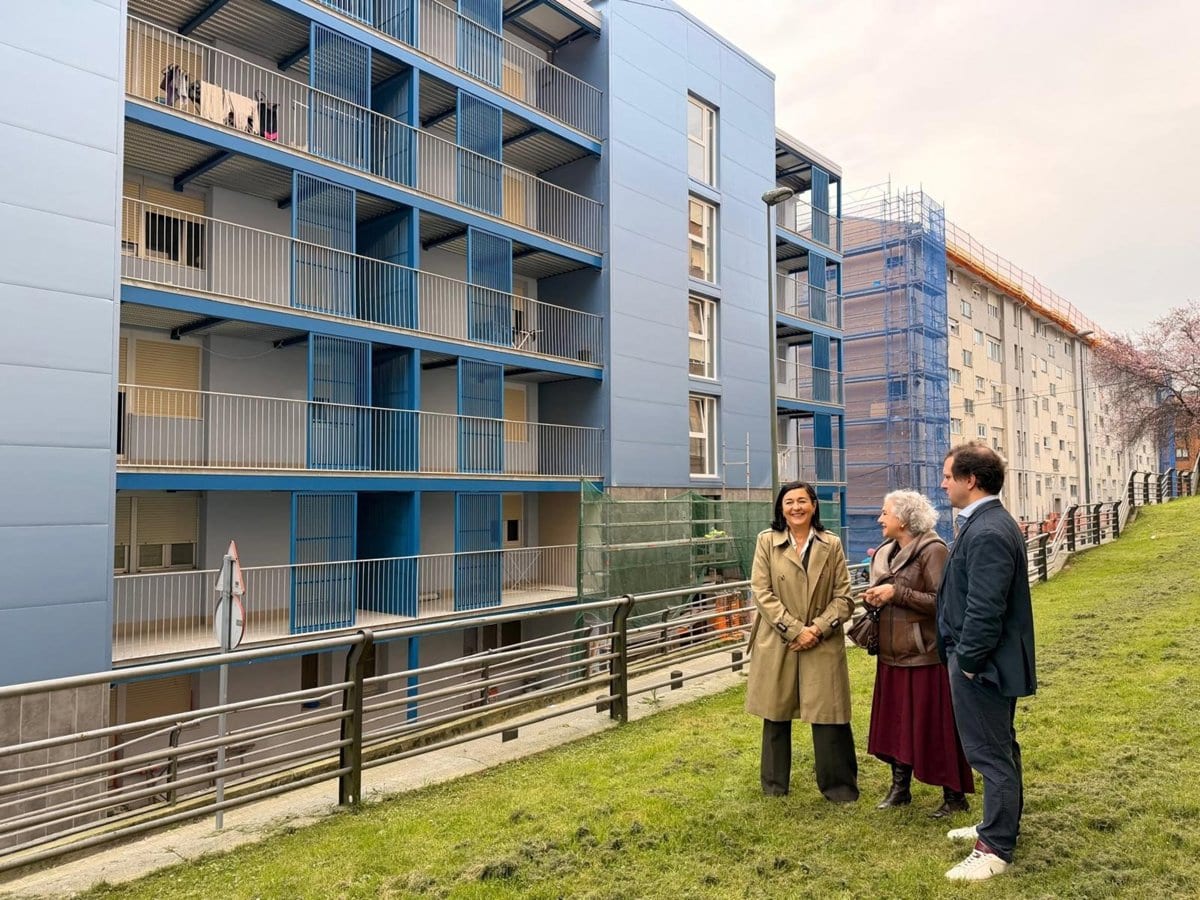
Orain Otxar applies the same logic to an ageing estate. Viviendas Municipales de Bilbao, which owns most of Otxarkoaga's flats, ran a €7 million four-year programme with the Basque Government to turn it into an eco-neighbourhood. Its Opengela office, funded by the EU's Horizon 2020 programme, helps owners' associations commission works, claim grants and borrow. The first phase covers 240 homes in 16 entrances. Emissions in the retrofitted blocks fell by an average of 74%, and residents now share rooftop solar power with the municipal landlord. In 2020 the project won an award from AVS, the Spanish association of public housing managers.
Viviendas Municipales also experiments at a smaller scale. Its Jóvenes Solidarios programme houses 59 postgraduate students for €55 a month in exchange for community work in their block. At Amezola it is building 93 transitional homes beside 66 already in use. Its eviction service stepped into 99 crisis cases last year.
Zorrotzaurre is where the next decade of supply will show. The former industrial peninsula is planned for about 5,670 homes, roughly half of them protected. The Basque Government has programmed 1,082 protected rental homes there. The first 66, promoted by Visesa and managed by Alokabide, the regional public rental company, broke ground in March 2026. Itxaso credits Bilbao's habit of ceding serviced plots free of charge for the fact that protected rental building here has not stopped in fifteen years.
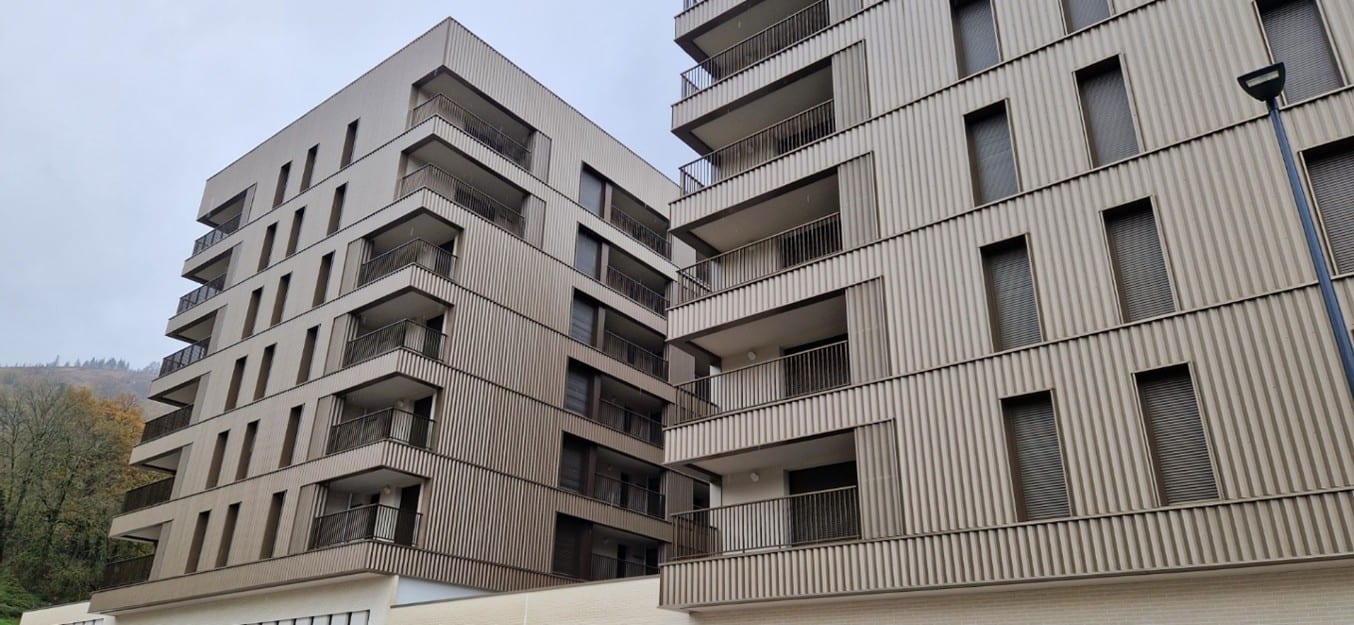
Alokabide
The regional public rental company and manager of Bizigune.
Read more →Ametsak Sortzen is preparing the cooperative future rather than building it yet. It runs open sessions in Deusto for people who want to start a grant-of-use project. In 2025 it also published a study of grant-of-use cooperatives in the rural Basque Country. Fiare Banca Etica took part in the 2023 Bilbao gathering where more than 80 people from Koobizitza, REAS Euskadi (the Basque solidarity-economy network) and public bodies discussed public-cooperative partnership. The International Co-operative Alliance's work on the capital conundrum explains why member shares alone rarely finance a building. A scoping review of English- and Spanish-language research links cooperative living to better health and less isolation, a case these groups now put to councils.
So what does a city that remade its riverfront around a titanium museum build next? It already builds passive towers for public tenants and retrofits whole estates with their owners. What it lacks is a lasting, member-run way of renting that sits between the municipal flat and the private lease. Land on Zorrotzaurre and at Bolueta, a century of cooperative habit, an ethical bank and groups waiting to start are all within the city limits.
References
Statistics16Click on any number to see the source
Housing market
Tenure & affordability
Cooperative, social & public
Adaptive reuse & vacancy
Population & migration
From our library19
- Viviendas Municipales de Bilbao — Organisation
- Why Is Spain’s Social Housing So Well-Designed? — Knowledge
- Unequal housing affordability across European cities. The ESPON Housing Database, Insights on Affordability in Selected Cities in Europe — Knowledge
- Affordable Cooperative Housing: An International Typology, Supportive Institutions and Public Policies — Knowledge
- The Story of Social Economy in the Basque Country — Knowledge
- Ametsak Sortzen Elkartea — Organisation
- Fiare Banca Etica — Organisation
- Effects on Social Cohesion of the Grant of Use Cooperative Housing Model in Catalonia — Knowledge
- Visesa — Organisation
- Gobierno Vasco y Ayuntamiento acuerdan la declaración de Bilbao como zona de mercado residencial tensionado — Knowledge
- Land Policy Instruments for the Provision of Social and Affordable Housing — Knowledge
- Public-cooperative policy mechanisms for housing commons — Knowledge
- Access to land and finance for community-led housing (No 1) — Knowledge
- Tools to Deal with Vacant Housing — Knowledge
- The regulatory aspects of short-term rentals in the EU — Knowledge
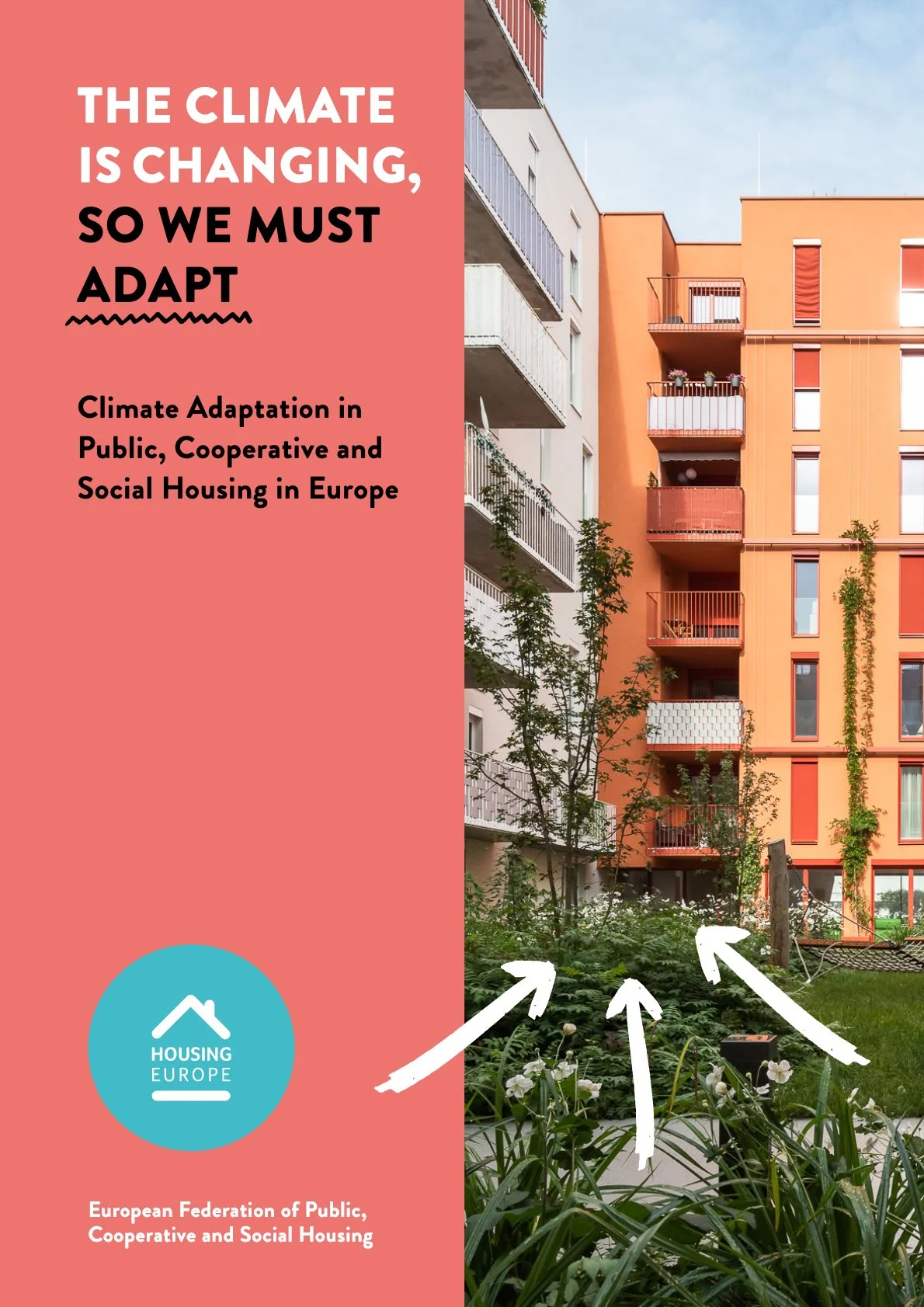
- Climate adaptation in public, cooperative, and social housing in Europe — Knowledge
- Alokabide — Organisation
- The Capital Conundrum for Co-operatives — Knowledge
- Cooperative housing: A catalyst for health and wellbeing? A scoping review of English and Spanish literature (2004–2024) — Knowledge
Further sources30
- Guggenheim Museum Bilbao — Wikipedia
- EH Bildu insta al Gobierno municipal a aumentar la oferta de vivienda pública de alquiler — EH Bildu Bilbao · 25 October 2023
- El 2,5% de los bilbainos residen en viviendas municipales, el mayor porcentaje del Estado — Deia · 14 May 2026
- El precio del alquiler en Euskadi toca techo en el primer trimestre — Radio Popular / Fotocasa · April 2026
- Gobierno Vasco y Ayuntamiento acuerdan la declaración de Bilbao como zona de mercado residencial tensionado — Gobierno Vasco · 4 September 2025
- Bilbao activa su declaración como zona tensionada con más de 1.000 viviendas protegidas hasta 2028 — Radio Popular · September 2025
- Arrancan las obras de 66 de las 1.082 viviendas protegidas en alquiler programadas en Zorrotzaurre — Gobierno Vasco · 12 March 2026
- Bilbao declara la guerra a la vivienda vacía y triplicará el IBI — idealista/news · 25 September 2026
- Lectura de resultados del Sociómetro Vasco n.º 88 — Gobierno Vasco · 17 April 2026
- Ciudad Jardín (Bilbao) — Wikipedia
- La iniciativa privada en la construcción de casas baratas en Bizkaia entre 1911 y 1936 — Ezagutu Barakaldo
- Jornada en Bilbao para impulsar la vivienda cooperativa en cesión de uso — Koobizitza · October 2023
- Ley 11/2019, de 20 de diciembre, de Cooperativas de Euskadi — Gobierno Vasco · 20 December 2019
- Las 109 viviendas protegidas en régimen de cesión de uso de Txomin Enea se entregarán en septiembre — Gobierno Vasco · 2026
- Itxaso eleva a 10.000 viviendas protegidas el objetivo de esta legislatura — Gobierno Vasco · 12 December 2025
- Bilbao considerará gran tenedor a los propietarios de cinco o más viviendas — Deia · 29 January 2026
- Bilbao bonificará al 99 por ciento el IBI para viviendas que se incorporen al mercado de alquiler — Deia · 24 September 2026
- Euskadi aprobará su 'escudo social' en materia de vivienda con el Decreto de Medidas Urgentes — Gobierno Vasco · 20 April 2026
- Más límites a las viviendas turísticas en Bilbao — Deia · 25 June 2026
- Bilbao pretende regenerar un tercio de su parque residencial para 2036 — Deia · 30 May 2024
- Ley 3/2015, de 18 de junio, de vivienda (País Vasco) — Boletín Oficial del Estado · 2015
- Visesa edifica en Bolueta el edificio residencial passivhaus más alto del mundo — Irekia, Gobierno Vasco · 10 May 2017
- Vitoria-Gasteiz y Bilbao son oficialmente zonas tensionadas — Gobierno Vasco · 30 October 2025
- Ley 6/2025, de 11 de diciembre, de Medidas Urgentes en materia de Vivienda, Suelo y Urbanismo — Boletín Oficial del Estado · 2026
- Aburto no continuará como alcalde de Bilbao a partir de 2027 — elDiario.es · June 2026
- Críticas de la oposición y respaldo del equipo de gobierno — Deia · 15 September 2026
- Karlos Renedo: «La modificación del PGOU no aborda los problemas generados por el turismo en Bilbao» — Radio Nervión · 17 June 2026
- Viviendas Municipales de Bilbao, premiada por su proyecto de regeneración urbana en Otxarkoaga — Opengela · 2020
- Otxarkoaga y Txonta ya han movilizado una inversión privada de 3,6 millones — Opengela · 2022
- Ametsak Sortzen Elkartea — Ametsak Sortzen