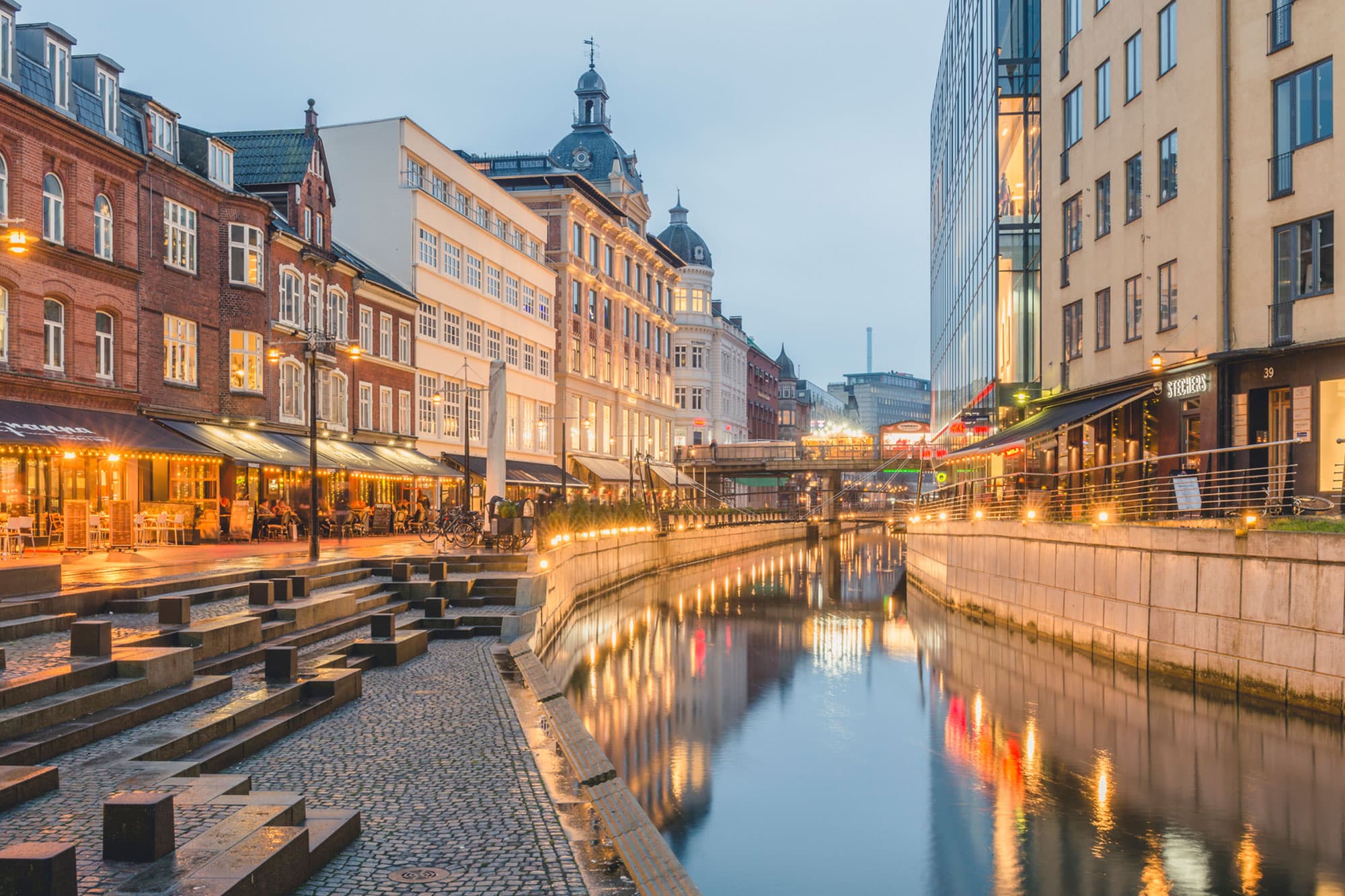
A young city running out of room
Aarhus grew from a Viking trading post at the mouth of its river into Denmark's second city, and it still behaves like a young one. The university draws students from across the country every August, and many of them stay on to work and raise families. A city that renews itself this fast needs a steady supply of homes at every price. Whether it can keep providing them is the question running through Aarhus's housing debate.
The municipality counted 186,523 occupied dwellings at the start of 2026. Owner-occupiers hold 62,000 of them, about 33%. Non-profit housing associations let 48,168, about 26%, and public authorities own a further 4,732 rented homes. Cooperative associations hold only 6,766 homes, under 4%. The largest block is the private rented sector: companies let 42,459 homes and private individuals 15,888, with foundations and other owners making up the rest. Together that puts roughly a third of the city in private rental, a larger share than owner-occupation.
- Owners
- Owner-occupier37.0%
- Cooperative10.0%
- Renters
- Public & non-profit rental21.0%
- Private rental12.0%
- Unclassified20.0%
- Unknown / Other20.0%
In Denmark the social-housing question is answered almost entirely by one sector. The almene boliger (non-profit homes owned by independent, tenant-governed housing associations) are open to everyone on a waiting list, whatever their income. Landsbyggefonden's 2025 count of the sector gives Aarhus 49,552 almene homes, 25.8% of the stock, more new ones since 2020 than any other municipality, although the share has slipped as private building ran faster. The sector association BL counts 8,557 youth homes among them. Rents are set at cost, and part of every rent is paid into Landsbyggefonden (the National Building Fund, which the tenants themselves finance) to renovate older estates. The municipality's lever is boligsocial anvisning (its right to allocate vacant flats to people in social need). A 2026 comparative study, Social Housing Opportunities and Challenges, calls this a universalist, association-based model. Social housing here is therefore not a separate slice. It is the rulebook attached to the non-profit one.
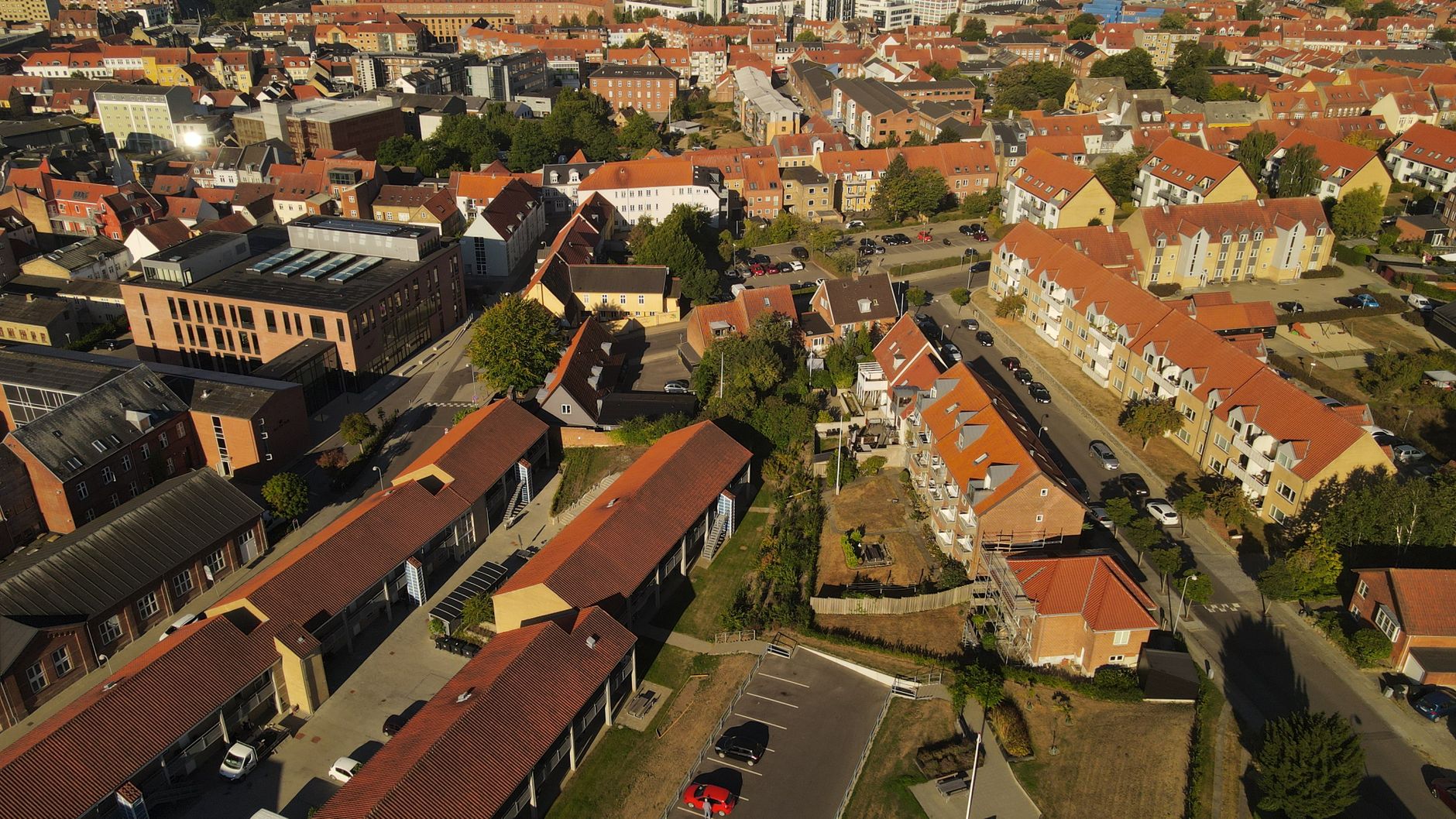
Those tenures buy very different rents. An almene tenant pays about €11.2 per m² a month, against an all-stock median of €14.7 across the market. Newly advertised flats cost more again. BoligPortal, the national listings site, found that a two-room flat in the municipality averaged DKK 7,895 a month in the first half of 2025, after two-room rents per m² rose 9% in a year. A furnished one-bedroom flat lists at around €1,100 a month, all-in.
- Public housing
- All-stock median
Monthly net rent per m² in the non-profit (almene) sector and across the whole rented stock. Cooperative members pay a housing charge rather than a rent, so the andel tier is not shown.
Empty homes are scarce. In Statistics Denmark's count, 7,801 dwellings, about 4% of the stock, have nobody registered as living in them, a figure that includes homes between tenants. Among flats actually on the rental market, vacancy in central Aarhus fell to 1.4% at the end of 2024, the lowest in eight years. Offices tell a different story. EDC Erhverv, a commercial agency, measured office vacancy rising from 5.1% to 7.2% in early 2024, with about 185,000 m² on offer, much of it in older buildings. Short lets add some pressure too: an entire one-bedroom flat on Airbnb costs a median €105 a night.
Demand keeps coming. The municipality grew from 330,639 residents in 2016 to 378,295 in 2026, with about 14,500 people moving in each year. Building has not kept an even pace. Statistics Denmark counts 4,859 homes completed in 2023, then 1,526 in 2024 and 2,177 in 2025. Denmark has no general rent cap for new lettings, so the gap shows up in prices.
Ten years ago in Aarhus, students moved into tents and caravans. That is simply not what happens today.The squeeze falls hardest on the young. DR's reporting on the August 2025 intake found seven students in higher education for every almene youth home in the city. Student halls hold 7,776 homes by Statistics Denmark's count, and the municipality's guarantee covers only new students applying on their own. Private vacancy fell from 4.5% to 1.5% in a year as applications rose. The pressure has also reached people with ordinary jobs. Economists at the labour-movement think tank AE found that the share of ordinary wage earners among homeowners is falling around Aarhus. Flat prices rose 16% in the year to March 2026, the steepest climb since the financial crisis, and were 20% higher by the summer. Local reporting in March 2026 noted that private rents nationally had risen 40% in real terms since 2018, and four council parties wanted to brake them. Housing is now a mainstream political issue in the city, not a marginal one.
Against that pressure, the cooperative form plays a surprisingly small part. Aarhus has only a fraction of Copenhagen's andel homes, and the reasons lie in how the tradition grew.
The andel city that never quite was
Denmark's cooperative tenure is the andelsbolig (a limited-equity cooperative home). Members buy a share in an association that owns the whole building and pay a monthly housing charge to run it. They hold a right to use their flat, not the flat itself. When they leave, the law caps what they may ask. The maksimalpris rule (the statutory maximum price) limits a sale to the member's share of the association's assets plus improvements. Associations value those assets by one of three methods: a valuer's appraisal (valuarvurdering), the public tax valuation, or the original purchase price. The form sits closer to ownership than to renting, yet the price cap keeps it well below the open market. The Danish federation ABF found that Aarhus's highest-valued associations averaged DKK 13,000 per m² in 2023, against 38,000 for owner-occupied flats.
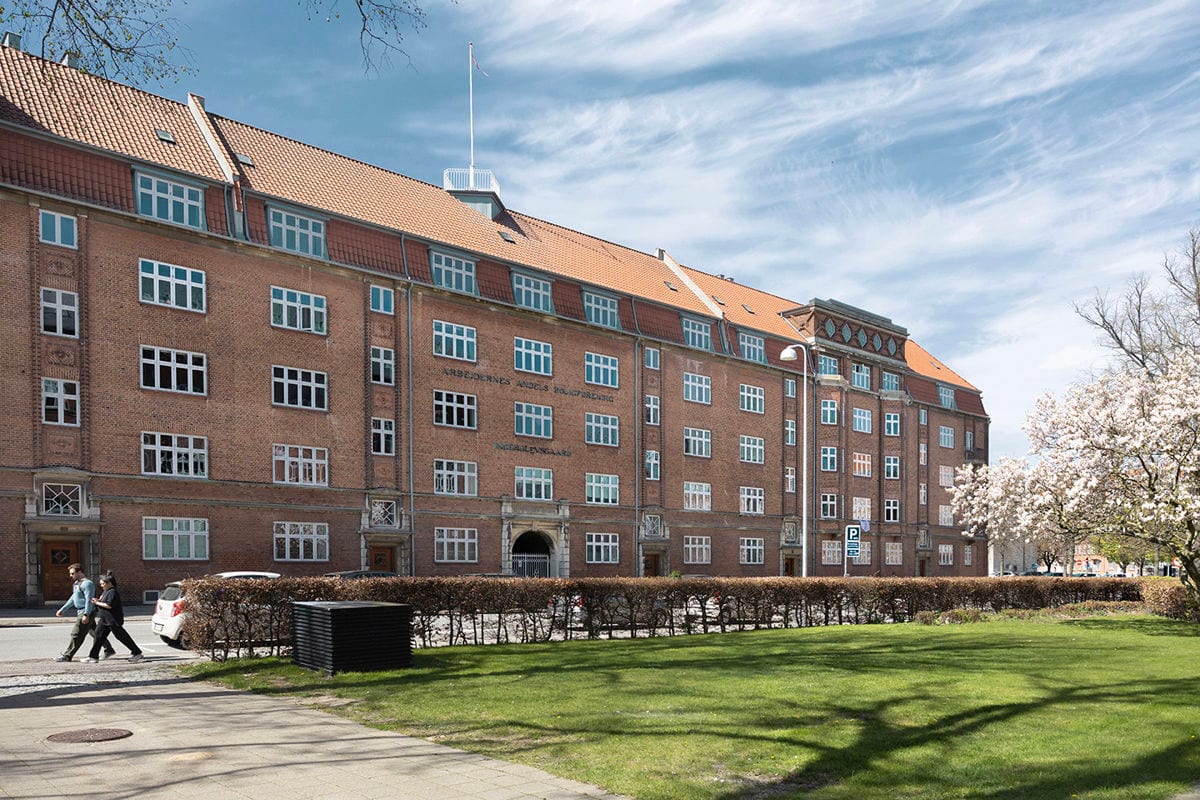
The form grew out of the rental market of the 1970s. When Parliament debated giving tenants a way to buy their buildings, 69 associations founded ABF (Andelsboligforeningernes Fællesrepræsentation, the cooperative housing federation) in March 1974 in protest at the first draft. From 1975, tenants gained a right of first refusal when a private landlord sold, and many of today's associations were formed by tenants buying their own block. The andel got its own act in 1979, and a 1977 change to the condominium law stopped associations from converting into owner-occupied flats. The wave left its biggest mark in Copenhagen. In Aarhus, the non-market tradition ran more strongly through the almene associations. The oldest of these, Arbejdernes Andels Boligforening (the workers' cooperative housing association), was founded in 1919 and still carries the word andel in its name, although it is now a non-profit landlord.
The sector today is small and uneven. Andelsportal's city ranking puts Aarhus third in Denmark with 6,790 andel homes, against 94,825 in Copenhagen. Three clusters stand out. The oldest are associations formed from converted rental blocks in the inner districts, which still carry the valuation and loan choices of the boom years. After 2008, falling prices left many associations with debts larger than their assets. Andelsportal counted between 450 and 750 associations nationally with serious problems, and new-build almost stopped: about 13,000 new andel homes went up in 2005–2008, fewer than 300 in 2010–2015. A second cluster is the new-build association, rare but reviving, such as the Lisbjerg scheme that won the city's architecture prize in 2025. A third is the intentional community, where andel sits alongside rental and ownership, as in Hjortshøj's eco-village. The first cluster worries about valuation and debt. The second faces land prices and construction costs. The third depends on members willing to plan and build together over many years.
Since July 2020, an association has been able to freeze its valuation at an appraisal obtained before that date, a national rule that lets members hold their price level steady. In Aarhus itself, the non-market ambition is written as a quota for almene homes rather than as a cooperative programme. How that quota works, and what else the city and the state have added, is where the politics begins.
Quotas, ceilings and a contested law
Most of the new money comes from Christiansborg, the national parliament. In December 2025 the government and its partners signed an agreement on stronger conditions for almene building. It lets Aarhus raise the maksimumbeløb (the state's cost ceiling per m² for a new almene home) by up to 20% until 2035, on top of a national rise. The ministry said the combined uplift in Aarhus and the capital could reach 24% and expected the deal to support 20,000–25,000 new almene homes nationally over ten years. The same deal gave DKK 10 billion to Fonden for blandede byer (the Fund for Mixed Cities) and set aside DKK 500 million for senior co-housing. Part of the package still needed legislation when the 2026 general election was called, and the tenants' union Lejernes LO warned that those bills had lapsed with it.
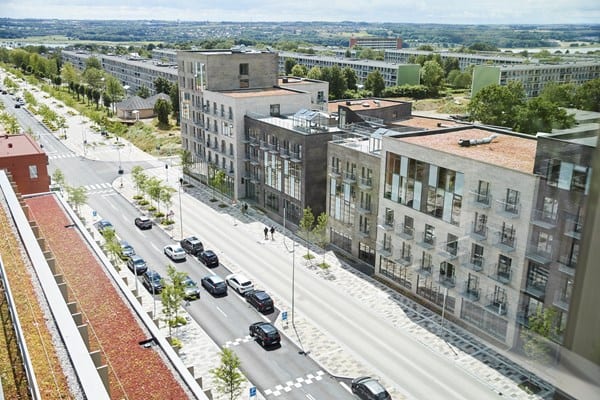
The city holds the planning levers. Since 2016, its own housing-policy analysis records, Aarhus has used Planloven §15 (the Planning Act clause that lets a municipality reserve housing types) to require up to 25% almene homes in new local plans. By 2024 that had produced requirements for 2,600 almene homes, and the council's ambition is 515 a year. The mayor, Anders Winnerskjold of the Social Democrats, governs with a broad constitution in which Nicolaj Bang of the Conservatives is rådmand for Teknik og Miljø (the councillor in charge of planning and the environment). Bang has made owner-occupation his theme. He points out that 73% of homes built in 2010–2020 were for rent, and 39 local plans that could deliver up to 4,200 family homes in the outer towns. For students, the municipality runs a housing guarantee for every new single applicant starting in the autumn.
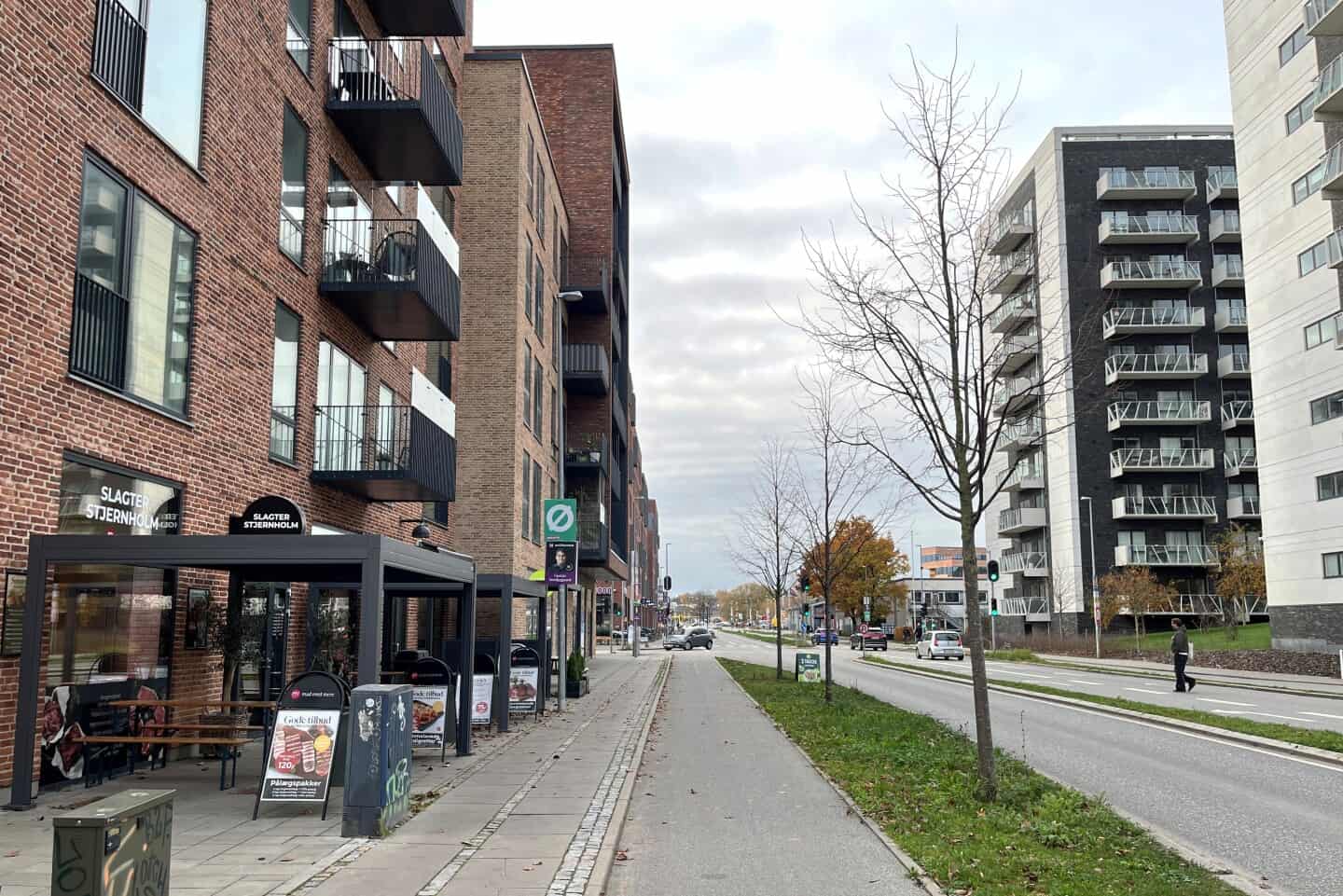
I want more owner-occupied homes in Aarhus, because Aarhus must be a municipality you can stay in. We must not develop a city where it becomes harder and harder for completely ordinary people to make a home and find financial security.Cooperative and collective forms have fewer dedicated instruments. The andel form relies on the national rules that cap and, since 2020, can freeze its prices. The new senior co-housing money is the clearest collective line, and Aarhus already has large rental co-housing schemes that such funding could follow. Otherwise the almene quota does the work that concept tenders or ground leases do in German cities.
The reply to empty space is regulatory. A landlord must report a flat that has stood empty for six weeks, and the municipality can then nominate a tenant on normal terms. Whole-home holiday letting is capped at 70 days a year when booked through a platform. Office conversion is decided case by case. In December 2025 the city approved plans to turn the Prismet office tower into 370 homes, 20% of them almene. The national deal also turned the conversion scheme of the Fund for Mixed Cities into loans free of interest for up to 50 years.
Climate policy now shapes every new building. The council adopted a climate strategy aiming for CO2 neutrality in 2030. Nationally, BR18 (the Danish building regulations) has capped the lifecycle emissions of new buildings over 1,000 m² since 2023. The cap began at 12 kg CO2e per m² a year and was tightened to about 7.1 kg in July 2025. It is due to fall again in 2027 and 2029. The almene sector is the main retrofit vehicle: a 2020 national agreement cleared Landsbyggefonden's renovation queue of 72,000 homes.
The sharpest dispute concerns the 2018 parallelsamfundslov (the parallel-societies law), which obliges areas with many residents of non-Western origin to cut family almene housing to at most 40% by 2030. In Aarhus it bears on Gellerup, Toveshøj and Bispehaven. Brabrand Boligforening's council of representatives accepted the plan by 50 votes to 44 in 2019, covering 600 demolitions and 903 new private homes. In December 2025 the EU Court of Justice ruled that the law's origin criterion can amount to discrimination, leaving the final judgment to Danish courts. Researchers frame the stakes more widely. Martin Vinæs Larsen, a political scientist at Aarhus University, wrote the 2025 research brief The Social Housing Comeback?. It names four barriers to reviving social housing across Europe: anti-immigrant sentiment, means-testing, high costs and local opposition to density.
Demolishing 600 homes is completely unnecessary to meet the law that Parliament has passed, but Aarhus Kommune has wanted to go much further than Parliament decided. We have been strongly critical of the municipality’s demand for demolitions all along, and we still are.Keld Albrechtsen, Chair of Brabrand Boligforening, the non-profit housing association that owns Gellerupparken, on the Gellerup/Toveshøj plan
- 1919[source]
Aarhus gets its first workers’ housing association
Arbejdernes Andels Boligforening is founded to give working families a home with a garden, the start of the city's almene tradition.
- 1968–1972[source]
Gellerupparken is built
Brabrand Boligforening builds the prefabricated estate on the western edge of the city, originally 1,776 flats in 23 blocks.
- Jun 2016[source]
Housing policy adopts the 25% almene rule
The city council decides to use Planning Act §15 to require up to 25% almene homes in new local plans.
- Jun 2018[source]
Gellerup and Bispehaven plans agreed
Under the national parallel-societies law, the council agrees that at most 40% of homes in Gellerup/Toveshøj will be almene by 2030, through 600 further demolitions and 1,600 new private homes.
- Mar 2019[source]
25% almene across the whole of Aarhus Ø
The council extends the almene requirement to the entire harbour district; Pier 4 had reached 552 almene homes out of 1,740.
- Apr 2024[source]
Climate strategy 2025–2030 adopted
The council commits the municipality to CO2 neutrality by 2030.
- Jul 2025[source]
Tighter carbon limits for new buildings
BR18 cuts the whole-life limit for new buildings to about 7.1 kg CO2e per m² a year on average, from 12 kg.
- Dec 2025[source]
National deal lifts almene cost ceilings in Aarhus
The state lets Aarhus and 17 other municipalities raise the cost ceiling for new almene homes by up to 20% from 2026 to 2035. A day later the EU Court of Justice rules that the parallel-societies criteria can amount to discrimination.
- 1 Jan 2030[source]
Deadline for Gellerup/Toveshøj
The almene share must be brought down to at most 40%; it stood at about 49% in 2025.
- 2050[source]
450,000 residents
The city's planning strategy aims for 450,000 residents and 250,000 jobs.
From the first workers’ association to the 2030 deadlines and the 2050 growth target.
Both camps agree the city must keep people who want to stay. They differ on whether ownership, non-profit renting or a mix of the two should carry that promise. The answers are being built on the harbour, in Gellerup and in the new town of Lisbjerg.
From the Gellerup slabs to the Lisbjerg fields
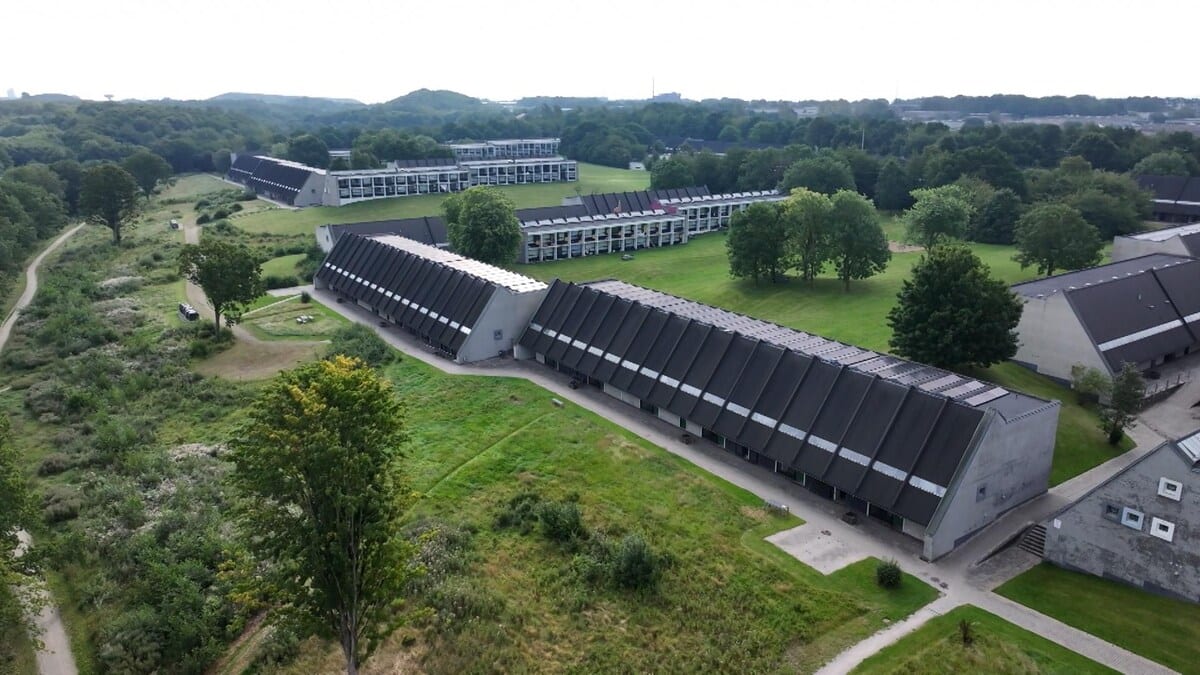
Gellerup is where Aarhus's biggest housing experiment is under way. Brabrand Boligforening, founded in 1948, built Gellerupparken as a modern answer to post-war crowding. Its comprehensive plan with the municipality has since demolished blocks, cut the estate with Karen Blixens Boulevard in 2016 and moved 1,000 municipal staff into new offices at Blixens in 2019. By 2030 the plan foresees more than 600 new terraced houses, more than 1,200 flats and nearly 50,000 m² of commercial space. Bazar Vest, a market hall opened on private initiative in 1996, shows the district's own economy already at work. East of the centre, Østjysk Bolig's Bispehaven is following the same law, with 310 almene homes in six blocks coming down.
Circle House, in the new town of Lisbjerg, points the almene sector towards a circular future. Circle House is a scheme of 60 almene homes for the housing organisation Lejerbo, designed by 3XN, Lendager Group and Vandkunsten working as one studio. It was built so that 90% of its materials can be taken apart and reused with little loss of value. Completed in 2020, it is one of Denmark's best-known tests of whether non-profit rents and circular construction can share a budget.
Lisbjerg also shows the cooperative form coming back. A/B haveHUSENE, a new-build association of 39 andel homes finished in 2023, won the Aarhus Architecture Prize 2025. Nearby, Plushusene Lisbjerg is a rental co-housing community of 226 homes for active over-55s and families around a shared common house. Jacob Bundsgaard, then mayor, attended its ground-breaking in August 2022.
haveHUSENE is built on the principles of affordable living and social sustainability, and shows how the cooperative idea can find new life in modern surroundings.Andelssamfundet i Hjortshøj is the older proof that residents can build a place themselves. Andelssamfundet i Hjortshøj, north of the city, was founded in 1986 and built its first homes in 1992–96. About 300 people now live in some 130 houses, organised in eight housing groups on one shared site.
Aarhus Ø, the former container port, is where the almene quota was tested at scale. By 2019, Pier 4 held 552 almene homes out of 1,740, above the district target. Even the 142-metre Lighthouse tower, designed by 3XN, includes almene flats let by Arbejdernes Andels Boligforening. The limits show too. Brabrand Boligforening had planned a third of the award-winning Isbjerget as almene homes, but withdrew from the scheme in 2011, and the finished building went ahead without it.
C.F. Møller Architects, founded in Aarhus, is still reshaping its home city. C.F. Møller Architects planned Frederiks Plads on a former railway workshop site, with 33,100 m² of housing in towers of 15 to 19 storeys, due to finish in 2027. AART, another Aarhus practice, designed Nicolinehus, 243 flats that were all sold before completion in 2023. Much of this is built by firms such as JCN Bolig, an Aarhus contractor founded in 1898 that specialises in housing. Together they give the city a design and delivery base that the non-market sector can draw on.
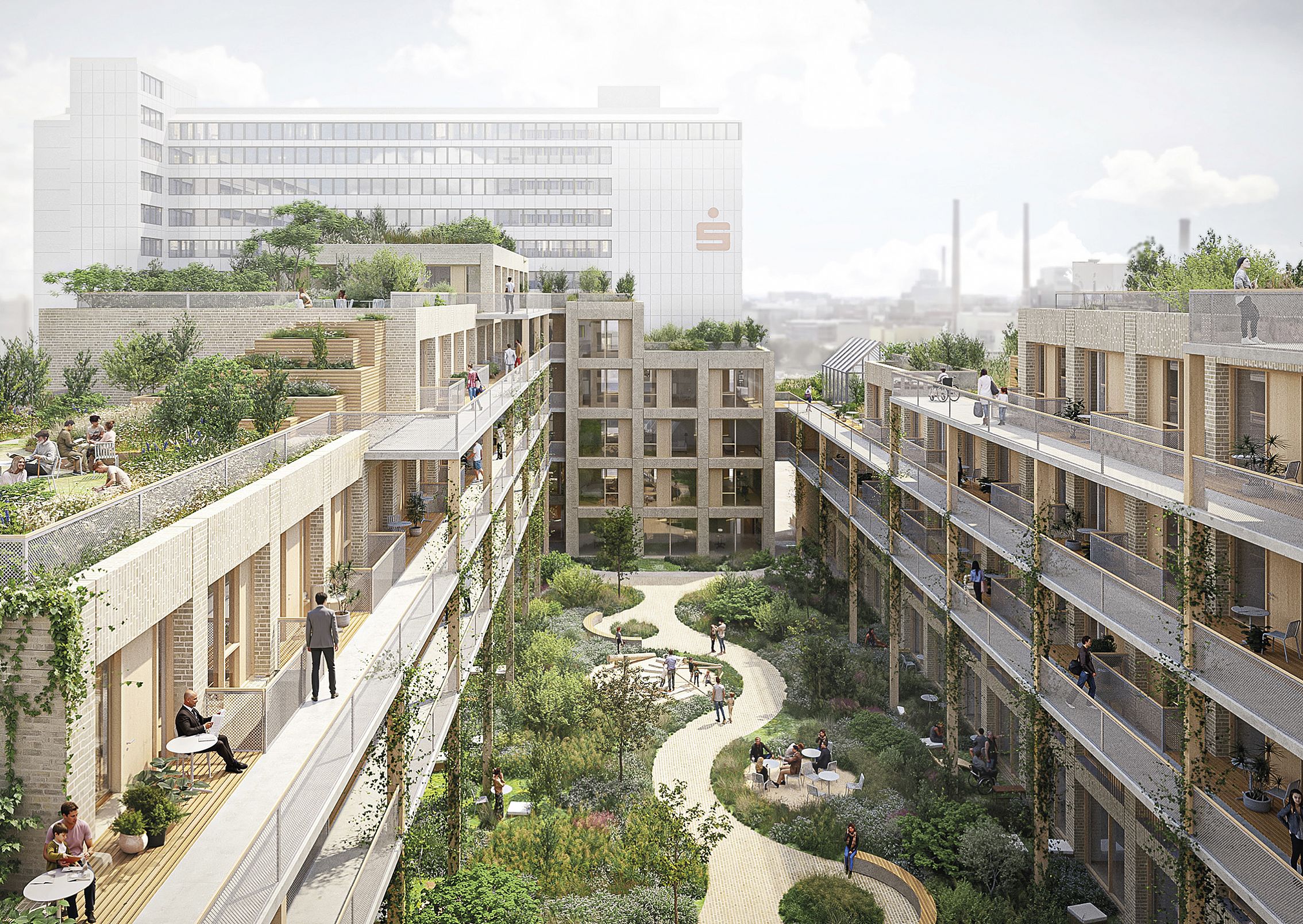
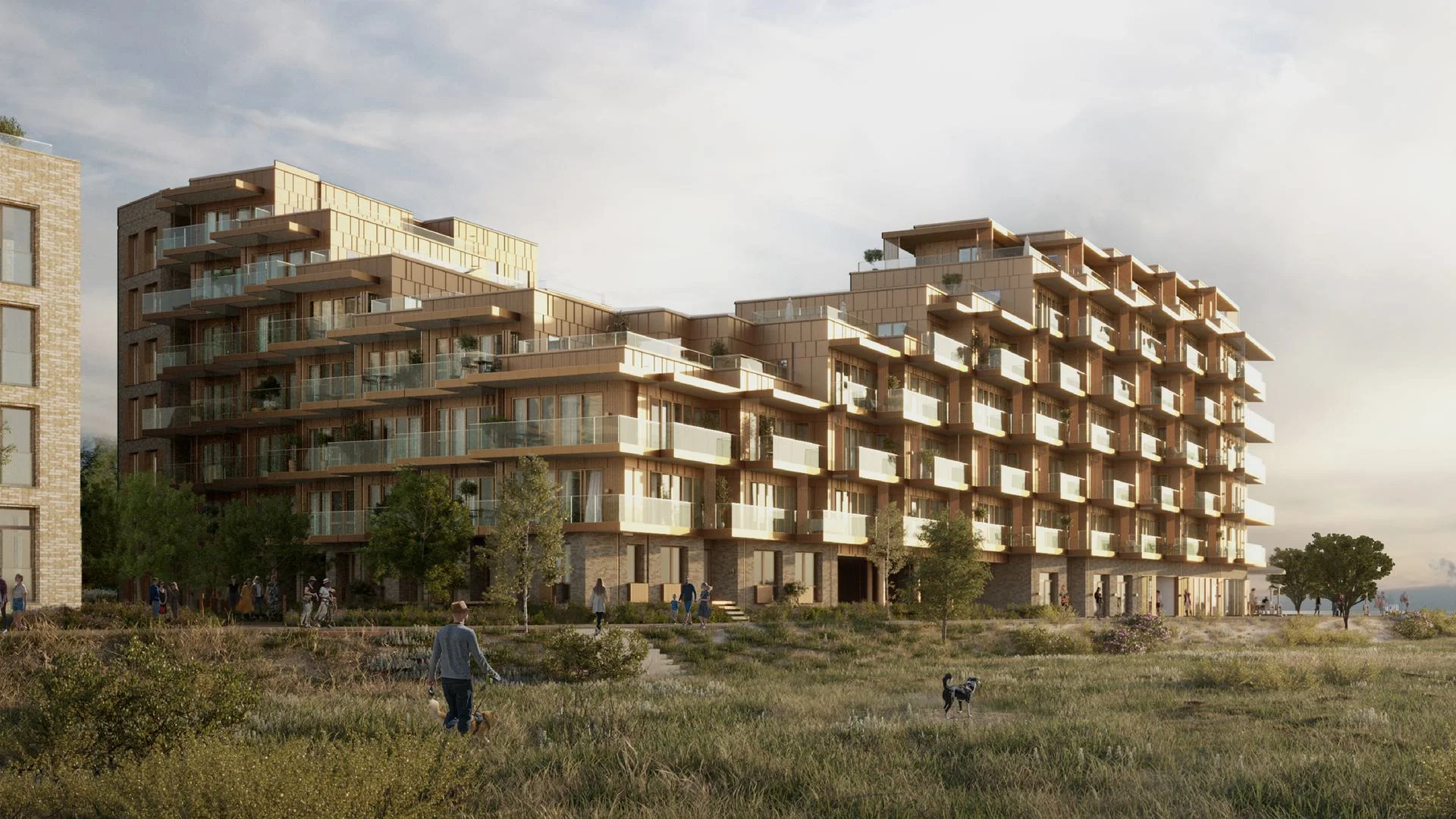
Nye, a new town on the northern edge of the city, rounds out the picture. Developed by Tækker Group with the municipality and the utility Aarhus Vand, Nye is planned for 15,000 to 17,000 residents and won Denmark's town-planning prize in 2022. How much of it ends up affordable, cooperative or non-profit will say a lot about which answer Aarhus chooses.
References
Statistics8Click on any number to see the source
Housing market
Cooperative, social & public
Adaptive reuse & vacancy
Population & migration
From our library13
- Omfanget af den almene boligsektor i kommunerne 2020-2025 (Temastatistik 2025:6) — Knowledge
- Social housing opportunities and challenges: Perspectives from Denmark, Germany, Portugal and Serbia — Knowledge
- Upopulære kollegieværelser er revet væk i Aarhus – i København kan de stadig fås — Knowledge
- Partier vil bremse store huslejestigninger i Aarhus — Knowledge
- Arbejdernes Andels Boligforening Aarhus (AAB Aarhus) — Organisation
- Andelsboliger i danske byer — Knowledge
- Boligpolitisk analyse 2025 — Knowledge
- The Social Housing Comeback? Explaining its Decline and the Political Barriers to its Revival — Knowledge
- Brabrand Boligforening — Organisation
- Circle House — Project
- C.F. Møller Architects — Organisation
- AART — Organisation
- JCN Bolig A/S — Organisation
Further sources19
- Statistics Denmark, BOL101 dwellings by tenure and ownership, Aarhus 2026 — Danmarks Statistik · 2026
- Statistics Denmark, FOLK1A population, Aarhus — Danmarks Statistik · 2026
- Statistics Denmark, BYGV22 dwellings completed, Aarhus — Danmarks Statistik · 2026
- Historisk få ledige lejeboliger til nye studerende i Aarhus — BoligPortal via Ritzau · 28 Jul 2025
- Laveste boligtomgang i otte år — EjendomDanmark · 2 Dec 2024
- Nybyggeri giver flere tomme kontorer i Aarhus — EDC Erhverv · 22 Jan 2024
- Aarhus-borgmester: Det vil være at stikke blår i øjnene — DR · 27 Oct 2025
- Største prisstigninger i Aarhus siden finanskrisen — Nykredit · 9 Apr 2026
- Andelsbolig — Lex (Den Store Danske)
- Historien om ABF — ABF
- Man stifter ikke en andelsboligforening for at gå konkurs — Andelsportal · 21 Mar 2017
- Aftale om styrkede rammer for alment byggeri — Social- og Boligministeriet · 17 Dec 2025
- Rådmand samlede branchen om flere ejerboliger i Aarhus — Aarhus Kommune · 8 Apr 2026
- Brabrand Boligforening stemmer ja til at rive 600 boliger — DR · 28 May 2019
- EU-Domstolen: Parallelsamfundslovgivning kan udgøre diskrimination — Institut for Menneskerettigheder · 18 Dec 2025
- Grønt lys til omdannelse af højhus i Aarhus — Dansk Byudvikling · 20 Dec 2025
- Hele Aarhus Ø skal have 25 procent almene boliger — Byens Ejendom · 8 Mar 2019
- Om Circle House — Lejerbo
- Tidslinje over helhedsplanen — Brabrand Boligforening