Can the way we live make us less lonely?
Who is lonely in Europe?
At the end of 2022, over 27,000 people across the European Union answered a question most surveys never ask: how often have you felt lonely in the past four weeks? It was the first survey on loneliness to cover every member state, run by the European Commission’s Joint Research Centre. Of those who answered, 13% said most or all of the time. Scaled up, that is almost 50 million Europeans.
The answers do not fit the picture most loneliness policy is built on. Loneliness fell with age: the youngest adults reported the most of it, young women aged 16 to 24 above all. The survey’s editors point to a mismatch, since many interventions are aimed at the elderly. The authors want the age pattern tested again, since an online panel misses people who never go online and they tend to be older, though a smaller, randomly drawn sample in four countries pointed the same way.
Money matters too. In the poorest fifth of households, 21.3% felt lonely most of the time, twice the 10.4% in the richest fifth. Among the unemployed it was more than one in five. Being the only adult at home added 3 percentage points to the risk, and an unhappy relationship was more closely tied to loneliness than having no partner at all.
Then there is moving. A recent move to a new town raises the chance of feeling lonely, and the effect fades only slowly. Watch the bars shrink the longer people have lived where they are:
The first two years in a new place are the loneliest. EU Loneliness Survey 2022, share of respondents. Source: JRC, Loneliness in Europe (2024), Fig. 3.4
Among people in their first two years in a town, 19.6% were lonely most of the time, against 11.8% of those who had stayed more than ten years. The gap holds when the authors compare people of the same age, education and work.
Across countries the survey holds another surprise. Loneliness was highest in Bulgaria, Cyprus, Ireland and Luxembourg, at 17% or more, and lowest in Austria, Croatia, Czechia, the Netherlands, Slovenia and Spain, at 10% or less. Two of the Union’s richest countries sit near the top. The authors caution that culture, the age of each population and sampling all play a part, and that the ranking differs from surveys taken before the pandemic.
If newcomers and the young are as exposed as the old, the next question is a practical one: can the way a building is organised do anything about it?
Does living together help?
Between July 2018 and April 2023, Barcelona’s public health agency did something rare in housing research. It asked people about their health before they moved into a cooperative, and again one and two years after. These were Catalan grant-of-use cooperatives, where the members own the building together and each household holds an open-ended right to its home for a stable monthly fee. The model has a read of its own.
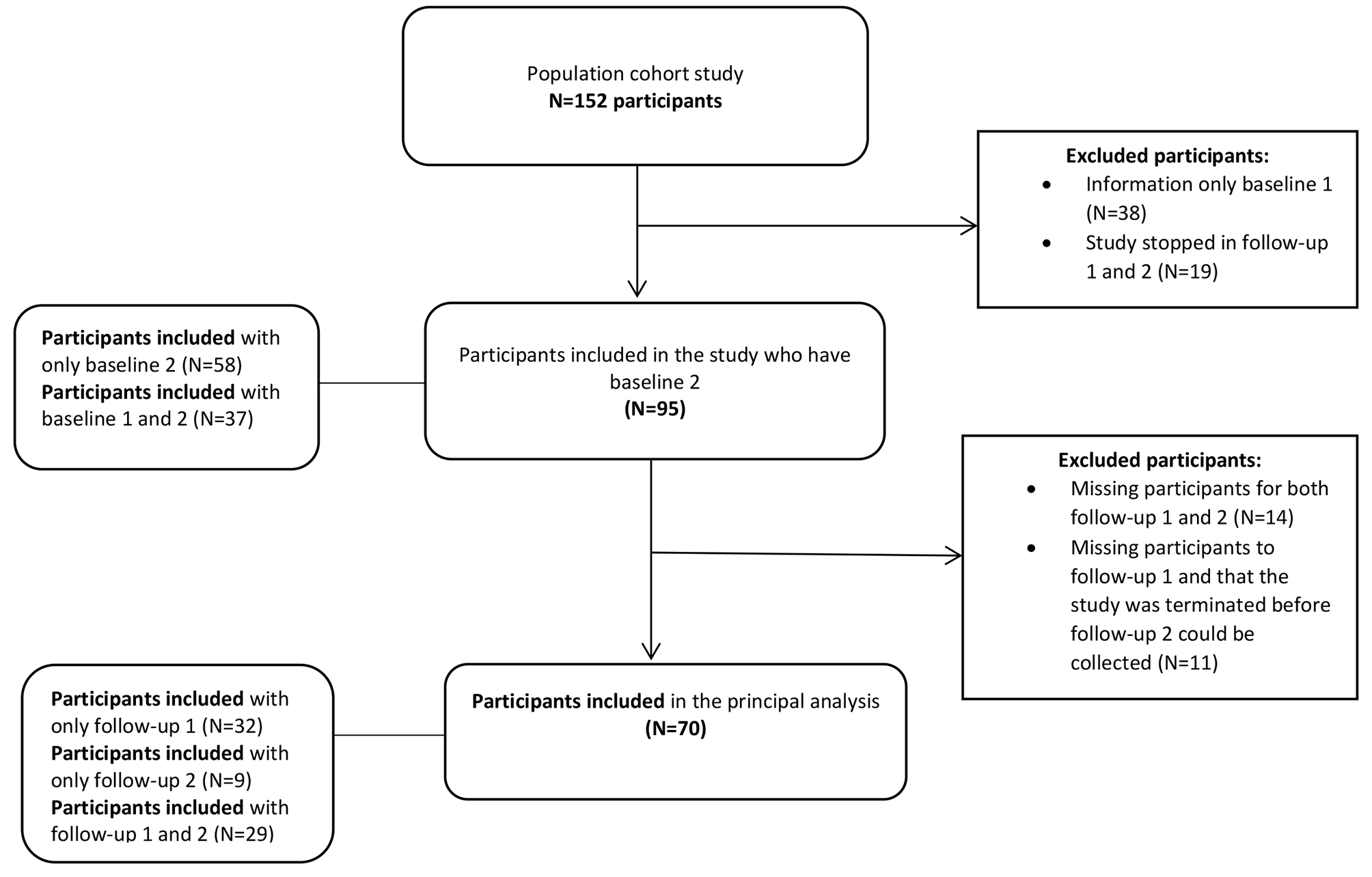
The homes improved quickly. Damp, leaks and decay fell from 37% to 4.6% of participants, and the share who could keep their home warm enough rose from 49% to 90%. Strong social support rose from 34% to 47%. Men reporting good mental health went from 70% to 89%, women from 67% to 72%. None of the health changes was statistically significant, and the social support result fell just short.
The design is honest about its limits. Only 70 people could be followed before and after, 77% of them had a university degree, and most were healthy to begin with. The authors say the sample is small and the follow-up short, because the model is still too new in Catalonia to find more.
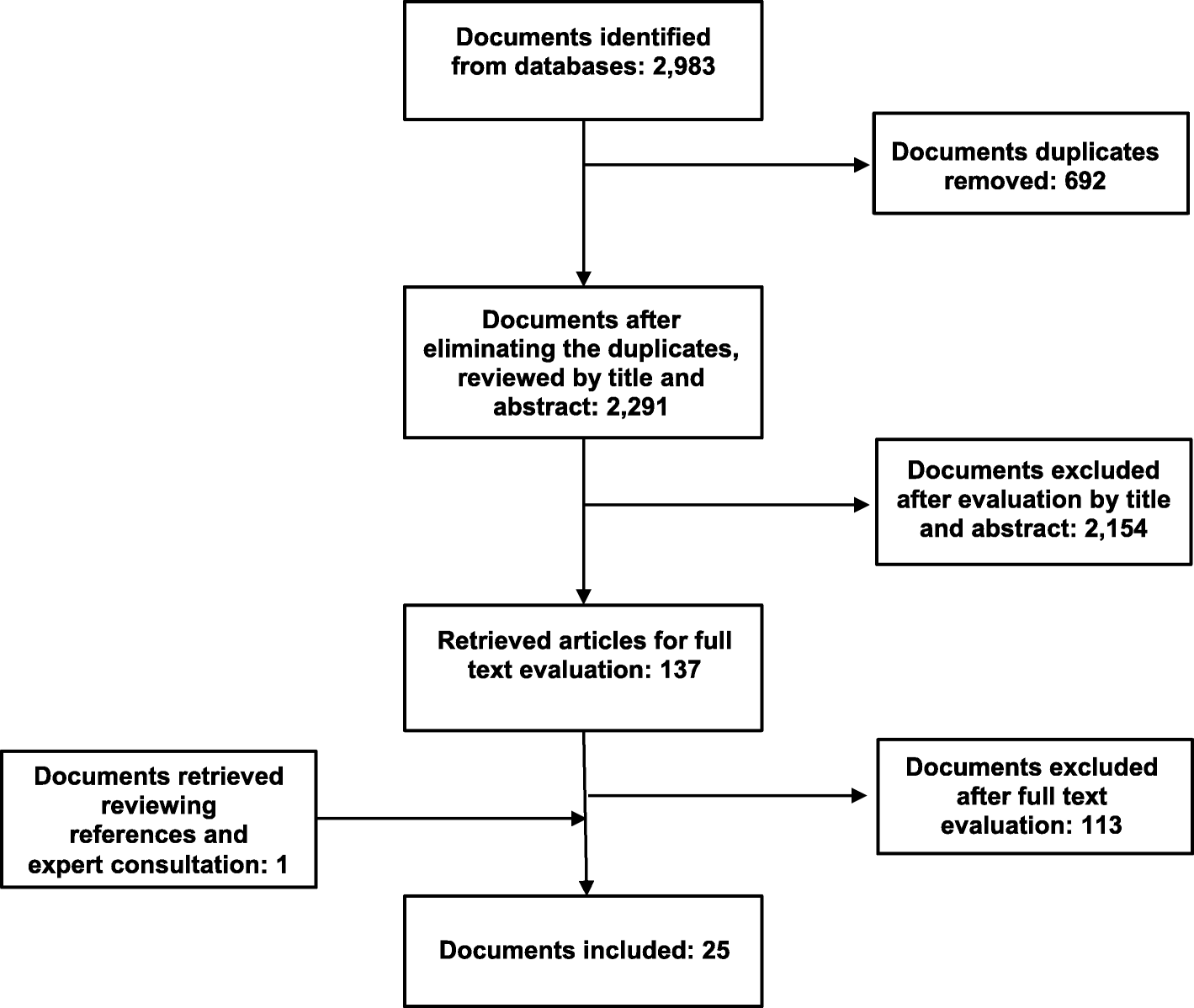
The widest look at the question is a 2020 review of everything linking cohousing to health. It found 25 studies covering 77 projects, all in high-income countries. Eight of the ten that measured health or wellbeing directly found a positive link, and every study that looked at isolation found residents less lonely. None of those had a comparison group, most studies were one-off snapshots or interviews, and the reviewers rate the evidence as low quality. In one cooperative for low-income women, residents said their health got worse after moving in.
A 2026 study of four Sostre Cívic projects used interviews and a group discussion instead of questionnaires. Its 17 participants described belonging and less isolation, and the price of both: an entry contribution of €20,000 to €35,000, and meetings that eat into the week. One member pointed out that not everyone can spare two hours a week for their housing cooperative.
A 2025 review of twenty years of English- and Spanish-language research puts the whole question in its title, with a question mark: is cooperative housing a catalyst for health and wellbeing?
That is a fair summary of where things stand. The studies are small, and the people in them chose to live together, often because they wanted community in the first place, so some of the benefit may come from who moves in rather than what the building does. The 2020 reviewers add a warning of their own: people from poorer households have fewer chances to get into these projects at all.
Where they did find the clearest link was in cohousing built for older people.
Growing old among neighbours
In north London, New Ground arranges 25 flats around a courtyard garden for women over 50. It was built by the Older Women’s Co-Housing group, opened in 2016 as the first cohousing for older people in the UK, and mixes 17 flats to buy with eight for social rent. Of the 26 women living there when the design lab SPACE10 profiled it, almost all had lived alone before.

The main problem was that none of us had a lot of money. And we wished to stay in London and also offer rental apartments, as well as some for the women to buy.Getting there was slow. A housing charity, Hanover, helped the group buy the land, and when the move-in date slipped, one woman aged 80 ended up sleeping on a friend’s sofa because she had already sold her home. The residents run the place themselves, cooking, gardening and organising its social life.
In Barcelona, a group of people over 55 set out to build Can 70, the city’s first senior cohousing and the first in Spain on public land, which reverts to the city after 99 years. Most members already owned a home. They were looking for company rather than shelter. In the group’s own words to researchers, “Loneliness is one of today’s great diseases, and we refuse to succumb to it.” Each member gets a flat of their own, couples included, so that losing a partner never means moving flat. The study behind this is a single case, built on in-depth interviews.

Would people who have never chosen this want it? A team from TU Delft asked in Tanthof-Oost, a Delft neighbourhood where respondents averaged 70 years of age and 34 years on the same streets. Of the 48 residents who returned the questionnaire, none showed interest in collaborative housing. They feared small, dark flats and anonymous blocks.
Then eight residents were taken to see three projects. Afterwards all of them were enthusiastic about private homes with shared rooms. Most liked a cosy, low-key cooperative for seniors best, the cheapest of the three, and were disappointed to find the waiting lists full. Those with smaller pensions knew least about such places and had the fewest ways in. It is a small study in one neighbourhood, but the shift is hard to miss: what changed minds was seeing the rooms.
Private enough, shared enough
Two brothers who came to Vienna as newcomers still live at Gleis 21, a building its future residents designed together. “It feels like living in a huge family here and I like my small apartment,” one of them told researchers. “The communal spaces are great for social interaction and common activities and in my room I have privacy.”
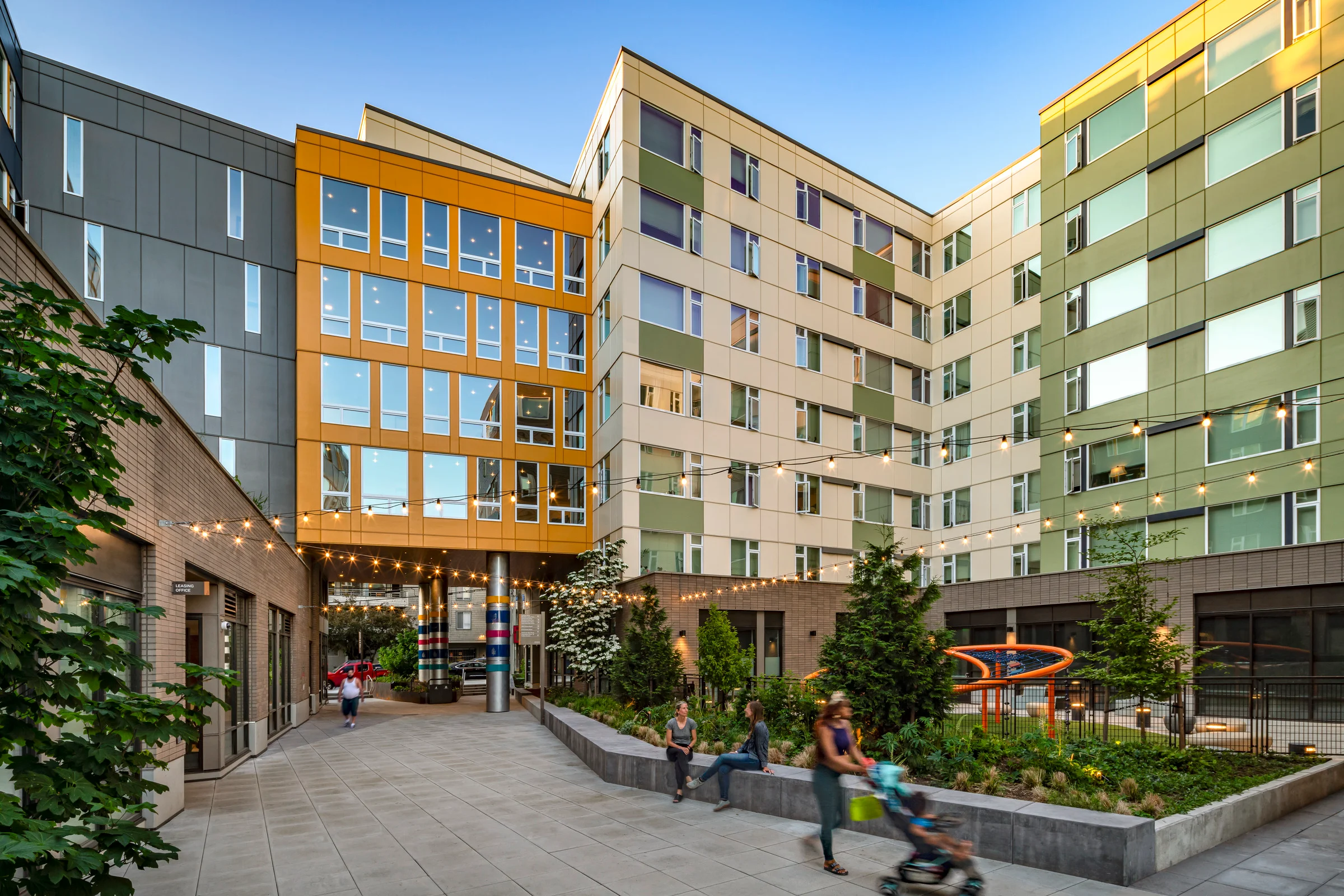
That balance was designed in. Residents set aside four small solidarity flats for newcomers, paid for by members renting bigger ones at higher rents, and run a buddy programme that links each arrival to the group. At Sargfabrik, an older Vienna project, flats for people with little money were part of the plan from the start, with the whole community paying slightly more to keep their rents down. In 2015 they went to refugee families, each with a named contact in the community.
How much sharing do people want? When SPACE10 asked more than 13,000 people in almost 175 countries, most chose a community of four to ten people. Couples with children wanted 10 to 25. Nobody chose bigger, and the main worry was privacy. It was playful research rather than a scientific sample, but it points one way.
It’s lovely that despite this bubble creation, when people are asked, they’d prefer to live with people who are different to them.At Can 70, each resident has a private flat of 30 m² with a bathroom and kitchenette, and shares 50 m² with three to five neighbours. Some members did not want to share a kitchen, so the plan also has 11 conventional flats of 45 m². Shared rooms take 25% of the floor area, 50% counting corridors and stairs. A Catalan law of 2020 helped by counting common rooms as part of the home, which lowered the minimum size of the private flat.
The trade-off shows up in the Barcelona health study, where overcrowding rose from 1.4% to 16% after the move because kitchens, laundries and living rooms had gone into the shared floor. The authors say crowding in such buildings has to be measured across private and shared space together.
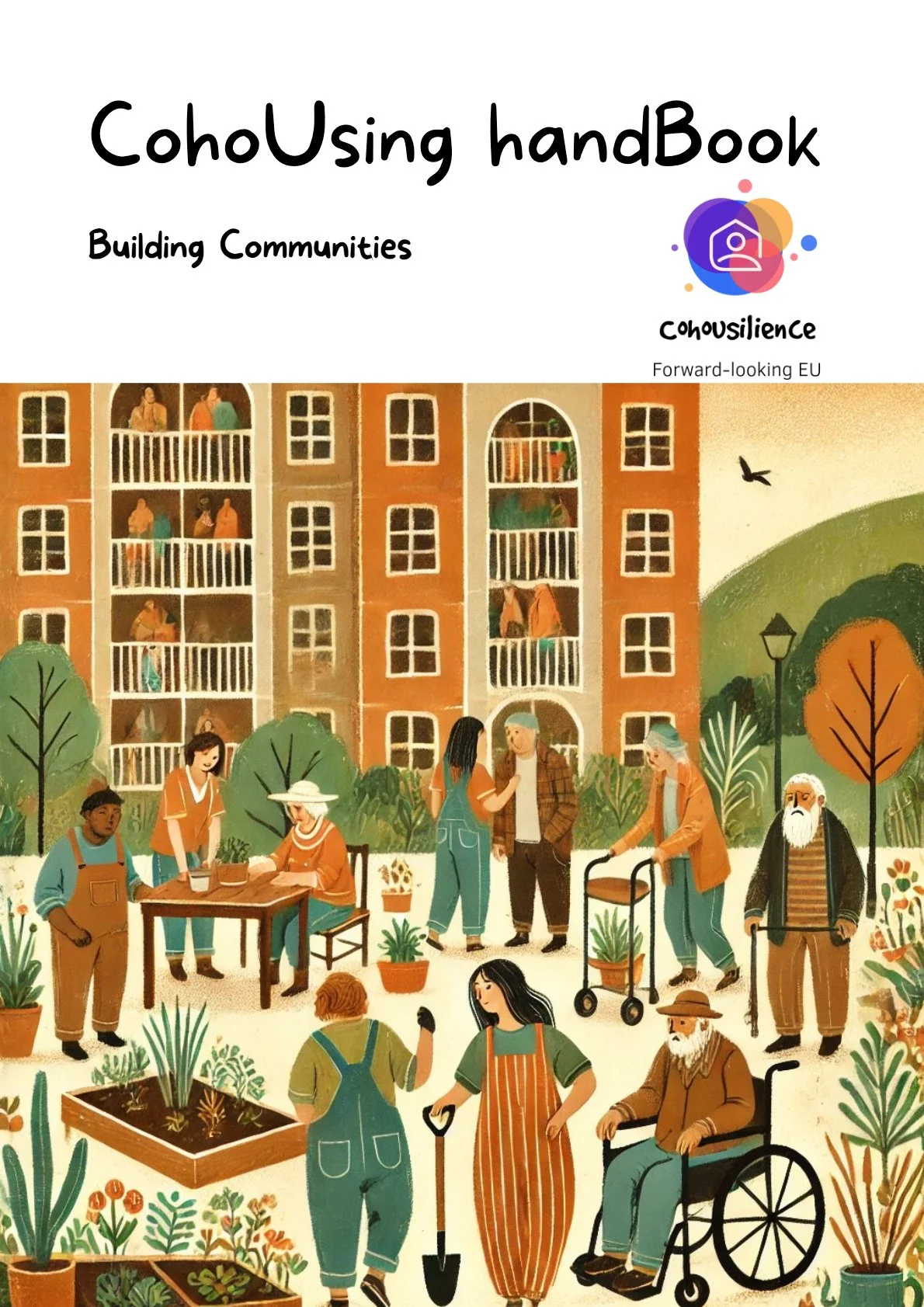
Walls are only half of it. “Living together is not improvised,” warns a handbook written by cohousing organisations from several European countries, which advises keeping the meetings that decide apart from the meetings that deal with feelings. Anitra Nelson, whose book argues that small is necessary, adds that shared living depends on skills that balance sociability with privacy.
As you look through the buildings named here, notice how each gives every household a door of its own and puts something worth leaving it for on the same floor.
None of the four was put up by a landlord selling community. In each, the people who were going to live there helped plan it, and that turns out to be the difference that matters most.
When “community” is a sales line
The Collective Old Oak in London was, when SPACE10 wrote about it, the world’s largest co-living building. Residents get screening rooms, a café bar, a laundrette and a lending room stocked with everything from tools to a canoe. Bills, wifi and room cleaning come with the rent. It was recently sold to a private equity firm for around £60 million.

Even a critic like Helen Hester concedes that at first glance this “may not sound like a bad way to live”. London holds between a fifth and a quarter of the continent’s co-living beds. But Old Oak’s planning agreement limits residents to graduate students and professionals. Children and undergraduates could not be accommodated.
Tim White and David Madden, who interviewed 24 co-living executives, consultants and strategists, describe the same moves wherever co-living arrives: more units squeezed onto the site, service fees added on top of the rent, and shorter, more flexible tenancies. Yields tend to be higher than in ordinary renting, and investment grew by more than 210% a year from 2015.

Community is the product on the brochure. One operator, Habyt, has offered “community-as-a-service”, and a chief operating officer at The Collective once predicted that “we will all be homeless” as people rent “space as a service”. Yet the researchers found that operators seldom try to connect tenants with neighbours outside the building, and that the community on offer is tuned to affluent, mobile tech workers. Hester puts it more bluntly: the main amenity is the other residents.
Operators can do better. In a design study by MVRDV for the developer HUB and the investor Bridges, HUB proposes discounted rooms mixed in with the rest and shared rooms that open to the neighbourhood like a village hall. The same study admits that co-living “often attracts young people that reside for a relatively short period”, and the groups people told SPACE10 they wanted are far smaller than blocks built for hundreds.
So the shared kitchen is not the test. Ownership is: whoever holds the building decides how long you can stay and what the common room is for. Cooperatives and cohousing are run by the people who live in them. In commercial co-living, those decisions belong to the investor.
References
From our library21
- Taking stock of loneliness in the European Union: A future pathway — Knowledge
- Loneliness in Europe — Knowledge
- Who feels lonely in the European Union? — Knowledge
- Cooperative housing under a grant-of-use in Catalonia and health: pre-post analysis — Knowledge
- The effects of cohousing model on people’s health and wellbeing: a scoping review — Knowledge
- Effects on Social Cohesion of the Grant of Use Cooperative Housing Model in Catalonia — Knowledge
- Cooperative housing: A catalyst for health and wellbeing? A scoping review of English and Spanish literature (2004–2024) — Knowledge
- New Ground — Project
- IMAGINE - Exploring the Brave New World of Shared Living — Knowledge
- Interdependence, commitment, learning and love: the case of the United Kingdom's first older women's co-housing community — Knowledge
- Can 70 — Project
- Housing as community infrastructure: an analysis of senior cooperative housing using the capability approach — Knowledge
- Living together in old age: Identifying preferences for collaborative housing through participatory design-led research — Knowledge
- Gleis21 — Project
- Housing crisis in European cities: exploring the potential of social and collaborative housing for supporting newcomers — Knowledge
- Sargfabrik — Project
- CohoUsing handBook — Knowledge
- Small is Necessary: Shared Living on a Shared Planet — Knowledge
- Domestic Realism or Something Worse? — Knowledge
- Housing ideology and urban residential change: The rise of co-living in the financialized city — Knowledge
- Co-living - Design study into co-living as a typology of shared living — Knowledge
Further sources1
- Hilary Vernon-Smith, resident of the Older Women’s Co-Housing community, New Ground, London — Hilary Vernon-Smith, resident of the Older Women’s Co-Housing community, New Ground, London