Introducing Collaborative Senior Housing Research
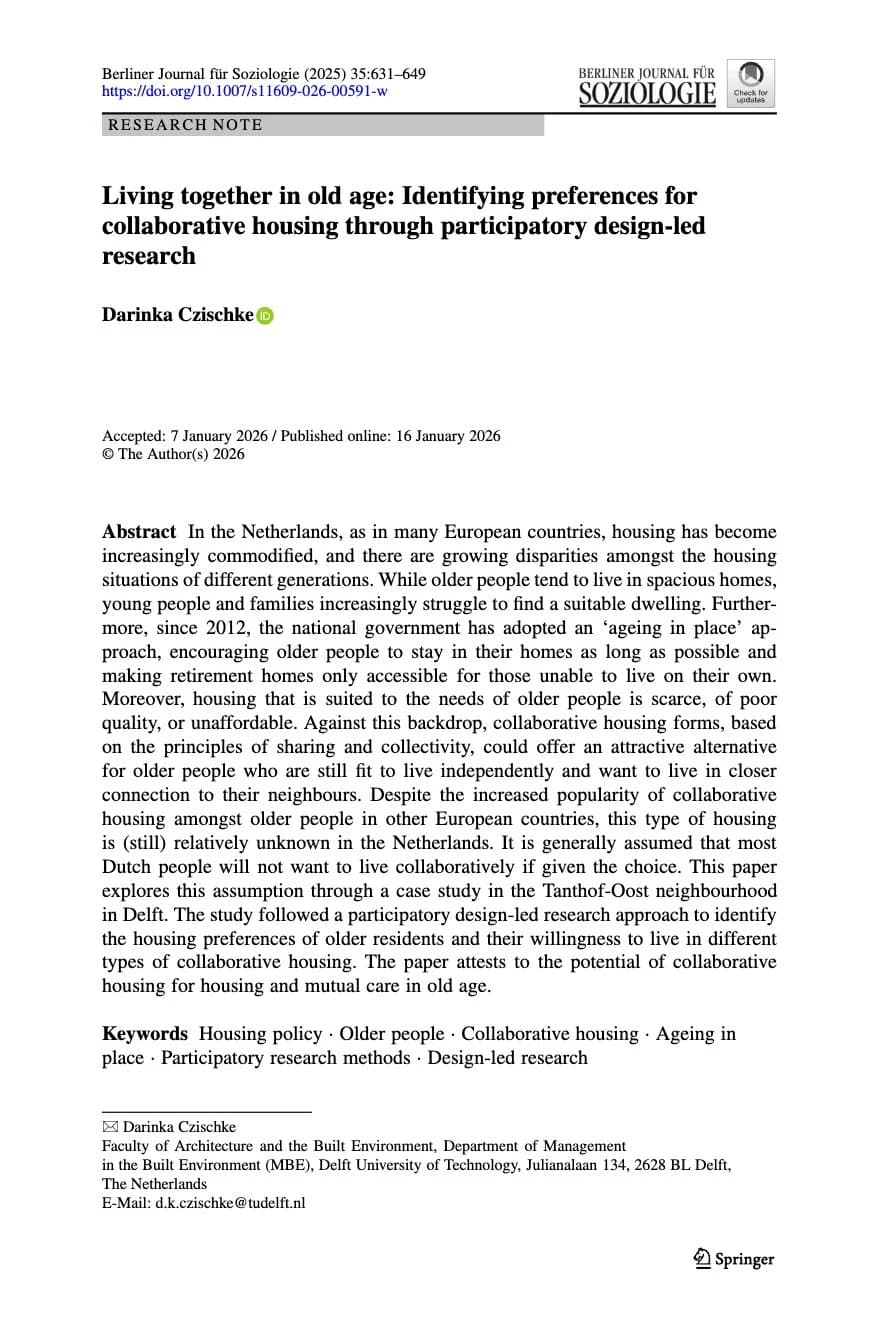
The study “Living together in old age: Identifying preferences for collaborative housing through participatory design‑led research” offers a comprehensive examination of how older adults across Europe envision co‑habitation models that combine social interaction, autonomy and environmental sustainability. Conducted under the auspices of a leading academic publisher, the research employs participatory design methods to capture the lived experiences and aspirations of seniors, aiming to inform future housing policies and design practices that support ageing in place while reducing ecological footprints.
Key Findings on Preferred Housing Arrangements
Participants expressed a strong preference for housing concepts that balance private spaces with shared communal areas. The most valued features include flexible room layouts, accessible indoor and outdoor environments, and opportunities for collective activities such as gardening, cooking and cultural events. Respondents highlighted the importance of proximity to public transport, local services and green spaces, indicating that sustainable mobility and reduced car dependency are central to their housing choices.
Sustainability Priorities Identified by Seniors
The research reveals that older adults place high importance on energy‑efficient building envelopes, renewable energy installations and waste‑reduction systems. Participants favoured retrofitting existing structures with insulation, solar panels and heat‑pump technologies rather than new construction, viewing this approach as both environmentally responsible and financially prudent. Additionally, shared resources—such as communal laundry facilities, car‑sharing schemes and bulk food purchasing—were identified as ways to lower individual consumption and carbon emissions.
Quantitative Insights from the Study
Across the pan‑European sample, 78 % of respondents rated “access to nature” as a critical factor in housing decisions, while 65 % indicated a willingness to participate in cooperative ownership models that distribute maintenance costs and decision‑making responsibilities. Energy‑efficiency measures were rated as “very important” by 71 % of participants, and 58 % expressed interest in living in buildings certified to standards such as Passivhaus or BREEAM.
Participatory Design Process and Methodology
The study employed workshops, focus groups and co‑design sessions that allowed seniors to actively shape design proposals. By involving older adults from diverse cultural and socioeconomic backgrounds, the research ensured that the resulting housing concepts reflect a broad spectrum of European preferences. This inclusive methodology also uncovered regional variations—for example, participants in northern Europe emphasised thermal comfort and daylight access, whereas those in southern regions prioritised shading solutions and outdoor social spaces.
Design Recommendations for Sustainable Senior Cohousing
Based on the collected data, the authors propose several design guidelines: modular units that can be reconfigured as needs evolve; universal design principles that guarantee accessibility for mobility‑impaired individuals; integration of renewable energy systems at the building or district level; and the creation of shared gardens and community kitchens to foster social cohesion and reduce resource use. The report also suggests policy measures such as incentives for retrofitting existing housing stock and support for cooperative ownership structures.
Implications for European Housing Policy
The findings align with the European Union’s climate‑neutrality targets and the European Pillar of Social Rights, which emphasise inclusive, affordable and sustainable living environments. By demonstrating seniors’ willingness to engage in collaborative housing models that are both socially supportive and environmentally sound, the study provides evidence for policymakers to promote co‑housing schemes, adapt building codes for ageing‑friendly design, and allocate funding for green retrofitting projects.
Conclusion: Towards a Sustainable Ageing Future
Overall, the research underscores that older Europeans are ready to adopt housing solutions that blend independence with community, while actively contributing to sustainability goals. The participatory design approach validates the lived expertise of seniors and offers a replicable framework for future projects aimed at creating resilient, low‑impact living environments across Europe.