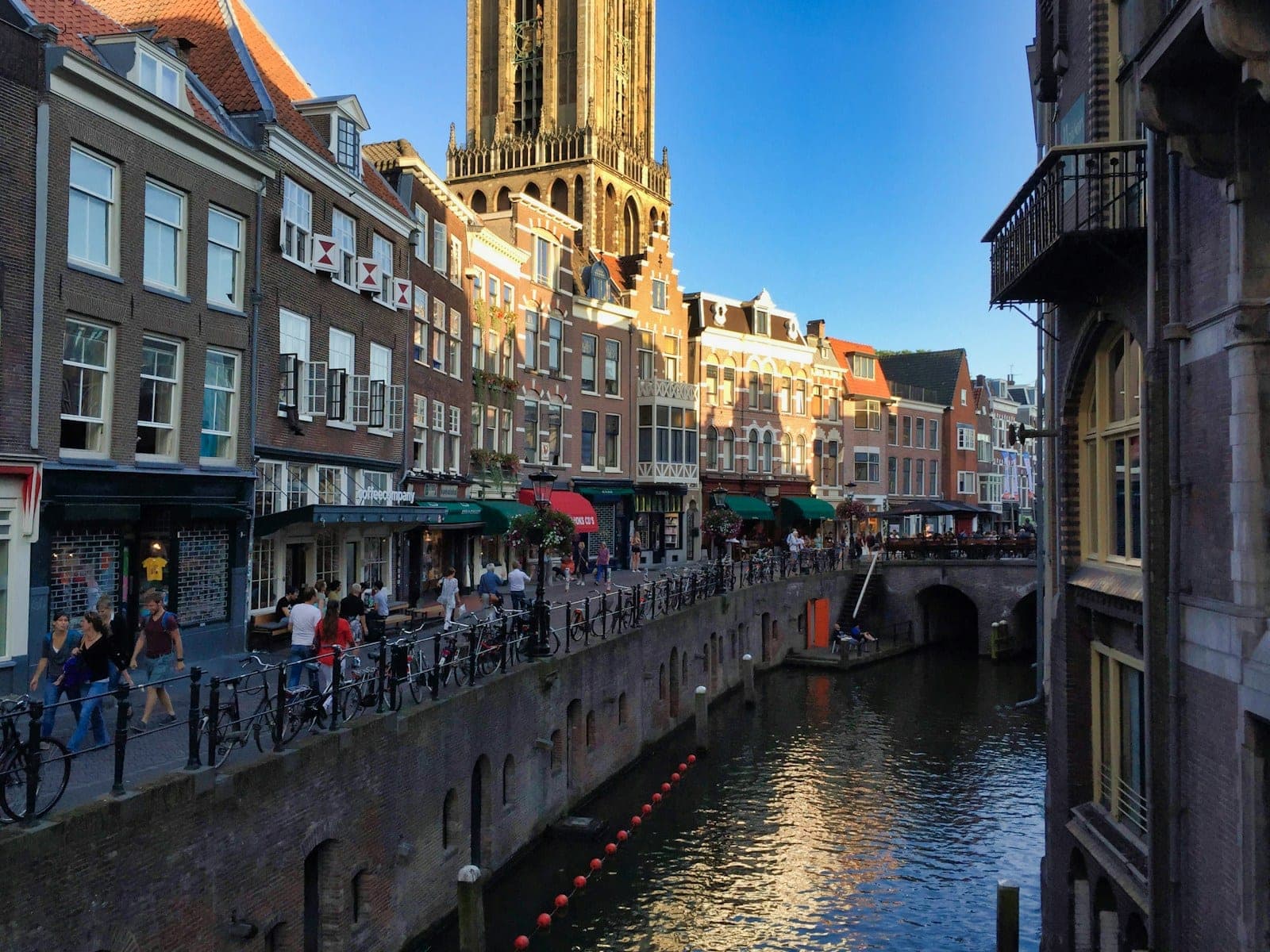
A crossroads city that people decide to stay in
Utrecht grew up as a crossroads. A Roman fort on the Rhine became a bishop's seat, then a university town, and now the country's busiest rail junction. The city still behaves like a place people pass through and then decide to stay in: students, researchers and young professionals arrive faster than homes can be finished. That is why a city of roughly 359,370 residents (the municipality's own count was 374,374 at the start of 2024) now carries one of the tightest housing markets in the Netherlands.
Renting is the majority tenure here. 58% of households rent and 42% own their home. The largest landlord is not the market but the non-profit housing associations, the woningcorporaties (independent, state-regulated social landlords). They hold about 31% of all dwellings, some 50,500 homes. The private rental sector makes up the remaining 26.9% of the stock. Cooperatives barely register: 0.1% of dwellings, or around 150 homes spread across 3 organisations.
- Owners
- Owner-occupier42.0%
- Renters
- Public & non-profit rental31.0%
- Cooperative0.10%
- Private rental26.9%
Social housing is a rulebook rather than a tenure. Around 35% of Utrecht's dwellings fall under the regulated social rent regime, which sits across the slices above instead of forming one. The layer is slightly larger than the association share because some private landlords let below the regulated ceiling too. It is also shrinking. The city's 2025 monitor puts the social share at 33.2%, and 47% of households earn little enough to qualify.
Rent depends on which door a household came through. An association tenancy averages €7.90 per square metre a month. The national cooperative benchmark is €9.31, and the all-stock median is €11. A newly signed private contract costs €22.41, twice the stock median, and the landlords' own figures for mid-2026 show €22.49 per square metre, second only to Amsterdam. Furnished lets reach €30 gross and serviced flats €38.
- Public/municipal housing
- Cooperative
- All-stock median
- New contracts
- Furnished (gross)
- Serviced (gross)
Monthly rent per square metre by tier: net cold for the first four, gross all-in for furnished and serviced. A new private contract costs almost three times an association tenancy.
Very little housing stands idle. Residential vacancy is 1.5%, about 2,450 dwellings, which is little more than homes between tenants. Office space is looser: 6.1% of the office stock is empty, some 143,200 square metres. Short-term letting adds pressure at the top of the market, with a one-bed flat fetching a median €155 a night.
Arrivals keep outrunning completions. About 26,500 people move into Utrecht each year. Roughly 38,000 more stay for three to twelve months, many of them students competing for rooms from SSH, the student-housing association, and from private landlords. The city finished more than 3,000 homes in 2025, up from about 2,000 in 2023. The Wet betaalbare huur (the Affordable Rent Act, which caps mid-market rents through a points system) has pushed private landlords to sell. As a result, fewer homes were let in 2026 than a year earlier even as lettings rose nationally.
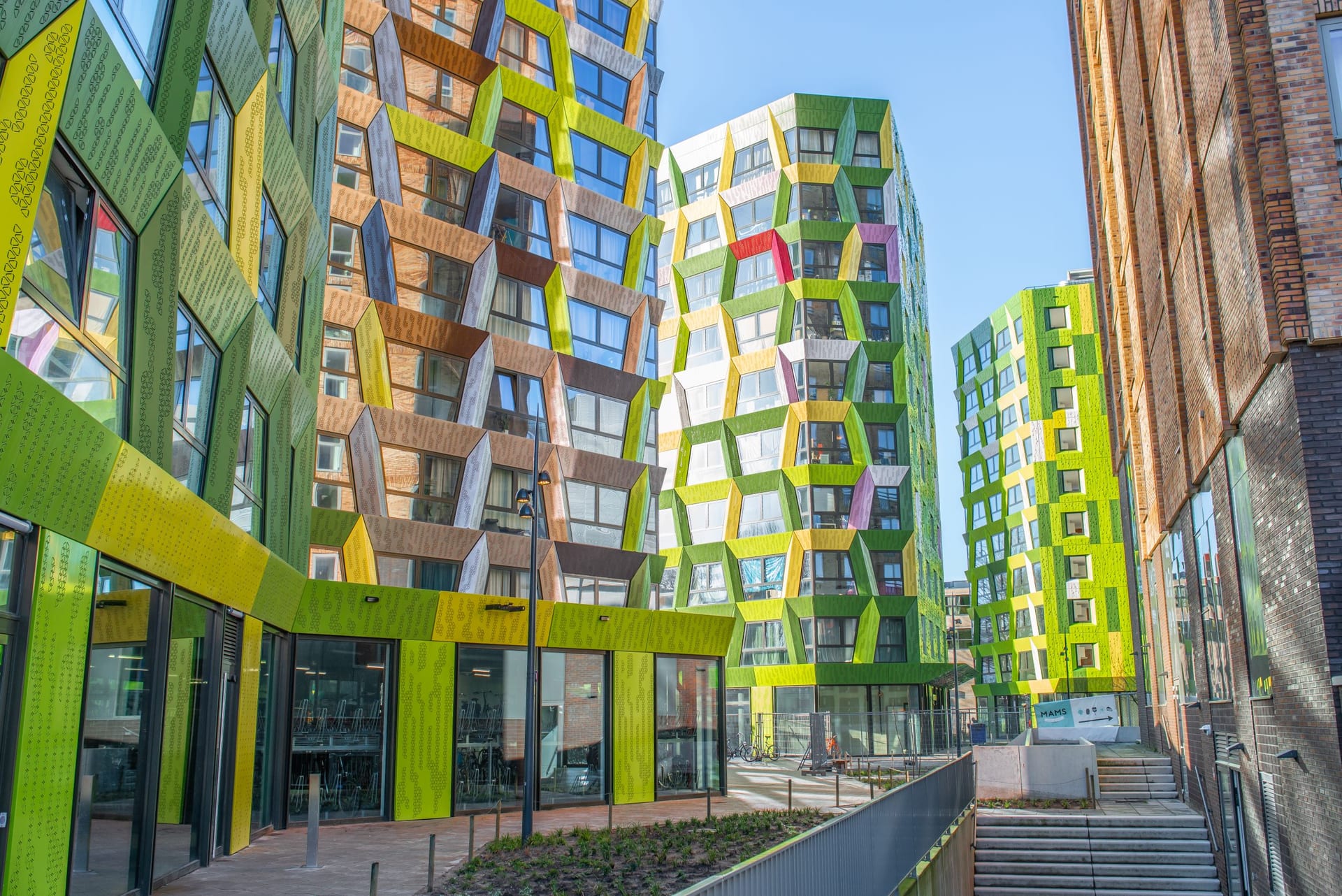
The shortage now reaches well beyond the poorest. Waiting for a social tenancy takes 11.7 years on average, and in 2025 an applicant under 23 had a 0.5% chance of an offer. A rough rent-to-income estimate puts about 49.6% of renters above the overburden line. Middle earners feel it too. Dennis de Vries, the city's alderman for housing from 2022 to 2026, came to the job from teaching. He told DUIC (Utrecht's online newspaper): "I could no longer live in this city." He also called mid-market rent simply "expensive rent", even for people in education or care. Nationally, an investigation by Follow the Money found unaffordable housing to be the top issue of the 2025 election. Against that backdrop, the cooperative share is the smallest number in Utrecht's housing picture, and the one the city has started trying to change.
A cooperative tradition the associations absorbed
A Dutch housing cooperative, a wooncoöperatie (a members' association that owns or manages its own homes), is legally young. It entered the Housing Act only in 2015. Members usually pay a modest entry contribution and rent from their own association, so no landlord takes a profit and rents track costs. A bill now before the senate would define two forms. A beheercoöperatie (management cooperative) runs homes that a housing association still owns. A vastgoedcoöperatie (property cooperative) builds or buys its own building, which is the harder and rarer route. A 2025 Eindhoven study of Dutch cooperative policy examines both forms across every level of government and against other European countries.

Utrecht's story starts earlier than the law. In 1912 municipal employees founded the Coöperatieve Woningvereniging voor Gemeente Personeel (the cooperative housing society for city staff), which delivered its first homes in 1916. Through mergers it became part of the association sector, and its lineage now sits inside Woonin, formed in 2023. A second, smaller wave of resident-run groups followed in the 1980s and 1990s. Most of Utrecht's cooperative ambition was therefore absorbed into the associations, which explains why the sector is so thin today.
Today the sector falls into two clusters. The survivors of the 1980s and 1990s wave are small, settled groups whose main task is upkeep and passing homes on to new members. The newcomers want to build from scratch. Hommeldorp, founded by five people aged 25 to 30, is the most visible, and it is financing its building partly through member bonds. Both clusters meet the same obstacle, although it bites the newcomers hardest: land and loans are priced for developers, not for groups without equity. National demand is not the problem. A survey-based thesis on demand for Dutch cooperatives estimates room for more than a million cooperative homes.
The city has begun to treat cooperatives as part of its affordable pipeline rather than as a hobby. Since 2021 it has had an action plan, and in December 2024 the council put €3 million behind a programme running to 2028. It promises at least 2 affordable plots a year, with €1.5 million held back to co-finance a national loan fund. Prospective groups register in a kaartenbak (a pre-qualification register of vetted initiatives) before they can bid. A Housing Europe review of collaborative housing argues that this jump from pilots to a steady land supply is what lets cooperatives scale.
Eighty per cent affordable, and who pays for it
Utrecht's new city government made housing its first promise. PRO Utrecht (the local branch of Progressief Nederland, the merged GreenLeft and Labour party) and D66 (the social-liberal party) signed their 2026-2030 coalition agreement in June. It requires that 80% of homes in large new projects be affordable, split into 40% social rent and 40% mid-market rent or purchase. It sets aside €9 million to plan four growth areas, Overvecht, Lunetten-Koningsweg, Groot Merwede and Rijnenburg. Teachers, nurses, carers, police and firefighters get priority for social homes. Up to four people may share a home without a permit, and rules on splitting homes and adding roof storeys are being eased. The new alderman for housing, Matthijs Sienot of D66, put it plainly: "Everyone in our city should be able to find a home of their own."
The money comes partly from residents. The coalition raises the property tax on homes, the OZB (onroerendezaakbelasting, the municipal property tax), by 15%. Developers answer that the target is possible, but only at the cost of quality. Land at €1,050 per square metre and building costs of €2,050 leave little margin. A third constraint is physical. Grid congestion, netcongestie (a full electricity network that cannot connect new buildings), is stalling projects, and Sienot has said the city cannot grow "without solving that".
Once again the bill lands on our residents and business owners.National law now sets the frame. The Wet versterking regie volkshuisvesting (the Act to Strengthen Public Housing Governance) took effect on 1 July 2026. It requires two-thirds of new homes to be affordable, with 30% of them social rent across each region. Every municipality must publish a housing programme by 1 July 2027. The housing minister, Elanor Boekholt-O'Sullivan, is a former senior military officer, and a Guardian profile describes her push for speed over polish. The national coalition's plan drew a sharp response from Aedes (the federation of housing associations), which said the cabinet offered no money to match its demands on the associations.
Cooperatives are getting their own legal lane. On 30 June 2026 the Tweede Kamer (the lower house of parliament) passed the Wet bevordering wooncoöperaties (the Housing Cooperatives Promotion Act), tabled by the Socialist Party MP Sandra Beckerman. It writes both cooperative forms into the Housing Act and lets municipalities anchor cooperative policy in their housing programmes. The Eerste Kamer (the senate) still has to vote. Utrecht is already ahead of that curve, and research on public-cooperative partnerships shows why the municipal land lever matters most. A comparison of active land policy in The Hague and Eindhoven makes the same case for owning and leasing rather than selling land.
Housing cooperatives are a tremendously valuable addition to housing construction in Utrecht.Empty offices are the city's quiet reserve. Across the province, office vacancy fell from 19% to 7% between 2015 and 2023, partly because 460,000 square metres of offices were converted, mostly into homes. Inside the city the remaining slack is small, so each conversion has to be chosen well. A Dutch method for measuring which offices can become homes has guided that choice for two decades. The coalition's permit-free home-sharing echoes a national study of better use of existing homes, which found room for hundreds of thousands of extra homes by splitting and sharing.
Climate goals ride on the same buildings. The coalition's Utrecht isoleert (Utrecht insulates) programme targets draughty homes, and it wants at least 50% of renewable generation in local ownership. Car-light districts such as Merwede and Cartesius cut transport emissions by design. Association and cooperative homes are the easiest place to deliver this, because their landlords plan decades ahead. A Eurocities review of city housing strategies makes the same point across Europe.
- 1912[source]
A cooperative for city staff
Utrecht municipal employees found the Coöperatieve Woningvereniging voor Gemeente Personeel; its first homes follow in 1916.
- 1998[source]
Mitros is formed
The cooperative's successor K77 merges with the municipal housing company and a Nieuwegein association to form Mitros.
- 2021[source]
Action plan for cooperatives
The city adopts the Actieplan Utrechtse Wooncoöperaties, its first cooperative policy.
- 2023[source]
Woonin is born
Mitros and Viveste merge into Woonin, one of the city's largest housing associations.
- Dec 2024[source]
Money and land for cooperatives
The council commits €3 million and at least 2 affordable plots a year to cooperatives until 2028.
- Dec 2025[source]
Merwede breaks ground
Construction starts on 1,068 rental homes, the first large phase of a car-light district of 6,000 homes.
- Jan 2026[source]
First plot for a cooperative
Hommeldorp wins the Chisinaustraat plot in Leidsche Rijn against three other groups, for 20 to 40 homes, at least 75% of them social or mid-market rent.
- Jun 2026[source]
80% affordable
The PRO Utrecht-D66 coalition requires 80% affordable homes in large projects: 40% social, 40% mid-market.
- Jul 2026[source]
National housing law in force
The Act to Strengthen Public Housing Governance takes effect: two-thirds of new homes affordable, 30% social rent.
- Jul 2027[source]
Housing programme due
Deadline for Utrecht and every other municipality to publish a statutory housing programme.
- 2028[source]
Cartesius complete
The car-light Cartesius district of more than 3,000 homes, 25% of them social rent, is due to be finished.
- 2040[source]
A 35% social share
The city aims to restore social housing to 35% of the stock, up from 33.2% in 2025.
From the first cooperative society for city staff to the national housing law and the city's 2040 social-housing target.
Railway yards, empty offices and a first cooperative plot
Hommeldorp is the project that tests whether Utrecht's cooperative programme works. Four groups registered for the city's first cooperative plot, on Chisinaustraat in Leidsche Rijn, and Hommeldorp's plan scored highest. It proposes 33 homes, clustered around shared kitchens, in an energy-positive building with a workshop open to the neighbourhood. One founder, Abel Bauer, told DUIC the group wants to do things "just a little differently on the housing market". The next test is the plot at Zuilense Vecht, whose tender follows in 2026.
Merwede is the city's largest bet on density without cars. The district along the Merwedekanaal will hold about 6,000 homes for 12,000 residents, 1,800 of them social rent. Building on the first 1,068 rental homes began in December 2025. Most will be finished between 2028 and 2030. Parking is scarce by design, which frees land for homes and green space.
Cartesius turns a former railway workshop site in the west of the city into a neighbourhood of more than 3,000 homes. A quarter are social rent, and affordable purchase homes are capped at €405,000. Cars are allowed but, in the city's words, are "guests". The plan borrows from the Blue Zones idea of neighbourhoods built for walking, fresh food and social contact, and the historic CAB building becomes its community hub.
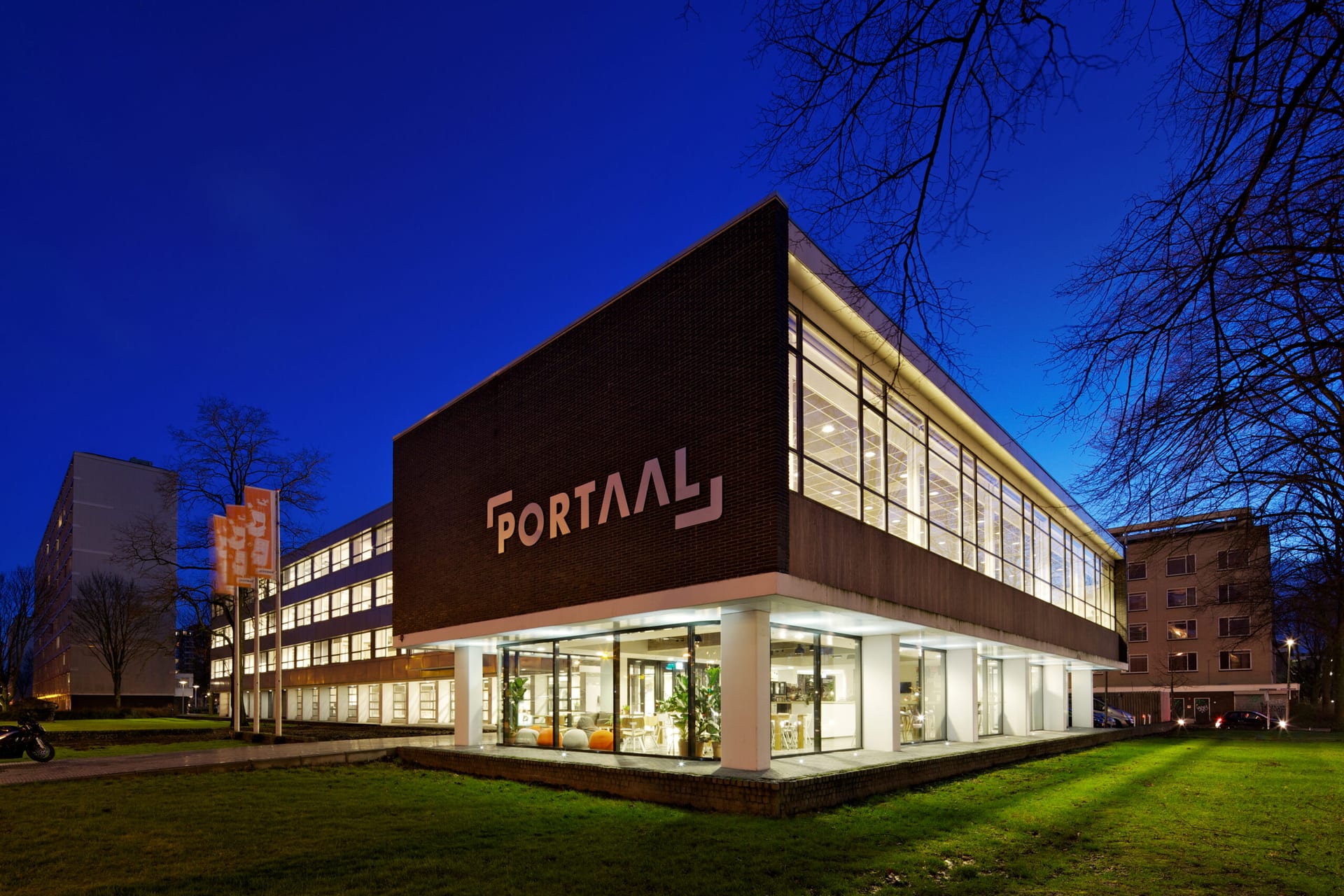
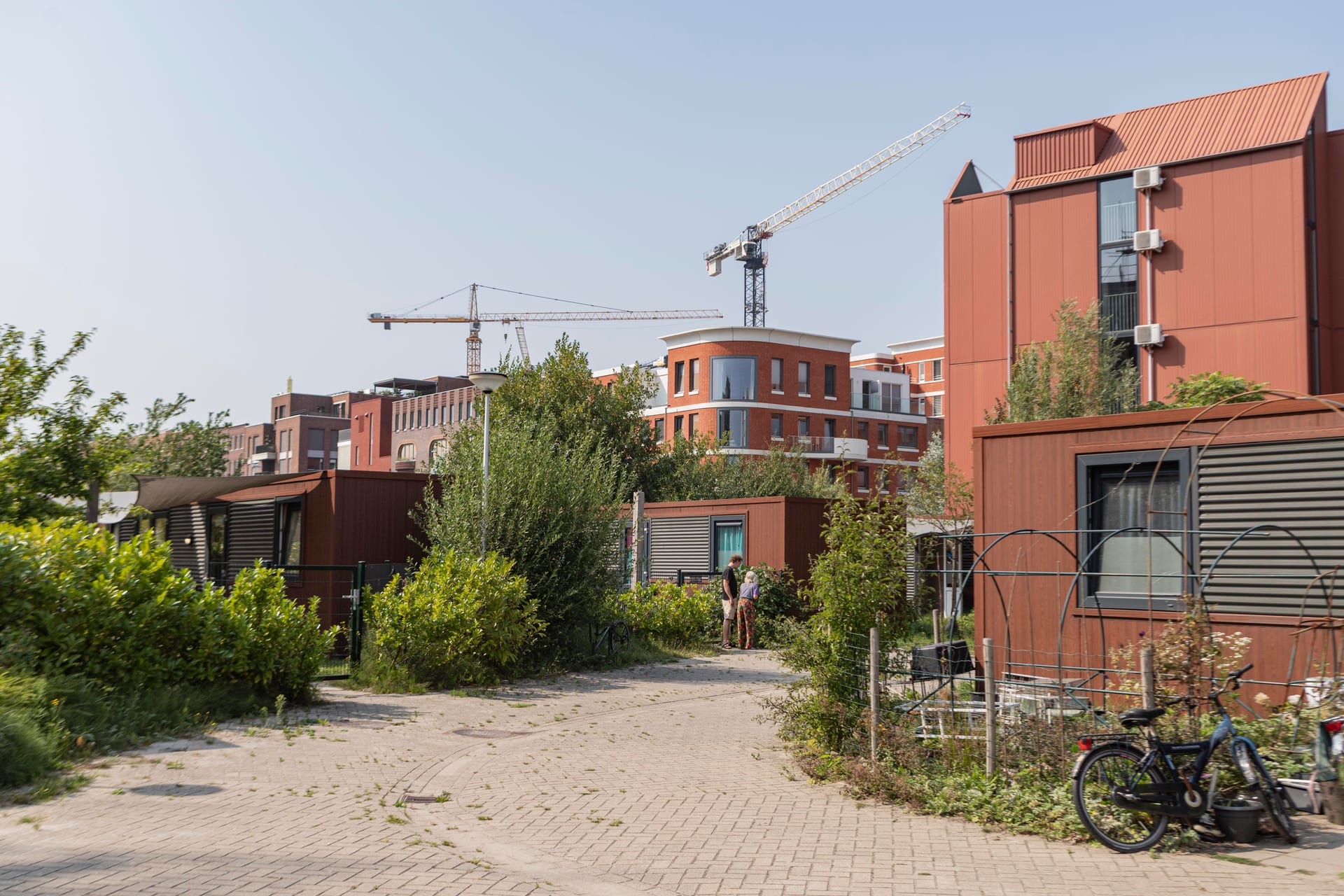
Majella Wonen shows what an association can do with homes it planned to demolish. Portaal kept two post-war blocks and filled them with 67 small, cheap flats. Formerly homeless tenants, supported by the Tussenvoorziening (Utrecht's shelter and supported-housing organisation), live as neighbours to socially committed tenants. The aim is that supported residents hold their own tenancy after three years.
De Ravel was one of Utrecht's first large office-to-home conversions. Socius Wonen turned an empty office block into 180 rooms for young people aged 18 to 28 and refugees with residence permits, living in groups of 20 per floor. It opened in 2015 for at least ten years. Mixed buildings of this kind have since multiplied across the city, run by Socius, Portaal and others.
Woonin carries the city's oldest cooperative thread into today's association sector. Its roots in the 1912 society for city staff make it a natural partner for management cooperatives under the new law. Sustainer, a Utrecht developer of timber buildings for social landlords, shows how association homes can be renewed with less embodied carbon.

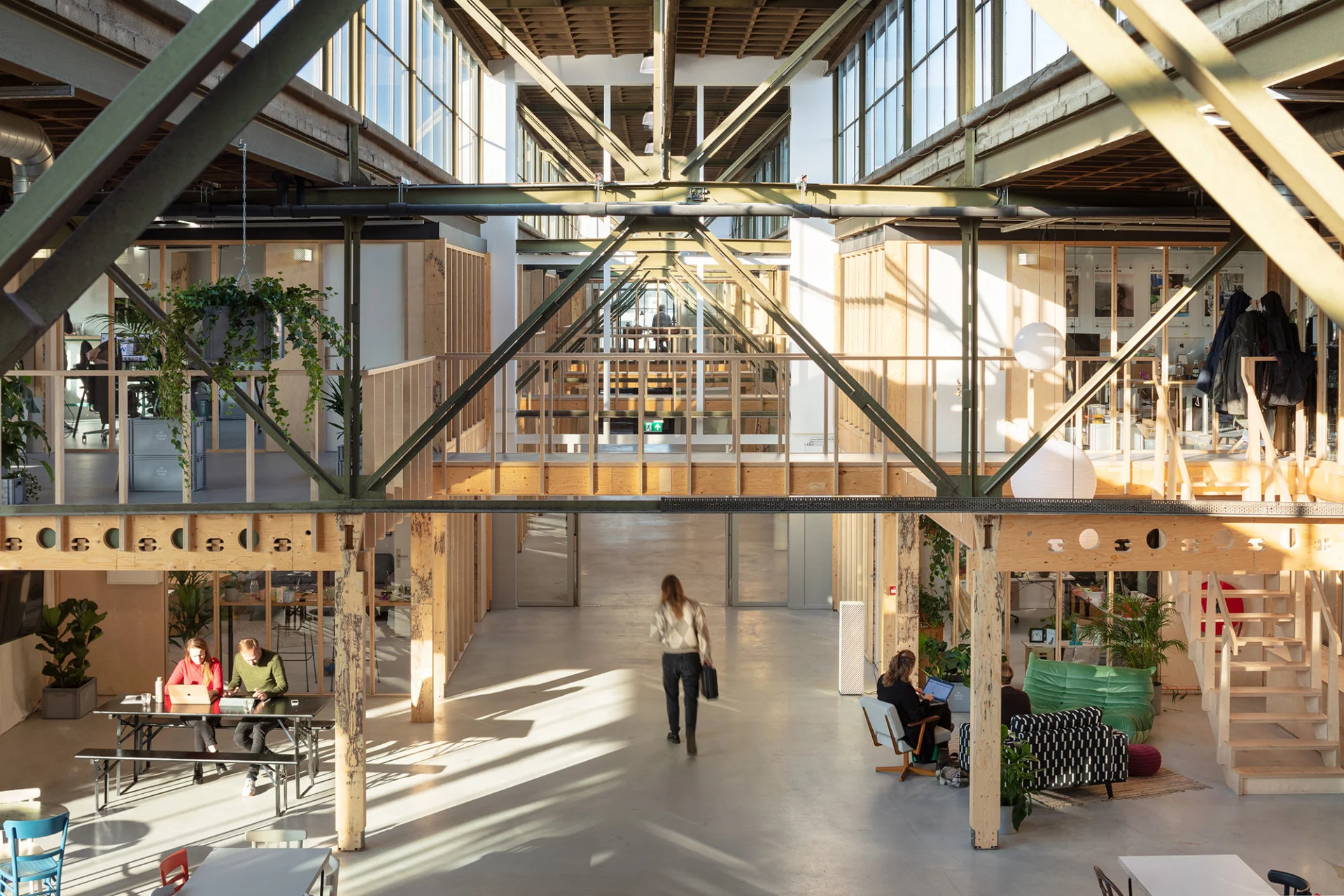
Sustainer
Utrecht developer of timber buildings for social landlords.
Read more →Wonderwoods is the counterpoint at the top of the market. Its planted tower, 105 metres tall and designed by Stefano Boeri Architetti, anchors the car-free Beurskwartier beside Utrecht Centraal. It proves the city can build green and dense. Hommeldorp, Majella Wonen and De Ravel show it can also build for people on ordinary incomes.
References
Statistics21Click on any number to see the source
Housing market
Tenure & affordability
Cooperative, social & public
Adaptive reuse & vacancy
Population & migration
From our library16
- SSH (Stichting Studenten Huisvesting) — Organisation
- Slaagkans jongeren op sociale huurwoning 0,5 procent, wachttijd 12 jaar: woningmarkt Utrecht blijft onder druk — Knowledge
- Unaffordable housing is the main election issue, but no party is tackling the cause — Knowledge
- Strengthening Cooperative Housing in the Netherlands - A Multi-Level Policy Analysis in Comparative Perspective — Knowledge
- Woonin — Organisation
- The demand for housing cooperatives in the Netherlands — Knowledge
- From pilots to scale: Collaborative housing and the push for long-term affordability — Knowledge
- ‘Luxury takes time. We don’t have time’: The former top military officer on a mission to fix the Dutch housing crisis — Knowledge
- Public-cooperative policy mechanisms for housing commons — Knowledge
- Land Policy in Practice: A Tale of Two Dutch Cities — Knowledge
- Beter Benutten Bestaande (Better Use Existing) — Knowledge
- Cities addressing the housing crisis: Innovative and integrated approaches — Knowledge
- Portaal — Organisation
- Tussenvoorziening — Organisation
- Socius Wonen — Organisation
- Sustainer — Organisation
Further sources20
- Wonen in Utrecht — samenvatting — Utrecht Monitor (Gemeente Utrecht) · 2024
- Slaagkans jongeren op sociale huurwoning 0,5 procent, wachttijd 12 jaar — DUIC · 2026
- Utrecht gaat tegen landelijke huurtrend in: minder woningen verhuurd en prijzen blijven hoog — DUIC · 2026-07-30
- Woningbouw in Utrecht (6): wethouders nemen maatregel na maatregel tegen woningnood, maar bouw stagneert — DUIC
- Geschiedenis — Woonin
- Gemeente Utrecht biedt ruimte aan wooncoöperaties — Cooplink · 2024-12-11
- Samen wonen: wooncoöperaties — Gemeente Utrecht · 2026
- Nieuw Utrechts college kiest voor wonen, verduurzaming en kansengelijkheid — Gemeente Utrecht · 2026-06-23
- PRO Utrecht en D66 maken namen kandidaat-wethouders bekend — Gemeente Utrecht · 2026-06-22
- Utrecht versnelt betaalbare woningbouw met hogere OZB en investeringen — VG Visie · 2026-06-25
- Voorgedragen wethouders willen bouwen aan 'de stad van vrijheid' — U in de Wijk · 2026-06
- Wet Versterking regie volkshuisvesting van kracht vanaf 1 juli — Rijksoverheid · 2026-06-23
- Reacties coalitieakkoord: Aedes diep teleurgesteld en felle kritiek Woonbond — Stadszaken · 2026-01-30
- Wet bevordering wooncoöperaties aangenomen door Tweede Kamer — Rijksoverheid · 2026-06-30
- Leegstand kantoren in provincie Utrecht fors gedaald en transformatie aangejaagd — RenovatieTotaal · 2025-02-19
- Utrecht selecteert winnaar wooncoöperatie Leidsche Rijn — Gemeente Utrecht · 2026-01-27
- Jonge Utrechters krijgen met eigen wooncoöperatie groen licht — DUIC · 2026-01-27
- Bouw van ruim 1000 huurwoningen in Merwede van start — DUIC · 2025-12-10
- Cartesius: bouw stadswijk — Gemeente Utrecht
- Coalitieakkoord Utrecht: betaalbare woningen, miljoenen voor veiligheid en hogere belastingen — RTV Utrecht · 2026-06-23