Skip to content
Explore

Land & leasehold

Building on leased land keeps the most expensive item off the balance sheet — where that is actually financeable across 30 European countries, and how to get a lease a bank will lend against.
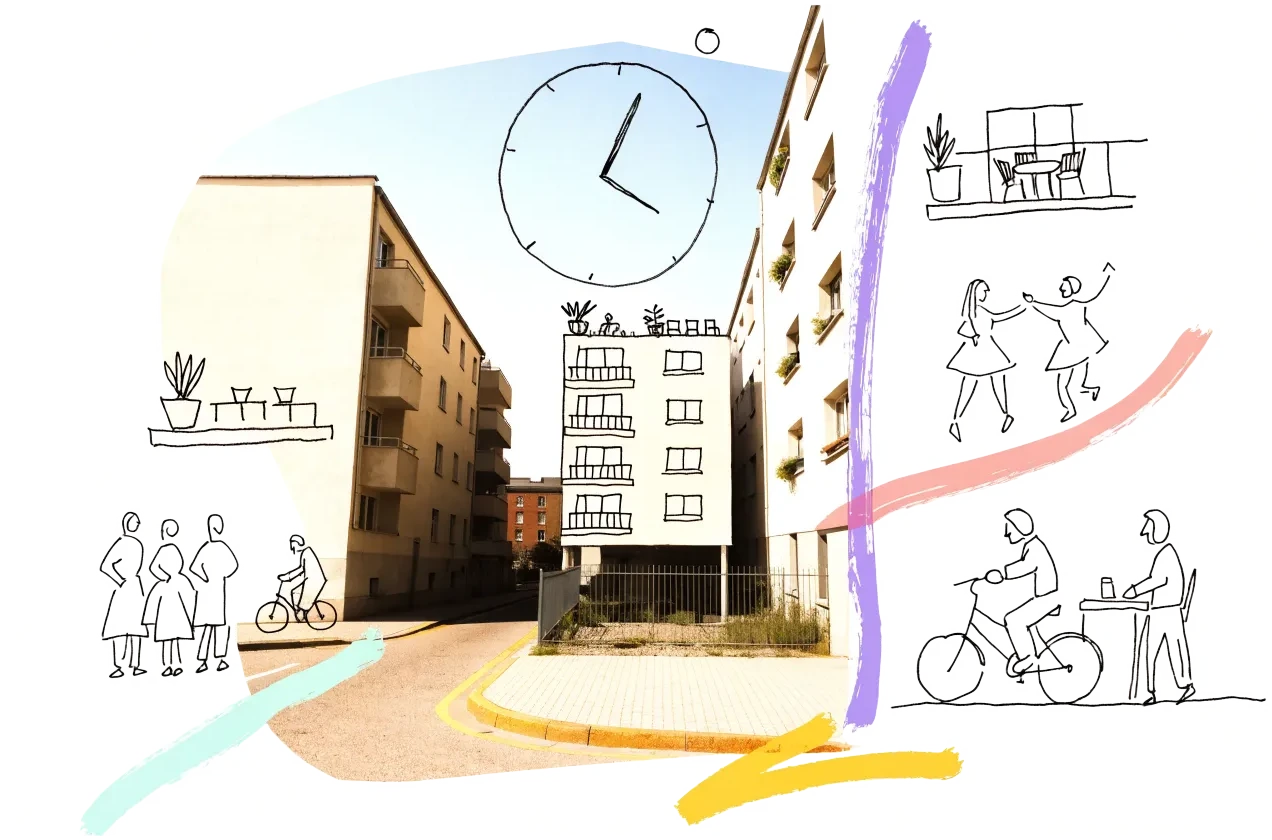
An empty corner plot with an ink apartment building drawn onto it and a clock face sketched in the sky

01 · Country by country

Where a long lease is bankable

Search a country, pick it on the map or sort the table. Each country opens a profile with its instruments, the lease-end rules, recent reforms and sources — and the link to it can be shared.

A long ground lease is legal in all 30 countries assessed — but only 14 have a regime mature enough to carry a 60-year housing loan. 12 work with caveats a lender prices in, and 4 are weak.

Holding land on a long lease instead of buying it keeps the most expensive item off a housing project's balance sheet. Whether that is a good idea depends on three things a lender cares about: how long the lease can run, whether the lease itself can be mortgaged, and whether anyone has actually built housing on one here. The instrument exists everywhere — the tier is about maturity and finance, not legality.

30 countries assessed374 distinct sourcesresearched June 2026
How this was researched

Two adversarially-verified research passes per country — a deep-research fan-out followed by a per-country research-and-verify pass — scored on the three axes that decide whether a 60-year debt-financed lease is bankable: duration reach, bank-mortgageability and housing track record.

What the tier is measuring

Long enough to finance29/30allow a lease of 60 years or more — the term a debt-financed model needs
A bank lends against it10/30take the lease itself as collateral on normal terms; elsewhere only public or social lenders will
Housing actually built on one16/30have a real residential or cooperative track record, not just a statute
Extra equity in weaker markets+10–20ppthe LTV haircut the economic model applies on a Tier B or C lease

No single test settles the tier: a long term counts for little if no bank will lend against the lease, and a statute counts for little if nothing has been built under it. The track record is the one that does not bend — all 14 Tier A countries have housing standing on a ground lease today.

Loading map…

A — mature, mortgageable, housing-proven (Germany's Erbbaurecht, Dutch erfpacht, Swedish tomträtt). B — the instrument exists but is housing-thin, in reform, or reliant on public lenders. C — short terms, poor bankability, or absent for private housing.

Leasehold viability by country

Sort by
CountryEUInstrument (local)Max termBank-mortgageable?Housing-proven?Tier
AustriaEUBaurecht100 yr Bank-mortgageableHousing-provenA · strong
DenmarkEUBygning på lejet grundNo cap ConditionalHousing-provenA · strong
FinlandEUMaanvuokra100 yr Bank-mortgageableHousing-provenA · strong
FranceEUBail Réel Solidaire99 yr ConditionalHousing-provenA · strong
GermanyEUErbbaurechtNo cap Bank-mortgageableHousing-provenA · strong
IrelandEULong leaseholdNo cap Bank-mortgageableHousing-provenA · strong
ItalyEUDiritto di superficieNo cap ConditionalHousing-provenA · strong
MaltaEUĊens perpetwuPerpetual / term ConditionalHousing-provenA · strong
NetherlandsEUErfpachtNo cap Bank-mortgageableHousing-provenA · strong
Norway—TomtefesteNo cap Bank-mortgageableHousing-provenA · strong
SpainEUDerecho de superficie99 yr ConditionalHousing-provenA · strong
SwedenEUTomträttNo cap Bank-mortgageableHousing-provenA · strong
Switzerland—Selbständiges und dauerndes Baurecht100 yr Bank-mortgageableHousing-provenA · strong
United Kingdom—Leasehold / Long leaseNo cap Bank-mortgageableHousing-provenA · strong
BelgiumEUErfpacht / Emphytéose99 yr ConditionalHousing-provenB · viable, with caveats
BulgariaEUПраво на строежNo cap ConditionalEmergingB · viable, with caveats
CroatiaEUPravo građenjaNo cap ConditionalEmergingB · viable, with caveats
CzechiaEUPrávo stavby99 yr ConditionalEmergingB · viable, with caveats
EstoniaEUHoonestusõigus99 yr Bank-mortgageableEmergingB · viable, with caveats
GreeceEUΔικαίωμα επιφανείας99 yr ConditionalEmergingB · viable, with caveats
LithuaniaEUUžstatymo teisėNo cap ConditionalNot yetB · viable, with caveats
LuxembourgEUBail emphytéotique / emphytéose99 yr ConditionalHousing-provenB · viable, with caveats
PortugalEUDireito de superfícieNo cap ConditionalEmergingB · viable, with caveats
RomaniaEUDreptul de superficie99 yr ConditionalEmergingB · viable, with caveats
SlovakiaEUNájom pozemkuNo cap ConditionalEmergingB · viable, with caveats
SloveniaEUStavbna pravicaNo cap ConditionalEmergingB · viable, with caveats
CyprusEUΕγγεγραμμένη μίσθωση ακινήτου99 yr ConditionalEmergingC · weak / problematic
HungaryEUÉpítményi jog50 yr ConditionalNot yetC · weak / problematic
LatviaEUApbūves tiesībaNo cap ConditionalNot yetC · weak / problematic
PolandEUUżytkowanie wieczyste99 yr ConditionalEmergingC · weak / problematic

“Max term” is the statutory ceiling — a debt-financed housing model needs 60–99 years. “Bank-mortgageable” asks whether a lender will take the leasehold itself as collateral; Conditional often means only public or social funds will. Open a country for its instruments, lease-end rules, reforms and sources.

30 countries are assessed — the European markets the research covers. A country that is absent has not been assessed, which is not the same as a finding that leasehold does not work there.

02 · How it works

Three parties, one piece of land

A ground lease splits what a purchase bundles together: the land stays with its owner, the building belongs to whoever builds it, and a bank lends against the lease in between.

LandownerA city, a church, a foundation, a land trust — sometimes a private ownerKeeps the land, and gets it back when the lease ends
The right to build and use, for 60–99 years or moreGround rent, every year
Co-opThe leaseholderOwns the building for the whole term and can sell or mortgage the lease
Repayments, finished well before the lease endsA loan against the lease
BankThe lenderHolds a mortgage on the lease — not on the land
The landowner grants the co-op the right to build for 60 to 99 years or more and receives a yearly ground rent. The bank lends to the co-op against the lease and is repaid well before the lease ends.

It is a right in land, not a tenancy

A long ground lease — Erbbaurecht, Baurecht, erfpacht, emphyteusis, droit de superficie — is entered in the land register. The leaseholder owns what it builds, can sell the lease, leave it to heirs and borrow against it.

The land stays where it is

The owner never sells. That is why cities, churches and foundations use leases: they keep the land for the next generation and still see it used for homes now.

The bank lends against the lease

Whether a lease is worth anything to a lender depends on how long it has left to run, what happens to the mortgage if the ground rent is not paid, and what the leaseholder gets at the end. That is what the tier on this page measures.

The price is the ground rent

Instead of a purchase price paid on day one, the project pays a yearly rent for the land — usually a percentage of the land’s value, indexed over time. Some owners let part of it be paid up front.

One idea, 30 names

The same instrument in every country assessed, in its own legal language, with the tier it earns.

  • BaurechtAustria · Tier A
  • Erfpacht / EmphytéoseBelgium · Tier B
  • Право на строежBulgaria · Tier B
  • Pravo građenjaCroatia · Tier B
  • Εγγεγραμμένη μίσθωση ακινήτουCyprus · Tier C
  • Právo stavbyCzechia · Tier B
  • Bygning på lejet grundDenmark · Tier A
  • HoonestusõigusEstonia · Tier B
  • MaanvuokraFinland · Tier A
  • Bail Réel SolidaireFrance · Tier A
  • ErbbaurechtGermany · Tier A
  • Δικαίωμα επιφανείαςGreece · Tier B
  • Építményi jogHungary · Tier C
  • Long leaseholdIreland · Tier A
  • Diritto di superficieItaly · Tier A
  • Apbūves tiesībaLatvia · Tier C
  • Užstatymo teisėLithuania · Tier B
  • Bail emphytéotique / emphytéoseLuxembourg · Tier B
  • Ċens perpetwuMalta · Tier A
  • ErfpachtNetherlands · Tier A
  • TomtefesteNorway · Tier A
  • Użytkowanie wieczystePoland · Tier C
  • Direito de superfíciePortugal · Tier B
  • Dreptul de superficieRomania · Tier B
  • Nájom pozemkuSlovakia · Tier B
  • Stavbna pravicaSlovenia · Tier B
  • Derecho de superficieSpain · Tier A
  • TomträttSweden · Tier A
  • Selbständiges und dauerndes BaurechtSwitzerland · Tier A
  • Leasehold / Long leaseUnited Kingdom · Tier A

03 · A lease’s life

From signing to the last day — and what to watch at each stage

A housing lease outlives the loans, the people who signed it and usually the building’s first renovation. What happens in year 80 is decided in year 0.

  1. Year 0

    Grant

    The owner and the co-op sign the lease before a notary; it is entered in the land register with the ground rent as a charge on it.

    Watch: Term, ground-rent formula, indexation, what happens at the end — everything that follows is decided here.

  2. Years 0–3

    Build and finance

    The bank takes a mortgage on the lease and the co-op builds or converts.

    Watch: The owner’s consent to the mortgage, and whether the ground rent survives a forced sale (see the checklist).

  3. Years 3–40

    Pay down

    Rents repay the loans. The ground rent moves with its index.

    Watch: An index without a cap can outrun the rents the co-op charges.

  4. Years 40–70

    The long middle

    The debt is gone and the building is the co-op’s. The lease is still long enough to refinance a deep renovation.

    Watch: Start talking about an extension while the remaining term is still long — lenders lose interest as it shortens.

  5. Year 60–99+

    The end

    The lease is renewed, or the building passes to the owner with compensation — or, in a perpetual lease, nothing happens at all.

    Watch: The compensation rule. In Germany a lease granted for low-income housing must pay at least two thirds of the building’s value (§ 27 (2) ErbbauRG).

04 · Lease or buy?

What the land costs you, either way

A ground lease swaps a purchase price for a yearly rent. Whether that is cheaper depends on four numbers only you know: what the land is worth, the ground-rent rate you are offered, how it is indexed, and what borrowing to buy it would cost. Put in your own.

€2.5m
2.0%
% of the land value per year, in the first year
2.0% a year
how fast the ground rent rises each year
3.5%
30 years
20%
cash you must raise up front, as % of the price
60 years
Ground rent, year 1€50k€161k by year 60
Land loan, per year€109kfor 30 years, then nothing
Equity a lease saves€500knot raised from members on day one

The lease is cheaper for the first 46 years; after that, buying has cost less in total. Over 60 years: lease €5.7m, buy €3.8m.

Lease: ground rent paid to date Buy: equity + loan repayments to date
€0€1.4m€2.9m€4.3m€5.7myear 0102030405060lines cross in year 47

Lease: ground rent = land value × rate, rising by the indexation each year. Buy: the equity share up front, then equal yearly instalments of interest and principal on the rest. The default figures are round examples, not market data. Buying leaves you owning the land when the loan is repaid; leasing leaves you the equity you did not have to raise — neither is priced here.

05 · Clause checklist

Twelve clauses that make a lease bankable

Lenders read a ground lease for a handful of clauses. Get these right in the draft and a bank will lend against the lease; get them wrong and no ground rent is low enough to save it. Tick them off as your draft covers them — your progress stays in this browser.

0 of 12 covered
  1. Ask for: Long enough that every loan is repaid with decades still to run — 99 years, or no end date at all.

    Lenders look at the term left when the loan ends, not when it starts. A short remaining term caps the loan and the price at which the lease can be sold.

  2. Ask for: A percentage of the land’s value for the use actually allowed — housing at capped rents — not its value for the most profitable use.

    Land valued for luxury flats and leased for co-op homes produces a ground rent the rents cannot carry.

  3. Ask for: Indexed to consumer prices or to rents, at fixed intervals, with a cap — and never re-based to a new land valuation.

    A rent that follows land prices can rise far faster than any rent the co-op may charge its members.

  4. Ask for: The ground-rent charge stays in place if the lease is ever auctioned, so the mortgage can rank first.

    Without it a lender either refuses or asks the owner to stand behind it each time. German law lets the parties agree this in advance (§ 9 (3) ErbbauRG).

  5. Ask for: The owner’s consent to mortgages up to an agreed share of value, given in the lease itself.

    Many leases need the owner’s consent for every new loan. Agreed up front, refinancing a renovation is a letter, not a negotiation.

  6. Ask for: The building’s full value, or a fixed share of it, paid if the lease is not renewed — with the valuation method written down.

    It is what keeps the co-op’s stake worth something in the last decades, and what keeps it maintaining the building.

  7. Ask for: A right to extend on the same terms, or a first right to a new lease.

    An option to renew turns a cliff edge into a negotiation the co-op starts from strength.

  8. Ask for: Only for serious breach — not for late payment alone — and always with compensation.

    In Germany the owner may call the lease back early (Heimfall) only on grounds the lease names. Narrow grounds are what a lender wants to read.

  9. Ask for: The same rent and allocation rules as the subsidy you take — one set of conditions, not two.

    A lease that requires affordable homes and a grant that requires them on different terms leave the co-op answering to both.

  10. Ask for: The option to pay part or all of the ground rent as a lump sum.

    If cheap money is available, paying ahead can cost less than an indexed rent — Amsterdam’s perpetual leases offer exactly this.

  11. Ask for: A first right to buy the land if the owner ever sells it.

    A lease outlives the owner’s plans. The co-op should not wake up with a new landlord it did not choose.

  12. Ask for: An independent valuer named for every valuation the lease calls for, and arbitration before court.

    Most lease disputes are about a number. Agreeing who decides it is cheaper than agreeing the number.

06 · Where it works

Cities and co-ops that build on leased land

Leased land is not a theory. These are places where it is how affordable and cooperative housing gets built — and the one lesson each offers a project starting now.

Zurich

A whole neighbourhood on city land

mehr als wohnen, a co-op founded in 2007 by 35 non-profit housing builders, built the Hunziker Areal on a 40,172 m² former industrial site the city leased to it in Baurecht. Around 1,200 people have lived there since 2015.

40,172 m²
Plot
~1,200
Residents

A long Baurecht from the city let a new co-op build at a scale normally reserved for big developers.

Switzerland: the legal profile
Basel

A canton that no longer sells land

In 2016 Basel-Stadt voted the “Neue Bodeninitiative” into its constitution: the canton may in principle only grant its land in Baurecht, and may sell only if it buys equivalent land in return. It has since leased sites to housing co-ops, among them the former Felix Platter hospital site.

When selling is off the table, the ground lease becomes the normal way public land reaches housing.

Switzerland: the legal profile
Vienna

Competitions, then a Baurecht

Since 1995 every subsidised new-build project in Vienna has been judged on quality — in a developers’ competition or by a land advisory board. The city’s land fund, wohnfonds_wien, increasingly grants its sites in Baurecht rather than selling them, and has run competitions just for building groups.

Judge the project, lease the land: the city keeps the land and chooses what is built on it.

Austria: the legal profile
Hamburg

Erbbaurecht written into the constitution

Hamburg’s parliament decided in 2019 to replace sales of city land with Erbbaurecht. In 2023 a constitutional amendment followed: city land meant for housing may in principle no longer be transferred, except by law or by a resolution of the parliament.

A city can turn a policy into a rule that outlasts the next election.

Germany: the legal profile
Amsterdam

Perpetual leasehold, with the price fixed

Much of Amsterdam stands on city erfpacht. Since 2017 residential leaseholders can switch to a perpetual lease whose ground rent is fixed at the switch and then moves only with inflation — or buy it out once. Around 85% of residential leaseholders asked to switch.

~85%
Asked to switch

A ground rent that only follows inflation, with the option to pay it off, is something a lender and a household can both plan around.

Netherlands: the legal profile
Brussels

A land trust that keeps homes affordable at resale

Community Land Trust Brussels owns the land; households own their homes on it. The lease restarts at every resale and a resale formula caps the price, so each home stays affordable for the next buyer. In 2023 there were 107 lived-in homes on its land across five projects.

107
Homes (2023)

Separating land from building can lock in affordability for every future buyer, not just the first.

Belgium: the legal profile
France

The bail réel solidaire

A non-profit land body (organisme de foncier solidaire, OFS) keeps the land and grants a lease of 18 to 99 years that restarts with every sale. Buyers must be below an income limit, the resale price is capped and the home must be their main residence.

A national law made the land-trust model available everywhere, with its own financing from the public bank.

France: the legal profile
Catalonia

Co-op homes on public land, financed by a European bank

Sostre Cívic, Catalonia’s largest housing co-op, builds “cessió d’ús” homes: members pay an entry contribution and a monthly fee, and hold an indefinite right to live there. In 2024 the Council of Europe Development Bank lent it €31 million for more than 350 such homes on publicly owned land.

€31m
CEB loan
350+
Homes

Public land plus a co-op that never sells is enough for a European development bank to lend at scale.

Spain: the legal profile

07 · Questions

What people ask about ground leases

What is a ground lease?

A long right to build on and use someone else’s land, entered in the land register: Erbbaurecht in Germany, Baurecht in Austria and Switzerland, erfpacht in the Netherlands and Belgium, tomträtt in Sweden, droit de superficie or emphytéose in France. The leaseholder owns the building; the landowner keeps the land and receives a ground rent.

How it works →

Who owns the building when the lease ends?

That depends on the lease and the country. Usually the building passes to the landowner, who pays compensation — in Germany a lease granted for low-income housing must pay at least two thirds of the building’s value. Many leases are renewed instead, and some, like Amsterdam’s perpetual erfpacht, never end.

The life of a lease →

Will a bank lend against a leasehold?

In mature markets, yes, on normal terms — that is what Tier A means. Elsewhere only public or social lenders will, or banks ask for more equity. What a lender checks is the term left after the loan is repaid, whether its mortgage survives if the ground rent goes unpaid, and the compensation at the end.

The clauses a lender reads →

How is the ground rent set?

Usually as a percentage of the land’s value each year, then indexed to prices. The two levers are which land value is used — for the housing actually allowed, or for the most profitable use — and how fast the index may move.

Is leasing cheaper than buying the land?

In the first years almost always: there is no price to finance. Over decades it depends on the ground-rent rate, its index and the cost of borrowing — and buying leaves the land on your books. The calculator on this page compares the two with your own figures.

Compare lease and purchase →

Why would a landowner lease instead of selling?

To keep the land. Cities use leases to steer what is built and to profit from the land’s value over generations; churches and foundations often may not sell; land trusts lease so that homes stay affordable for every future buyer.

Places that do it →

What happens if the co-op cannot pay the ground rent?

The lease decides. Most allow the owner to call the lease back early (Heimfall in Germany) only after serious, repeated arrears, and with compensation. The bank’s mortgage is protected if the lease lets the ground-rent charge survive a forced sale.

What does a country’s tier change in the numbers?

The economic model asks for more equity on a weaker lease: none extra on Tier A, 10 percentage points more on Tier B and 20 more on Tier C, because a lender will lend less against it.

See it in the model →

How was this researched?

Two independent research passes per country — a broad sweep and then a country-by-country check against statutes and lenders’ practice — scored on how long a lease can run, whether a bank lends against it and whether housing has actually been built on one. Every country profile lists its sources.

08 · Glossary

The words on this page, in plain English

Building rightErbbaurecht · Baurecht · droit de superficie · derecho de superficie
A registered right to own a building on someone else’s land for a set term.
Community land trust (CLT)organisme de foncier solidaire
A non-profit that holds land for good and leases it to households or co-ops, with resale rules that keep the homes affordable.
Emphyteusisemphytéose · erfpacht
The civil-law long lease, typically 18 to 99 years, that gives the leaseholder near-ownership rights over the land.
Ground rentErbbauzins · Baurechtszins · canon · redevance
What the leaseholder pays the landowner each year, usually a percentage of the land’s value, indexed.
Heimfall
German term for the owner calling a lease back before its end, on grounds the lease names, with compensation.
Indexation
The rule by which the ground rent moves over time — with consumer prices, rents or a fixed step.
Lease extension
Renewing the lease before it ends, often on new terms.
Leasehold LTV haircut
The extra equity a lender asks for because the security is a lease rather than freehold land.
Perpetual leaseeeuwigdurende erfpacht · ċens perpetwu
A lease with no end date; the ground rent is the only link to the owner.
Reversion
The land and building passing back to the owner when the lease ends.
Site leaseholdtomträtt · maanvuokra · tomtefeste
The Nordic municipal ground lease, whose rent is reviewed at fixed intervals.
Usufructużytkowanie wieczyste · usufruit
A right to use and take income from property owned by another; Poland’s perpetual usufruct of public land was converted into ownership for most residential plots in 2019.
09 · Data & citing

Open data, sources and corrections

Every country profile lists its sources. The whole table can be downloaded and cited.

Take the data with you

The whole table — 30 entries, one row per country, with the source link behind every figure — as a spreadsheet or as JSON. It is the same data this page renders, rebuilt with every release.

Cite this page

European Housing Coop (2026). Land & leasehold: where a long ground lease works in Europe. https://www.housingcoop.eu/explore/leasehold

How it was made

Two adversarially-verified research passes per country — a deep-research fan-out followed by a per-country research-and-verify pass — scored on the three axes that decide whether a 60-year debt-financed lease is bankable: duration reach, bank-mortgageability and housing track record.

374 distinct sources.

Sources checked November 2026