Overview of the Resource
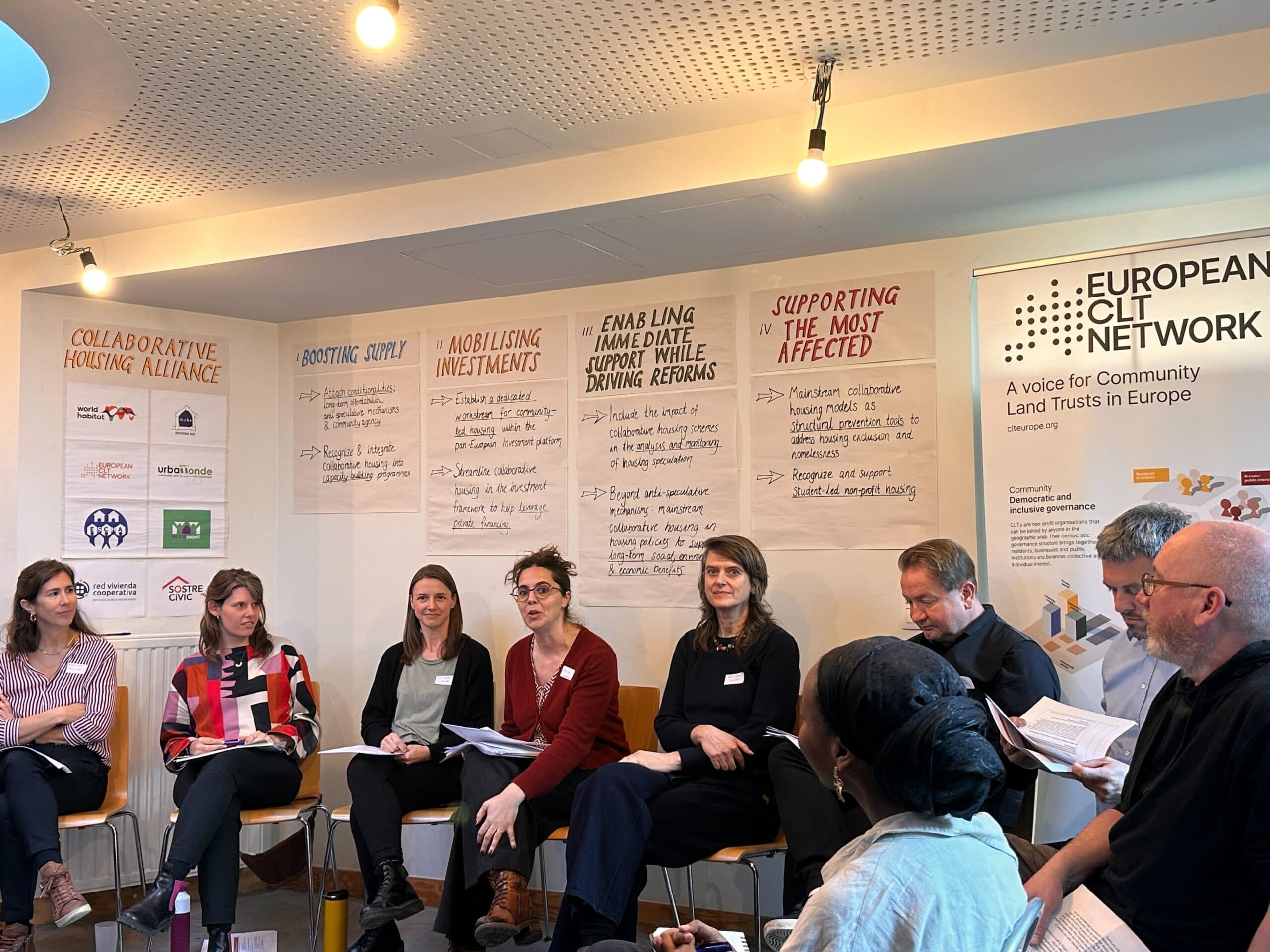
The report, published by Housing Europe, examines collaborative housing models across Europe as the EU advances its Affordable Housing Plan. It draws on discussions from a meeting of the Collaborative Housing Alliance held at the Arc‑en‑Ciel Community Land Trust (CLT) in Molenbeek, Brussels, and presents data on the scale, financing and policy implications of CLTs, housing cooperatives and other non‑profit housing forms.
Scale of Collaborative Housing in Europe
Across the continent more than 350 Community Land Trust initiatives now deliver roughly 7,000 homes, with an additional 25,000 homes in the pipeline. In Berlin, housing cooperatives account for about ten per cent of the city’s housing stock and consistently offer some of the lowest average rents. These figures illustrate that collaborative models have moved beyond pilot projects to become a significant part of the housing market.
Financing Highlights and Recent Loans
The report notes a €31 million loan secured by Sostre Cívic in Catalonia from the Council of Europe Development Bank, signalling growing institutional confidence in non‑profit housing. Ethical banks such as GLS Bank (Germany), Coop57 (Catalonia) and Rabobank (Netherlands) are also highlighted as partners. An accelerator scheme run by MOBA Housing has already provided a €100 000 loan to a student housing cooperative in Budapest, with repayments earmarked for future projects.
Linking Pilot Projects to Permanent Affordability
Participants stressed that public support must create lasting affordability rather than temporary subsidies. Key safeguards discussed include anti‑speculation measures, conditional public funding and legal recognition that enables non‑profit providers to access land and finance, including under the Services of General Economic Interest framework.
Sustainable Renovation and Climate Resilience
Collaborative housing actors are active in retrofitting homes to high energy standards while protecting occupants from displacement. The Interreg “Upcycling Trust” is cited as an example where energy‑efficient upgrades are combined with safeguards against rising land values, ensuring environmental improvements do not undermine affordability.
Social Inclusion and Vulnerable Groups
The report highlights the role of collaborative housing in student accommodation, homelessness prevention and mixed‑neighbourhood development. Student housing cooperatives deliver low‑cost, democratically governed accommodation, while community‑led models support households exiting precarious housing, integrating prevention with long‑term stability.
Policy Context and EU Investment Priorities
The discussion aligns with four pillars of the European Affordable Housing Plan: boosting supply, mobilising investment, enabling reforms and supporting the most affected. Upcoming EU initiatives—such as the pan‑European Investment Platform and the next Multi‑annual Financial Framework—are expected to shape financing conditions, making an ecosystem of public, cooperative and ethical finance crucial for scaling non‑profit housing.
Voices from the Alliance
Housing Europe’s Secretary General Sorcha Edwards and Matthew Baldwin, Chief of the European Commission’s Housing Task Force, underscored the need for a critical mass of genuinely affordable housing to counter financialisation. Geert De Pauw of Community Land Trust Brussels summed up the collaborative spirit: actors are “baking the cake together” rather than seeking a larger slice.
Key Take‑aways for Sustainable Housing Stakeholders
- Collaborative models now deliver thousands of homes and are expanding rapidly.
- Significant financing is already flowing from public banks and ethical lenders.
- Legal and policy reforms are essential to lock in long‑term affordability.
- Sustainable retrofits can be paired with anti‑displacement safeguards.
- EU‑wide investment frameworks will be decisive in scaling these solutions. The resource provides a factual snapshot of how collaborative housing is positioning itself as a cornerstone of Europe’s sustainable and affordable housing future.